
Annual meadow-grass (Poa annua, )
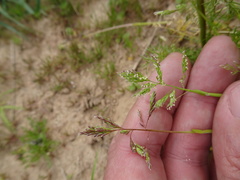
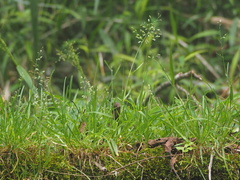
Annual meadow-grass (Poa annua) is an annual or short-lived perennial grass in the Poaceae family, originating from an ancient hybridization between Poa infirma and Poa supina. Now cosmopolitan, it colonizes lawns, sidewalks and golf courses on almost every continent, reaching Antarctica, where it is the only established invasive flowering plant.
Read moreAnnual meadow-grass and Annual bluegrass
Allow a few hours of direct sun per day, preferably morning or evening.
Full sun to light partial shade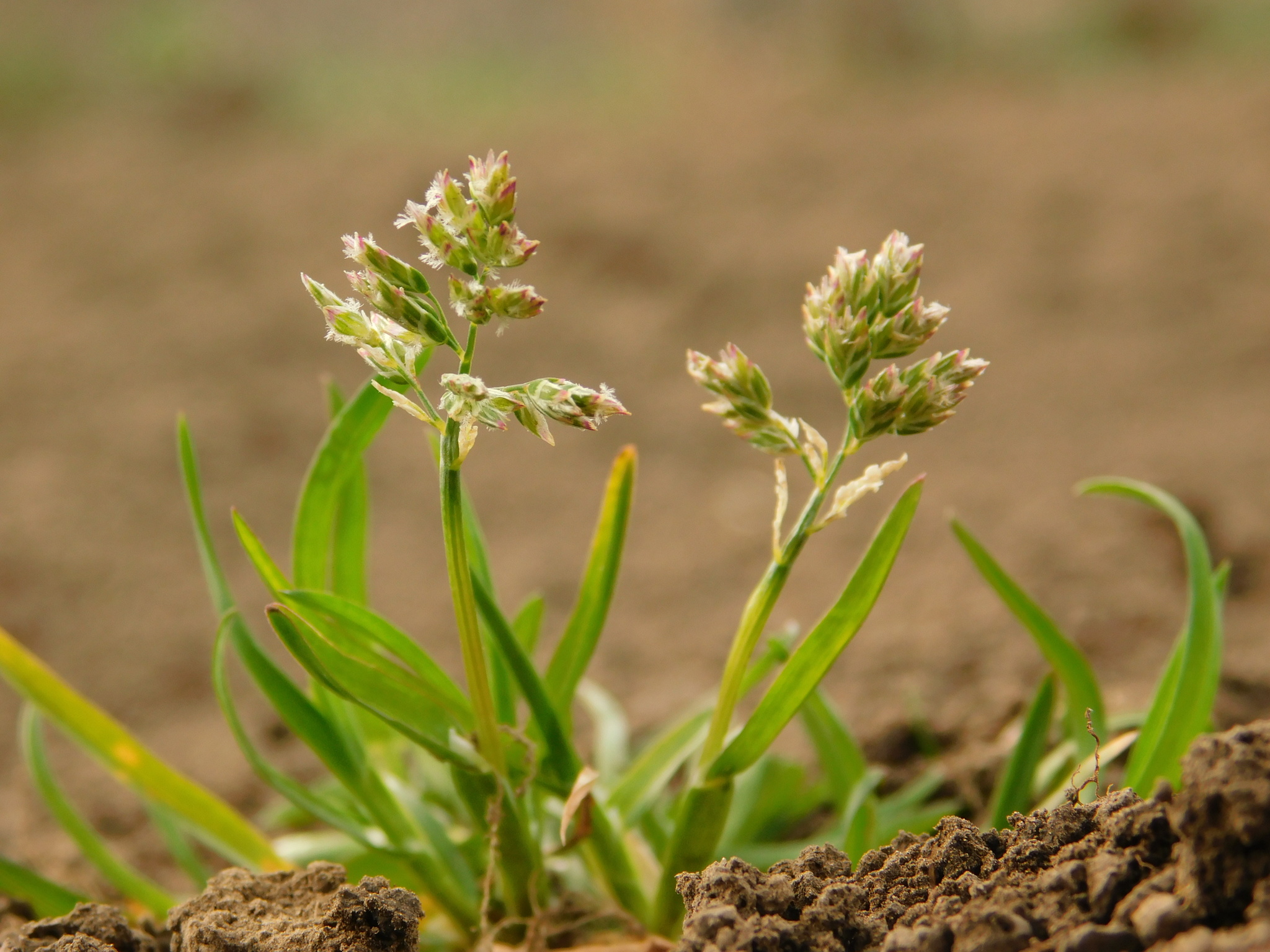
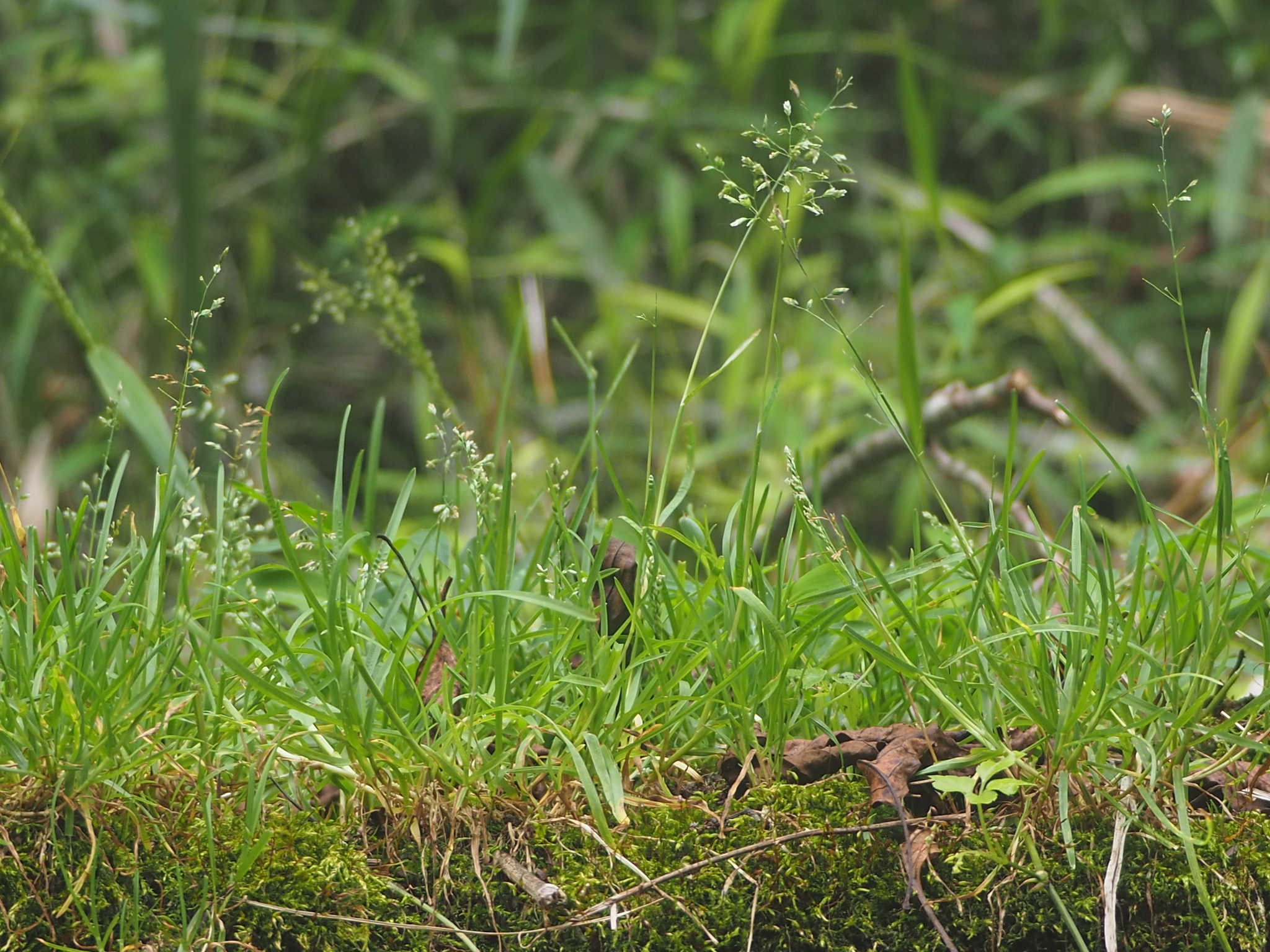
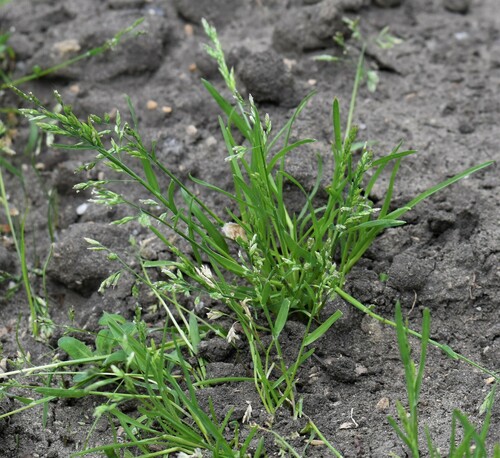
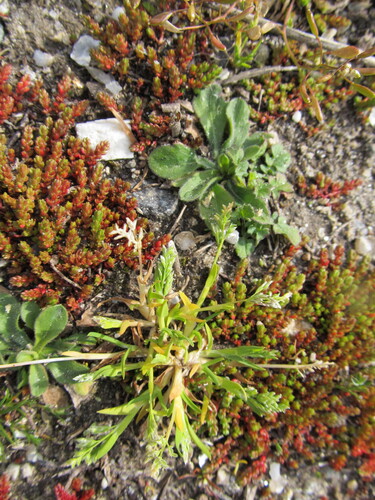
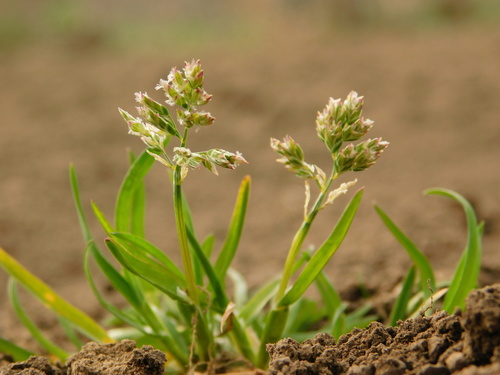
© photo
(c) Татьяна Ильина, some rights reserved (CC BY-NC), uploaded by Татьяна Ильина · cc-by-nc
Robert H. Wardell · cc0
葉子 · cc0
(c) Eric Lamb, some rights reserved (CC BY) · cc-by
(c) zebedeugalinha, some rights reserved (CC BY) · cc-by
Global distribution
Poa annua is native to temperate Eurasia and the Mediterranean region, originating from the meeting of two parent species with much narrower ranges. It is now cosmopolitan, occurring on every continent including Antarctica, where it remains the only persistently established invasive flowering plant.
- Native4
- Introduced3
- Invasive1
- France
- Spain
- United Kingdom
- Germany
- United States
- Australia
- New Zealand
- Antarctica
Hexagons: regions where the plant occurs. Green dots: native range.1
Identity
Annual meadow-grass (Poa annua L., 1753) is an accepted species in the genus Poa, family Poaceae. Linnaeus described it in 1753. The Latin binomial provides a stable reference, while common names vary with language and local use. 1
English speakers also know it as annual bluegrass. Its Dutch name, straatgras, literally means street grass, reflecting its ability to germinate in sidewalk cracks and along paved edges. 2
Rather than serving as an ornamental, Poa annua is a grass worth recognizing: it may be tolerated as a spontaneous lawn component or controlled as a weed, from home gardens to golf greens. 3
Recognition
Low, dense tufts of pale to clear green foliage reach 5–30 cm (2–12 in) tall. The stems initially lie along the ground before rising toward the flower head. This habit explains tolerance of close mowing: even when flattened, the productive base of the tuft stays below the blade. 3 4
Leaf blades measure 2–12 cm (0.8–4.7 in) long and 1–3.5 mm (0.04–0.14 in) wide. They are folded into a channel and end in a rounded, boat-shaped tip. A conspicuous membranous ligule marks the junction of sheath and blade. Together these traits usually distinguish Poa annua from other lawn meadow-grasses without a hand lens or identification key. 3
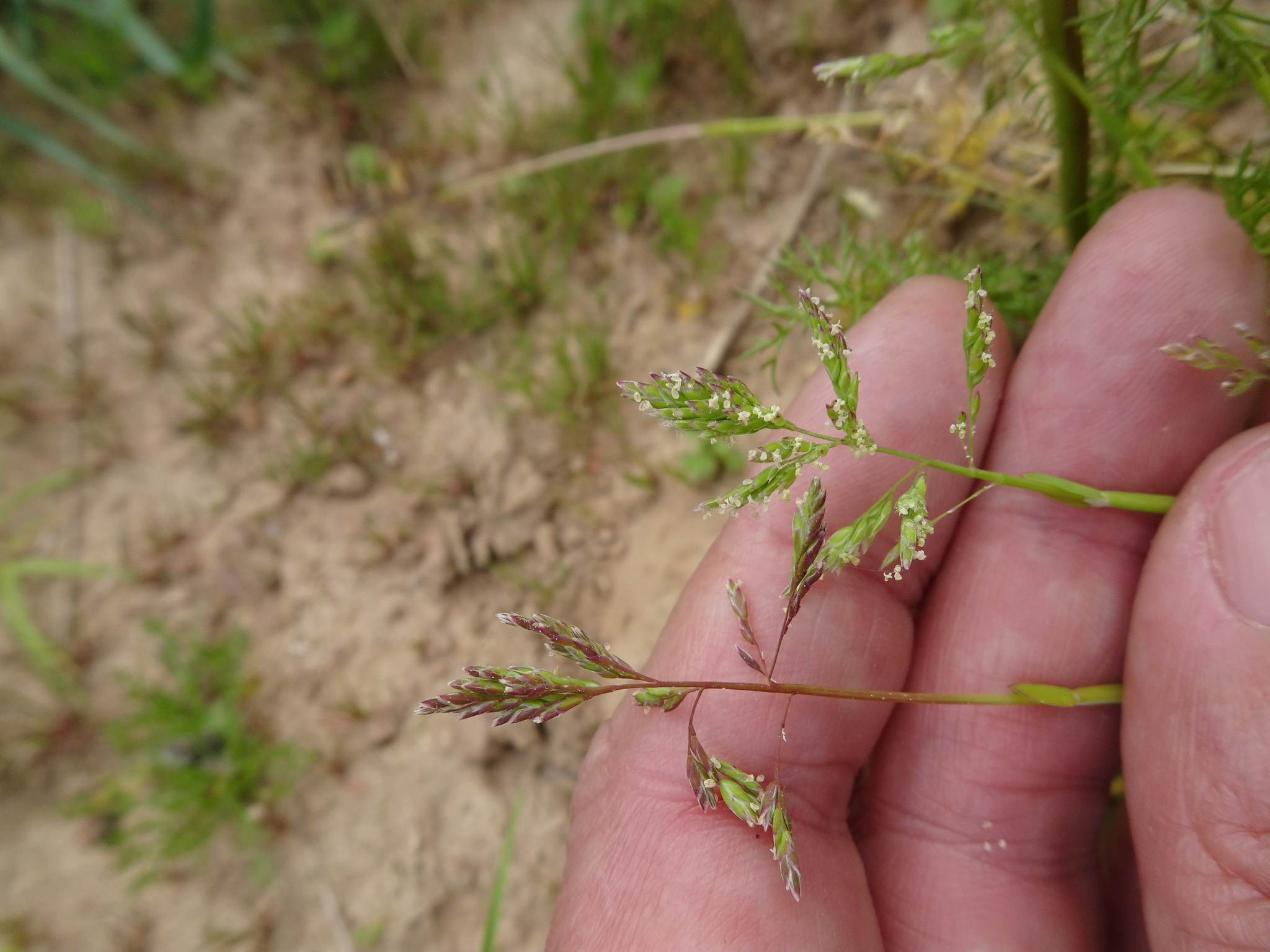
An open, pyramidal panicle 3–10 cm (1.2–4 in) long has horizontally spreading branches bearing oval spikelets in groups of 3–5. Roots remain shallow, extending less than 5 cm (2 in) deep. This shallow rooting explains the plant's poor drought resistance despite its almost ubiquitous presence. 3
Genetic origins and taxonomy
The genus name Poa derives from ancient Greek póa, meaning grass, while annua comes from Latin annuus, annual. This etymology captures little of the species' story: modern genetics reveals more than a simple short life cycle. 5
An allotetraploid, Poa annua arose by hybridization between two diploid species with very restricted ranges: Poa infirma, from dry Mediterranean climates, and Poa supina Schrad., from the alpine zones of Central Europe. The hybridization is thought to date to less than 50,000 years ago, remarkably recent in evolutionary terms for such a widespread plant. 7
Several named forms fall within the accepted species in Plants of the World Online, including Poa annua f. reptans T.Koyama and Poa annua subsp. supina (Schrad.) Link. These are treated as synonyms rather than distinct taxa. 1
Habitat and range
Temperate Eurasia and the Mediterranean region are the original home of Poa annua. It is now cosmopolitan, growing on all seven continents in waste ground, sidewalk cracks, mown lawns and cultivated land. 7 5
Antarctica holds established invasive populations of Poa annua, the only flowering plant with that status there. Introduced near scientific stations since the 1950s, it has been reported at at least eight sites between Signy and Galíndez islands. It competes directly with the continent's only two native vascular plant species. 8
Life cycle and reproduction
Both parent species influence its life cycle: annual like Poa infirma or perennial like Poa supina, it can express either behavior according to climate and mowing pressure. In temperate conditions it can flower and set seed almost year-round, including during mild winters. 5 4
Individual plants produce several hundred seeds per season, capable of germinating even after very close mowing, unlike conventional sown turfgrasses. The plant also reproduces by cleistogamy: self-fertilization without the flower fully opening. This ensures reproduction in unfavorable conditions without a pollinator or pollen-carrying wind. 4 6
Uses, management and golf
No food or medicinal use is recorded for Poa annua. It does, however, feed the caterpillars of several butterflies and provides a resource for wildlife in open habitats. 4
Golf courses reveal its conflicting roles: the world's most studied putting-green weed, yet also a tolerated, sometimes valued grass because it withstands extreme mowing and trampling where creeping bentgrass, the standard turfgrass, struggles to establish. Each plant produces 1,000–2,250 seeds in a season, explaining why lasting removal is so difficult. 6
For an ordinary lawn, management rests on three practical measures: mow before seed develops, aerate compacted soil and overseed with more competitive perennial grasses. 3
Look-alikes and related species
One genetic parent, Poa supina Schrad., is a frequent source of confusion. It is strictly perennial and stolon-forming, with a short ligule. Poa annua, in contrast, forms a tuft with absent or very reduced stolons. 7
Lawns and putting greens also contain two recognizable forms: the upright Poa annua var. annua, strictly annual and the most widespread, and the more perennial, stolon-forming Poa annua var. reptans, sometimes deliberately tolerated on golf greens. 1
Deeper roots and better summer performance distinguish other turfgrasses, including Poa pratensis and Lolium perenne. Annual meadow-grass declines in heat and drought because its shallow roots cannot reach deeper water. 3
Main sources
- Plants of the World Online / Kew, Poa annua L.
- Encyclopaedia Britannica, Annual bluegrass
- NC State Extension, Poa annua plant profile
- Plants For A Future, Poa annua
- Tela Botanica / eFlore BDTFX, Poa annua
- USGA Green Section Record, Understanding Poa annua
- BMC Genomics, Homoeologous evolution of the allotetraploid genome of Poa annua
- Biodiversity and Conservation, Establishment and eradication of Poa annua at Signy Island
Frequently asked questions
Is annual meadow-grass a weed or a turfgrass?
Both, depending on the setting. In a sown lawn it is treated as a weed to control; on some golf greens, its tolerance of extremely close mowing makes it an accepted and sometimes desirable component.
How do you recognize annual meadow-grass in a lawn?
A low, pale green tuft, leaves with rounded tips and a clearly visible membranous ligule where the leaf sheath meets the blade usually distinguish it from other lawn grasses.
Is annual meadow-grass toxic to dogs or cats?
No, it is not toxic through ingestion. Dry spikelets can, however, cause mechanical irritation in the mouth or coat, as with most grasses bearing pointed seed heads.
Why do golfers talk so much about annual meadow-grass?
It is both the most closely studied weed on putting greens and a grass tolerant of extremely close mowing. That makes any simple choice between removing it and allowing it to establish difficult.
What is the genetic origin of annual meadow-grass?
It arose through ancient hybridization less than 50,000 years ago between Poa infirma, a Mediterranean species, and Poa supina, an alpine species from Central Europe. It is therefore an allotetraploid derived from two parents with very restricted ranges.
How can I reduce annual meadow-grass in a lawn?
Mow regularly before seed develops, aerate compacted soil and overseed with more competitive perennial grasses. These steps gradually reduce its presence rather than eliminating it all at once.
Similar plants
If you are unsure about a plant’s toxicity, ask a botanist or veterinarian for advice.