
Cowslip (Primula veris, )
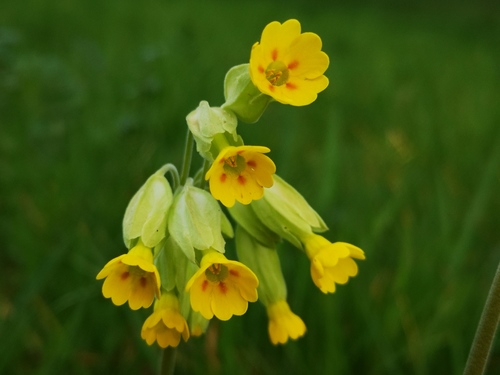
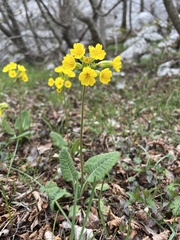
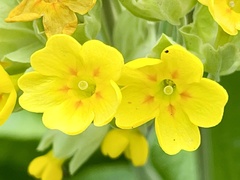
Cowslip (Primula veris) is a small perennial in Primulaceae with umbels of softly yellow, nodding spring flowers above low leaf rosettes. It suits woodland edges, orchards and low-fertility meadows, bringing a restrained yellow display to gardens managed for gradual naturalization.
Read moreCowslip, Common cowslip, Cowslip primrose and Paigle



© photo
(c) Lou Valence, some rights reserved (CC BY-NC), uploaded by Lou Valence · cc-by-nc
Mirko Ubović · cc0
Kieran Roy Powell · cc0
Taken Mar 13, 2016 by Tela Botanica − Liliane ROUBAUDI (cc-by-sa)
Taken Mar 22, 2022 by jana gellinck (cc-by-sa)
Taken May 21, 2021 by Dieter Wagner (cc-by-sa)
Taken Apr 23, 2020 by Martin Kratochvíl (cc-by-sa)
Taken Apr 3, 2020 by Sylvie Ducharne (cc-by-sa)
© copyright of the Board of Trustees of the Royal Botanic Gardens, Kew.




Identity
Cowslip (Primula veris L.) is a perennial in the Primulaceae family, known for yellow spring flowers and a quiet meadow character. Its slender flowering stems suit woodland edges, old orchards and lightly managed grassland, where repeated small groups create a softer effect than a solid block of bedding plants. 1 8
POWO, WFO and IPNI confirm the accepted binomial. The epithet veris refers to spring, matching the season in which the plant produces its yellow flowers. The scientific name remains useful alongside the common name because other primroses can grow nearby or appear in the same horticultural displays. 2 3 4
Slender stems and softly yellow, nodding flowers give cowslip a lighter appearance than many substantial garden-center primroses. Primula veris is valued for a pastoral presence, especially where it can settle among other low vegetation rather than being expected to form a dense, highly formal floral display. 6 8
Among yellow spring flowers, cowslip makes a transition between bulbs, open woodland and meadow. Its color is gentler than forsythia's, yet it can sustain a naturalized scene. The effect depends on its relationship with neighboring plants as much as on the brightness of each individual flower. 8 5
Recognition
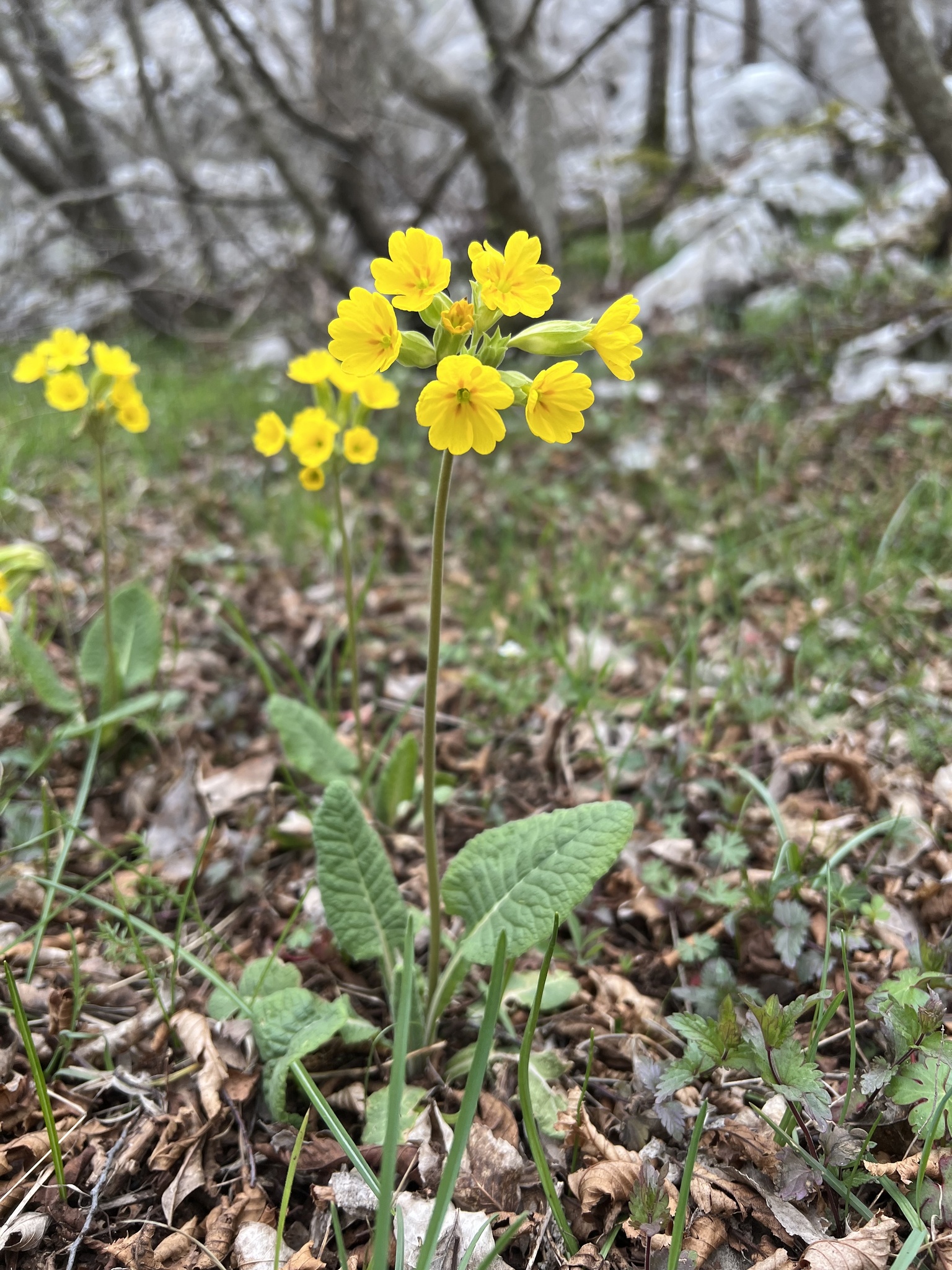
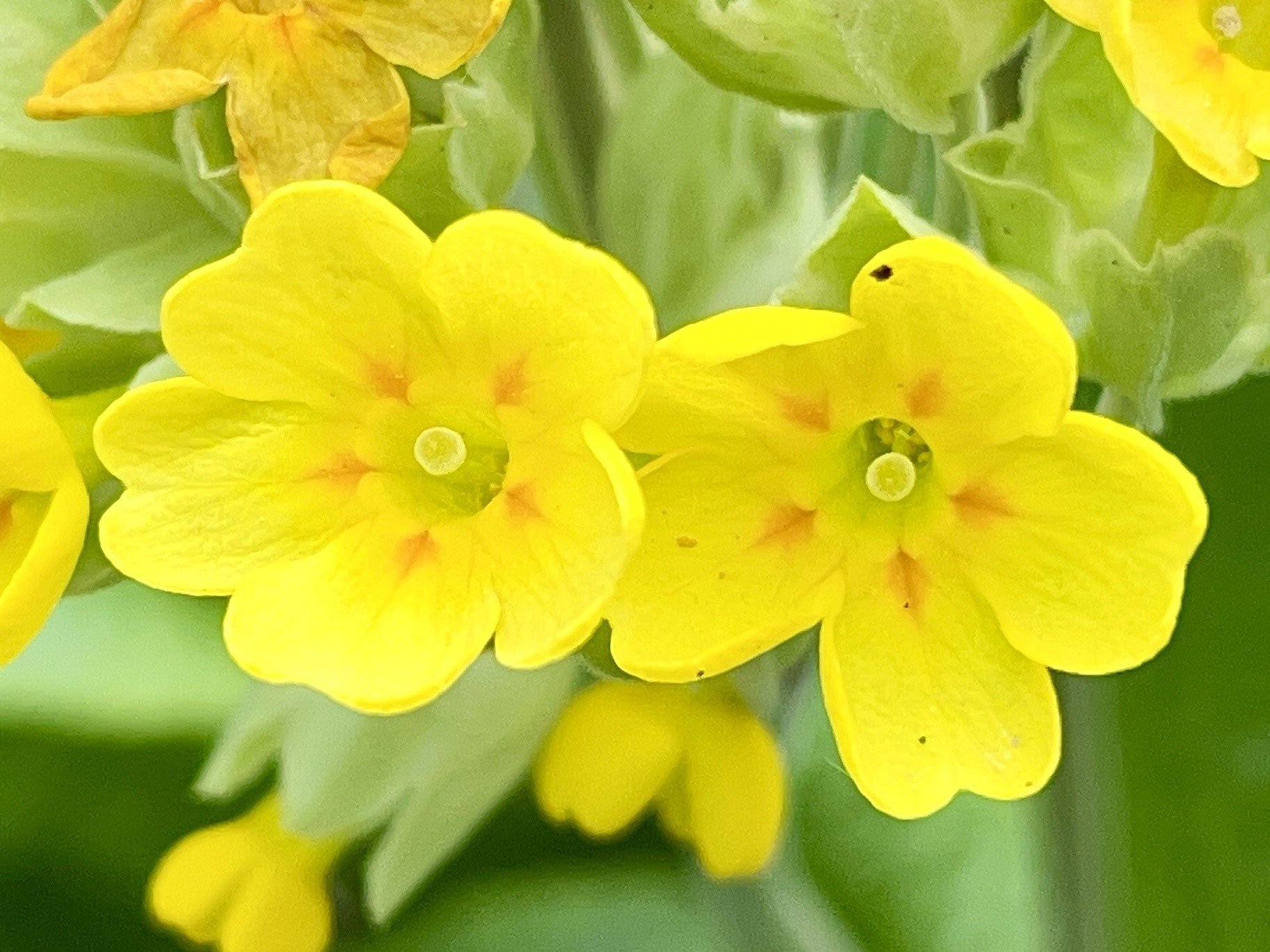
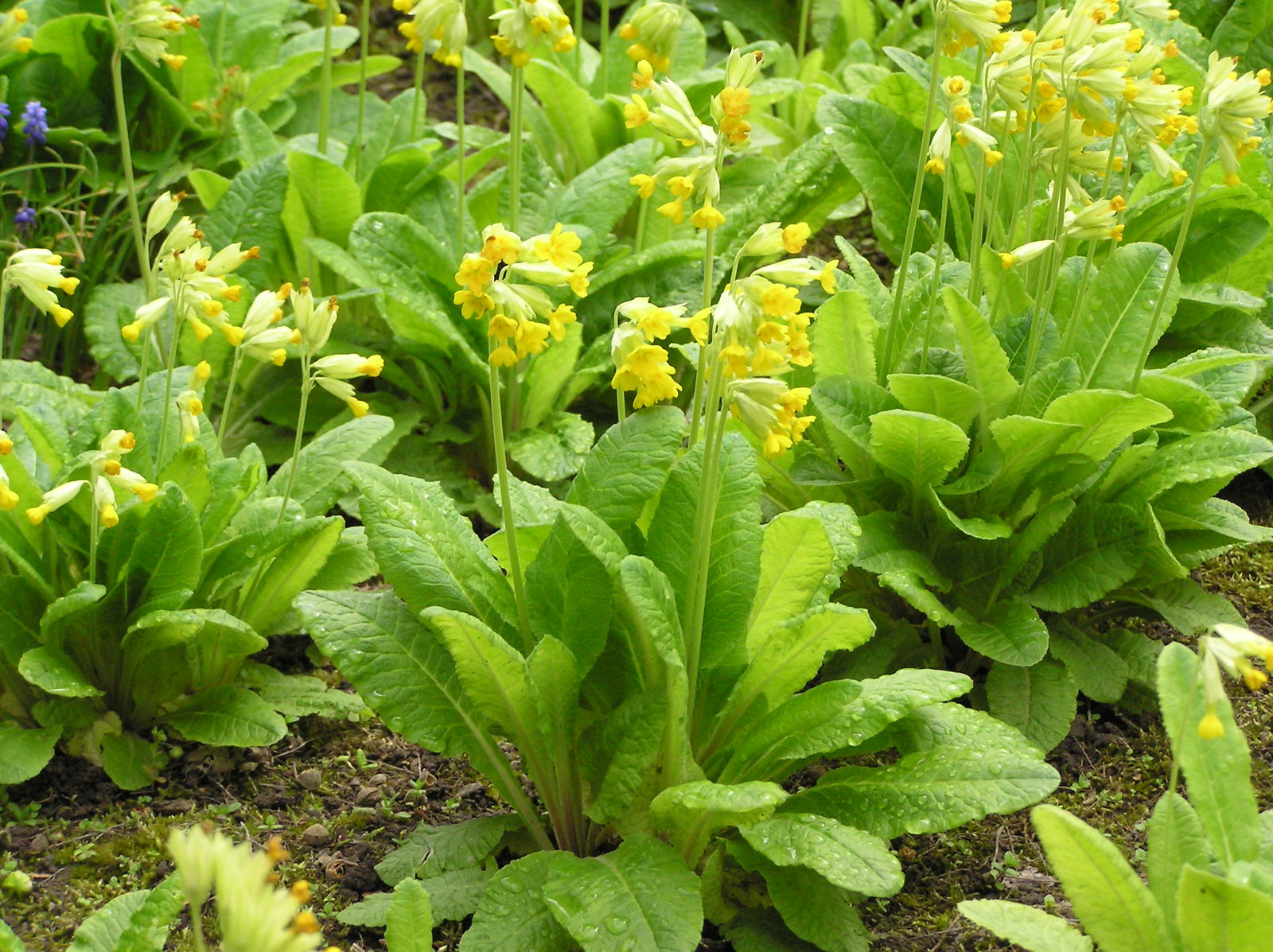
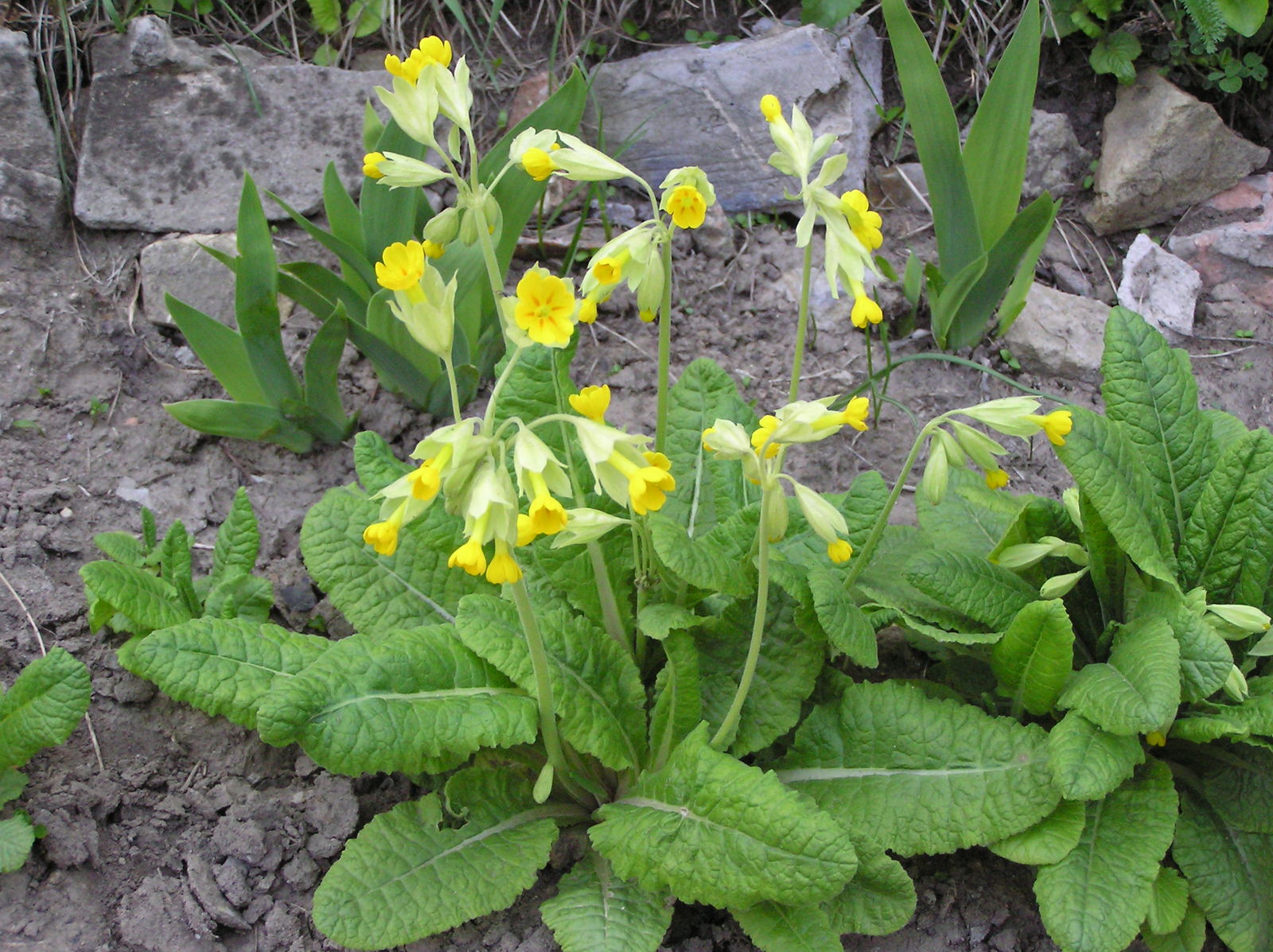
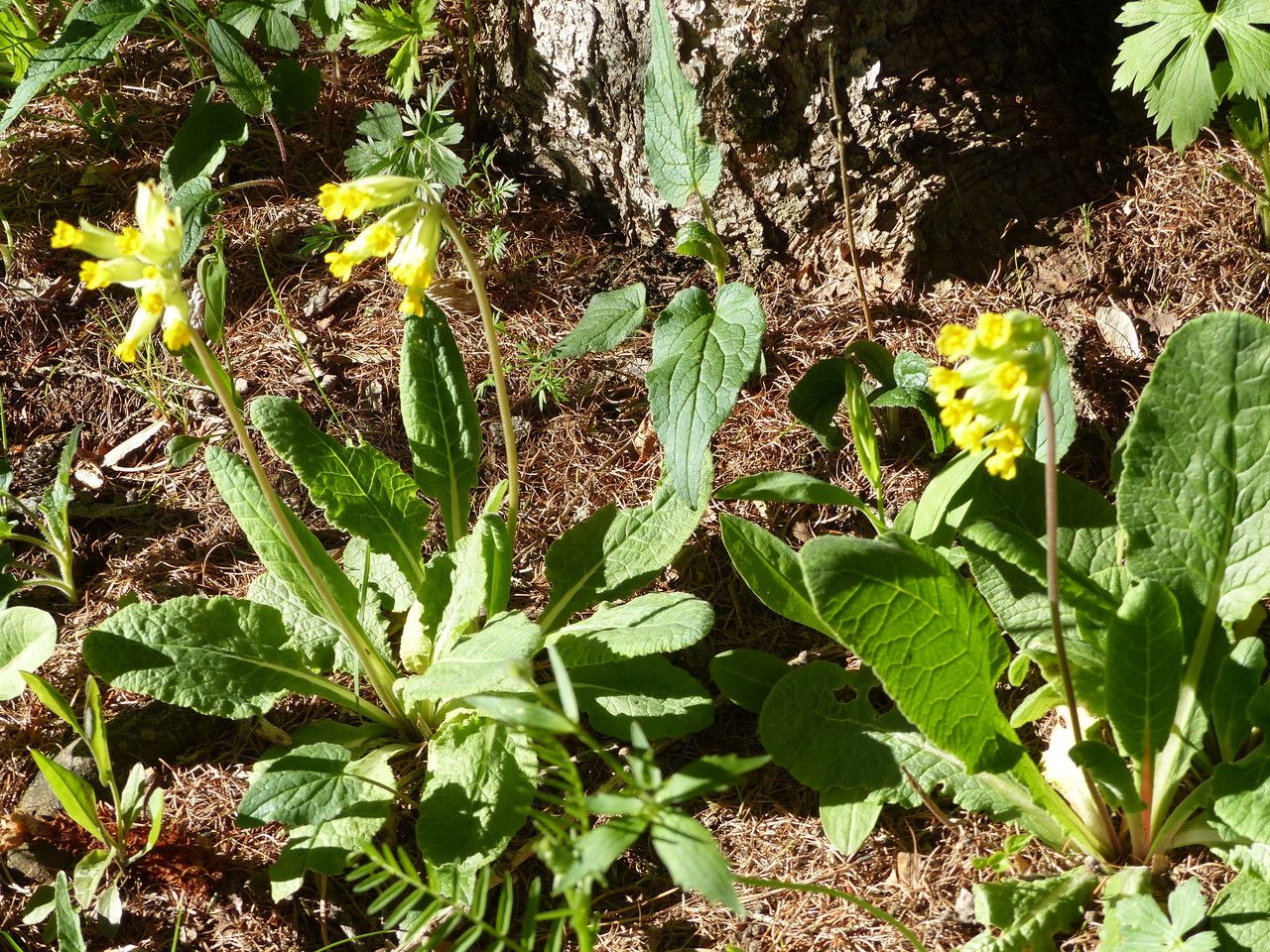
A low rosette of green, oval, puckered leaves forms the base of the plant. The blades have a slightly wrinkled surface. Above this rosette, slender flowering stalks rise and carry several flowers grouped into an umbel, making the contrast between low foliage and elevated blooms especially useful for recognition. 6
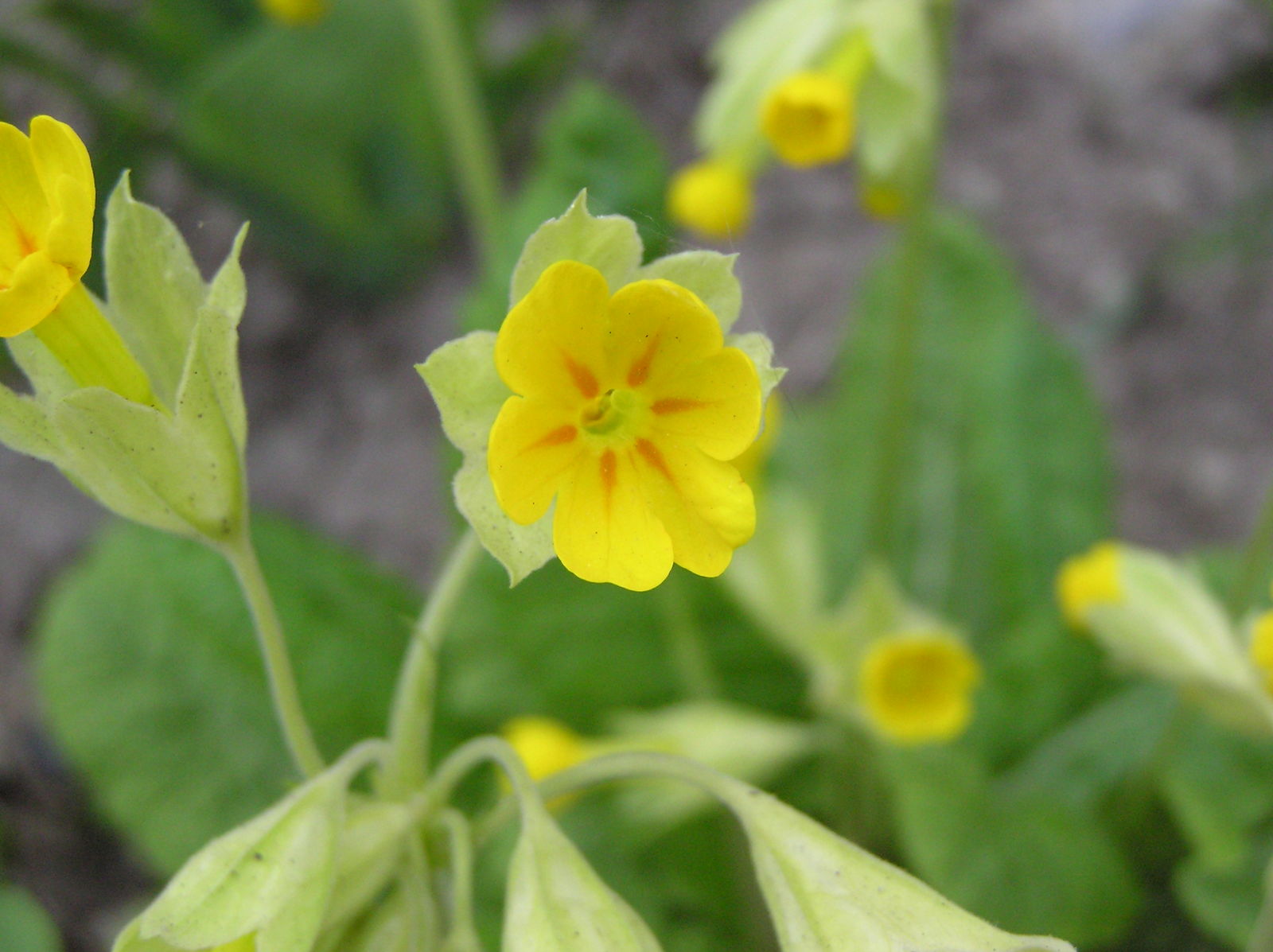
Small yellow bells hang downward, often with a more orange throat. This arrangement distinguishes cowslip from Primula vulgaris, whose flowers are generally more solitary and sit closer to the leaves. Look at the whole flowering stem rather than relying only on the familiar yellow color. 6
Height remains modest at about 10–25 cm (4–10 in). An established population is most noticeable through repeated yellow patches in spring, not through the size of a single plant. Its scale makes it particularly suitable for places where low flowers can remain visible among grass or early bulbs. 5 8
Before mowing a meadow or orchard, look closely for the rosettes. Low leaves can disappear visually into surrounding grass, while the yellow stems reveal the plants once flowering begins. Recognizing this seasonal change helps avoid cutting a population just as its flowers become visible above the sward. 8 7
Useful taxonomy
The accepted species name is Primula veris L. Keeping identification at species level distinguishes cowslip from the much broader genus Primula. A label that gives the full binomial identifies a particular meadow and woodland-edge perennial, rather than an unspecified primrose selected only for spring color. 2 8
Other primroses cause the main identification difficulties, particularly Primula vulgaris, Primula elatior and horticultural hybrids. Cowslip's umbel and nodding yellow flowers are useful clues. These traits should be checked together, since a familiar common name or a yellow flower alone is insufficient for distinguishing close relatives. 6
Established names such as common cowslip and cowslip primrose remain useful, but the scientific reference is Primula veris. Common names may vary, while the binomial keeps discussion tied to the same species. That consistency is especially valuable when comparing nursery plants with wild or naturalized populations. 1 4
Species-level precision separates this woodland-edge and meadow plant from a generic garden primrose. Its light flowering habit and suitability for naturalized planting are central to its character. Retaining that identity helps match the plant with a setting that reflects its scale and seasonal rhythm. 8 5
Cultivation
Cultivation calls for cool, moist but well-drained soil and gentle light. Light partial shade, woodland edges, ground beneath deciduous shrubs, orchards and low-fertility meadows all provide useful settings. The aim is a balanced planting where moisture remains available and nearby vegetation does not overwhelm the low rosette. 5 8
Dry spring soil restricts flowering. Conversely, very rich soil and closely managed turf can favor vigorous grasses that eventually crowd cowslip out. A low-fertility meadow with little fertilizer offers a better balance, allowing the primrose room without encouraging a dense canopy of competing grass around it. 6
For naturalization, let seeds mature before mowing. Cutting too early may preserve a few flowers for one year while preventing the population from renewing itself. Delayed mowing therefore supports more than the immediate floral display: it gives the plant time to complete the seed-producing part of its cycle. 8
Established plants can be divided, although natural seedling recruitment often gives a more convincing meadow effect. Young plants need time to establish before forming an obvious colony. Allow that development to happen gradually rather than judging success solely by the number of flowers in the first season. 5
At woodland edges, avoid thick mulch that blocks seedlings. A light layer of decomposed leaves is more suitable than coarse bark, leaving the rosette visible and gaps where seeds can settle. The surface should support renewal rather than sealing the ground around each established plant. 5 8
Watering is mainly useful during establishment or an unusually dry spring. In suitable soil, established plants benefit from steady moisture rather than abrupt, heavy applications. This is especially effective where competing herbaceous growth is already balanced and the roots have room to use the moisture available. 5
Uses
Spring naturalization is its strongest garden use: orchards, cool banks, woodland margins, lightly shaded hedge bases, late-cut meadows and cottage gardens. In these settings, small groups of cowslip can recur through the planting without needing to dominate the entire view or form a rigid geometric arrangement. 8 5
Snowdrops, daffodils, violets, lungworts and small grasses make suitable companions. Neighboring plants should respect cowslip's low stature and early rhythm. Its flowers are easier to appreciate when surrounding foliage does not grow tall enough to obscure them before the spring display has run its course. 8
A pot can support an attractive flowering display, although it is not the plant's strongest setting. A hot, dry container exhausts it, while a cool woodland edge better suits its character. Container success therefore depends on conditions rather than on the simple fact that it can flower in a pot. 5
Within a yellow planting scheme, cowslip contributes a soft register. It does not shine like a bright tulip or mimosa; instead, its modest but recognizable color signals spring's return. This restraint works well in a scene intended to look settled and natural rather than intensely saturated. 8 6
Cowslip works especially well where lawn is allowed to become a small spring meadow. That means accepting later mowing, some leaves remaining after flowering and a population that shifts slightly as seedlings establish. These changes belong to the planting's naturalized character rather than indicating that it has lost its shape. 8
In a conventional border, position it toward the front or among later-growing perennials. If taller neighbors develop too rapidly, the yellow stems disappear before they can contribute fully to the scene. Keeping its early-season space open allows a low plant to remain visible without requiring a larger stature. 5
Precautions
The retained species profile classifies cowslip as non-toxic to dogs and cats, with horse safety undocumented. Normal caution still applies to a wild or naturalized garden plant. This classification should not be treated as an invitation to improvised food gathering or unrestricted consumption by people or animals. 2 6
Historical uses should not become medicinal recommendations. Compounds such as saponins and aromatic substances help explain possible reactions in sensitive individuals when use is poorly controlled. A history of use provides context, but does not establish that a home preparation is suitable or safe for a particular person. 6
Mowing is the main practical garden concern. An early cut destroys flowers and seeds, while late mowing gives a population time to establish without becoming dominant. Managing the timing of the cut is therefore more useful than expecting the plant to persist under an unchanged close-mowing routine. 8
Avoid taking plants from the wild. Start a garden population with nursery-grown plants or seed, then let the colony shift gradually through a suitable setting. This approach also allows the gardener to work with the plant's natural pace instead of transplanting a finished-looking population from elsewhere. 5 7
Slow development is part of its appeal. As seedlings establish and small groups repeat, the planting looks settled into its surroundings rather than abruptly imposed on them. The effect depends on time and on allowing the meadow or woodland-edge setting to retain space for renewal. 8
Patient gardeners are well suited to cowslip. Its modest scale rewards observation across successive springs, when a few early flowers and low rosettes gradually become a recognizable part of the planting rather than an instant, densely packed display. 5
Cowslip brings together soft spring yellow, woodland-edge planting and gentle naturalization. Primula veris is the precise species behind that combination. Giving it suitable ground, time to set seed and space among compatible neighbors preserves the character that makes it useful in a quiet spring garden. 8 2
Main sources
If you are unsure about a plant’s toxicity, ask a botanist or veterinarian for advice.