
Turkey oak (Quercus cerris, )
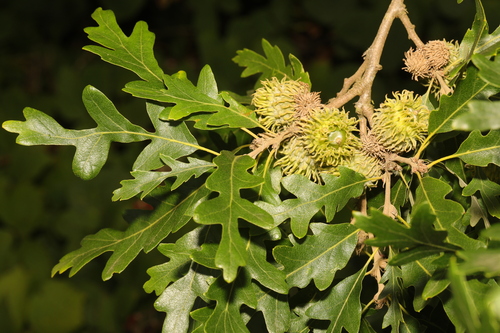
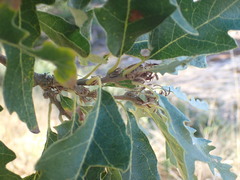
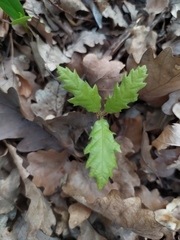
Turkey oak (Quercus cerris L., 1753) is a large deciduous tree in the Fagaceae family, native to southeastern Europe and Asia Minor. Its buds are surrounded by long, soft bristles, its leaves are deeply lobed, and its acorns sit in bristly cups and take eighteen months to ripen.
Read moreTurkey oak, Austrian oak, Zerreiche and Cerro



© photo
no rights reserved, uploaded by Stephen James McWilliam · cc0
Sarah Adamson · cc0
iNaturalist User · cc0
Taken Nov 24, 2011 by Tela Botanica − Annick LARBOUILLAT (cc-by-sa)
Taken Nov 23, 2011 by Tela Botanica − Annick LARBOUILLAT (cc-by-sa)
Taken Jun 21, 2020 by Mehmet Basbag (cc-by-sa)
© copyright of the Board of Trustees of the Royal Botanic Gardens, Kew.


Global distribution
The native range of Quercus cerris extends across southeastern and southern Europe to Türkiye and the Anti-Lebanon mountains. In mainland France it barely reaches its natural range limit, being native only at a few sites in Var and Alpes-Maritimes. Trees elsewhere, including the lower Loire valley, eastern Brittany and Centre-Val de Loire, originate from plantings or self-sown populations outside the native range.
- Native6
- Introduced2
- Türkiye
- Greece
- Italy
- Austria
- Lebanon
- Mainland France
- United Kingdom
- Ireland
Hexagons: regions where the plant occurs. Green dots: native range.1
Identity
Turkey oak (Quercus cerris L., 1753), also called Austrian oak, is an accepted species of Quercus in the Fagaceae family and the type species of section Cerris. Two features immediately set it apart from other European oaks: buds surrounded by soft bristles and acorns that ripen over two growing seasons rather than one. 1 6
The English names Turkey oak and Austrian oak recall the tree’s southeastern European origins and its long history of introduction to northwestern Europe. Its French name refers to the hairy buds and foliage; in German it is known as Zerreiche, and in Italian as cerro. 2 3
Recognition
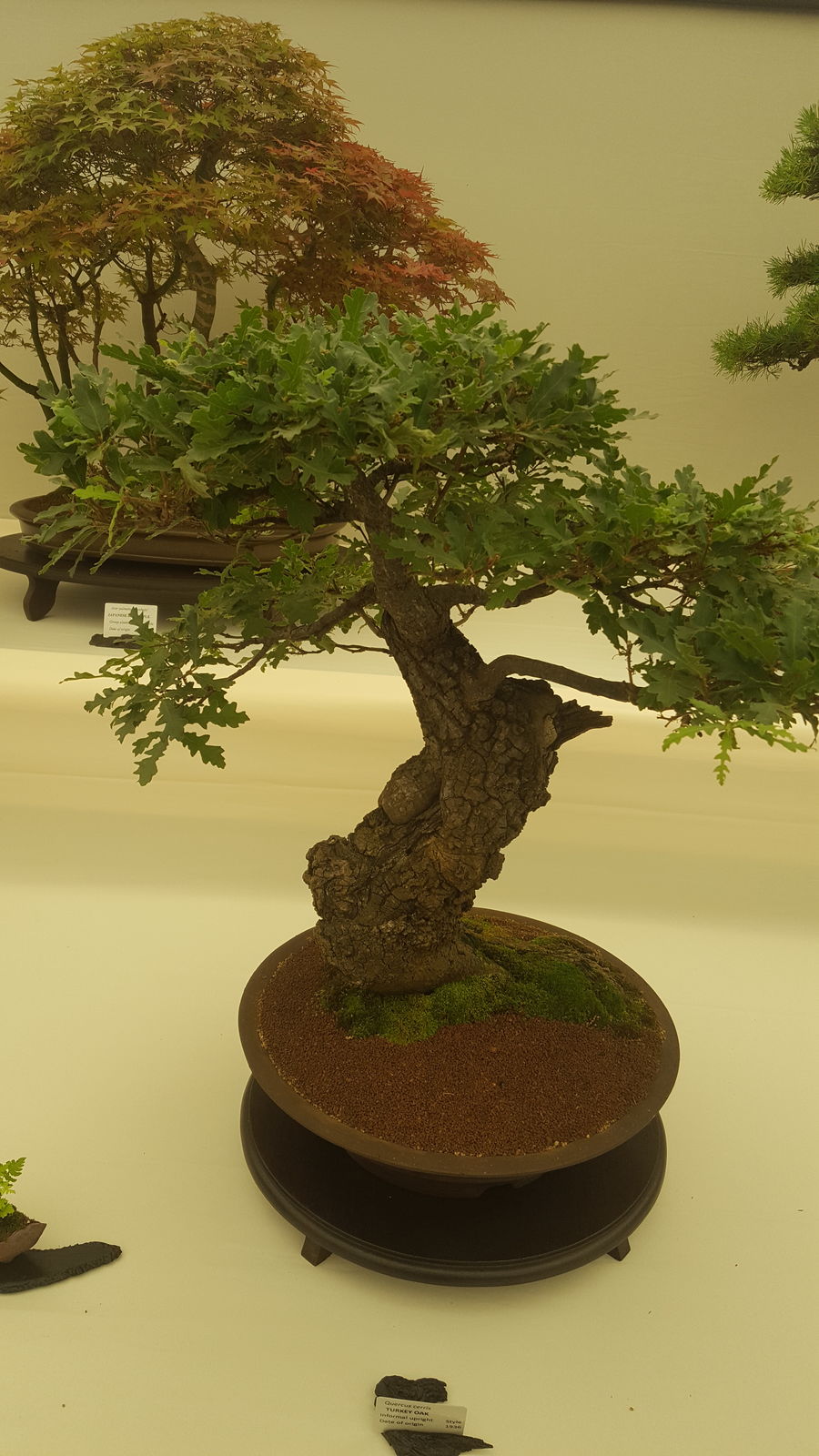
Turkey oak grows into a large deciduous tree, reaching 25–40 m (82–131 ft) in the wild, with a trunk that may exceed 2 m (6.5 ft) in diameter. In parks or as an isolated specimen, free from competition with neighboring forest trees, it more often reaches 12–18 m (39–59 ft). The crown begins conical and becomes broad and rounded as the tree matures. 6 4
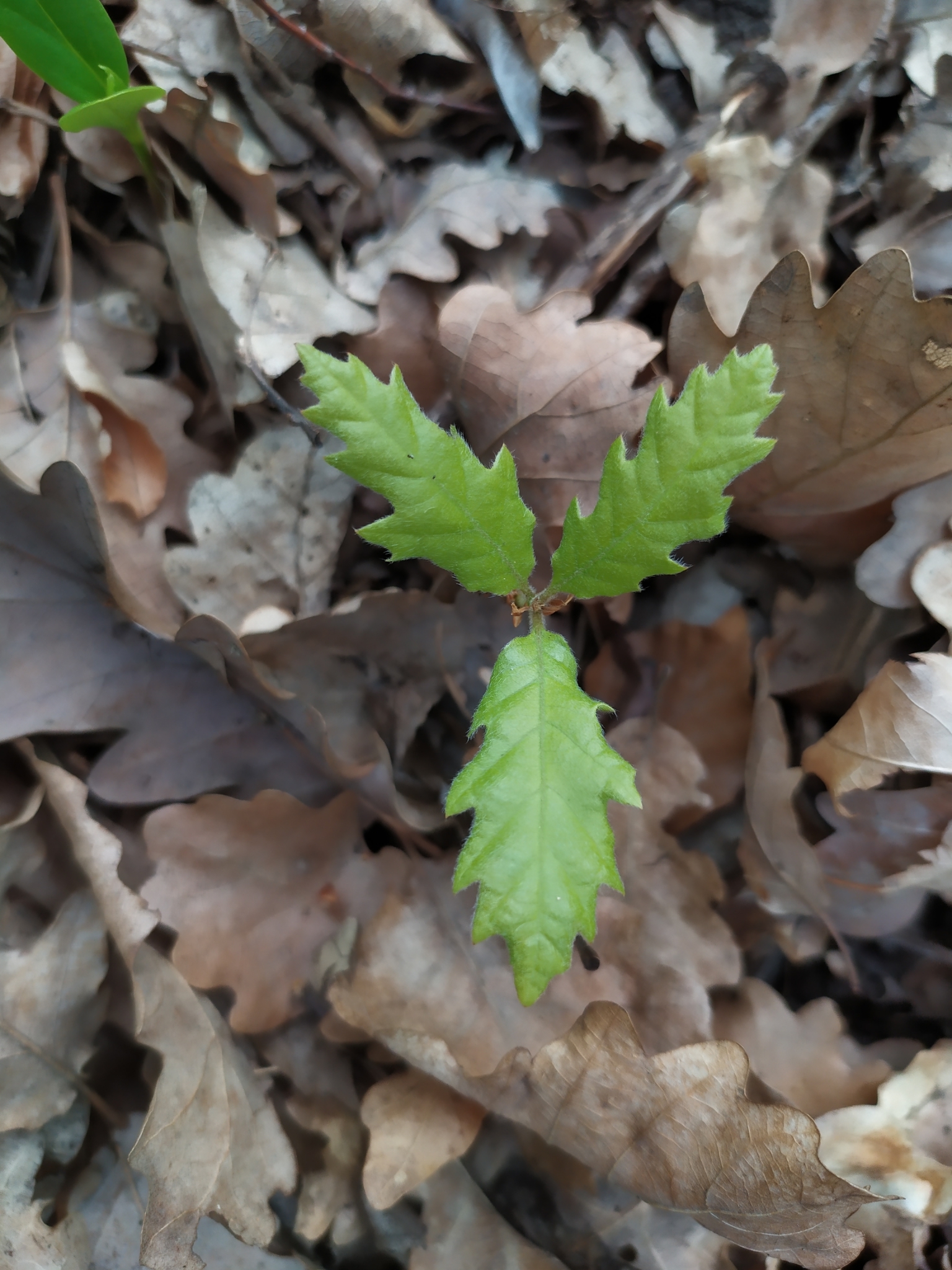
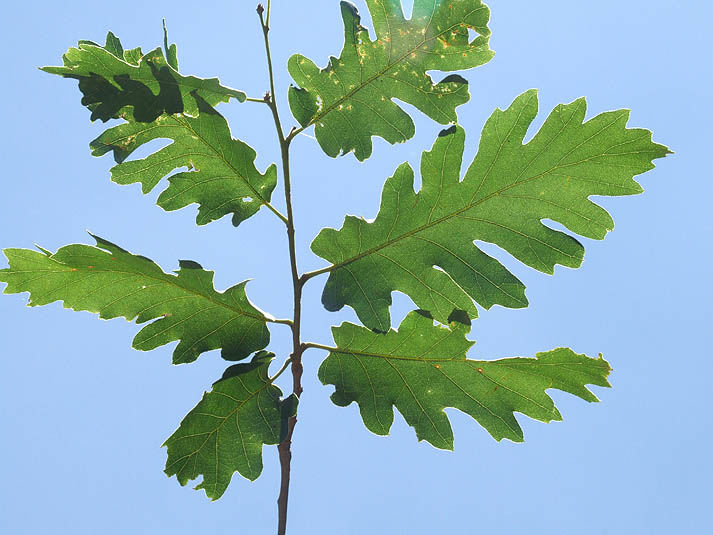
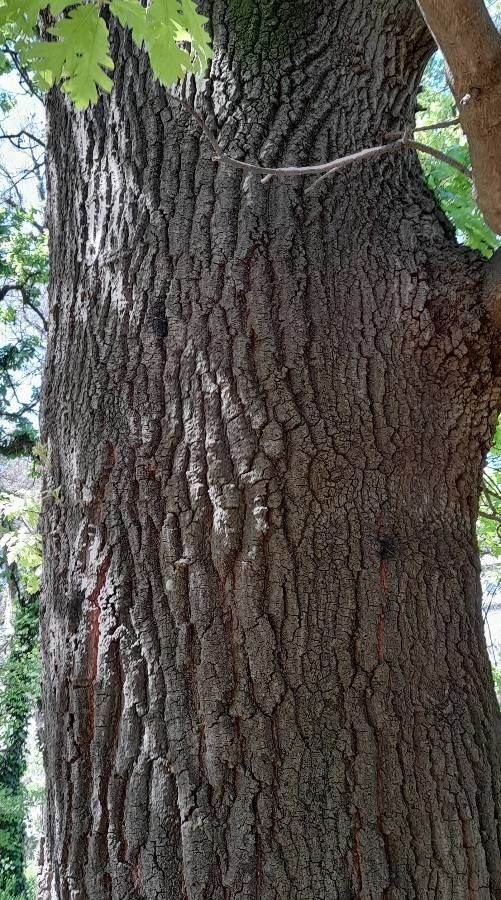
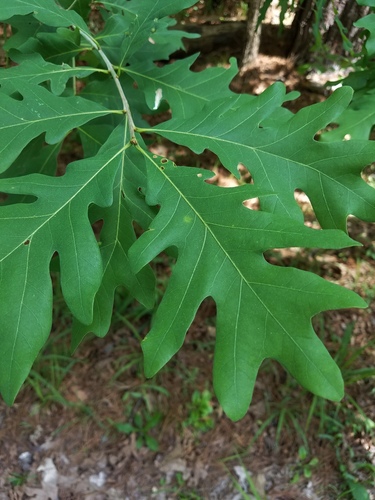
Dark gray bark develops deep fissures, sometimes revealing orange streaks near the base of old trunks. The glossy leaves measure 7–14 cm (3–5.5 in) and bear 6–12 pairs of triangular lobes, sometimes with bristle-tipped points. 6 3
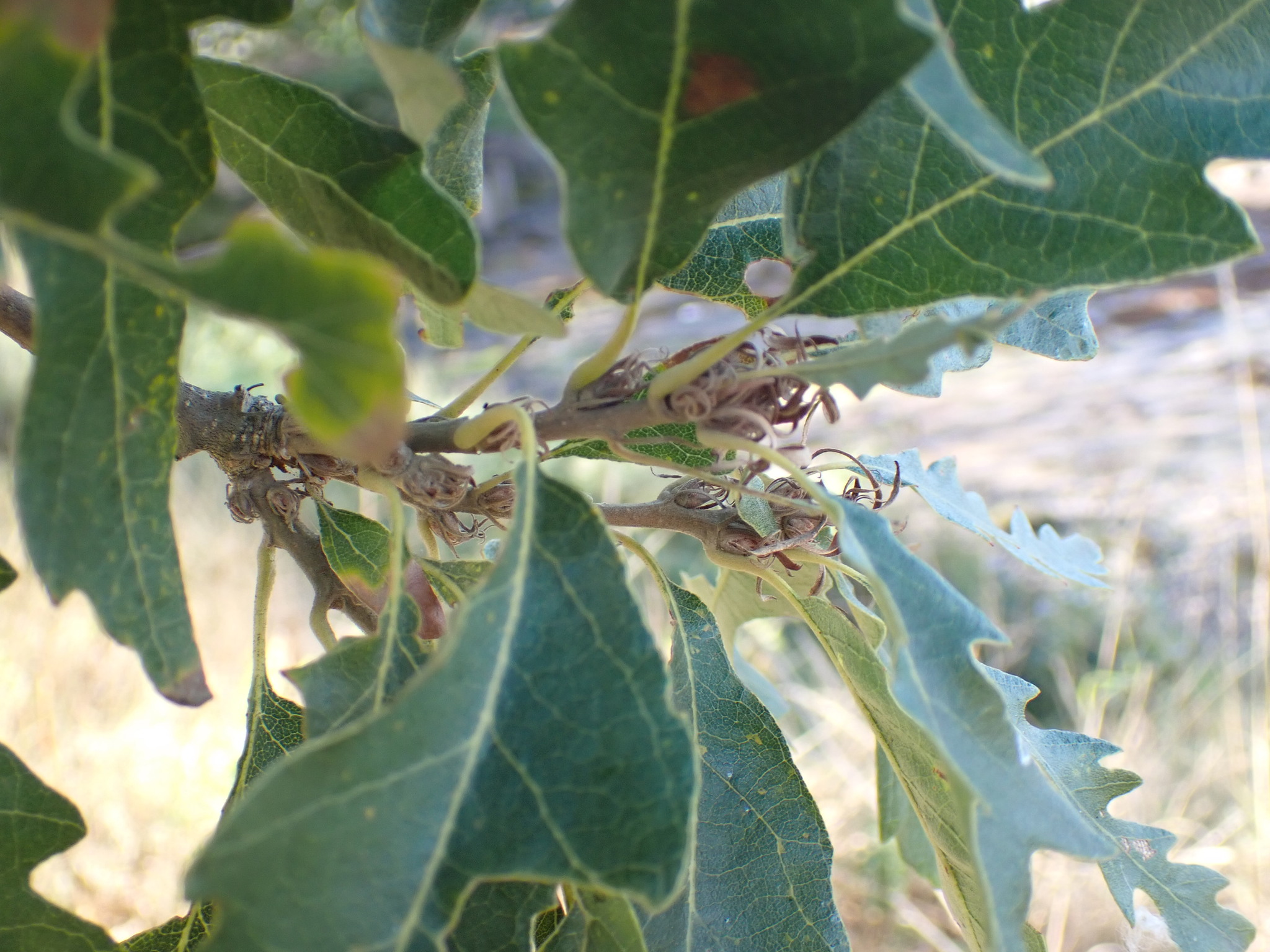
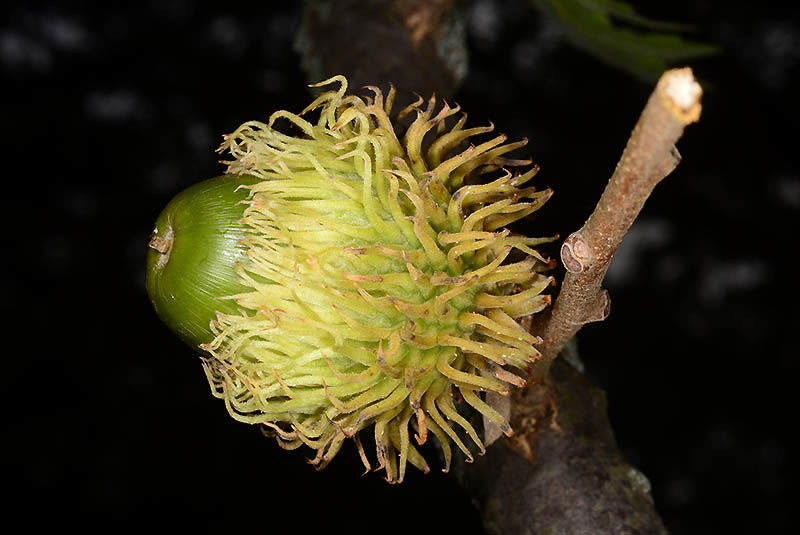
Winter buds provide a particularly clear identification feature. Their long, soft bristles are visible without magnification and characterize section Cerris, unlike the smooth buds of English or sessile oak. The acorns supply a second check: they sit in cups clothed with mossy, projecting scales 4–8 mm (0.2–0.3 in) long. The acorns measure 2.5–4 cm (1–1.6 in) and take eighteen months to ripen, compared with one season in those two other oaks. 6 3
Useful taxonomy
Kew accepts Quercus cerris L., published in 1753, and gives its native range as southeastern and southern Europe through Türkiye to the Anti-Lebanon mountains. 1 2
The species has a substantial synonymy. Quercus austriaca Willd. and Cerris austriaca (Willd.) Raf. refer to the same plant under older names, while Quercus tournefortii Willd. refers to regional variation now included within the species. 1
English oak (Quercus robur) and sessile oak (Quercus petraea) are useful field comparisons. Both have smooth buds and acorns that mature annually. They are widespread in France, where Turkey oak remains rare and localized in its native range. 1 7
Habitat and range
Southeastern Europe and Asia Minor form the core of the native range, which extends to Türkiye and the Anti-Lebanon mountains. The tree grows in open woodland, scrub and hedges, often on poor or acidic soils. 1 5
Mainland France lies at the very edge of this natural range. Turkey oak is native only at a few isolated sites in Var and Alpes-Maritimes. Elsewhere it has mainly been planted, with long-established populations in the lower Loire valley, eastern Brittany and Centre-Val de Loire. Those populations reflect introduction rather than the native range. 7 8
Introduced to the United Kingdom and Ireland as an ornamental during the 18th century, Turkey oak has since become widely naturalized there. It is also used as a windbreak in sheltered settings, although it copes poorly with direct maritime exposure. 6 5
Life cycle and reproduction
Wind-pollinated catkins appear in spring. Acorns develop afterward, but their cycle differs from that of most other European oaks: they require eighteen months, spanning two growing seasons, to reach full maturity rather than finishing within one season. 6 5
This extended ripening cycle offsets the availability of Turkey oak acorns within the woodland food calendar. Jays and pigeons readily eat first-year acorns despite their bitterness, whereas squirrels generally turn to them only when other food is unavailable. 6
Propagation is by direct sowing. Acorns quickly lose their ability to germinate if allowed to dry, so they should be sown fresh and usually protected from rodents. Horticultural cultivars are propagated by grafting. 5 4
Uses and risks
Timber value is limited by the tendency of Turkey oak wood to crack and split. Unlike oaks prized for structural timber, it is therefore used mainly for fencing and other relatively undemanding purposes. 6
Turkey oak hosts the gall wasp Andricus quercuscalicis. One generation develops on its catkins, while the other distorts acorns on nearby English oaks. This alternating cycle prompted preventive felling of Turkey oaks at British military sites in 1998. 6
Bitter raw acorns can be prepared after prolonged leaching to remove tannins, or roasted as a coffee substitute. A sweet sap called manna, produced following insect punctures, is traditionally sold in some Iranian markets. Available toxicity data identify no confirmed risk to humans, cats or dogs; sensitivity in horses remains poorly documented for this particular species. 5
Varieties, hybrids and look-alikes
'Variegata' denotes variegated foliage, while 'Woden' covers trees with more deeply cut leaves. Neither horticultural label represents a separate botanical rank. 6
Lucombe oak (Quercus × hispanica) was raised around 1762 by nurseryman William Lucombe in Exeter by crossing Turkey oak and cork oak. It remains the notable hybrid associated with this species, and several historical specimens of the cross survive in major botanical gardens. 6
Field confusion mainly involves Quercus robur and Quercus petraea. Both have smooth buds and acorns that ripen in one season, whereas Turkey oak has silky buds and a two-season acorn cycle. A complete shoot can settle the question: acorns from two seasons on one branch point to Turkey oak, while a single season fits the other two. 3 7
Main sources
- Plants of the World Online / Kew, Quercus cerris L.
- International Plant Names Index, Quercus cerris L.
- Royal Horticultural Society, Quercus cerris - Turkey oak
- Missouri Botanical Garden Plant Finder, Quercus cerris
- Plants For A Future, Quercus cerris
- Wikipedia (EN), Quercus cerris
- INPN / MNHN, Quercus cerris L., 1753 - Turkey oak
- Tela Botanica / eFlore, Quercus cerris
Frequently asked questions
Why do Turkey oak acorns take two years to ripen?
Unlike most European oaks, Quercus cerris has an eighteen-month fruiting cycle. One branch can therefore carry young green acorns alongside mature acorns from the previous year, which can make quick identification confusing.
How can I distinguish Turkey oak from English oak?
The most reliable feature is the winter bud, surrounded by long, soft bristles in Turkey oak and smooth in Quercus robur. Acorns confirm the distinction: those of Turkey oak take two seasons and have mossy cups, while those of the other oak ripen in one season and are nearly stalkless.
Is Turkey oak toxic to horses?
Available data do not identify confirmed toxicity to humans, cats or dogs. Horses remain poorly documented for this particular species, so the same general caution used for other tannin-rich oak acorns is appropriate.
Is Turkey oak native to France?
Only just. Its natural range reaches a few isolated sites in Var and Alpes-Maritimes. Elsewhere in France it has mainly been planted, with a long-established presence in the lower Loire valley.
Can I plant a Turkey oak in a small garden?
It is not recommended. A mature tree can exceed 25 m (82 ft) with a broad crown, making it too large for an ordinary garden even though its fast growth and drought tolerance can be attractive.
What is Turkey oak wood used for?
Its uses are fairly limited. Unlike oaks valued for timber, Turkey oak wood readily cracks and splits, restricting it to less demanding uses such as fencing.
Which varieties or hybrids are known in Turkey oak?
The horticultural labels 'Variegata' and 'Woden' describe foliage variations without taxonomic standing. Its best-known hybrid is Lucombe oak, raised in the 18th century by crossing Turkey oak with cork oak.
Similar plants
If you are unsure about a plant’s toxicity, ask a botanist or veterinarian for advice.