
White oak (Quercus alba, )
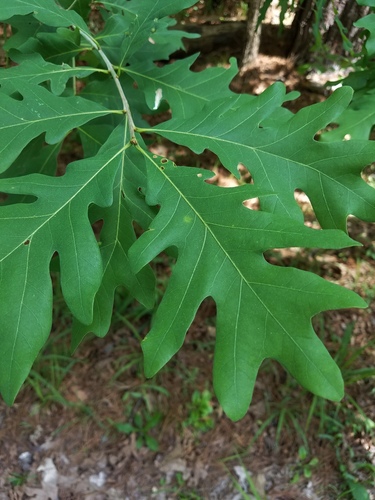
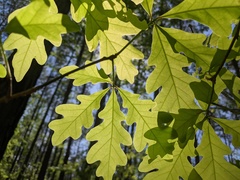
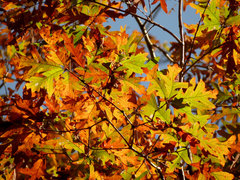
White oak (Quercus alba L., 1753) is a large deciduous tree in the Fagaceae family, native to eastern and central North America, from southern Quebec to northern Florida. It has rounded leaf lobes without bristle tips, pale gray bark and acorns that ripen in one season, unlike red oaks.
Read moreWhite oak, Eastern white oak and Stave oak


© photo
(c) Eric Keith, some rights reserved (CC BY-NC), uploaded by Eric Keith · cc-by-nc
Austin Pursley · cc0
Katja Schulz · cc0
Taken May 27, 2022 by Jean-René Girardeau (cc-by-sa)
Taken May 20, 2020 by Aaron Harp (cc-by-sa)
© copyright of the Board of Trustees of the Royal Botanic Gardens, Kew.




Global distribution
Quercus alba is native to eastern and central temperate North America, from southern Quebec, Ontario and Minnesota in the north to northern Florida and eastern Texas in the south. Elsewhere it is mainly cultivated as an ornamental tree in Europe, without documented invasive status.
Identity
White oak (Quercus alba L., 1753) is an accepted species in the genus Quercus, family Fagaceae. POWO/WCVP links the name to Linnaeus's 1753 publication and places the species among the white oaks, native to eastern and central temperate North America. 1 7
The name white oak distinguishes this American tree from European Quercus pubescens, which is also sometimes called white oak. Here, “white” refers chiefly to its pale gray to whitish bark and light-colored wood, rather than flowers or fruit. Eastern white oak specifies its range, while Stave oak recalls the historic use of its wood for barrel staves. 2 3
Recognition
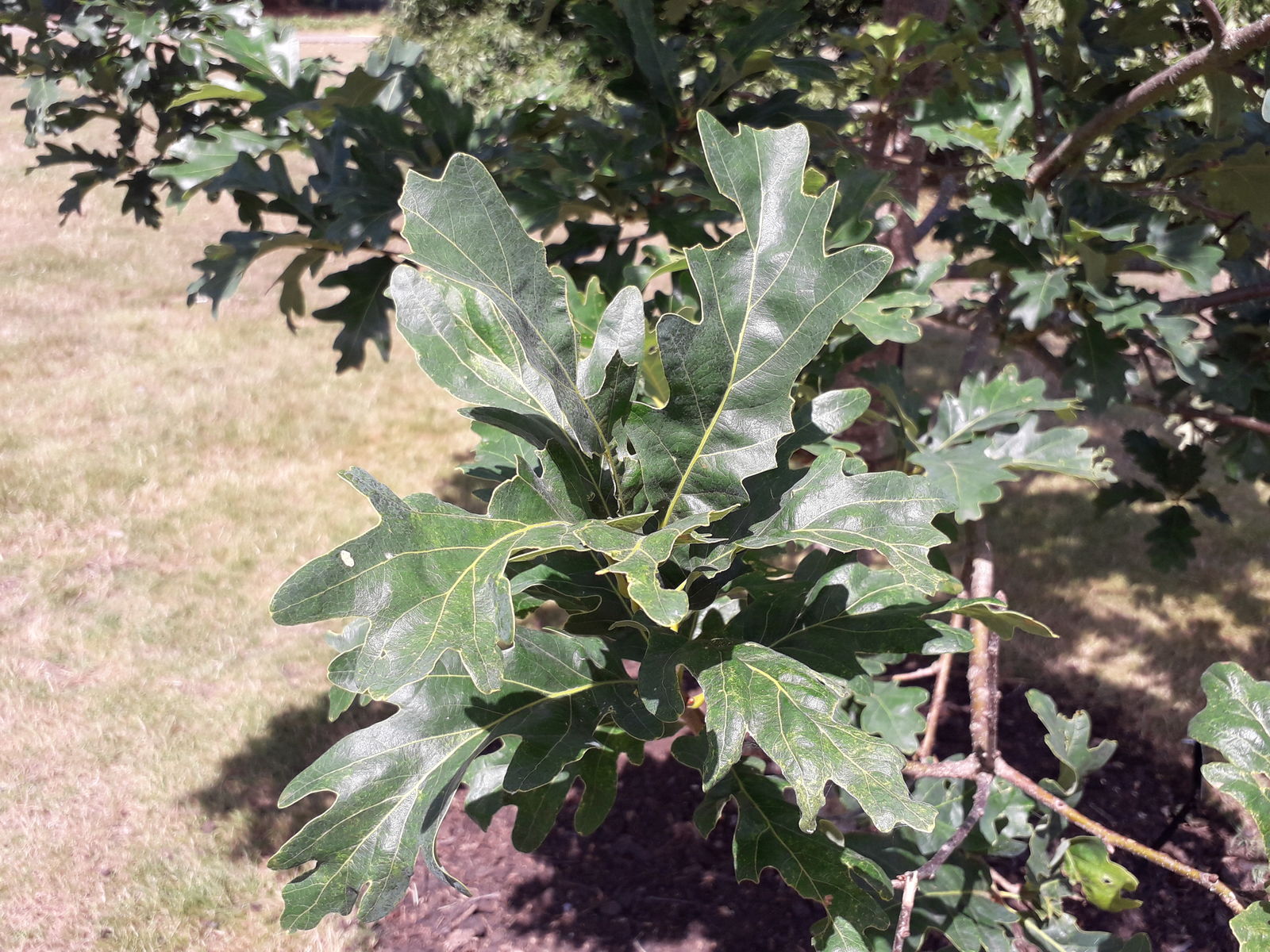
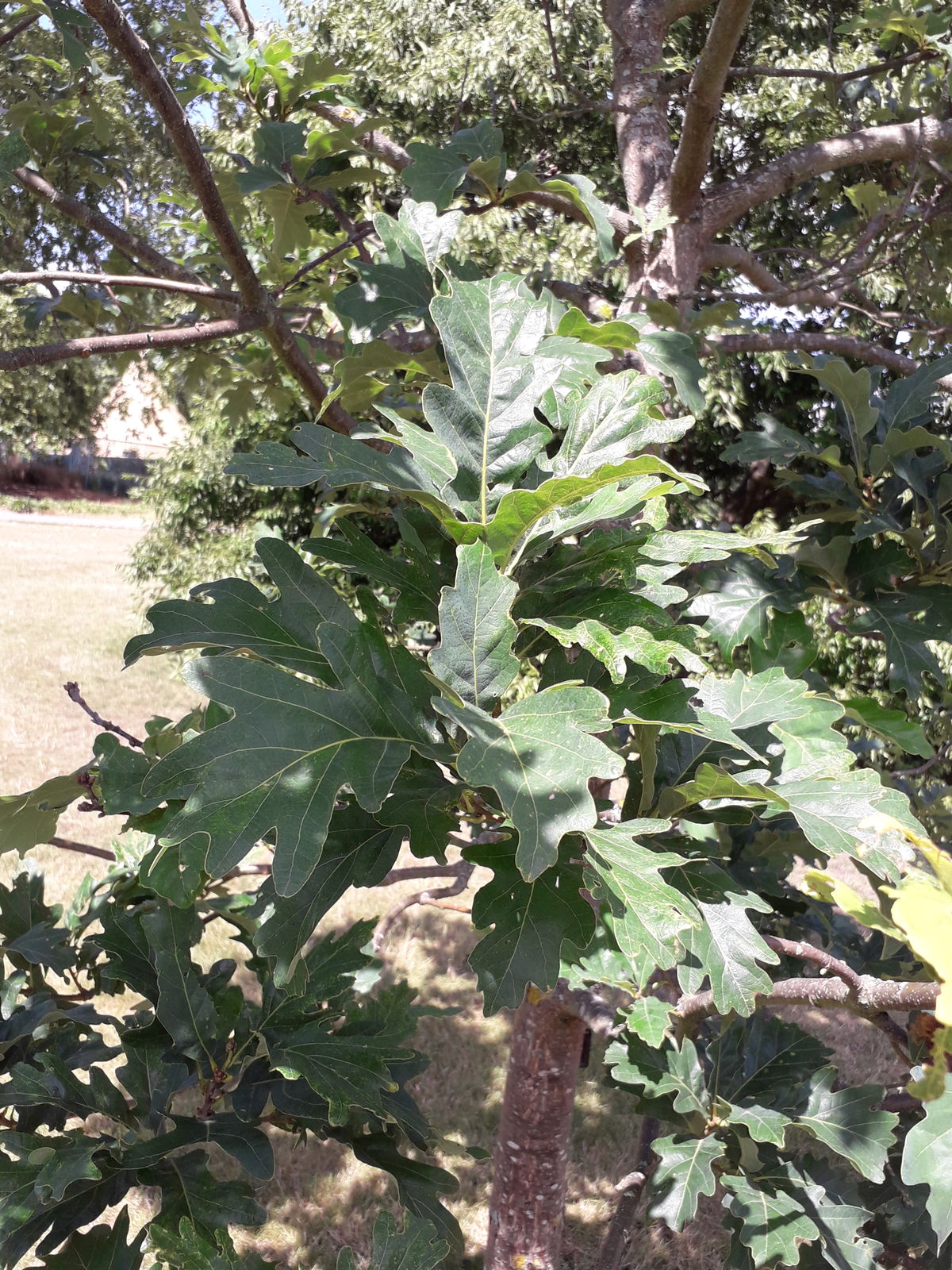
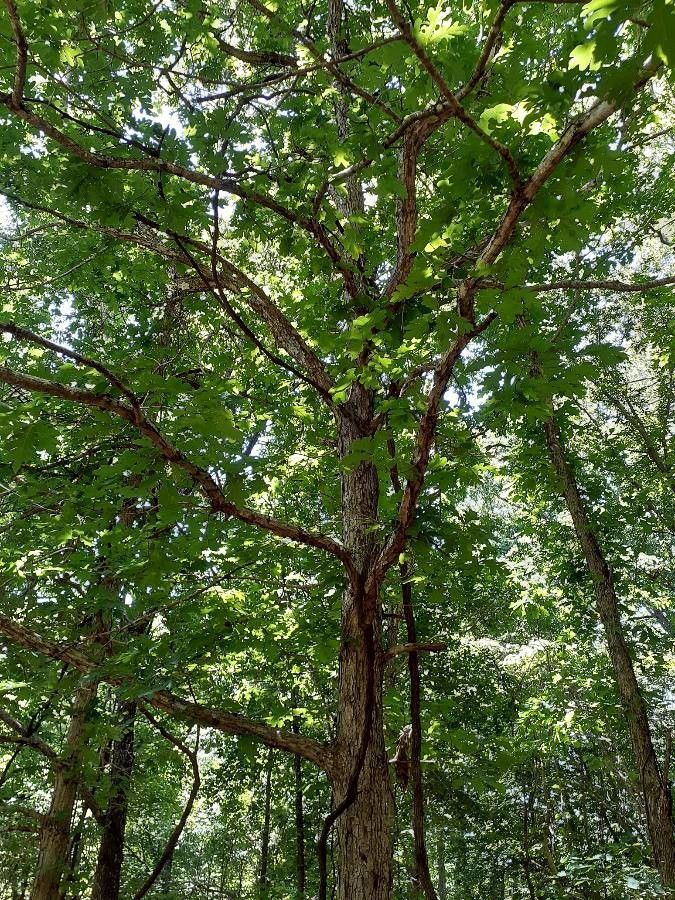
Mature Quercus alba commonly reaches 20–30 m (66–98 ft). An open-grown tree develops a broad, rounded crown, while forest trees grow taller and narrower. Its distinctive pale bark flakes away in plates or long, irregular strips with age. 3 4
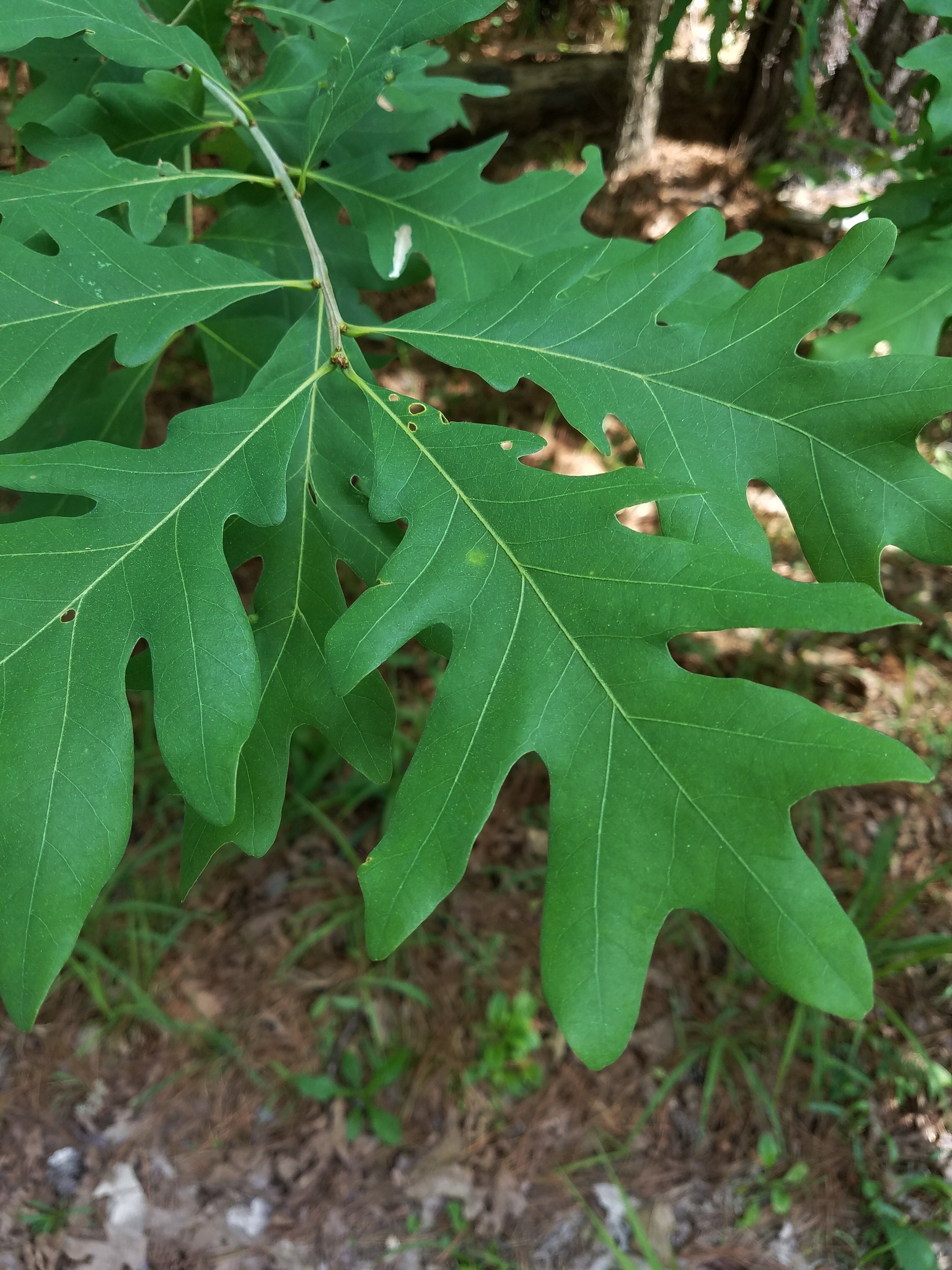
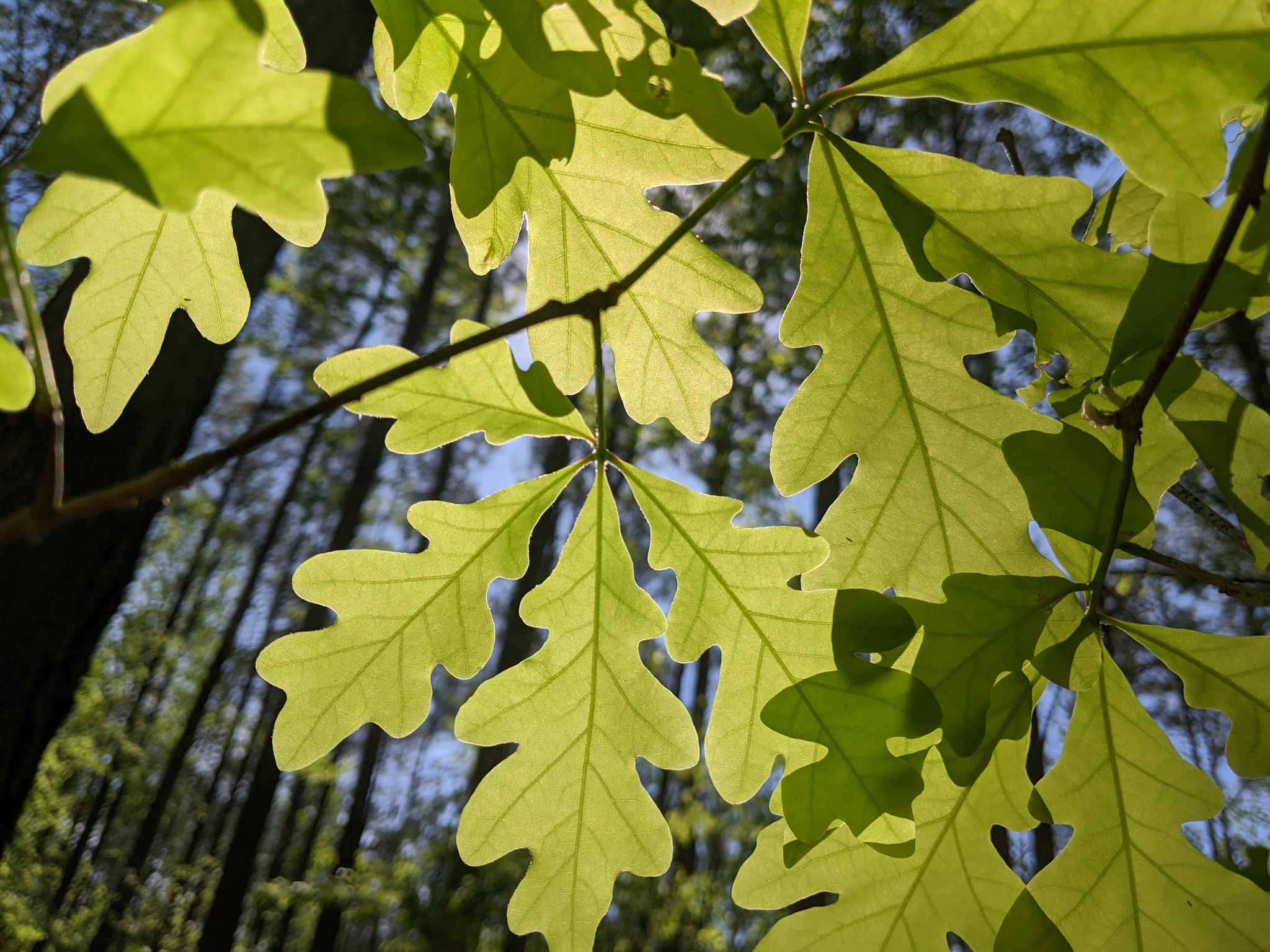
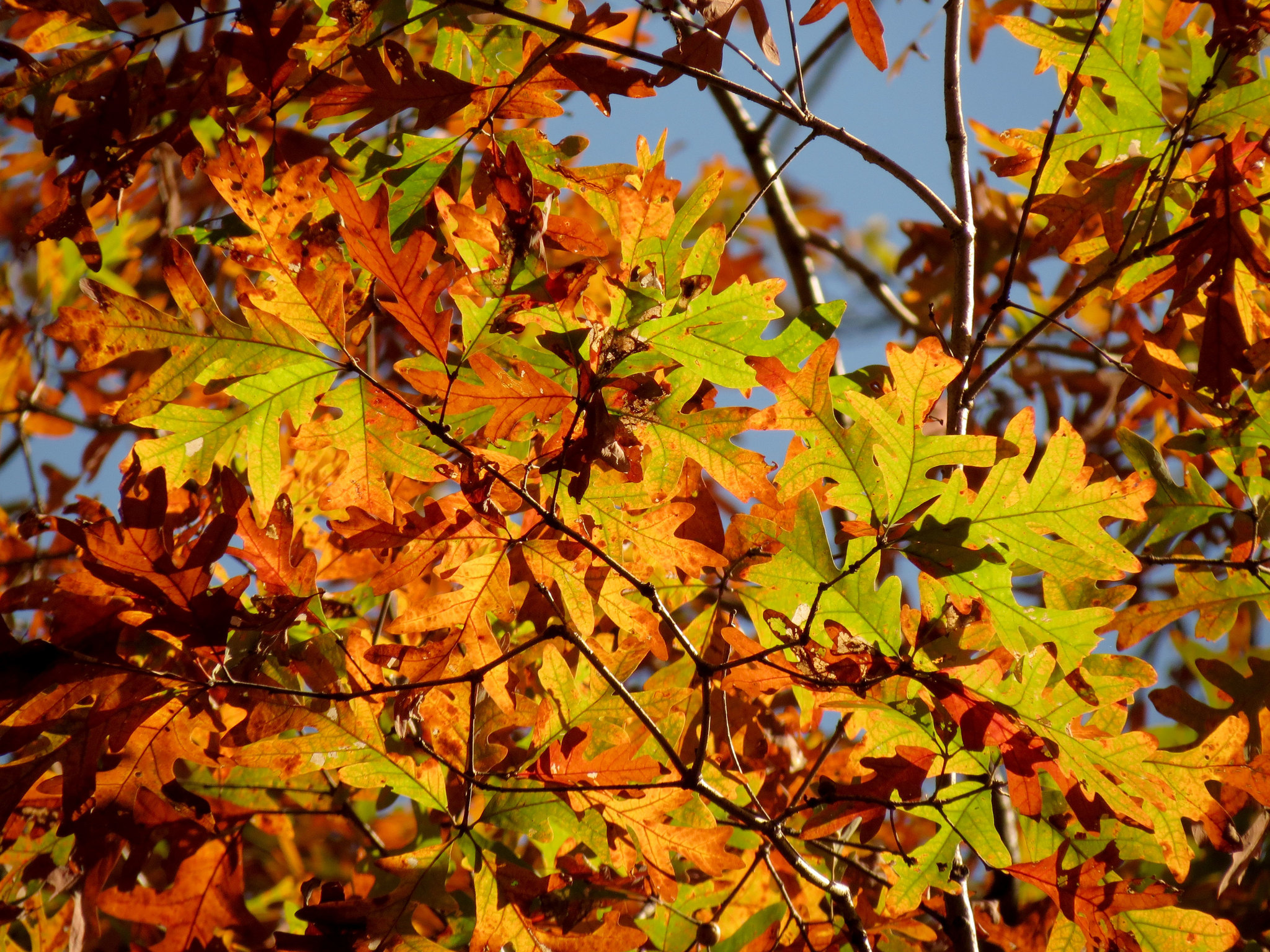
Leaves measuring 10–20 cm (4–8 in) carry 7–9 rounded lobes without bristles or sharp tips, immediately separating white oak from the red oak group. Upper surfaces are dull green; undersides are paler, often glaucous. In fall, foliage turns purple or reddish brown. Dead leaves may remain all winter on young trees and lower branches, a phenomenon called marcescence. 4 6
Acorns ripen in one growing season, unlike those of red oaks, which need two. A shallow cup covers only one-quarter to one-third of the fruit, about 25–33% of its surface, providing another useful field character. 5 3
Useful taxonomy
For white oak, Quercus alba L. is the stable botanical reference. POWO/WCVP and GBIF confirm its accepted status, placement in Fagaceae and native range centered on temperate North America. 1 7
Section Quercus, the white oaks, includes North American species with rounded leaf lobes and annually ripening acorns, such as Quercus bicolor, Quercus macrocarpa and Quercus stellata. All three sometimes hybridize with Quercus alba in the wild, producing scattered trees with intermediate traits that are difficult to assign to one species. 5 6
By comparison, section Lobatae, the red oaks, includes northern red oak (Quercus rubra) and is characterized by bristle-tipped lobes and acorns ripening over two years. Lobe shape and acorn maturation time therefore separate the two groups in the field without a complete identification key. 2
Habitat and range
Eastern and central North America form the native range of Quercus alba, from southern Quebec, Ontario and Minnesota in the north to northern Florida and eastern Texas in the south. 1 5
White oak tolerates a broad range of soils and sites, from dry, poor slopes to deep, moist valley-bottom soils, preferring good drainage and mildly acidic conditions. Young trees tolerate light shade under woodland cover; adults need much more light. 3 6
Beyond its native range, white oak is mainly cultivated as an ornamental tree in European parks and arboretums, including in the United Kingdom. No invasive naturalization is documented in metropolitan France. 2
The International Union for Conservation of Nature assesses Quercus alba as Least Concern, consistent with its extensive range and abundant populations. 8
Life cycle and reproduction
As leaves emerge in spring, yellowish male catkins hang in clusters and inconspicuous female flowers appear in the axils of young leaves. 3 4
Autumn brings ripe acorns from the same year's flowers, a white-oak-group trait associated with rapid germination. Unlike red oaks, they often germinate that fall, before winter, instead of waiting until spring. Acorn crops vary from year to year, with good crops separated by several poorer seasons. 5 6
Documented trees more than 450 years old illustrate this oak's longevity. Growth remains slow to moderate throughout life, accelerating in deep soil without competition. Cultivated trees are propagated almost entirely from fresh acorns: cuttings and grafts are difficult, severely limiting clonal cultivar development. 3 6
Uses and risks
Dense, strong wood is especially valued for being impermeable. Tyloses block the vessels in Quercus alba, preventing liquid movement. This property has long made it useful for wine and whiskey barrel staves and for shipbuilding. 4 6
Lower in tannins than red oak acorns, white oak acorns have a long documented food use after soaking or leaching to remove bitterness. Raw acorns in large quantities remain unsuitable as a regular food. 6
Livestock face the main safety risk. Acorns and young leaves contain tannins (gallotannins) that can cause digestive disturbances and kidney damage in cattle, horses and sheep after substantial intake. Risks arise especially with young spring shoots or heavy fall acorn crops. The ASPCA lists oak among plants requiring caution for dogs, cats and horses, especially horses. 9
Varieties, look-alikes and related plants
Named cultivars of Quercus alba are rare. Almost all planted trees are seed-grown representatives of the species because no method of cutting propagation or grafting is sufficiently reliable on a large scale. 6
Other North American white oaks cause the most frequent confusion: Quercus bicolor has less deeply lobed leaves and scalier bark; Quercus macrocarpa has a large fringed acorn cup; and Quercus stellata has cross-shaped leaves. All three naturally hybridize with Quercus alba, producing intermediate trees that are harder to identify than a typical specimen. 5 6
A juvenile white oak may also resemble a young red oak before the absence of terminal bristles becomes clear. At this stage a single leaf may not settle identification. A complete adult leaf with 7–9 well-developed lobes, together with an acorn when available, reduces ambiguity more effectively than one feature on a young shoot. 4 2
Main sources
- Plants of the World Online / Kew, Quercus alba L.
- Royal Horticultural Society, Quercus alba - white oak
- Missouri Botanical Garden PlantFinder, Quercus alba
- NC State Extension Gardener Plant Toolbox, Quercus alba
- USDA PLANTS Database, Quercus alba profile
- Plants For A Future, Quercus alba
- GBIF Backbone Taxonomy, Quercus alba L.
- IUCN Red List of Threatened Species, Quercus alba assessment
- ASPCA, Oak toxicity entry
Frequently asked questions
Is white oak native to France?
No. Quercus alba is native only to eastern and central North America. In France it is occasionally cultivated in parks or arboretums, with no documented invasive naturalization.
How can I distinguish white oak from red oaks?
White oak has rounded leaf lobes without terminal bristles and acorns that ripen in one growing season. Red oaks have bristle-tipped lobes and need two years to ripen acorns.
Are white oak acorns edible?
They contain fewer tannins than red oak acorns and have a long documented food use after soaking or leaching. They are still unsuitable as a regular food raw and in large amounts.
Is white oak toxic to animals?
Acorns and young leaves contain tannins that can cause digestive disturbances and kidney damage in livestock and horses after substantial intake. The ASPCA lists oak among plants requiring caution for dogs, cats and horses.
Why is white oak wood used for barrels?
Its vessels are naturally blocked by tyloses, making the wood almost impermeable. This makes it valued for wine and whiskey barrel staves and shipbuilding.
How long can a white oak live?
The species is known for longevity, with documented trees over 450 years old in favorable conditions. Its growth remains slow to moderate throughout its life.
Is white oak an official U.S. state tree?
Yes. It is the official tree of Connecticut, Illinois and Maryland, where large historic specimens are associated with local legends and protected natural monuments.
Similar plants
If you are unsure about a plant’s toxicity, ask a botanist or veterinarian for advice.