
Pin oak (Quercus palustris, )
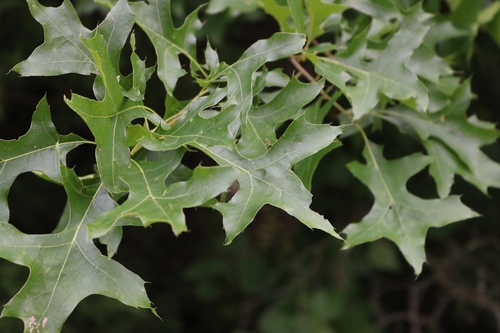
Pin oak (Quercus palustris) is a large deciduous oak in the Fagaceae family, native to wetlands of the northeastern and north-central United States and southeastern Canada. Its pyramidal crown has strongly drooping lower branches, deeply cut leaves with pointed lobes and tiny acorns barely covered by a cup. Its fast growth makes it a popular urban ornamental, but suitable soil is essential.
Read morePin oak, Swamp oak and Swamp Spanish oak
Allow a few hours of direct sun per day, preferably morning or evening.
Full sun; tolerates light partial shade



© photo
(c) Kelly Krechmer, some rights reserved (CC BY-NC), uploaded by Kelly Krechmer · cc-by-nc
Kent P. McFarland · cc0
Katie McCoy · cc-by
Taken Jul 19, 2003 by Tela Botanica − Annick LARBOUILLAT (cc-by-sa)
Taken Oct 31, 2013 by Tela Botanica − Hervé Goëau (cc-by-sa)
Taken Mar 28, 2020 by lindsay watson (cc-by-sa)
Taken Nov 12, 2020 by Sandra Clermont (cc-by-sa)
Taken Nov 20, 2022 by Tristan Jaton-Maria (cc-by-sa)
© copyright of the Board of Trustees of the Royal Botanic Gardens, Kew.




Global distribution
Quercus palustris is native to the northeastern and north-central United States, from Massachusetts and Michigan to Virginia and Arkansas, and southeastern Canada in Ontario. It grows on deep, wet soils in marshes, floodplains and along streams. Widely introduced to Europe for urban ornamental planting, pin oak is not reported as invasive there.
- Native2
- Introduced5
- United States
- Canada
- Germany
- Austria
- Denmark
- Hungary
- Romania
Hexagons: regions where the plant occurs. Green dots: native range.1
Identity
Pin oak (Quercus palustris Münchh., 1770), also called Swamp oak or Swamp Spanish oak, is a large deciduous tree in the genus Quercus, family Fagaceae. The Latin epithet palustris means “of marshes,” directly describing its original habitat of floodplains and stream banks. 1 3
Northeastern and north-central U.S. wetlands form its native range, from Massachusetts and Michigan south to Virginia and Arkansas, together with Ontario in southeastern Canada. Introduced to Europe as an urban ornamental, it is planted in Germany, Austria and France, among other countries. 3 8
The English name pin oak refers to the many small, slender, pin-shaped dead branches that remain on the trunk and lower limbs for a long time before falling. 3
Recognition
Adult Quercus palustris commonly stands 15–21 m (49–69 ft) tall with a spread of 12–18 m (39–59 ft). Old trunks may exceed 90 cm (35 in) in diameter; some forest accounts give heights up to 25 m (82 ft). Fast growth helps explain its popularity in urban forestry and its ease of transplanting. 3 5
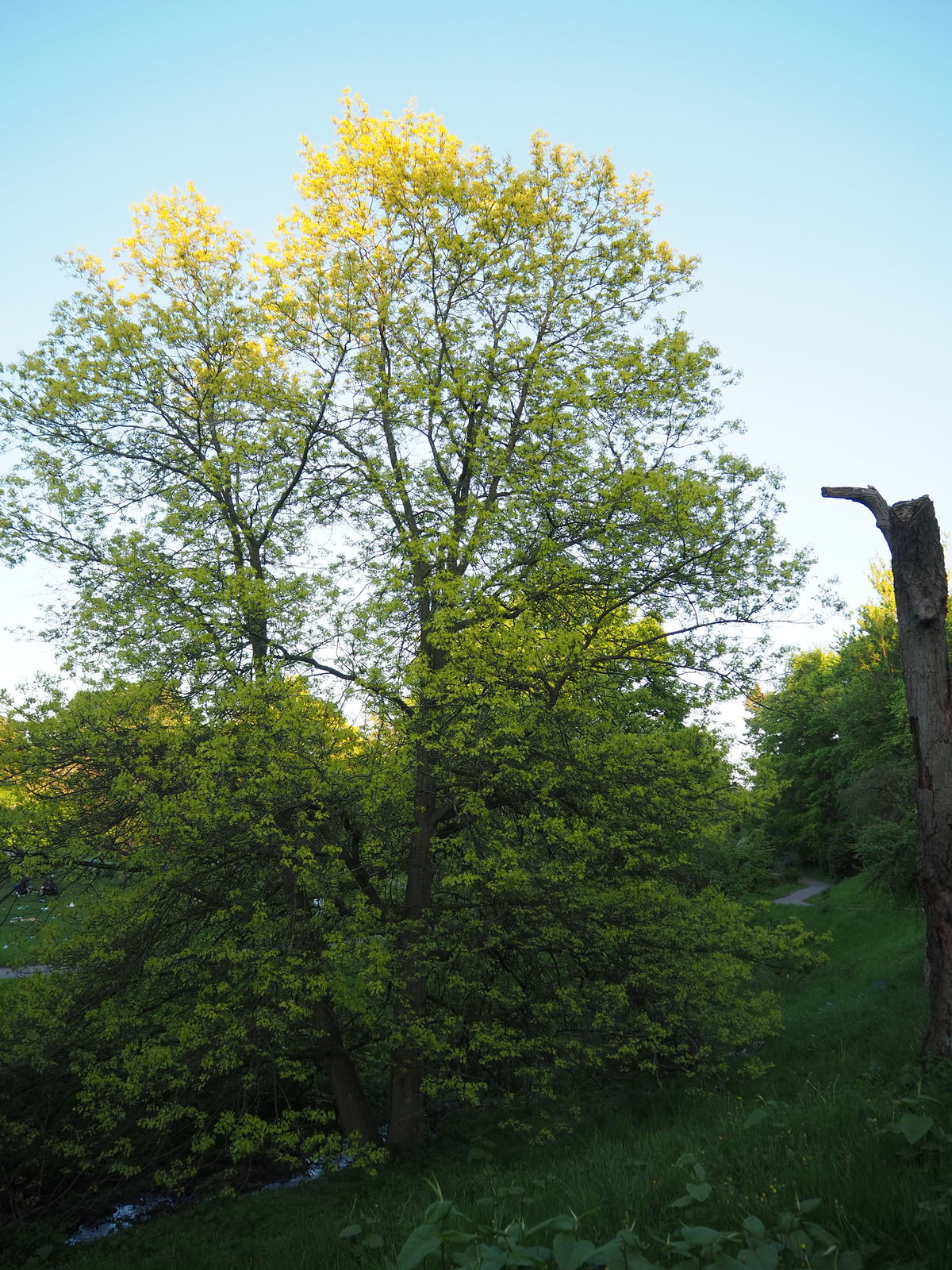
Three distinct layers define the crown, providing an identification clue even without leaves or acorns in winter: lower branches point strongly downward, middle branches remain horizontal, and upper branches rise. The tree stays pyramidal for much of its life, rounding only at an advanced age. 3 4
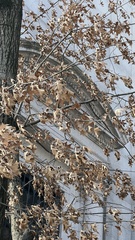
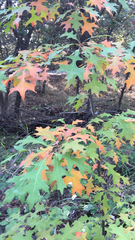
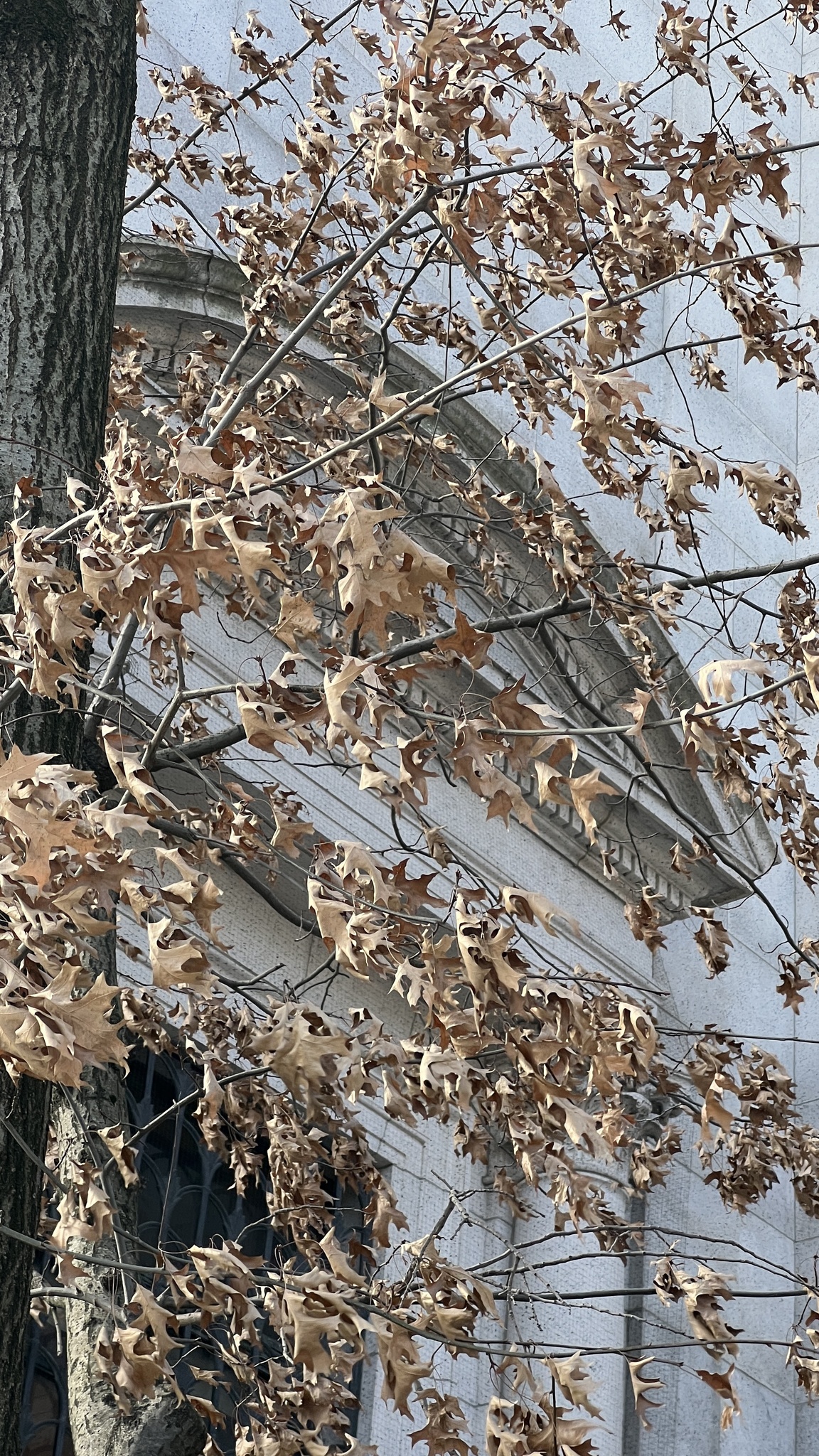
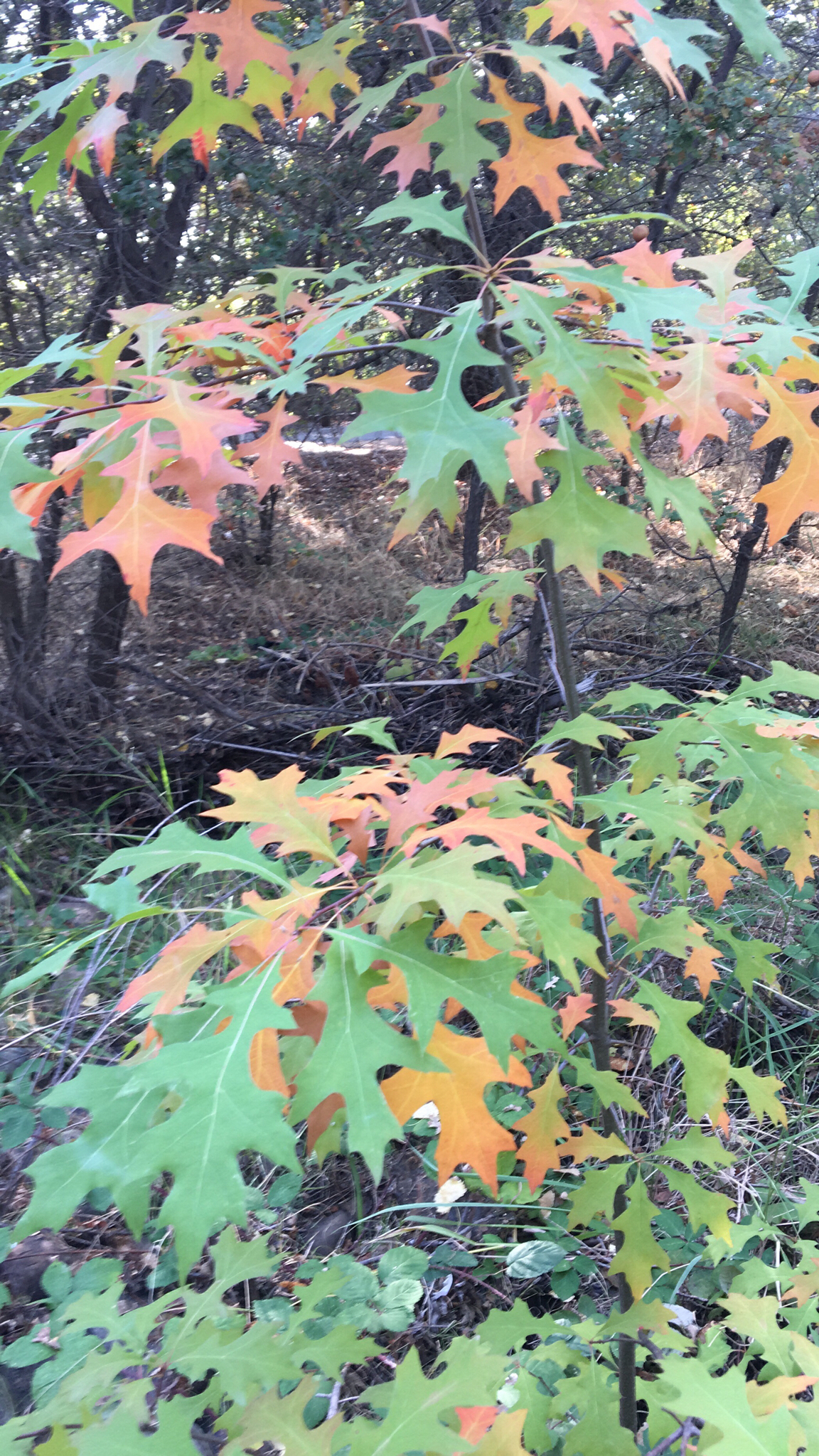
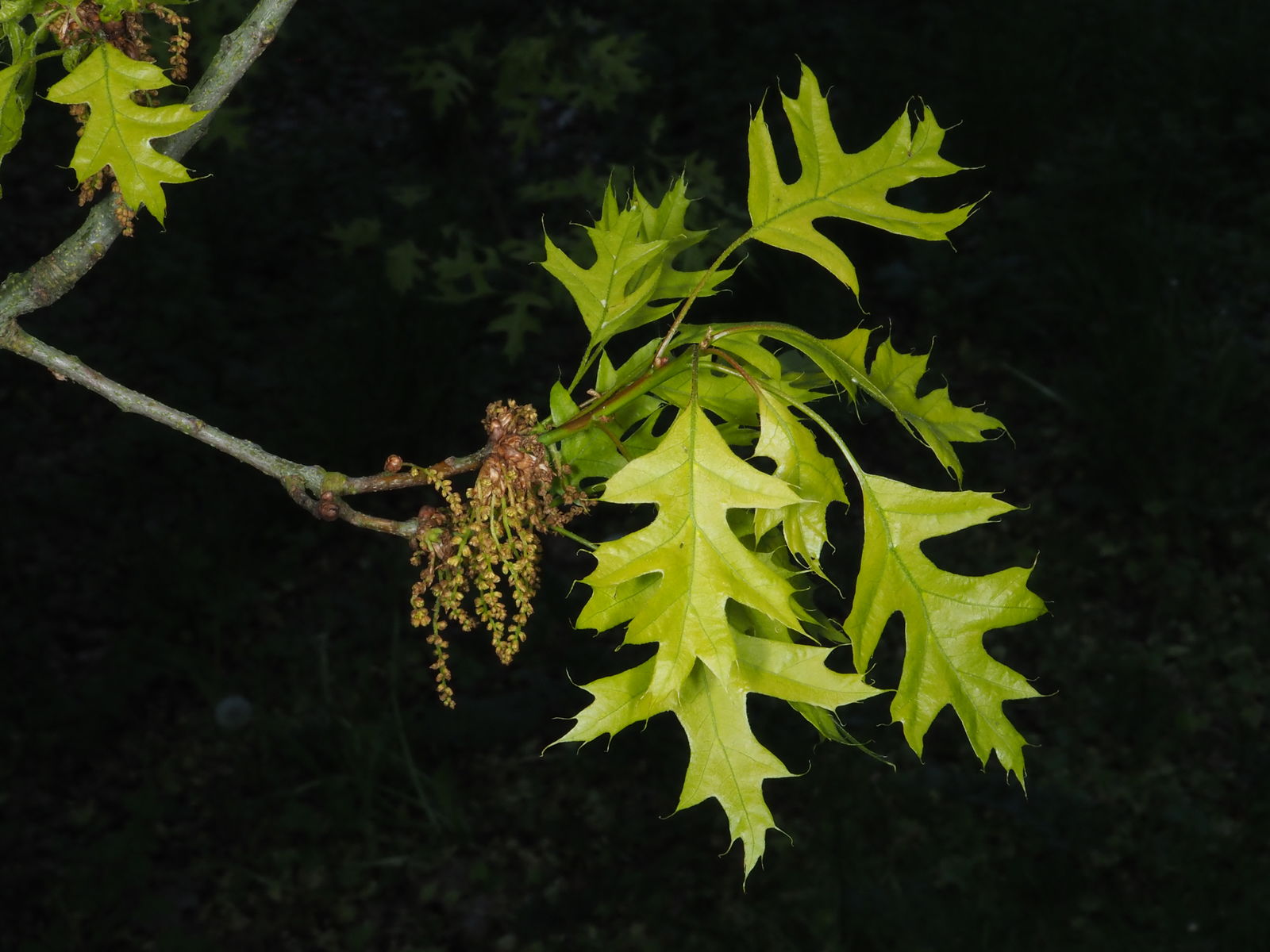
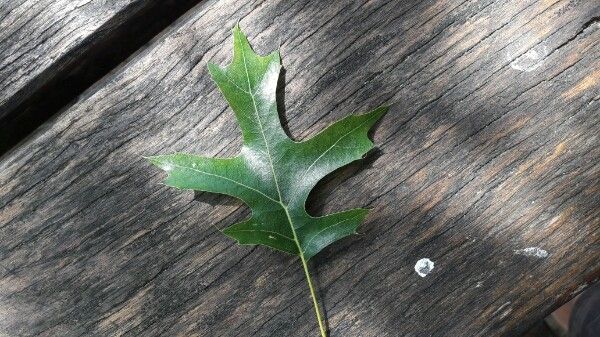
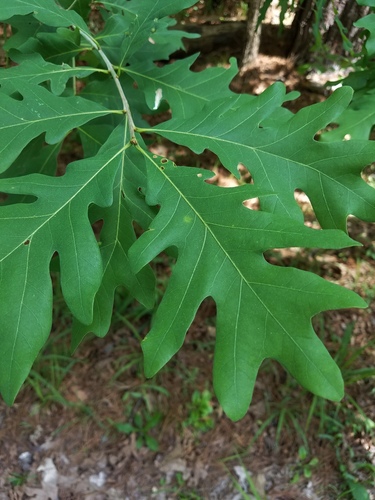
Leaf blades 7.5–15 cm (3–6 in) long carry 5–7 pointed lobes, separated by deep U-shaped sinuses that nearly reach the midrib, deeper than in most other red oaks. Glossy dark green foliage turns red, orange or bronze in fall. Young trees and lower branches often retain dried leaves throughout winter, a phenomenon called marcescence. 3 2
Useful taxonomy
Otto von Münchhausen described Quercus palustris Münchh. in 1770. Two botanical synonyms, Quercus rubra var. dissecta and Quercus rubra var. palustris, have long been used for the tree and are now associated with the accepted species. 1 4
Among American oaks, Quercus palustris belongs to the red oak group, section Lobatae, alongside Quercus rubra and Quercus coccinea. These oaks have bristle-tipped leaf lobes and acorns that generally mature over two years, in contrast with the rounded lobes of white oaks. 1 3
The older name swamp Spanish oak combines its marshland habitat with the red oak group, historically called Spanish oaks in nineteenth-century North American forestry literature. 8
Habitat and range
Deep, often poorly drained soils in marshes, floodplains and stream margins support pin oak across its native northeastern and north-central U.S. range and southeastern Canada. It tolerates prolonged temporary flooding in spring, an unusual ability among large ornamental oaks that are often much more sensitive to excess water. 3 4
European street and park plantings draw on its fast growth, easy transplanting and air-pollution tolerance. It is planted in Germany, Austria, Denmark, Hungary, Romania and France, without being reported as invasive in those countries. 3
Shallow but spreading roots make even well-developed trees relatively easy to transplant, an advantage for urban nurseries compared with other oaks that develop deep taproots. 4
Life cycle and reproduction
Spring flowering, in March–April in the Northern Hemisphere context described here, produces hanging yellow-green male catkins and inconspicuous female flowers in the axils of young leaves. 3 4
Tiny, almost round acorns measure only 0.6–1.3 cm (0.2–0.5 in) long and occur singly or in groups of two or three. A thin cup covers about one-quarter of each fruit. An isolated tree begins bearing at about 15–20 years, earlier than many other large oaks, contributing to its popularity in urban planting. 3 4
Nursery propagation relies mainly on seed, using fresh acorns that quickly lose viability if allowed to dry. Grafting is reserved for reproducing cultivars such as Green Pillar or Sovereign faithfully. 5
Uses and risks
Shade, street and park planting are its principal uses, drawing on rapid growth, easy transplanting and tolerance of air pollution and poor drainage. Its hard, heavy wood also has secondary uses for shingles, furniture and fuel. 3 5
Bitter tannins make raw acorns unsuitable for eating. Following prolonged leaching in water, they can be dried, ground into flour or roasted as a coffee substitute, uses documented among several Indigenous peoples of North America. 5
Young leaves and unleached acorns contain gallotannins and quercitrin, which cause digestive disturbances in animals when eaten in quantity. The documented risk mainly concerns horses: abdominal pain, constipation followed by sometimes bloody diarrhea, and excessive thirst and urination. 7 3
Varieties, look-alikes and related plants
Almost all city-planted pin oaks represent the typical species. Green Pillar has a narrow columnar crown for street sites where the species needs too much room; Sovereign reduces the inconvenience of drooping lower branches through a more open lower crown. 3
Related red oaks account for most identification mistakes: Quercus coccinea has similar leaf sinuses but a less clearly pyramidal crown; Quercus texana occurs farther south; and Quercus rubra has less deeply cut lobes and much larger acorns. 3
Compared with northern red oak (Quercus rubra), crown shape is decisive: pin oak has strongly drooping lower branches and a pyramidal crown, whereas Quercus rubra has a rounded crown and horizontal branches. Acorns also distinguish them clearly, tiny and barely capped in pin oak and much larger in Quercus rubra.
Main sources
- Plants of the World Online / Kew, Quercus palustris Münchh.
- Royal Horticultural Society, Quercus palustris - pin oak
- NC State Extension, Quercus palustris (Pin Oak)
- Missouri Botanical Garden, Quercus palustris
- Plants For A Future, Quercus palustris
- GBIF, Quercus palustris Münchh.
- ASPCA, Oak toxicity entry
- USDA PLANTS Database, Quercus palustris (QUPA2)
Frequently asked questions
Why do pin oak’s lower branches point downward?
This is a characteristic growth pattern. Quercus palustris has three crown layers: drooping lower branches, horizontal middle branches and ascending upper branches. The pattern appears early and remains clear in mature trees.
Is pin oak toxic to animals?
The documented risk mainly concerns horses. Gallotannins and quercitrin in acorns and young leaves can cause digestive disturbances after large, repeated intake. Water-leached acorns no longer present this risk.
Why do young pin oaks keep their leaves in winter?
This phenomenon, called marcescence, mainly affects young trees and lower branches of Quercus palustris. Dried leaves fall only when new growth begins the following spring. It is normal, rather than a sign of disease.
Does pin oak tolerate limestone soils?
No, or very poorly. Excessively alkaline soil blocks iron uptake and almost invariably causes iron chlorosis. Leaves yellow between the veins, and continued deficiency can lead to decline.
How long does pin oak take to produce acorns?
The first crop generally appears at about 15–20 years, earlier than in many other large oaks. This is among the reasons for its success in urban planting.
How can I tell Quercus palustris from Quercus rubra?
Crown shape is the quickest clue: Quercus palustris has strongly drooping lower branches and a pyramidal crown, while Quercus rubra has a rounded crown and more horizontal branches. Quercus palustris also has much smaller acorns, barely covered by their cups.
Are pin oak acorns edible?
Raw acorns are bitter and rich in irritating tannins. After prolonged water leaching, they can be dried, ground into flour or roasted as a coffee substitute, uses documented among several Indigenous peoples of North America.
Similar plants
If you are unsure about a plant’s toxicity, ask a botanist or veterinarian for advice.