
Red raspberry (Rubus idaeus, )
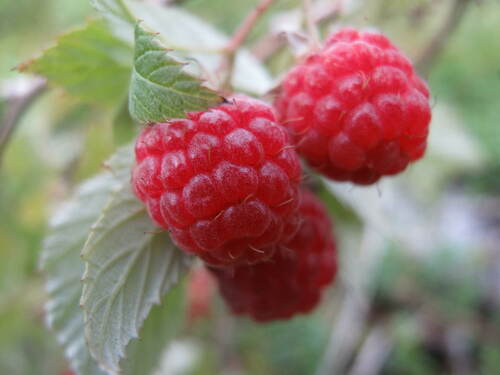
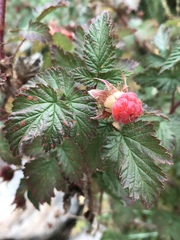
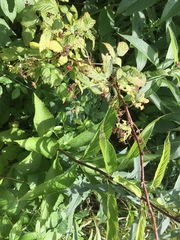
Red raspberry (Rubus idaeus) is a fruiting shrub in the Rosaceae family, grown for raspberries, aggregate fruits made of many small drupelets. Native to temperate parts of the Northern Hemisphere, it forms suckering clumps of upright, often prickly biennial canes that can be trained on supports in the garden.
Read moreRed raspberry, Raspberry and European raspberry


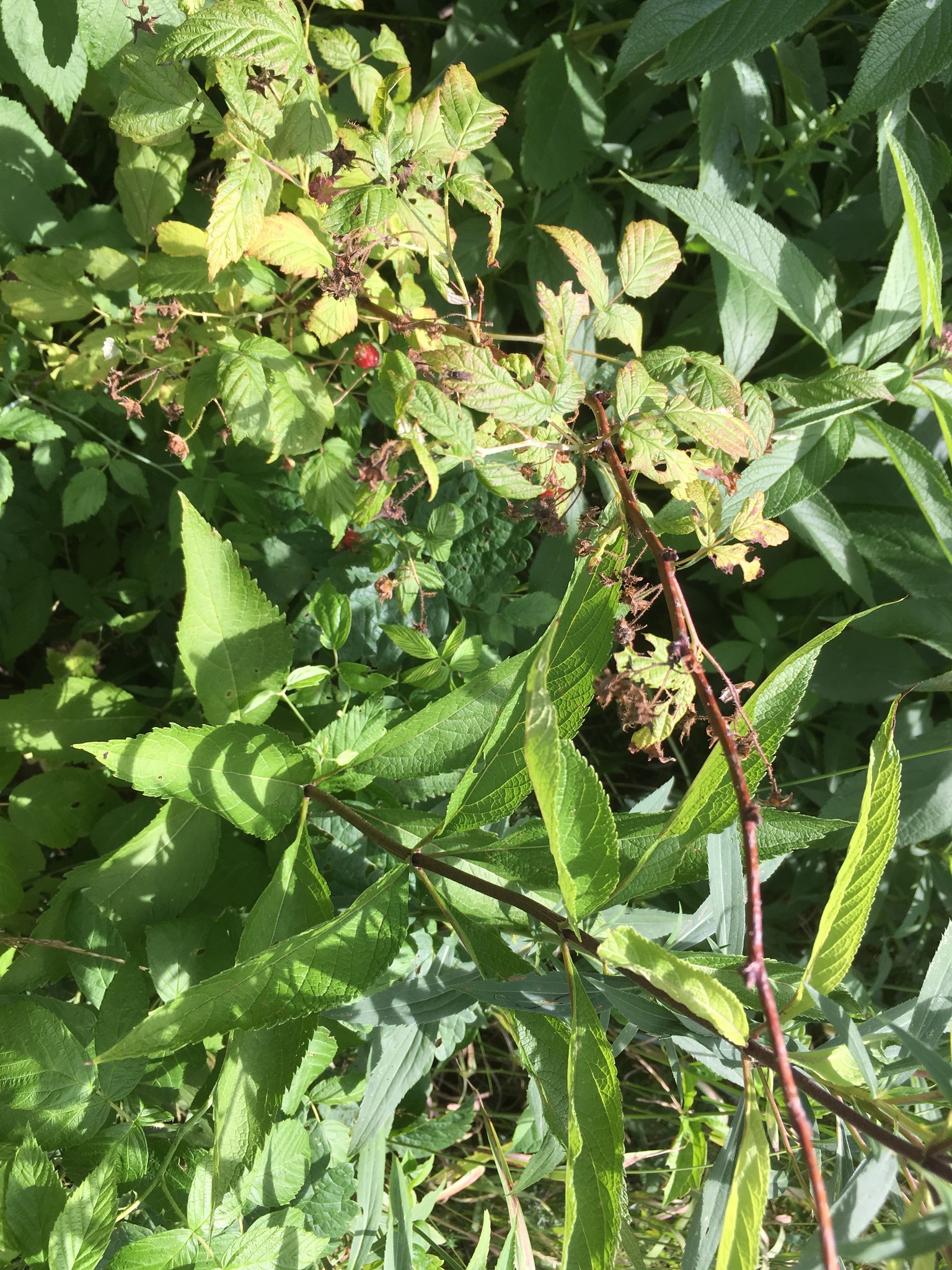
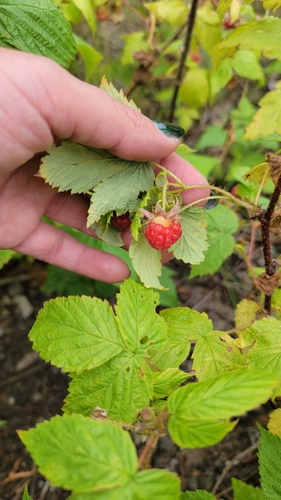
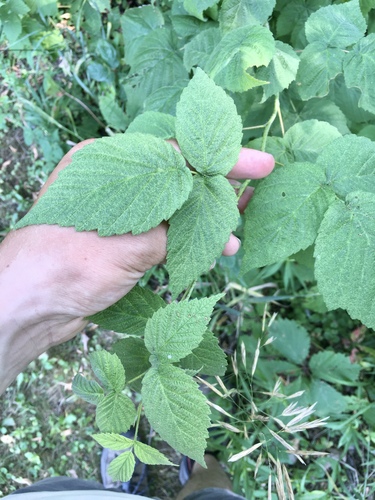
© photo
(c) Ole Husby, some rights reserved (CC BY-SA) · cc-by-sa
Robbie Hannawacker · cc0
naturalist charlie · cc0
(c) Lauren Markewicz, some rights reserved (CC BY) · cc-by
(c) gonodactylus, some rights reserved (CC BY) · cc-by
Global distribution
Rubus idaeus is widespread in temperate parts of the Northern Hemisphere, from Europe to temperate Asia, extending to northern North America and Mexico under some classifications. In France it grows wild in cool and mountain areas and is widely cultivated elsewhere as a small fruit crop.
- Native6
- Introduced2
- Mainland France
- Germany
- United Kingdom
- Russia
- China
- Mexico
- United States
- Canada
Hexagons: regions where the plant occurs. Green dots: native range.1
Identity
Red raspberry (Rubus idaeus L., 1753) belongs to the rose family, Rosaceae, and the genus Rubus. Its fragrant red fruits are aggregate fruits, rather than true berries in the botanical sense. This is one of the most widely cultivated small fruit crops of the temperate Northern Hemisphere. 1 4
Garden plants form a suckering clump of upright, often prickly canes that renew themselves each year. The names raspberry and European raspberry distinguish this crop from other brambles, including the blackberries familiar in hedges. The clump persists even though its individual canes do not live indefinitely. 2 3
Recognition
Biennial canes provide a useful first clue to Rubus idaeus. Green and unbranched in their first year, they become woody and fruit-bearing in their second, arising from suckers produced by the roots. Plants commonly reach 1–2.5 m (3–8 ft) tall, with fine prickles whose prominence varies between cultivars. 2 6
Compound leaves have three or five toothed leaflets. Their upper surfaces are green, while the conspicuously white, felted undersides help confirm identification. Small clusters of modest, five-petaled white flowers open in spring and attract bees. Looking beneath a leaf is often more helpful than judging the general shape of a cane. 3 5
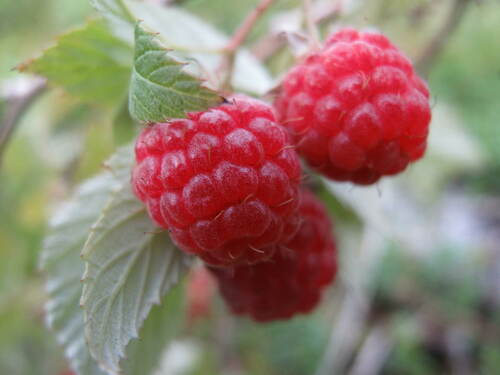
Ripe fruit supplies the clearest distinction from a blackberry. Each raspberry consists of joined drupelets, which pull away from the receptacle together, leaving a characteristic hollow center. A blackberry, by comparison, retains its receptacle when picked. Both fruits look berry-like, but their structure explains the different feel at harvest. 4 3
Useful taxonomy
The 1753 description by Linnaeus established the name Rubus idaeus L. The genus Rubus is taxonomically complex, with many forms and hybrids, and older synonyms and names below species rank still appear in references. Useful names to recognize include:
- Rubus fragrans Salisb., a synonym;
- Batidaea idaea (L.) Nieuwl., an older combination;
- Rubus idaeus subsp. idaeus, the nominate subspecies;
- Rubus idaeus var. maritimus (Arrh.) Focke, a name below species rank;
- Rubus idaeus f. albus (Weston) Rehder, a named form.
Use the accepted scientific name, Rubus idaeus, as the consistent reference. Cultivar names such as 'Heritage' and 'Glen Ample' identify horticultural selections, rather than separate species or botanical varieties. That distinction matters when comparing a nursery label with a flora or taxonomic database. 1 7
Habitat and range
Temperate Europe and Asia form much of the broad range attributed to Rubus idaeus. Depending on the classification used, accounts also include northern North America and Mexico. In France, wild plants occur in cool and mountain districts, colonizing clearings and recently felled woodland. 1 7
Woodland margins, banks, waste ground and newly opened forest sites provide the light this shrub needs after disturbance. Cool, moist soil that is loose and well drained suits it best. Decomposing woodland litter also releases nitrogen that the expanding clumps can use. These preferences explain its association with clearings rather than permanently dark forest interiors. 6 3
Centuries of fruit cultivation have carried red raspberry into most temperate regions of the world, where it sometimes escapes from gardens. Introduced populations, including those described in North America, should be distinguished from the spontaneous range assigned to the species under a particular classification. Cultivation alone does not establish native status. 4 5
Life cycle and reproduction
A perennial rootstock supports canes with a two-year life cycle. A new shoot, the primocane, emerges in spring and normally grows without flowering. After winter it becomes a floricane, flowers, bears fruit and dries out. Meanwhile, replacement primocanes emerge below, so the whole clump continues growing from year to year. 2 6
Cropping type determines the pruning routine. Summer-bearing raspberries fruit on the previous season’s floricanes. Fall-bearing, or everbearing, cultivars also flower on current-year primocanes and produce a late-summer-to-fall crop. When managed specifically for that fall crop, all canes can be cut down in late winter. Apply this seasonal sequence to the local growing year in either hemisphere. 2 4
Bees and bumblebees pollinate the bisexual white flowers, which develop into the familiar aggregate fruits. Garden propagation relies mainly on division and the removal of rooted suckers, which establish faster and reproduce the parent more faithfully than seedlings. Root cuttings also work. Seed propagation is slower and is used chiefly when selecting new varieties. 5 3
Uses and risks
Fresh fruit, preserves, syrups and baking account for the main uses of red raspberry. The crop also supplies many processed foods. Raspberry leaves have a long history of use in herbal tea, giving the shrub a place both in the fruit garden and among traditionally gathered tea plants. 5 4
Red raspberry is generally regarded as non-toxic: neither fruit nor leaves are known for notable toxicity in people or common household pets. Its most immediate practical hazard is the prickles on the canes. Gloves are useful when pruning and harvesting, especially with strongly prickled cultivars. 2 5
Varieties, look-alikes and related plants
Fruit cultivars represent selections within the crop, rather than separate species. 'Heritage' and 'Autumn Bliss' are fall-bearing selections; 'Meeker' and 'Glen Ample' are summer-bearing, with the latter having almost thornless canes. Check the cropping type before buying because it determines which canes to keep and which to remove.
Other brambles and small fruit crops can cause confusion:
- Rubus fruticosus, blackberry, retains the receptacle inside the picked fruit;
- Rubus occidentalis, the American black raspberry, is related but has dark fruit;
- Fragaria vesca, woodland strawberry, is another small fruit in Rosaceae but lacks prickly canes.
Taken together, a hollow aggregate fruit, white-felted leaf undersides and biennial canes provide the most reliable practical clues to red raspberry, Rubus idaeus. None of these features needs to be inferred from a cultivar name or from fruit color alone. 3 1
Main sources
Frequently asked questions
Is red raspberry toxic?
No. Raspberries are edible fruits, and raspberry leaves have traditionally been used in tea. No part is known for notable toxicity in people or common household pets.
What are primocanes and floricanes?
Raspberry canes live for two years. A first-year green cane, called a primocane, normally grows without flowering. In its second year it becomes a floricane, flowers, fruits and dies. This cycle determines how to prune it.
How do summer-bearing and fall-bearing raspberries differ?
Summer-bearing raspberries fruit on the previous year’s canes. Fall-bearing types also fruit on new canes in late summer and fall, which changes how the clump is pruned.
How do I prune red raspberry?
For summer-bearing varieties, cut fruited canes to ground level after harvest and retain young canes. For fall-bearing varieties managed for a fall crop, cut all canes down in late winter.
How does a raspberry differ from a blackberry?
Both are aggregates of drupelets, but a raspberry separates from its receptacle and leaves a hollow center. A blackberry retains the receptacle. Red raspberry is Rubus idaeus.
Can red raspberry spread too far?
Yes. Root suckers can send up canes away from the original row. Control the colony by regularly removing unwanted shoots or installing a buried edging barrier.
Can I grow red raspberry in a pot?
Yes. A deep container with moisture-retentive but well-drained growing medium can support a few canes on a patio. For a large harvest, planting in the ground is preferable because the roots need space and cool conditions.
Similar plants
If you are unsure about a plant’s toxicity, ask a botanist or veterinarian for advice.