
Woodland strawberry (Fragaria vesca, )
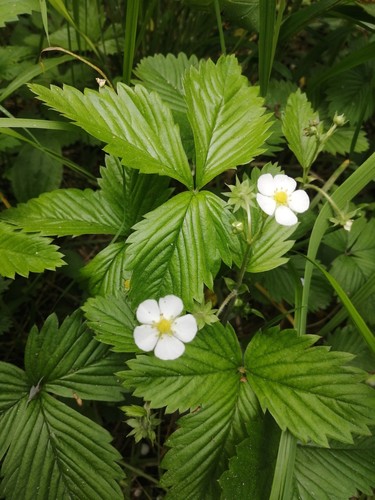
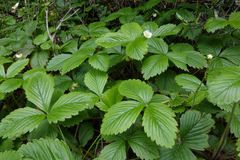

Woodland strawberry (Fragaria vesca) is a small herbaceous perennial in the Rosaceae, widespread across much of the Northern Hemisphere. Its creeping stems produce numerous runners, and its small red strawberries are intensely fragrant, edible and non-toxic. Its low stature and small fruits distinguish it from the larger-fruited cultivated hybrid Fragaria × ananassa.
Read moreWoodland strawberry, Wild strawberry and Alpine strawberry

© photo
(c) Алексей Афонин, some rights reserved (CC BY-NC), uploaded by Алексей Афонин · cc-by-nc
John Barkla · cc0
Bruce Cook · cc0
(c) John Barkla, some rights reserved (CC BY) · cc-by
no rights reserved · cc0
Global distribution
Fragaria vesca ranges widely across the Northern Hemisphere, from Macaronesia and Europe to Siberia and Xinjiang, and also in North America. It is the most widespread wild strawberry. It grows in open woodland, edges and moist banks, and readily naturalizes from cultivated plants.
- Native7
- Introduced1
- Mainland France
- Germany
- Russia
- Spain
- Italy
- United States
- Canada
- Japan
Hexagons: regions where the plant occurs. Green dots: native range.1
Identity
Woodland strawberry (Fragaria vesca L., 1753) is a small herbaceous perennial in the Rosaceae and the genus Fragaria. This widespread Northern Hemisphere wild strawberry is grown and gathered for its intensely fragrant little red fruits. 1 4
Low creeping clumps carpet the soil in gardens and spread by runners. Compared with the cultivated strawberry (Fragaria × ananassa), woodland strawberry has a smaller stature and smaller, more aromatic fruit. 2 3
Recognition
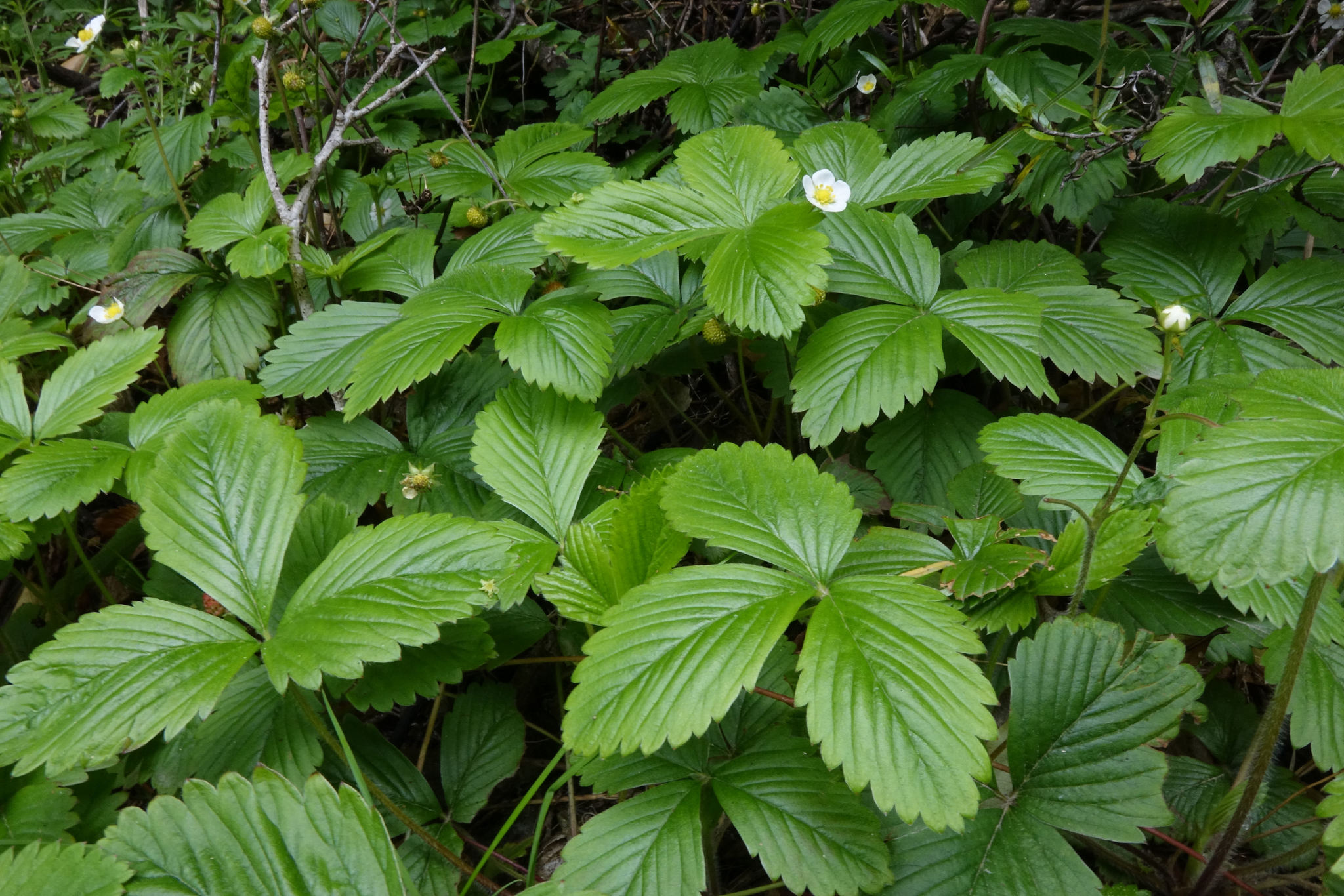
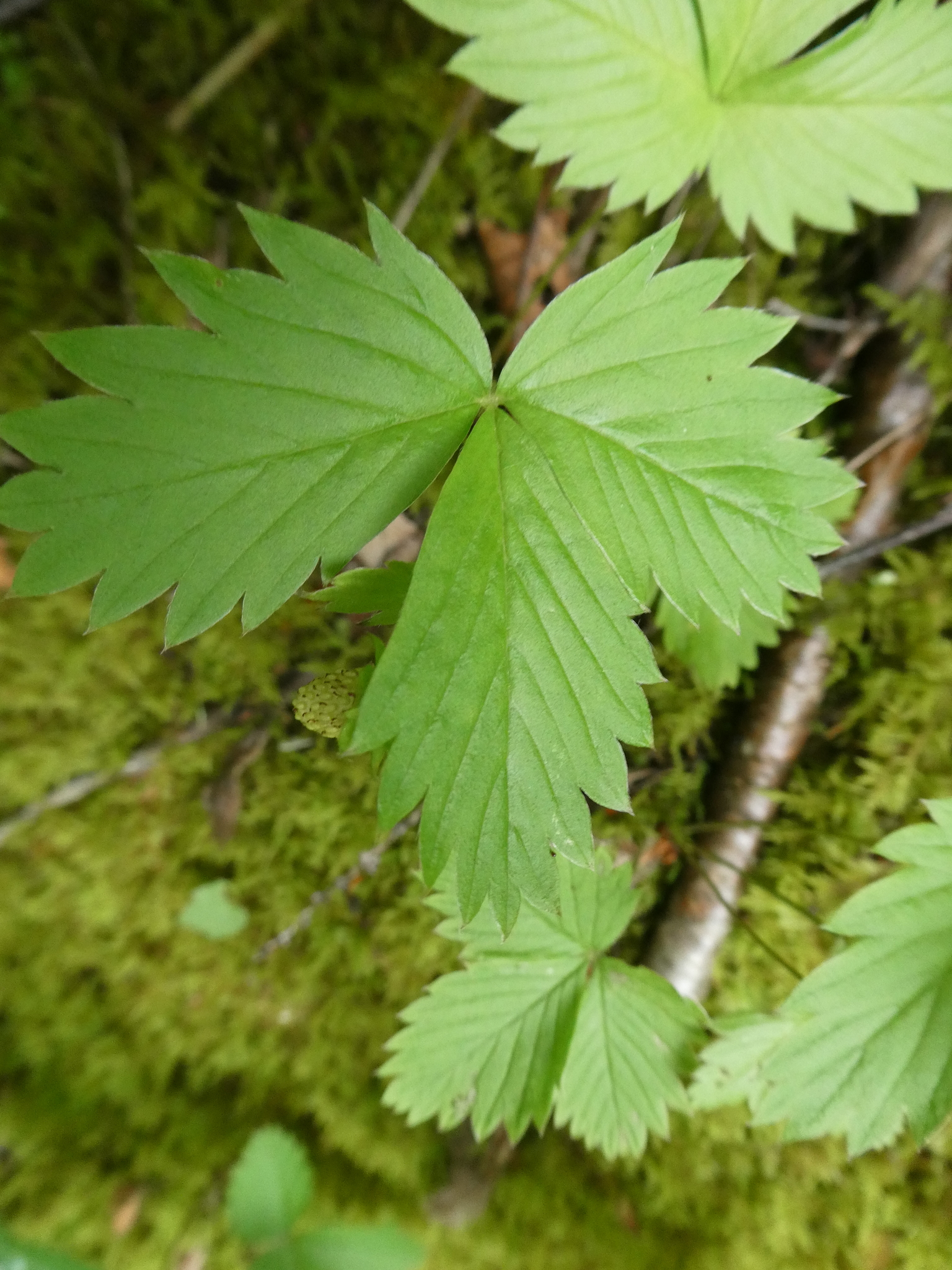
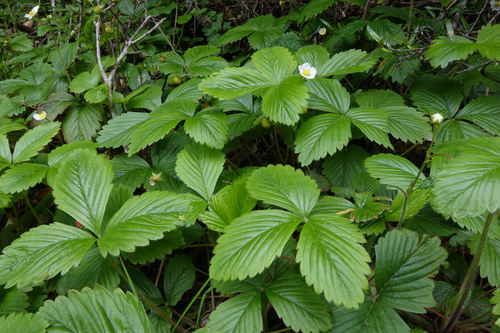
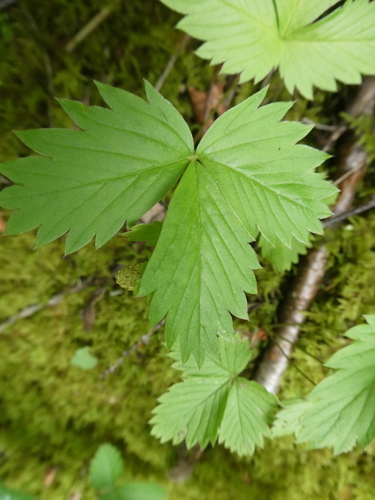
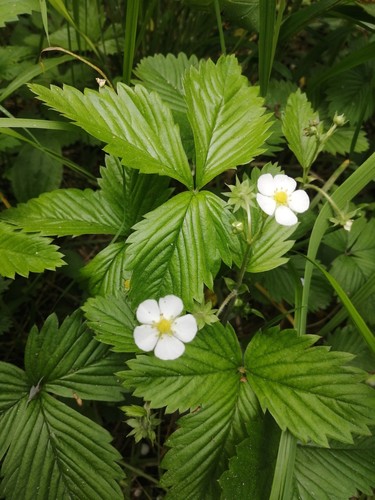
Light green trifoliate leaves grow on long stalks, with clearly toothed leaflets and prominent veins. The plant forms a ground-hugging rosette, only 5–30 cm (2–12 in) high. 3 7
Numerous reddish runners, or stolons, creep across the ground and root some distance away to form new plants. Five-petaled white flowers, 12–18 mm (0.5–0.7 in) across with yellow centers, appear from spring into early summer. 2 5
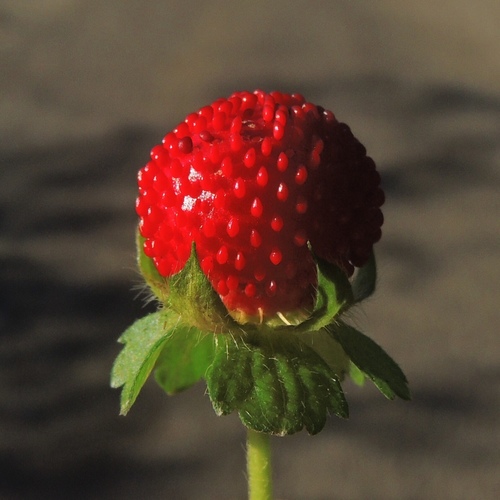
The familiar little red strawberry sits upright or hangs slightly, with tiny raised grains on its surface. Those grains, the achenes, are the true fruits; the red flesh is a swollen receptacle. 4 7
Useful taxonomy
Linnaeus described woodland strawberry in 1753 as Fragaria vesca L. The Latin epithet vesca means edible, recalling its long use as food. Older names and infraspecific names still encountered include:
- Potentilla vesca (L.) Scop., an older synonym
- Fragaria vesca subsp. vesca, the typical subspecies
- Fragaria vesca subsp. americana (Porter) Staudt, a subspecies name
- Fragaria vesca var. alba (Weston) Rydb., a variety name
- Fragaria sylvestris auct., a name used by earlier authors
The accepted scientific name, Fragaria vesca, provides a consistent reference. Variety and horticultural form names describe cultivated selections rather than separate species. Keep it distinct from the cultivated strawberry hybrid, written Fragaria × ananassa. 1 3
Habitat and range
Macaronesia, Europe, Siberia, Xinjiang and much of North America fall within the broad Northern Hemisphere range of Fragaria vesca. This makes it the most widely distributed wild strawberry. 1 6
Open woodland, forest edges, banks and cool clearings provide its natural habitat. It grows on drained, humus-rich soil that remains fairly moist, often alongside deciduous trees in the filtered light of open woods. 7 5
Garden plants readily naturalize, with runners and seeds colonizing nearby borders and woodland. Their spread remains easy to contain; spreading in a garden should be distinguished from an invasive-species designation. 2 3
Life cycle and reproduction
The woodland strawberry’s accessory fruit develops from the flower receptacle. Each white flower is hermaphroditic and insect-pollinated. After fertilization, its receptacle swells and turns red to form the fleshy strawberry, so the part eaten is not itself a true botanical fruit. 4 3
Each small dry achene on the strawberry’s surface contains a seed. A fleshy receptacle covered with achenes is characteristic of Fragaria and explains why the grains separate so readily from the flesh. 4 7
Vegetative propagation is the main route: runners root at their tips and produce plants identical to the parent. Clumps can also be divided in spring, or achenes surface-sown because the seed needs light to germinate. Runnerless forms such as Alexandria are mainly raised from seed. First fruit follows about three to five months after sowing, depending on climate. 2 5
Uses and risks
Food is the principal use of woodland strawberry. Its small fruits are eaten raw or made into jam or syrup, and their fragrance is notably stronger than that of large commercial strawberries. Young leaves are also used for infusions. This edible plant has been gathered since antiquity. 5 4
No hazardous substance is known in Fragaria vesca, which is considered non-toxic to people and domestic animals. It is not listed among plants reported as toxic to cats, dogs or horses. As with other fruits, sensitive people may have an allergic reaction; that is an individual sensitivity rather than plant toxicity. 3 2
Varieties, look-alikes and related plants
Cultivated selections differ in fruiting habit and foliage. Semperflorens and Alexandria are everbearing alpine strawberry forms, fruiting from summer until frost; Mignonette suits borders or pots; variegated Variegata is mainly ornamental. Check whether a selection repeat-fruits and whether it produces runners before buying.
The main plants that cause confusion are:
- Potentilla indica, mock strawberry, with yellow flowers and upright but bland red fruit;
- Fragaria × ananassa, the cultivated strawberry, with much larger, less fragrant fruit;
- Potentilla sterilis, barren strawberry, without a truly fleshy fruit.
White flowers, a red accessory fruit covered with achenes and a pronounced fragrance together provide the most useful confirmation of woodland strawberry, Fragaria vesca. 3 1
Main sources
- Plants of the World Online / Kew, Fragaria vesca L.
- Royal Horticultural Society, Fragaria vesca - wild strawberry
- Missouri Botanical Garden, Fragaria vesca
- Encyclopaedia Britannica, strawberry plant
- Plants For A Future, Fragaria vesca
- USDA PLANTS Database, Fragaria vesca L.
- Tela Botanica, Fragaria vesca L. (eFlore)
Frequently asked questions
Is woodland strawberry toxic?
No. Woodland strawberry is edible and has been grown and gathered for its fruit since antiquity. No toxic substance is known in it, and it is not listed among plants reported as dangerous to cats, dogs or horses.
Is a strawberry really a fruit?
Not in the strict botanical sense. The red fleshy part is an accessory fruit formed by the swollen flower receptacle. The true fruits are the tiny grains on its surface, called achenes.
How do I propagate woodland strawberry?
The easiest method is to detach young plants already rooted at the ends of runners. You can also divide clumps in spring or surface-sow the achenes. Runnerless varieties are propagated from seed.
Does woodland strawberry need sun or shade?
Partial shade suits its woodland origins best. It tolerates sun in cool climates if the soil stays moist, but suffers in hot, dry positions.
How does it differ from a supermarket strawberry?
Commercial strawberries come from the large-fruited cultivated hybrid Fragaria × ananassa. Woodland strawberry produces much smaller, more fragrant fruit and a lower yield.
What plant looks like woodland strawberry?
Mock strawberry (Potentilla indica) is the most common look-alike. It has yellow flowers and upright red fruit with little flavor. White flowers and a strong fragrance help identify woodland strawberry.
Is woodland strawberry invasive?
It spreads quickly by runners and can colonize a border, but is easy to contain by removing them. It is not classified as an invasive plant in France.
Similar plants
If you are unsure about a plant’s toxicity, ask a botanist or veterinarian for advice.