
Mock strawberry (Potentilla indica, )
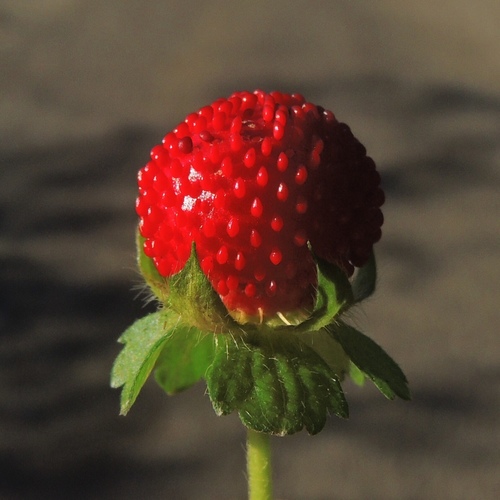
Mock strawberry (Potentilla indica) is a creeping perennial in the Rosaceae family, native from Afghanistan to the Russian Far East and Malaysia. Yellow flowers and upright red accessory fruit resemble true strawberries at a glance, but the flesh is bland. Long runners rapidly colonize disturbed ground.
Read moreMock strawberry, Indian strawberry, False strawberry and Yellow-flowered strawberry
Give plenty of ambient light without direct sun on the leaves.
Full sun to deep shade; broad tolerance depending on the site.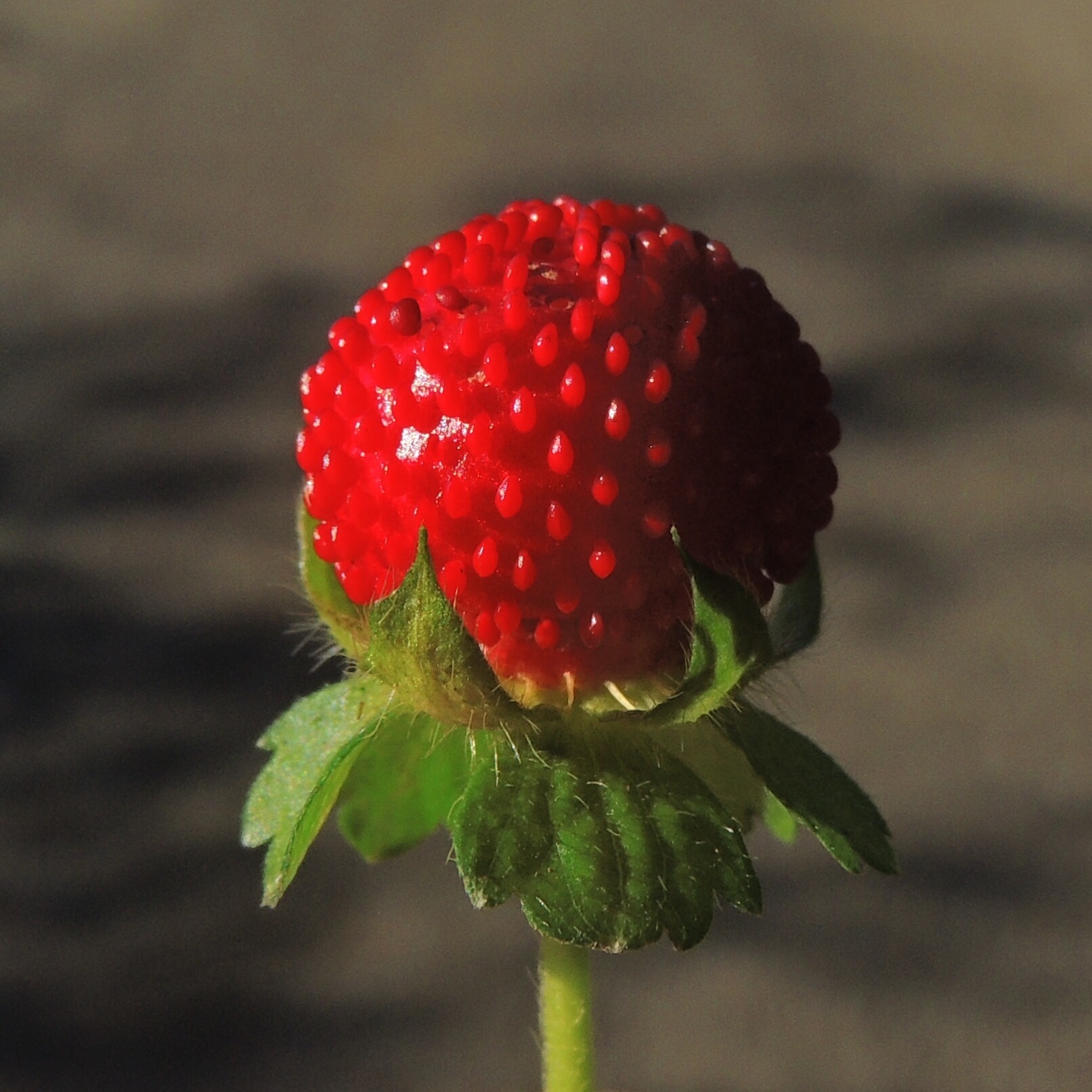


© photo
(c) Rob Curtis, some rights reserved (CC BY-NC-SA), uploaded by Rob Curtis · cc-by-nc-sa
Alison Northup · cc0
Ilka Schindler · cc0
Taken Jun 18, 2020 by stephane pal (cc-by-sa)
Taken May 27, 2020 by Paul DUPUYDS (cc-by-sa)
Taken Jun 18, 2020 by Leandro Martins Santos (cc-by-sa)
Taken Nov 3, 2016 by Yoan MARTIN (cc-by-sa)
© copyright of the Board of Trustees of the Royal Botanic Gardens, Kew.




Global distribution
Potentilla indica has an extensive native range from Afghanistan through India and the Himalayas to China, Japan, Korea and Southeast Asia as far as Malaysia. Introduced to Europe as an ornamental in the seventeenth century, it has naturalized in many temperate and subtropical regions worldwide and is classed as invasive in several of them.
- Native4
- Introduced2
- Invasive2
- China
- Japan
- India
- Afghanistan
- Metropolitan France
- Argentina
- Belgium
- Southeastern United States
Hexagons: regions where the plant occurs. Green dots: native range.1
Identity
Mock strawberry (Potentilla indica (Andrews) Th.Wolf, 1904), also called Indian strawberry, false strawberry or yellow-flowered strawberry, is a creeping perennial in the Rosaceae family. Long placed in Duchesnea as Duchesnea indica, it moved to Potentilla after molecular phylogenetic studies of chloroplast DNA showed that Duchesnea was nested within that genus. 10 1
The epithet indica refers to the Indian origin claimed when Henry Charles Andrews described Fragaria indica, the basionym, in 1807. Its actual range extends far beyond India, from Afghanistan to the Russian Far East and Malaysia. The former genus name Duchesnea, also reflected in the French name fraisier de Duchesne, honors Antoine Nicolas Duchesne, author of an eighteenth-century reference work on strawberry natural history. 9 2
Recognition
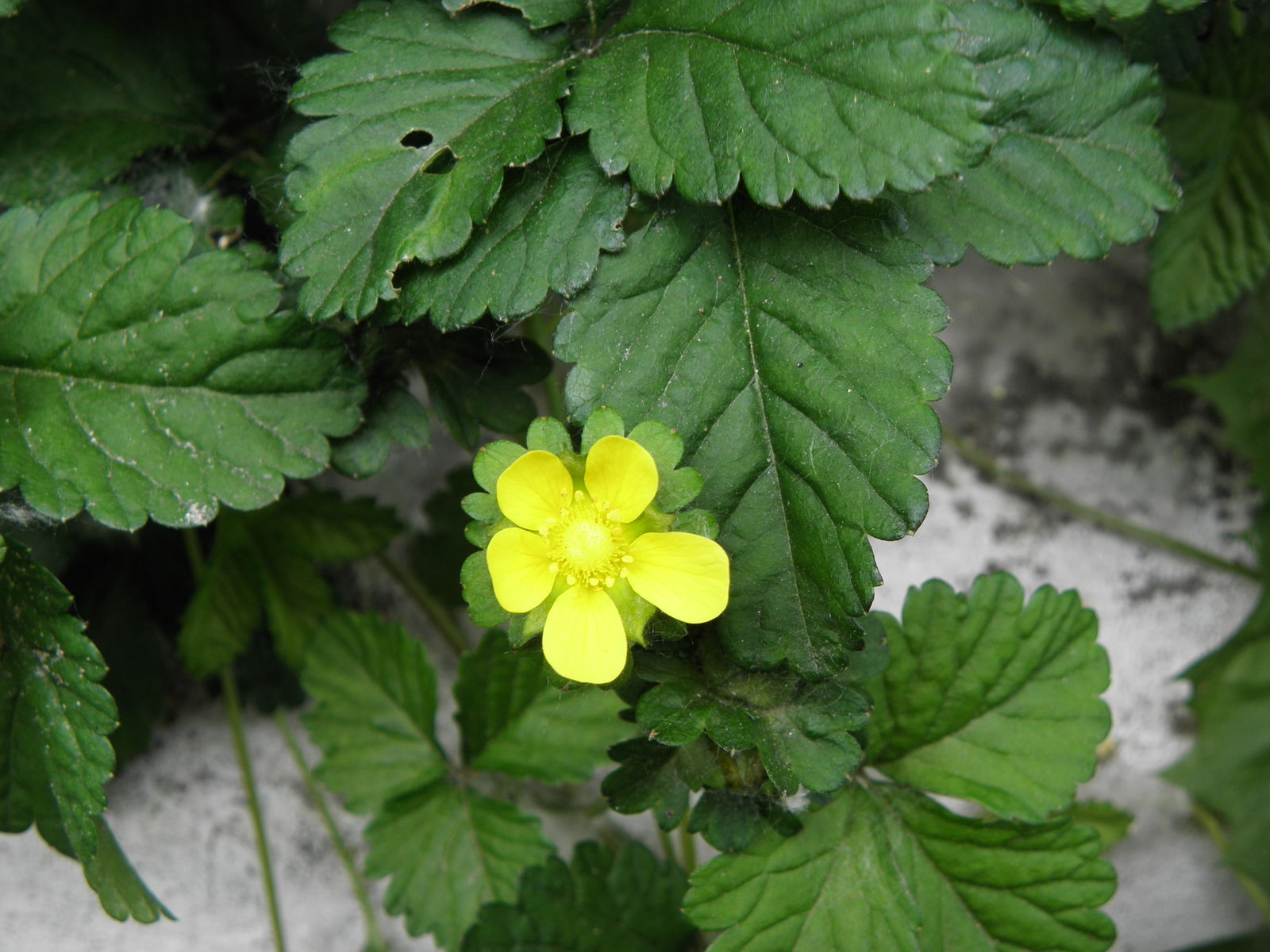
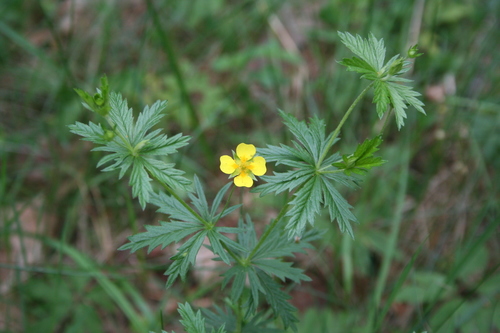
Yellow flowers often resolve confusion with true strawberries of the genus Fragaria. Mock strawberry has yellow flowers with five petals and twenty to thirty stamens, while true strawberries flower white or pale pink. 10 6
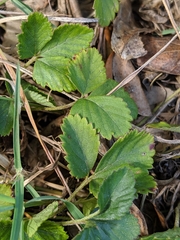
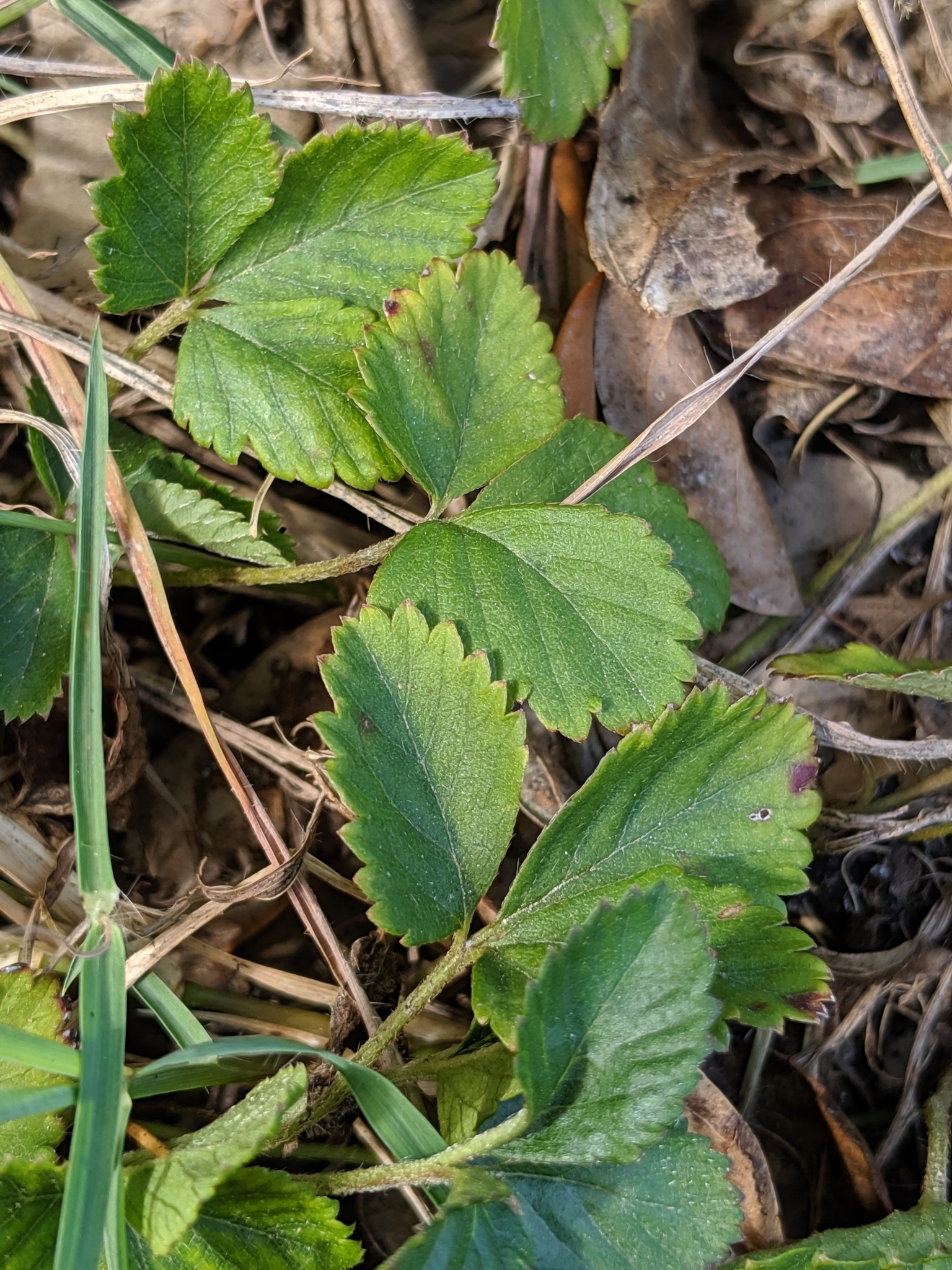
Low rosettes stand 2–10 cm (0.8–4 in) high and produce long runners extending 30–100 cm (12–39 in). Each node touching the soil roots and forms a daughter plant within weeks, without seed. Three toothed leaflets, each 1–5 cm (0.4–2 in) long, closely resemble woodland strawberry foliage. 9 3
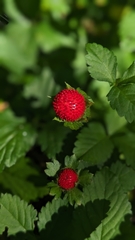
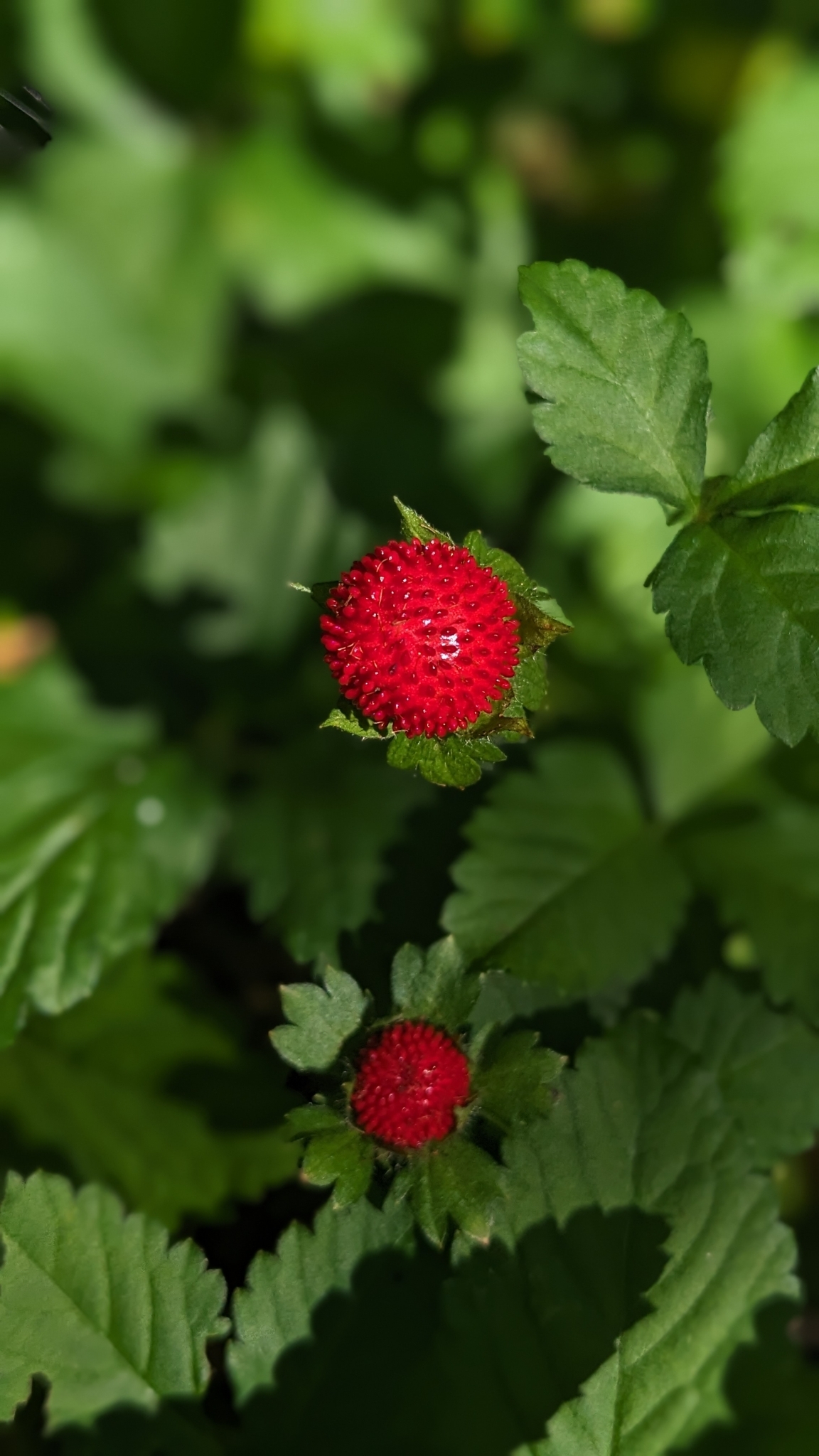
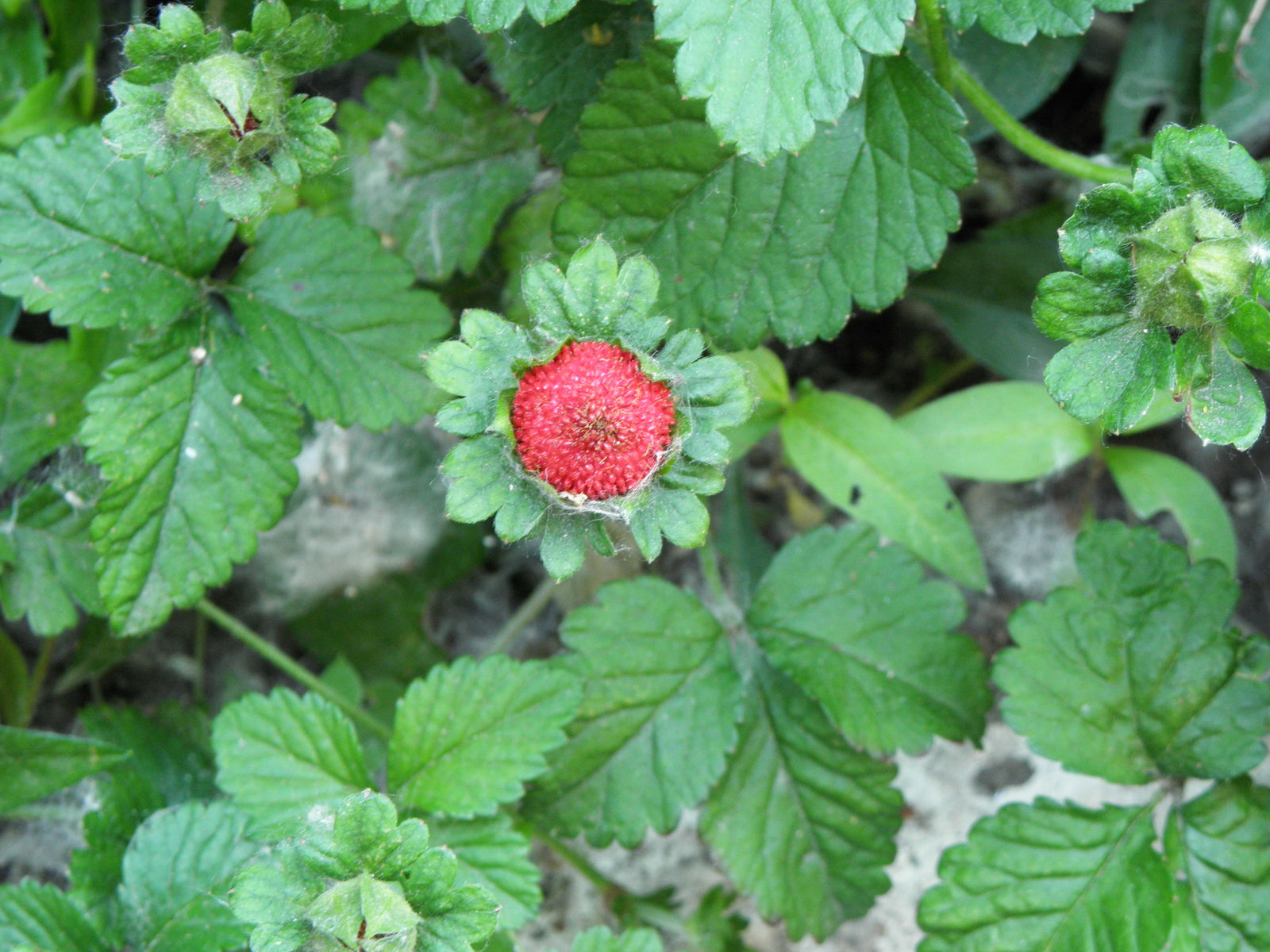
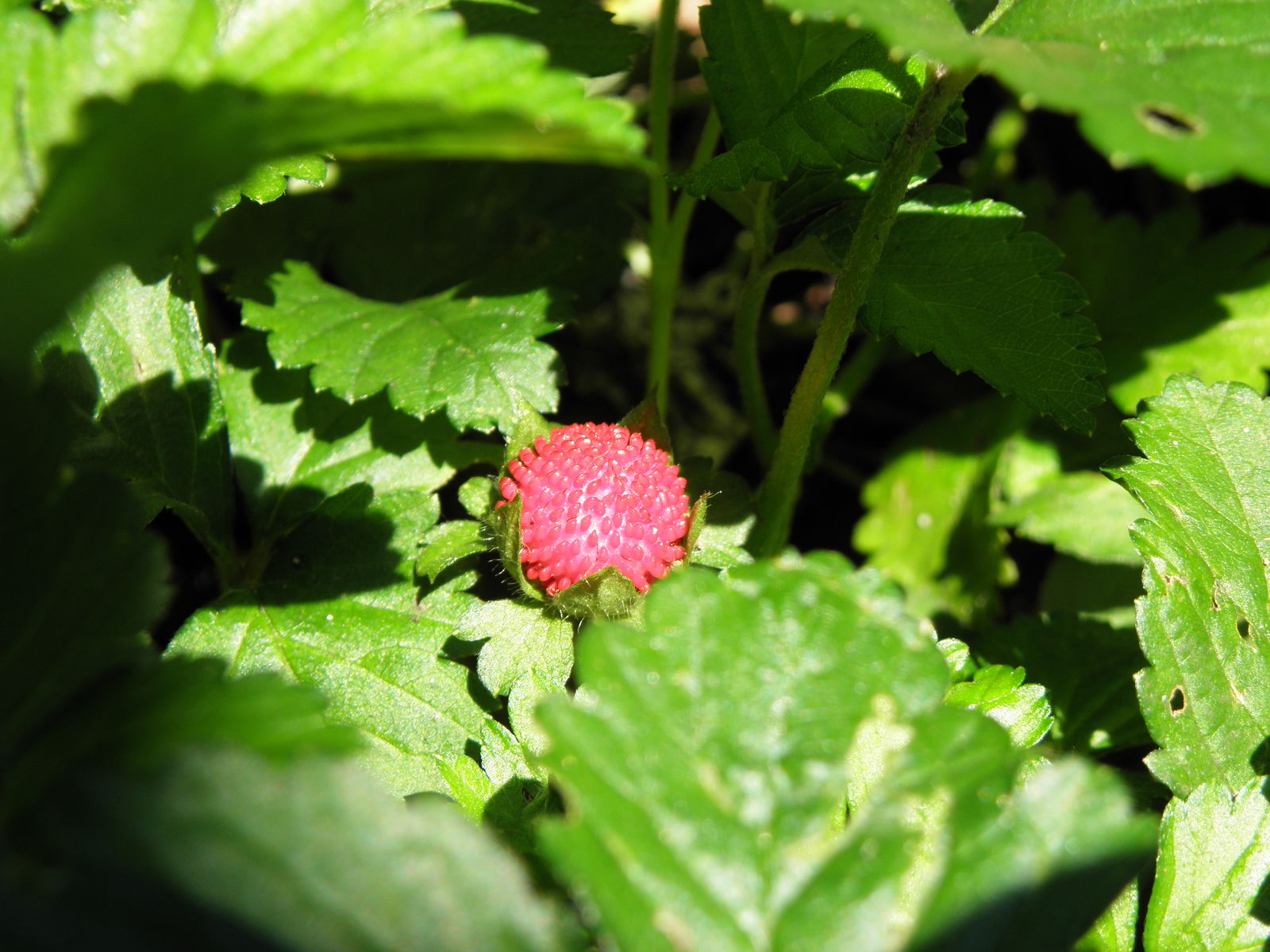
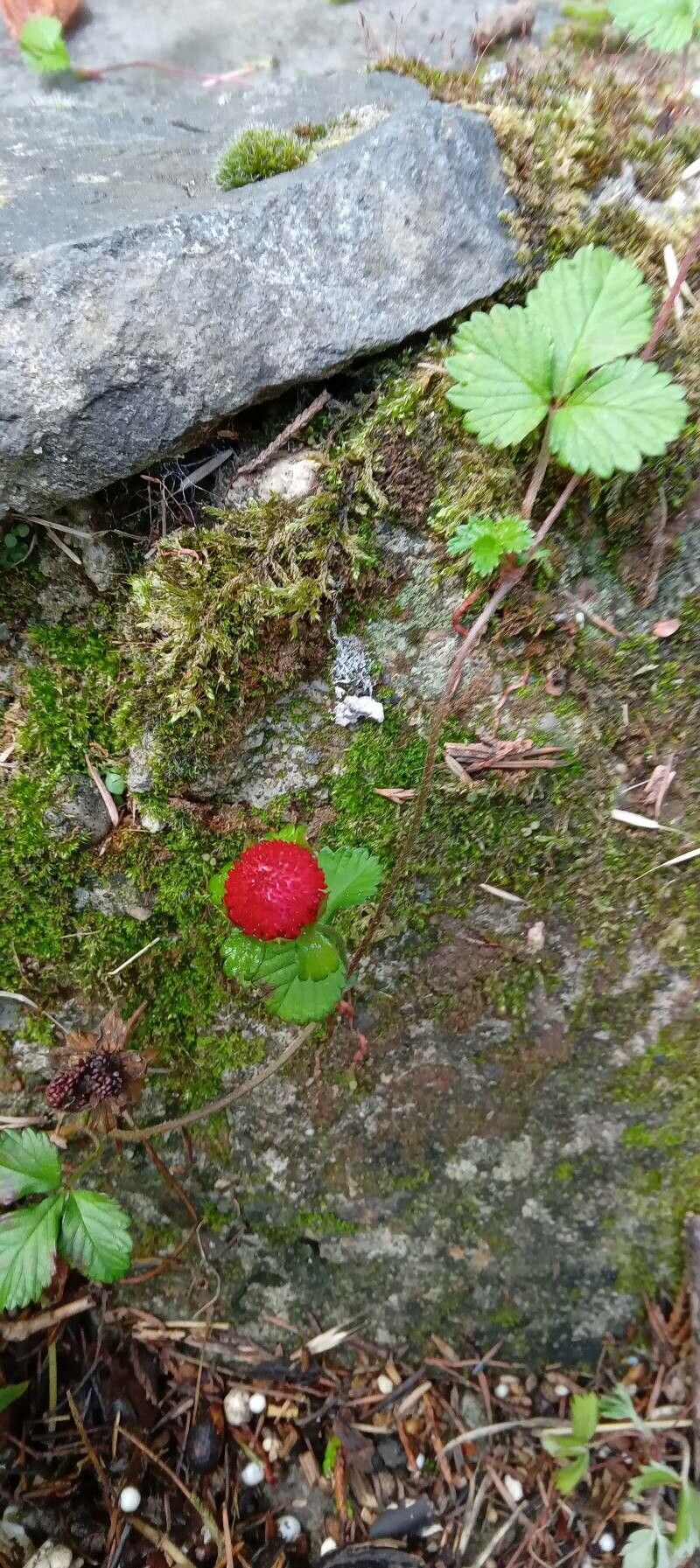
Round red accessory fruit measures 1–2 cm (0.4–0.8 in) across. Unlike a true strawberry, it points upward on its stalk instead of hanging down, and its whitish flesh is dry and tasteless. A rare white-fruited form, Potentilla indica f. albicaput, has been observed in Argentina and Japan. 10 5
Useful taxonomy
Earlier combinations still appear in databases alongside the accepted Potentilla indica. The principal synonyms and named forms to recognize are:
- Duchesnea indica (Andrews) Focke (Former genus combination)
- Fragaria indica Andrews (Original strawberry combination)
- Potentilla indica var. wallichii (Franch. & Sav.) Th.Wolf (Named botanical variety)
- Potentilla indica var. microphylla (T.T.Yu & T.C.Ku) H.Ohashi (Small-leaved botanical form)
- Potentilla indica f. albicaput (Naruh.) H.Ohashi (White-fruited botanical form)
Nurseries and some regional floras continue to use Duchesnea indica for the same plant. POWO’s accepted name, Potentilla indica (Andrews) Th.Wolf, provides the stable reference. 1 8
Habitat and range
Afghanistan marks the western end of mock strawberry’s extensive native range, which continues through India and the Himalayas to China, Japan, Korea and Southeast Asia as far as Malaysia. It grows in mountain areas, meadows, woodland edges and along watercourses. 9 7
European introductions as an ornamental began in the seventeenth century. The plant has naturalized, locally covering almost all the ground in some woodlands. In Wallonia, planting has been prohibited since January 1, 2013. It is also considered invasive in the southeastern United States, where it colonizes lawns, gardens and disturbed ground. 9 6
Life cycle and reproduction
Runners drive most mock strawberry spread: creeping stems 30–100 cm (12–39 in) long root at each node touching the soil and produce independent daughter plants within weeks. This vegetative route is much faster than growing a true strawberry from seed. Runners extend a colony by 30–100 cm in one season, while seed takes several years to form an equivalent mat. 9 6
Blooming runs from May to August, with solitary flowers sometimes persisting into December in mild climates. Each yellow petal has an ultraviolet-absorbing nectar guide, invisible to people but visible to pollinators, directing them toward the flower’s center. Natural crosses occur with related species, such as Duchesnea × hara-kurosawae with Duchesnea chrysantha. Crosses with true strawberries in Fragaria almost always fail: resulting embryos remain weak and do not germinate. 10 9
After forming, the accessory fruit takes several weeks to turn fully red. Flowers, green fruit and ripe fruit often occur together on one clump, extending its appeal to small pollinators well beyond peak flowering. 9
Uses and risks
No toxic effects are reported for people or pets: the RHS and Plants For A Future describe the species as having no known hazards. Its edible accessory fruit is nevertheless bland and dry, making it less appealing than a true strawberry. 3 4
Asian traditional medicine uses the whole mock strawberry plant. In China, where its name translates as “snake strawberry,” it has been applied as a poultice for bites and insect stings and used in decoctions for fever and abscesses. These traditional uses have no validated medical status in Europe. 9 4
Ecological effects can accompany vigorous spread. Several studies associate mock strawberry proliferation with local declines in soil fauna, particularly springtails and ants, in invaded areas. 10
Varieties, look-alikes and related plants
Named mock strawberry forms are botanical varieties or natural rarities rather than true horticultural cultivars. They include the white-fruited f. albicaput, recorded in Argentina and Japan, and the Himalayan varieties wallichii and microphylla. 1
True strawberries are the main look-alikes. Fragaria vesca and Fragaria × ananassa share a rosette, runners and three-leafleted foliage, but have white flowers and sweet, hanging fruit. Yellow flowers, upright fruit and whitish, bland flesh distinguish mock strawberry clearly. 5 3
Ground-ivy and white clover may share the same disturbed lawns or woodland habitats. Neither produces an upright, red, strawberry-shaped accessory fruit; inspecting the flowers also resolves the confusion. 6
Main sources
- Plants of the World Online / Kew, Potentilla indica (Andrews) Th.Wolf
- International Plant Names Index, Potentilla indica (Andrews) Th.Wolf
- Royal Horticultural Society, Duchesnea indica - Mock strawberry
- Plants For A Future, Duchesnea indica - Mock Strawberry
- Missouri Department of Conservation, Indian Strawberry (Mock Strawberry)
- Flora of the Southern and Mid-Atlantic States, Potentilla indica
- USDA PLANTS Database, Duchesnea indica (DUIN)
- ITIS, Potentilla indica (Andrews) Th. Wolf
- French Wikipedia, Potentilla indica
- English Wikipedia, Potentilla indica
Frequently asked questions
Is mock strawberry poisonous?
No. The RHS and Plants For A Future report no known toxic effects. The fruit is simply bland, with no real danger from accidental ingestion.
Can you eat mock strawberry fruit?
Technically yes, but the fruit is described as dry and tasteless, much less flavorful than a true strawberry. Cooked leaves are sometimes eaten in Asia.
How can I tell mock strawberry from a true strawberry?
Yellow flowers are the clearest clue, compared with white or pink in Fragaria. Upright fruit and whitish, bland flesh confirm the identification.
Is mock strawberry invasive?
Yes, in several regions. Planting has been prohibited in Wallonia since 2013, and the species is considered invasive in the southeastern United States.
Why was Duchesnea indica renamed Potentilla indica?
Molecular phylogenetic analyses of chloroplast DNA showed that Duchesnea was nested within Potentilla, leading to the species being reclassified.
How can I control mock strawberry in a garden?
Regularly remove rooted runners before they form a dense mat, or keep the plant in a container where its spread is easier to contain.
Similar plants
If you are unsure about a plant’s toxicity, ask a botanist or veterinarian for advice.