
Soapwort (Saponaria officinalis, )

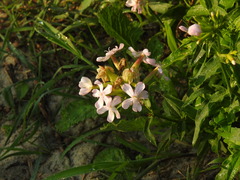
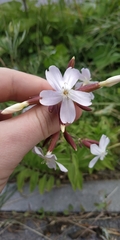
Soapwort (Saponaria officinalis) is a rhizomatous perennial in the Caryophyllaceae family, native to Europe and the Caucasus. It forms dense colonies of upright stems with opposite leaves and pink or white flowers in summer and fall, scented most strongly in the evening. Its roots and seeds contain foaming saponins, giving the plant its name and a long history as a plant-based soap for wool and delicate fabrics.
Read moreSoapwort, Common soapwort and Bouncing bet



© photo
(c) ingakom, some rights reserved (CC BY-NC) · cc-by-nc
Duarte Frade · cc-by
Yurii Basov · cc-by
Taken Feb 4, 2020 by de Tezanos Pinto Ximena (cc-by-sa)
Taken Mar 8, 2021 by Rhys Williams (cc-by-sa)
Taken Jul 15, 2019 by Annie Salvador (cc-by-sa)
Taken Jul 25, 2020 by Llandrich anna (cc-by-sa)
Taken Aug 24, 2019 by Romain Bellec (cc-by-sa)
© copyright of the Board of Trustees of the Royal Botanic Gardens, Kew.




Global distribution
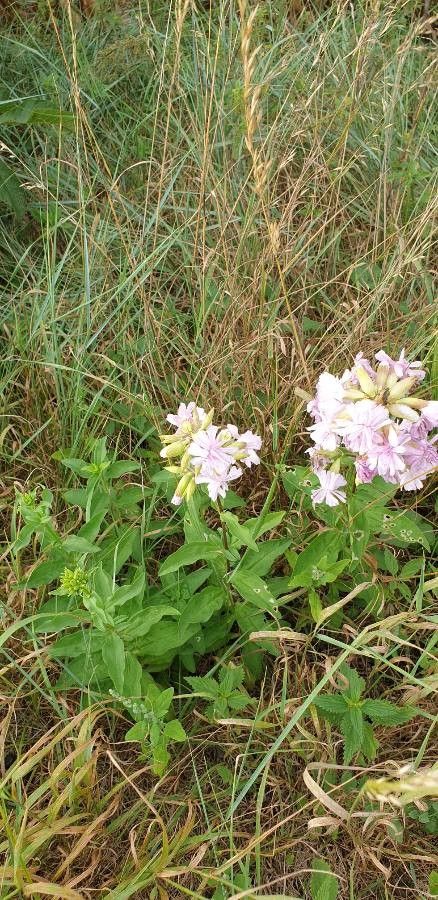
Saponaria officinalis is native from Europe to the Caucasus, with a continuous presence from Scandinavia to Spain reported by horticultural extension sources. It is native to metropolitan France, occupying disturbed habitats without a concerning status. Long introduced to North America, it is widely naturalized along roads and on waste ground.
- Native3
- Introduced3
- Metropolitan France
- Central Europe
- Caucasus
- United Kingdom
- United States
- Canada
Hexagons: regions where the plant occurs. Green dots: native range.1
Identity
Soapwort (Saponaria officinalis L., 1753), or common soapwort, is a perennial 40 to 100 cm (16 to 39 in) tall in the genus Saponaria, family Caryophyllaceae. Its name comes from the Latin sapo, meaning soap: a crushed root beaten in water releases a fine foam through triterpenoid saponins, concentrated mainly in the roots and seeds. 1 8
Foaming saponins also explain the French names herbe à savon and herbe à foulon. The latter recalls fullers, workers who removed grease from shorn wool with a root decoction. The English nickname bouncing bet evokes a washerwoman bent over her laundry, while soapwort directly means a soap plant. 3 8
Recognition
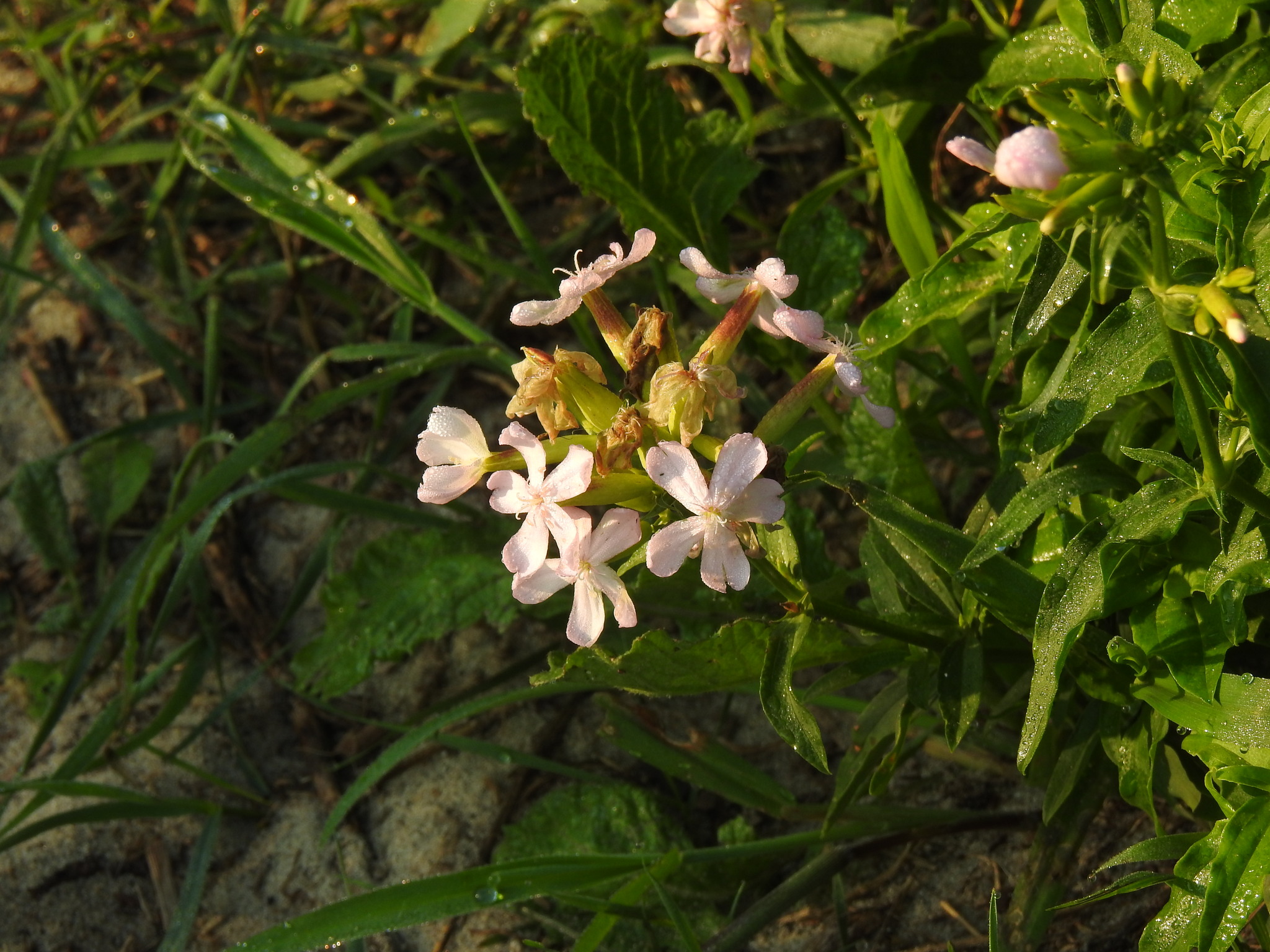
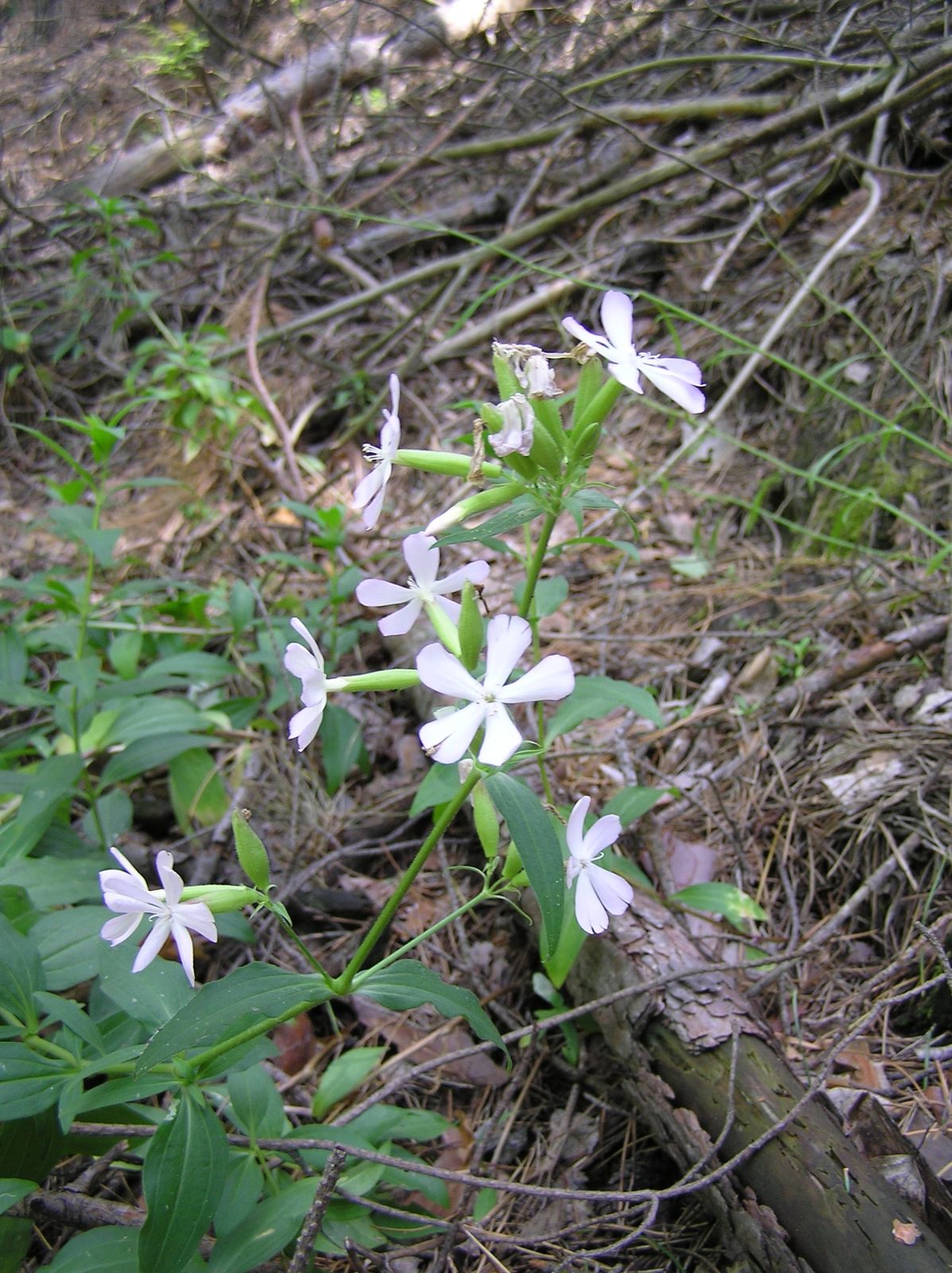
Sturdy cylindrical stems rise 40 to 100 cm (16 to 39 in) in upright colonies, often tinged red at the swollen nodes characteristic of Caryophyllaceae. Opposite, oval-lanceolate leaves have no stalk and show three prominent lengthwise veins, useful for recognizing the plant even without flowers. 2 4
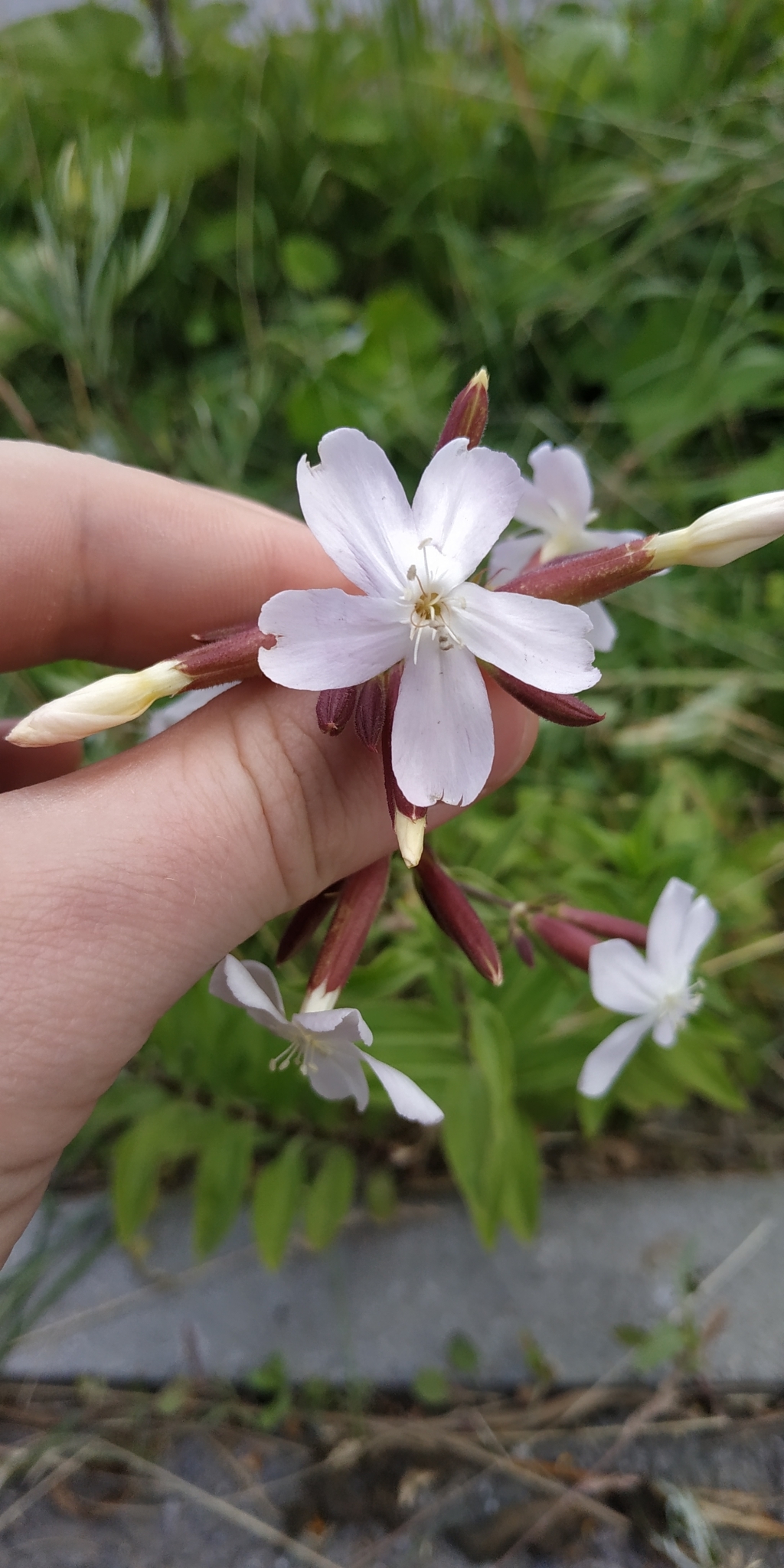
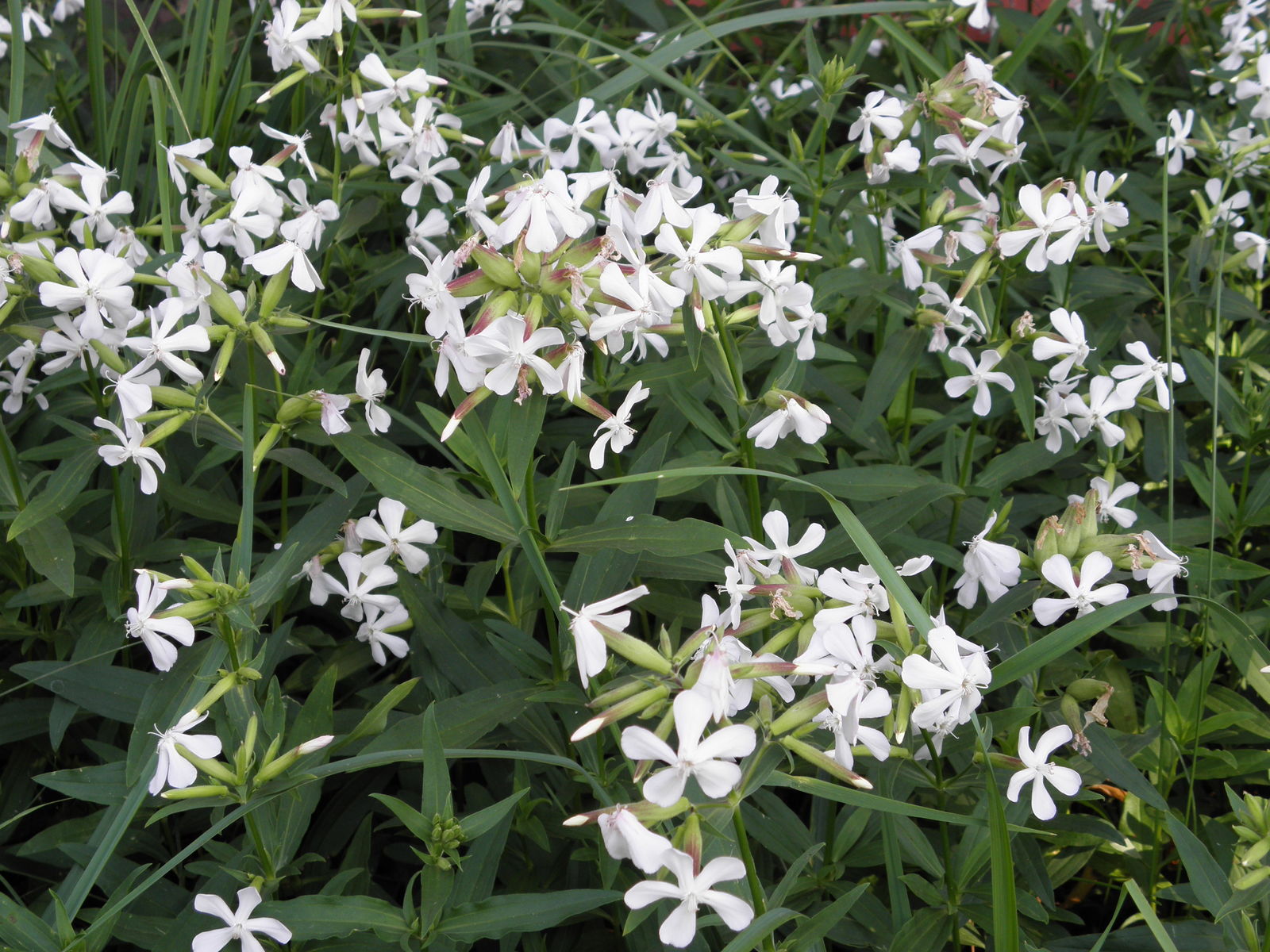
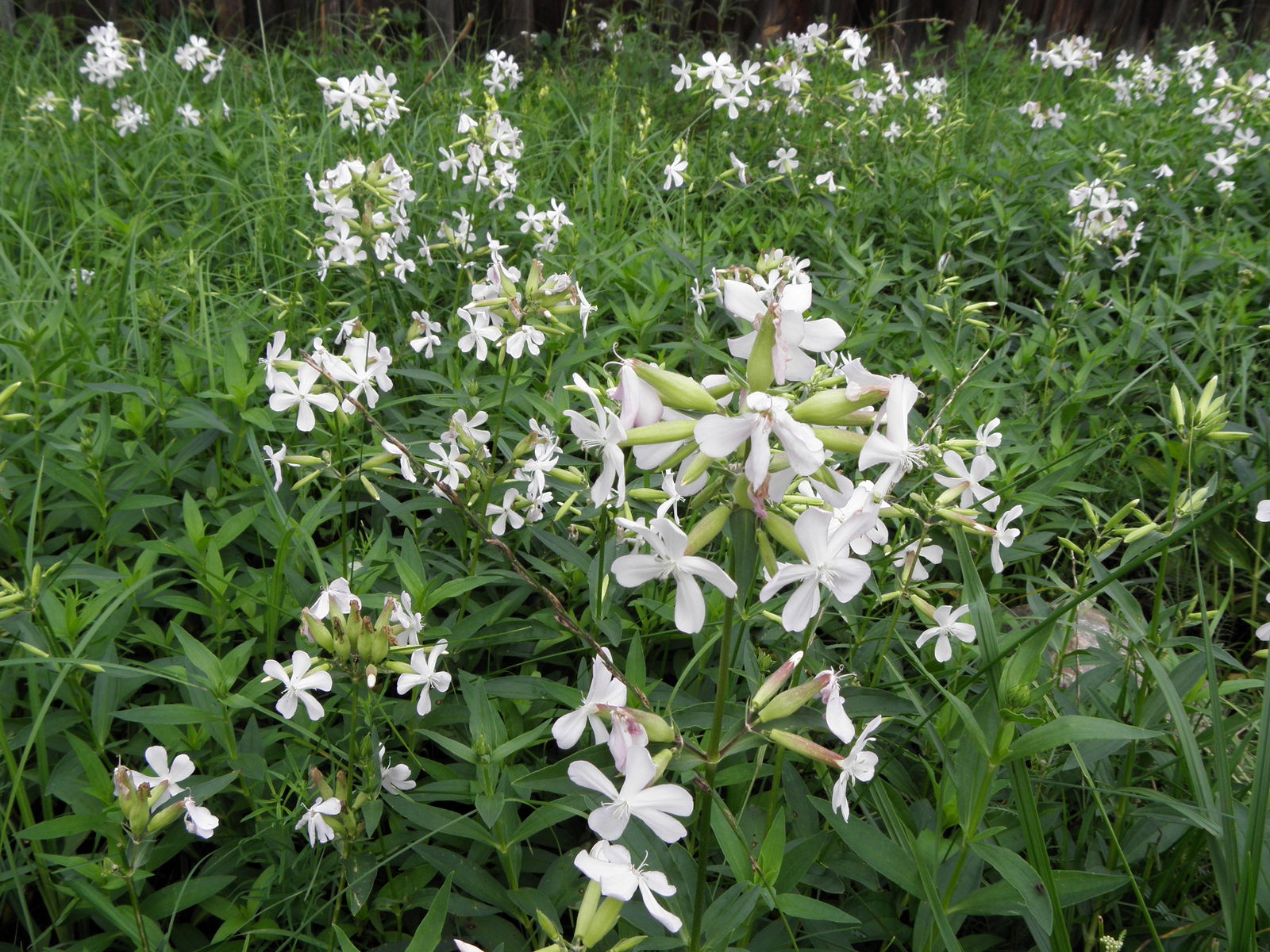
Dense terminal flower clusters contain pink or white blooms with five petals. Each petal has two small scales at its base, making a crown at the entrance to the tubular calyx. Flowers measure 1.5 to 2.5 cm (0.6 to 1 in) across and release a stronger scent as evening falls, mainly attracting pollinating moths. 4 3
An oblong capsule holds numerous small black seeds, released through four teeth at maturity. Below ground, an often shallow creeping rhizome turns a single clump into a continuous colony within two to three years. 3
Useful taxonomy
In 1753, Carl Linnaeus described Saponaria officinalis L., the name still accepted by Kew. The genus Saponaria contains around twenty species of Caryophyllaceae, several of which share this foaming property without the epithet officinalis. 1 7
The main cultivated garden forms are horticultural selections rather than separate species:
- Saponaria officinalis 'Rosea Plena', with double pink flowers;
- Saponaria officinalis 'Alba Plena', with double white flowers;
- Saponaria officinalis 'Variegata', with cream-variegated foliage.
Keeping the accepted name Saponaria officinalis provides a stable reference: these cultivars change neither the family's identity nor the rhizomatous behavior of the typical species. 2
Habitat and range
Across Europe to the Caucasus, soapwort has a native range with a continuous presence from Scandinavia to Spain reported by English-language horticultural extension sources. In metropolitan France it colonizes disturbed habitats, including roadsides, banks, streambanks and waste ground, on poor, well-drained and often calcareous soils. In these exposed places it tolerates cold down to −15 °C (5 °F) without special protection. 3 8
Long-established introductions in North America have become widely naturalized along roads and on waste ground. There, soapwort is considered a common weed, a different status from that of an ordinary native species in Europe. 4
Life cycle and reproduction
Once spring temperatures exceed 15 °C (59 °F), the rhizome sends up new stems that flower through summer and early fall, sometimes later into fall in mild climates. Each pollinated flower forms a capsule releasing many small seeds, but the creeping rhizome chiefly maintains and expands colonies from one season to the next. 2 4
Garden propagation mainly relies on rhizome division in spring or fall, a reliable method when soil stays moist enough to encourage establishment. Seed propagation is reserved for the typical species and requires cold stratification, after which seeds germinate in about four weeks. 3 4
For traditional textile use, two- to three-year-old rhizomes offer the most useful saponin concentration. Steeped in hot water, they produce a foaming solution gentle enough for delicate fibers. 8
Uses and risks
Historically, soapwort served as a plant-based soap. Its decoction removed grease from freshly shorn wool and cleaned delicate fabrics without changing their colors. Textile conservators still use rhizome decoctions to gently clean fragile old tapestries and fabrics. 8
Every part contains triterpenoid saponins, concentrated mainly in the roots and seeds. In humans, ingestion causes digestive upset, nausea, vomiting and diarrhea; normal external use is not associated with serious effects. The ASPCA lists soapwort as toxic to cats and dogs, with a comparable risk in horses after substantial ingestion. 4 6
Vigor is the main gardening drawback. In rich, moist soil, colonies spread quickly through rhizomes and elongated stems tend to flop. Poor, well-drained soil reduces this expansion without harming flowering, explaining its suitability for rock gardens and banks rather than heavily fed beds. Divide clumps every 2 to 3 years to keep them compact. 5
Varieties, look-alikes and related plants
Double-flowered forms belong to the same species. 'Rosea Plena' and 'Rubra Plena' have sterile, double pink to red flowers without viable seed; 'Variegata' has cream-edged leaves. These selections are propagated only by division. 2
Other pink-flowered Caryophyllaceae on similar banks and dry meadows can be mistaken for soapwort:
- Dianthus barbatus, with a short calyx and fringed petals, lacking soapwort's crown scales;
- Silene dioica, with smaller flowers and a bladder-like swollen calyx;
- Lychnis flos-cuculi, with petals deeply divided into fine strips.
To distinguish Saponaria officinalis from sweet-william, count the five petals and the two crown scales, which Dianthus barbatus lacks. The elongated tubular calyx and small scales at the petal bases are the most reliable distinctions from Dianthus barbatus, Silene dioica and Lychnis flos-cuculi, together with the characteristic soapy smell of crushed roots. 4 2
Main sources
- Plants of the World Online / Kew, Saponaria officinalis L.
- Royal Horticultural Society, Saponaria officinalis - soapwort
- Plants For A Future, Saponaria officinalis
- NC State Extension, Saponaria officinalis
- Missouri Botanical Garden, Saponaria officinalis 'Flore Pleno'
- ASPCA, Soapwort toxic plant entry
- ITIS, Saponaria officinalis L. taxonomic serial number
- Wikipedia, Saponaire officinale (soapwort)
Frequently asked questions
Is soapwort toxic?
The whole plant contains saponins, concentrated mainly in the roots and seeds. Ingestion causes digestive upset in humans, and the ASPCA lists it as toxic to cats and dogs, with a comparable risk in horses.
Why is this plant called soapwort?
Crushed roots and leaves beaten in water release a fine foam because of their saponins. This foaming action was long used to remove grease from shorn wool and wash delicate fabrics without manufactured soap.
How does single-flowered soapwort differ from Rosea Plena?
The typical species has single flowers with five petals that can produce seeds. Rosea Plena and other double forms are sterile horticultural selections propagated only by dividing the rhizomes.
Can soapwort take over a garden?
Its creeping rhizome quickly colonizes favorable soil and can become overbearing in a rich, moist flower bed. Poor, well-drained soil and regular division are enough to contain its spread.
Can soapwort still be used to wash fabrics?
Yes. A decoction of two- to three-year-old rhizomes steeped in hot water is still used in textile conservation to gently clean old tapestries and fabrics too delicate for ordinary soap.
How can I tell soapwort from sweet-william?
Dianthus barbatus has a short calyx and fringed petals, without the two small scales at the petal bases found in soapwort. The elongated tubular calyx of Saponaria officinalis is the most reliable feature.
Where does soapwort grow wild?
Its native range extends from Europe to the Caucasus. In France, it grows on roadsides, banks and beside streams on poor, often calcareous soils. It is also widely naturalized in North America.
Similar plants
If you are unsure about a plant’s toxicity, ask a botanist or veterinarian for advice.