
Giant sequoia (Sequoiadendron giganteum, )
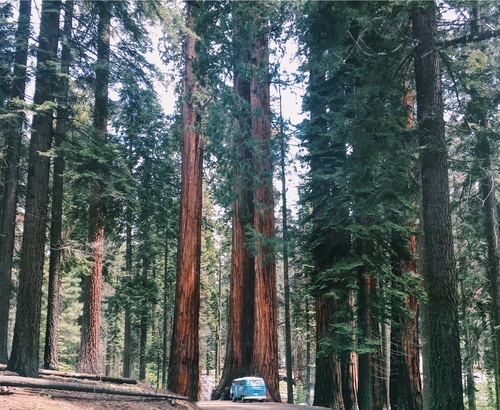
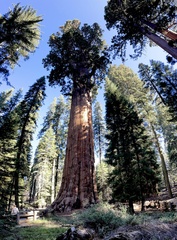

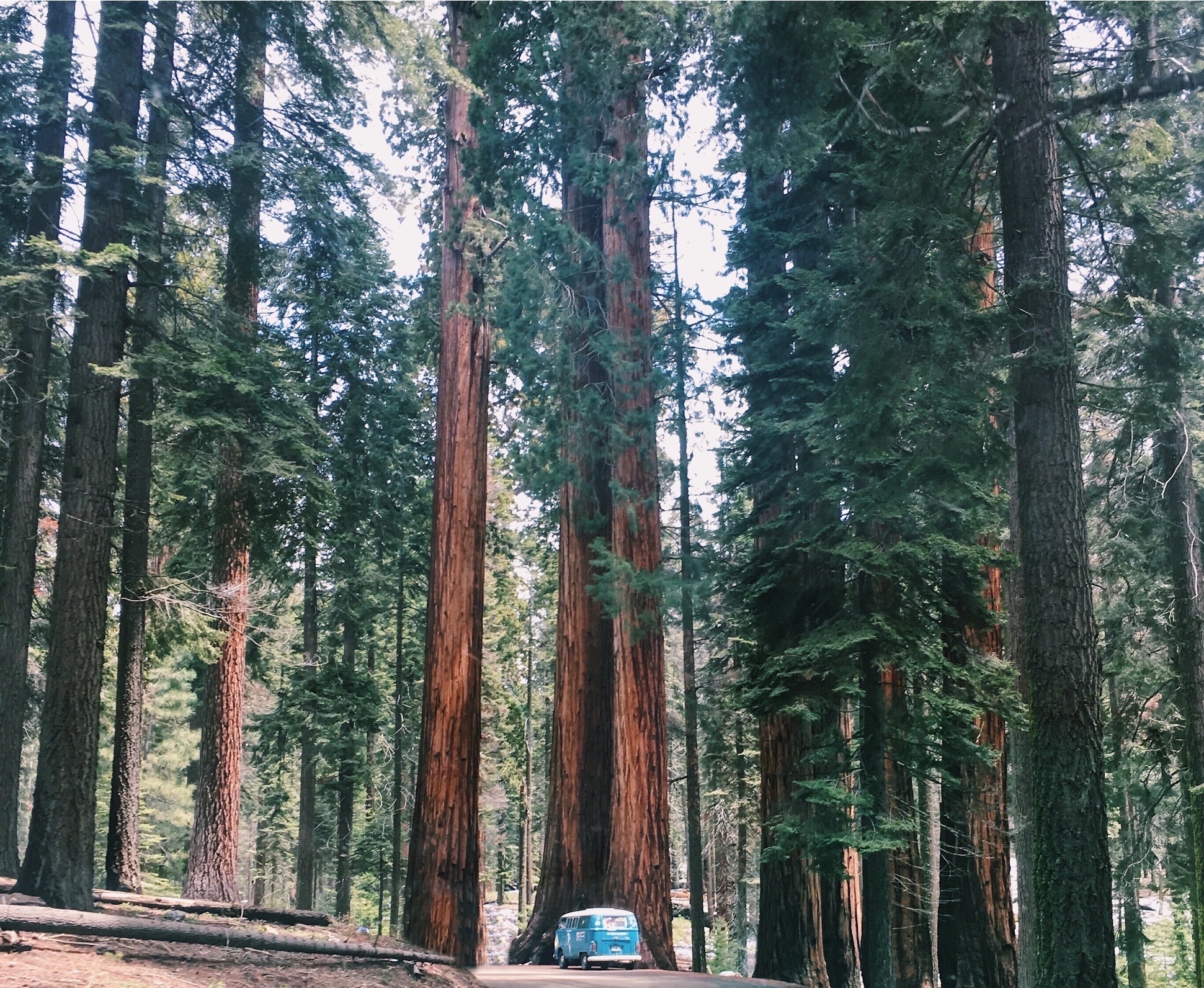
Giant sequoia (Sequoiadendron giganteum) is an immense conifer in the Cupressaceae family, native only to the western slopes of California’s Sierra Nevada. The sole living species of its genus, it is the world’s largest tree by wood volume. Thick, fire-resistant bark protects its trunk, and forest fires play an important part in releasing its seeds.
Read moreGiant sequoia, Giant redwood, Wellingtonia, Big tree and Sierra redwood



© photo
(c) carolanne625, some rights reserved (CC BY-NC) · cc-by-nc
Irene · cc0
Jason Hernandez · cc0
Taken Feb 8, 2022 by Ernst Fürst (cc-by-sa)
Taken Sep 24, 2016 by Dieter Albrecht (cc-by-sa)
Taken Jun 29, 2022 by Easger (cc-by-sa)
Taken Jul 3, 2022 by Tristan Jaton-Maria (cc-by-sa)
Taken May 14, 2020 by Mr. Spruce (cc-by-sa)
© copyright of the Board of Trustees of the Royal Botanic Gardens, Kew.




Global distribution
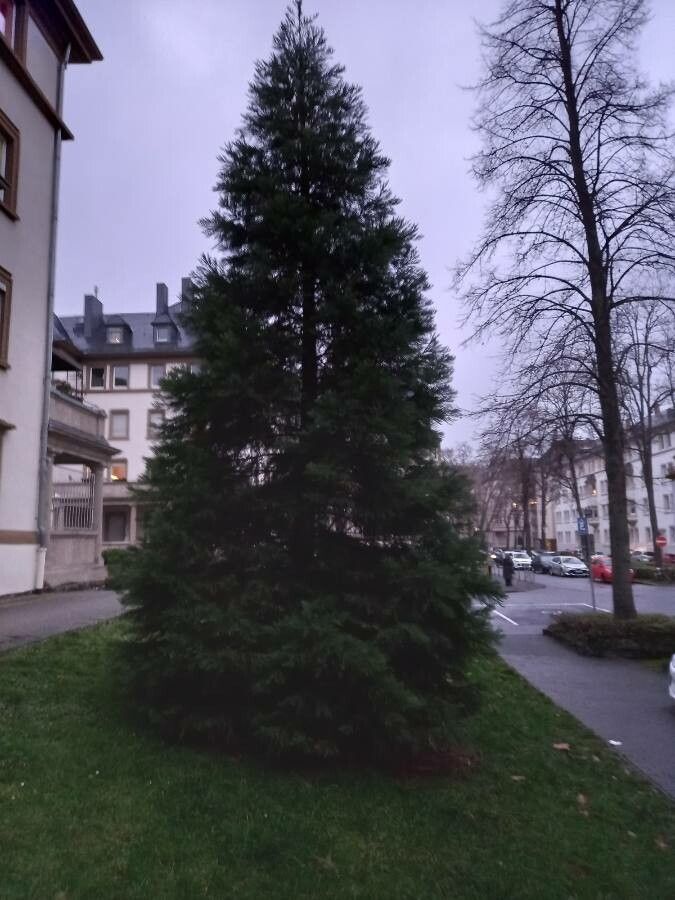
Sequoiadendron giganteum is native only to the western Sierra Nevada in California, in scattered groves at 1,400–2,400 m (4,600–7,900 ft) elevation. Widely planted as an ornamental around the world since the 19th century, it does not show invasive behavior outside its native range.
Identity
Giant sequoia (Sequoiadendron giganteum (Lindl.) J.Buchholz, 1939), also known as wellingtonia, giant redwood, big tree or Sierra redwood, is a conifer in the Cupressaceae family, subfamily Sequoioideae. It is the sole living species of Sequoiadendron, with no other close botanical counterpart among living trees. 1 7
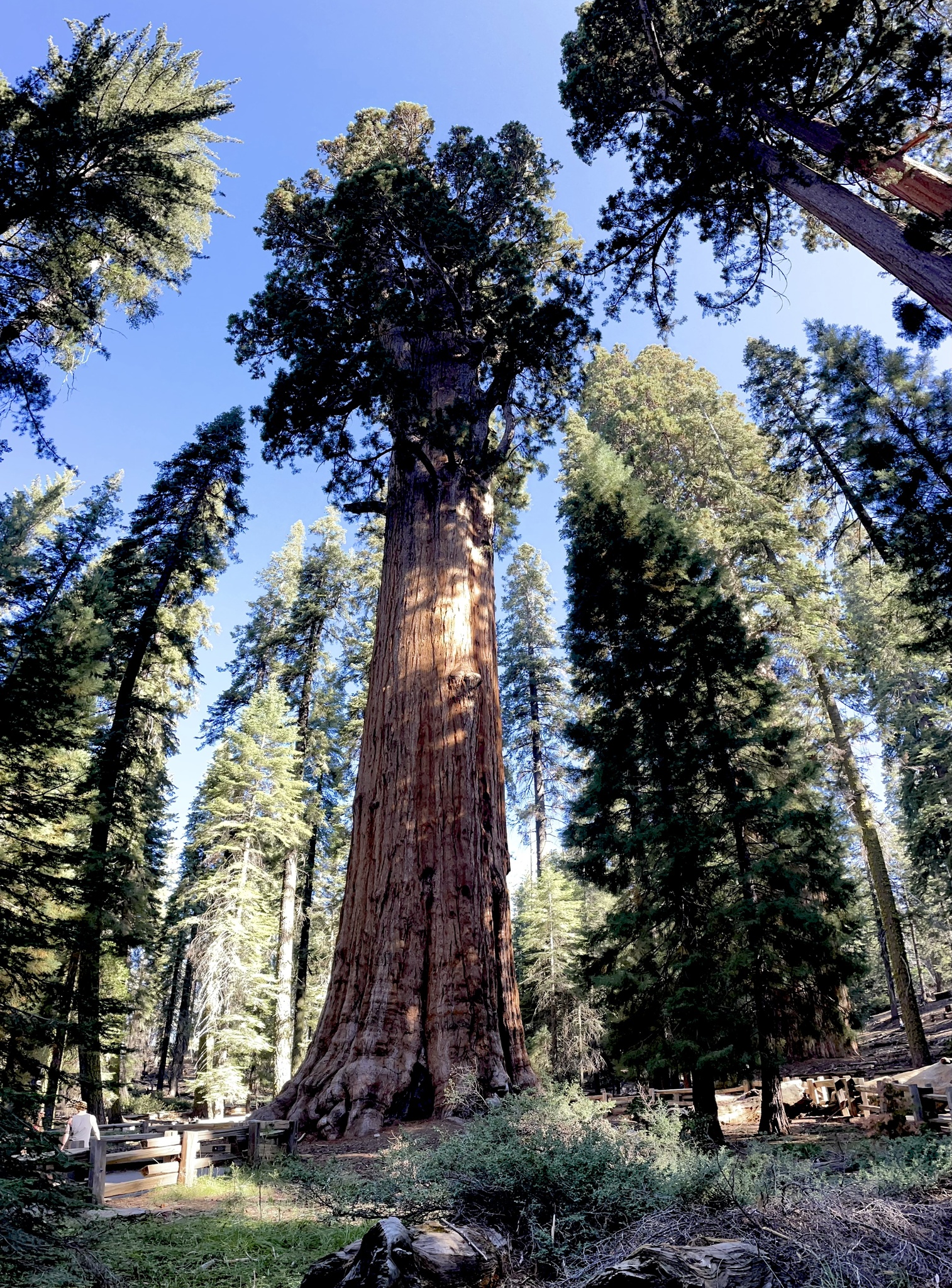
Wood volume makes giant sequoia the largest tree in the world. General Sherman in Sequoia National Park contains about 1,487 m³ (52,500 cu ft) of wood and stands 83.8 m (275 ft) tall. Coast redwood grows taller, but no trunk rivals this volume. Height and bulk therefore distinguish the records held by these two related Californian conifers. 3 2
Recognition
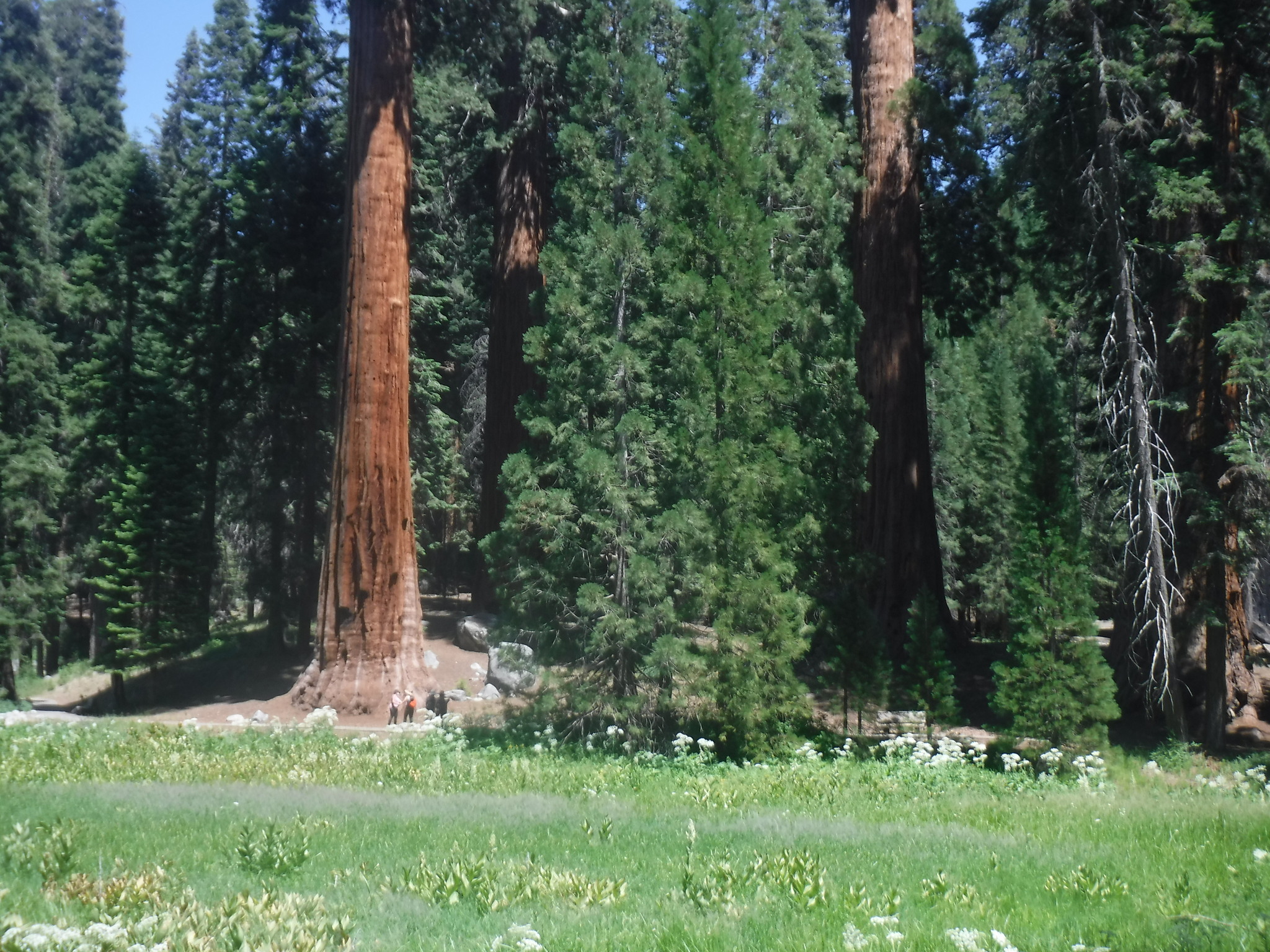
Thick, cinnamon-red bark immediately distinguishes Sequoiadendron giganteum. Fibrous and rich in tannins, it can exceed 60 cm (2 ft) thick at the base of old trees. This bark insulates the living wood against the heat of low- to moderate-intensity fires, forming a substantial protective layer around the trunk. 4 2
The foliage consists of small, pointed blue-green scales, tightly arranged in spirals around each shoot. There are no flat needles or visible central veins. The massive trunk tapers very little and remains almost cylindrical through much of its height, clearly different from the more strongly tapering trunks of many familiar conifers. 2
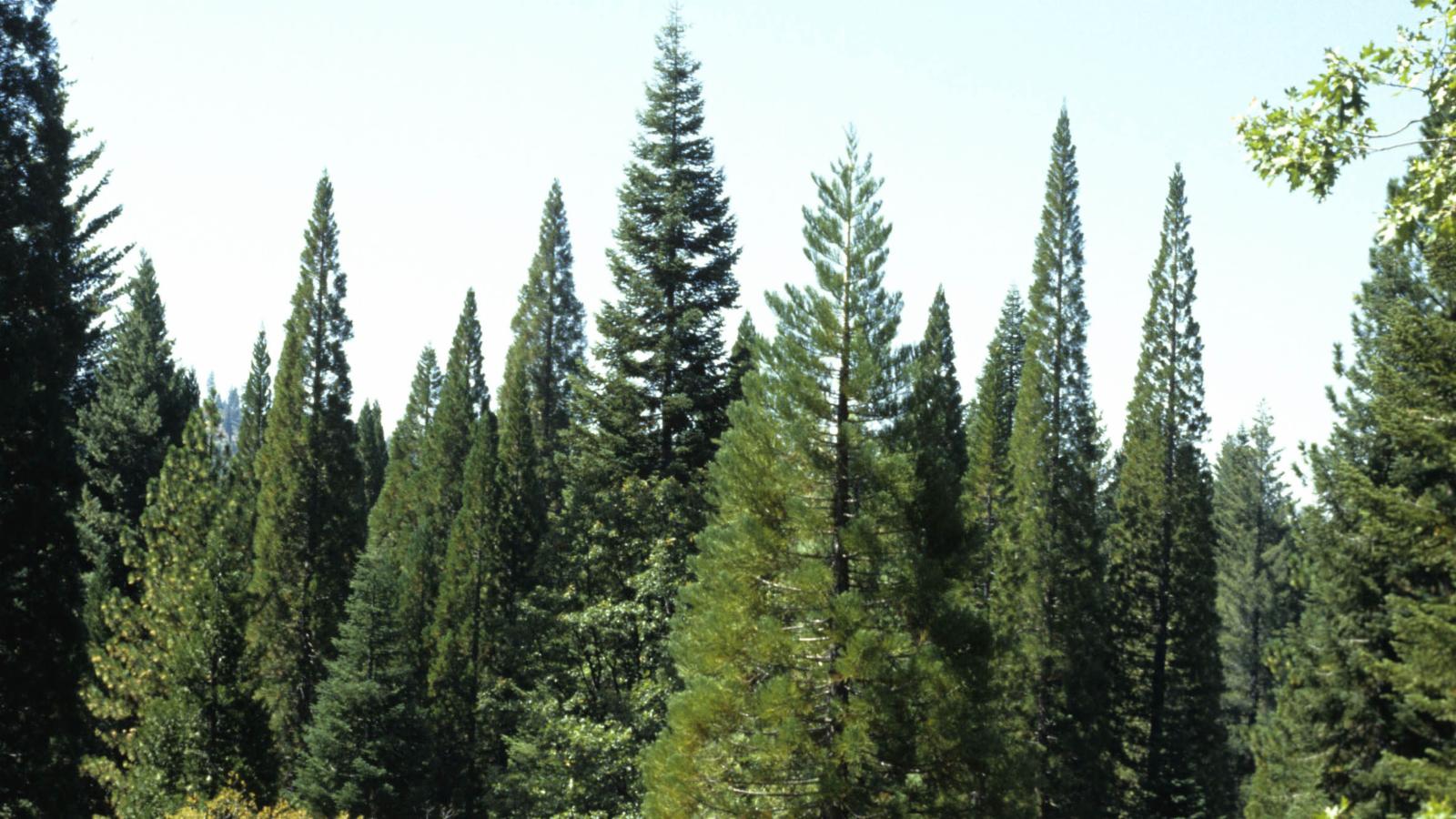
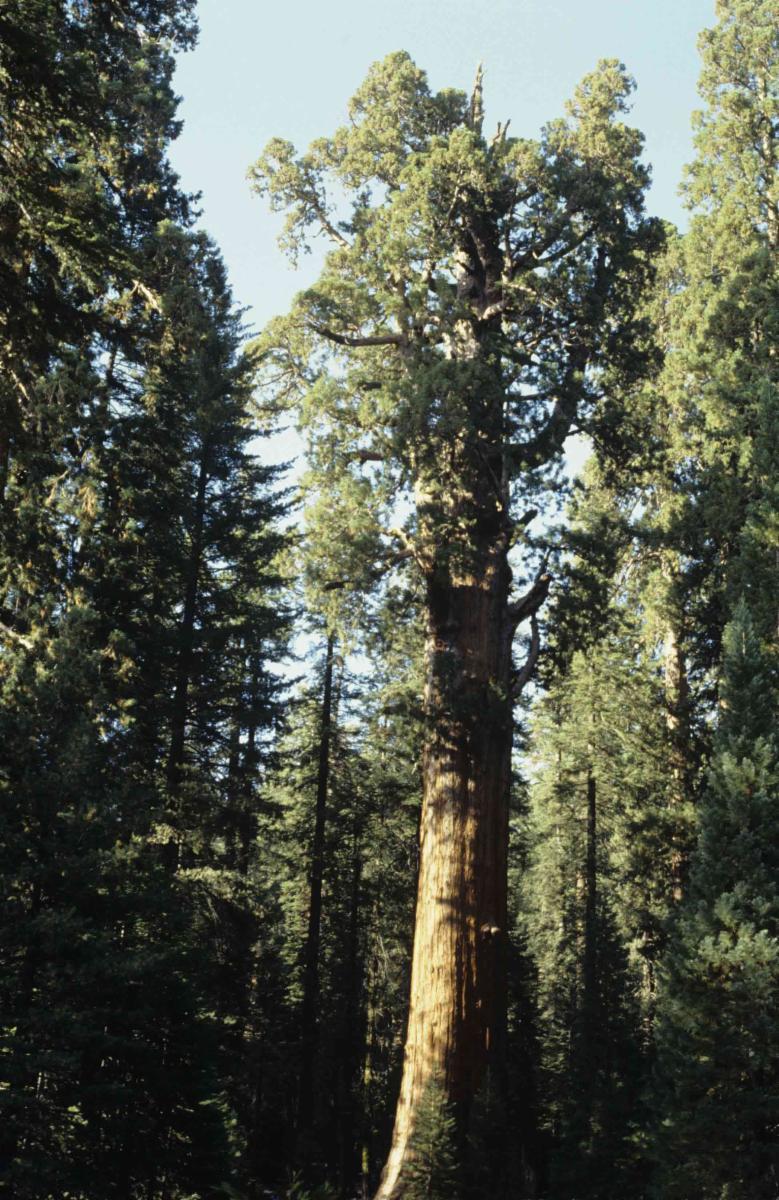
Young trees have a regular conical crown. After several centuries it becomes irregular, sometimes flattened or broken at the top following lightning strikes or wind damage. Despite the enormous trunk, the roots are shallow and widely spreading, with no deep taproot. An isolated tree on waterlogged soil may fall in a storm because it lacks deep anchorage. 3 4
Useful taxonomy
Naming this Californian giant took several attempts. In December 1853, British botanist John Lindley described it as Wellingtonia gigantea Lindl., honoring the Duke of Wellington without realizing that the genus name was already occupied. 6
American botanists protested strongly: they considered it inappropriate to name a tree discovered in California after an English general. Belgian botanist Joseph Decaisne proposed Sequoia gigantea (Lindl.) Decne. in 1854. This name also proved invalid, with Sequoia already in use for coast redwood since 1847. 6
In 1939, John T. Buchholz resolved the naming history by establishing Sequoiadendron as a genus distinct from coast redwood. The accepted name, Sequoiadendron giganteum, provides the stable taxonomic reference behind these historical synonyms. 1 6
Habitat and range
California’s western Sierra Nevada slopes hold the entire native range of giant sequoia. Trees occur in scattered groves at 1,400–2,400 m (4,600–7,900 ft) elevation, on unglaciated slopes and in valleys where soil remains moist. These are mountain forest habitats rather than the coastal fog belt occupied by coast redwood. 1 8
The first public report by European settlers dates to the discovery of the Calaveras grove in 1852. Since the 19th century, the tree has been planted as an ornamental worldwide, including France, the United Kingdom and Australia, without becoming invasive there. 6 7
Wild populations remain threatened. High-intensity fires in 2020 and 2021 alone destroyed 13–19% of the population of large trees. Decades of fire suppression had allowed unusually heavy fuel loads to accumulate, while worsening drought compounded the damage. The fires involved were far more destructive than the lower-intensity burns that help the species regenerate. 5
Life cycle and reproduction
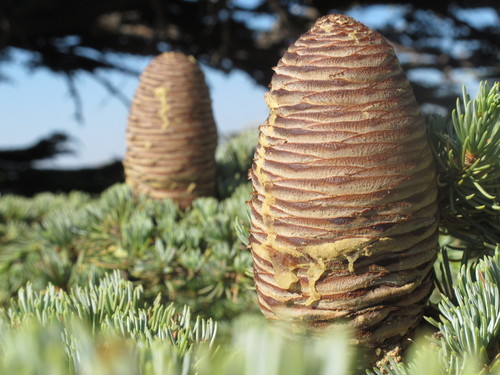
Spring winds carry pollen from male cones to female cones. The latter develop into woody, egg-shaped seed cones 5–9 cm (2–3.5 in) long, much larger than those of coast redwood. Cone size is useful for identification as well as for understanding the tree’s reproductive cycle. 2
Serotiny is central to reproduction: mature cones stay closed for years, sometimes decades, until dried by the heat of a forest fire. This connection with fire releases seeds mainly onto ground recently cleared of litter, where conditions favor germination. Seed release and the creation of a suitable seedbed are thus closely linked. 4
Between fires, Douglas squirrels chew the fleshy scales of young cones, releasing some seeds throughout the year. Wood-boring insects release more as they tunnel through mature cones. In cultivation, the typical species is raised from seed after stratification; cuttings or grafting reproduce particular cultivars faithfully. 4
Uses and risks
Monumental specimen planting remains its main ornamental role. Giant sequoia needs extensive open space in large parks and arboretums, beyond what a small garden can provide. Some avenues planted in Europe during the 19th century have now become imposing rows of mature trees. The space required by the typical species matters as much as its appearance when choosing a planting site. 2
No known toxicity is reported in humans, cats or dogs; toxicity to horses remains undocumented. The main practical threat concerns the tree itself: prolonged drought weakens it and encourages bark beetle attacks, a factor identified in mortality during 2020 and 2021. 5
Varieties, look-alikes and related plants
Named garden selections all belong to the same taxon. 'Pendulum' corresponds to the botanical form f. pendulum and has weeping growth. 'Glaucum' and 'Powder Blue' have more strongly blue foliage, while 'Hazel Smith' is grown particularly for its improved cold tolerance. These differences concern cultivated forms rather than separate species. 1
The main look-alikes are:
- Sequoia sempervirens, coast redwood, with flat needles and thinner, darker bark;
- Metasequoia glyptostroboides, dawn redwood, with deciduous, opposite foliage rather than spirally arranged leaves;
- large Cupressus or Chamaecyparis, sometimes mistaken for young giant sequoias when no cones are visible.
Cone length provides the most dependable comparison with coast redwood: 5–9 cm (2–3.5 in) in giant sequoia versus 2–2.5 cm (0.8–1 in) in coast redwood. Where foliage alone leaves room for doubt, a mature cone makes the difference much clearer. 2
Main sources
- Plants of the World Online / Kew, Sequoiadendron giganteum (Lindl.) J.Buchholz
- Royal Horticultural Society, Sequoiadendron giganteum - giant redwood
- National Park Service, The General Sherman Tree
- National Park Service, Giant Sequoias and Fire
- National Park Service, 2021 fire season impacts to giant sequoias
- Oregon State University Landscape Plants, Discovery and naming of Sequoiadendron giganteum
- INPN / MNHN, Sequoiadendron giganteum (Lindl.) J.Buchholz, 1939 (cd_nom 122788)
- Tela Botanica, Sequoiadendron giganteum (Lindl.) Buchholz
Frequently asked questions
Is giant sequoia the largest tree in the world?
Yes, by wood volume. General Sherman in Sequoia National Park contains about 1,487 m³ (52,500 cu ft) of wood. It is not the tallest tree: coast redwood grows taller.
Why is giant sequoia bark so thick?
Its fibrous, tannin-rich bark can exceed 60 cm (2 ft) thick at the base, insulating living wood from the heat of fire. It burns slowly rather than readily igniting, protecting the tree during low- to moderate-intensity fires.
Does giant sequoia need fire to reproduce?
To a large extent, yes. Its cones remain closed for years until dried by the heat of fire, a feature called serotiny. Douglas squirrels and some wood-boring insects also release a portion of the seeds between fires.
How can I tell giant sequoia from coast redwood?
Giant sequoia has pointed, scale-like leaves and much larger cones, 5–9 cm (2–3.5 in) rather than 2–2.5 cm (0.8–1 in). Its bark is thicker and redder, and its trunk tapers much less than that of coast redwood.
Is giant sequoia toxic to cats or dogs?
No known toxicity is reported in cats, dogs or humans. Toxicity to horses remains undocumented.
Is giant sequoia invasive?
No. Although widely planted outside its native range since the 19th century, it is not considered an invasive species.
Why is giant sequoia sometimes called Wellingtonia?
In 1853, botanist John Lindley named it Wellingtonia gigantea to honor the Duke of Wellington. That name, and the later Sequoia gigantea, proved invalid; Sequoiadendron giganteum was established only in 1939.
Similar plants
If you are unsure about a plant’s toxicity, ask a botanist or veterinarian for advice.