
Lebanon cedar (Cedrus libani, )
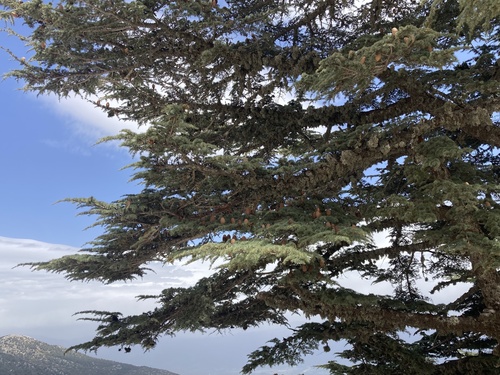
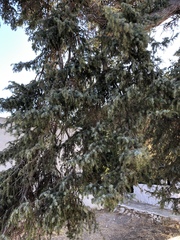
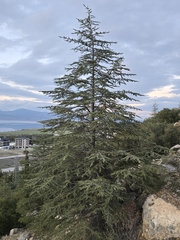
Lebanon cedar (Cedrus libani) is a large evergreen conifer in Pinaceae, native to the mountains of Turkey, Lebanon and Syria. Dense clusters of needles, upright barrel-shaped cones and a flat, tablelike mature crown distinguish one of the Mediterranean region’s most historically significant trees.
Read moreLebanon cedar, Cedar of Lebanon and Lebanese cedar
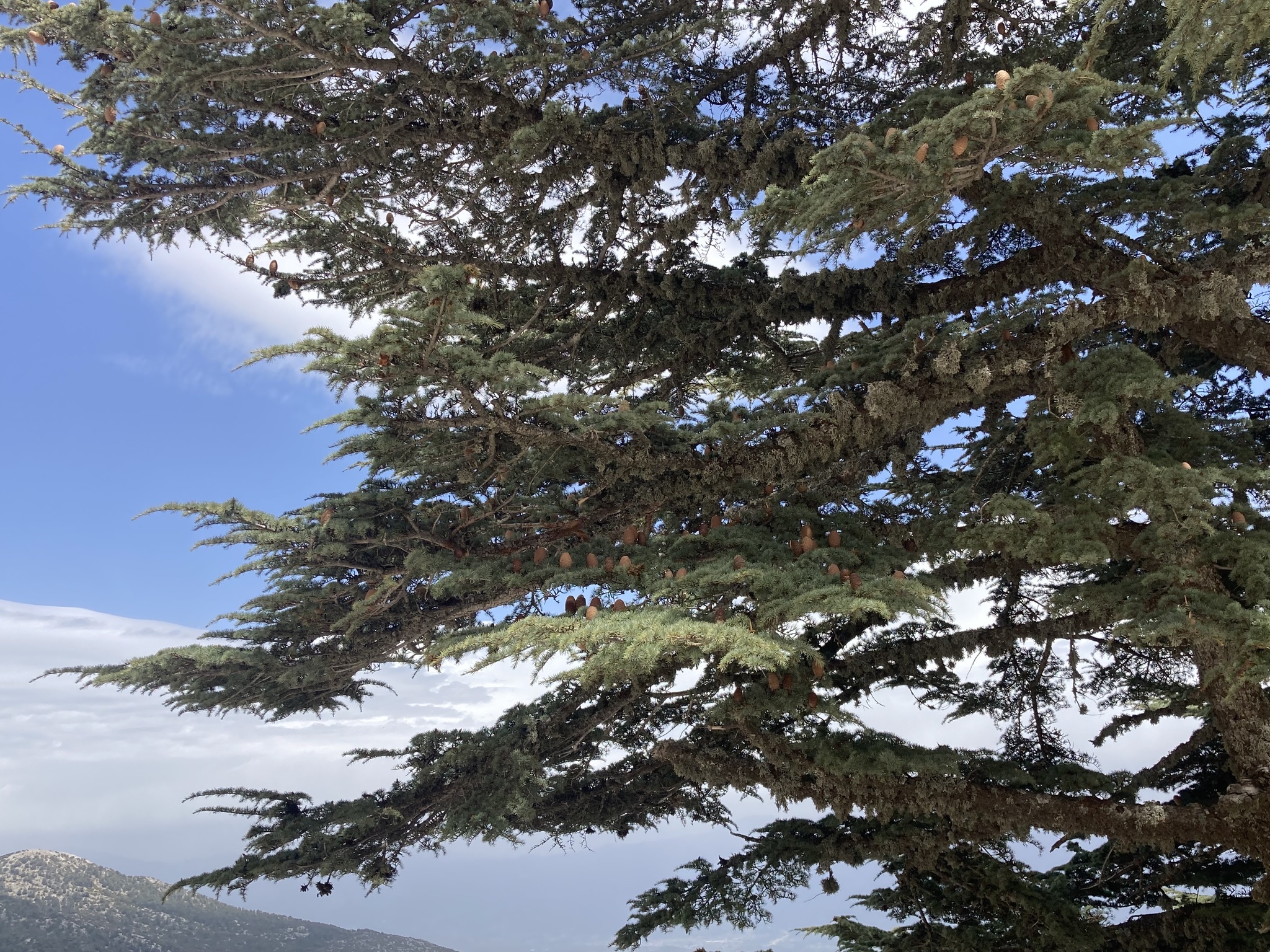



© photo
John Kenrick Gibson · cc0
James Hardcastle · cc-by
Thor-Rune Hansen · cc-by-sa
Taken Oct 12, 2022 by Slavica Tofilovska (cc-by-sa)
Taken May 20, 2014 by Tela Botanica − Denis NESPOULOUS (cc-by-sa)
Taken Jul 22, 2022 by astrobio . exe (cc-by-sa)
Taken Oct 19, 2021 by Decobert Didier (cc-by-sa)
© copyright of the Board of Trustees of the Royal Botanic Gardens, Kew.




Global distribution
Cedrus libani is native to Turkey, where the Taurus Mountains hold most surviving stands, Lebanon’s Mount Lebanon range, and one locality on Jabal an-Nusayriya in Syria. Outside this range, it has been widely grown as an ornamental tree in Europe and North America since the 17th century.
Identity
Lebanon cedar (Cedrus libani A.Rich., 1823) is a conifer in Pinaceae, described by French botanist Achille Richard. It appears on Lebanon’s national flag and remains one of the trees most deeply embedded in Mediterranean history and symbolism. 1 8
Also called cedar of Lebanon or Lebanese cedar, it has a name that can obscure its present distribution: most surviving natural stands grow in Turkey’s Taurus Mountains, rather than Lebanon, where millennia of exploitation have greatly reduced the historic forests. The French INPN records both cèdre du Liban and cèdre du mont Liban as vernacular names. 6 10
The Epic of Gilgamesh already describes cedar as timber protected by the gods. Its wood supplied Phoenician shipbuilding and, according to biblical tradition, Solomon’s Temple in Jerusalem: Phoenician craftsmen cut the timber, which was transported by sea to Judea. 8
Recognition
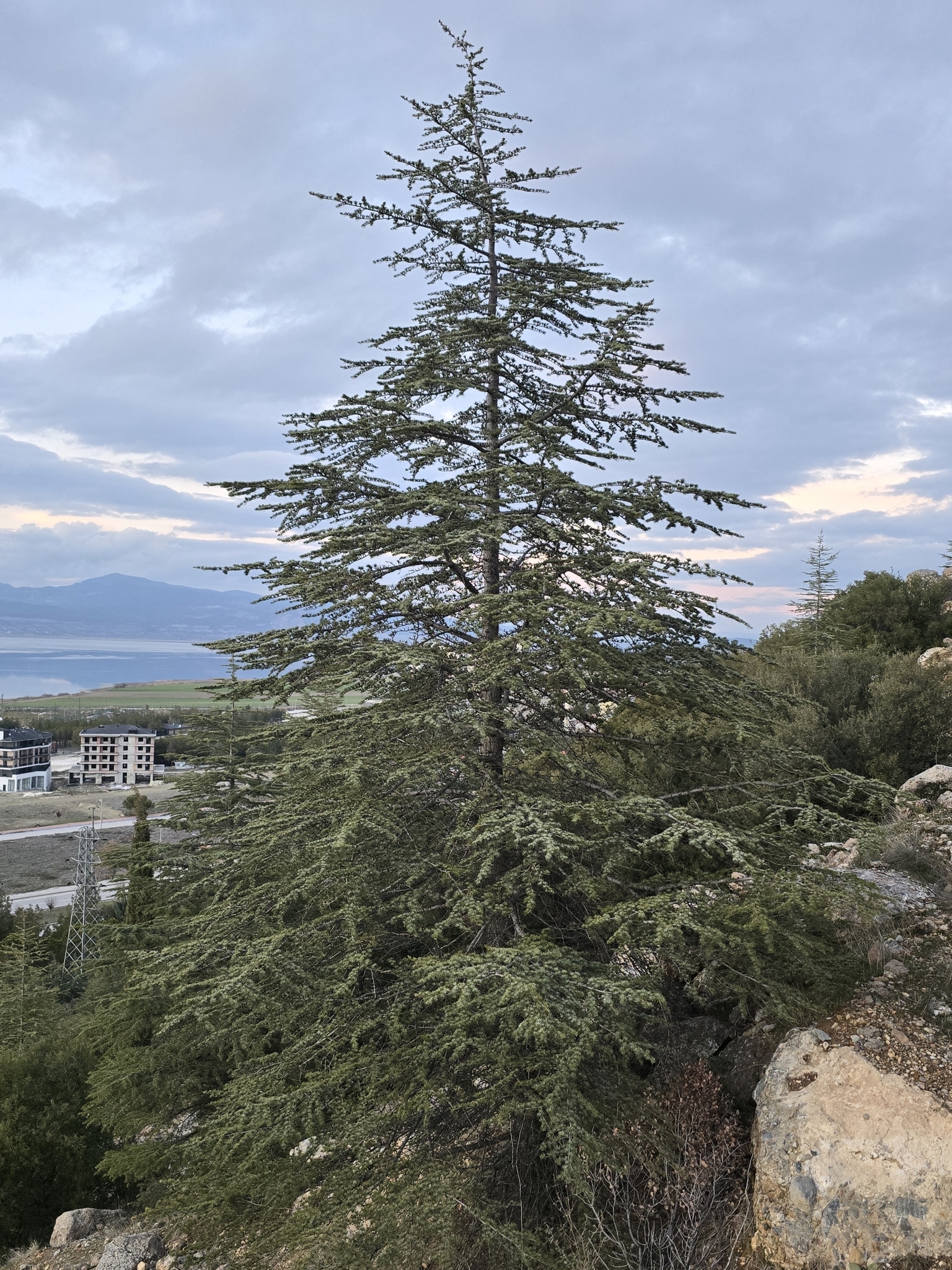
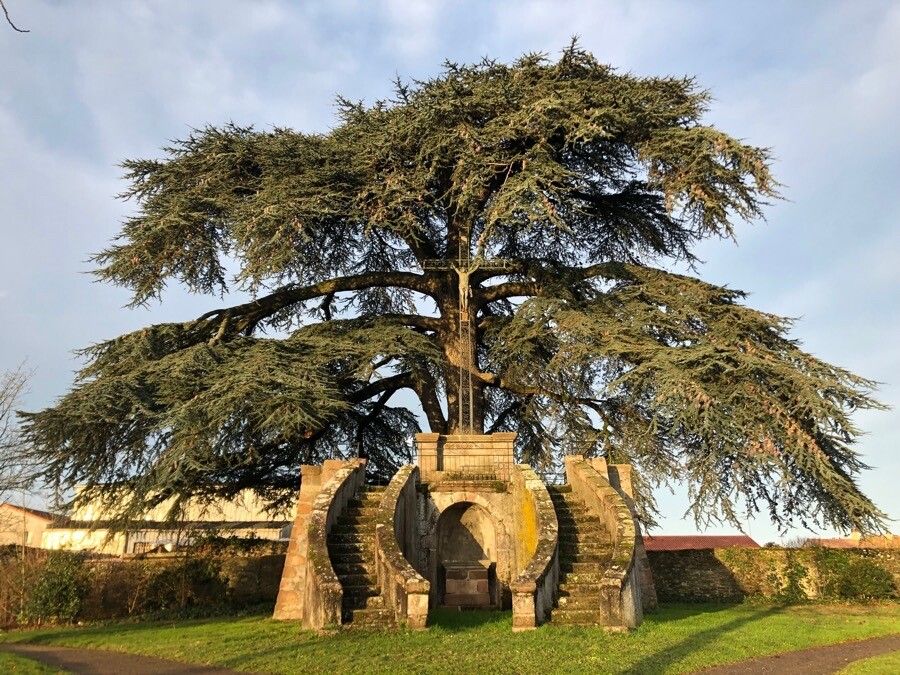
A slow-growing conifer, Lebanon cedar typically reaches 20–40 m (65–130 ft) tall and 10–18 m (33–59 ft) wide, occasionally exceeding these dimensions in exceptional specimens. Its shape changes dramatically with age: dense and pyramidal when young, it develops a flat, layered, tablelike crown as an old tree. 2 3
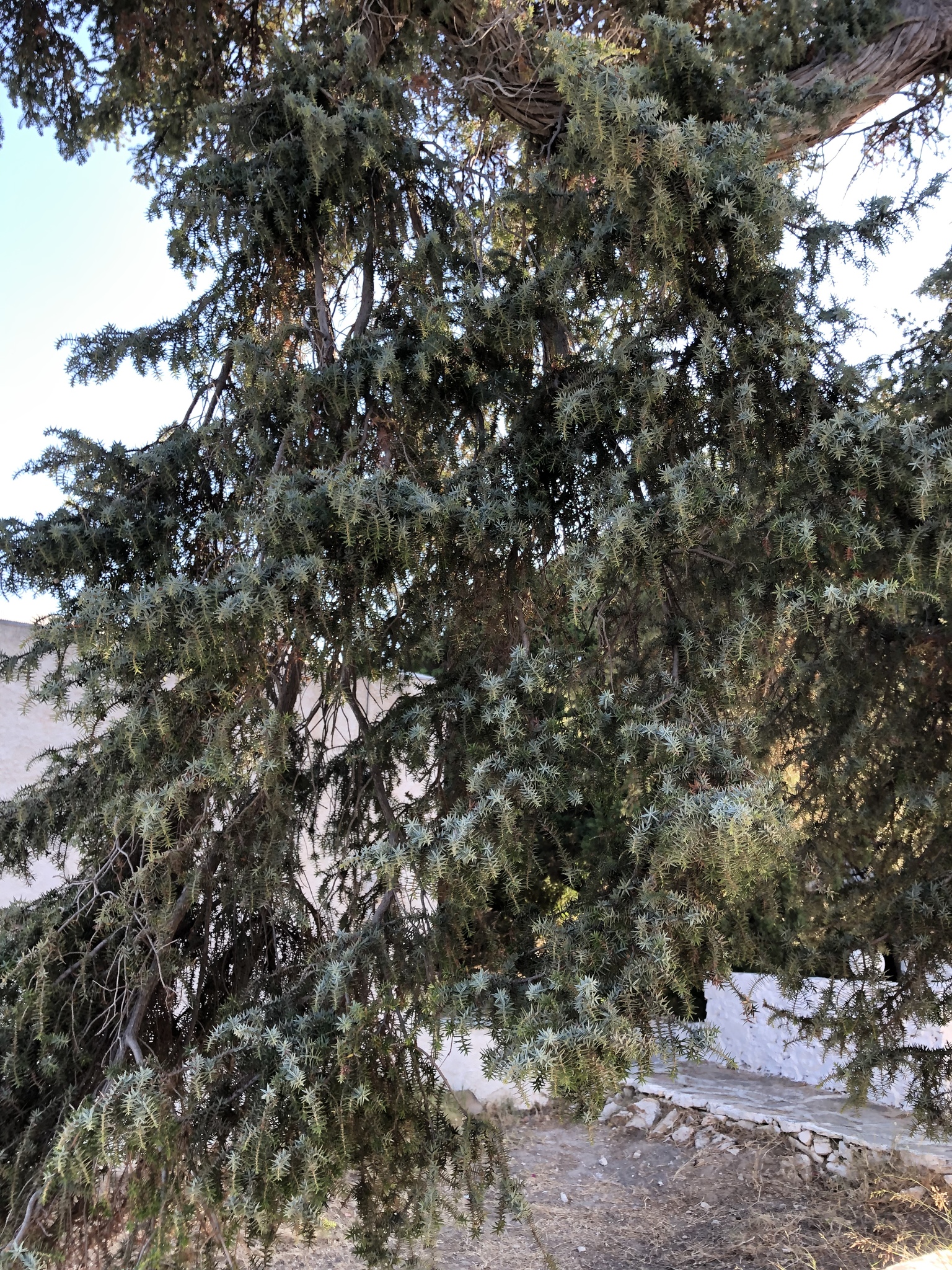
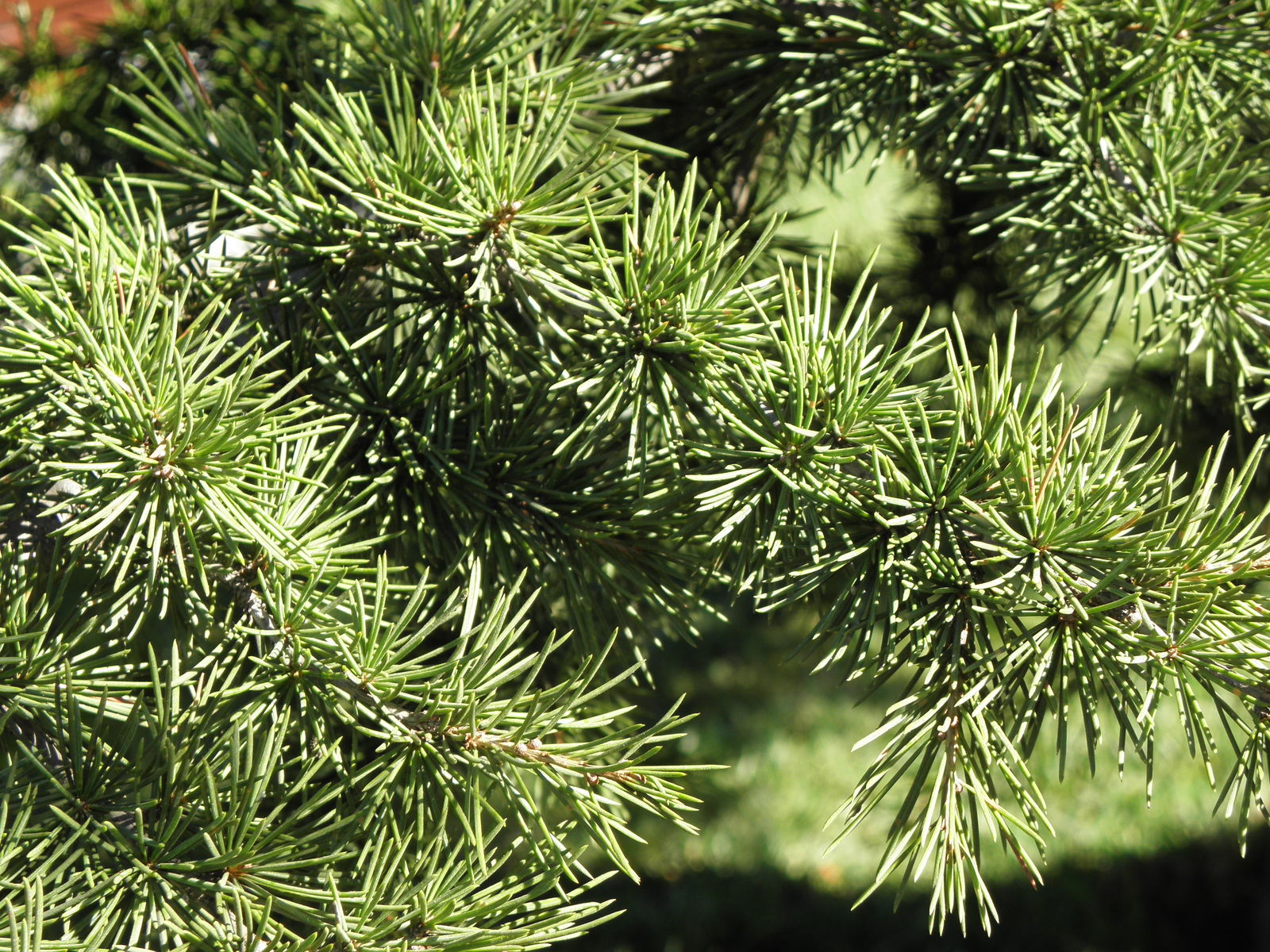
Evergreen needles measure 2–3.5 cm (0.8–1.4 in) and form clusters of 20–35 on short lateral shoots. On the current year’s young shoots they remain single and spiral around the stem. Gray-brown bark becomes blackish and cracks into longitudinal plates with age. 6
The tree requires full sun and cannot tolerate even partial shade, explaining its absence beneath dense forest cover and its occurrence in open stands or as an isolated specimen. On an old tree with plenty of room, the main lower branches can spread far enough to touch the ground. 5 3
Useful taxonomy
Published in 1823, Cedrus libani A.Rich. is the scientific name accepted by Plants of the World Online. Most botanists recognize four “true cedars” in Cedrus: C. libani, C. atlantica (Atlas cedar), C. brevifolia (Cyprus cedar) and C. deodara (Himalayan cedar). Nursery labels often confuse them under the single name cedar. 1 6
The status of Cedrus brevifolia remains debated. Some treatments place it within Lebanon cedar as Cedrus libani var. brevifolia Hook.f.; others recognize a separate species confined to Cyprus’s Troodos Mountains. Genetic analyses place divergence between Cypriot populations and the rest of the libani/atlantica complex at 5.3–10.5 million years ago. 6
Five genetically distinct groups have been identified among Turkey’s natural populations. They include a columnar form from southwestern Anatolia sometimes named Cedrus libani subsp. stenocoma (O.Schwarz) Greuter & Burdet. Provenance therefore helps explain why a tree planted in Europe may have a narrow, columnar outline from the stenocoma lineage, or a wider, layered crown from a typical Lebanese or Syrian origin. 6 1
Habitat and range
Turkey, Syria and Lebanon form the native range of Cedrus libani. Most surviving stands occupy Turkey’s Taurus Mountains; Syria retains a single locality on Jabal an-Nusayriya, and Lebanese populations occur in the Mount Lebanon range. Trees grow at 1,300–3,000 m (4,300–9,800 ft) on well-drained limestone soils, in pure stands or mixed with firs, junipers and black pines. 6
The IUCN classifies the species as Vulnerable, reflecting historical deforestation, goat grazing that limits natural regeneration, urban development, ski resorts and, more recently, climate change. Populations already confined to mountain summits have no higher, cooler ground to migrate toward. 7
Mount Lebanon’s historic forests, exploited since antiquity and felled again for railway construction during World War I, retain only a fraction of their former extent. Protected reserves include the Cedars of God. Beyond its native range, the species has been widely planted as an ornamental in European and North American parks and arboretums since the 17th century. 8 2
Life cycle and reproduction
Separate male and female cones grow on the same tree: Lebanon cedar is monoecious. Wind carries pollen in late summer; in the Northern Hemisphere account, male cones appear around the transition into early fall, followed by female cones later in that period. 6
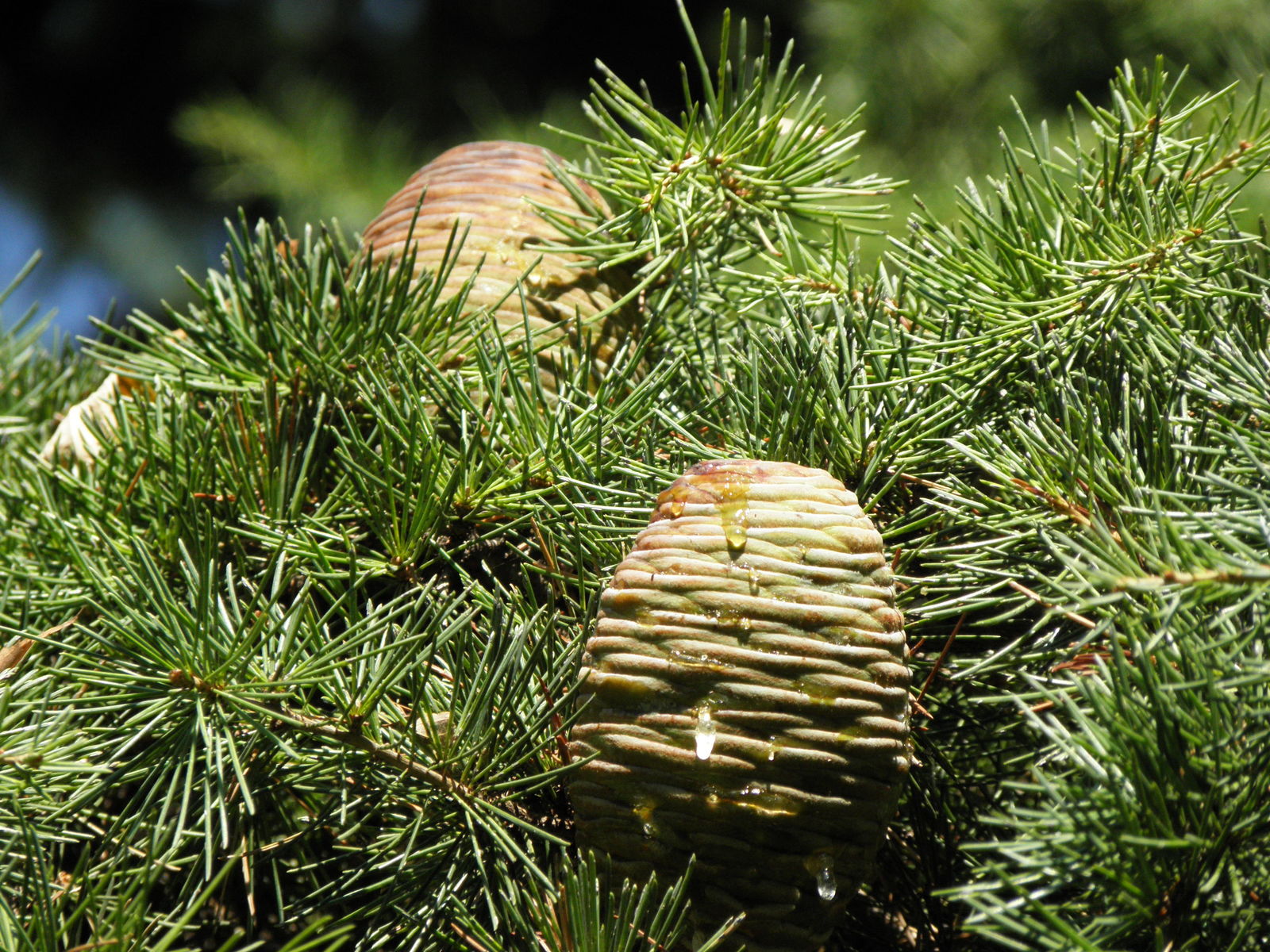
Female cones stand upright on the branch, never hanging down, and take about twelve months to ripen. They change from green to gray-brown in the fall after pollination. Unlike pine cones, they do not drop whole: they disintegrate scale by scale while still attached to the tree. 6
Growth stays slow throughout the tree’s life, around 20–30 cm (8–12 in) a year, and the first cones often appear only after twenty to forty years. Longevity is measured in centuries: the oldest specimen documented by tree-ring analysis, studied near Antalya in Turkey, records 619 years of continuous growth. 5 6
Uses and risks
Ornamental planting is Lebanon cedar’s dominant modern use. It serves as a specimen tree in parks, large gardens and avenues, provided it has considerably more space than an urban garden offers. Its resinous, durable wood, naturally resistant to insects, historically supplied Phoenician shipbuilding and cabinetmaking and, according to biblical tradition, Solomon’s Temple. 8 5
Essential oil extracted from the wood still goes into perfumery, and a sweet substance called manna was long collected from the bark. Leaves and wood have traditional antiseptic and expectorant uses, without modern clinical validation comparable to that required for a medicine. 5
No major toxic hazard is documented: the ASPCA does not classify true cedars in Cedrus among plants toxic to cats and dogs, although eating large quantities of needles can irritate the digestive tract. Some people develop allergic reactions after contact with resin or pollen. 9 4
The main hazard is mechanical. Heavy snow or storms can break entire main branches on old trees with broad spreading limbs. Excessively wet soil also encourages root rot and honey fungus. 4 2
Varieties, look-alikes and related plants
Cultivars differ in shape or foliage color. Glauca has silver-blue foliage, while Pendula, often sold as Pendula Sargentii, has weeping branches grafted onto an upright rootstock. Dwarf Nana and Comte de Dijon remain rounded and shrubby, barely reaching 1.5 m (5 ft) in ten years. 2
The other two true cedars widely planted in Europe cause the most frequent confusion. Cedrus atlantica has smaller cones and a narrower, less layered mature crown. Cedrus deodara has a drooping leader and branch tips, a feature absent in C. libani. 6
Cyprus cedar, Cedrus libani var. brevifolia, is endemic to the Troodos Mountains and differs in its shorter needles and generally smaller size. References alternate between treating it as a variety and as the separate species Cedrus brevifolia. The complete scientific name distinguishes these three taxa, which the simple nursery name cedar can blur together. 6 1
Main sources
- Plants of the World Online / Kew, Cedrus libani A.Rich.
- Royal Horticultural Society, Cedrus libani - cedar of Lebanon
- Missouri Botanical Garden, Cedrus libani
- NC State Extension, Cedrus libani (Cedar of Lebanon)
- Plants For A Future, Cedrus libani
- The Gymnosperm Database, Cedrus libani
- IUCN Red List of Threatened Species, Cedrus libani assessment
- Encyclopaedia Britannica, cedar of Lebanon
- ASPCA, Toxic and Non-Toxic Plant List - Cats
- INPN / MNHN, Cedrus libani A.Rich., 1823 (cd_nom 89455)
Frequently asked questions
Does Lebanon cedar still grow in Lebanon?
Yes, but its forests cover far less ground than historically. Most surviving natural stands are now in Turkey’s Taurus Mountains, while Lebanon retains protected reserves such as the Cedars of God.
Is Lebanon cedar poisonous to cats and dogs?
No. The ASPCA does not classify true cedars in Cedrus among plants toxic to common pets. Eating large amounts of needles may nevertheless irritate the digestive tract.
How large does a mature Lebanon cedar grow?
It commonly reaches 20–40 m (65–130 ft) tall and 10–18 m (33–59 ft) wide, with a characteristic flat crown at maturity. These dimensions require ample open space before planting.
How can I distinguish Cedrus libani from Cedrus atlantica and Cedrus deodara?
Cedrus atlantica has smaller cones and a narrower mature crown. Cedrus deodara has a drooping leader and branch tips, a feature absent in Cedrus libani.
Why is Lebanon cedar a national symbol?
The tree appears on Lebanon’s flag and in ancient texts such as the Epic of Gilgamesh. Its durable wood served Phoenician shipbuilding and, according to biblical tradition, Solomon’s Temple.
Is Lebanon cedar suitable for a small garden?
No, unless you choose a dwarf cultivar such as Nana or Comte de Dijon. The typical species needs far more room than an urban garden to develop its spreading mature crown.
Why do Lebanon cedar cones never fall whole?
Unlike most pine cones, Cedrus libani cones disintegrate scale by scale on the tree when ripe, about twelve months after pollination.
Similar plants
If you are unsure about a plant’s toxicity, ask a botanist or veterinarian for advice.