
Common sowthistle (Sonchus oleraceus, )

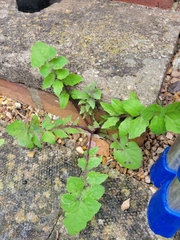
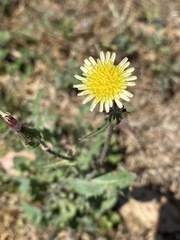
Common sowthistle (Sonchus oleraceus L., 1753) is an annual in the Asteraceae family, native to Europe, North Africa and the Middle East and now naturalized on almost every continent. Its brittle hollow stems, clasping stem leaves with pointed basal lobes and white latex make it a familiar vegetable-garden weed. People have eaten its young rosettes for centuries.
Read moreCommon sowthistle, Smooth sow thistle, Annual sow thistle, Sow thistle and Pūhā
Allow a few hours of direct sun per day, preferably morning or evening.
Full sun to light partial shade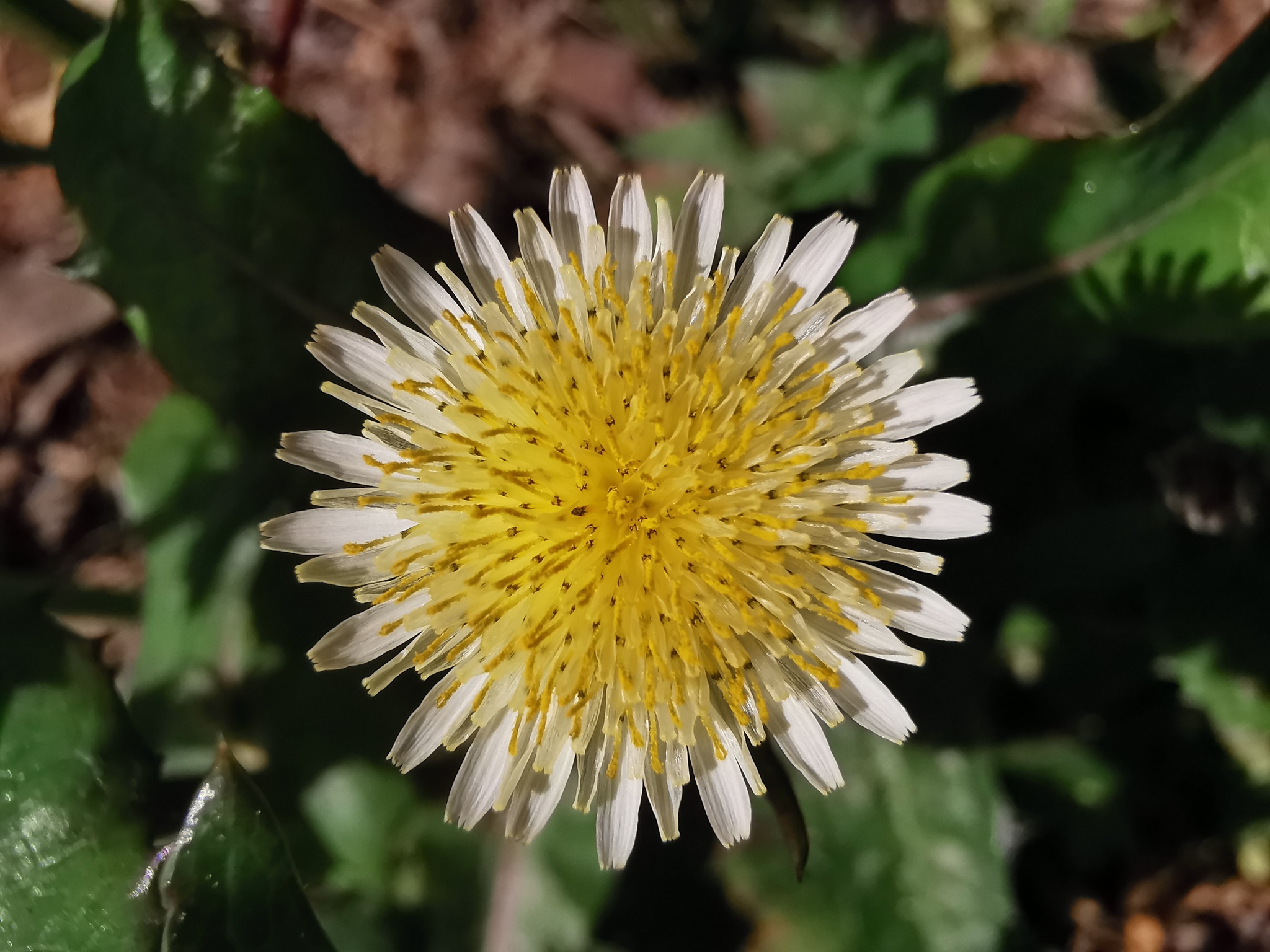


© photo
(c) Jean-Philippe BASUYAUX, some rights reserved (CC BY-NC), uploaded by Jean-Philippe BASUYAUX · cc-by-nc
Fiona Chan-Cary · cc0
Rebecca Johnson · cc0
Taken Mar 1, 2022 by Gianni Del Bufalo (cc-by-sa)
Taken Jun 7, 2021 by R. de Castro Ricardo (cc-by-sa)
Taken Feb 25, 2022 by Gianni Del Bufalo (cc-by-sa)
Taken Nov 18, 2020 by Virgi Pey (cc-by-sa)
© copyright of the Board of Trustees of the Royal Botanic Gardens, Kew.


Global distribution
Sonchus oleraceus is native to Europe, North Africa and the Middle East, from Macaronesia around the Mediterranean to the Arabian Peninsula. Introduced beyond this range long ago, it is now naturalized on most continents, notably in Oceania and the Americas.
- Native3
- Introduced4
- Metropolitan France
- Europe
- North Africa
- Australia
- New Zealand
- United States
- South America
Hexagons: regions where the plant occurs. Green dots: native range.1
Identity
Common sowthistle (Sonchus oleraceus L., 1753), also called smooth sow thistle or annual sow thistle, is an annual species of Sonchus in the Asteraceae family. Plants of the World Online accepts this name, published by Linnaeus in 1753, for a plant native to Europe, North Africa and the Middle East. 1 4
The epithet oleraceus comes from Latin and means something grown as a garden vegetable. The species was used this way long before its formal description in 1753, as agricultural extension and ethnobotanical references still document. 3 9
Broken leaves and stems release white latex, the feature behind the French name laiteron. All members of Sonchus share this trait, as do many other Cichorieae, including dandelions and chicory. 2
Recognition
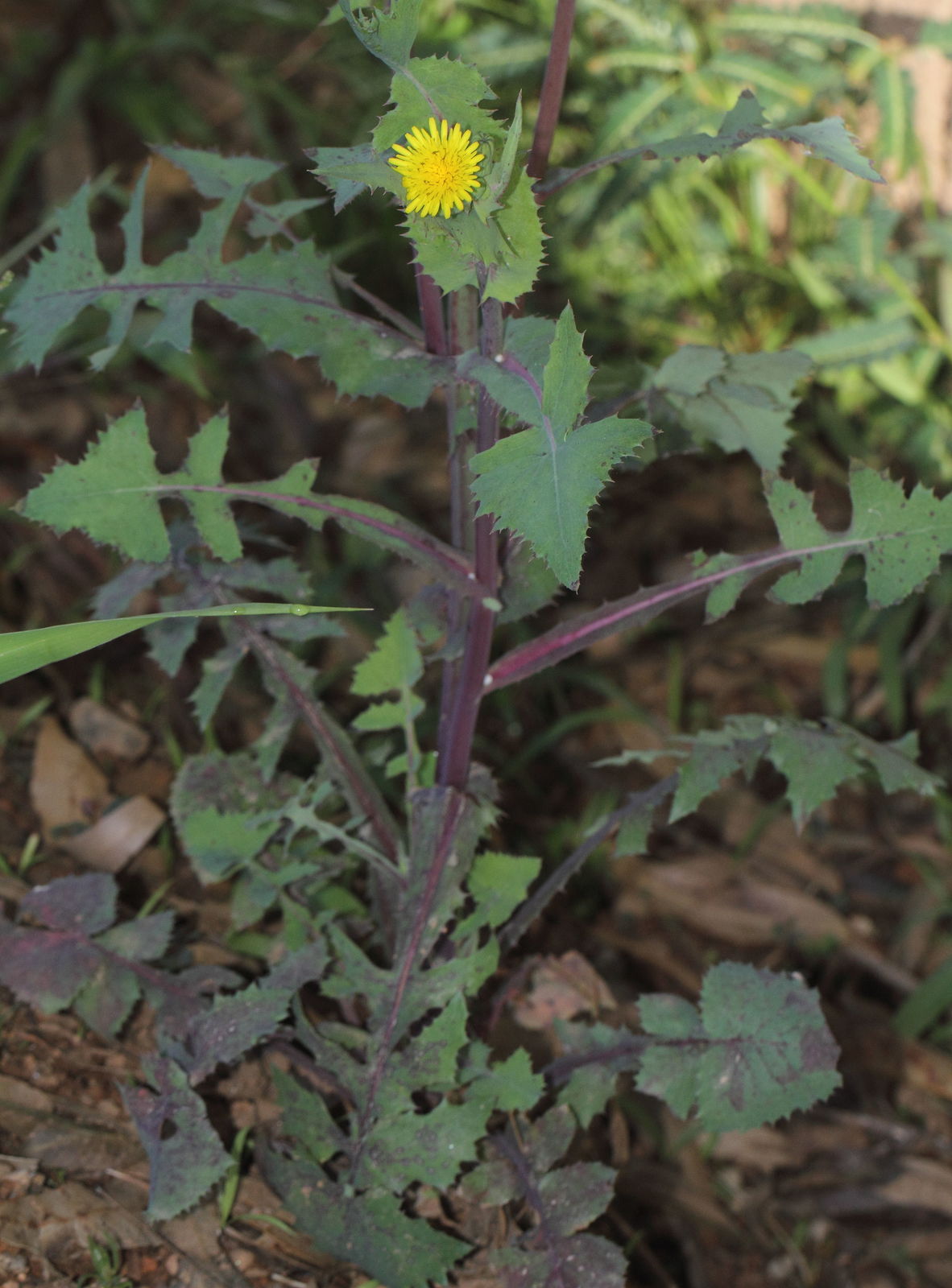
An upright, hollow, brittle stem branches sparingly except near the top. Common sowthistle usually reaches 30–80 cm (12–31 in), though plants in rich soil can grow to 1.5 m (5 ft). 4 2
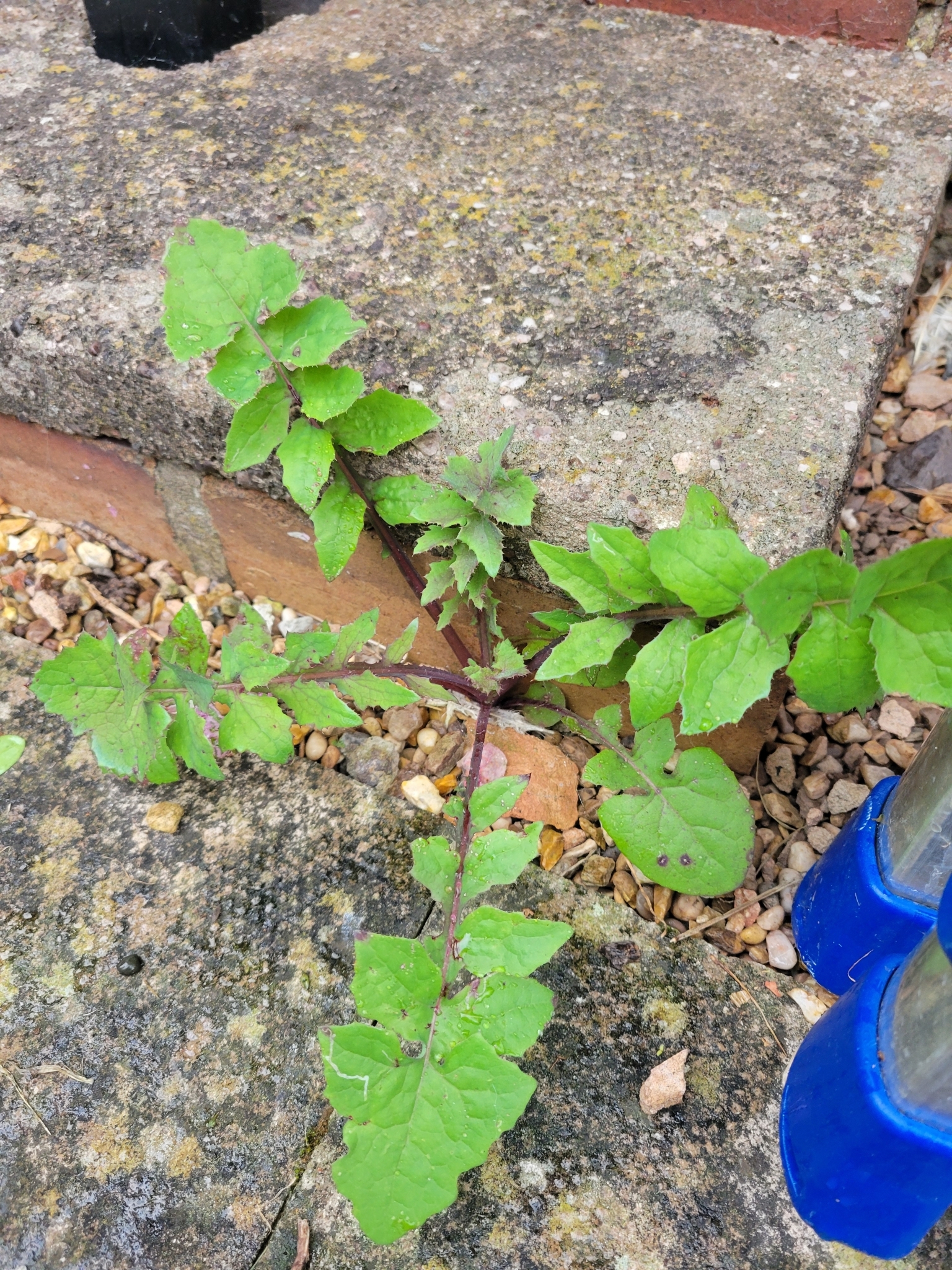
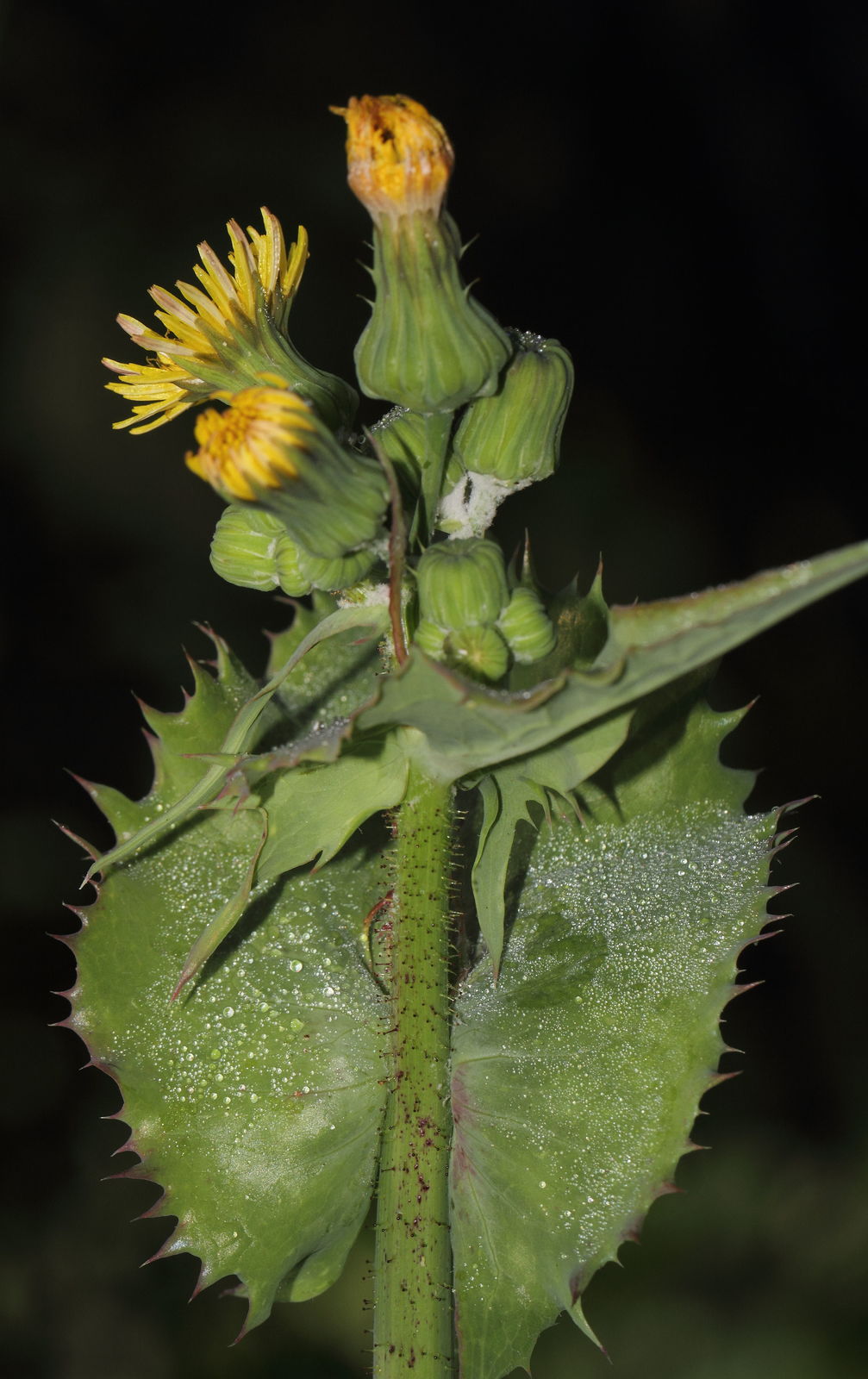
Hairless basal leaves form a rosette. Their backward-pointing lobes surround a triangular terminal lobe larger than the lateral ones. Stem leaves clasp the stem with pointed, spreading basal lobes, unlike the rounded, prickly lobes of Sonchus asper. 4 3
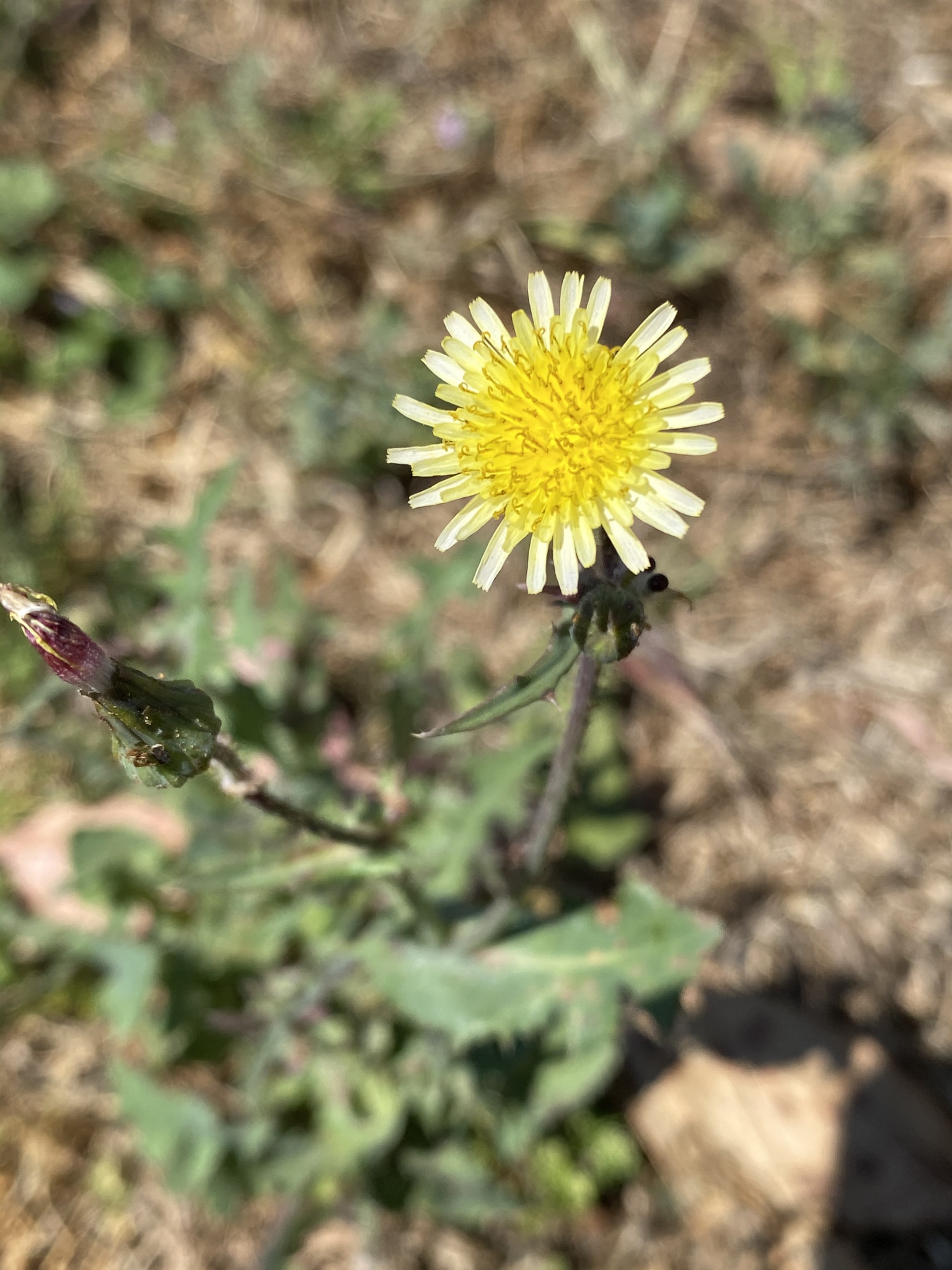
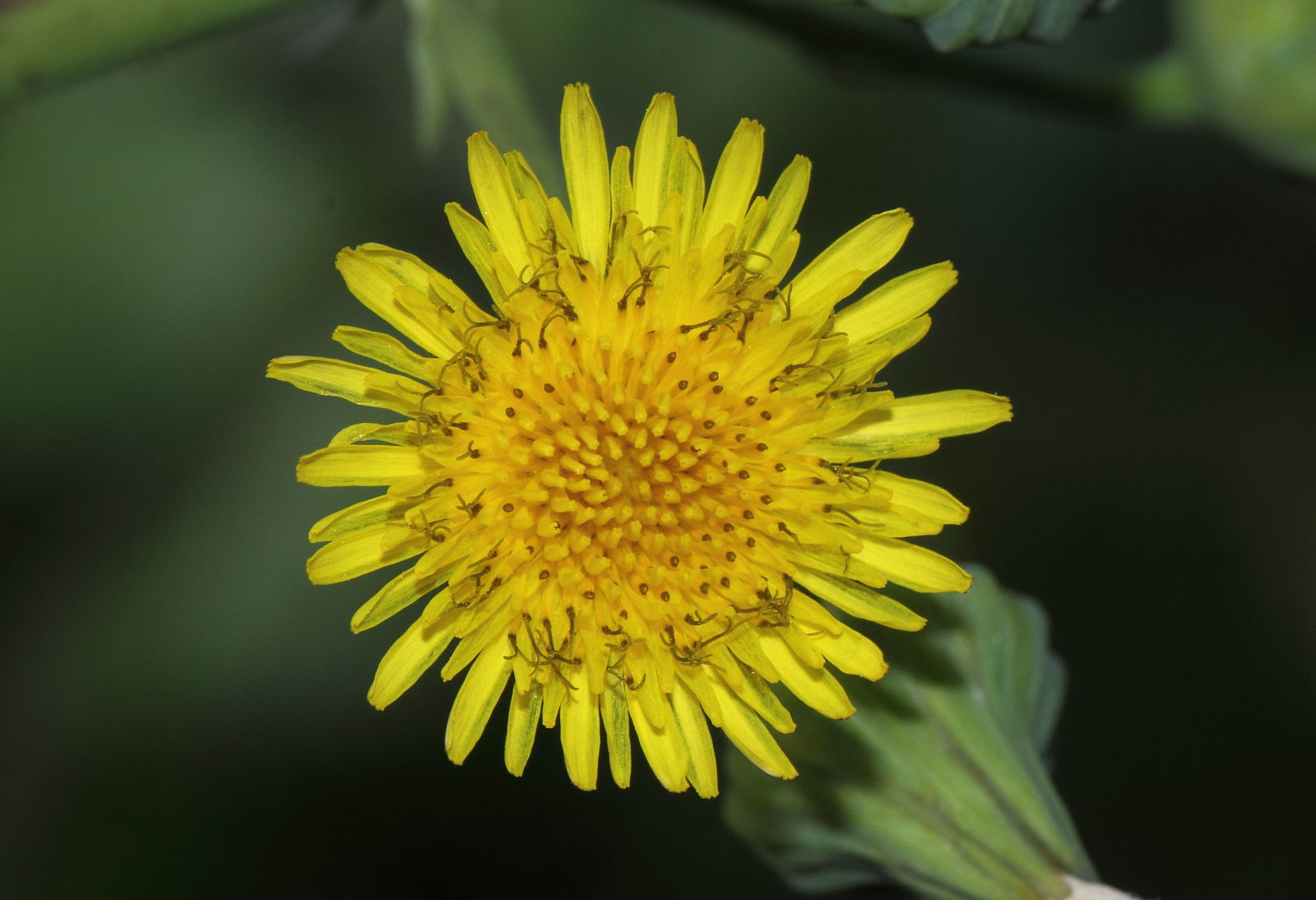
Flower heads about 2 cm (0.8 in) across contain only yellow strap-shaped florets, sometimes tinged cream, as in the rest of Sonchus. They form loose clusters at the stem tips, opening in the morning and closing by early afternoon. 3
Useful taxonomy
For this annual weed, the accepted name is Sonchus oleraceus L., published in 1753. Older names still encountered in regional floras include Hieracium oleraceum (L.) Scop. and Sonchus ciliatus Lam.; these synonyms do not replace the accepted name. 1 4
Within Asteraceae, common sowthistle belongs to the Cichorieae tribe alongside dandelions, chicory and cultivated lettuce. These plants share white latex and heads made entirely of strap-shaped florets, without central tubular florets. 4
Its close relative Sonchus asper often causes confusion in the field. Stiffer leaves, distinctly spiny margins and rounded rather than pointed basal lobes distinguish it. Examining those lobes closely is the most useful garden identification check. 3
Habitat and range
For common sowthistle, WCVP records a native range spanning Europe, North Africa and the Middle East, from Macaronesia through the Mediterranean region to the Arabian Peninsula. 1
Rich, disturbed soil favors establishment, especially where ground remains bare for several weeks between crops. Vegetable gardens, waste ground, uncultivated plots, roadsides and sidewalk edges are typical habitats. INPN records it as widespread in metropolitan France, where the national Red List assesses it as Least Concern. 8 4
Long-established introductions have naturalized on most continents, particularly in Oceania and the Americas. VicFlora records it as introduced and naturalized in Victoria, Australia. The New Zealand Plant Conservation Network dates naturalization there to 1832, almost two centuries ago. 5 6
Life cycle, flowering and dispersal
Seeds can germinate through almost the entire year in mild climates, allowing summer or winter growth depending on the region. The tender, shallow-rooted basal rosette is easier to harvest than a flowering plant, whose leaves become bitter within weeks. 3
In France, Tela Botanica records a flowering season lasting five months, from June to October; timing elsewhere depends on the local climate. Each closing head soon produces brownish, ribbed achenes with transverse markings and a silky white plume. Wind carries them efficiently, sometimes a long way from nearby plants already setting seed. 4
Rapid development and nearly year-round germination allow several generations in one season where a vegetable plot is left unattended between crops. One overlooked plant on a bed edge can reseed an adjacent bed before the next harvest. 3
Uses and risks
Tender rosette leaves have long been eaten raw in salads or cooked as greens; peeled stems are also cooked. Solander documented cultivation for edible shoots in 1769, during Captain Cook's first voyage, using the Latin note “in graminosis et cultis.” 3 7
Māori cooking in New Zealand includes the plant as pūhā. Traditionally, pounding first removed the bitter juice, and the greens were cooked with eel or pork. This practice is documented from the nineteenth century and continues today. The same references describe traditional medicinal uses as a cleansing herb and as a poultice on wounds. 7
Common sowthistle is considered non-toxic to humans, cats and dogs. Repeated skin contact with its white latex may nevertheless cause irritation. Alongside its food uses, it provides resources for pollinators and beneficial garden insects. 9
Varieties, look-alikes and related plants
Recognized horticultural cultivars are absent from Sonchus oleraceus: it remains a wild plant and vegetable rather than a selected ornamental. 3
The main identification challenge is Sonchus asper. Its stiffer leaves, strongly spiny margins and rounded basal lobes contrast with the softer foliage and pointed lobes of common sowthistle. 3
Early-season rosettes of other Asteraceae can also look similar, especially dandelions (Taraxacum) and wild chicory (Cichorium intybus). Abundant white latex and a triangular terminal leaf lobe are the most useful combined clues before stem elongation. 4
Main sources
- Plants of the World Online / Kew, Sonchus oleraceus L.
- Royal Horticultural Society, Sonchus oleraceus - common sowthistle
- North Carolina Extension Gardener Plant Toolbox, Sonchus
- Tela Botanica / eFlore bdtfx, Sonchus oleraceus L.
- VicFlora / Royal Botanic Gardens Victoria, Sonchus oleraceus
- New Zealand Plant Conservation Network, Sonchus oleraceus
- Ngā Rauropi Whakaoranga / Landcare Research, Sonchus oleraceus. Rauriki. Pūhā.
- INPN / MNHN, Sonchus oleraceus L., 1753
- Plants For A Future, Sonchus oleraceus
Frequently asked questions
Is common sowthistle poisonous?
No. It is considered non-toxic to humans, cats and dogs; repeated contact with its white latex may irritate skin. Its status for horses is poorly documented.
Can you eat common sowthistle?
Yes. Young rosette leaves are eaten raw in salads or cooked as greens, with a bitter-lettuce flavor. Peeled stems can also be cooked.
How can I tell it apart from Sonchus asper?
The most reliable feature is the pair of lobes at the base of each stem leaf. They are pointed and spreading in Sonchus oleraceus, rounded and distinctly prickly in Sonchus asper.
Where does common sowthistle come from?
Its native range covers Europe, North Africa and the Middle East, from Macaronesia to the Arabian Peninsula. It is now naturalized on most continents.
Why is it called pūhā in New Zealand?
Pūhā is its Māori name. It has been grown as a vegetable since at least the late eighteenth century and is still cooked with eel or pork, or boiled like cabbage in European-style cooking.
Is common sowthistle invasive?
In France it is a common weed assessed as Least Concern, rather than a regulated invasive species. Elsewhere, especially Australia and New Zealand, it has been widely naturalized since the nineteenth century.
How do I keep it from spreading in the garden?
Pull or hoe plants at the rosette stage, before stems elongate and well before the plumed achenes form and disperse on the wind.
Similar plants
If you are unsure about a plant’s toxicity, ask a botanist or veterinarian for advice.