
Poison ivy (Toxicodendron radicans, )
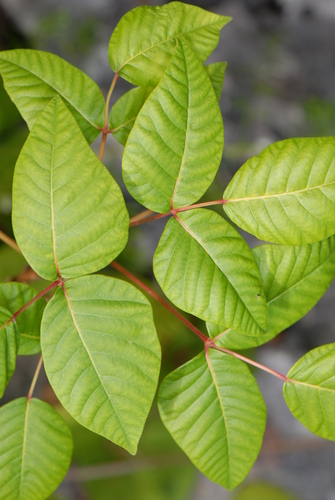
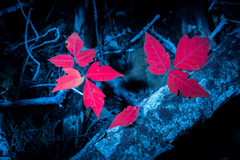
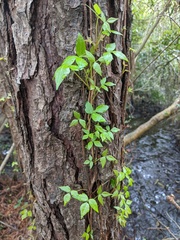
Poison ivy (Toxicodendron radicans) is a deciduous vine or small shrub in the Anacardiaceae family, native to North America from eastern Canada to Guatemala. Its alternate leaves have three leaflets and contain urushiol, an oil that causes allergic contact dermatitis in most people exposed to it.
Read morePoison ivy and Eastern poison ivy

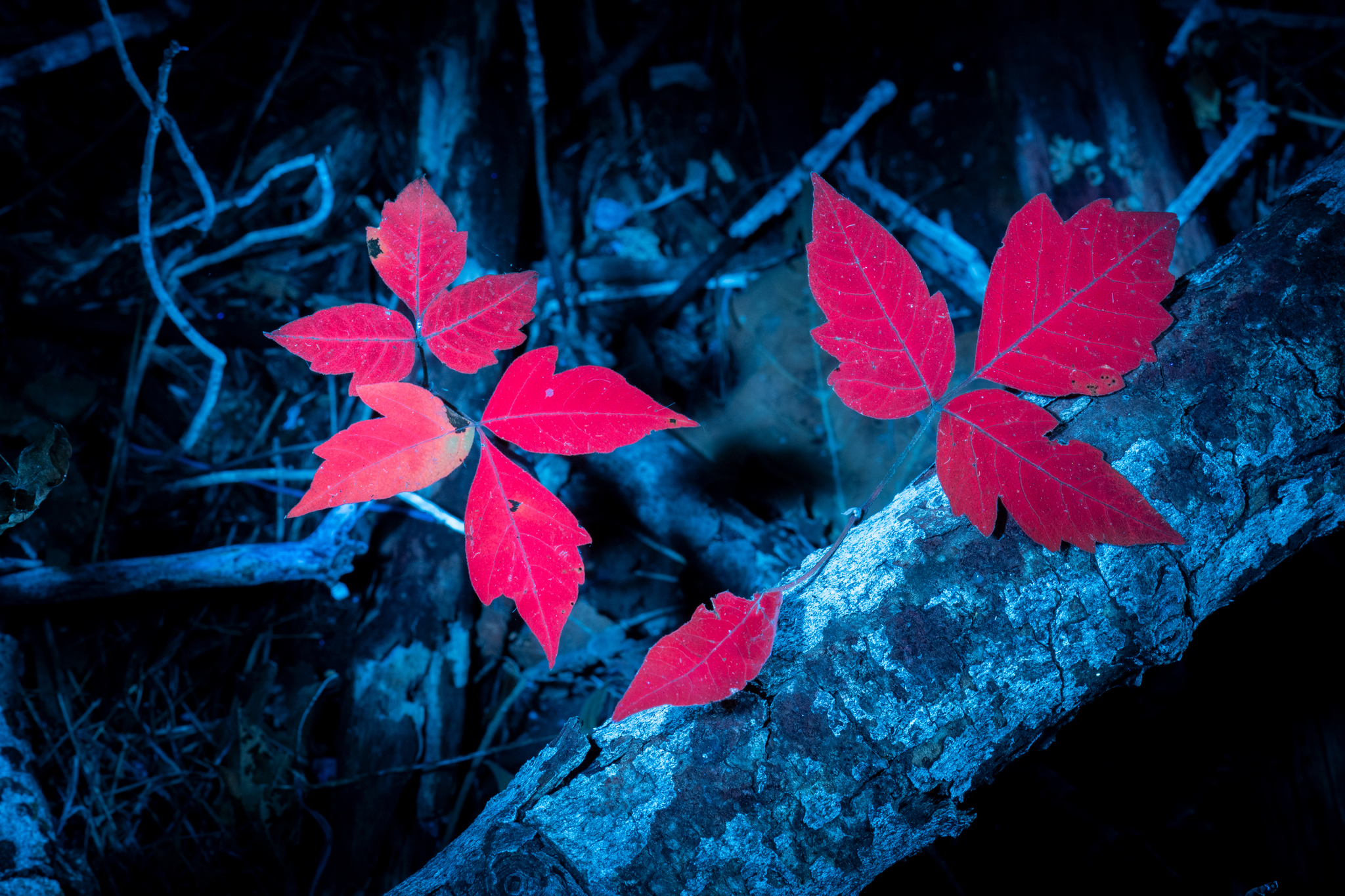



© photo
(c) Sam Fraser-Smith, some rights reserved (CC BY) · cc-by
Alan Rockefeller · cc-by-sa
Austin Pursley · cc0
Taken Sep 27, 2019 by Melissa Melissa Keneely (cc-by-sa)
Taken Jul 29, 2022 by Mark Knudsen (cc-by-sa)
Taken Jul 22, 2019 by Maureen MoeR (cc-by-sa)
Taken Jun 5, 2019 by evan Romine (cc-by-sa)
Taken Aug 4, 2020 by pretty flower (cc-by-sa)
© copyright of the Board of Trustees of the Royal Botanic Gardens, Kew.




Global distribution
Toxicodendron radicans is native from eastern Canada to Guatemala, including almost all of the United States east of the Rockies, northern Mexico, the Bahamas and Bermuda. In France it is not widely naturalized; it remains known mainly as a former ornamental wall climber whose sale is regulated.
- Native6
- Canada
- United States
- Mexico
- Guatemala
- Bahamas
- Bermuda
Hexagons: regions where the plant occurs. Green dots: native range.1
Identity
Poison ivy (Toxicodendron radicans (L.) Kuntze, 1891), also known as eastern poison ivy, is a deciduous vine or small shrub in the genus Toxicodendron, family Anacardiaceae. This family also includes ornamental sumacs (Rhus), mango and cashew. That relationship helps explain some food allergies in people already sensitized to urushiol. 1 6
Despite its familiar English name, poison ivy is unrelated to true ivy (Hedera), which belongs to a different botanical family. The Quebec French name herbe à puce refers to the itching caused by contact, compared with flea bites, rather than to any connection with the insect. 5
Recognition
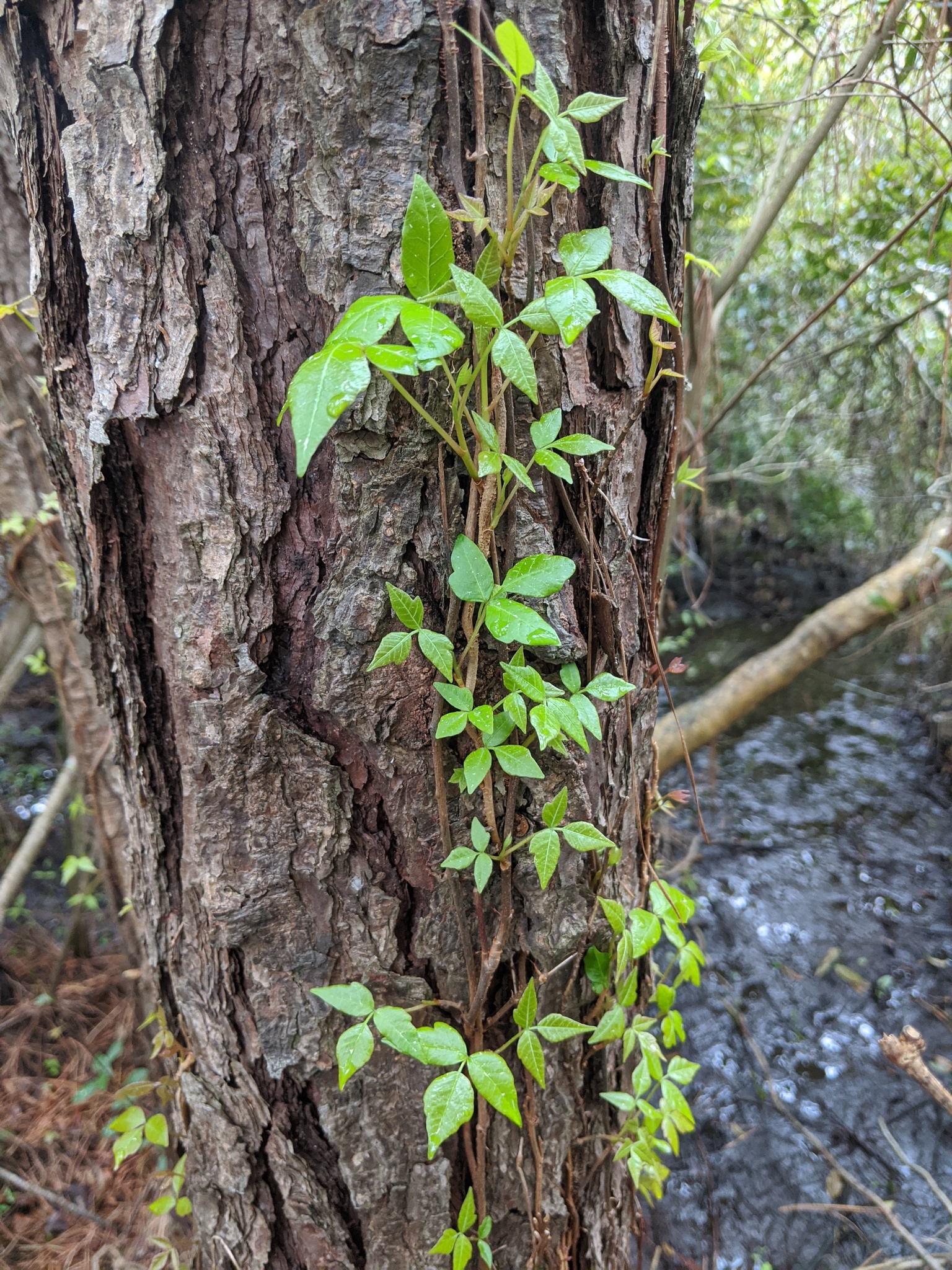
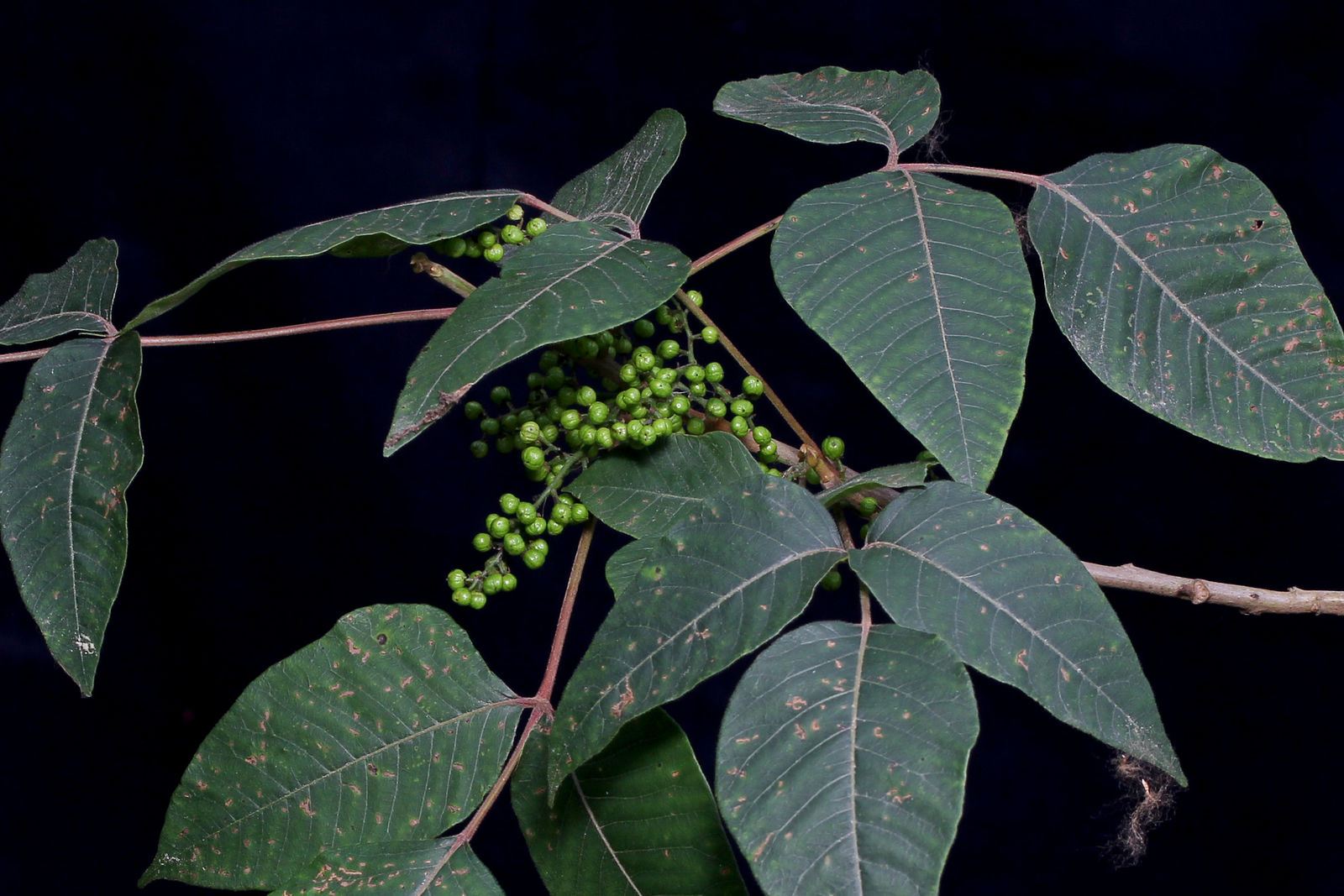
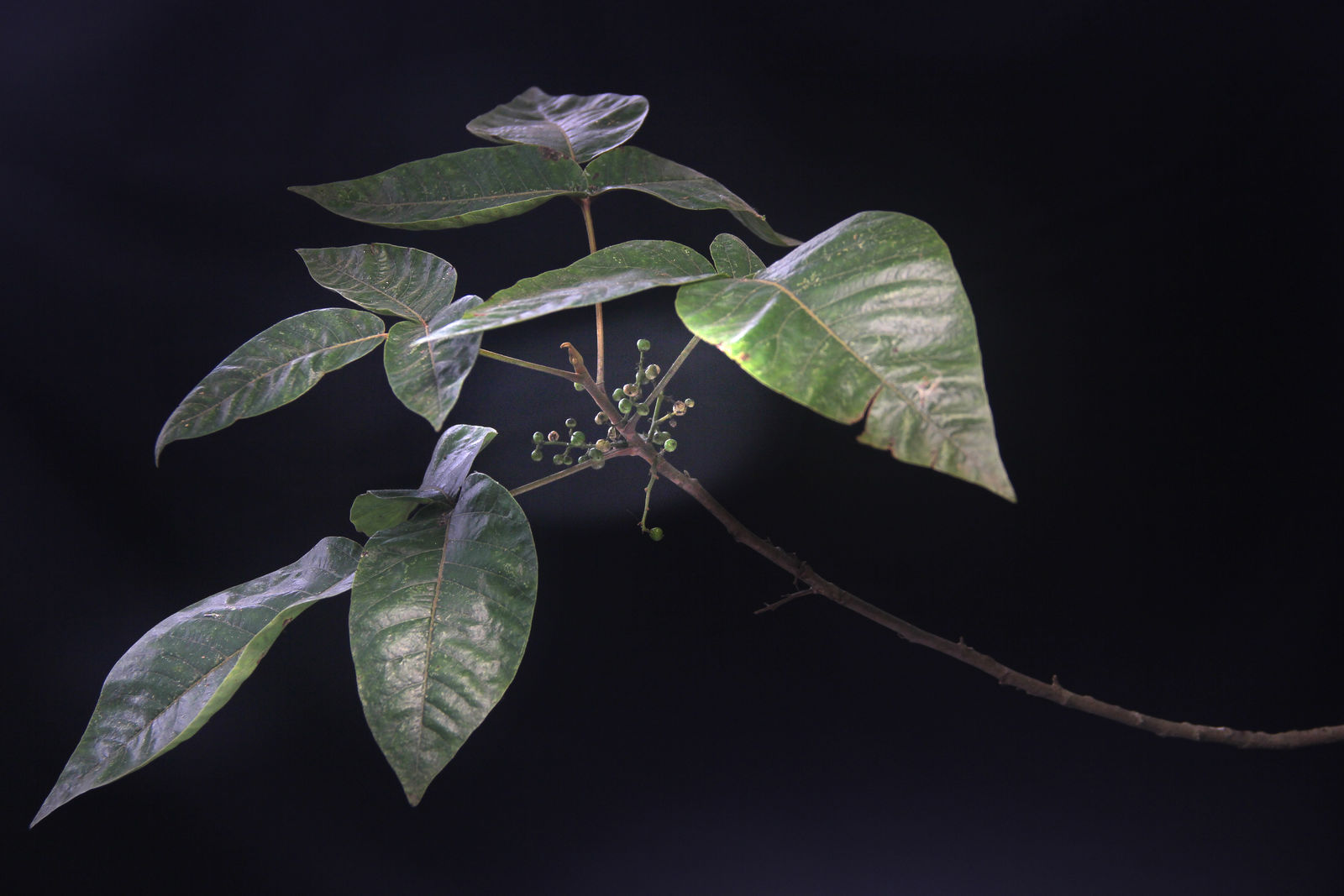
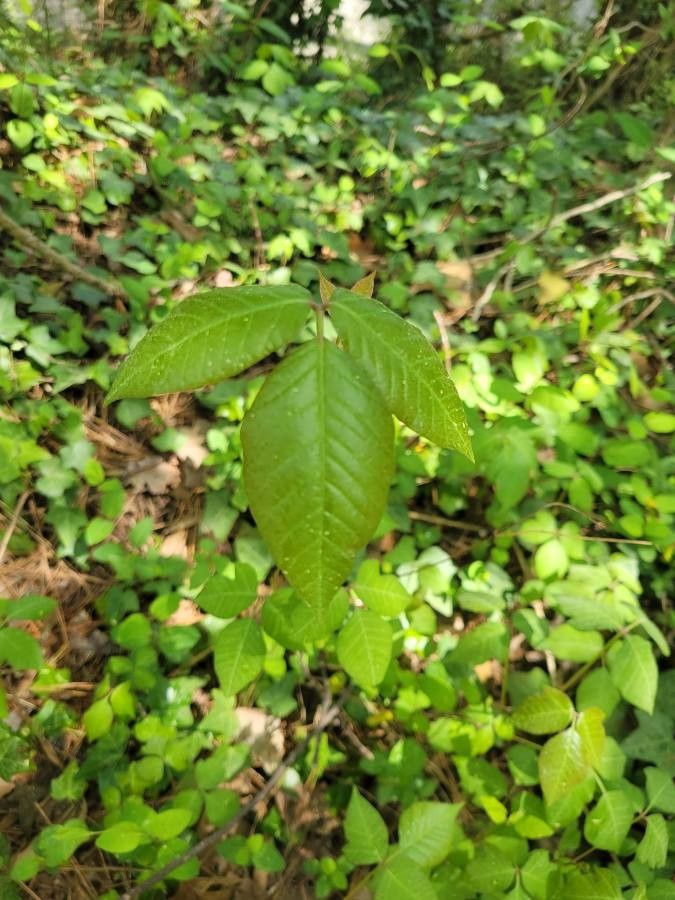
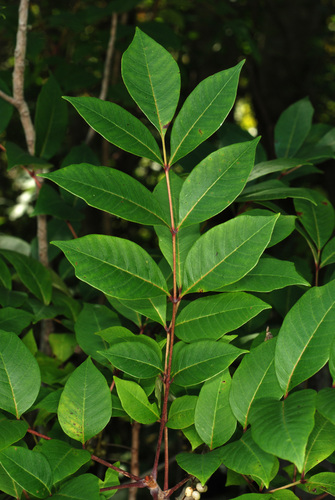
Look for alternate leaves with three leaflets, the basis of the North American warning “leaves of three, let it be.” The central leaflet has a longer stalk than the two lateral ones. Leaflet margins may be smooth, toothed or lobed, so shape alone can make quick identification difficult. 3 2
No thorns occur on this plant, unlike several vines mistaken for it. Depending on available support, it grows as an upright bush about 0.3–1 m (1–3 ft) tall, a trailing groundcover, or a vine attached to trunks by hairy, reddish-brown aerial roots. Climbing stems can sometimes exceed 18 m (59 ft). 2
Small yellowish-green to whitish flowers open in loose clusters in the leaf axils in spring. They are followed by white, waxy, hairless drupes, about 0.5–0.8 cm (0.2–0.3 in) across, held in clusters that often remain through winter. 2 5
Useful taxonomy
For poison ivy, the accepted POWO/WCVP name is Toxicodendron radicans (L.) Kuntze. Otto Kuntze transferred it to Toxicodendron in 1891 after its long use under Linnaeus’s name Rhus radicans. Several geographic subspecies help explain regional forms:
- Toxicodendron radicans subsp. rydbergii (Small ex Rydb.) Á.Löve & D.Löve (regional subspecies)
- Toxicodendron radicans subsp. eximium (Greene) Gillis (regional subspecies)
- Toxicodendron radicans subsp. verrucosum (Scheele) Gillis (regional subspecies)
The subspecies rydbergii is bushy and climbs little or not at all. It reaches northwestern Mexico and is sometimes treated as a separate species, Toxicodendron rydbergii. Such diversity explains why poison ivy may be a shrub, groundcover or vine in different regions without losing its botanical identity. 1
Habitat and range
From eastern Canada, poison ivy ranges south to Guatemala, across almost all US states east of the Rockies, northern Mexico, the Bahamas and Bermuda. It colonizes moist woodland edges as well as dry disturbed ground, hedges, coastal dunes and roadsides. Tolerance of pH 5–8.5 allows it to grow in both acidic and calcareous soils. 1 2
Cold tolerance reaches USDA zone 4, with winter temperatures down to −30 °C (−22 °F), a threshold covering almost all of France. Together with its tolerance of different soils, this hardiness helps explain its broad North American distribution.
Waxy white fruits provide winter food for birds, including thrushes, woodpeckers and many songbirds. White-tailed deer and rabbits browse the leaves without a skin reaction; sensitivity to urushiol is characteristic of primates. 2
French occurrences remain largely outside extensive naturalized populations. The plant is still occasionally sold there as an ornamental wall climber for its colorful fall foliage. In that country, sale requires warning labels rather than being completely prohibited. 5
Life cycle and reproduction
Spring brings clusters of inconspicuous yellowish-green flowers. Birds eat the white fruits in winter and disperse seeds after they pass through the digestive tract, often encouraging germination the following spring. 5 2
After becoming anchored to a vertical support, a vine can add several meters of growth each year. This speed lets it cover an entire trunk within just a few seasons.
Root suckers also allow vegetative spread. A root fragment left in the soil after removal can regenerate a new plant the following year, making lasting eradication from a garden difficult. 3
Uses and risks
Roots, bark, unripe fruits and every other part contain urushiol, a resinous oil that causes allergic contact dermatitis in most exposed people. In sensitive individuals, redness, blisters and intense itching usually develop 12–48 hours after exposure. 6 5
The ASPCA lists poison ivy as non-toxic to dogs, cats and horses. A pet can nevertheless carry urushiol on its coat and transfer it by contact to someone who later pets the animal. 4
Cut stems and uncleaned tools can retain active urushiol for months, sometimes up to two years. Burning the plant is especially dangerous because smoke vaporizes the oil and inhalation can cause a severe respiratory reaction. Washing exposed skin with cold water and soap within minutes remains the best preventive measure. 3
Varieties, look-alikes and related plants
Harmless climbing or shrubby plants account for the main look-alikes. Virginia creeper (Parthenocissus quinquefolia) has five leaflets instead of three. Young box elder (Acer negundo) seedlings also have three leaflets, but their leaves are opposite rather than alternate on the stem. 3
Two relatives deserve separate recognition: poison sumac (Toxicodendron vernix), a wetland species with seven to thirteen leaflets and reportedly even more concentrated urushiol, and staghorn sumac (Rhus typhina), a harmless ornamental whose similar name can be misleading. 6
Cross-reactions with mango skin and cashew shells have been documented in people already sensitized to urushiol. The family relationship described above can therefore help explain some otherwise puzzling food allergies. 5
Main sources
Frequently asked questions
Is poison ivy really an ivy?
No. Toxicodendron radicans belongs to the Anacardiaceae family, while true ivy (Hedera) belongs to Araliaceae. They share only a climbing habit.
Is poison ivy toxic to cats and dogs?
The ASPCA lists it as non-toxic to dogs, cats and horses. The main risk is indirect: urushiol on an animal’s coat can transfer to a person who pets it.
How can I tell poison ivy from a harmless vine?
Leaflet number is the most reliable clue: three in Toxicodendron radicans, compared with five in Virginia creeper, Parthenocissus quinquefolia. The absence of thorns and its reddish-brown aerial roots also help.
What should I do after skin contact?
Washing exposed skin with cold water and soap as soon as possible greatly reduces the risk of dermatitis. Widespread reactions or large blisters warrant medical advice.
Can I burn poison ivy to remove it?
No. Burning vaporizes urushiol in the sap, and inhaling the smoke can cause a severe, potentially serious respiratory reaction.
Does urushiol stay active on dead plants?
Yes. The oil can remain active for up to two years on a cut stem, garden tool or unwashed clothing, even when no living foliage remains.
What does the French name herbe à puce mean?
The Quebec name compares the intense itching caused by the sap to flea bites. There is no actual connection between the plant and the insect.
Similar plants
If you are unsure about a plant’s toxicity, ask a botanist or veterinarian for advice.