
Wild pansy (Viola tricolor, )
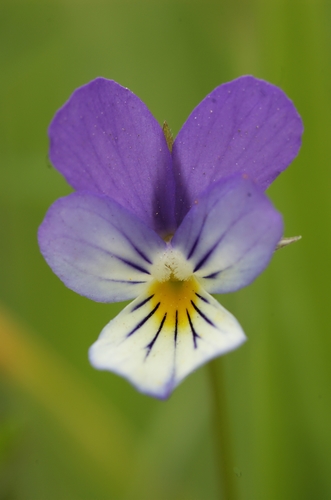
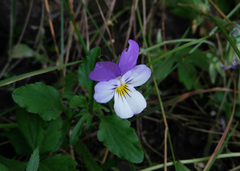
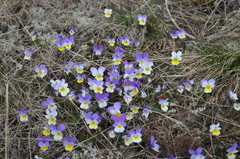
Wild pansy (Viola tricolor), also called heartsease, is a small annual to short-lived perennial in the Violaceae family, common across Europe. Its purple, yellow, and white flowers suit beds and meadows and have food and traditional herbal uses; the species is among the ancestors of garden pansies.
Read moreWild pansy, Heartsease, Johnny-jump-up, Three-colored violet and Love-in-idleness

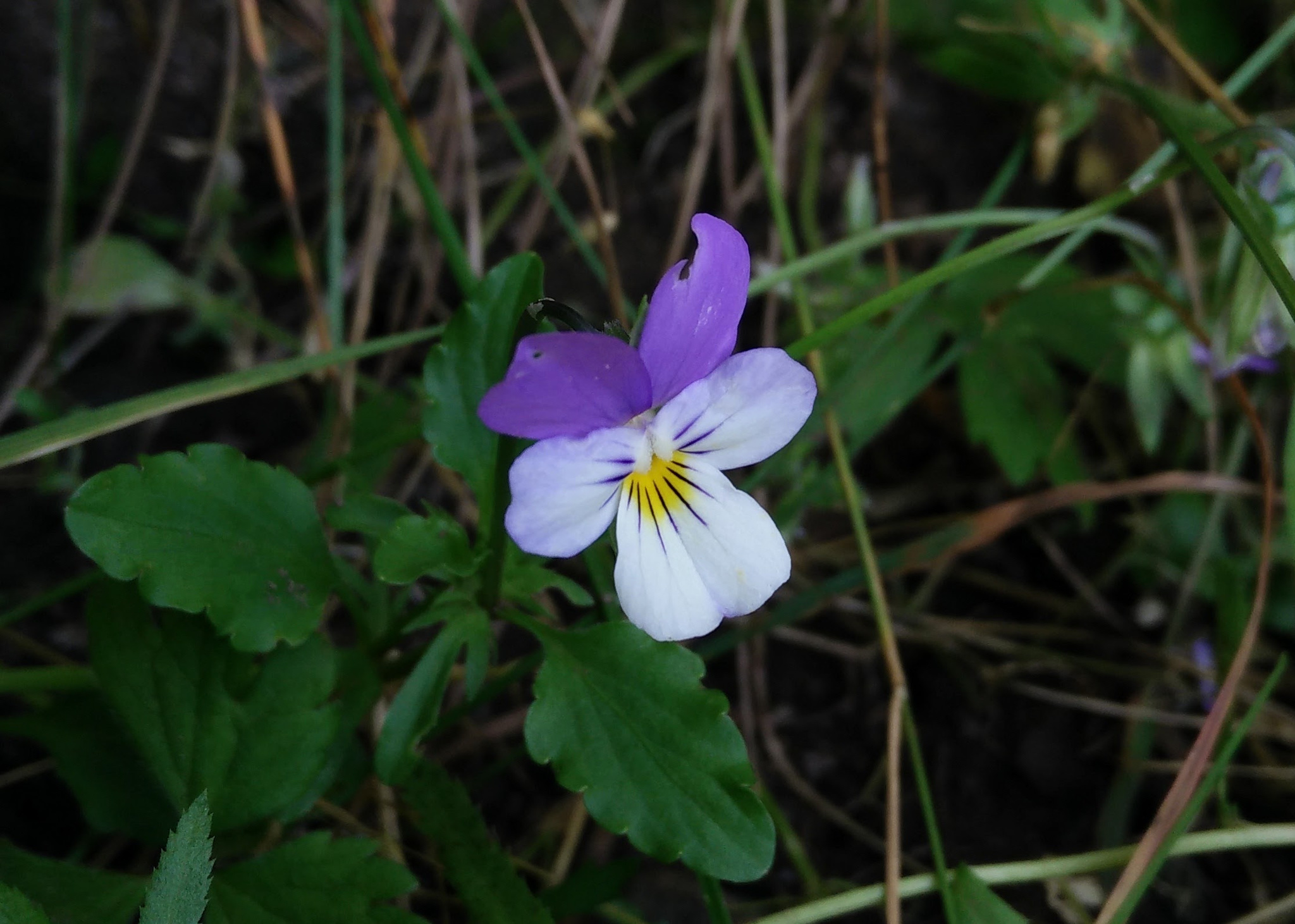
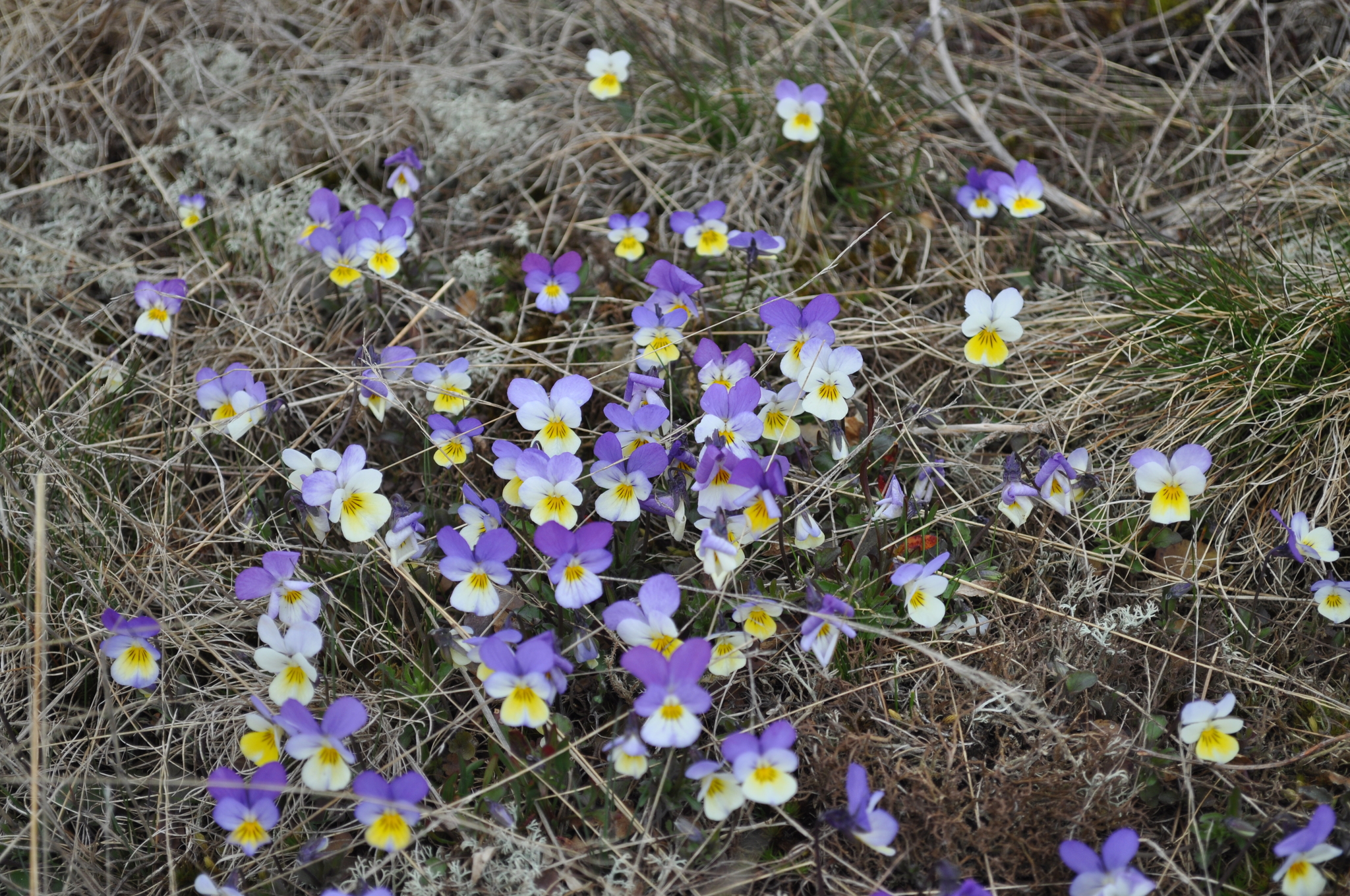
© photo
(c) AnneTanne, some rights reserved (CC BY-NC) · cc-by-nc
Wouter Koch · cc0
Albin Larsson · cc0




Global distribution
The native range of Viola tricolor extends from Europe to western Siberia and northwestern Iran. Widely cultivated and naturalized, it has spread to North and South America and other temperate regions. These introduced areas remain distinct from its native Eurasian range.
- Native6
- Introduced2
- Metropolitan France
- Germany
- United Kingdom
- Spain
- Russia (western Siberia)
- Iran (northwest)
- United States
- Canada
Hexagons: regions where the plant occurs. Green dots: native range.1
Identity
Wild pansy (Viola tricolor L., 1753), also called heartsease, Johnny-jump-up, three-colored violet, or love-in-idleness, is a small herbaceous member of the genus Viola, family Violaceae. The epithet tricolor refers to the flower’s three colors, purple, yellow, and white. The French name pensée is associated with the tilted lower petal, long seen as a thoughtful face. 1 3
In beds and meadows, wild pansy is valued as a small flowering plant with a long bloom period and abundant self-seeding. It is easy to grow and very cold hardy, has edible flowers, and is among the ancestors of garden pansies. 2 5
Recognition
Branched, upright or spreading stems form a low clump 10–40 cm (4–16 in) tall. Alternate leaves range from oval to lance-shaped and have large, deeply lobed stipules at their bases, a useful distinction from other violets. 6 5
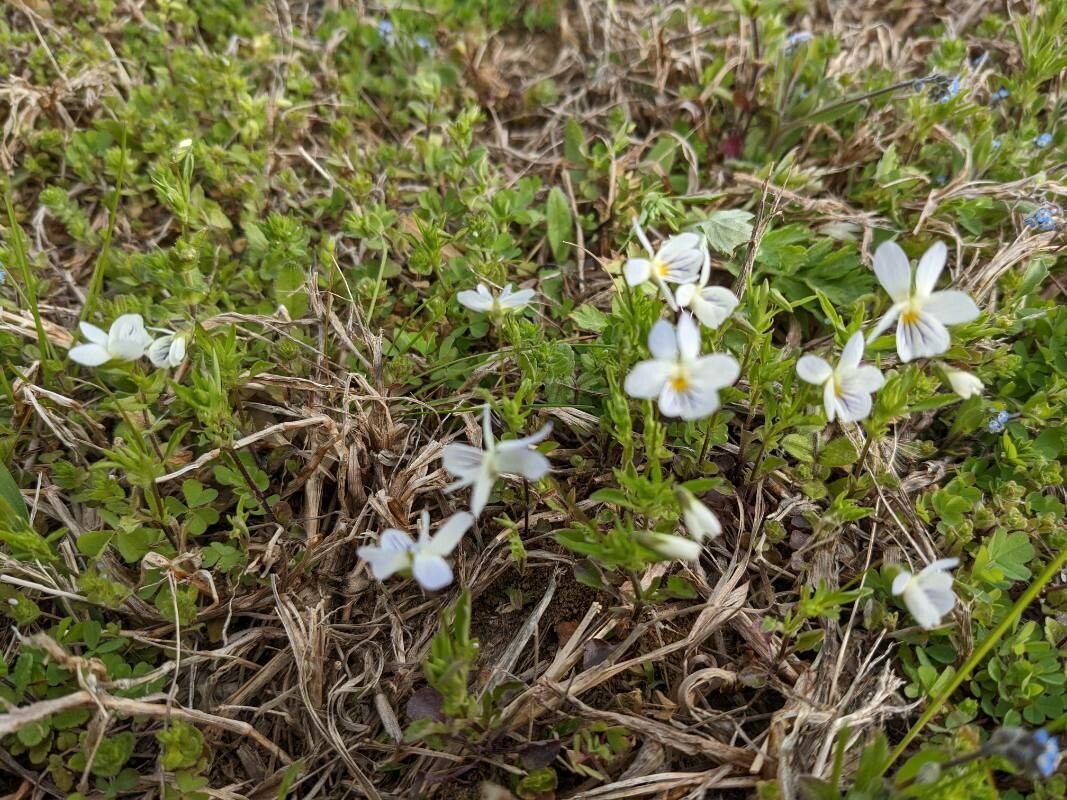
Single flowers provide the clearest feature: 1.5–2.5 cm (0.6–1 in) across, with five petals combining purple, yellow, and white in proportions that vary between plants. The lower petal has a spur and fine dark veins that guide insects toward nectar. 3 2
Flowering stretches from spring to autumn. The fruit is a capsule that opens into three valves and flings seeds away from the plant. This dispersal mechanism explains its often generous self-seeding. 4 6
Useful taxonomy
Carl Linnaeus’s Species Plantarum included the description of Viola tricolor L. in 1753. The genus Viola is large, and many older names still appear in botanical literature. Important synonyms and names to recognize include:
- Viola versicolor Salisb.
- Mnemion tricolor (L.) Spach, historical botanical name
- Jacea tricolor (L.) Opiz, historical botanical name
- Viola tricolor subsp. tricolor
Use the accepted scientific name, Viola tricolor, as the stable reference. Garden pansies sold in nurseries belong to the cultivated hybrid Viola × wittrockiana, rather than to the wild species itself. 1 7
Habitat and range
From Europe to western Siberia and northwestern Iran, wild pansy occupies a broad native range. It grows in meadows, disturbed ground, banks, fields, and roadsides on moist soils that tend to be somewhat acidic. 1 6
As a pioneer of disturbed soil, it quickly colonizes open, well-lit ground. Its preference for cool, disturbed habitats also guides garden cultivation: prolonged dry heat shortens flowering and can cause it to decline during summer. 5 2
Widely cultivated and escaping from gardens, wild pansy has become naturalized beyond its native range, notably in North and South America. These introduced areas should remain distinct from the native Eurasian range. 7 4
Life cycle and reproduction
An annual to short-lived perennial, wild pansy lives for one or two growing seasons depending on soil and climate, while self-seeding renews the population. Flowering begins in the first year, a few months after sowing, and continues over a long period. 2 4
Nectar-bearing flowers attract bees and butterflies, guided by the petal veins. After pollination, each flower produces a three-valved capsule that dries and mechanically ejects its seeds several tens of centimeters, roughly a foot or more, from the parent. 3 6
Sowing is the main method of garden propagation: sow in place in late summer for early flowering, or under cover in spring before transplanting. The plant self-seeds so readily that it often seems permanent. Clump division is possible but secondary, and seedlings of garden pansies do not reproduce their parents’ colors reliably. 2 5
Uses and risks
Today, wild pansy is chiefly an ornamental and edible plant for beds, borders, and containers. Its edible three-colored blooms decorate salads, desserts, and drinks. It also has a long tradition in herbalism, using infusions of the flowering plant for skin conditions and mild respiratory irritation. 3 4
Wild pansy is nontoxic, unlike many ornamental plants. The ASPCA lists wild violet (Viola) as nontoxic to cats, dogs, and horses; only very large quantities may cause mild digestive upset due to saponins. Traditional herbal use does not replace medical advice for a persistent condition. 8 5
Disease and growing conditions cause the main problems. Wild pansy is susceptible to powdery mildew and pansy rust in stuffy or damp conditions. Space plants apart, open up dense clumps, and water at soil level to reduce these problems. Dry summer heat is its most consistent enemy; moist, mulched soil offers the best response. 5 2
Varieties, look-alikes and related plants
Cultivated forms are selections rather than separate species. Helen Mount has large three-colored flowers; Bowles Black bears nearly black blooms with a yellow eye; King Henry stays compact and flowers in purple and yellow. More broadly, large garden pansies belong to Viola × wittrockiana, a hybrid derived partly from Viola tricolor. 2
Look-alikes most likely to cause confusion include:
- Viola arvensis, field pansy, with smaller, mostly creamy yellow flowers ;
- Viola odorata, sweet violet, with simple, fragrant purple flowers ;
- garden pansies with very large flowers, produced by crossing.
Three features best confirm a meadow plant as Viola tricolor: three-colored flowers combining purple, yellow, and white, large divided stipules, and a low growth habit. 6 1
Main sources
- Plants of the World Online / Kew, Viola tricolor L.
- Royal Horticultural Society, Viola tricolor - heartsease
- Encyclopaedia Britannica, wild pansy
- Plants For A Future, Viola tricolor
- NC State Extension, Viola tricolor
- Tela Botanica, Viola tricolor L., wild pansy
- USDA PLANTS Database, Viola tricolor L.
- ASPCA, Wild violet (Viola) non-toxic plant entry
Frequently asked questions
Is wild pansy toxic?
No. Viola tricolor is not listed as toxic to cats, dogs, or horses. Its flowers and leaves are edible; only very large amounts may cause mild digestive upset due to saponins.
Can you eat wild pansy flowers?
Yes. The three-colored flowers of Viola tricolor are edible and mainly used to decorate salads, desserts, and drinks. Their flavor is mild and slightly grassy; young leaves can also be eaten in small amounts.
How is wild pansy used in herbalism?
The flowering plant has a long history of use in infusions for skin conditions and mild respiratory irritation. This traditional use does not replace medical advice for a persistent condition.
How does wild pansy differ from garden pansies?
The large pansies sold in garden centers are garden hybrids, Viola × wittrockiana, derived partly from Viola tricolor. Wild pansy stays smaller, has modest flowers, and readily self-seeds.
Does wild pansy return every year?
It is annual to short-lived perennial, but self-seeds so freely that it can seem permanent in a garden. Seeds flung from the capsules quickly colonize nearby moist, loose soil.
How can I distinguish Viola tricolor from Viola arvensis?
Viola arvensis, or field pansy, has smaller flowers that are mainly creamy yellow, while Viola tricolor shows more purple. Both grow in fields and disturbed ground and look very similar.
Where should I plant wild pansy?
Choose moist, well-drained soil in sun or light partial shade, in a bed, border, or container. It suits flower meadows and edible-flower gardens, and dislikes dry, hot summer soil.
Similar plants
If you are unsure about a plant’s toxicity, ask a botanist or veterinarian for advice.