
Japanese pepper (Zanthoxylum piperitum, )
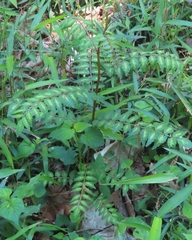

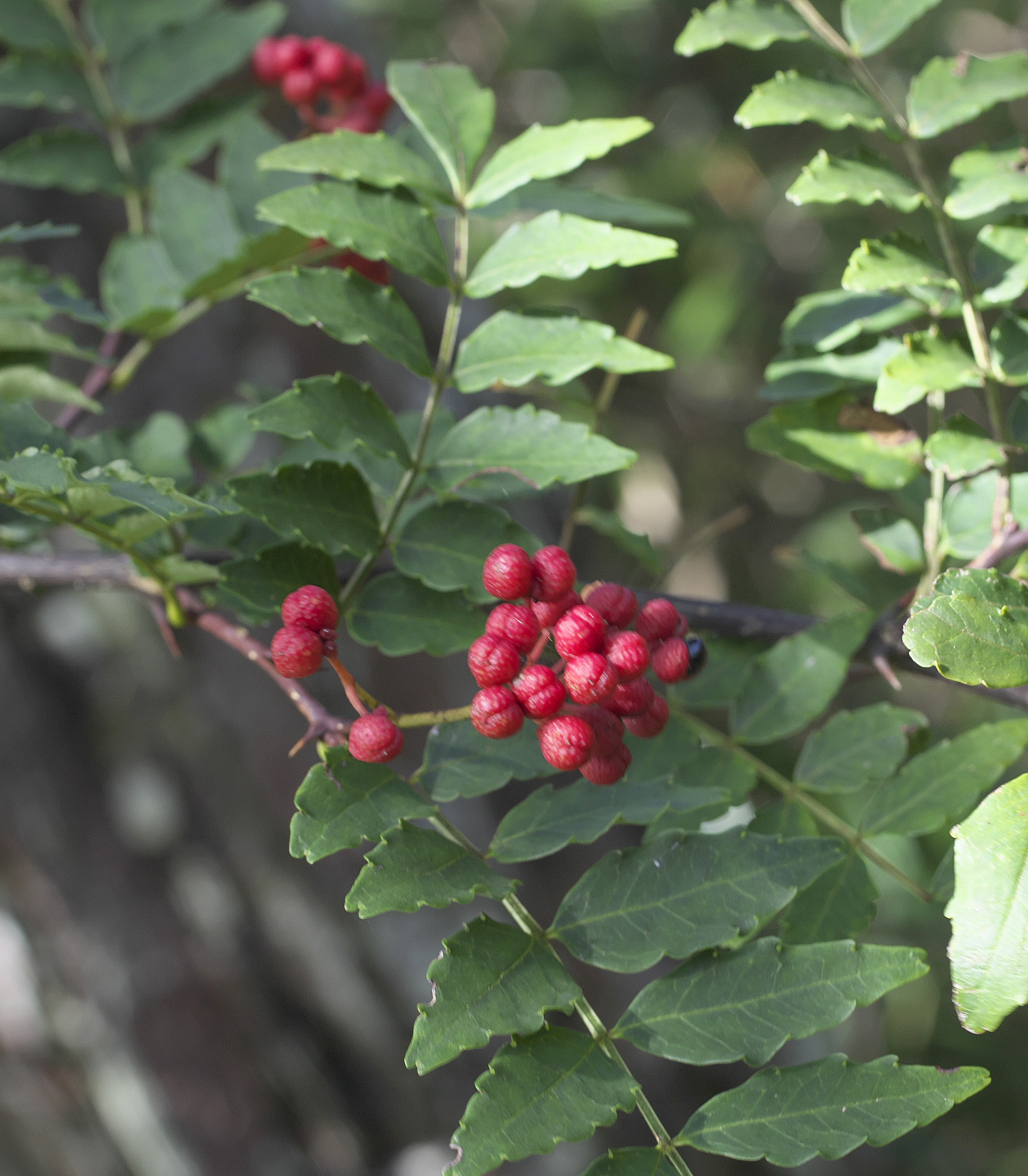
Japanese pepper (Zanthoxylum piperitum) is a deciduous, thorny shrub in the Rutaceae family, native to Japan and the Korean peninsula. Male and female plants bear small yellow-green flowers in spring; female plants later produce tiny red fruits that split in fall to reveal glossy black seeds. Its dried, ground fruit supplies sansho, a Japanese spice prized for its distinctive tingling sensation.
Read moreJapanese pepper, Sansho, Japanese prickly-ash and Chopi

© photo
(c) 空猫, some rights reserved (CC BY-NC), uploaded by 空猫 · cc-by-nc
iNaturalist User · cc-by
Wikimedia Commons · CC BY-SA or Public Domain
(c) mami_t_t, some rights reserved (CC BY) · cc-by
(c) WATANABE Hitoshi 渡辺仁, some rights reserved (CC BY) · cc-by
Global distribution
Zanthoxylum piperitum is native from Hokkaido to Kyushu in Japan, the Korean peninsula and, depending on the taxonomic treatment, southern China. It is widely cultivated beyond this range in temperate European and North American gardens, with no documented invasive status.
Identity
Japanese pepper (Zanthoxylum piperitum (L.) DC., 1824), also called sansho, is a perennial shrub in the genus Zanthoxylum and the citrus family, Rutaceae. Japanese prickly-ash and chopi are other established names for this aromatic plant. 1 4
Its common name can cause lasting confusion with true pepper, Piper nigrum, a climbing vine from an entirely different family, Piperaceae. Sansho's tingling comes from sanshool, an alkaloid associated with Zanthoxylum, chemically distinct from the piperine responsible for black pepper's burning heat. The shared word pepper describes a culinary resemblance rather than a close botanical relationship. 3 7
Recognition
A deciduous, thorny shrub, Zanthoxylum piperitum reaches 1.5–3 m (5–10 ft) in cultivation and is often as wide as it is tall. Its branches carry a pair of strong, curved thorns at the base of each leaf, an immediate clue when distinguishing it from nearby plants with unarmed foliage. 2 3
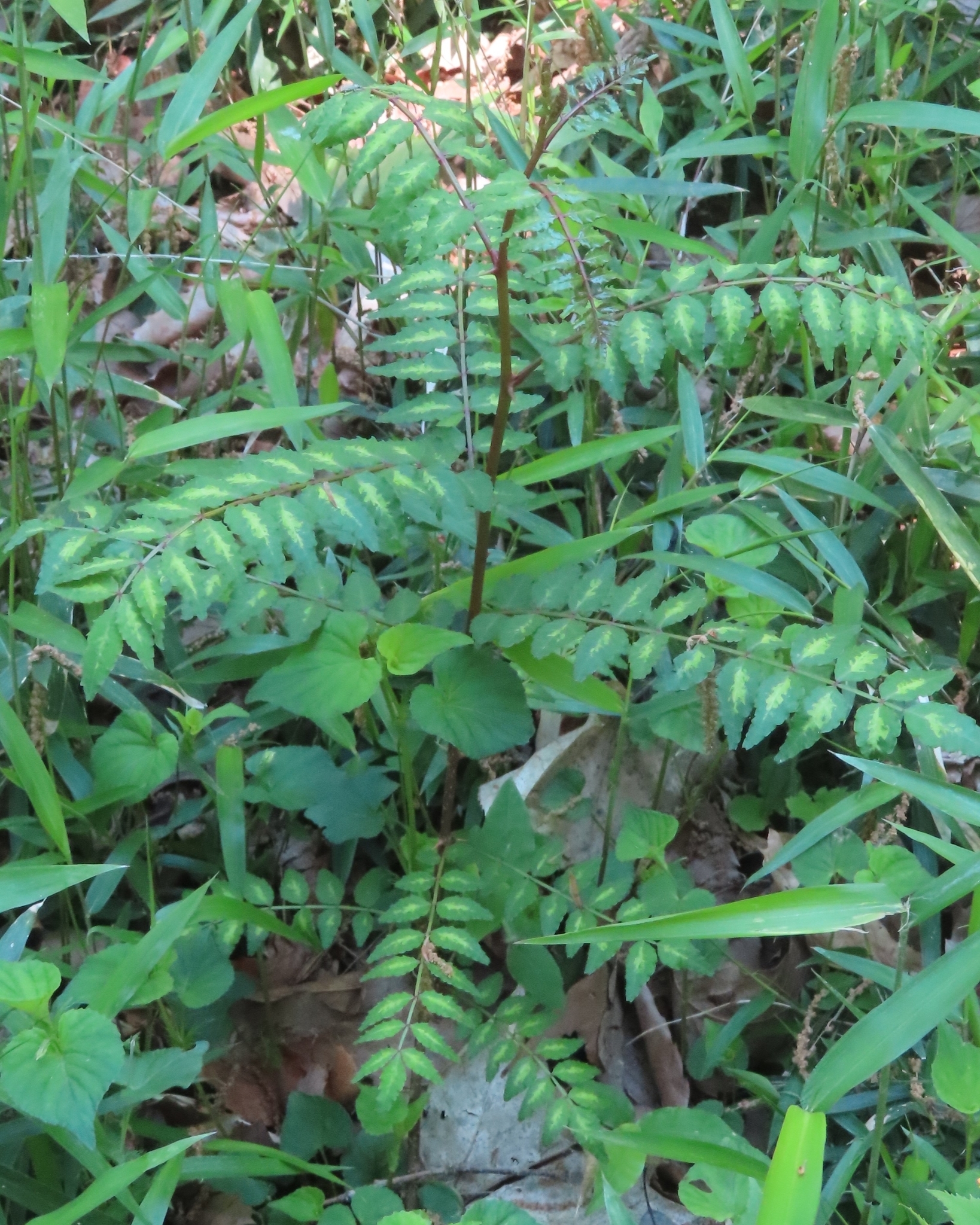
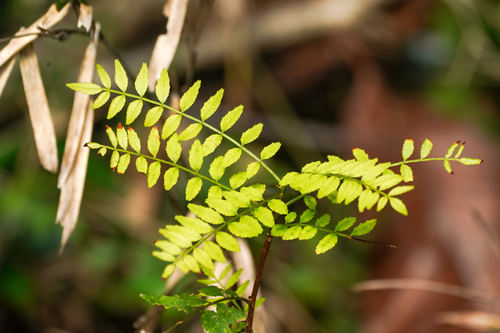
Odd-pinnate compound leaves bear 5–9 pairs of oval leaflets with scalloped margins and glossy dark green surfaces. When crushed, they release a clear lemony, peppery scent. That aroma remains useful for identification outside the flowering and fruiting seasons, when those other clues are unavailable. 2 7
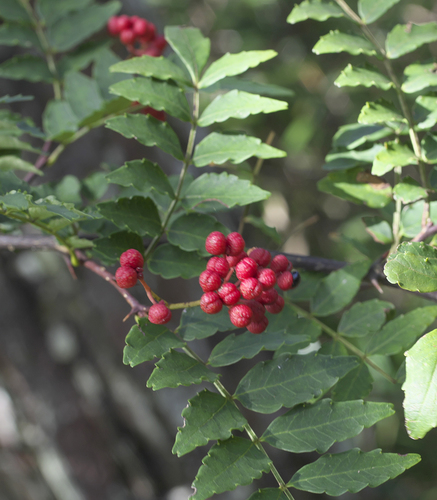
The species is dioecious, with male and female flowers on separate plants. Small yellow-green flowers open in spring in axillary clusters about 5 mm (0.2 in) across. On a pollinated female, they give way in fall to tiny red fruits, also about 5 mm (0.2 in) across, which split to expose a glossy black seed. 7 2
Useful taxonomy
For this aromatic shrub, POWO/WCVP accepts Zanthoxylum piperitum (L.) DC., published in 1824. Several forms and varieties have been described; some remain recognized, while others have become synonyms:
- Zanthoxylum piperitum var. inerme Makino (a varietal name)
- Zanthoxylum piperitum f. hispidum Hayashi (a form name)
- Zanthoxylum piperitum var. pubescens Nakai (a varietal name)
- Zanthoxylum piperitum var. spinosum Konta (a varietal name)
The same binomial, Zanthoxylum piperitum, was published twice more under other authors. Hooker and Arnott's 1838 combination is now considered illegitimate; Bennett's 1862 name was misapplied to a different accepted species. Depending on the work consulted, identical binomials can therefore point to different plants. Retaining the author and year, DC. 1824 for the accepted species, avoids that mistake. 1 5
Habitat and range
Japanese populations extend from Hokkaido to Kyushu, with the native range continuing into the Korean peninsula and, depending on taxonomic treatment, southern China. The shrub occupies thickets, hedges and woodland edges on hills and lower mountain slopes. 1 3
Hardiness to about -15 °C (5 °F) helps explain its cultivation in temperate gardens in Europe and North America. There, Japanese pepper is planted both for aromatic foliage and for harvesting its spice. No invasive status is documented for the species outside its native range in the cited accounts. 2 3
Life cycle and reproduction
Seedlings grow slowly, taking 5–10 years to become mature shrubs 1.5–3 m (5–10 ft) tall. Spring flowering, corresponding to April and May in its northern growing season depending on climate, begins toward the end of that development as the plant's sex becomes apparent. Male and female flowers occur on different individuals. Without a nearby male, an isolated female can flower every year without setting a single fruit. 7
Immature green seeds contain an unusual chemistry for a spice plant: two glucosylated serotonin derivatives occur at notably high concentrations, around 0.29% and 0.15% of dry weight. Published in 2010, this finding remains a biochemical curiosity associated with Zanthoxylum. 6
Propagation uses seed with about 3 months of cold stratification before germination, or semi-ripe cuttings taken in summer. Basal suckers are common in this suckering species; they can be removed in late winter rather than allowing the clump to spread unchecked. 3
Uses and risks
Dried, ground fruit husks supply sansho, an essential ingredient in the Japanese spice mixture shichimi togarashi and a classic seasoning for grilled eel, kabayaki. Young shoots, known as kinome, flavor soups and spring dishes, while still-green fruits are preserved with soy sauce as tsukudani. These uses distinguish the young foliage, green fruit and mature dried husk as different culinary products of the same shrub. 7
In Korea, dried ground fruit produces chopi, a traditional seasoning for spicy fish soups such as maeuntang, used long before chili peppers reached East Asia. In the south of the country, a few fruits were also thrown into ponds to stun small fish for capture. This documented practice does not establish toxicity to humans. 7
Available toxicological information classifies the plant as non-toxic to cats, dogs and humans; its status in horses remains uncertain. Raw seeds, however, can lodge in the throat and interfere with swallowing. The cited account describes consuming them dried, roasted or ground rather than raw and whole. 3
Varieties, look-alikes and related plants
Two horticultural forms stand out for harvesting. Asakura zanshō (var. inerme) is nearly thornless and favored in commercial orchards because picking is easier. Budō sanshō, a specialty of Wakayama Prefecture, produces particularly large fruits in grape-like clusters. 7
Sichuan pepper is the most frequent source of confusion. It comes mainly from Zanthoxylum bungeanum and Zanthoxylum simulans: the same genus and a similar tingling sensation, but distinct species with separate native ranges. In Korea, Zanthoxylum schinifolium adds another naming trap by supplying sancho, a name similar to chopi but referring to a different plant. In the garden or when buying, check the lemony scent of crushed foliage and the paired thorns at the base of each leaf.
Main sources
- Plants of the World Online / Kew, Zanthoxylum piperitum (L.) DC.
- Royal Horticultural Society, Zanthoxylum piperitum
- Plants For A Future, Zanthoxylum piperitum
- International Plant Names Index, Zanthoxylum piperitum (L.) DC.
- NCBI Taxonomy, Zanthoxylum piperitum
- Yanase et al., 2010, serotonin glucosides isolated from immature Zanthoxylum piperitum seeds
- Wikipedia (EN), Zanthoxylum piperitum
Frequently asked questions
Is Japanese pepper a true pepper?
No. Zanthoxylum piperitum belongs to Rutaceae, the citrus family, whereas true pepper (Piper nigrum) belongs to Piperaceae. The tingling of sansho comes from sanshool, an alkaloid associated with Zanthoxylum that is chemically distinct from black pepper's piperine.
Is sansho the same spice as Sichuan pepper?
No. Sichuan pepper comes mainly from Zanthoxylum bungeanum and Zanthoxylum simulans, Chinese species related to but distinct from Zanthoxylum piperitum, the Japanese and Korean species that supplies sansho.
Why does my Japanese pepper never fruit?
Zanthoxylum piperitum is dioecious, with male and female flowers on separate plants. An isolated male or female can flower every year without producing fruit; plants of both sexes need to grow near each other to obtain seeds.
Is Japanese pepper toxic to cats and dogs?
Available toxicological information classifies it as non-toxic to cats, dogs and humans; its status in horses remains uncertain. Raw seeds are still discouraged because they can lodge in the throat.
What is kinome?
Kinome refers to young Japanese pepper shoots and leaves harvested in spring to flavor soups, grilled dishes and miso-based preparations in Japanese cooking.
Where does the name sansho come from?
The Japanese name sanshō literally means mountain and pepper, referring to the shrub's natural habitat in Japanese hills and lower mountains.
What varieties of Japanese pepper are grown?
The almost thornless Asakura zanshō is favored for commercial harvesting. Budō sanshō, a Wakayama specialty, has large fruits arranged in clusters resembling bunches of grapes.
Similar plants

If you are unsure about a plant’s toxicity, ask a botanist or veterinarian for advice.