
Mandarin (Citrus reticulata, )


Mandarin (Citrus reticulata) is a small evergreen tree in the Rutaceae family, native to a restricted area of southern China and northern Vietnam. Its flattened fruits have thin, flexible peels and are now grown across most subtropical regions of the world.
Read moreMandarin, Tangerine, Satsuma and Mandarin orange
Place in full sun, with intense direct light all day long.
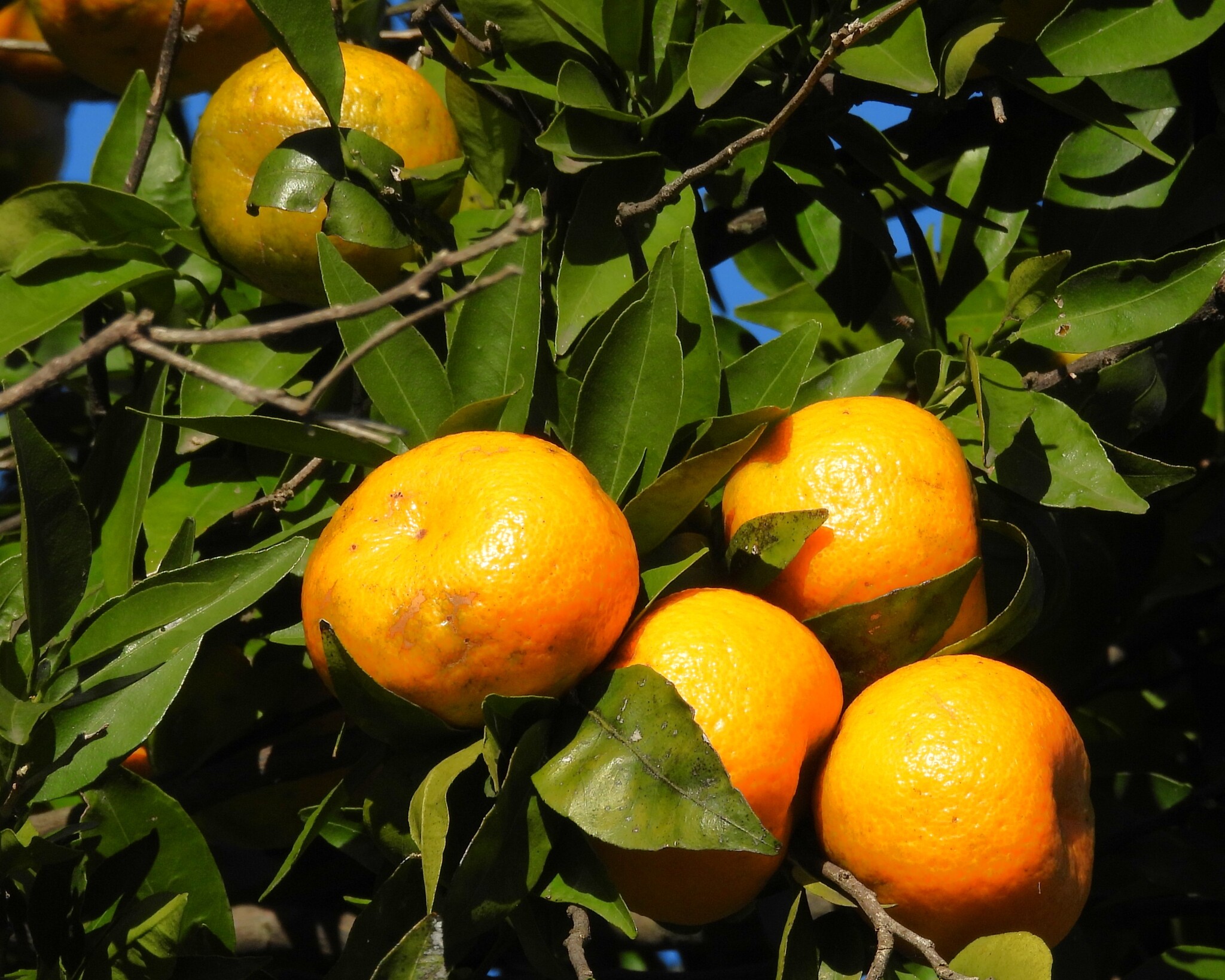


© photo
(c) patanat, some rights reserved (CC BY-NC) · cc-by-nc
Wikimedia Commons · CC BY-SA or Public Domain

Global distribution
Citrus reticulata is native to a restricted part of southern China and northern Vietnam around the Nanling Mountains. Horticultural introductions later took it across Asia, Europe and the Americas, without it becoming invasive in those regions.
- Native2
- Introduced1
- Southern China
- Vietnam
- United States (Florida, California)
Hexagons: regions where the plant occurs. Green dots: native range.1
Identity
Mandarin (Citrus reticulata Blanco, 1837) was described by botanist Francisco Manuel Blanco in the Philippines, then under Spanish administration. The tree belongs to the genus Citrus in the Rutaceae family and produces mandarins, also sold as tangerine or satsuma depending on the cultivar; mandarin orange is another established name. 1 2
The scientific epithet reticulata means “netted” in Latin, referring to the fine, veined texture of the peel and the fruit's internal membranes. The common name follows another route: “mandarin” comes from the imperial Chinese term adopted into French for a senior official, then applied to a color and finally the fruit. 4
Recognition
Mandarin grows as an evergreen tree 2 to 7.5 m (7 to 25 ft) tall, depending on climate and training, and often stays much more compact in a container. Young branches bear thorns. Glossy, lance-shaped leaves have short, barely winged petioles, unlike the distinctly winged petioles of orange trees. 4 7
White flowers, borne singly or in small groups, precede flattened (oblate) fruit 4 to 8 cm (1.6 to 3.1 in) across. Oranges, by contrast, are round. The thin, flexible peel separates easily from the segments, earning mandarin the English nickname “kid-glove orange.” 4 7
Useful taxonomy
Under the Swingle system, cultivated mandarins (satsuma, Mediterranean mandarin and tachibana) are grouped into one variable species, Citrus reticulata. The older Tanaka classification treated them as separate species. 4 3
The main synonyms and associated taxa to check are:
- Citrus reticulata subsp. unshiu (Tanaka ex Swingle) D.Rivera & al., the satsuma mandarin
- Citrus reticulata subsp. deliciosa (Ten.) D.Rivera & al., the Mediterranean mandarin
- Citrus reticulata subsp. tachibana (Makino) D.Rivera & al., the tachibana subspecies
- Citrus × nobilis subf. reticulata (Blanco) M.Hiroe, an associated historical name
The accepted name remains Citrus reticulata Blanco. Commercial mandarins such as clementine, ponkan and dancy are distinct hybrids or cultivars rather than direct synonyms. 1
Habitat and range
Around the Nanling Mountains, a restricted area of southern China and northern Vietnam forms the native range; POWO places the origin in Guangxi, Hunan and Jiangxi. 1 4
Two independent domestications north and south of the Nanling Mountains produced cultivated mandarins whose genomes carry about 1.8% pomelo introgression, absent from wild mandarins. 4
Cultivation subsequently reached Japan, India and the Philippines, then Europe, with arrival in England by 1805. Introduction to the United States dates to the 1840s–1850s in Louisiana, followed by spread to Florida, Alabama, Mississippi and California. 7
For cultivation, Mandarin needs well-drained soil, preferably loamy and slightly acidic, with a pH of 5 to 6. Full sun directly influences flowering: a shaded tree grows but bears little fruit. 6
Life cycle and reproduction
Spring flowering produces white flowers singly or in clusters. Fruit then develops over several months, with harvest typically in fall and winter under the seasonal conditions described. 4
An established mature tree can produce up to 79 kg (174 lb) of fruit each year, although yield varies greatly with cultivar, rootstock and climate. 4
Horticultural propagation relies mainly on grafting, which preserves cultivar qualities. Seeds and cuttings are used chiefly for collections or cultivar research, and growth slows markedly below 13 °C (55 °F). 6
Uses and risks
Fresh fruit is eaten on its own, in salads or as juice. Its thin peel, rich in essential oil, flavors confectionery, beverages and pastries. In traditional Chinese medicine, dried peel (chenpi) is used to treat digestive problems and coughs. 6
No ASPCA entry specifically addresses Citrus reticulata. Related citrus, including orange (Citrus sinensis) and calamondin (Citrus mitis), are classified as toxic to cats, dogs and horses: essential oils and psoralens in the peel and leaves cause vomiting, diarrhea and photosensitization. 8 9
Mandarin pulp is generally considered nontoxic. As a precaution, keep peel and concentrated oils away from animals. After a large ingestion of peel, seeking veterinary advice remains the safest course.
Since the 1880s, mandarins have become festive fruit in North America. Japanese immigrants gave them at New Year, and they later became a Christmas stocking tradition, echoing the gold coins associated with Saint Nicholas. 4
Varieties, look-alikes and related plants
Satsuma, Mediterranean mandarin (willowleaf) and tachibana are now treated as subspecies of Citrus reticulata; ponkan and dancy remain horticultural cultivars in the same complex. 10 4
Common sources of confusion include:
- Citrus × clementina, clementine, a usually seedless mandarin–orange hybrid
- Citrus sinensis, sweet orange, with round fruit and a thick, closely attached peel
- Citrus mitis, calamondin, a miniature fruit often grown in containers
Flattened fruit and a thin peel that comes away by hand provide the most reliable guide. An orange, by contrast, is round and its skin clings to the segments. 7
On nursery labels, “mandarin” often covers a broad group: satsuma, clementine, ponkan or tangor may all be sold under this general term, despite representing different subspecies, hybrids or cultivars within the same complex. Checking the full botanical name remains the only reliable way to know what you are planting. 10
Main sources
- Plants of the World Online / Kew, Citrus reticulata Blanco
- GBIF Backbone Taxonomy, Citrus reticulata Blanco
- International Plant Names Index, Citrus reticulata
- Wikipedia EN, Mandarin orange
- Wikipedia FR, Mandarin tree
- Plants For A Future, Citrus reticulata
- Purdue University NewCrop (Morton), Mandarin Orange
- ASPCA, Orange (Citrus sinensis) toxicity entry
- ASPCA, Calamondin Orange (Citrus mitis) toxicity entry
- Givaudan Citrus Variety Collection / UC Riverside, Citrus reticulata Blanco (CRC 3239)
Frequently asked questions
How does a mandarin differ from an orange?
A mandarin is flattened with a thin, flexible peel that comes away easily, whereas an orange is rounder with a thicker peel that clings to the segments.
Is Mandarin toxic to pets?
No ASPCA entry specifically covers Citrus reticulata. Related citrus such as orange and calamondin are classified as toxic because of essential oils and psoralens in the peel and leaves, so caution concerns the peel rather than the pulp.
Are satsumas and mandarins the same species?
Yes. Satsuma is now treated as a subspecies of Citrus reticulata, known for early ripening, hardiness and seedless fruit.
Why does Mandarin have thorns?
Young ungrafted shoots are often thorny; mature trees grafted onto a suitable rootstock generally have fewer thorns.
Similar plants
If you are unsure about a plant’s toxicity, ask a botanist or veterinarian for advice.