
Common fig (Ficus carica, )
Common fig (Ficus carica) is a deciduous fruit tree in the Moraceae, native to western Asia and the eastern Mediterranean region. Grown for its fig, a fleshy enclosed flower structure called a syconium, it is among the oldest domesticated fruit trees and remains well suited to dry, sunny gardens.
Read moreCommon fig, Fig and Edible fig
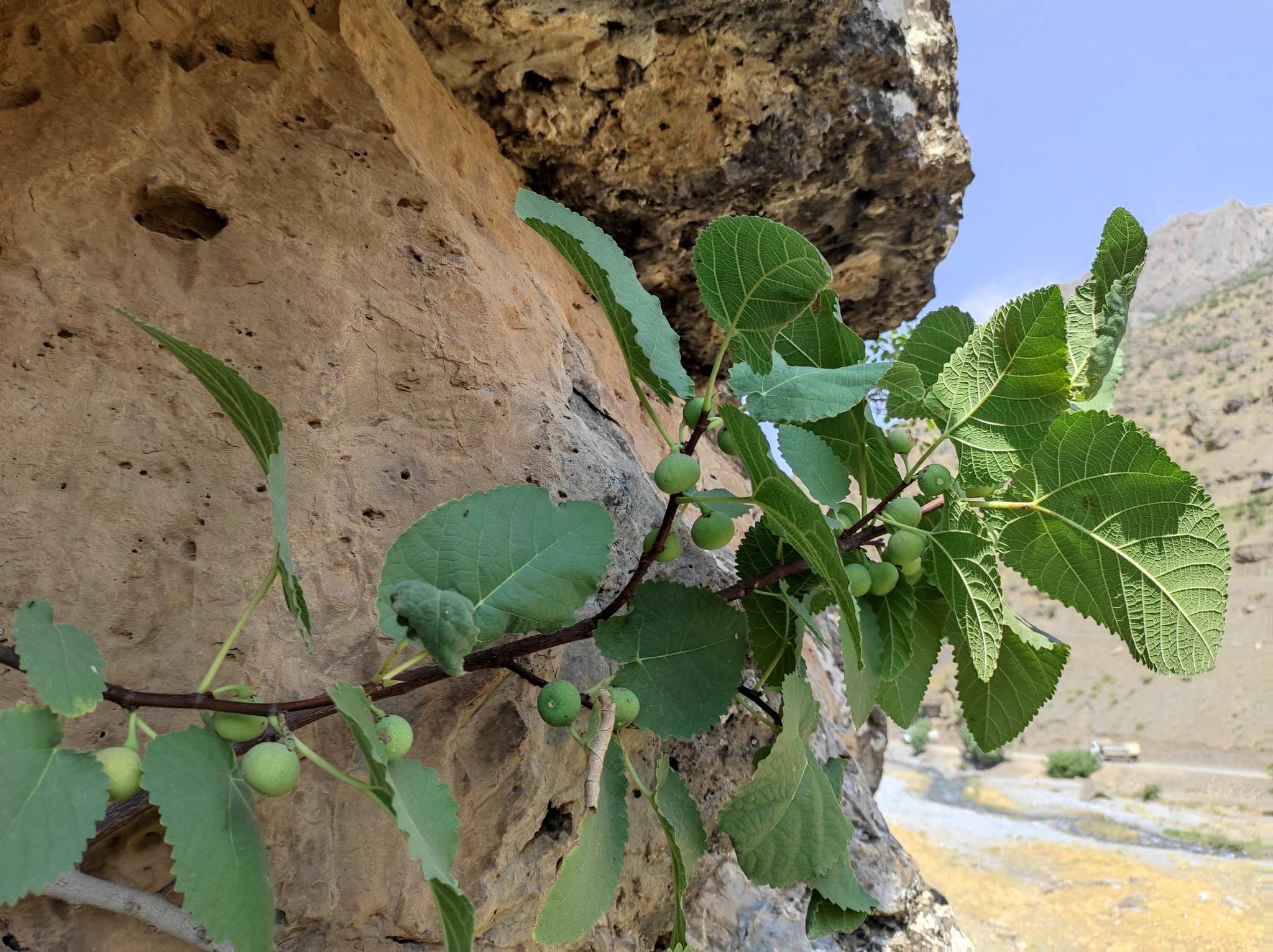
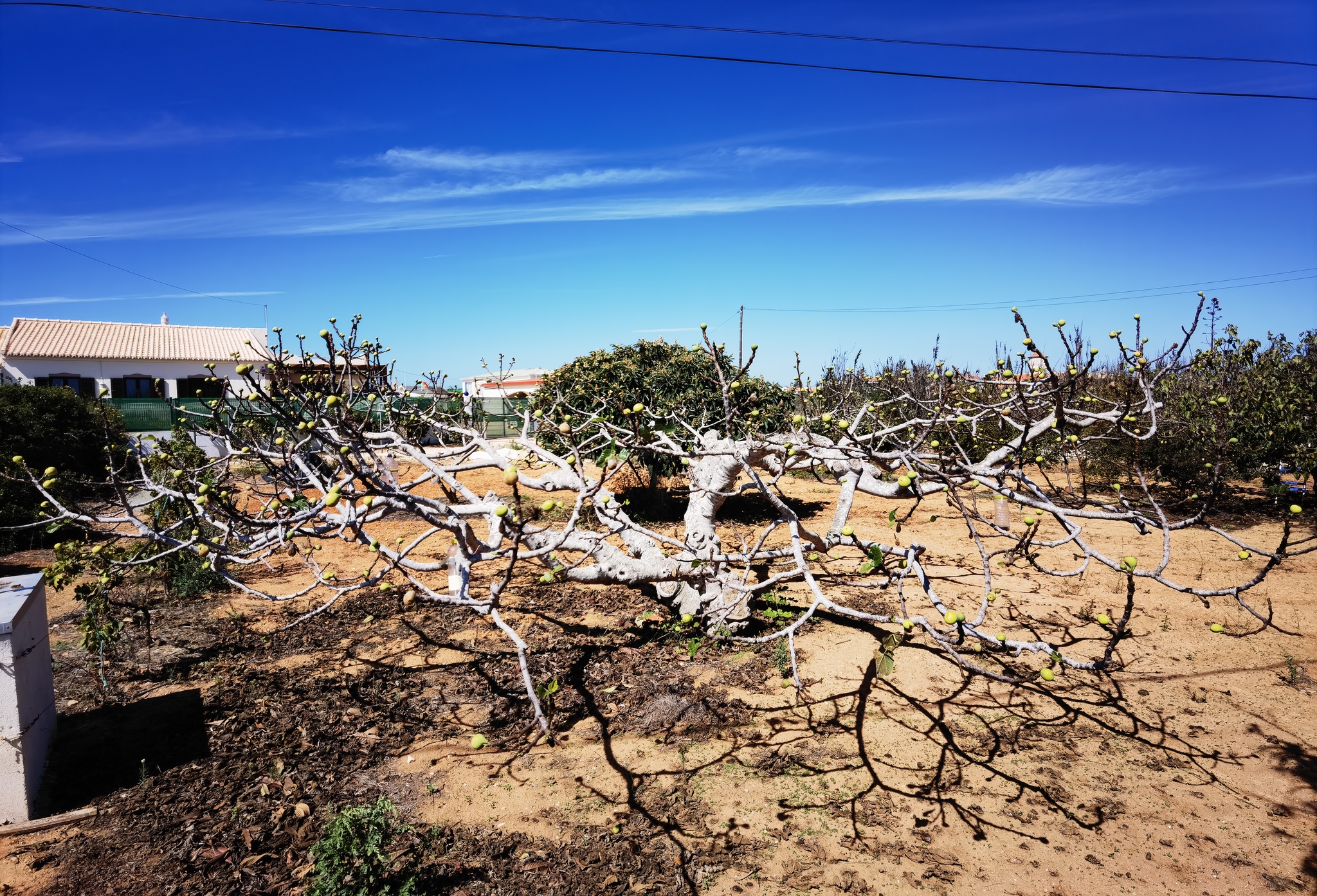
© photo
Dmitry Lyskov · cc0
Claude Kolwelter · cc-by
zebedeugalinha · cc-by
(c) Claude Kolwelter, some rights reserved (CC BY) · cc-by
no rights reserved · cc0
Global distribution
Ficus carica is native from Asia Minor through the Middle East to the western Himalayas. It has been cultivated around the Mediterranean for so long that it is also widely naturalized there, sometimes making wild populations difficult to distinguish from garden escapes.
- Native4
- Introduced3
- Turkey
- Iran
- Pakistan
- Afghanistan
- Greece
- California (United States)
- Australia
Hexagons: regions where the plant occurs. Green dots: native range.1
Identity
Common fig (Ficus carica L., 1753) is a deciduous fruit tree in the Moraceae and the genus Ficus. Native from Turkey to northern India and Pakistan, it has also become widely naturalized around the Mediterranean after millennia of cultivation. Its domestication as a fruit tree goes back more than 11,000 years, making it one of the oldest known cultivated trees. 1 8 6
The familiar fig, also called Edible fig, is not a single fruit in the strict botanical sense. It is a syconium, a fleshy, urn-shaped structure enclosing flowers that cannot be seen from outside and later the small seed-bearing fruits. The epithet carica recalls Caria, a region of Asia Minor already famous for figs in antiquity. 3 8
Recognition
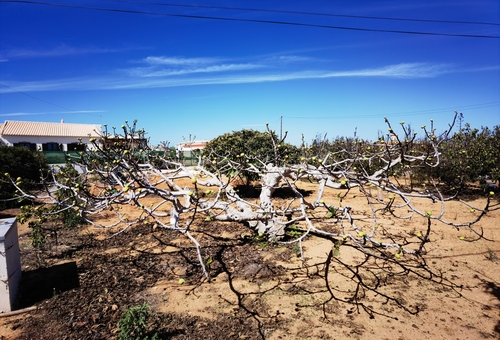
Smooth gray bark and a spreading, bushy crown characterize Ficus carica. The tree or large shrub commonly reaches 3–8 m (10–26 ft) tall with a comparable spread. In a cool climate or a container, its size is usually much more modest, so the dimensions of a garden specimen depend strongly on its setting. 5 3
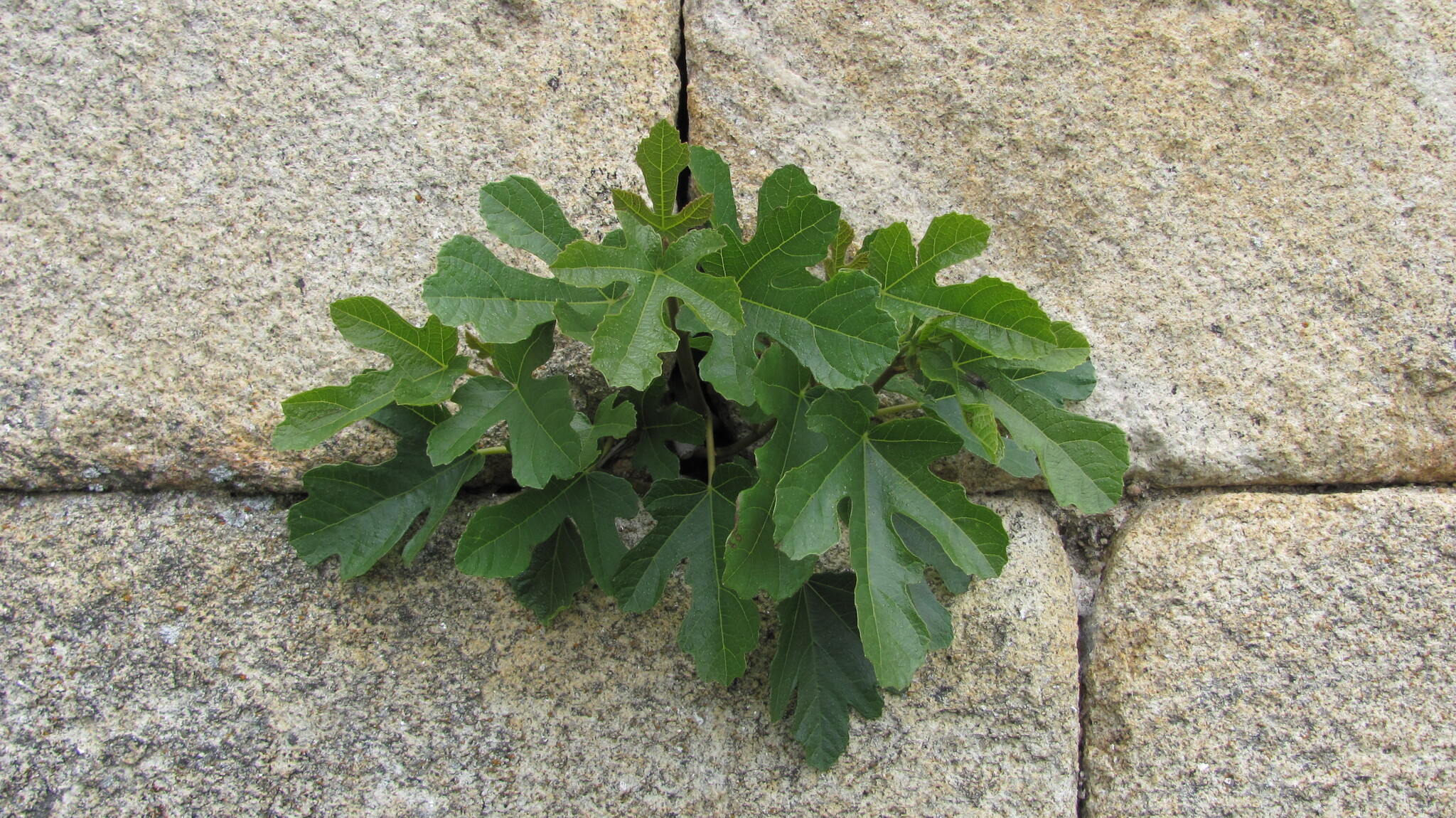
Broad, leathery leaves feel rough to the touch and are deeply divided into 3–5 lobes. Pulling off a leaf or pruning a shoot immediately releases white, milky sap. This sap is a useful identifying feature of Ficus, though it should be handled with care rather than used as a casual skin-contact test. 4 3
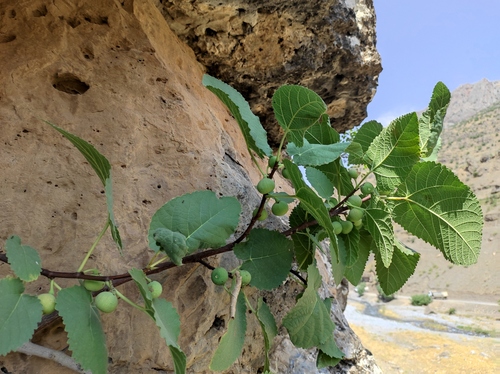
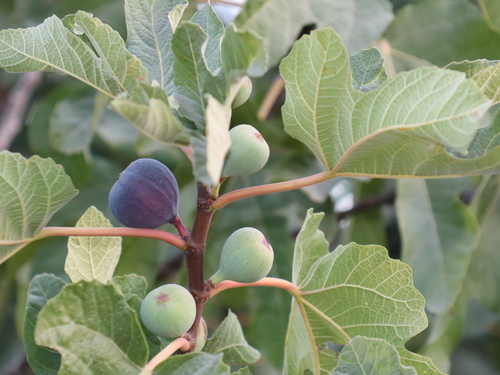
The flowers remain hidden, lining the inside of the closed fleshy structure that becomes the fig. As it ripens, the outside changes from green to brown or purple, depending on the cultivar. Figs are often 3–8 cm (1–3 in) long, and their color alone does not identify a particular cultivar. 8 5
Useful taxonomy
As the type species of Ficus, Common fig anchors a genus containing more than 800 tropical and subtropical species. Several botanical synonyms and infraspecific names have been associated with the accepted name; one distinction is particularly useful when choosing a tree for fruit:
- Ficus carica var. caprificus (Risso) Tschirch (botanical name)
- Ficus carica subsp. carica
- Ficus caprificus Risso
- Ficus sylvestris Gaudin
- Ficus kopetdaghi Pachom.
The name caprificus refers to the caprifig, the wild male form that houses the pollinating wasp. Planting it in place of an orchard fruit cultivar means growing a tree whose figs are not edible. Its role is to support pollination of types grown commercially in warm regions. The accepted scientific name, Ficus carica, remains the botanical reference point, but a fruit grower also needs to know which cultivated type is being offered. 1 7
Habitat and range
Warm, dry rocky ground, Mediterranean scrub and woodland edges provide natural habitat for Common fig from Asia Minor through the Middle East to the western Himalayas. It can act as a pioneer on poor ground, establishing in cracks in rock where only a small amount of soil has accumulated. 1 4
Thousands of years of cultivation around the Mediterranean have also produced extensive naturalization. Distinguishing genuinely wild populations from old garden escapes can therefore be difficult. The tree tolerates poor, lime-rich soil provided that drainage is good; water standing around its roots is more damaging than dry conditions. 4 3
Charred figs approximately 11,400 years old were discovered at Gilgal in the Jordan Valley. They represent one of the oldest known examples of a fruit tree cultivated by humans, preceding the domestication of cereals at the same site. That archaeological history helps explain why cultivated and naturalized distributions are now so closely intertwined. 6
Life cycle and reproduction
Caprification links fig reproduction to a tiny wasp, Blastophaga psenes, which enters the closed syconium to lay eggs and pollinate its internal flowers. This mutualism is particularly relevant to Smyrna and San Pedro types in warm production regions, where branches of caprifig may be hung in orchards to provide pollination. 7
Many garden cultivars, including Madeleine des deux saisons and Sultane, are parthenocarpic: they set figs without pollination, allowing a single isolated tree to bear fruit. Two-crop cultivars can produce large breba figs in summer on the previous year's wood, followed by a main crop on new wood in late summer and fall. In the temperate Northern Hemisphere, that second harvest commonly runs from late August to October; local warmth and season length determine whether it ripens. 7 3
Growers usually propagate figs by cuttings. A 20–30 cm (8–12 in) section of mature wood can root within a few weeks in a pot or in the ground. Air layering is another option for an established plant when the aim is to retain its characteristics rather than raise variable seedlings. 2 4
Uses and risks
Ripe figs are grown chiefly for food, eaten fresh or dried; their flesh is edible and safe for humans. Common fig is among the world's oldest cultivated fruit trees. Even a single garden tree also provides food for many birds and insects toward the end of the local summer. 8 3
The main handling risk comes from milky sap, which escapes at even a small cut. It contains furanocoumarins, including the photosensitizing substance psoralen. Sap on skin followed by sunlight can cause phytophotodermatitis, with redness, burns and blisters sometimes appearing hours after contact. Humans, cats, dogs and horses are all relevant to this caution. Wear gloves when pruning and wash any skin exposed to sap. 3 4
Varieties, look-alikes and related plants
Fruit cultivars of Common fig are selections maintained by cuttings rather than separate species. Madeleine des deux saisons and Sultane are widely grown in France for their two crops and climatic tolerance. Brown Turkey is a familiar choice in English-speaking gardens for container growing and cooler climates. Check the stated hardiness and whether the cultivar produces one crop or two before buying. 2
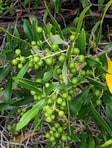
The most consequential mix-up is with the caprifig, Ficus carica var. caprificus. Its inedible figs house the pollinating wasp, so it should not replace a fruiting orchard cultivar. Other hardy ornamental Ficus also share milky sap and lobed foliage without producing edible figs.
- Ficus carica var. caprificus is the wild caprifig, with inedible figs;
- Ficus palmata, a related species, is sometimes used as a rootstock or pollen source;
- ornamental Ficus can share milky sap and divided leaves, making young plants harder to distinguish before they bear figs.
A bushy habit, milky sap and pear-shaped figs ripening from green to brown or purple together provide the most reliable features for recognizing Ficus carica. Use that combination rather than a single leaf or fruit color when checking a plant's identity. 3 5
Main sources
- Plants of the World Online / Kew, Ficus carica L.
- Royal Horticultural Society, Ficus carica (F) - fig
- North Carolina State Extension, Ficus carica
- Plants For A Future, Ficus carica
- Missouri Botanical Garden Plant Finder, Ficus carica
- ScienceDaily, on Kislev, Hartmann & Bar-Yosef 2006, early domesticated fig in the Jordan Valley
- International Society for Horticultural Science, the fig caprification system and its effects on productivity
- Encyclopaedia Britannica, fig plant and fruit
Frequently asked questions
Is Common fig toxic?
Ripe figs are edible and safe for humans. The milky sap contains photosensitizing furanocoumarins; skin contact followed by sunlight can cause phytophotodermatitis, burns and blisters in humans and domestic animals.
Does a fig tree need a pollinator?
Not if you choose a parthenocarpic cultivar such as Madeleine des deux saisons or Sultane, which sets fruit without pollination. Pollination by the wasp Blastophaga psenes, called caprification, is needed only by certain commercial types, particularly in warm growing regions.
Why does my fig tree have no fall crop?
Late frost can damage young buds associated with the fall crop, or the cultivar may not produce two crops. A cool climate or a short growing season can also prevent fall figs from ripening before cold weather returns.
What soil and exposure does Common fig need?
Common fig needs full sun and tolerates poor, dry, lime-rich soil as long as it drains well. Standing water is more harmful than drought, which an established tree tolerates well.
When are figs ready to harvest?
Two-crop cultivars produce summer breba figs on the previous year’s wood, then a second crop on new wood in late summer and fall. In the Northern Hemisphere, the latter commonly runs from late August to October. A ripe fig droops on its stalk and detaches easily.
What plants can be mistaken for Common fig?
The main confusion is with the wild caprifig, Ficus carica var. caprificus, whose figs are inedible and which is grown to house the pollinating wasp. Other hardy ornamental Ficus can also have milky sap and lobed leaves.
Where does Common fig come from?
Its native range extends from Turkey to northern India and Pakistan. Cultivation around the Mediterranean is so ancient, with charred figs more than 11,000 years old discovered in the region, that it is also widely naturalized there.
Similar plants
If you are unsure about a plant’s toxicity, ask a botanist or veterinarian for advice.