















01
पहचानें या खोजें
एक फ़ोटो, या नाम से खोज।

एनसाइक्लोपीडिया
हर प्रजाति के लिए एक पूरी प्रोफ़ाइल: उसे क्या चाहिए, वह कहाँ से आती है, किस काम आती है, उसे कैसे पहचानें, और क्या वह आपके पालतू जानवरों के लिए खतरनाक है।
ऐप स्टोर पर 4.850,000+ बागवान
Monstera deliciosa
अन्य नाम: Philodendron pertusum, Monstera borsigiana
 +15
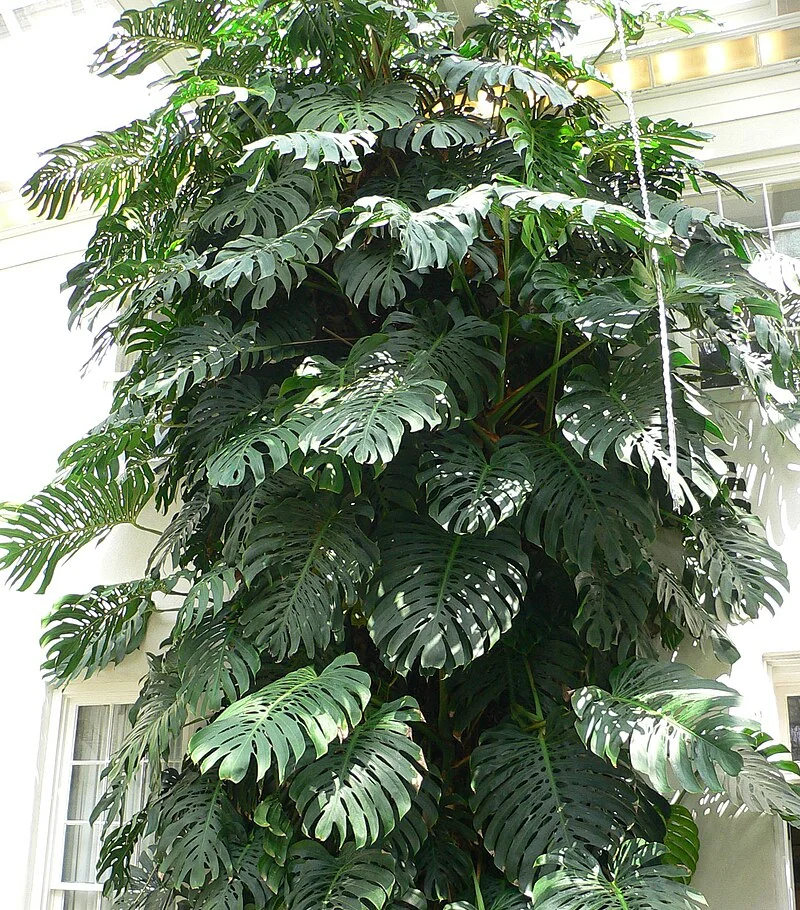
Monstera deliciosa दक्षिणी मैक्सिको और मध्य अमेरिका के वर्षावनों से आता है। उम्र के साथ इसकी बड़ी पत्तियां कटती हैं और उनमें छेद बनते हैं, और जितनी ज़्यादा रोशनी मिले, उतने ज़्यादा।
Monstera deliciosa दक्षिणी मैक्सिको और मध्य अमेरिका के वर्षावनों से आता है। उम्र के साथ इसकी बड़ी पत्तियां कटती हैं और उनमें छेद बनते हैं, और जितनी ज़्यादा रोशनी मिले, उतने ज़्यादा।
The specific epithet deliciosa means "delicious", referring to the edible fruit. The genus Monstera is named from the Latin word for "monstrous" or "abnormal", and refers to the unusual leaves with natural holes that members of the genus have. Its popular name as a houseplant of "Swiss cheese plant", or just "cheese plant", is commonly stated to refer to the "eyes" or holes that develop in its leaves similar to the holes in some Swiss-type cheeses such as Emmental cheese.
स्रोत: विकिपीडिया
This member of the arum family (Araceae) is a hemiepiphyte with aerial roots. It is able to grow up to 20 m (66 ft) high in the wild, with large, leathery, glossy, pinnate, heart-shaped leaves 25, 90 cm (10, 35.5 in) long by 25, 75 cm (10, 29.5 in) broad. The leaves on young plants are smaller and entire with no lobes or holes, but soon produce lobed and fenestrate leaves as they grow. Although it can grow very tall in nature, it only measures between 2 and 3 m (6.6 and 9.8 ft) when grown indoors.
स्रोत: विकिपीडिया
Monstera deliciosa is native to humid tropical forests, in lowlands and on lower mountains, in the south of Mexico and also in Costa Rica, Guatemala and Panama. The seeds fall to the ground, then the seedlings crawl (negative phototropism) until they meet a tree on which to attach. The many adjacent roots thus allow the plant to anchor against its new support and reach the canopy light (although it rarely grows in full sun and prefers a light dimmed by the foliage).
स्रोत: विकिपीडिया
Monstera deliciosa is commonly grown outdoors as an ornamental plant in the tropics and subtropics. The plant requires a lot of space and a rich and loose soil (ideally garden soil and compost in equal parts). If it grows in the ground it is better to plant it near a tree, where it can climb, if not against a trellis. It is a "moderately greedy plant", in that it needs to be watered just to keep the soil slightly moist. Its hardiness is 11 (that is to say the coldest at −1 °C or 30 °F).
स्रोत: विकिपीडिया
Monstera deliciosa is moderately toxic to both cats and dogs because it contains needle-like insoluble calcium oxalate crystals. These crystals may cause injury to the mouth, tongue, and digestive tract. It also causes dermatitis by direct contact with cat and dog skin.
स्रोत: विकिपीडिया
In those areas where it grows naturally, M. deliciosa is considered a delicacy due to its sweet and exotic flavor. The fruit may be ripened by cutting it when the first scales begin to lift up and it begins to exude a pungent odor. It is wrapped in a paper bag and set aside until the scales begin popping off. The scales are then brushed off or fall away to reveal the edible flesh underneath. The flesh, which is similar to pineapple in texture, can be cut away from the core and eaten.
स्रोत: विकिपीडिया
प्रोफ़ाइल के टैब, बिल्कुल ऐप की तरह: पहले ओवरव्यू, फिर प्रजाति के विकिपीडिया लेख के सेक्शन, आपकी भाषा में।
कठिनाई, ज़हरीलापन, रोशनी, पानी।
विवरण, फैलाव, खेती: इसके विकिपीडिया लेख के सेक्शन, आपकी भाषा में।
ऐप की तरह एक सेक्शन से दूसरे पर जाएं, प्रोफ़ाइल छोड़े बिना।
यहीं आज़माएं: टैब बदलें
Monstera deliciosa
अन्य नाम: Philodendron pertusum, Monstera borsigiana
+15Monstera deliciosa दक्षिणी मैक्सिको और मध्य अमेरिका के वर्षावनों से आता है। उम्र के साथ इसकी बड़ी पत्तियां कटती हैं और उनमें छेद बनते हैं, और जितनी ज़्यादा रोशनी मिले, उतने ज़्यादा।
Monstera deliciosa दक्षिणी मैक्सिको और मध्य अमेरिका के वर्षावनों से आता है। उम्र के साथ इसकी बड़ी पत्तियां कटती हैं और उनमें छेद बनते हैं, और जितनी ज़्यादा रोशनी मिले, उतने ज़्यादा।
The specific epithet deliciosa means "delicious", referring to the edible fruit. The genus Monstera is named from the Latin word for "monstrous" or "abnormal", and refers to the unusual leaves with natural holes that members of the genus have. Its popular name as a houseplant of "Swiss cheese plant", or just "cheese plant", is commonly stated to refer to the "eyes" or holes that develop in its leaves similar to the holes in some Swiss-type cheeses such as Emmental cheese.
स्रोत: विकिपीडिया
This member of the arum family (Araceae) is a hemiepiphyte with aerial roots. It is able to grow up to 20 m (66 ft) high in the wild, with large, leathery, glossy, pinnate, heart-shaped leaves 25, 90 cm (10, 35.5 in) long by 25, 75 cm (10, 29.5 in) broad. The leaves on young plants are smaller and entire with no lobes or holes, but soon produce lobed and fenestrate leaves as they grow. Although it can grow very tall in nature, it only measures between 2 and 3 m (6.6 and 9.8 ft) when grown indoors.
स्रोत: विकिपीडिया
Monstera deliciosa is native to humid tropical forests, in lowlands and on lower mountains, in the south of Mexico and also in Costa Rica, Guatemala and Panama. The seeds fall to the ground, then the seedlings crawl (negative phototropism) until they meet a tree on which to attach. The many adjacent roots thus allow the plant to anchor against its new support and reach the canopy light (although it rarely grows in full sun and prefers a light dimmed by the foliage).
स्रोत: विकिपीडिया
Monstera deliciosa is commonly grown outdoors as an ornamental plant in the tropics and subtropics. The plant requires a lot of space and a rich and loose soil (ideally garden soil and compost in equal parts). If it grows in the ground it is better to plant it near a tree, where it can climb, if not against a trellis. It is a "moderately greedy plant", in that it needs to be watered just to keep the soil slightly moist. Its hardiness is 11 (that is to say the coldest at −1 °C or 30 °F).
स्रोत: विकिपीडिया
Monstera deliciosa is moderately toxic to both cats and dogs because it contains needle-like insoluble calcium oxalate crystals. These crystals may cause injury to the mouth, tongue, and digestive tract. It also causes dermatitis by direct contact with cat and dog skin.
स्रोत: विकिपीडिया
In those areas where it grows naturally, M. deliciosa is considered a delicacy due to its sweet and exotic flavor. The fruit may be ripened by cutting it when the first scales begin to lift up and it begins to exude a pungent odor. It is wrapped in a paper bag and set aside until the scales begin popping off. The scales are then brushed off or fall away to reveal the edible flesh underneath. The flesh, which is similar to pineapple in texture, can be cut away from the core and eaten.
स्रोत: विकिपीडिया
01
एक फ़ोटो, या नाम से खोज।
02
कठिनाई, ज़हरीलापन, रोशनी और पानी, प्रोफ़ाइल में सबसे ऊपर।
03
इसके विकिपीडिया लेख के सेक्शन, अलग-अलग टैब में, आपकी भाषा में।
ओवरव्यू के बाद हर टैब में प्रजाति के विकिपीडिया लेख का एक सेक्शन होता है। गैलरी में पत्तियां, फूल, फल, बढ़ने का ढंग और छाल दिखती है, ताकि आप प्रजाति पहचान सकें।
Monstera deliciosa
अन्य नाम: Philodendron pertusum, Monstera borsigiana
+15Monstera deliciosa दक्षिणी मैक्सिको और मध्य अमेरिका के वर्षावनों से आता है। उम्र के साथ इसकी बड़ी पत्तियां कटती हैं और उनमें छेद बनते हैं, और जितनी ज़्यादा रोशनी मिले, उतने ज़्यादा।
Monstera deliciosa दक्षिणी मैक्सिको और मध्य अमेरिका के वर्षावनों से आता है। उम्र के साथ इसकी बड़ी पत्तियां कटती हैं और उनमें छेद बनते हैं, और जितनी ज़्यादा रोशनी मिले, उतने ज़्यादा।
The specific epithet deliciosa means "delicious", referring to the edible fruit. The genus Monstera is named from the Latin word for "monstrous" or "abnormal", and refers to the unusual leaves with natural holes that members of the genus have. Its popular name as a houseplant of "Swiss cheese plant", or just "cheese plant", is commonly stated to refer to the "eyes" or holes that develop in its leaves similar to the holes in some Swiss-type cheeses such as Emmental cheese.
स्रोत: विकिपीडिया
This member of the arum family (Araceae) is a hemiepiphyte with aerial roots. It is able to grow up to 20 m (66 ft) high in the wild, with large, leathery, glossy, pinnate, heart-shaped leaves 25, 90 cm (10, 35.5 in) long by 25, 75 cm (10, 29.5 in) broad. The leaves on young plants are smaller and entire with no lobes or holes, but soon produce lobed and fenestrate leaves as they grow. Although it can grow very tall in nature, it only measures between 2 and 3 m (6.6 and 9.8 ft) when grown indoors.
स्रोत: विकिपीडिया
Monstera deliciosa is native to humid tropical forests, in lowlands and on lower mountains, in the south of Mexico and also in Costa Rica, Guatemala and Panama. The seeds fall to the ground, then the seedlings crawl (negative phototropism) until they meet a tree on which to attach. The many adjacent roots thus allow the plant to anchor against its new support and reach the canopy light (although it rarely grows in full sun and prefers a light dimmed by the foliage).
स्रोत: विकिपीडिया
Monstera deliciosa is commonly grown outdoors as an ornamental plant in the tropics and subtropics. The plant requires a lot of space and a rich and loose soil (ideally garden soil and compost in equal parts). If it grows in the ground it is better to plant it near a tree, where it can climb, if not against a trellis. It is a "moderately greedy plant", in that it needs to be watered just to keep the soil slightly moist. Its hardiness is 11 (that is to say the coldest at −1 °C or 30 °F).
स्रोत: विकिपीडिया
Monstera deliciosa is moderately toxic to both cats and dogs because it contains needle-like insoluble calcium oxalate crystals. These crystals may cause injury to the mouth, tongue, and digestive tract. It also causes dermatitis by direct contact with cat and dog skin.
स्रोत: विकिपीडिया
In those areas where it grows naturally, M. deliciosa is considered a delicacy due to its sweet and exotic flavor. The fruit may be ripened by cutting it when the first scales begin to lift up and it begins to exude a pungent odor. It is wrapped in a paper bag and set aside until the scales begin popping off. The scales are then brushed off or fall away to reveal the edible flesh underneath. The flesh, which is similar to pineapple in texture, can be cut away from the core and eaten.
स्रोत: विकिपीडिया
ज़हरीलापन हर जानवर के लिए अलग से बताया गया है: कुत्ते, बिल्लियां, घोड़े। प्रोफ़ाइल समझाती है कि पौधा ज़हरीला क्यों है, अपने पालतू जानवरों को कैसे बचाएं और अगर किसी ने खा लिया तो क्या करें, साथ में पॉइज़न कंट्रोल सेंटर के संपर्क।
Monstera deliciosa
अन्य नाम: Philodendron pertusum, Monstera borsigiana
+15Monstera deliciosa दक्षिणी मैक्सिको और मध्य अमेरिका के वर्षावनों से आता है। उम्र के साथ इसकी बड़ी पत्तियां कटती हैं और उनमें छेद बनते हैं, और जितनी ज़्यादा रोशनी मिले, उतने ज़्यादा।
Monstera deliciosa दक्षिणी मैक्सिको और मध्य अमेरिका के वर्षावनों से आता है। उम्र के साथ इसकी बड़ी पत्तियां कटती हैं और उनमें छेद बनते हैं, और जितनी ज़्यादा रोशनी मिले, उतने ज़्यादा।
The specific epithet deliciosa means "delicious", referring to the edible fruit. The genus Monstera is named from the Latin word for "monstrous" or "abnormal", and refers to the unusual leaves with natural holes that members of the genus have. Its popular name as a houseplant of "Swiss cheese plant", or just "cheese plant", is commonly stated to refer to the "eyes" or holes that develop in its leaves similar to the holes in some Swiss-type cheeses such as Emmental cheese.
स्रोत: विकिपीडिया
This member of the arum family (Araceae) is a hemiepiphyte with aerial roots. It is able to grow up to 20 m (66 ft) high in the wild, with large, leathery, glossy, pinnate, heart-shaped leaves 25, 90 cm (10, 35.5 in) long by 25, 75 cm (10, 29.5 in) broad. The leaves on young plants are smaller and entire with no lobes or holes, but soon produce lobed and fenestrate leaves as they grow. Although it can grow very tall in nature, it only measures between 2 and 3 m (6.6 and 9.8 ft) when grown indoors.
स्रोत: विकिपीडिया
Monstera deliciosa is native to humid tropical forests, in lowlands and on lower mountains, in the south of Mexico and also in Costa Rica, Guatemala and Panama. The seeds fall to the ground, then the seedlings crawl (negative phototropism) until they meet a tree on which to attach. The many adjacent roots thus allow the plant to anchor against its new support and reach the canopy light (although it rarely grows in full sun and prefers a light dimmed by the foliage).
स्रोत: विकिपीडिया
Monstera deliciosa is commonly grown outdoors as an ornamental plant in the tropics and subtropics. The plant requires a lot of space and a rich and loose soil (ideally garden soil and compost in equal parts). If it grows in the ground it is better to plant it near a tree, where it can climb, if not against a trellis. It is a "moderately greedy plant", in that it needs to be watered just to keep the soil slightly moist. Its hardiness is 11 (that is to say the coldest at −1 °C or 30 °F).
स्रोत: विकिपीडिया
Monstera deliciosa is moderately toxic to both cats and dogs because it contains needle-like insoluble calcium oxalate crystals. These crystals may cause injury to the mouth, tongue, and digestive tract. It also causes dermatitis by direct contact with cat and dog skin.
स्रोत: विकिपीडिया
In those areas where it grows naturally, M. deliciosa is considered a delicacy due to its sweet and exotic flavor. The fruit may be ripened by cutting it when the first scales begin to lift up and it begins to exude a pungent odor. It is wrapped in a paper bag and set aside until the scales begin popping off. The scales are then brushed off or fall away to reveal the edible flesh underneath. The flesh, which is similar to pineapple in texture, can be cut away from the core and eaten.
स्रोत: विकिपीडिया
टैक्सॉन एक्सप्लोरर पौधों की लाइब्रेरी को ऑर्डर, फैमिली और जीनस के हिसाब से दिखाता है। किसी जानी-पहचानी प्रजाति से शुरू करें और उसकी पड़ोसी प्रजातियां खोजें।
Monstera deliciosa
अन्य नाम: Philodendron pertusum, Monstera borsigiana
+15Monstera deliciosa दक्षिणी मैक्सिको और मध्य अमेरिका के वर्षावनों से आता है। उम्र के साथ इसकी बड़ी पत्तियां कटती हैं और उनमें छेद बनते हैं, और जितनी ज़्यादा रोशनी मिले, उतने ज़्यादा।
Monstera deliciosa दक्षिणी मैक्सिको और मध्य अमेरिका के वर्षावनों से आता है। उम्र के साथ इसकी बड़ी पत्तियां कटती हैं और उनमें छेद बनते हैं, और जितनी ज़्यादा रोशनी मिले, उतने ज़्यादा।
The specific epithet deliciosa means "delicious", referring to the edible fruit. The genus Monstera is named from the Latin word for "monstrous" or "abnormal", and refers to the unusual leaves with natural holes that members of the genus have. Its popular name as a houseplant of "Swiss cheese plant", or just "cheese plant", is commonly stated to refer to the "eyes" or holes that develop in its leaves similar to the holes in some Swiss-type cheeses such as Emmental cheese.
स्रोत: विकिपीडिया
This member of the arum family (Araceae) is a hemiepiphyte with aerial roots. It is able to grow up to 20 m (66 ft) high in the wild, with large, leathery, glossy, pinnate, heart-shaped leaves 25, 90 cm (10, 35.5 in) long by 25, 75 cm (10, 29.5 in) broad. The leaves on young plants are smaller and entire with no lobes or holes, but soon produce lobed and fenestrate leaves as they grow. Although it can grow very tall in nature, it only measures between 2 and 3 m (6.6 and 9.8 ft) when grown indoors.
स्रोत: विकिपीडिया
Monstera deliciosa is native to humid tropical forests, in lowlands and on lower mountains, in the south of Mexico and also in Costa Rica, Guatemala and Panama. The seeds fall to the ground, then the seedlings crawl (negative phototropism) until they meet a tree on which to attach. The many adjacent roots thus allow the plant to anchor against its new support and reach the canopy light (although it rarely grows in full sun and prefers a light dimmed by the foliage).
स्रोत: विकिपीडिया
Monstera deliciosa is commonly grown outdoors as an ornamental plant in the tropics and subtropics. The plant requires a lot of space and a rich and loose soil (ideally garden soil and compost in equal parts). If it grows in the ground it is better to plant it near a tree, where it can climb, if not against a trellis. It is a "moderately greedy plant", in that it needs to be watered just to keep the soil slightly moist. Its hardiness is 11 (that is to say the coldest at −1 °C or 30 °F).
स्रोत: विकिपीडिया
Monstera deliciosa is moderately toxic to both cats and dogs because it contains needle-like insoluble calcium oxalate crystals. These crystals may cause injury to the mouth, tongue, and digestive tract. It also causes dermatitis by direct contact with cat and dog skin.
स्रोत: विकिपीडिया
In those areas where it grows naturally, M. deliciosa is considered a delicacy due to its sweet and exotic flavor. The fruit may be ripened by cutting it when the first scales begin to lift up and it begins to exude a pungent odor. It is wrapped in a paper bag and set aside until the scales begin popping off. The scales are then brushed off or fall away to reveal the edible flesh underneath. The flesh, which is similar to pineapple in texture, can be cut away from the core and eaten.
स्रोत: विकिपीडिया
प्रोफ़ाइल आम जानकारी देती है। आपके गमले और कमरे के हिसाब से देखभाल आपके पौधे के पेज पर मिलती है, मेरा गार्डन में।
हर प्रजाति का ज़हरीलापन अभी दर्ज नहीं है, न ही हर प्रजाति की पूरी गैलरी है। अंदाज़ा लगाने के बजाय प्रोफ़ाइल "अज्ञात" या "जानकारी उपलब्ध नहीं है" दिखाती है।
अगर किसी पालतू ने पौधा खा लिया हो, तो पशु चिकित्सक या पॉइज़न कंट्रोल सेंटर को कॉल करें। प्रोफ़ाइल जल्दी कदम उठाने में मदद करती है, यह डायग्नोसिस नहीं करती।
मुख्य बातें (कठिनाई, ज़हरीलापन, रोशनी, पानी), पौधे के हर हिस्से की गैलरी और प्रजाति का वर्गीकरण, फिर उसके विकिपीडिया लेख के सेक्शन टैब में, आपकी भाषा में।
प्रजाति की प्रोफ़ाइल खोलें और ज़हरीलापन पर टैप करें: जहाँ जानकारी उपलब्ध है, वहाँ कुत्तों, बिल्लियों और घोड़ों के लिए खतरा अलग से बताया गया है।
उसके मुंह से बचे हुए टुकड़े बिना ज़ोर लगाए निकालें, नोट करें कि कौन-सा हिस्सा खाया गया, और पशु चिकित्सक या पॉइज़न कंट्रोल सेंटर को कॉल करें। प्रजाति की प्रोफ़ाइल में ये कदम और काम के संपर्क एक साथ दिए गए हैं।
आपके गार्डन के पौधों की प्रोफ़ाइल बिना इंटरनेट के भी देखी जा सकती हैं, गार्डन के आखिरी कोने में भी।
पौधों को ऑर्डर, फैमिली और जीनस के हिसाब से देखने का एक तरीका। हर स्तर बताता है कि उसमें कितनी प्रजातियां हैं और एक खास प्रजाति को सामने रखता है।
कुछ प्रजातियों के बारे में दूसरों से कम जानकारी दर्ज है। अंदाज़ा लगाने के बजाय प्रोफ़ाइल बताती है कि कोई जानकारी उपलब्ध नहीं है।
हाँ। Floralens एनसाइक्लोपीडिया वेब पर भी कई भाषाओं में उपलब्ध है, ऐप इंस्टॉल किए बिना।
प्रोफ़ाइल प्रजाति के बारे में बताती है। मेरा गार्डन में आपके पौधे का पेज इसी प्रोफ़ाइल से शुरू होता है और उसे आपके गमले, कमरे और देखभाल के हिसाब से ढालता है।
किसी पौधे की फ़ोटो लें: नतीजे के साथ उसकी प्रोफ़ाइल खुल जाती है।
एक फ़ोटो, 4,00,000 से ज़्यादा प्रजातियां, 5 सेकंड से कम में नतीजा, कॉन्फिडेंस स्कोर और दूसरे विकल्पों के साथ।
फ़ोटो से पहचान देखेंहर पौधे का एक प्लान, आपके चुने समय पर नोटिफिकेशन और मौसम के साथ बदलती फ्रीक्वेंसी।
देखभाल रिमाइंडर देखेंकमरे, हर पौधे का एक पेज, ग्रोथ फ़ोटो और हर पौधे का सफ़र।
मेरा गार्डन देखेंवह बॉटनिस्ट जो आपके गार्डन की हर बात जानती है। सवाल पूछें, जवाब आपके पौधों को ध्यान में रखता है।
Flora देखेंतीन फ़ोटो, कुछ सवाल, फिर एक संभावित कारण, प्राथमिकता के क्रम में इलाज के प्लान और सात दिन बाद एक फ़ॉलो-अप।
Dr. Flora देखेंअपने पौधे पोस्ट करें, पौधों के दूसरे शौकीनों से सवाल पूछें और उन्हें फ़ॉलो करें जो आपको प्रेरित करते हैं।
कम्युनिटी देखें6 फैमिली में 65 बैज, 6 स्तरों वाली 8 सीरीज़ और 17 एक बार मिलने वाले बैज, जो आपके कामों से मिलते हैं।
बैज देखें