
Goutweed (Aegopodium podagraria, )
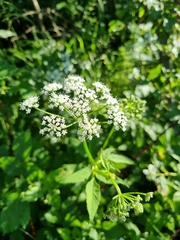
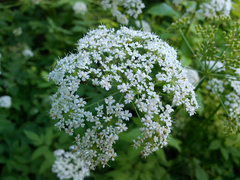
Goutweed (Aegopodium podagraria L., 1753) is a perennial Apiaceae native to temperate Europe and western Asia, the only species of its genus naturally present in Europe. Spreading rhizomes make it a persistent weed in gardens and hedges. Its young leaves are edible, but identification requires care because poisonous relatives can look similar.
Read moreGoutweed, Ground elder, Bishop's weed and Bishop's goutweed
Place in indirect light or in a shaded room.
Deep shade to full sun; thrives especially in open woodland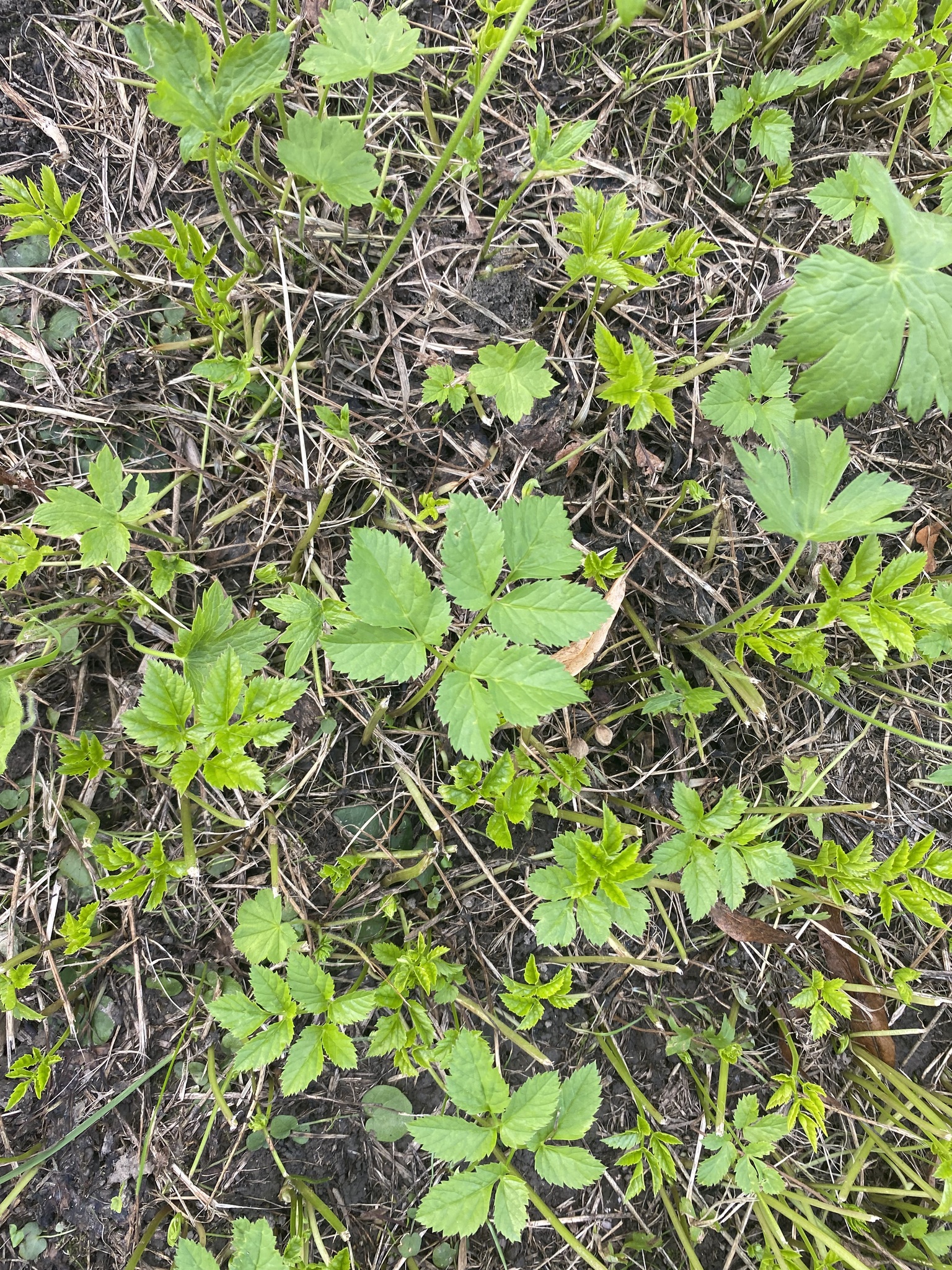

© photo
Radosław Puchałka · cc0
Bartłomiej Biernat · cc0
iNaturalist User · cc-by
no rights reserved · cc0
(c) ape, some rights reserved (CC BY) · cc-by
Global distribution
The native range of Aegopodium podagraria covers temperate Europe and western Asia, reaching Siberia. Introduced beyond that range as a medicinal and food plant from medieval times onward, it has naturalized on several continents and is sometimes classified as a regulated weed.
- Native3
- Introduced3
- Invasive2
- Metropolitan France
- Europe
- Siberia and western Asia
- Australia
- New Zealand
- Japan
- United States
- Canada
Hexagons: regions where the plant occurs. Green dots: native range.1
Identity
Goutweed (Aegopodium podagraria L., 1753), also called Ground elder or Bishop's weed, is a perennial Apiaceae reaching 30–100 cm (12–39 in). It is the only species of Aegopodium native to Europe. Plants of the World Online accepts the name published by Linnaeus in 1753. 1 7
The epithet podagraria refers to Greek podagra, gout affecting the big toe. The plant was long prescribed as a poultice for this joint pain, a use mentioned in the 12th century by the abbess Hildegard of Bingen. The genus name Aegopodium combines Greek aix, goat, and podion, little foot, referring to the shape of the leaflets. 3 2
Recognition
Whitish spreading rhizomes just beneath the soil surface produce a dense colony. In established patches, the upright, hollow, grooved stems commonly stand 30–100 cm (12–39 in) tall. They lack the purple blotches characteristic of poison hemlock, a useful early clue when separating the plants. 3 4
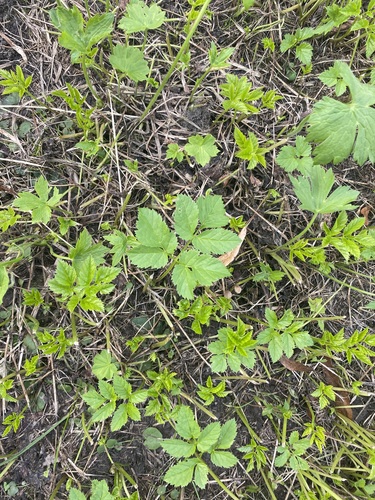
Goutweed leaves are biternate: the blade divides into three, with each division dividing again into three toothed leaflets. This is sometimes called the rule of threes. Crushed leaves smell of celery or carrot, unlike the unpleasant odor of fool's parsley. 2
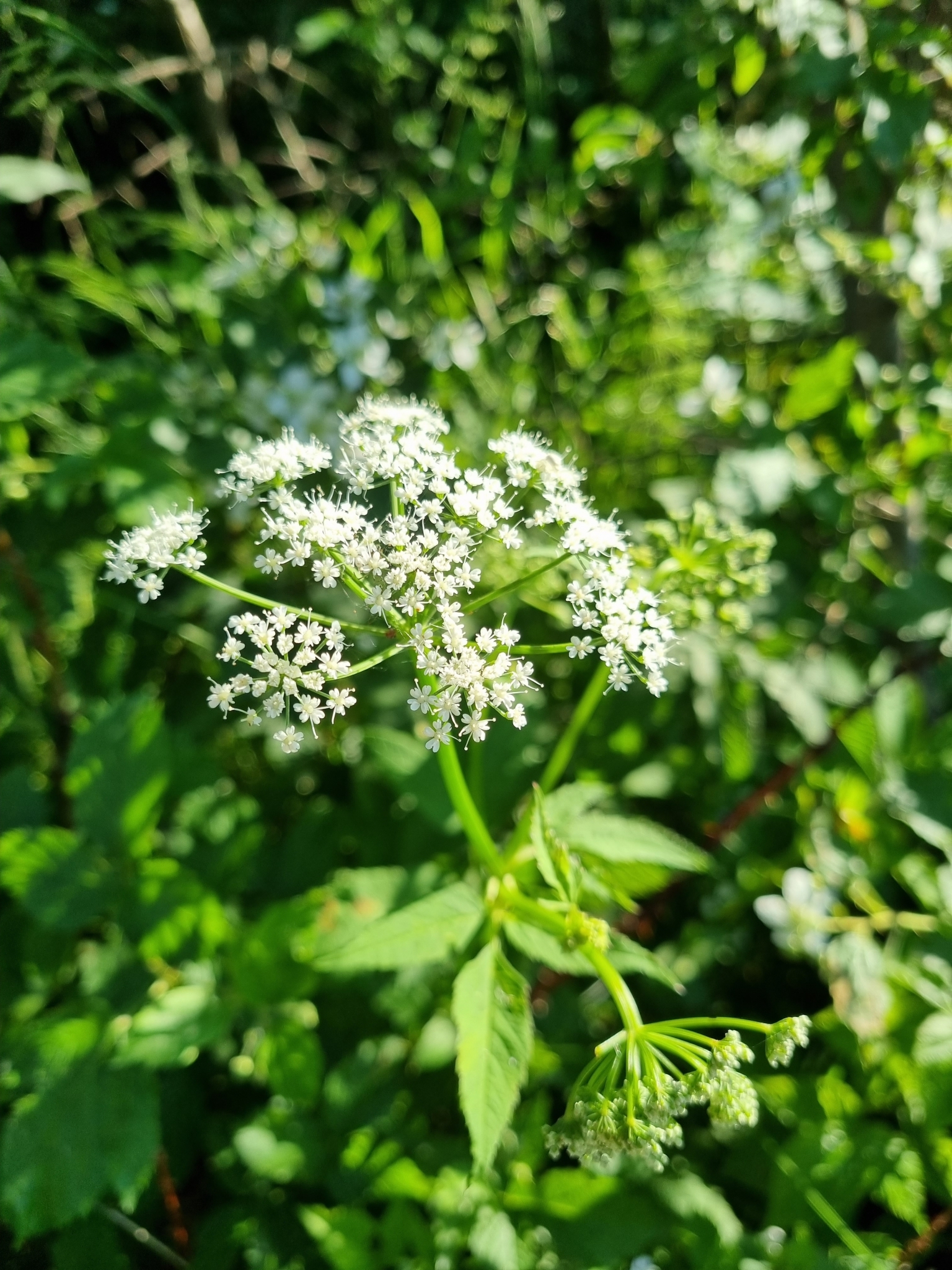
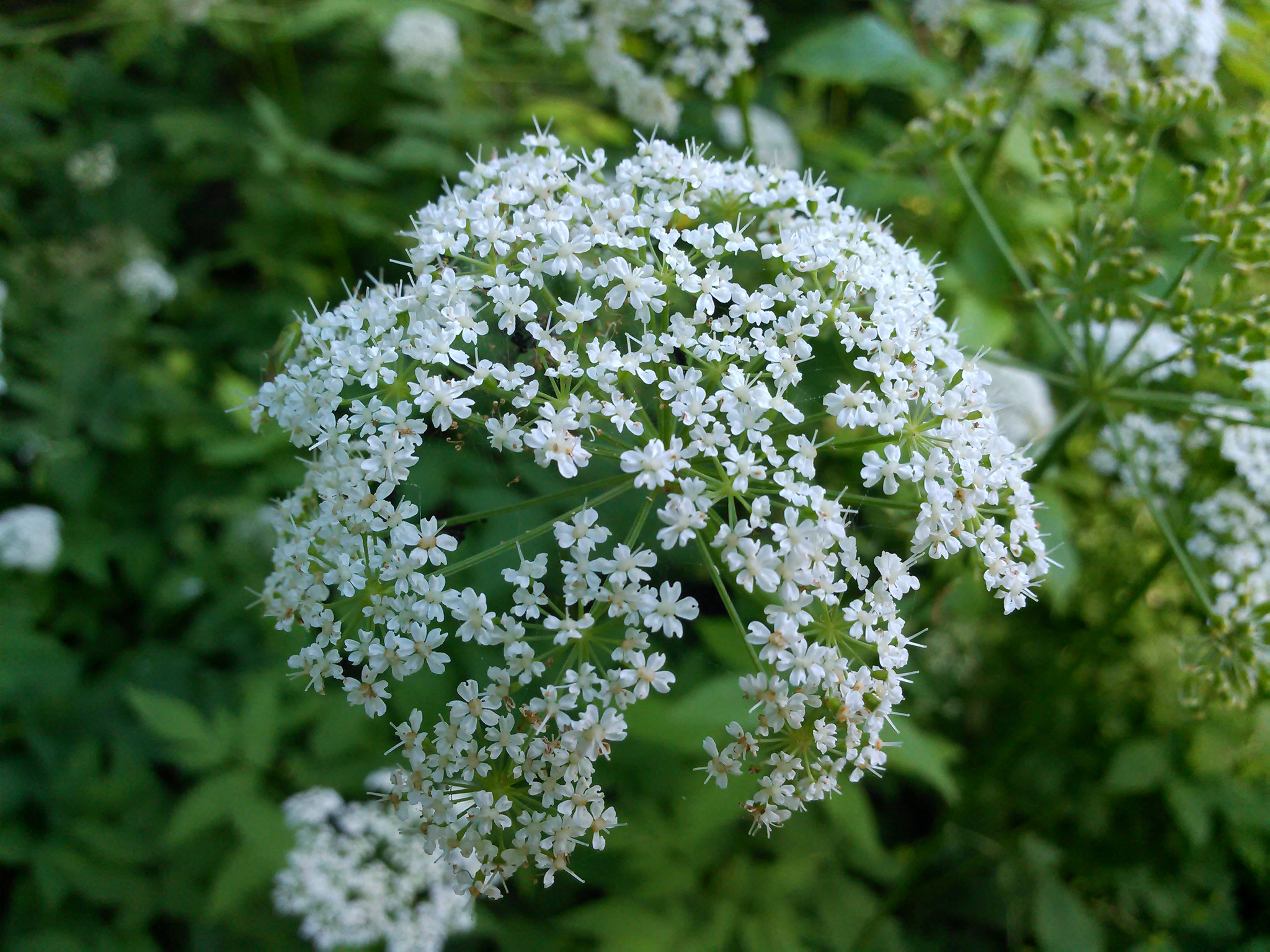
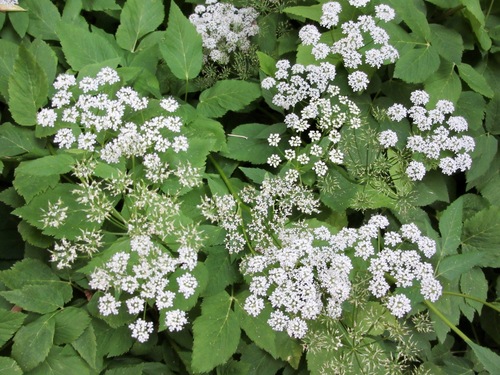
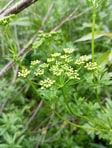
From late spring through summer in temperate climates, compound umbels with 15–20 rays carry tiny white, five-petaled flowers. Across the genus Aegopodium, these umbels lack bracts and bracteoles at their bases, a useful identifying character. Oval, ribbed fruits measure 3–5 mm (0.12–0.20 in) and provide another clue at maturity. 4
Useful taxonomy
POWO accepts Aegopodium podagraria L., published in 1753 in Species Plantarum. Its roughly fifteen botanical synonyms reflect successive transfers to related genera, including Apium podagraria (L.) Caruel, Carum podagraria (L.) Roth, Ligusticum podagraria (L.) Crantz, Sison podagraria (L.) Spreng. and Sium podagraria (L.) Weber. 7 1
These synonyms are not used in the horticultural trade. Variegatum is the familiar cultivar name on sale and does not change the accepted genus or species. 5
Habitat and range
Temperate Europe and western Asia, extending into Siberia, form the native range of Aegopodium podagraria. 1
France is part of that native range. The INPN records it as “égopode podagraire,” “podagraire” and “fausse angélique.” It is widespread across metropolitan France, particularly in moist woodland, rural hedges and orchards. 6
Ornamental and medicinal introductions beyond its native range began in medieval times. It has since naturalized in North America, Australia, New Zealand and Japan. Horticultural and USDA sources record restrictions on its sale as a regulated invasive plant in US states including Connecticut, Massachusetts, Vermont and Wisconsin; applicable rules vary by jurisdiction. 3 8
Life cycle and reproduction
Seeds provide one means of reproduction, but the shallow network of spreading rhizomes is more important. Even a small fragment a few centimeters long can regenerate a whole clump. This ability, more than seed production, explains why the species is so difficult to eradicate. 3 2
Early shoots emerge in early spring in temperate climates, ahead of most other woodland plants and several weeks before other wild vegetables in the same habitat. Late-spring to summer flowering is followed by fruiting, which adds to dispersal even though vegetative spread remains the dominant way colonies expand. 4
Uses and risks
For centuries, people have eaten the young leaves before flowering, raw in salads or cooked like spinach, with a flavor reminiscent of angelica. Medieval monks are thought to have spread the plant beyond its native range both as food and as a treatment for gout, reflected in the epithet podagraria. 2 3
Standard horticultural references document no toxicity to humans, cats or dogs. The danger lies in the young plant's resemblance to seriously poisonous Apiaceae, including poison hemlock (Conium maculatum) and fool's parsley (Aethusa cynapium). Check the foliage carefully before any wild harvest. 2
Agricultural and horticultural records describe Goutweed as an economically damaging weed outside its native range. Without a barrier to its rhizomes, it can displace existing plant cover within a single season. 8
Varieties, look-alikes and related plants
The widely recognized cultivar Variegatum, also sold as Snow on the Mountain, has cream-white leaf margins. It grows a little more slowly than the species, but entirely green shoots can reappear. Cut these out promptly or they can overtake the rest of the clump. 5 4
Poisonous relatives in the same habitat present the most serious confusion. Conium maculatum has purple-blotched stems and finely divided, lacy leaves; Aethusa cynapium releases an unpleasant smell when crushed, unlike Goutweed's celery scent. The twice-three arrangement of leaflets and umbels without bracts remain the most reliable distinguishing features before harvesting. 2
Main sources
- Plants of the World Online / Kew, Aegopodium podagraria L.
- Plants For A Future, Aegopodium podagraria
- NC State Extension Gardener Plant Toolbox, Aegopodium podagraria
- Missouri Botanical Garden Plant Finder, Aegopodium podagraria 'Variegatum'
- Royal Horticultural Society, Aegopodium podagraria 'Variegatum'
- INPN / MNHN, Aegopodium podagraria L., 1753 - Goutweed
- Tela Botanica / eFlore bdtfx, Aegopodium podagraria L.
- USDA PLANTS Database, Aegopodium podagraria - bishop's goutweed
Frequently asked questions
Is Goutweed poisonous?
No toxicity to humans, cats or dogs is documented in standard horticultural literature. The real risk is confusing it with poisonous members of the Apiaceae.
Can you eat Goutweed?
Yes. Young leaves picked before flowering are eaten raw in salads or cooked like spinach, with a flavor reminiscent of angelica.
How can I tell Goutweed from poison hemlock or fool's parsley?
The leaves are the most reliable clue. Goutweed has a twice-divided arrangement of three leaflets, while poison hemlock and fool's parsley have finely cut, lacy foliage, often with an unpleasant smell.
Why is Goutweed so difficult to remove?
It regrows from small rhizome fragments left in the soil after incomplete removal, as well as producing seeds each summer.
Where does Goutweed come from?
Its native range covers temperate Europe and western Asia, reaching Siberia. Medieval monks are thought to have spread it farther north for medicinal and food uses.
Is Goutweed invasive?
Outside its native range, several US states and Canada classify it as a regulated weed because of its impact on beds and cultivated woodland. In France, where it is native, it remains a common weed. Regulations depend on location.
Is variegated Goutweed less invasive?
Variegatum grows a little more slowly than the species, but fully green shoots may reappear. Remove them as soon as they develop, or they can take over the clump.
Similar plants
If you are unsure about a plant’s toxicity, ask a botanist or veterinarian for advice.