
Garden parsley (Petroselinum crispum, )
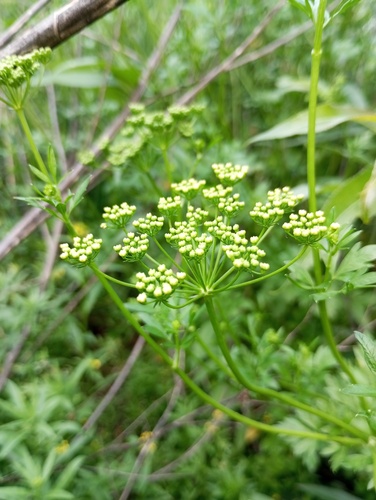
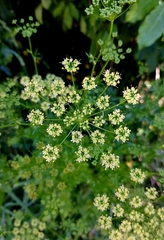
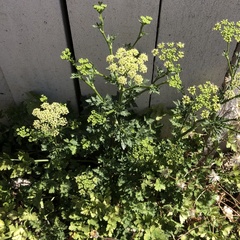
Garden parsley (Petroselinum crispum) is an aromatic herb in the Apiaceae, native to the Balkans and Mediterranean. Usually grown as an annual despite its biennial cycle, it forms a clump of dark green, curly or flat leaves harvested through the growing season in vegetable gardens and containers.
Read moreGarden parsley, Parsley, Curly parsley, Flat-leaf parsley, Italian parsley and Common parsley



© photo
(c) Юрий, some rights reserved (CC BY-NC), uploaded by Юрий · cc-by-nc
iNaturalist User · cc0
James K. Douch · cc-by-sa
Taken Dec 30, 2021 by Trap Hers (cc-by-sa)
Taken Aug 6, 2020 by Vix Green (cc-by-sa)
Taken Jul 7, 2019 by Herr Koalabär (cc-by-sa)
Taken May 15, 2021 by zakaria raoui (cc-by-sa)
Taken May 3, 2017 by Rémi Knaff (cc-by-sa)
© copyright of the Board of Trustees of the Royal Botanic Gardens, Kew.


Global distribution
The native range of Petroselinum crispum lies in the Balkan Peninsula and central Mediterranean, with records extending to northwestern Africa. Widely cultivated, garden parsley has naturalized across much of Europe and beyond; these introduced regions remain distinct from its original range.
- Native4
- Introduced2
- Greece
- Balkans
- Italy
- Morocco
- United Kingdom
- United States
Hexagons: regions where the plant occurs. Green dots: native range.1
Identity
Garden parsley (Petroselinum crispum (Mill.) Fuss), also called common parsley, is an aromatic herb in the Apiaceae family and the genus Petroselinum. Widely grown in temperate vegetable gardens, it supplies fragrant leaves for harvesting throughout the growing season, whether planted in the ground or kept in a container. 1 4
Although biennial, garden parsley is usually grown as an annual. Gardeners sow it each year to harvest leaves before flowering begins in the second season. The two main leaf types are curly parsley, often used for decoration, and flat-leaf parsley, also called Italian parsley, whose flavor is often considered stronger in cooking. 2 3
Recognition
Dark green, finely divided leaves on long stalks form a low clump. During its first year in a vegetable garden, garden parsley commonly reaches 25–30 cm (10–12 in) tall, with a spread of about 20 cm (8 in). This leafy first-year growth looks quite different from the taller flowering plant of the following season. 3 6
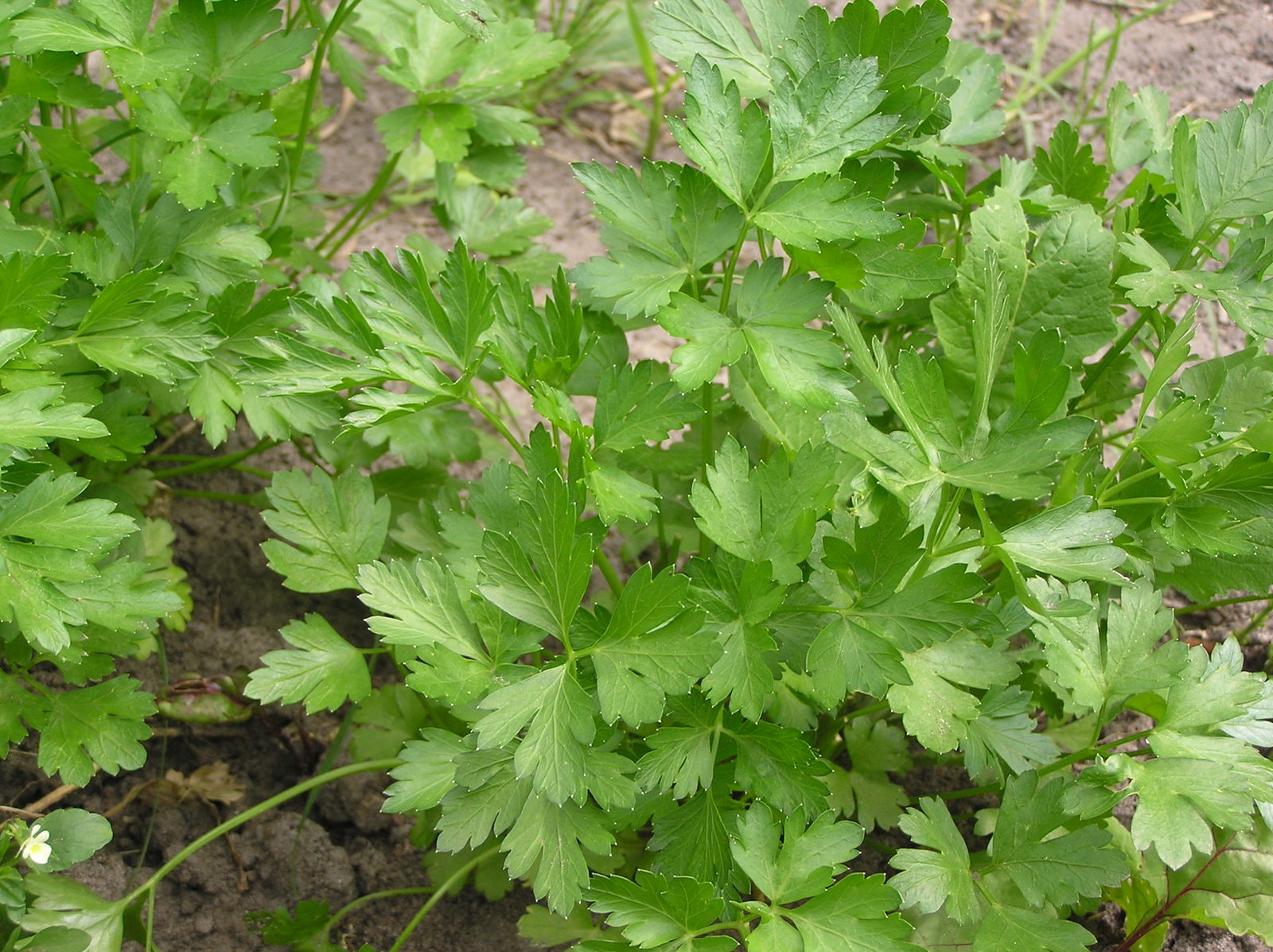
Leaf shape offers the clearest distinction between the familiar garden types. The common curly form has tightly curled and crinkled blades, while Italian parsley has broad, flat leaves. Crushing the foliage releases its characteristic aromatic scent, a useful distinguishing feature among otherwise similar-looking members of the carrot family. 4 2
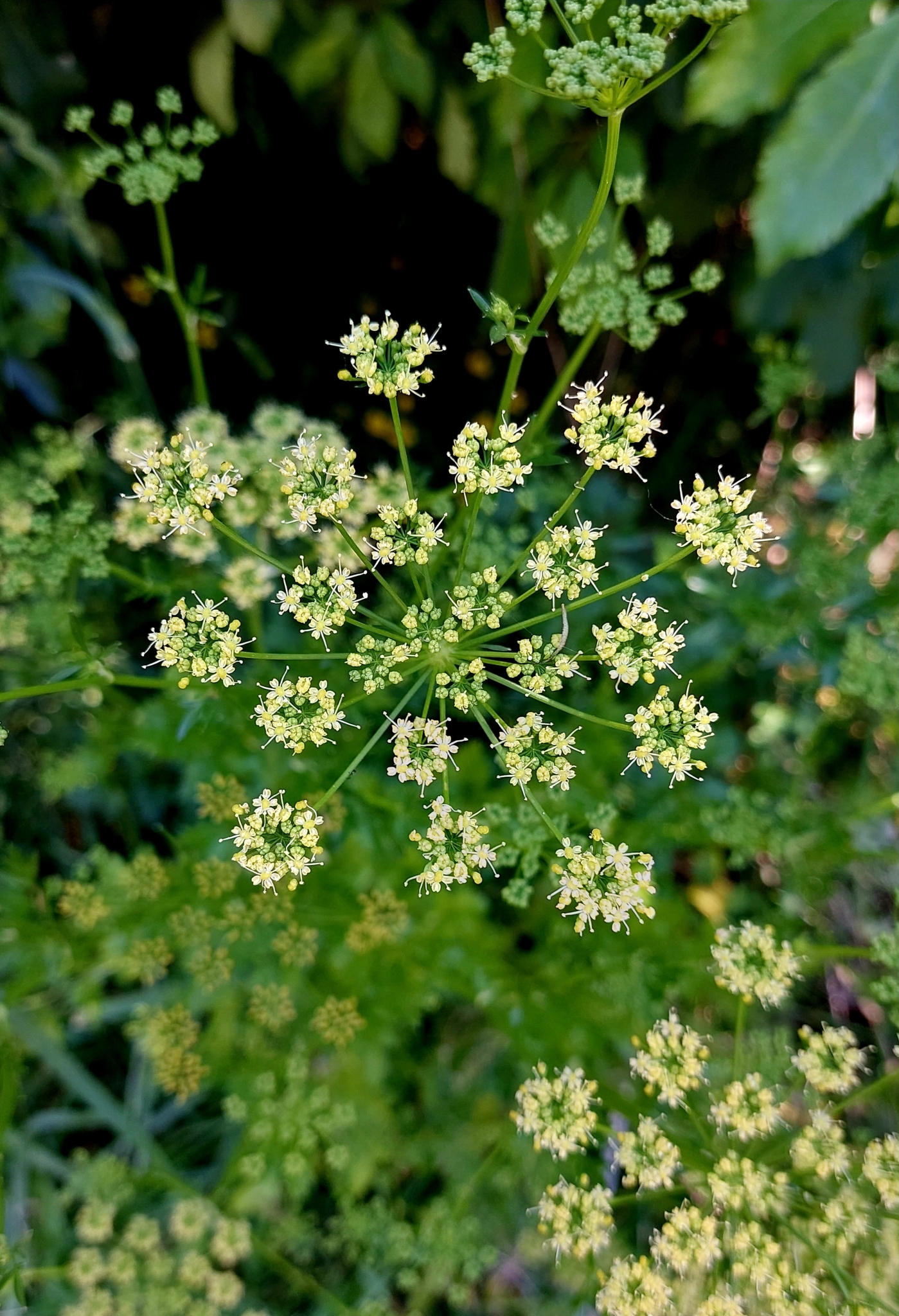
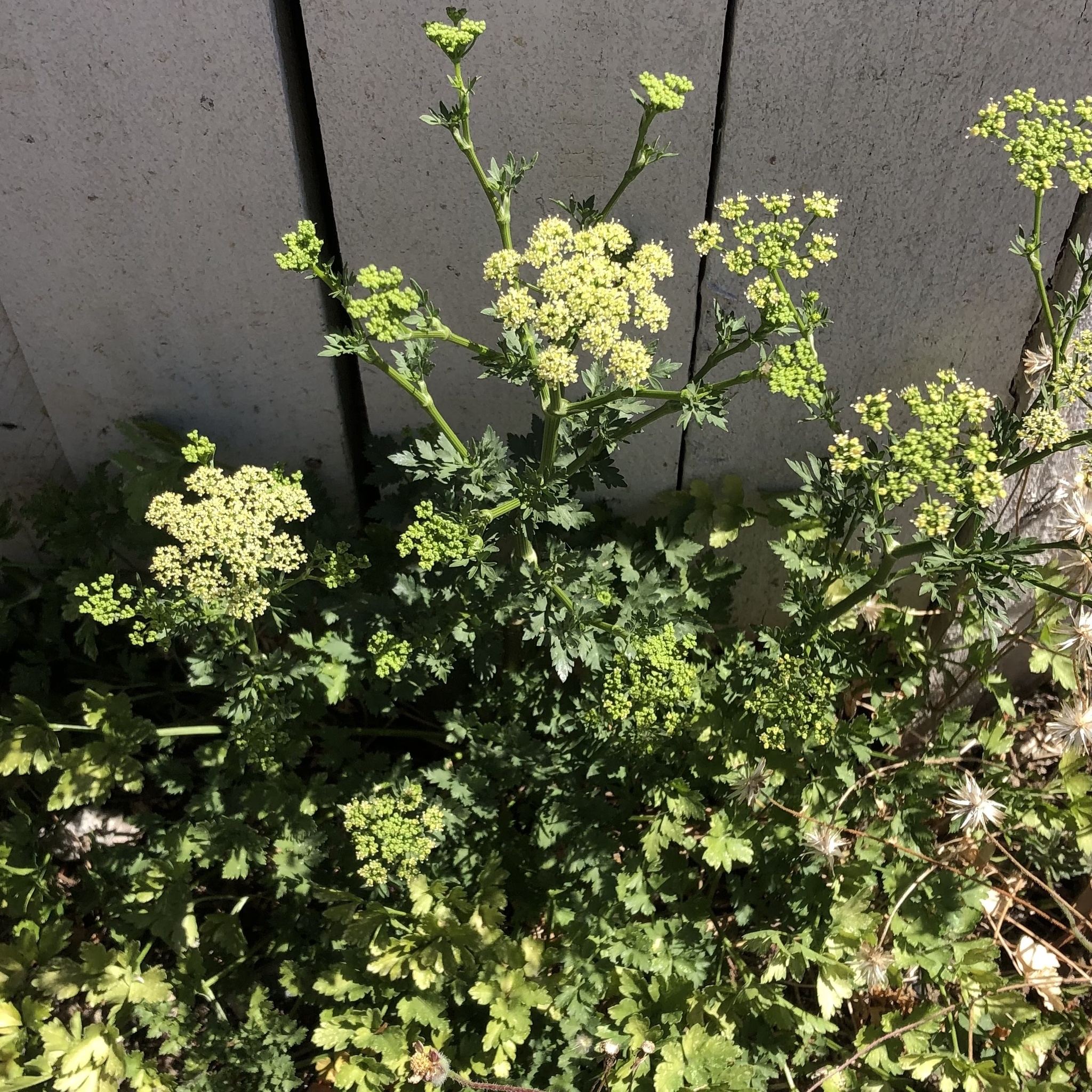
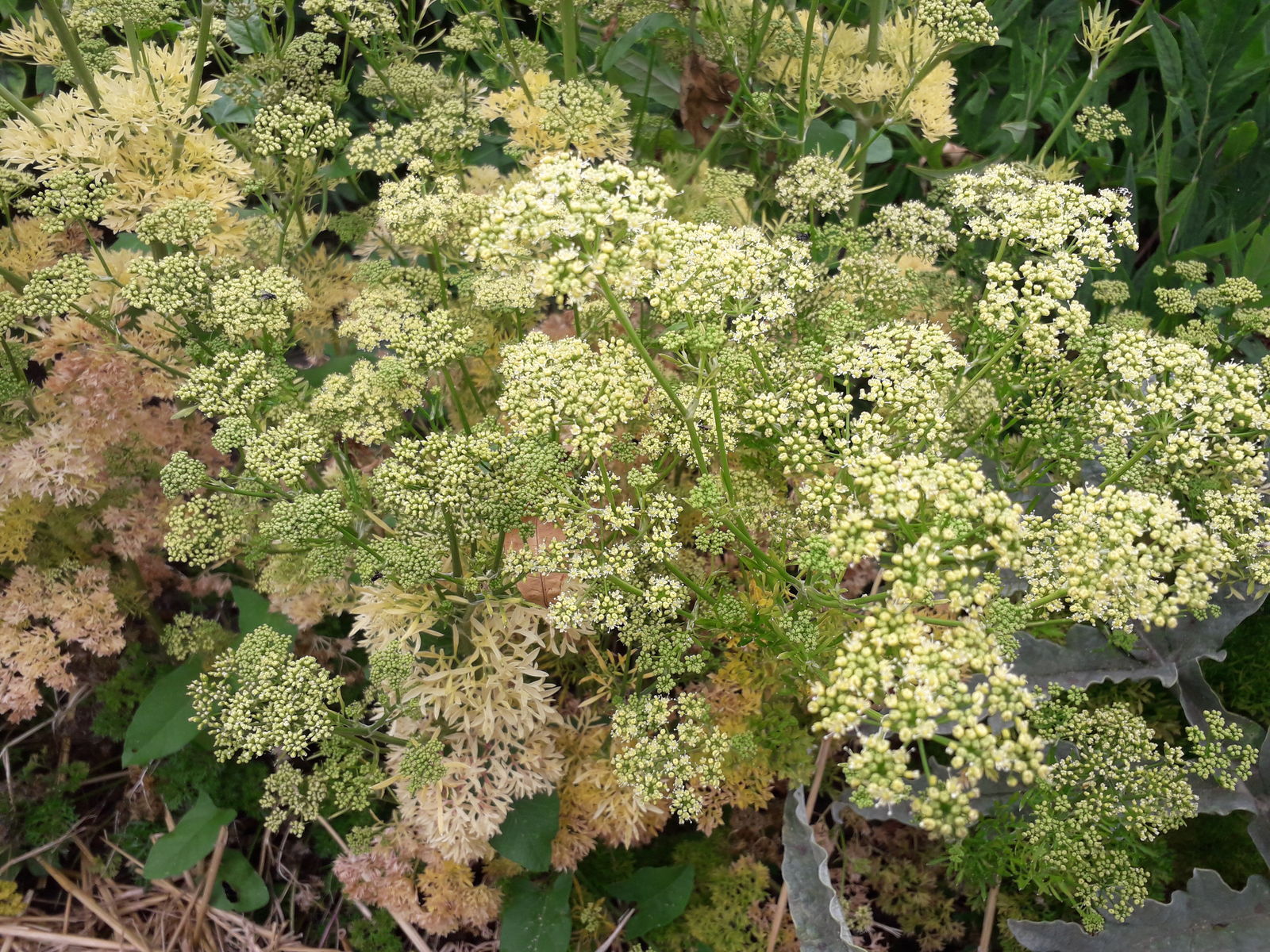
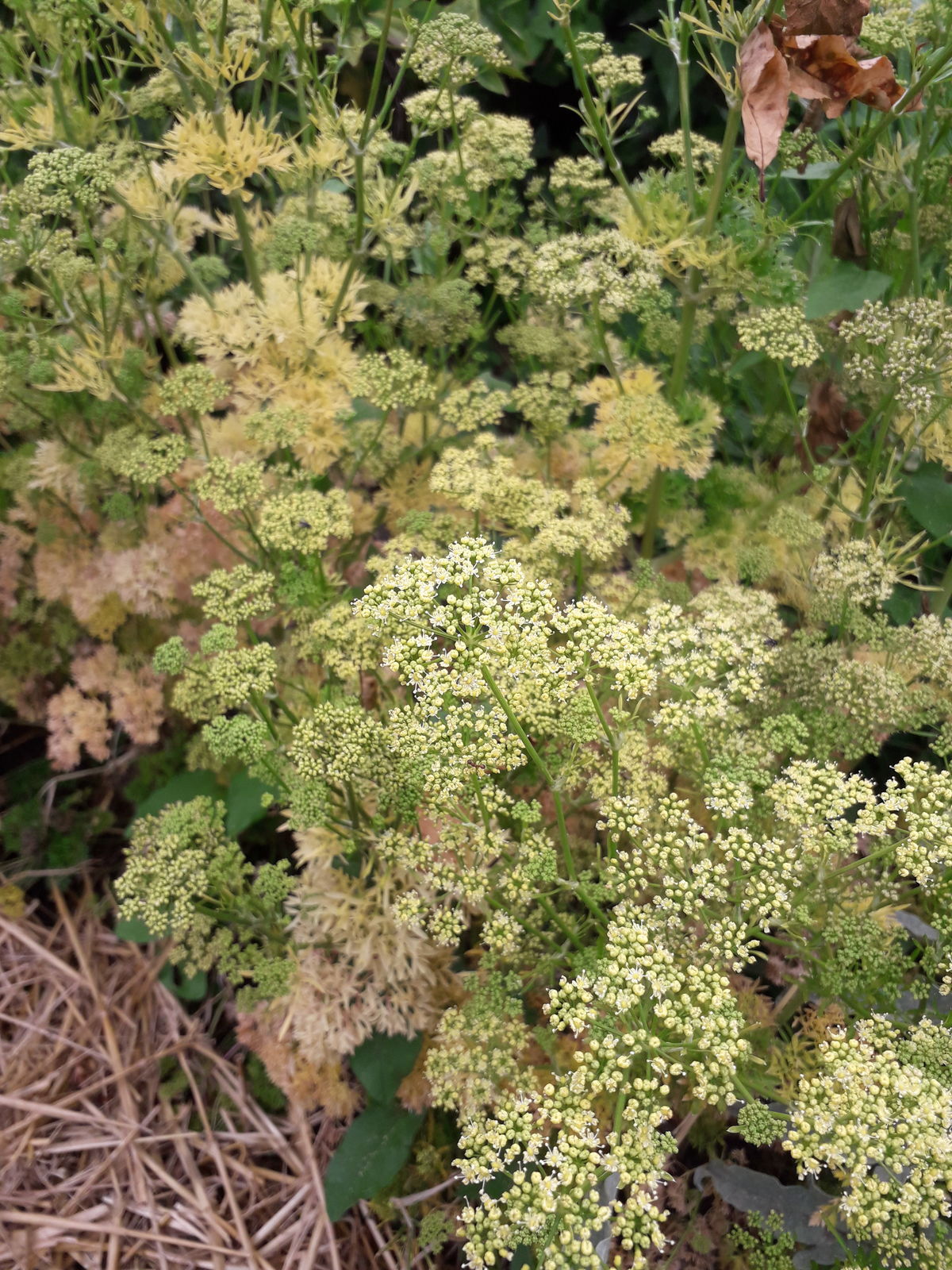
In the second year, an upright flowering stem may reach 75 cm (30 in). It ends in the yellowish-green umbels typical of the family. The flowers are followed by small, ridged seeds, which take a long time to germinate when sown for the next crop. 3 5
Useful taxonomy
Philip Miller's earlier name provides the basionym for Petroselinum crispum (Mill.) Fuss. Parsley has appeared under several generic and garden names over time, so older references and catalogs may still use these scientific synonyms:
- Petroselinum sativum Hoffm. (an older parsley name)
- Petroselinum hortense var. crispum (Mill.) L.H.Bailey (a curly-leaf name)
- Petroselinum crispum var. vulgare (Nois.) Danert (a common parsley name)
- Petroselinum vulgare var. crispum (Mill.) Gray (another curly-leaf name)
- Apium crispum Mill. (the basionym)
The accepted scientific name, Petroselinum crispum, provides a consistent reference across those older names. Descriptions such as curly, flat-leaf and Hamburg refer to horticultural types selected for different uses, rather than to separate botanical species. Their different appearance does not change their identity as garden parsley. 1 7
Habitat and range
The Balkan Peninsula and central Mediterranean form the native range of garden parsley, with records extending to northwestern Africa. It grows in rich soil that retains moisture in temperate climates. Prolonged dry heat is poorly tolerated, particularly when the foliage is being harvested regularly. 1 3
Cultivated widely since antiquity, parsley has become naturalized across much of Europe and has been introduced to many other places with suitable climates. These areas of cultivation and introduction need to be distinguished from its original Mediterranean range; a familiar garden presence does not necessarily indicate a native population. 4 6
Bright light suits the plant during spring growth, while partial shade helps in hot summers by reducing wilting and early flowering. Garden parsley withstands cold well, and in mild climates leaves can often be harvested late into the season. Exposure is therefore best considered alongside local heat and moisture conditions. 2 5
Life cycle and reproduction
Leaf growth fills the first year of the biennial cycle. In the second year, garden parsley flowers, produces seeds and then dies back. Growing it as an annual, with fresh sowings each season, keeps a supply of tender foliage instead of relying on older plants that are approaching flowering. 3 4
Propagation is by seed, sown directly or started in small pots. March through July is the usual sowing window in a Northern Hemisphere temperate garden; elsewhere, follow the equivalent local growing season. Germination commonly takes three to six weeks. Keep the seedbed moist and allow time; seedlings started in pots tend to emerge more evenly than direct sowings. 2 6
Harvest individual leaves by taking the outer stalks of the clump, encouraging fresh growth from its center. Removing a flower stalk as it appears extends leaf production. Alternatively, let a few plants complete their cycle if the aim is to collect seed for future sowings rather than harvest only foliage. 2 5
Uses and risks
Fresh or dried parsley leaves are primarily a culinary herb, used for seasoning and as a garnish. The Hamburg type is selected for its fleshy root, which is cooked as a vegetable. Garden parsley is edible for people and is widely consumed, with the choice of leaf or root type determining the crop harvested. 4 3
Animals require a different degree of caution. Parsley contains furanocoumarins, photosensitizing compounds that can cause sunburn and dermatitis after large quantities are eaten, for example during grazing. The ASPCA lists parsley as toxic to cats, dogs and horses, with low severity. Small amounts in food generally cause no serious effects, but animals should not be allowed to consume it in abundance. 8 6
Varieties, look-alikes and related plants
Commercial leaf and root types remain part of the same species. Frisé describes the tightly curled leaves of the classic garnish; Géant d'Italie and Commun 2 are flat-leaf types valued in cooking; Hambourg is selected for its root. Choose seed according to the intended harvest: decorative foliage, aromatic leaves or a fleshy root. 2
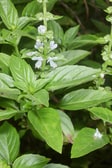
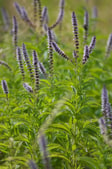
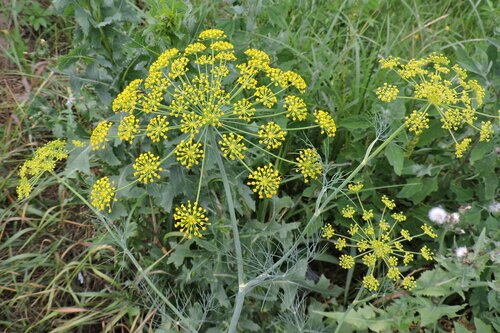
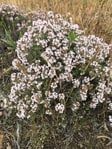
Other members of the Apiaceae account for the most important look-alikes:
- Aethusa cynapium, fool's parsley, is toxic and looks similar but lacks the parsley scent;
- Coriandrum sativum, cilantro, has similar leaves but a very different smell;
- Anthriscus cerefolium, chervil, has finer foliage and an anise scent.
Aromatic foliage when crushed, together with the clump of divided leaves, remains a useful feature for recognizing cultivated garden parsley. These visible and scented traits help distinguish Petroselinum crispum from neighboring herbs that may have a similar outline but a different scent and use. 3 1
Main sources
- Plants of the World Online / Kew, Petroselinum crispum (Mill.) Fuss
- Royal Horticultural Society, parsley - grow your own
- Missouri Botanical Garden, Petroselinum crispum
- Encyclopaedia Britannica, parsley
- Plants For A Future, Petroselinum crispum
- NC State Extension, Petroselinum crispum
- International Plant Names Index, Petroselinum crispum (Mill.) Fuss
- ASPCA, parsley (Petroselinum crispum) toxicity entry
Frequently asked questions
Is garden parsley toxic to cats and dogs?
Parsley contains furanocoumarins, which cause photosensitivity in large quantities. The ASPCA lists it as toxic to cats, dogs and horses, particularly after substantial consumption or grazing; small amounts in food generally cause no serious effects.
Can people eat garden parsley?
Yes. Parsley leaves are a familiar culinary herb, used fresh or dried for seasoning and garnishing. The root of Hamburg parsley is also cooked as a vegetable.
How do curly and flat-leaf parsley differ?
Curly parsley has tightly curled leaves often used as a garnish. Flat-leaf or Italian parsley has broad, flat leaves and a flavor considered stronger in cooking. Both belong to the same species.
Why is my parsley going to seed?
Garden parsley is biennial and flowers and sets seed in its second year. Drought or strong heat may also trigger early bolting. Keeping the soil moist and sowing each year extends the leaf harvest.
Why does parsley take so long to germinate?
Parsley naturally germinates slowly, often taking three to six weeks. Keep the seedbed moist and be patient. Plants started in small pots tend to emerge more evenly than direct sowings.
Does parsley need sun or shade?
Garden parsley grows in sun or partial shade. Full light suits spring growth, while light shade in hot summers helps keep the leaves tender and delay flowering.
What plants can be confused with parsley?
The most hazardous look-alike is toxic fool's parsley (Aethusa cynapium), which resembles parsley but lacks its characteristic scent. Crushed foliage and its aromatic smell are useful distinguishing features.
Similar plants
If you are unsure about a plant’s toxicity, ask a botanist or veterinarian for advice.