
Dill (Anethum graveolens, )
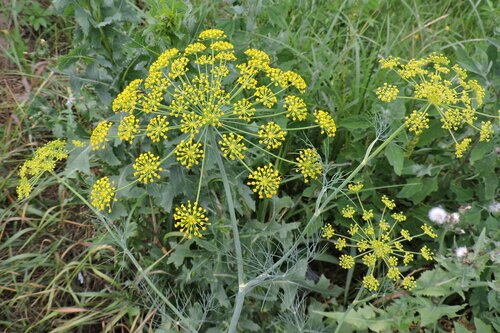
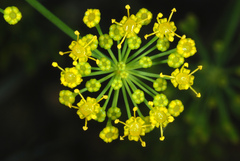

Dill (Anethum graveolens) is an annual herb in the Apiaceae family, native from North Africa south to Chad and from Iran to the Arabian Peninsula. Its finely divided, bluish foliage and yellow flower umbels resemble fennel. Both leaves and seeds flavor food, with no known dietary toxicity to people or domestic animals.
Read moreDill and Anet
Allow a few hours of direct sun per day, preferably morning or evening.
Full sun, sheltered from wind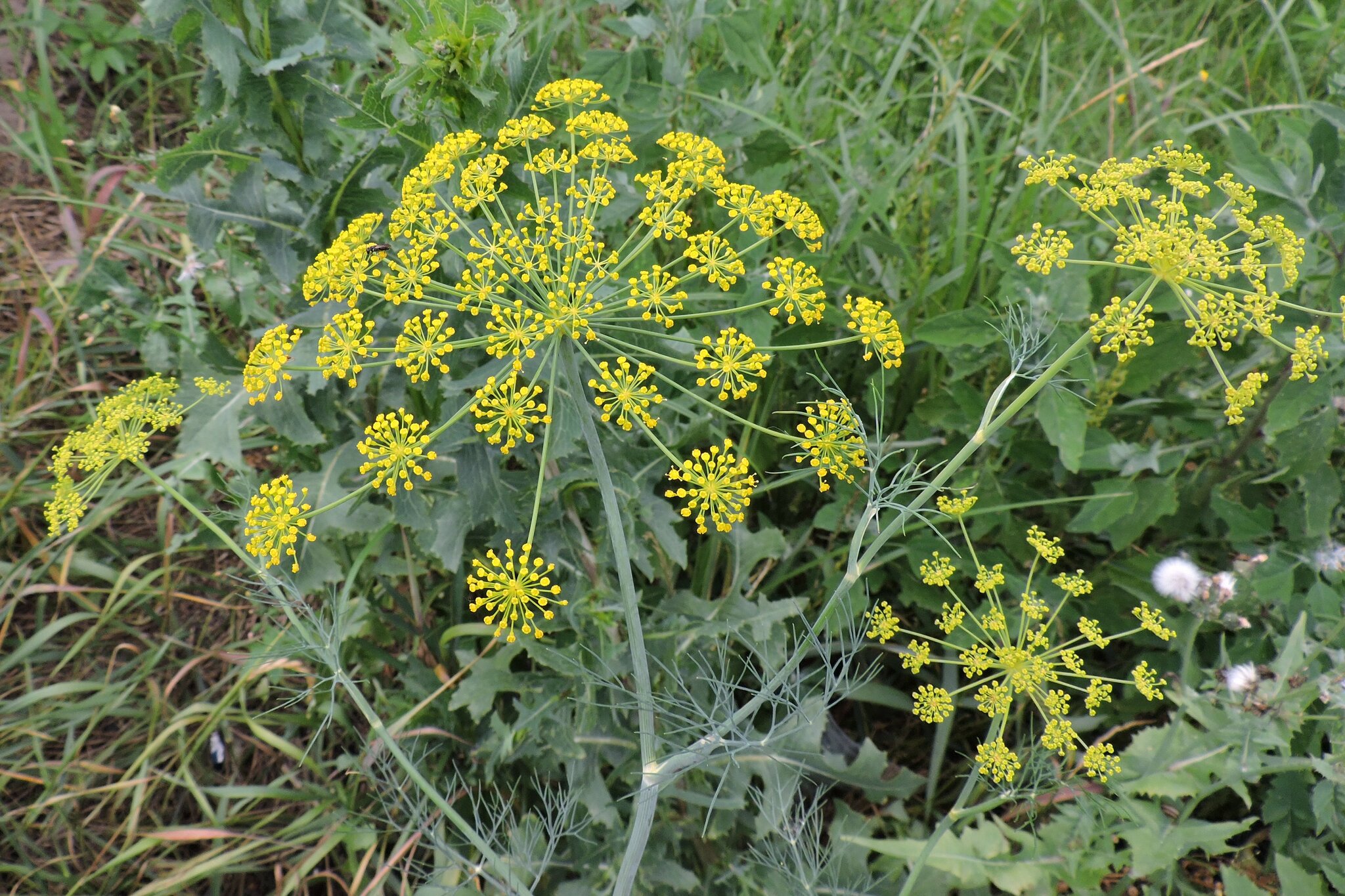


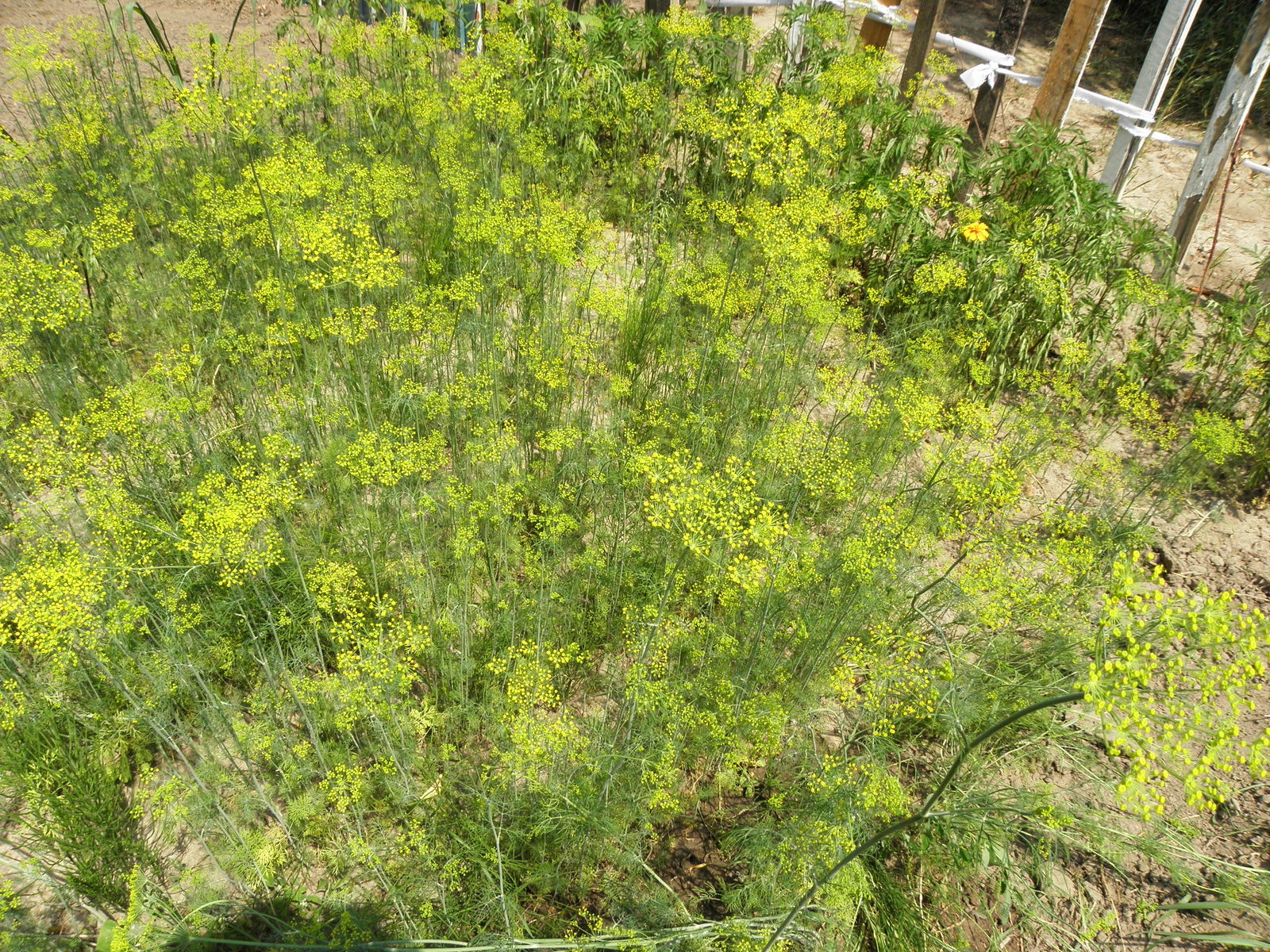

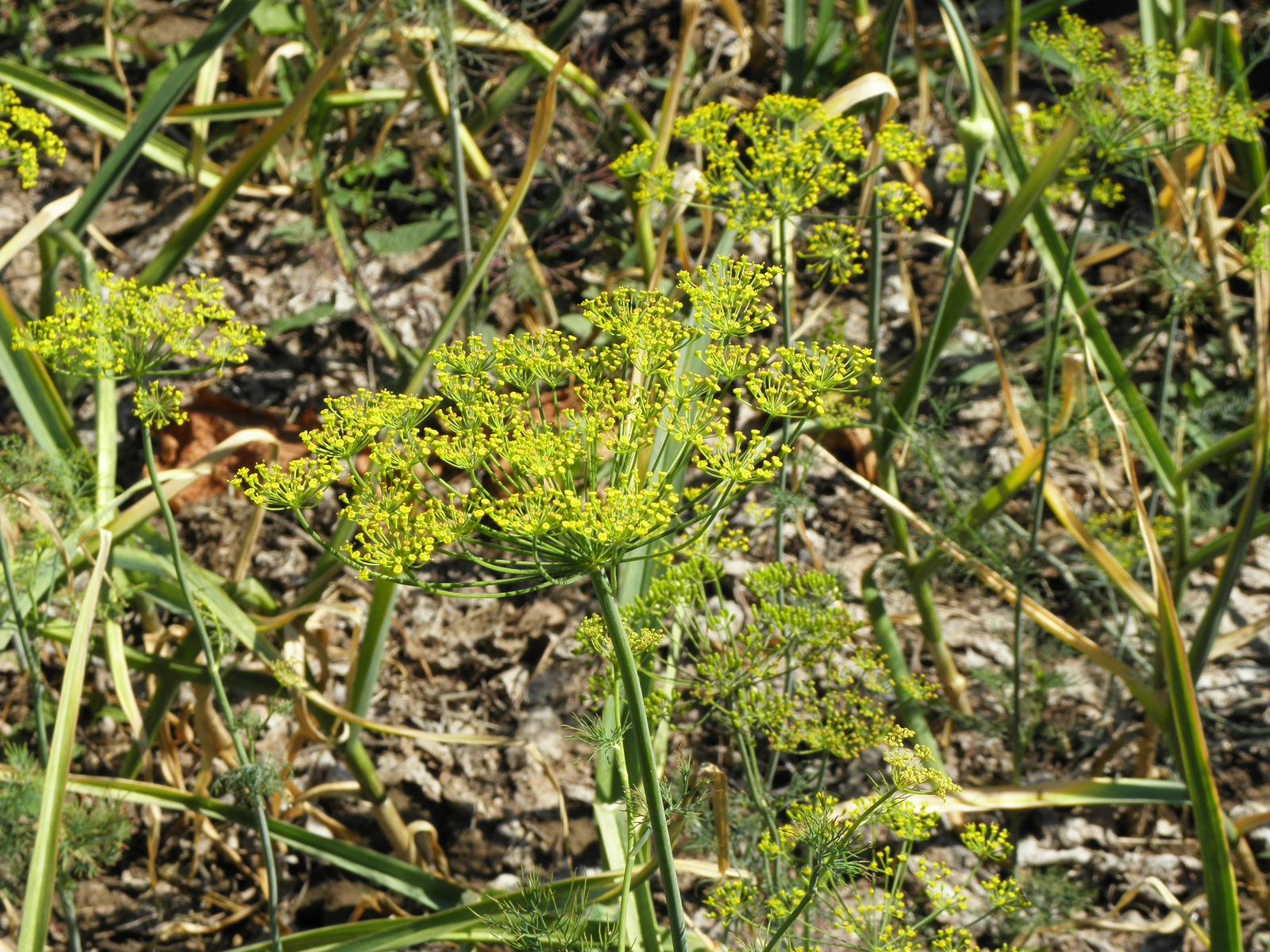
© photo
(c) Олександр Гриб, some rights reserved (CC BY-NC), uploaded by Олександр Гриб · cc-by-nc
Douglas Goldman · cc-by-nc
Wikimedia Commons · CC BY-SA or Public Domain
Taken Jan 1, 1900 by EOL − Forest & Kim Starr (cc-by)
Taken Oct 31, 2016 by Yoan MARTIN (cc-by-sa)
Taken Sep 3, 2021 by an sh (cc-by-sa)
Taken Feb 7, 2014 by Tela Botanica − Jean-Claude ECHARDOUR (cc-by-sa)
© copyright of the Board of Trustees of the Royal Botanic Gardens, Kew.


Global distribution
According to POWO, Anethum graveolens is native from North Africa south to Chad and from Iran to the Arabian Peninsula. Cultivated as a culinary herb since antiquity, dill is now grown or naturalized across temperate continents; this spread through cultivation is distinct from its smaller native range.
- Native4
- Morocco
- Egypt
- Iran
- Saudi Arabia
Hexagons: regions where the plant occurs. Green dots: native range.1
Identity
Dill (Anethum graveolens L., 1753) is an annual herb in the genus Anethum, part of the Apiaceae family. An older English name is Anet. The genus contains just two accepted species: widely cultivated Anethum graveolens and Anethum theurkauffii Maire, a rare endemic of northern Mauritania. This small genus belongs to the same family as several familiar kitchen herbs and vegetables. 1
The epithet graveolens combines Latin gravis, meaning strong, and olens, meaning scented, in reference to the aromatic foliage. The genus name Anethum derives from Greek ánēthon, a word formerly used for both dill and anise. Later botanical usage separated the two plants. This history also explains the older English name anet and related names in Romance languages. 9 8
Recognition
A fragile taproot anchors the plant, much as it does a carrot. Smooth, hollow stems commonly reach 50 cm–1.2 m (20 in–4 ft) in cultivation, or 1.5 m (5 ft) in vigorous cultivars such as Mammoth. Bluish, finely divided leaves have threadlike segments that are slightly broader and softer than fennel foliage. Their texture provides one useful distinction between the two herbs. 4 8
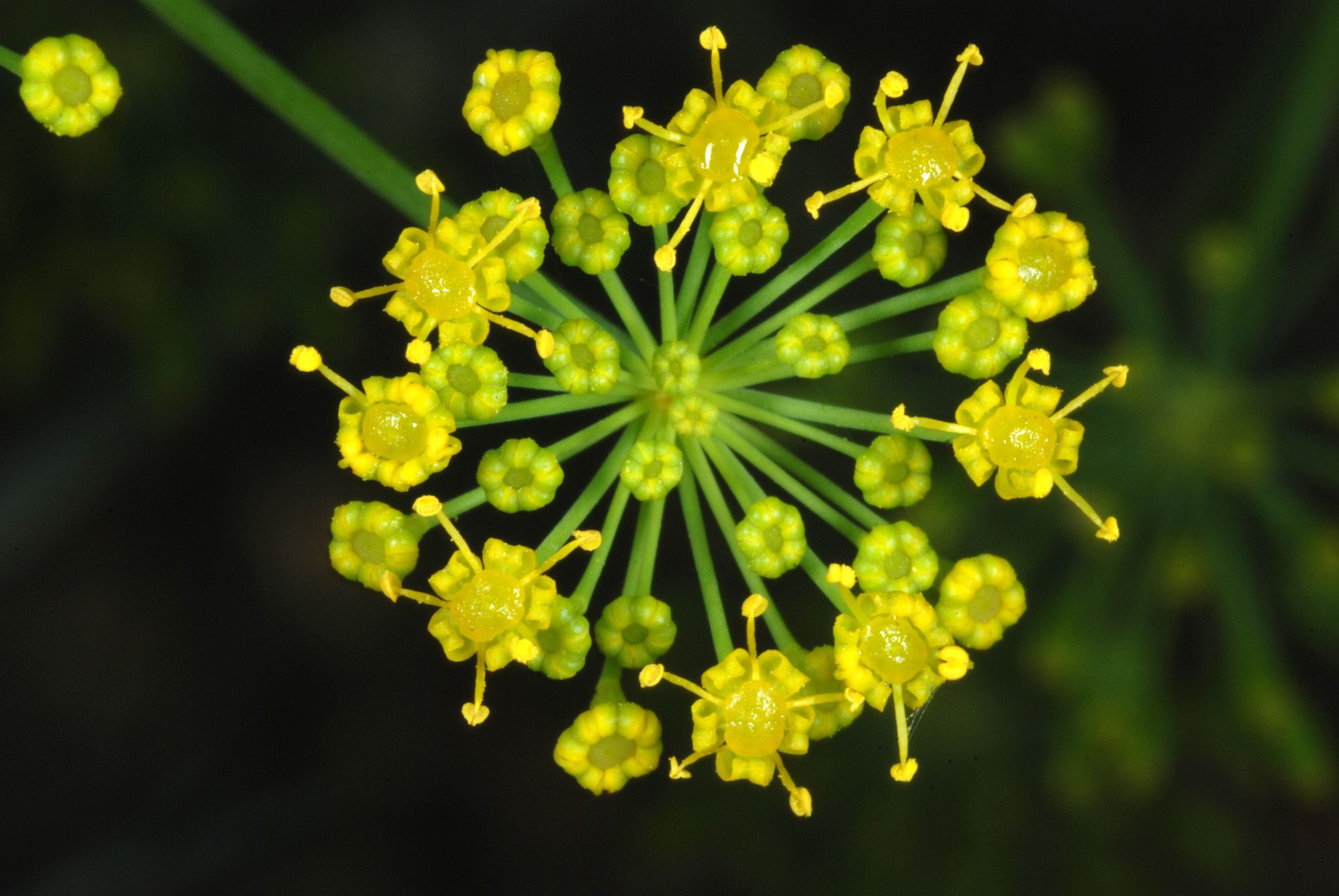
Hot, dry weather brings small yellow flowers in compound umbels 2.5–9 cm (1–3.5 in) across, borne on a tall flowering stem. The dry fruit is a schizocarp 4–5 mm (about 0.2 in) long, straight or slightly curved, with lengthwise ridges. Its outline differs from the more curved seeds of caraway. 8 5
Habit and threadlike foliage alone can make dill and fennel difficult to distinguish. Crushing a leaf releases a clearer clue: dill has its own gentler fragrance, while fennel smells distinctly of anise. Identification should consider scent alongside the visible structure, rather than relying on the feathery appearance alone. 6
An upright, columnar habit develops around a central stem bearing the terminal flower head. The RHS recommends a site sheltered from wind for this tall, narrow plant. Without shelter, hollow stems can lean or fall during heavy rain or gusty weather, particularly in taller cultivars. 2
Useful taxonomy
Nine principal synonyms are recorded by POWO for Anethum graveolens, reflecting earlier placements among related Apiaceae genera. Names encountered in older references include:
- Peucedanum graveolens (L.) Benth. & Hook.f. ex Hiern, historical dill synonym
- Pastinaca graveolens (L.) Bernh., historical dill synonym
- Ferula graveolens (L.) Spreng., historical dill synonym
- Selinum graveolens (L.) Vest, historical dill synonym
- Anethum sowa Roxb., historical dill synonym
- Peucedanum sowa (Roxb.) Kurz, historical dill synonym
These are historical scientific names for dill.
Anethum sowa was long treated as a separate Indian dill species with a slightly different aroma. POWO now includes it as a synonym of Anethum graveolens. Some seed catalogs still sell Indian dill separately, so a commercial distinction does not necessarily indicate an accepted botanical species. The accepted scientific name provides a consistent reference across those labels. 1 9
Habitat and range
North Africa south to Chad, together with Iran and the Arabian Peninsula, forms the native range recognized by POWO. Within that range, dill occupies disturbed ground, waste places and field edges in warm, sunny conditions. Its worldwide familiarity as a kitchen herb should not obscure this more restricted geographical origin. 1
Cultivation since antiquity has carried dill far beyond its native range. It remains a major culinary herb in Russia, Scandinavia and the Baltic countries. Where plants are allowed to flower and set seed, volunteers can return in subsequent seasons, linking cultivated beds with locally self-sown populations. 8
USDA zones 2–11 describe the broad range in which this annual can be grown during a suitable season. They do not imply that a plant survives winter outdoors throughout that range. Missouri Botanical Garden reports that dill self-seeds from year to year in beds where flowering plants are allowed to mature. 5 3
Life cycle and cultivation
Direct sowing avoids disturbance to the long, fragile taproot. Cover seed only lightly because light promotes germination, which takes around 10–14 days from 10 °C (50 °F). Thereafter, full sun supports sturdy, aromatic growth; partial shade produces looser plants that lodge more easily. Begin harvesting foliage at about 15 cm (6 in) tall to extend production and delay flowering. 5 6
Sustained temperatures above 26 °C (79 °F), dry soil and long days encourage early bolting, bringing tender leaf production to an end. Repeat sowings every two to four weeks spread the harvest across the local growing season. Regular leaf picking and an even water supply help delay the switch from leafy growth to flowering. 4
In mixed vegetable beds, dill attracts hoverflies and parasitoid wasps that benefit cucumbers, cabbage and broccoli. It can also offer temporary protection to young tomato plants from some pests if cut before flowering. Several North American extension sources report that planting dill too close to carrots reduces carrot yields, so spacing decisions matter. 4
Black swallowtail caterpillars (Papilio polyxenes) use dill as a host plant wherever that butterfly occurs. They readily eat its fine foliage. This feeding may be a minor issue in a bed grown primarily for seed, and it can be a welcome feature in a garden intended to support butterflies. 8
Uses, look-alikes and risks
Fresh leaves and dried seeds provide different seasonings from the same plant. Leaves flavor fish, cold marinades and sauces; seeds season pickles, bread and vinegar. Essential oil rich in carvone and limonene has also been used in traditional soap making. Harvest timing determines which of these products a planting supplies. 8
Russian cooking makes generous use of dill, known there as ukrop, in cold okroshka soup and over new potatoes. Russian cosmonauts have even recommended it aboard spacecraft for supposed antiflatulent effects in enclosed cabins with recycled air. This is a reported cultural use rather than a reason to assume a proven medical effect. 8
The ASPCA lists dill as non-toxic to cats, dogs and horses, making it suitable for vegetable gardens visited by domestic animals. A documented case of occupational contact dermatitis nevertheless involved frequent handling of fresh plants. Dietary non-toxicity does not guarantee that every person can handle the sap without a skin reaction. 7 10
Remains of dill were found in the tomb of Amenhotep II, dating to about 1400 BCE. Theophrastus also mentioned the herb in ancient Greece centuries later. These records place its culinary and medicinal history deep in antiquity, long before the modern seed cultivars grown for leaves or pickling. 8
Main sources
- Plants of the World Online / Kew, Anethum graveolens L.
- Royal Horticultural Society, Anethum graveolens (dill)
- Missouri Botanical Garden Plant Finder, Anethum graveolens
- University of Wisconsin Horticulture, Dill, Anethum graveolens
- NC State Extension Gardener Plant Toolbox, Anethum graveolens
- Plants For A Future, Anethum graveolens
- ASPCA, Dill (Anethum graveolens) non-toxic plant entry
- Wikipedia (EN), Dill
- Wikipedia (FR), Dill
- Monteseirín et al. 2002, Occupational contact dermatitis to dill, Allergy 57(9), 866-867
Frequently asked questions
Is dill toxic to cats and dogs?
No. The ASPCA lists Anethum graveolens as non-toxic to cats, dogs and horses. Rare occupational contact dermatitis has nevertheless been reported in people handling fresh plants frequently.
How can I tell dill from fennel?
They are separate species despite their similar habit and threadlike foliage. Dill has a different scent from the strongly anise-scented fennel, and its leaf segments are softer.
Why does my dill bolt so quickly?
Heat, long days and lack of water speed up flowering in this annual. Sowing in cooler conditions, watering regularly and harvesting leaves continuously can delay it.
Can I eat dill leaves and seeds?
Yes. Fresh leaves flavor fish and sauces, while dried seeds season marinades, pickles and bread.
Can dill grow beside carrots?
It is not recommended. Several horticultural extension sources report reduced carrot yields when dill grows immediately nearby.
How do I harvest dill seeds?
Cut the heads after seeds have formed but before they turn completely brown, then hang them upside down in a paper bag to dry for about a week.
How long has dill been cultivated?
Remains were found in the tomb of the Egyptian pharaoh Amenhotep II, around 1400 BCE. Theophrastus also described the plant in ancient Greece several centuries later.
Similar plants
If you are unsure about a plant’s toxicity, ask a botanist or veterinarian for advice.