
Leek (Allium porrum, )


Leek (Allium porrum) is a biennial vegetable in the Amaryllidaceae family, grown as an annual for its long white shaft and flat, sheathing leaves. Related to garlic and onion, it occupies vegetable beds for much of the year. It is edible for humans but, like other Allium crops, toxic to cats, dogs and horses.
Read moreLeek and Garden leek
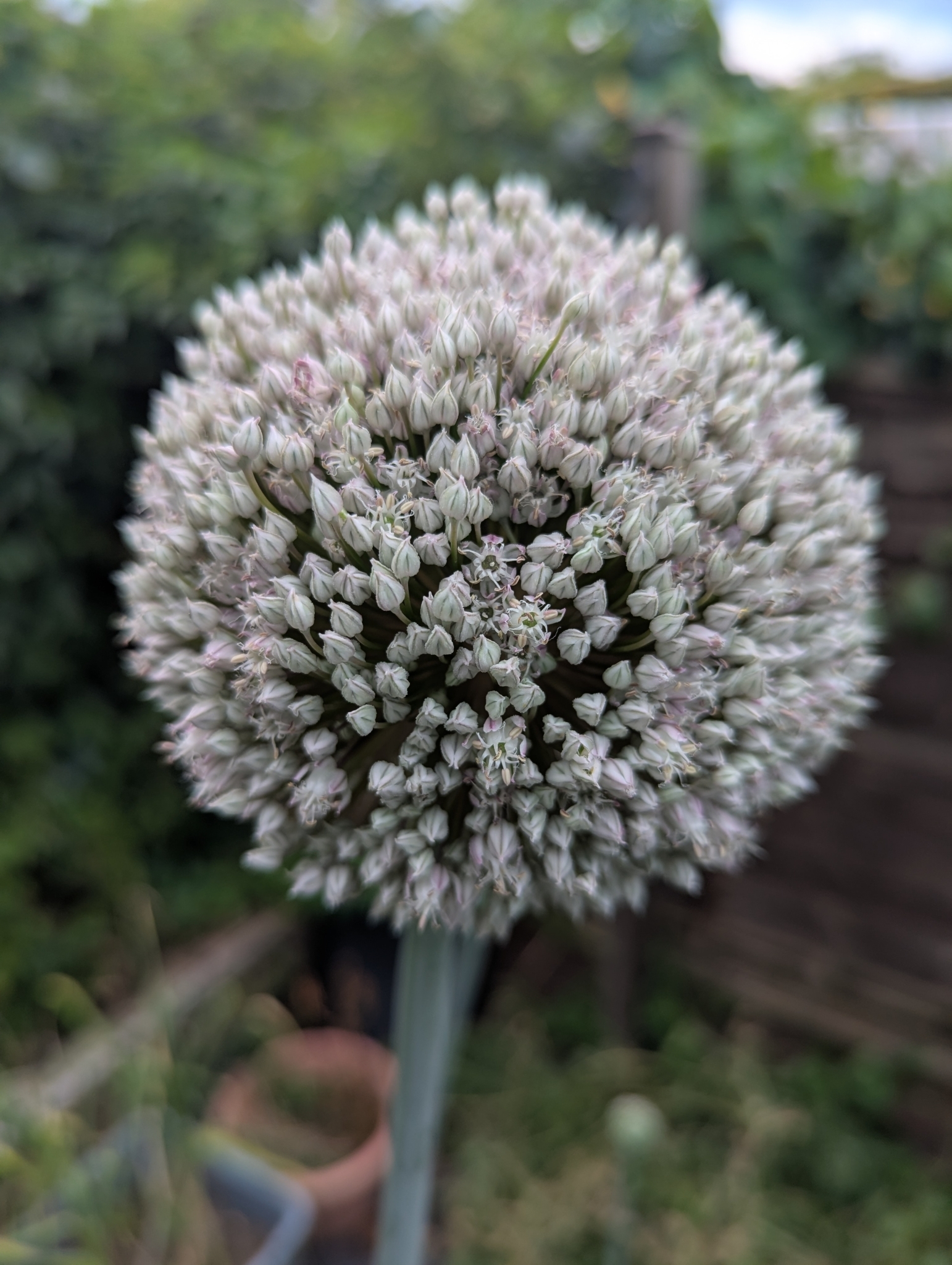


© photo
(c) Jay, some rights reserved (CC BY-NC), uploaded by Jay · cc-by-nc
Wikimedia Commons · CC BY-SA or Public Domain
Global distribution
Leek is a cultivated vegetable with no distinct natural wild range. POWO associates it with a cultigen of Mediterranean and Near Eastern origin, derived from the Allium ampeloprasum complex. It therefore occurs mainly in gardens, fields and market gardens.
- Cultivated6
- Metropolitan France
- Belgium
- Mediterranean Basin
- Near East
- Northern Europe
- North America
Hexagons: regions where the plant occurs. Green dots: native range.1
Identity
Leek (Allium porrum L., 1753) is an Allium vegetable in the Amaryllidaceae family. This biennial is grown as an annual: harvest takes place before flowering, for the long white shaft made of overlapping leaf sheaths. Garden leek is another established name for the crop. 1 3
Garlic, onion and chives share its genus, but leek differs through its flat leaves and lack of a true round bulb. Edible for humans, it is toxic to cats, dogs and horses, as are other Allium crops. 2 7
Recognition
A cylindrical white shaft, standing upright beneath a fan of broad, flat leaves, gives leek its familiar shape. Unlike onion leaves, the blades are not hollow. The base is a slight thickening with white fibrous roots, rather than a swollen round bulb. 3 5
Leaf color ranges from bright green to blue-green, with some varieties turning purple in severe cold. A cut leek releases an Allium scent milder than garlic. In garden crops, the shaft commonly reaches 30 to 50 cm (12 to 20 in), including a blanched portion of 15 to 25 cm (6 to 10 in) according to the extent of earthing up. 2 4
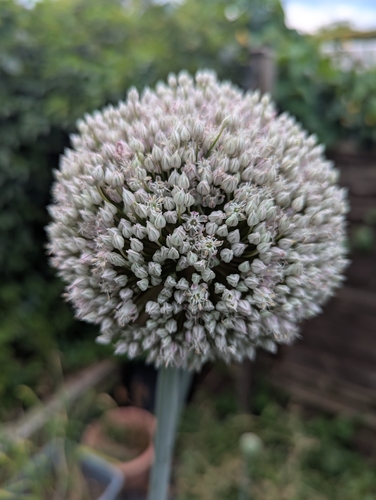
An unharvested plant flowers in its second year. Its upright flower stalk may exceed 1 m (3.3 ft) and ends in a large spherical umbel of small pinkish-white to purplish flowers. By this stage the shaft has become fibrous and its value as a vegetable has declined. 3 6
Useful taxonomy
Botanical treatments differ over cultivated leek's position. POWO accepts Allium porrum L., published by Linnaeus in 1753, while associating it with a cultigen derived from the Allium ampeloprasum complex. Many authors instead treat leek as a cultivar group within A. ampeloprasum, explaining the two names found in reference works. 1 5
Important synonyms and historical combinations include:
- Allium ampeloprasum subsp. porrum (L.) Hayek, a subspecies treatment
- Allium ampeloprasum var. porrum (L.) J.Gay, a varietal treatment
- Porrum sativum Mill., an older generic placement
- Porrum commune Rchb., an older generic placement
- Allium porrum var. kurrat (Schweinf. ex K.Krause) Seregin, a historical varietal name
Scientific names provide the consistent reference, whether a source uses Allium porrum or Allium ampeloprasum Leek Group. Names such as Bleu de Solaise and Monstrueux de Carentan describe horticultural selections rather than separate botanical species. 1 6
Habitat and range
Cultivation defines leek's habitat: it has no distinct natural wild habitat. The crop derives from a Mediterranean and Near Eastern complex. POWO presents it as a cultigen without a clearly delimited wild place of origin, unlike a species tied to a precise natural range. 1 3
Vegetable gardens, family gardens and outdoor market-garden fields are therefore its main settings in temperate climates. It is widely grown in Europe from the Mediterranean Basin to northern Europe, as well as in temperate parts of North America and elsewhere. 2 5
Winter hardiness gives leek a particular role in vegetable beds. Winter varieties can remain in the ground for harvesting as needed through the cold season; some withstand temperatures around -15 °C (5 °F). That frost tolerance makes leek a useful winter vegetable where conditions suit the variety. 2 4
Life cycle and reproduction
A two-year life cycle underlies the annual harvest. During the first year leek develops its shaft and leaves; in the second, after exposure to cold, it flowers and sets seed. Garden crops are harvested before this bolting, because flowering makes the shaft fibrous. 3 5
Propagation is by seed. Sow in a nursery bed or seed tray from late winter through spring, then transplant pencil-thick seedlings in late spring or summer. Deep planting followed by successive earthing up creates a long white shaft: the portion excluded from light does not turn green. Germination takes about two to three weeks; harvest follows four to six months after sowing, depending on the variety. 2 4
Leaving a plant to bloom lets its umbel attract insects and produce seed. Some gardeners save this seed, although this route takes longer and is less reliable than buying selected seed, particularly when maintaining stable varieties. 6 3
Uses and risks
Cooking is leek's main use. The white shaft and lower leaves go into soups, gently braised dishes, quiches and side dishes, including preparations such as pot-au-feu and vichyssoise. This mild, low-calorie vegetable is available through much of the year when harvests are staggered. 3 2
Normal human consumption is safe, but the ASPCA classes leek as toxic to cats, dogs and horses. Allium sulfur compounds, particularly thiosulfates, can cause hemolytic anemia, with vomiting, lethargy and weakness. The Merck Veterinary Manual describes this Allium toxicosis and its damage to red blood cells. Do not feed raw or cooked leek to domestic animals. 7 8
Varieties, look-alikes and related plants
Harvest season and cold tolerance distinguish the main leek selections. Bleu de Solaise is a hardy winter type with bluish leaves; Monstrueux de Carentan produces a thick, short fall shaft; Gros long d'été is early. Électra and Bandit are more recent commercial names for summer and winter types respectively. These are horticultural selections, not separate species. 2
Closely related plants explain most mistaken identities:
- Allium cepa, onion, has hollow leaves and a true round bulb;
- Allium ampeloprasum in the broad sense includes cultivated leek and related wild leeks and alliums;
- Allium ursinum, wild garlic, is a woodland plant that must not be mistaken for leek when foraging.
A cylindrical white shaft, flat leaves arranged in a fan and the absence of a round bulb remain the most reliable combined clues for recognizing leek in a vegetable garden. 5 6
Main sources
- Plants of the World Online / Kew, Allium porrum L.
- Royal Horticultural Society, Leeks - grow your own
- Encyclopaedia Britannica, Leek
- Plants For A Future, Allium porrum
- North Carolina State Extension, Allium ampeloprasum (leek)
- Tela Botanica, Allium ampeloprasum L.
- ASPCA, Leek toxicity entry
- Merck Veterinary Manual, Garlic and Onion (Allium spp) Toxicosis in Animals
Frequently asked questions
Are leeks edible?
Yes. Leek is a widely grown vegetable. The white shaft and lower green leaves are eaten raw in fine strips or, more often, cooked in soups, gently braised dishes or side dishes.
Are leeks poisonous to cats and dogs?
Yes. Like other Allium crops, leek is classified as toxic to cats, dogs and horses by the ASPCA because its sulfur compounds can cause hemolytic anemia. Do not feed it to animals.
How is a leek different from an onion?
Leek forms a long shaft of overlapping leaf sheaths without a true round bulb, and its leaves are flat. Onion develops a swollen bulb and hollow leaves. Both belong to Allium.
Why are my leeks going to seed?
Bolting often follows a cold spell while plants are young or sowing too early. Leek is biennial; cold can trigger first-year flowering and stop the shaft from thickening.
How do I grow a long white leek shaft?
Transplant seedlings fairly deeply, then gradually mound soil around their bases as they grow. The portion excluded from light stays white and tender.
Can leeks survive frost?
Winter varieties, including bluish-leaved types, can stay in the ground and tolerate cold down to about -15 °C (5 °F), depending on the source. Harvest them as needed during winter.
Where did cultivated leeks originate?
Leek is a cultigen with no distinct wild population. Botanical databases associate it with the Mediterranean and Near Eastern Allium ampeloprasum complex, explaining its relationship to wild leeks and related wild alliums.
Similar plants
If you are unsure about a plant’s toxicity, ask a botanist or veterinarian for advice.