
Chili pepper (Capsicum annuum, )
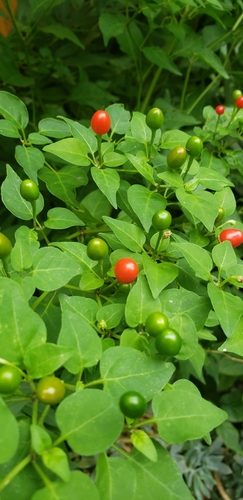
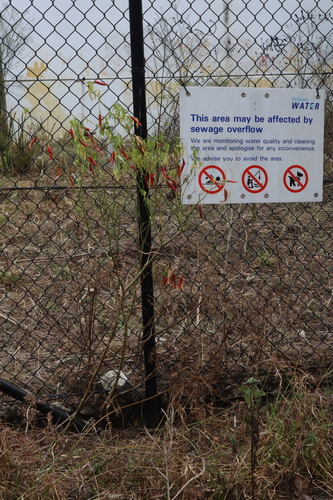
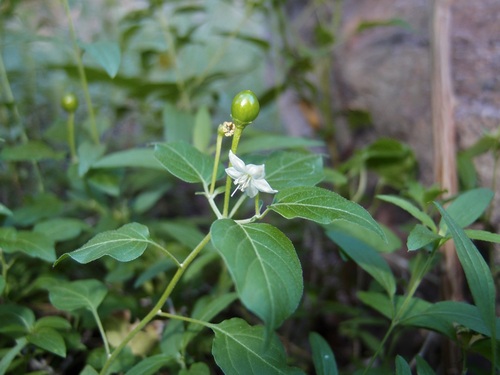
The chili pepper (Capsicum annuum) covers sweet bell peppers, paprika and a long list of annual chilies. It belongs to the nightshade family, Solanaceae, was described by Linnaeus in 1753, and varies far more in fruit shape than in flower structure.
Read moreBell pepper, Sweet pepper and Capsicum annuum
Place in full sun, with intense direct light all day long.
Global distribution
POWO/WCVP gives the native range of Capsicum annuum as the southern United States to Brazil and the Caribbean. The species is also domesticated and grown almost everywhere, so cultivation notes are kept separate from the native range.
- Native5
- Southern United States
- Mexico
- Central America
- Caribbean
- Tropical South America
Hexagons: sourced regions. Green dots: native range. Statuses according to POWO (Kew).
Identity
Listed here as the chili pepper, Capsicum annuum takes in sweet bell peppers, paprika and a great many hot chilies. The epithet annuum does not rule out a perennial life where frost never comes, but in temperate climates the plant is best treated as a warm-season annual. 1 2
What makes it tricky is its double role: a vegetable-garden crop and a colorful ornamental. A red or purple fruit alone will not tell you whether it is sweet, hot, edible or merely decorative. 3 4
Recognition
Simple leaves, white to purplish flowers and hollow berries of wildly varying shape mark the plant. The chili pepper and the bell pepper therefore share a flower structure that is far more consistent than the outline of their fruit. 5 6
Heat comes mainly from capsaicinoids concentrated in the inner tissues of the fruit, not from its color. An ornamental cultivar can be fiercely irritating even when its fruits look small and glossy. 4 6
Useful taxonomy
POWO treats Capsicum annuum as the accepted name for the species. Grossum, Longum and other horticultural group names describe uses and fruit shapes, not necessarily separate species. 1 7
- Capsicum grossum L.
- Capsicum longum DC.
Watch out for the name ornamental pepper: in the ASPCA database it points to Solanum pseudocapsicum, not to Capsicum annuum. 1
Habitat and range
Native to the Americas, the species carries a long history of domestication. In the garden, that tropical past shows up as a need for warmth, sun, fertile soil and freedom from frost. 1 5
Crops most often fail from a cold start or disturbed roots. Sowing in warmth, transplanting once the frost risk has passed where you live, and keeping watering steady does more than heavy feeding of a stressed plant. 6 4
Life cycle and reproduction
Where winters bring frost, the plant runs through an annual cycle: sowing, growth, flowering, fruit set, then harvest until the cold arrives. In frost-free climates it can become somewhat woody, but that is not the most useful scenario for the average grower. 5 6
Seed is the main means of propagation. Seed saved from a hybrid cultivar, or from plants grown near other peppers, will not always produce the same fruit the following year. 6
Uses and risks
From sweet bell pepper to hot chili, the fruit is used fresh, dried, smoked or ground into paprika. Ripening often changes color, sugar and aroma, though not always the expected heat. 4 6
The caution rating is mostly about irritation, not about any established veterinary toxicity for C. annuum. Hot fruit irritates the mouth, eyes and skin, and the green parts should not be treated as a leafy vegetable. 8
Varieties, look-alikes and related plants
Bell pepper, cayenne, jalapeño, paprika and Black Pearl are useful markers of shape, heat or color. When buying, ask above all about the heat level and the intended use in the kitchen. 6 5
Common mix-ups involve:
- Capsicum frutescens, shrubby chilies, often more upright
- Capsicum chinense, habanero and relatives, with a strong fruity aroma
- Solanum lycopersicum, another nightshade vegetable, with different leaves and flowers
The biggest risk of confusion is with other ornamental nightshades: check the scientific name, the flower and the fruit before eating anything. 2
Checkpoints
Choosing what to sow or buy means pulling apart three things that seed packets and labels often blur: fruit type, heat level and kitchen use. A blocky bell pepper, a jalapeño and a cayenne can all be Capsicum annuum, yet they are neither cooked nor handled the same way. Color mostly signals ripeness or cultivar; it cannot predict heat on its own. 5 6
- At sowing: start in warmth, transplant without breaking the root ball and wait until nights stay reliably mild. A seedling stalled early often flowers late.
- During flowering: keep watering steady. Flowers drop easily when the plant swings between drought, soggy soil, cold nights or sudden heat. Mulch helps more than a late dose of fertilizer.
- On the fruit: leave enough foliage to prevent sunscald, but keep air moving to limit aphids, whiteflies and spider mites. Blossom-end rot mostly points to uneven watering and poorly available calcium. 6
Handling calls for care with hot fruit first: hands, eyes and mucous membranes react quickly to capsaicinoids. In a family kitchen, labeling the cultivar and keeping very hot chilies apart avoids mistaking an ornamental harvest for sweet bell peppers. 8
In the vegetable garden, the harvest stretches further when the first fruits are picked without waiting for the whole plant to turn red. Leaving a few fruits to ripen fully brings more flavor and seed, but can slow new fruit set on a heavily loaded plant. 6
Main sources
- Plants of the World Online / Kew, Capsicum annuum
- International Plant Names Index, Capsicum annuum
- GBIF Backbone Taxonomy, Capsicum annuum
- Wikidata, Capsicum annuum
- French Wikipedia, Piment
- Wikipedia EN, Capsicum annuum
- NC State Extension, Capsicum annuum
- NC State Extension, Capsicum annuum edibility notes
Frequently asked questions
Are bell peppers and chili peppers the same species?
Often, yes: sweet bell peppers and many chilies both belong to Capsicum annuum.
Why do the flowers drop?
Cold, excessive heat or irregular watering often prevent fruit set.
Does the ASPCA ornamental pepper entry refer to this species?
No. The ASPCA entry called ornamental pepper refers to Solanum pseudocapsicum, not Capsicum annuum.
Similar plants
Botanical data compiled from reference sources (RHS, Kew Gardens, POWO). This profile is for guidance only and is not a substitute for advice from a botanist or veterinarian if you have concerns about toxicity.