
Greater galangal (Alpinia galanga, )
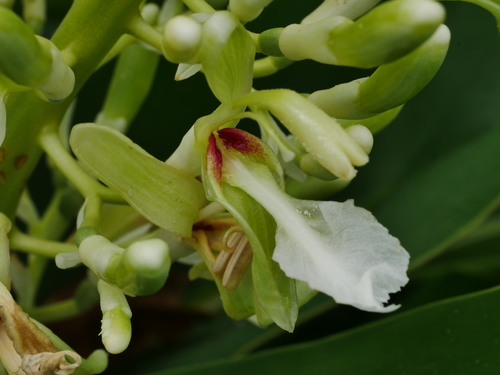

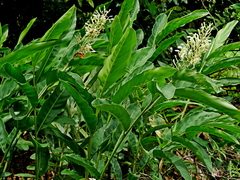
Greater galangal (Alpinia galanga) is a herbaceous perennial in the Zingiberaceae family, native to southern China, Indochina and western Malesia. Its glossy, highly branched rhizome has a peppery, citrus and resinous scent and is one of the galangals used as spices and traditional remedies in Southeast Asia.
Read moreGreater galangal, Galangal, Siamese ginger, Thai ginger, Blue ginger and Lengkuas
Give plenty of ambient light without direct sun on the leaves.
Partial shade to full sun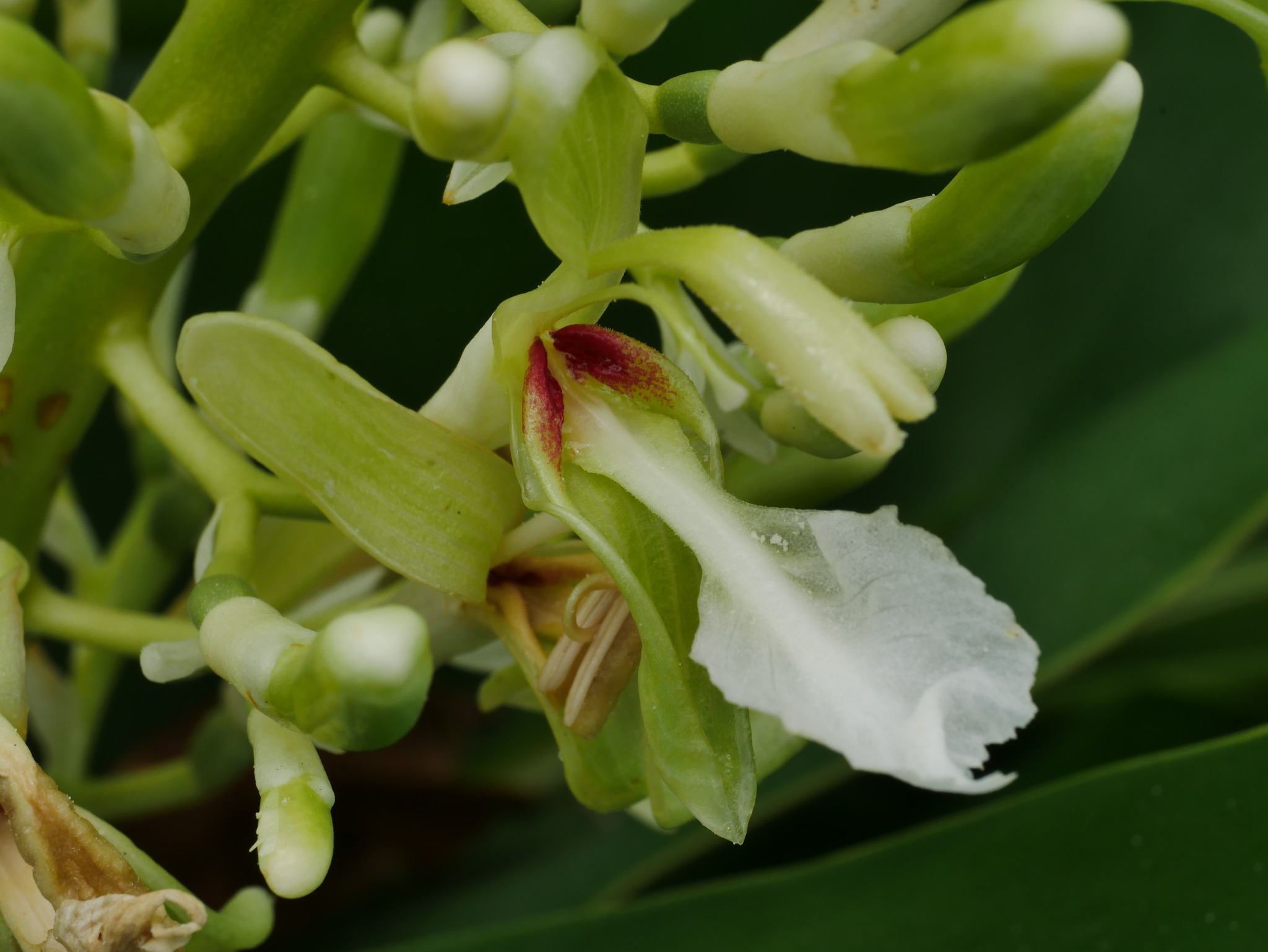
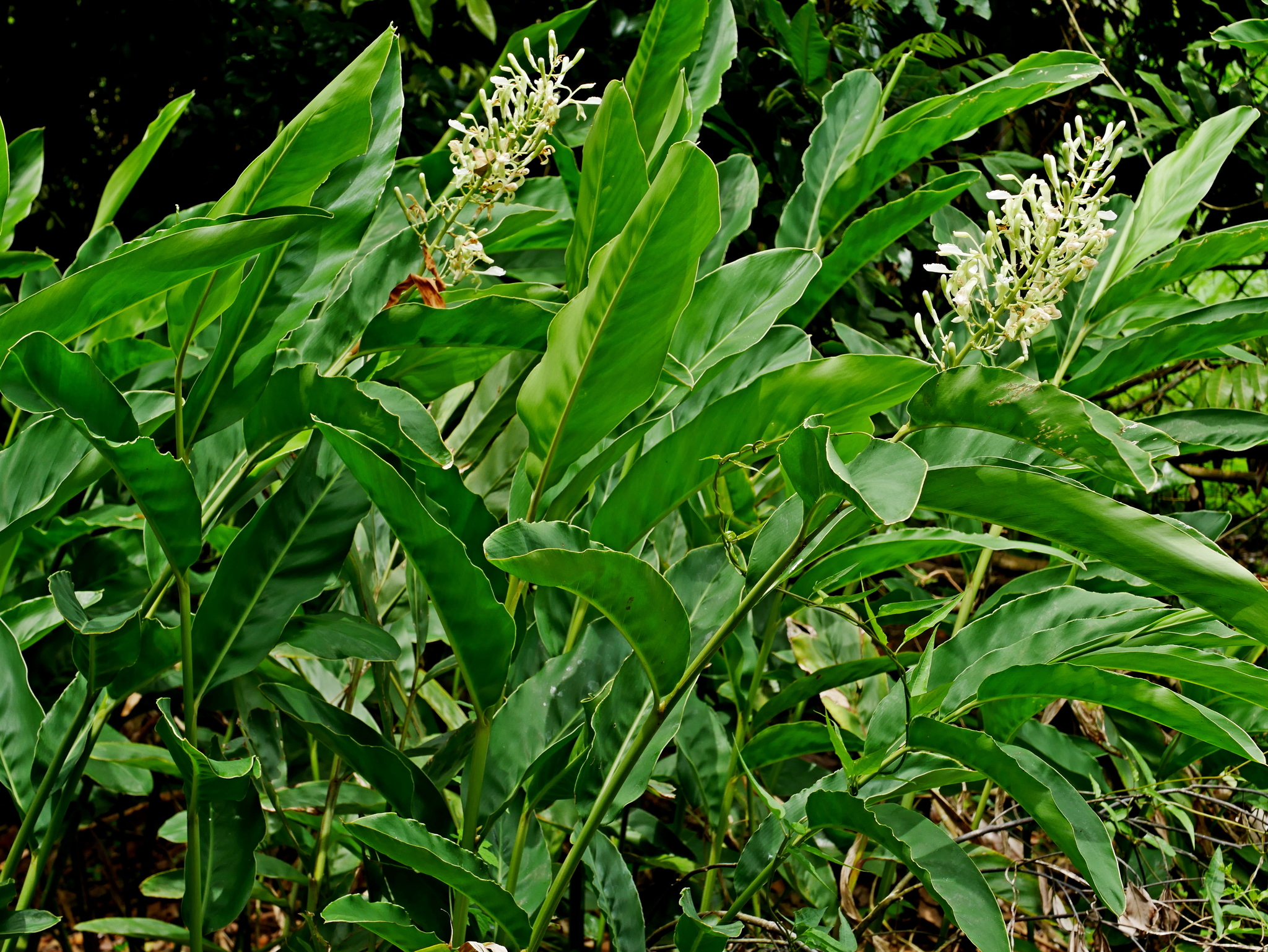


© photo
(c) Jacy Chen, some rights reserved (CC BY), uploaded by Jacy Chen · cc-by
葉子 · cc0
Jacy Chen · cc-by
© copyright of the Board of Trustees of the Royal Botanic Gardens, Kew.


Global distribution
Alpinia galanga is native from southern China through Indochina to western and central Malesia. Java was an early center of cultivation and distribution through the spice trade. The plant later spread widely in Thailand, Malaysia, Indonesia and the Philippines.
- Native4
- Southern China
- Vietnam
- Malaysia
- Indonesia
Hexagons: regions where the plant occurs. Green dots: native range.1
Identity
Greater galangal (Alpinia galanga (L.) Willd., 1797), or galangal, is a herbaceous perennial in the genus Alpinia, family Zingiberaceae. Its glossy, branched rhizome, 2–4 cm (0.8–1.6 in) thick, has a peppery, citrus and resinous scent that quickly distinguishes it from ginger at a market. The word galangal is thought to trace back through Persian qulanjan and Arabic khalanjan to Chinese gao liang jiang, reflecting its long history as a traded spice. 5 6
Names used for the spice include Siamese ginger, Thai ginger, blue ginger and lengkuas. It is one of several plants called galangal and differs from lesser galangal (Alpinia officinarum), which is slimmer and more camphor-scented. Java became an early center of cultivation and distribution in the medieval spice trade, before the plant spread to Thailand, Malaysia and the Philippines. 5 1
Recognition
Dense clumps of leafy stems emerge from a shared glossy, highly branched rhizome, 2–4 cm (0.8–1.6 in) thick. Mature upright stems reach 2–3.5 m (6.5–11.5 ft), while the underground rhizome continues thickening beneath the clump. 4 6
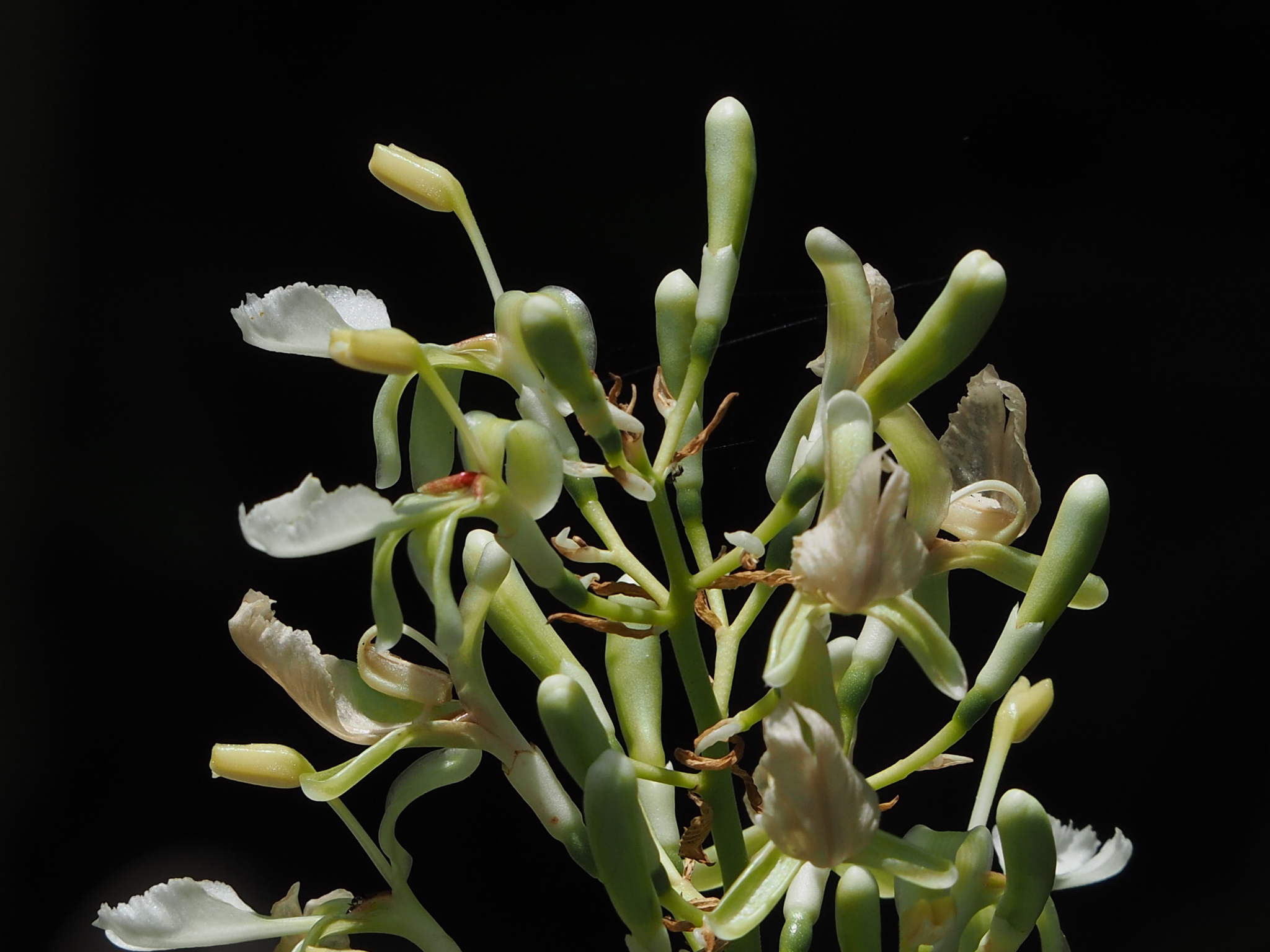
Glossy green, lance-shaped leaves, sometimes mottled white, alternate in two rows along the stem, with the shortest near the base. Terminal inflorescences bear two to six scented white flowers with red or yellowish centers. 6 3
Round capsules measure 1–1.5 cm (0.4–0.6 in) across and ripen from green through orange to wine red. Their flavor resembles cardamom, which they replace locally in some preparations. 6 5
Useful taxonomy
The accepted name Alpinia galanga in POWO is based on Maranta galanga L., 1762, recombined by Willdenow in 1797. Historical literature and trade labels still use several synonyms: 1 8
- Zingiber galanga (L.) Stokes (historical combination)
- Languas galanga (L.) Stuntz (historical combination)
- Amomum galanga (L.) Lour. (historical combination)
- Galanga officinalis Salisb. (synonym)
- Alpinia viridiflora Griff. (synonym)
This abundance of names helps explain vague nursery labels and packets in Asian grocery stores. The accepted binomial, Alpinia galanga, remains the dependable identity check. 2
Habitat and range
Southern China, Indochina and western and central Malesia form its native range. There it grows along forest margins and in moist understory, from lowlands to 1,300 m (4,265 ft). 4 1
Early cultivation in Java was followed by widespread use as a spice in Thailand, Malaysia, Indonesia and the Philippines, and introduction to India, where it entered Ayurvedic practice. Beyond its native range, it is mainly a tropical garden, greenhouse or large-container plant. 5 4
Natural growing conditions supply 2,000–3,700 mm (79–146 in) of annual rain, and the plant does not tolerate temperatures below 15 °C (59 °F). These requirements explain its need for a heated greenhouse or bright indoor space in temperate climates. 4
Life cycle and reproduction
A rhizome fragment with a bud produces its first shoot in about a week, then two or three leaves within a month if temperatures stay above 20 °C (68 °F). Over the following months the clump thickens, with rhizomes branching underground and leafy stems multiplying above. 4
Established clumps flower and then form red capsules. Cultivation relies almost entirely on rhizome division for propagation. Seed is possible but slower and less reliable for preserving the parent plant's aromatic qualities. 4
For cooking, rhizomes can be harvested from three months, while still tender and fragrant. Traditional medicinal practice considers rhizomes more active at four to six years. This difference helps explain why grocery-store rhizomes and those used medicinally are not always equivalent. 4
Uses and risks
Thai, Malay and Indonesian cooking uses the rhizome as a spice, notably in tom kha kai, where it often replaces ginger with a more peppery, resinous note. Asian groceries sell it fresh, sliced and dried, or powdered. 5 6
Unani medicine uses khulanjan, the rhizome, as a cardiac and respiratory tonic. Ayurveda uses it as rasna for colds and sore throats, often with licorice. These are traditional applications. The rhizome contains the flavonol galangin and an essential oil, galangol, rich in cineole, pinene and eugenol, contributing to its more peppery and resinous scent compared with ginger. 5
No major toxicity is documented for the species itself. The ASPCA lists several related Zingiberaceae, including Kaempferia, as non-toxic to cats, dogs and horses. That family comparison is consistent with galangal's food use, but it concerns related plants rather than a species-specific assessment. 7
Varieties, look-alikes and related plants
Spice sellers mainly distinguish a white rhizome type, dominant in cooking, with paler flesh and a milder scent, from a red rhizome type traditionally reserved for medicinal use and considered stronger. These forms are not separate botanical varieties. 5
Several related spices are commonly confused with Greater galangal:
- Alpinia officinarum, lesser galangal, with a slimmer, more camphor-scented rhizome;
- Kaempferia galanga, aromatic ginger, with a low-growing rosette habit;
- Boesenbergia rotunda, fingerroot, with a very different underground shape;
- Zingiber officinale, common ginger, in a separate genus within the same family.
Crushing a little rhizome releases the quickest distinguishing clue: in Alpinia galanga, the 2–4 cm (0.8–1.6 in) thick rhizome smells more peppery and resinous than its relatives. This helps separate spices often sold side by side without dependable botanical labels. 4
Main sources
- Plants of the World Online / Kew, Alpinia galanga (L.) Willd.
- International Plant Names Index, Alpinia galanga (L.) Willd.
- Missouri Botanical Garden, PlantFinder, Alpinia galanga
- Useful Tropical Plants Database, Alpinia galanga
- Wikipedia EN, Alpinia galanga
- Wikipedia FR, Alpinia galanga
- ASPCA, Kaempferia (Zingiberaceae) non-toxic entry
- USDA GRIN Global, Taxonomy detail, Alpinia galanga
Frequently asked questions
Is Greater galangal the same plant as ginger?
No. Greater galangal (Alpinia galanga) and ginger (Zingiber officinale) belong to different genera in the same family, Zingiberaceae. Galangal has a more peppery, resinous rhizome scent.
What is the difference between greater and lesser galangal?
Greater galangal (Alpinia galanga) has a larger rhizome with a citrusy, peppery scent. Lesser galangal (Alpinia officinarum) has a slimmer, more camphor-scented rhizome and is used more in traditional Chinese medicine.
Is Greater galangal toxic to cats and dogs?
No major toxicity is documented for Alpinia galanga. The ASPCA lists several related Zingiberaceae, including Kaempferia, as non-toxic to cats, dogs and horses; this is evidence about relatives rather than a species-specific assessment.
Can Greater galangal grow in a temperate climate?
Yes, in a large container brought indoors for winter or in a heated greenhouse. The plant does not tolerate sustained temperatures below 15 °C (59 °F).
When do you harvest galangal rhizomes?
For cooking, rhizomes can be harvested from three months after planting a piece. For traditional medicinal use, they are considered more active at four to six years old.
Which plants are confused with Alpinia galanga?
Common confusions include Alpinia officinarum (lesser galangal), Kaempferia galanga (aromatic ginger) and Boesenbergia rotunda (fingerroot), other spices in the same family.
What are the traditional medicinal uses of galangal?
Unani medicine uses the rhizome as a cardiac and respiratory tonic under the name khulanjan. In Ayurveda it is used as rasna for colds and sore throats, often with licorice. These are traditional uses.
Similar plants
If you are unsure about a plant’s toxicity, ask a botanist or veterinarian for advice.