
Redroot amaranth (Amaranthus retroflexus, )
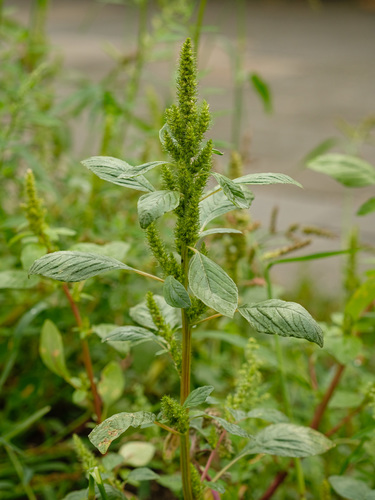
Redroot amaranth (Amaranthus retroflexus) is an annual in the Amaranthaceae family, native to the Americas and now naturalized on most continents. Its rough, upright stem carries diamond-shaped leaves and a dense terminal flower spike with spiny bracts. Agronomists know it for its persistent soil seed bank and for a Chinese population that developed the first confirmed resistance to PPO-inhibiting herbicides recorded in this species.
Read moreRedroot amaranth, Redroot pigweed, Red-rooted pigweed, Common amaranth, Rough pigweed and Common tumbleweed

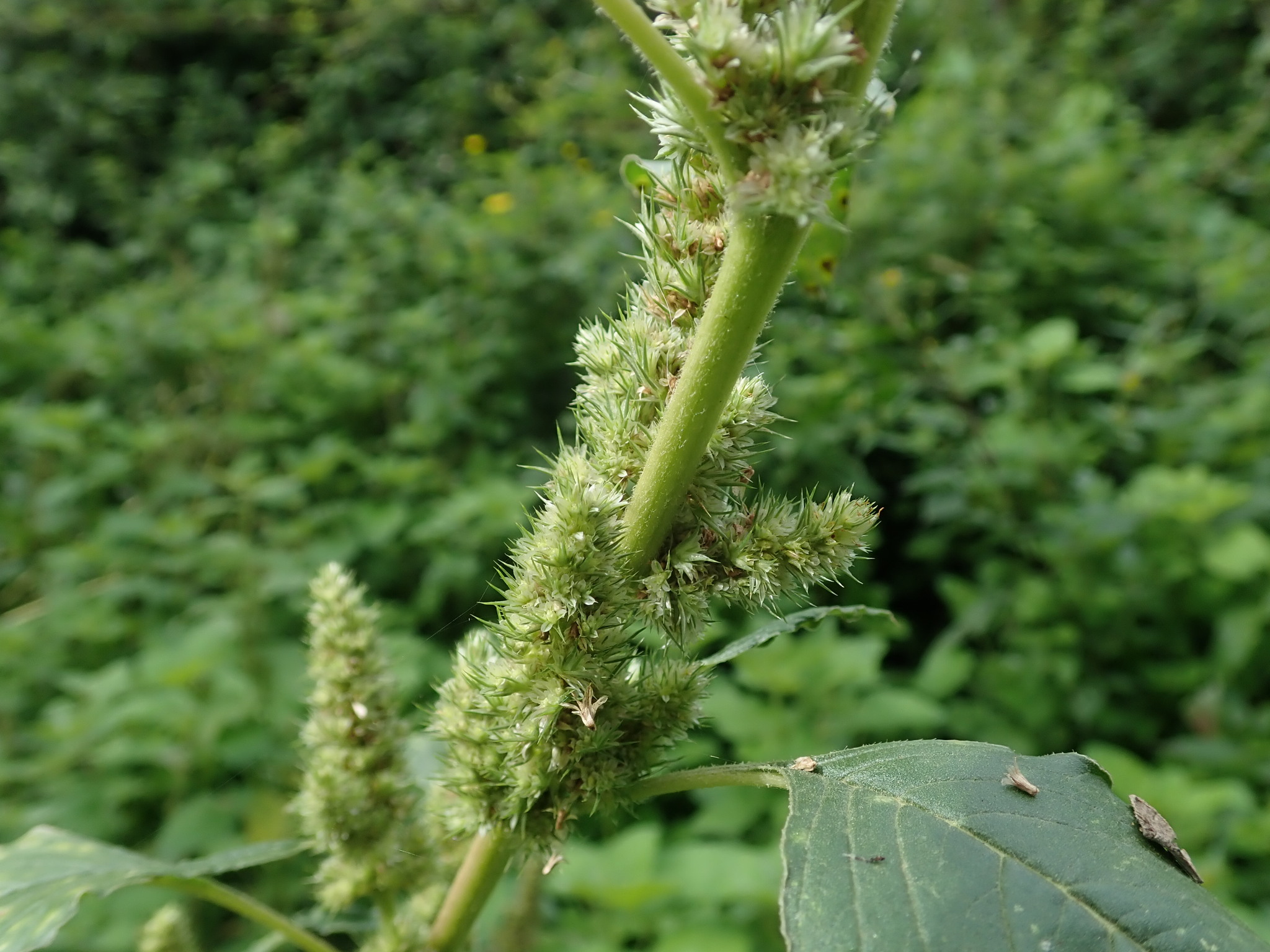


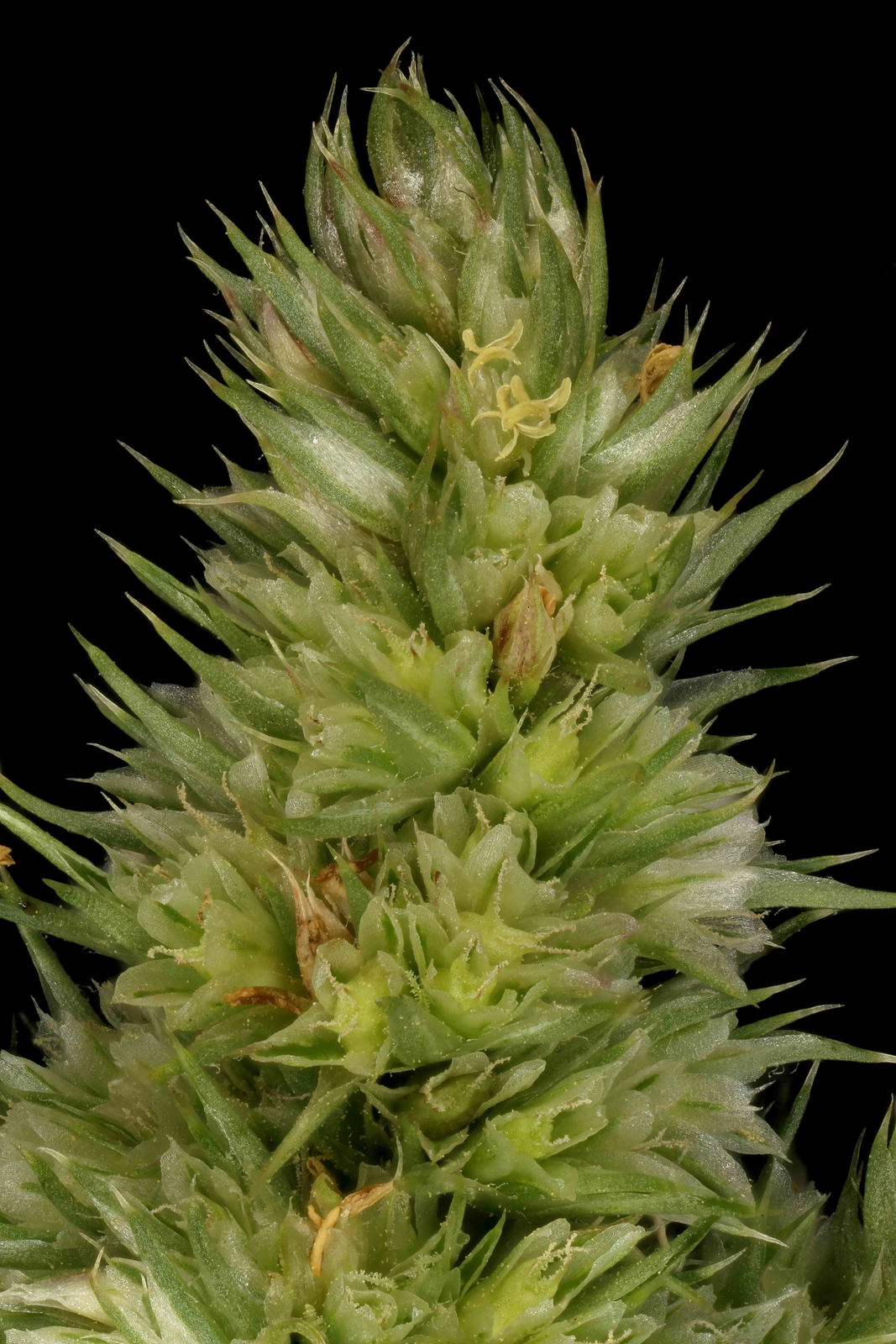
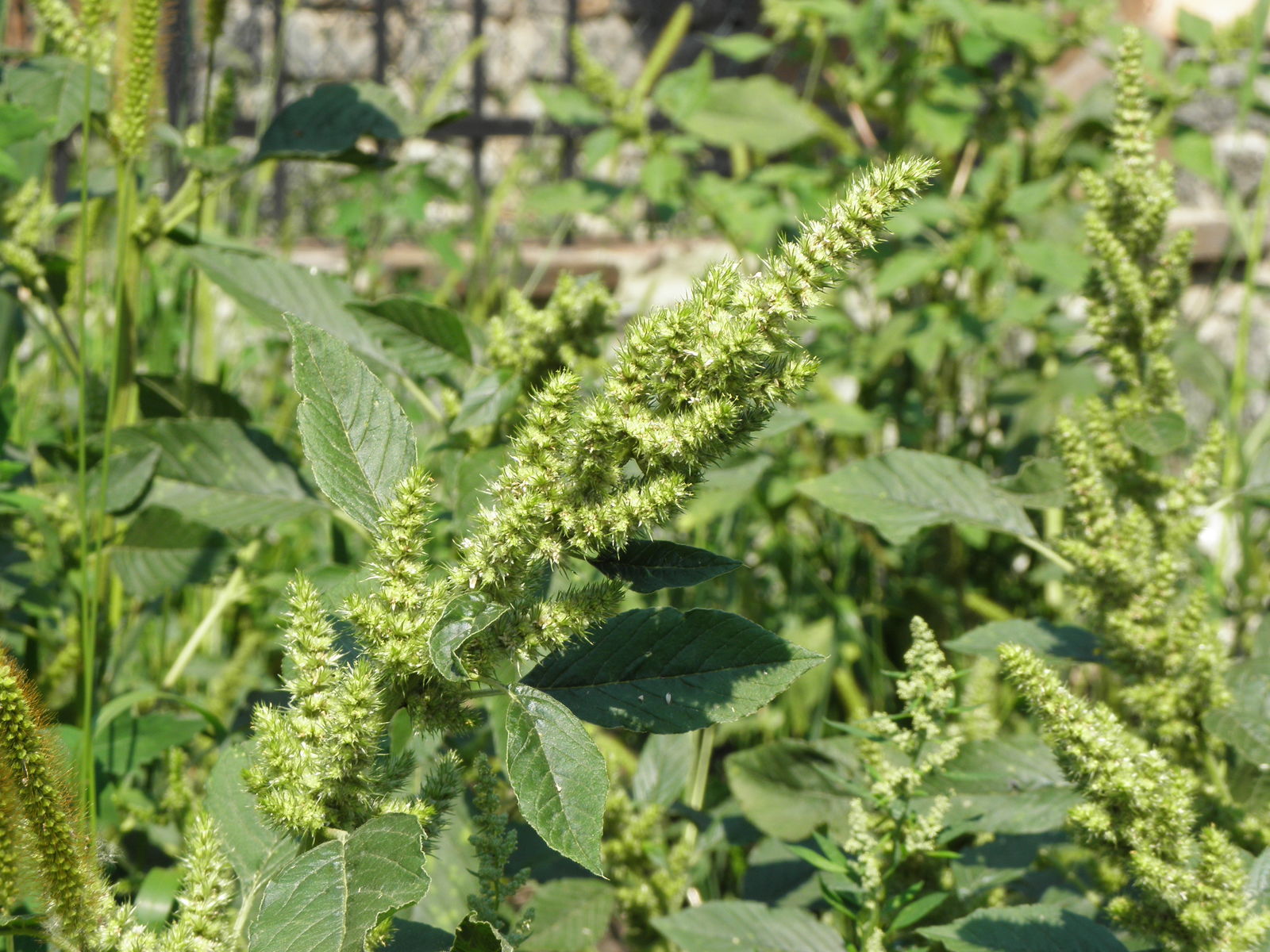
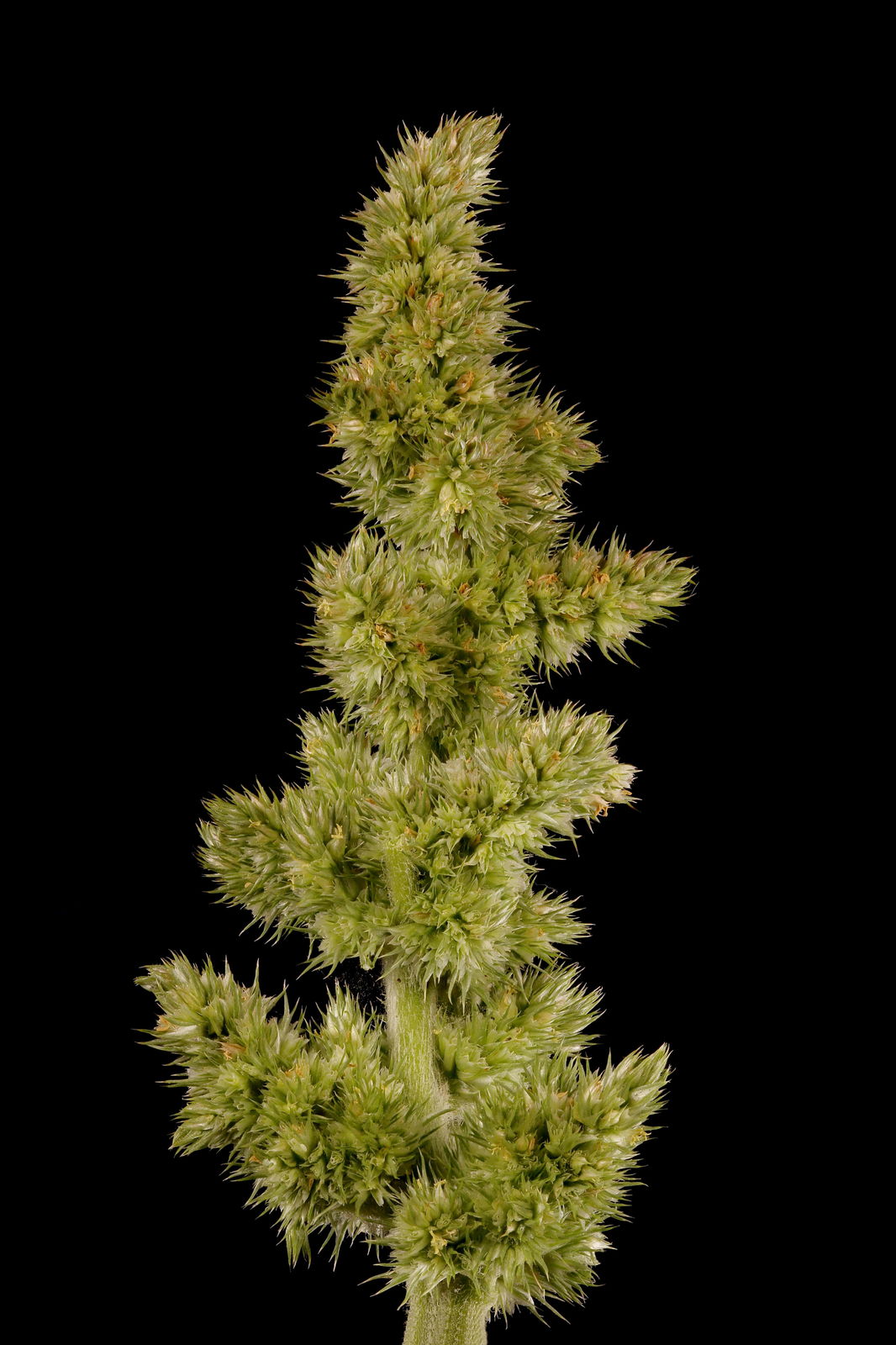
© photo
(c) Alexander Rumpel, some rights reserved (CC BY-NC), uploaded by Alexander Rumpel · cc-by-nc
Zihao Wang · cc-by
Daniel Cahen · cc-by
Taken Jul 10, 2019 by Nele Pele (cc-by-sa)
Taken Oct 30, 2015 by Tela Botanica − Jean-Luc Gorremans (cc-by-sa)
Taken Jul 5, 2021 by Роман Бородавкин (cc-by-sa)
Taken Nov 16, 2019 by agal (cc-by-sa)
Taken Jul 22, 2019 by Liette Szabo (cc-by-sa)
© copyright of the Board of Trustees of the Royal Botanic Gardens, Kew.




Global distribution
The precise native range of Amaranthus retroflexus is debated, with accounts placing it in the Neotropics or central and eastern North America; WCVP places its origin in Mexico. Introduced from North America, it is now naturalized on most continents. Some agricultural populations are troublesome, including one in China with confirmed resistance to PPO-inhibiting herbicides.
- Native2
- Introduced5
- Invasive1
- Mexico
- United States
- Canada
- Mainland France
- Europe
- Japan
- Australia
- China
Hexagons: regions where the plant occurs. Green dots: native range.1
Identity
Redroot amaranth (Amaranthus retroflexus L., 1753) is an annual in the Amaranthaceae family and the genus Amaranthus. Linnaeus described it in 1753, but its precise native range remains debated between the Neotropics and central and eastern North America. A single plant can produce up to 35,000 seeds, replenishing a persistent soil seed bank. That reserve makes the weed difficult to eliminate even after careful pulling. 1 3
The alternative name redroot pigweed combines a frequently reddish taproot with the plant's association with outdoor pig pasture. Other established names include red-rooted pigweed, common amaranth and rough pigweed. Common tumbleweed describes its behavior at maturity rather than its appearance during active growth, when the plant remains rooted and upright. 4 8
Recognition
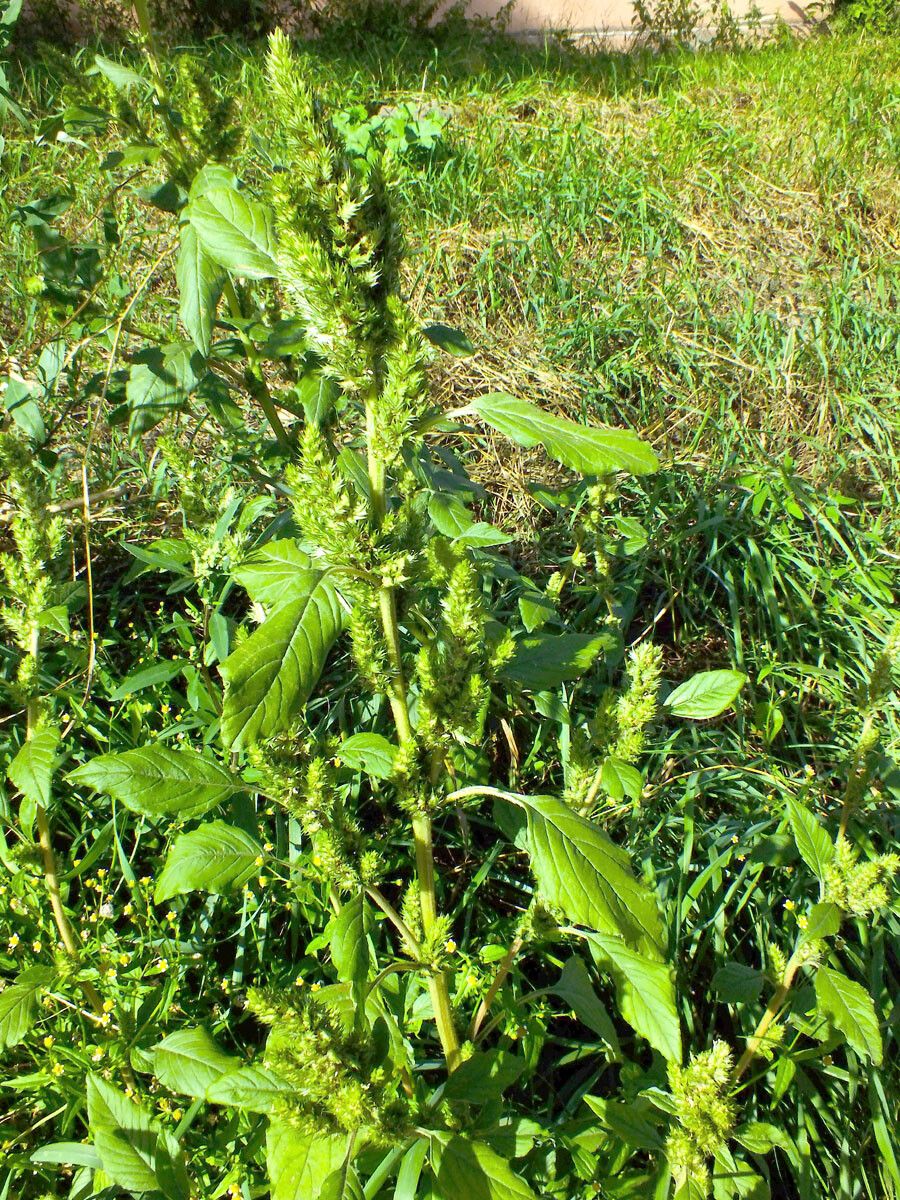
Rough, hairy, upright stems often branch in their upper half and usually reach 20–150 cm (8 in–5 ft). Exceptional plants on rich, sunny ground can attain 2 m (6.5 ft), well above the smaller individuals commonly seen on disturbed sites. 6
Alternate, stalked leaves are diamond-shaped to oval, with conspicuous veins and often a notch at the tip. On well-exposed plants, the largest leaves can approach 15 cm (6 in) long. Leaf shape and size vary with position and growing conditions. 3
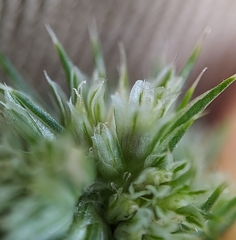
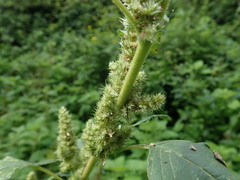
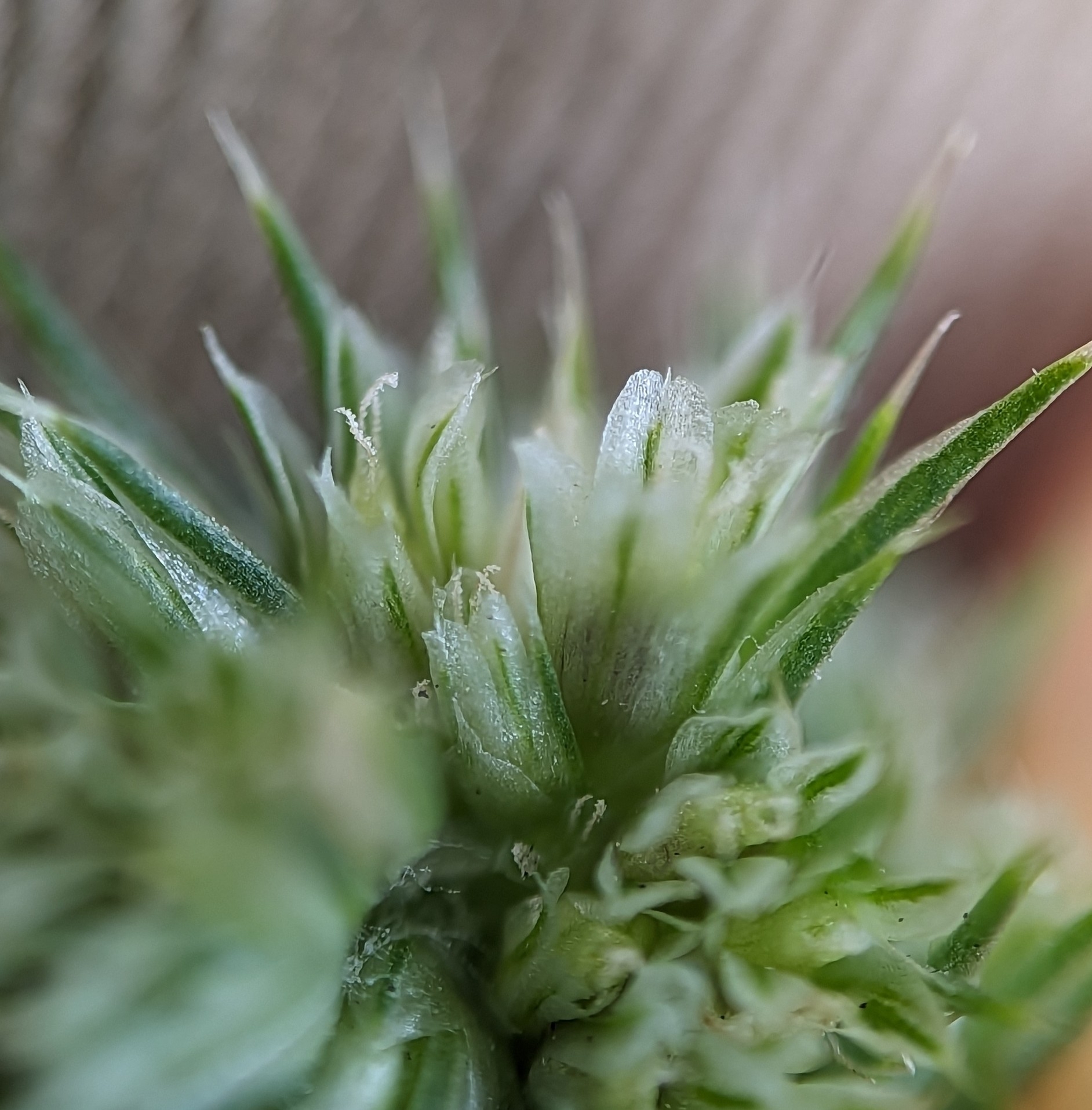
A thick, dense terminal flower spike is surrounded by pale green, spiny bracts, giving the plant its bristly appearance. The minute greenish flowers are wind-pollinated. Without nectar, they attract few foraging insects, unlike the conspicuous flowers of many garden plants. 3
Glossy black seeds are lens-shaped and barely wider than 1 mm (0.04 in). Each is enclosed in a small capsule under 2 mm (0.08 in) long. Once shed, seeds can remain in the soil for several years before germinating. 3
Useful taxonomy
The reference name for redroot amaranth is Amaranthus retroflexus L., accepted by Plants of the World Online and published in 1753. The species belongs to the Amaranthaceae family. 1 2
Dozens of similar-looking Amaranthus species can be confused in the field. Many varieties and subspecies have been described under this name, including Amaranthus retroflexus var. salicifolius I.M.Johnst. and Amaranthus retroflexus subsp. patulus (Bertol.) Bonnier & Layens. These distinctions mainly concern leaf shape or growth habit rather than ornamental selections. 1
North American and French agricultural databases generally use the accepted name Amaranthus retroflexus. It avoids the tangle of competing synonyms that complicates the identification of some other crop weeds. 4
Habitat and range
Mexico is the origin given by WCVP, while other accounts place the native range more broadly in the Neotropics or central and eastern North America. The precise limits therefore remain debated rather than securely confined to a single regional account. 1 3
Following introduction from North America, redroot amaranth has become naturalized across most continents, including Europe, Asia and Oceania. France's INPN records it as widespread in France; this is a French distribution record rather than a statement about its status elsewhere. 4
Crop fields, vegetable gardens, fallow land and pathsides are its favored sites. Disturbed, nitrogen-rich soils particularly suit it, allowing rapid germination once the ground warms. These conditions help explain why it is encountered so often alongside cultivated plants. 6
Life cycle, resistance and dispersal
Warm soil drives most germination from spring through summer; cool ground produces slower, more irregular emergence. Flowering occurs in summer, followed by seed ripening from late summer into fall. The timing shifts with local climate, so the seasonal sequence is more useful across hemispheres than fixed calendar months. 6
Each plant produces 13,000–35,000 seeds, capable of forming a persistent seed bank. About three years are needed for half the soil reserve to disappear, and nearly 20 years for a 99% decline. At maturity, dry stems can detach from the roots and roll in the wind, scattering seeds over long distances. This explains the name tumbleweed. 8 3
A Chinese population reported in 2020 showed the first confirmed resistance to protoporphyrinogen oxidase (PPO) inhibitors documented in this species. Resistance reached 41.8 times that of susceptible populations and was associated with a single mutation in the target gene. The resistant population nevertheless remained susceptible to glyphosate and several other herbicide families tested. 5
Uses and risks
Edible young leaves can be eaten raw or cooked like spinach and provide iron and vitamins A and C. Seeds are also edible raw or cooked; they can be ground into flour or roasted before grinding. These uses concern the harvested leaves and seeds rather than a cultivated ornamental variety. 6
Traditional uses include an astringent leaf tea for heavy menstrual bleeding, intestinal bleeding and diarrhea, and an infusion for hoarseness. These are historical uses rather than established treatment recommendations. The whole plant has also supplied yellow and green dyes. 7
No Amaranthus species is known to be poisonous to humans in the cited account, but plants on nitrogen-rich soil can concentrate nitrates in their leaves. The documented concern mainly involves livestock consuming large quantities. Reported consequences include digestive disorders and methemoglobinemia, which impairs the blood's ability to carry oxygen. 3
Varieties, look-alikes and related plants
Recognized garden cultivars are absent for Amaranthus retroflexus. Field variation mainly concerns leaf shape and stem hairiness, traits used to distinguish botanical varieties rather than selected garden forms. This is a weed with variable natural populations, not a standard ornamental cultivar range. 1
Close look-alikes include Amaranthus hybridus and Amaranthus powellii, both similar in habit, and the smaller, paler Amaranthus albus. Taproot color and the form of the floral bracts are the most useful field clues when comparing these related weeds. 3
Other summer weeds, including horseweed and common ragweed, often grow around the same fields. Their silhouettes and foliage usually separate them readily from redroot amaranth. Within Amaranthus itself, the glossy black, lens-shaped seed, about 1 mm (0.04 in) across, is more dependable than foliage alone when settling an identification.
Main sources
- Plants of the World Online / Kew, Amaranthus retroflexus L.
- International Plant Names Index, Amaranthus retroflexus
- Wikipedia EN, Amaranthus retroflexus
- INPN / MNHN, Amaranthus retroflexus L., 1753
- Wang et al. 2020, resistance mechanism to fomesafen in Amaranthus retroflexus L., Pesticide Biochemistry and Physiology
- Plants For A Future (Useful Tropical Plants), Amaranthus retroflexus
- Natural Medicinal Herbs, Amaranthus retroflexus (Pigweed)
- Michigan State University Extension, Redroot Pigweed (Amaranthus retroflexus)
Frequently asked questions
Is redroot amaranth poisonous?
No Amaranthus species is known to be poisonous to humans. The documented risk mainly concerns livestock eating large amounts of plants that have accumulated nitrates in nitrogen-rich soil.
Why is redroot amaranth hard to control?
Its seeds persist in the soil for years, and a Chinese population showed confirmed resistance to PPO-inhibiting herbicides in 2020. Control should alternate modes of action rather than rely on a single herbicide family.
How can you recognize young seedlings?
Seedlings have diamond-shaped leaves and a stem often already reddish at the base. This is the easiest stage to control, before the flower spike develops.
What does the name retroflexus mean?
The Latin epithet retroflexus means bent backward. It describes the curved floral bracts rather than an immediately obvious feature of the growing plant. The English name redroot refers to its often reddish taproot.
Can you eat redroot amaranth?
Its young leaves and seeds are edible, with the leaves used like spinach. Avoid plants growing in excessively nitrogen-fertilized soil, which can accumulate more nitrates.
Can it be confused with other amaranths?
Yes, particularly Amaranthus hybridus and Amaranthus powellii, which have very similar growth habits, and the smaller, paler Amaranthus albus. Root color remains a useful clue.
Where does redroot amaranth usually grow?
It grows in crop fields, vegetable gardens, fallow land and along paths, favoring disturbed soil rich in nitrogen.
Similar plants
If you are unsure about a plant’s toxicity, ask a botanist or veterinarian for advice.