
Spinach (Spinacia oleracea, )
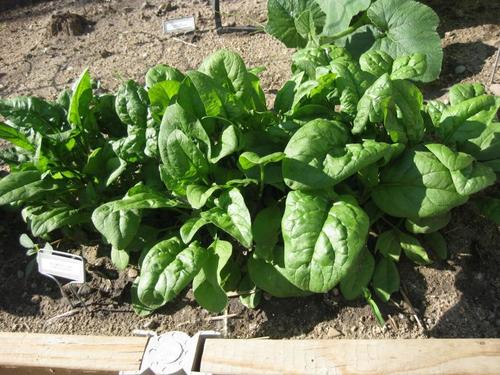


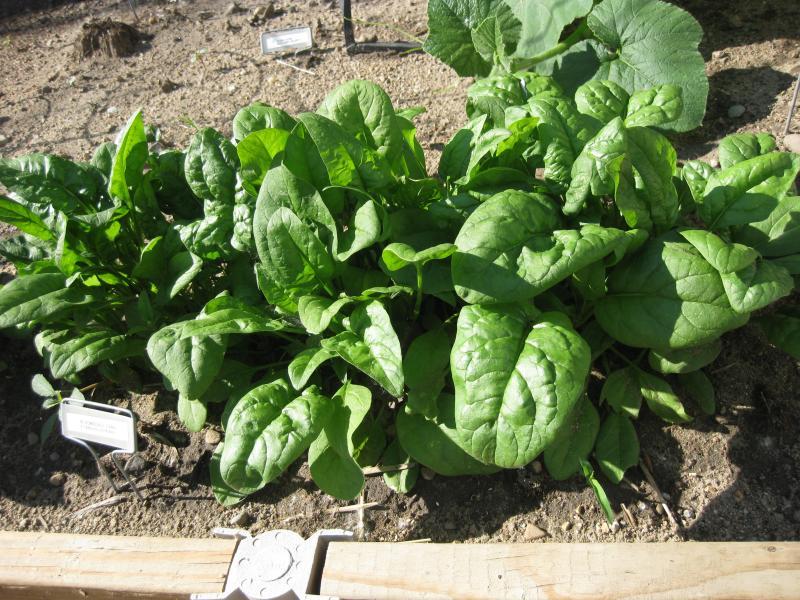
Spinach (Spinacia oleracea) is an annual leafy vegetable in the Amaranthaceae family, grown for its tender, nutritious leaves. This cool-season plant thrives in spring and fall and bolts quickly in hot weather. Plants are usually either male or female, with wind carrying pollen between them.
Read moreSpinach



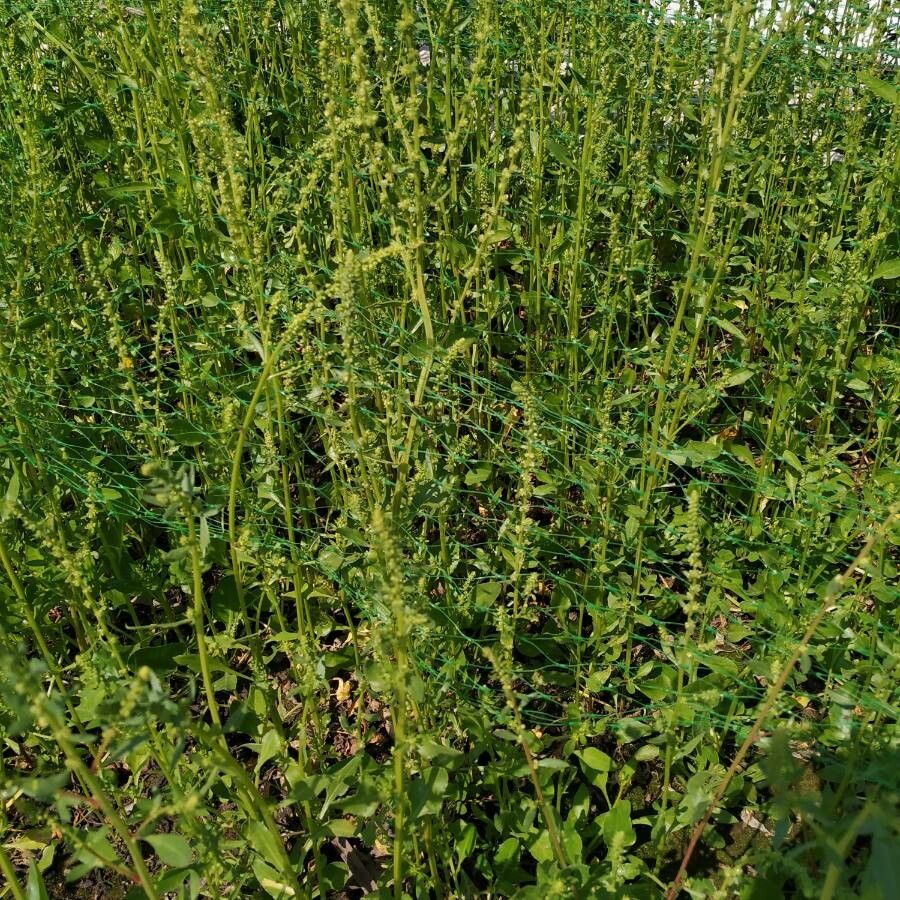
© photo
(c) Anne The Librarian, some rights reserved (CC BY-NC-ND) · cc-by-nc-nd
Wikimedia Commons · CC BY-SA or Public Domain
Taken May 26, 2022 by Jäger Latein (cc-by-sa)
Taken Jan 1, 1970 by Photoflora - L'Abbé COSTE (©)
Taken Nov 3, 2016 by Yoan MARTIN (cc-by-sa)
Taken Jan 1, 1800 by Tela Botanica − Daniel MATHIEU (cc-by-sa)
© copyright of the Board of Trustees of the Royal Botanic Gardens, Kew.




Global distribution
Spinach is a cultigen, a plant known only in cultivation, derived from wild ancestors in Central and Southwest Asia. It is now grown throughout temperate climates but does not occur spontaneously in the wild; the regions listed therefore represent areas of cultivation rather than a strictly defined wild native range.
Identity
Spinach (Spinacia oleracea L., 1753) is an annual leafy vegetable in the Amaranthaceae family and the genus Spinacia. It is grown for its tender, green, nutritious leaves, eaten raw in salads or cooked. A cool-season plant, it performs best in spring and fall rather than summer heat. 3 4
The epithet oleracea means “of the vegetable garden” in Latin and neatly reflects its status. Spinach is a cultigen, a plant known only in cultivation, with no clearly identified wild population. Described by Linnaeus in 1753, it is now one of the most widely grown leafy vegetables in temperate climates. 1 2
Recognition
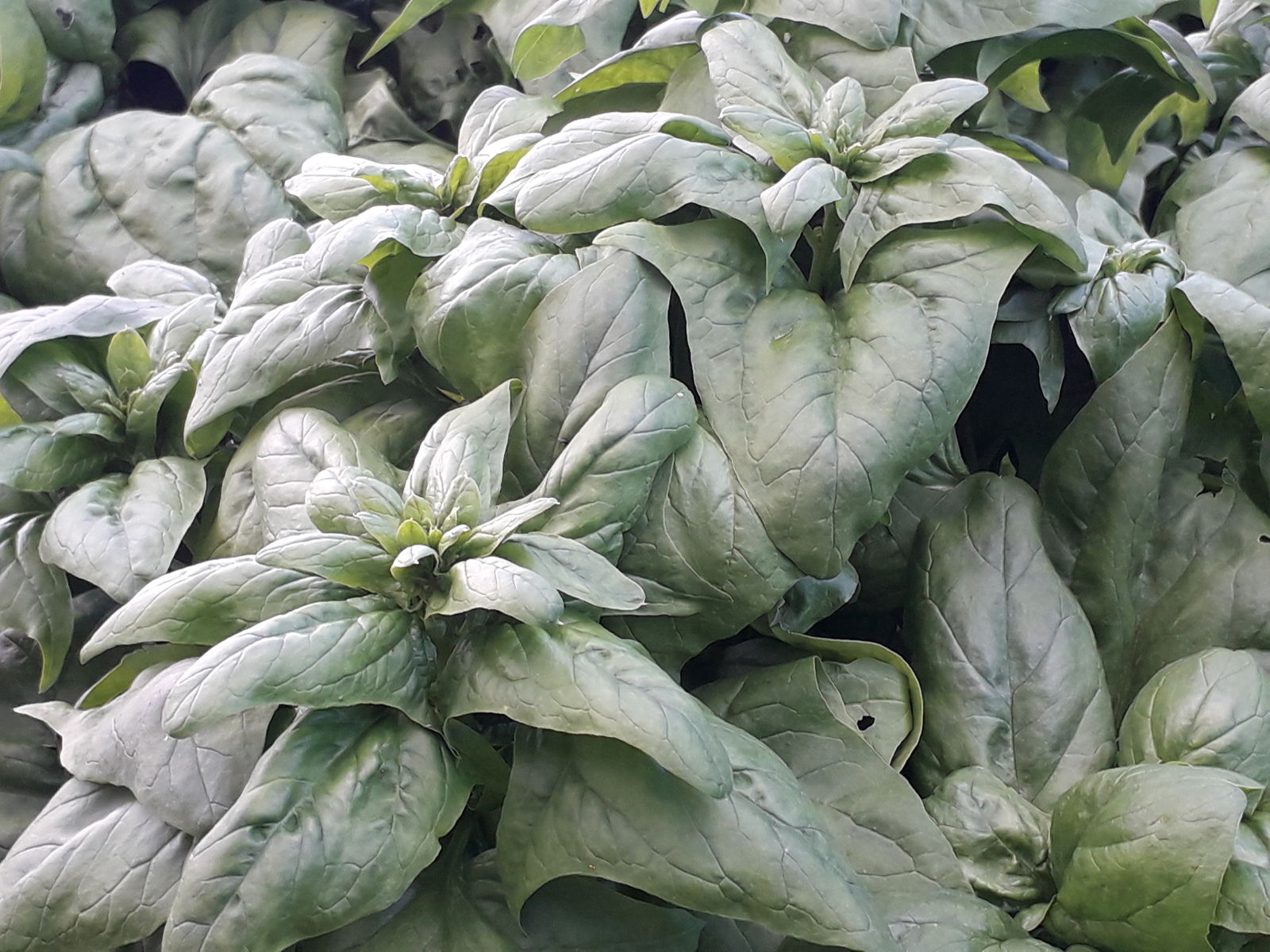
Young spinach begins as a rosette of long-stalked leaves arising from the crown at ground level. The tender, bright green blades may be smooth or savoyed, depending on the variety. They range from rounded to arrow-shaped and are often 3–8 cm (1–3 in) long. At the harvesting stage, the plant remains low, about 15–30 cm (6–12 in) tall. 6 3
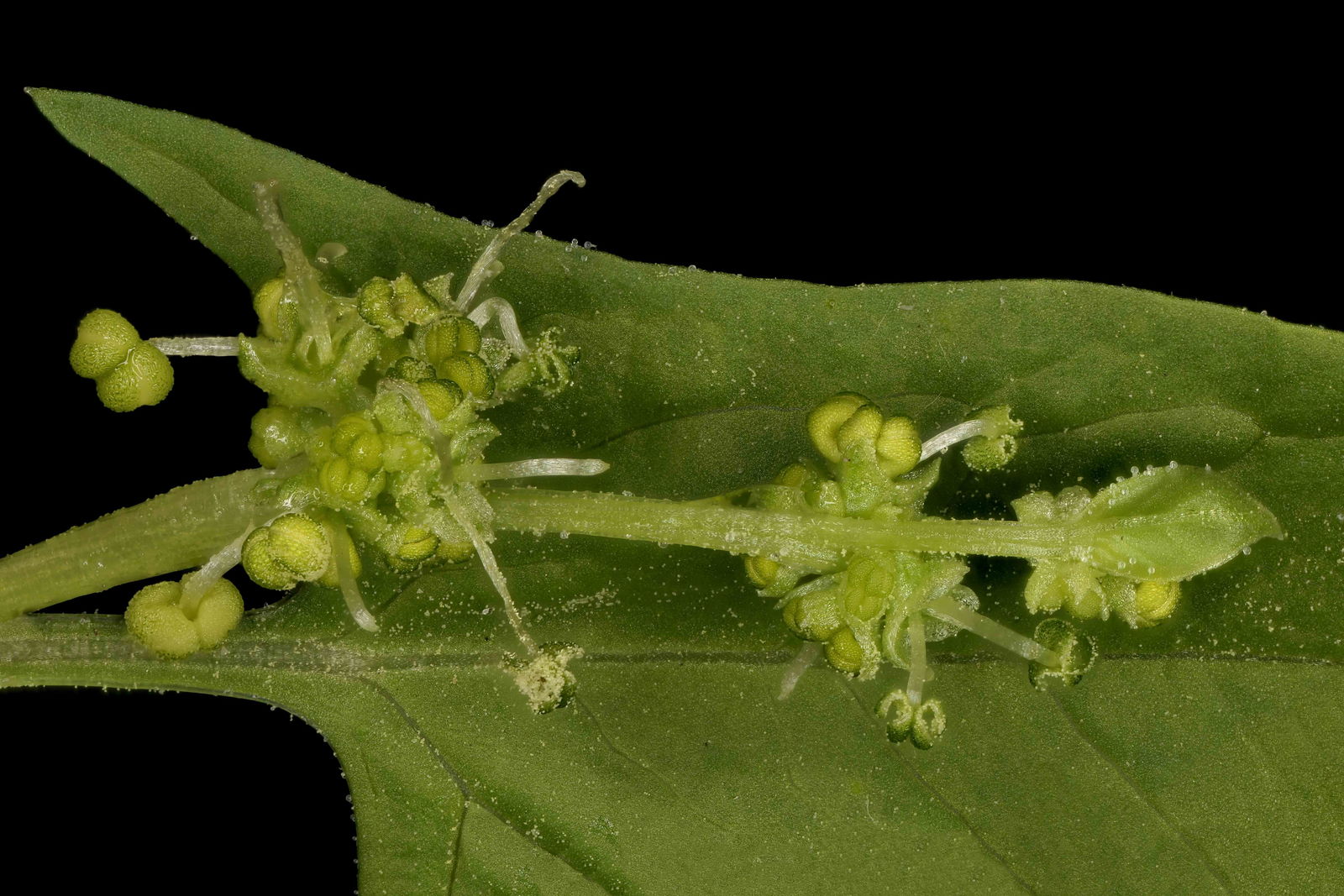
Heat or lengthening days prompt an upright flower stalk that can reach 30–60 cm (1–2 ft). This transition, called bolting, marks the end of the leaf-harvesting period. Small yellowish-green flowers have no showy petals or nectar, because wind carries their pollen rather than insect visitors. 6 4
A useful botanical distinction is that spinach is generally dioecious, with separate male and female plants. This separation of the sexes is unusual among familiar vegetables and explains why the inconspicuous flowers differ from one plant to another. 6 5
Useful taxonomy
Carl von Linnaeus described Spinacia oleracea in 1753, and it remains the accepted species name. The genus Spinacia is small; much of the diversity lies in cultivated varieties and a few infraspecific taxa. The principal names and ranks include:
- Spinacia oleracea subsp. oleracea, the nominal subspecies
- Spinacia oleracea subsp. turkestanica (Iljin) Del Guacchio & P.Caputo, a subspecies name
- Spinacia oleracea var. inermis (Moench) Peterm., a botanical variety name
- Spinacia oleracea var. spinosa (Moench) Peterm., another botanical variety name
- Spinacia inermis Moench, a historical scientific name
The accepted scientific name Spinacia oleracea is the reliable reference. Commercial names such as Matador and Monstrueux de Viroflay identify horticultural varieties, rather than separate species or botanical varieties. Spinach is now placed in Amaranthaceae, after long being included in the former Chenopodiaceae family. 1 3
Habitat and range
Cultivation defines spinach's distribution: it derives from ancestors in Central and Southwest Asia, in a region extending from Iran to western Pakistan, but it is not known as a spontaneously occurring wild plant. Vegetable cultivation carried it from Asia toward the Mediterranean and then into medieval Europe. 1 4
Its habitat is therefore the vegetable garden or cultivated field. It is sown in rich, moisture-retentive soil in regions and seasons with moderate temperatures, around 10–20 °C (50–68 °F). Summer heat works against it and quickly triggers seed-stalk formation. 6 3
Regions recorded for the species chiefly indicate areas of cultivation. Spinach is now produced across temperate climates, from China to North America and Europe, without establishing lasting naturalized populations. A map of its cultivation should not be read as a strict map of wild origins. 4 5
Life cycle and reproduction
A short annual cycle takes spinach from seed to harvest. Direct-sown seeds emerge in one to two weeks at soil temperatures of 10–20 °C (50–68 °F), then develop a harvestable leaf rosette in six to ten weeks. Growth remains vigorous while conditions stay cool. 2 6
Reproduction begins with bolting. In heat and long days, the plant stops producing tender leaves and raises a flower stalk. The small yellowish-green flowers are wind-pollinated, after which female plants bear small dry fruits containing the seeds. 6 4
Growers propagate spinach only from seed; it is neither divided nor grown from cuttings. Successive sowings every two to three weeks in spring and late summer spread production through the cool season. Picking outer leaves individually extends harvesting, while the appearance of the flower stalk signals the end of its useful leaf-producing cycle. 2 5
Uses and risks
Cooking and salads account for spinach's main use. Young, tender leaves are eaten raw or cooked as a vegetable, supplying vitamins and minerals in many dishes. It is an easy, productive garden crop valued for fast growth in cool weather. 3 2
Leaf oxalates, or oxalic acid, are the main caution. In sensitive people, repeated heavy consumption may interfere with iron and calcium absorption and increase the risk of kidney stones; cooking reduces some of the oxalates. For most people, spinach remains a healthy food when eaten in moderation. It is not listed as a poisonous plant for cats and dogs, but its oxalate content calls for similar caution in vulnerable animals. 6 5
Its reputation for being exceptionally rich in iron needs qualification. That reputation rests partly on inflated figures circulated in the 20th century. Its actual iron content is respectable but comparable to other leafy vegetables, and oxalates limit absorption of some of that iron. 4
Varieties, look-alikes and related plants
Cultivar names describe garden selections rather than separate species. Matador and Géant d'hiver are slow-bolting types, the latter sown in fall. Monstrueux de Viroflay is an old variety with very large leaves, while America has thick, savoyed foliage. Match the variety to the intended season and its resistance to bolting before sowing. 2
Several vegetables sold as “spinach” do not belong to the genus Spinacia. Common garden comparisons include:
- Tetragonia tetragonioides, New Zealand spinach, a heat-tolerant summer vegetable;
- Basella alba, Malabar spinach, a climbing vine from warm regions;
- Beta vulgaris var. cicla, chard, another leafy vegetable in the Amaranthaceae family.
These plants share a culinary role with spinach, but their thicker foliage and tolerance of heat distinguish them from true spinach, a characteristic cool-season crop. Their familiar market names therefore describe use rather than close botanical identity. 3 6
Main sources
- Plants of the World Online / Kew, Spinacia oleracea L.
- Royal Horticultural Society, Spinach - grow your own
- Missouri Botanical Garden, Spinacia oleracea
- Encyclopaedia Britannica, spinach
- Plants For A Future, Spinacia oleracea
- NC State Extension, Spinacia oleracea
- USDA PLANTS Database, Spinacia oleracea L.
Frequently asked questions
Is spinach poisonous?
No. Spinach is a common edible vegetable. Its leaves do contain oxalates, which may interfere with iron and calcium absorption and increase kidney risk in sensitive people; cooking reduces some of them.
Why does spinach bolt so quickly?
Heat and lengthening days trigger bolting. Sow in cool conditions in early spring or late summer and choose slow-bolting varieties to reduce it.
Is spinach toxic to cats and dogs?
Spinach is not classified as a poisonous plant for cats and dogs. As for people, its high oxalate content calls for moderation, especially in animals with a history of urinary problems.
When should I sow spinach?
Sow in cool weather: in spring, about three weeks before the last frost, and in late summer for a fall harvest. Summer heat is unfavorable.
Which plants are confused with spinach?
New Zealand spinach (Tetragonia tetragonioides), also called tetragonia, is sold as a summer spinach but does not belong to the genus Spinacia. Its thicker foliage and heat tolerance distinguish it.
Are spinach plants male or female?
Usually, yes. Spinach is generally dioecious, with separate male and female plants. Wind carries the pollen, and the flowers are inconspicuous.
Similar plants
If you are unsure about a plant’s toxicity, ask a botanist or veterinarian for advice.