
Beet (Beta vulgaris, )
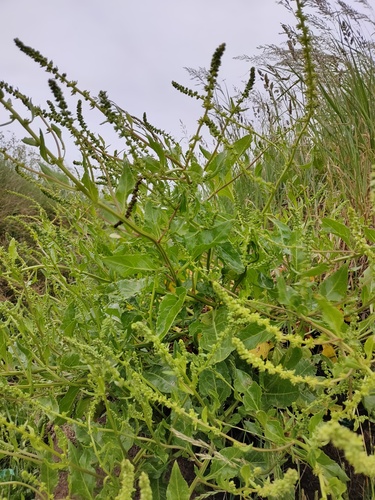
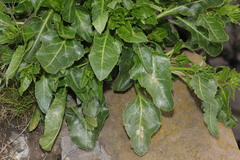
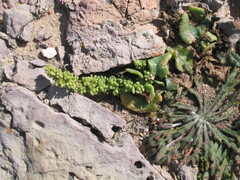
Beet (Beta vulgaris) is a vegetable in the Amaranthaceae family, a biennial usually grown as an annual. A single species includes table beet, chard, sugar beet and fodder beet, divided into cultivar groups. Its fleshy root and leaves are edible and contain sugars and oxalates.
Read moreBeet, Beetroot, Swiss chard, Sugar beet and Fodder beet


© photo
Ben Deed · cc0
Stephen James McWilliam · cc0
zebedeugalinha · cc-by
Taken Apr 9, 2022 by Fabrice Rubio (cc-by-sa)
Taken Feb 3, 2022 by Fabrice Rubio (cc-by-sa)
Taken Dec 1, 2020 by Fero Looxi (cc-by-sa)
Taken Oct 26, 2022 by Annemarie Ahrens-Stehle (cc-by-sa)
© copyright of the Board of Trustees of the Royal Botanic Gardens, Kew.




Global distribution
Cultivated beet descends from wild sea beet on the coasts of western Europe and the Mediterranean. The natural range extends from the Azores through western Europe and the Mediterranean basin to India. Vegetable and industrial forms are now grown on every temperate continent.
- Native6
- Spain
- Italy
- Greece
- United Kingdom
- Azores
- India
Hexagons: regions where the plant occurs. Green dots: native range.1
Identity
Beet (Beta vulgaris L., 1753) is a vegetable in the genus Beta, in the Amaranthaceae family. This biennial species is almost always grown as an annual: its root or leaves are harvested during the first year, before it flowers. 1 3
Several very different crops share this botanical name. Beetroot, Swiss chard, sugar beet and fodder beet all belong to Beta vulgaris. They differ in the organs favored through generations of agricultural selection. 4 6
Recognition
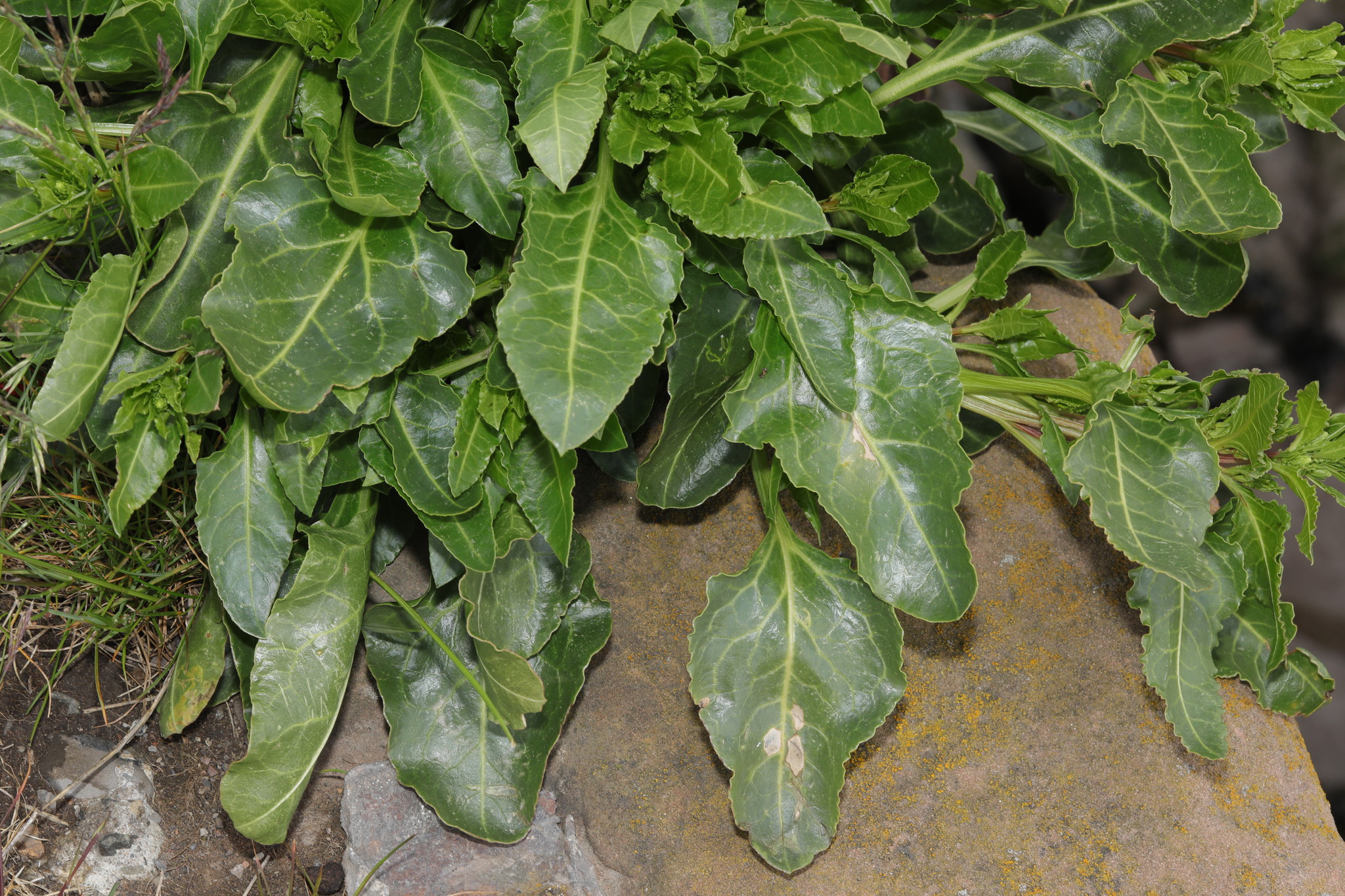
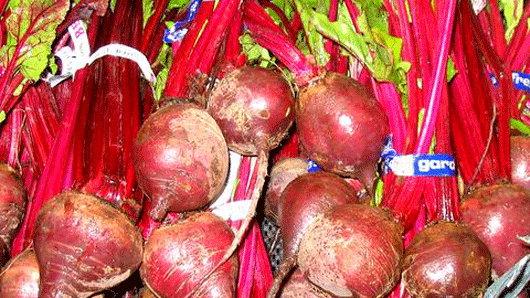
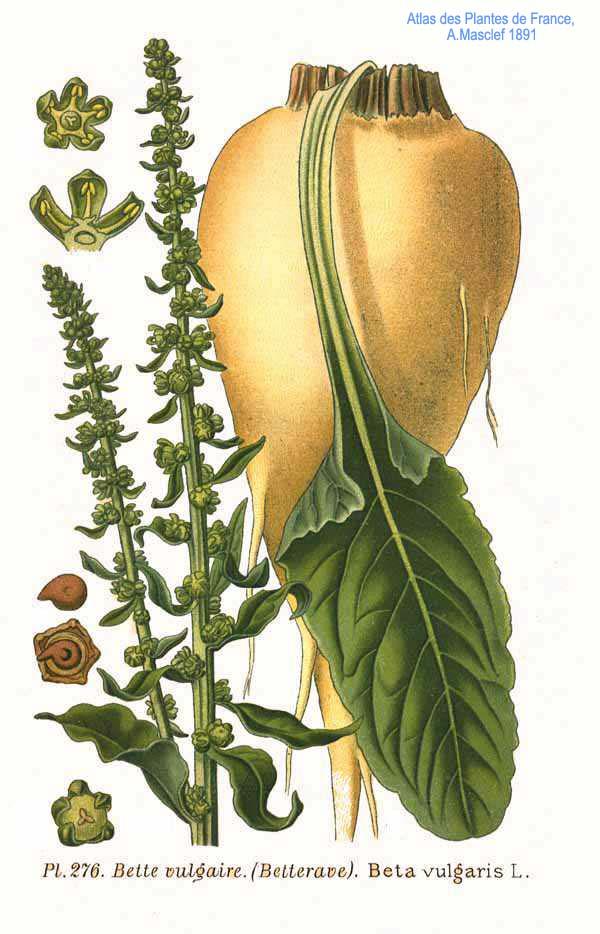
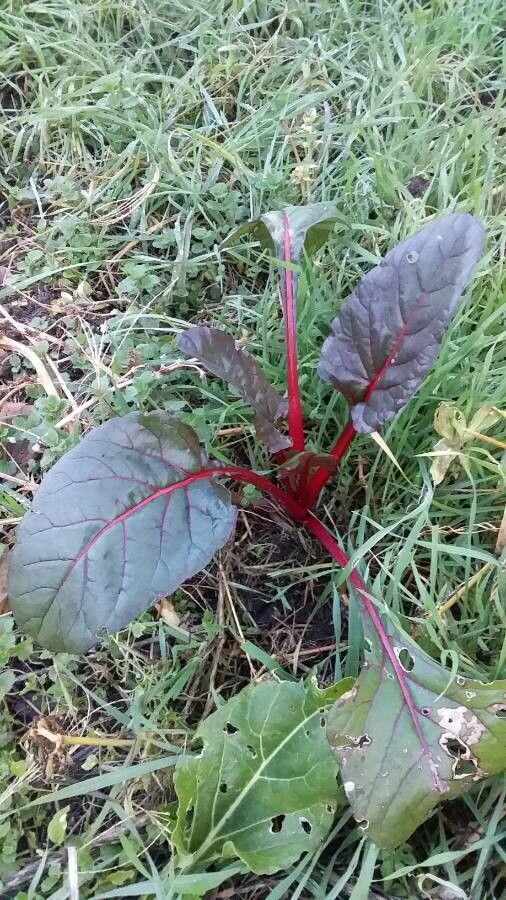
A table beet is most easily recognized by its single fleshy root, often dark red but sometimes white, yellow or ringed, depending on the cultivar. Above it sits a rosette of oval to heart-shaped leaves, dark green to reddish, on long and sometimes brightly colored stalks. 3 6
Red table beet flesh and juice leave strong red stains, a useful clue. In the Cicla Group, or chards, the foliage dominates instead: large leaves and white, yellow or bright red stalks stand above a slender, fibrous root. 7 5
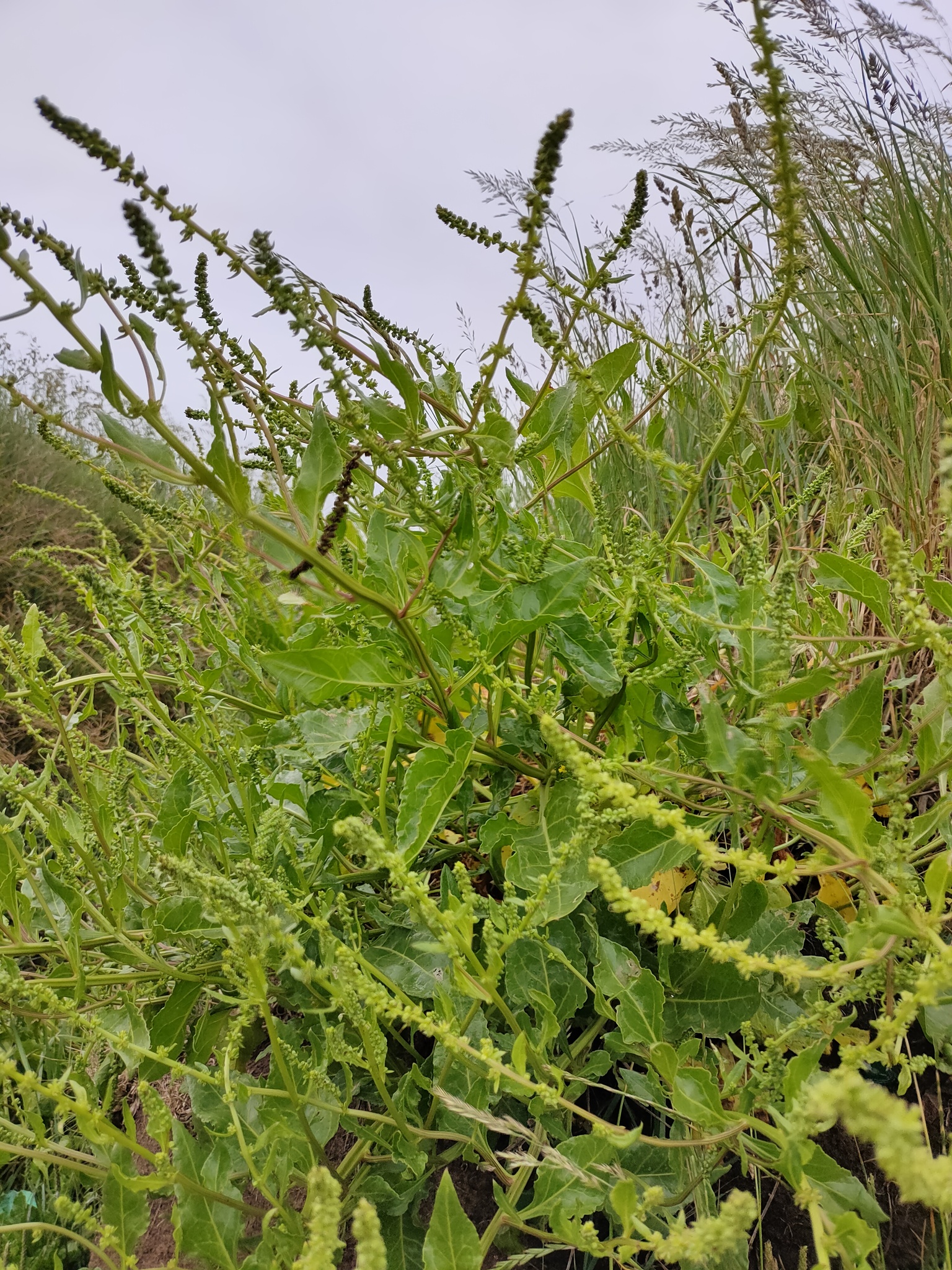
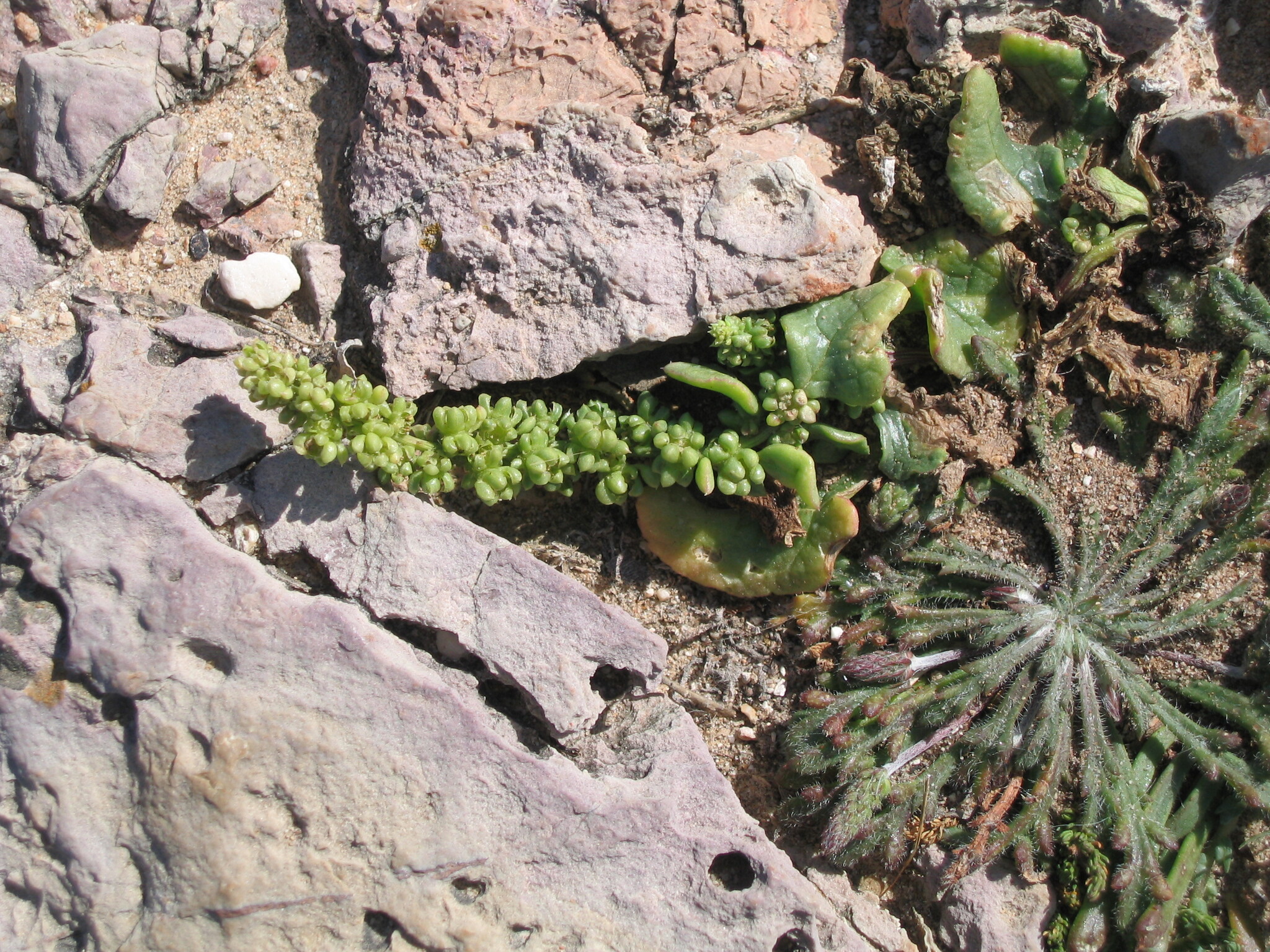
During its first year, beet stays low, around 20 to 50 cm (8 to 20 in) tall. If left in the ground for a second year, it produces an upright, branched flowering stem, sometimes more than 1 m (3 ft) tall, with small greenish flowers in clusters. 3 4
Useful taxonomy
The accepted scientific name, Beta vulgaris L., provides a consistent reference. Beet diversity falls into cultivar groups within one species, rather than separate species. Older names still circulate as synonyms or as the basis of these groups:
- Beta vulgaris subsp. vulgaris (accepted cultivated subspecies)
- Beta vulgaris var. maritima (L.) Moq. (sea beet)
- Beta vulgaris convar. cicla (L.) Alef. (chard)
- Beta vulgaris var. saccharifera Alef. (sugar beet)
- Beta vulgaris var. hortensis (Mill.) Alef. (garden beet)
Four main crop groups are useful in practice: Conditiva Group for table beet, Cicla Group for chard, Altissima Group for sugar beet, and a fodder group for livestock. These group names organize cultivated forms without creating new species. 1 7
Habitat and range
Wild sea beet (Beta vulgaris var. maritima) is the ancestor of cultivated beets. It grows on cool, well-lit shores in western Europe and the Mediterranean basin. The natural range of the species extends from the Azores through western Europe and the Mediterranean to India. 3 1
Gardeners and crop breeders selected this coastal plant for enlarged roots or abundant leaves. Beet is now cultivated on every temperate continent, in vegetable gardens and fields far beyond its Mediterranean and Atlantic homeland. 4 6
For garden growing, beet favors moist, deep, rich soil in full sun. Salt tolerance inherited from its coastal ancestor lets it grow in soils that hinder other vegetables. Waterlogging remains a problem, however, because it causes root rot. 5 3
Life cycle and reproduction
The biennial life cycle begins with a leaf rosette and storage of reserves in the root, the stage harvested in vegetable gardens. After a cold period, the plant bolts and flowers in its second year, then dies after fruiting. 3 4
Small greenish flowers form clusters along the flowering stem. Those clusters explain how the crop propagates: each dry unit often contains several seeds, so one sowing point produces a clump of seedlings that needs careful thinning. 6 5
Direct sowing takes place in spring to early summer, at 1 to 2 cm (0.4 to 0.8 in) deep in rows 25 to 30 cm (10 to 12 in) apart. Germination takes one to three weeks, depending on soil temperature, which should exceed about 7 to 10 °C (45 to 50 °F). Roots are harvested 8 to 12 weeks later, depending on the group; chard leaves can be picked progressively. Premature bolting often follows a cold spell affecting young plants and then a return to warm weather. 2 7
Uses and risks
Food production is the main use of Beta vulgaris. The root is eaten cooked or grated raw, and the leaves are cooked like spinach. Depending on the group, this species supplies table beet, colorful chard stalks, large fodder roots for livestock, or sugar. 4 5
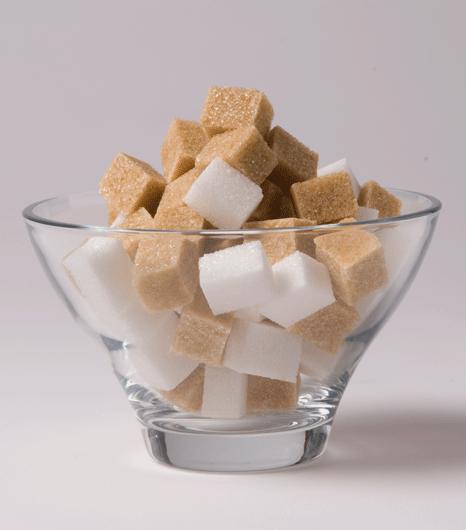
The sugar beet has a distinct industrial role. Selected to contain 16 to 20% sucrose in its root, it became a major field crop in temperate regions and supplies a large share of sugar produced from sources other than cane. 5 4
As a food plant, beet is nontoxic, including to cats, dogs and horses. The main caution concerns leaf oxalates, as in spinach: the leaves are useful greens, but moderation is advised for people prone to kidney stones. 5 7
Varieties, look-alikes and related plants
Commercial beets are cultivars arranged in groups, rather than separate species. Conditiva covers table beets, Cicla chards and Altissima sugar beets, alongside fodder beets. Selections such as Bull's Blood and Bright Lights are horticultural names for plants valued for both ornamental and edible qualities. 6 7
In vegetable gardens, the plants most likely to be confused are:
- Spinacia oleracea, spinach, another member of Amaranthaceae with oxalate-rich green leaves;
- Beta vulgaris var. maritima, wild sea beet, the ancestor of cultivated forms;
- young chard and table beet plants, which are difficult to distinguish before the root enlarges.
A fleshy root that stains red, a rosette of heart-shaped leaves and clustered seed units remain the most reliable clues that a plant belongs to Beta vulgaris. 3 1
Main sources
- Plants of the World Online / Kew, Beta vulgaris L.
- Royal Horticultural Society, beetroot - grow your own
- Missouri Botanical Garden, Beta vulgaris
- Encyclopaedia Britannica, beet (Beta vulgaris)
- Plants For A Future, Beta vulgaris
- NC State Extension, Beta vulgaris Garden Beet Group
- NC State Extension, Beta vulgaris Leaf Beet Group
Frequently asked questions
Is beet toxic to animals?
Beet is a food plant classified as nontoxic to cats, dogs and horses. The leaves contain oxalates and should be offered in moderation, while the root is a familiar, safe food.
Are beetroot, chard and sugar beet the same species?
Yes. They all belong to Beta vulgaris. Table beet, chard, sugar beet and fodder beet are cultivar groups selected for their roots, leaves or sugar.
Why are my beets bolting?
Bolting often follows a cold spell affecting young plants, followed by warmer weather. Sowing after hard frosts and watering regularly helps limit premature flowering.
Which parts of beet can you eat?
The fleshy root and leaves are edible. Table beet can be cooked or grated raw; chard leaves and stalks are cooked like spinach. Sugar comes from sugar beet.
Does beet contain a lot of sugar?
Beet roots are naturally rich in sugars. Sugar beet, selected to contain 16 to 20% sucrose, is used for industrial sugar production in temperate regions.
When should I sow beets outdoors?
Direct sow in spring to early summer when the soil warms above 7 to 10 °C (45 to 50 °F). Roots are harvested 8 to 12 weeks later, depending on the group and growing conditions.
Are beet and chard leaves rich in oxalates?
Yes. Like spinach, beet and chard leaves contain oxalates. They are useful green vegetables, but moderate consumption is advised for people prone to kidney stones.
Similar plants

If you are unsure about a plant’s toxicity, ask a botanist or veterinarian for advice.