
Poppy anemone (Anemone coronaria, )
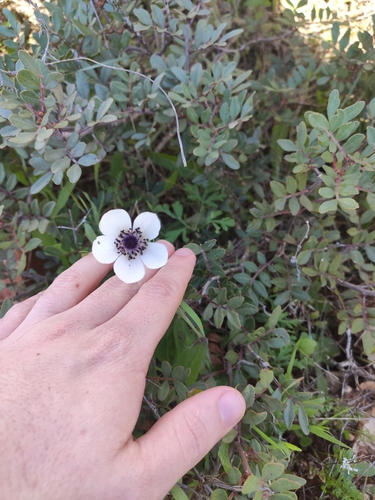
Poppy anemone (Anemone coronaria) is a tuberous perennial in the Ranunculaceae family, native to the Mediterranean region. Its large solitary spring flowers are bright red, blue-violet or white, usually with a dark center. De Caen and St Brigid selections are grown for borders and cut flowers; fresh plant tissue can cause irritation when handled.
Read morePoppy anemone, Crown anemone, Windflower and Spanish marigold
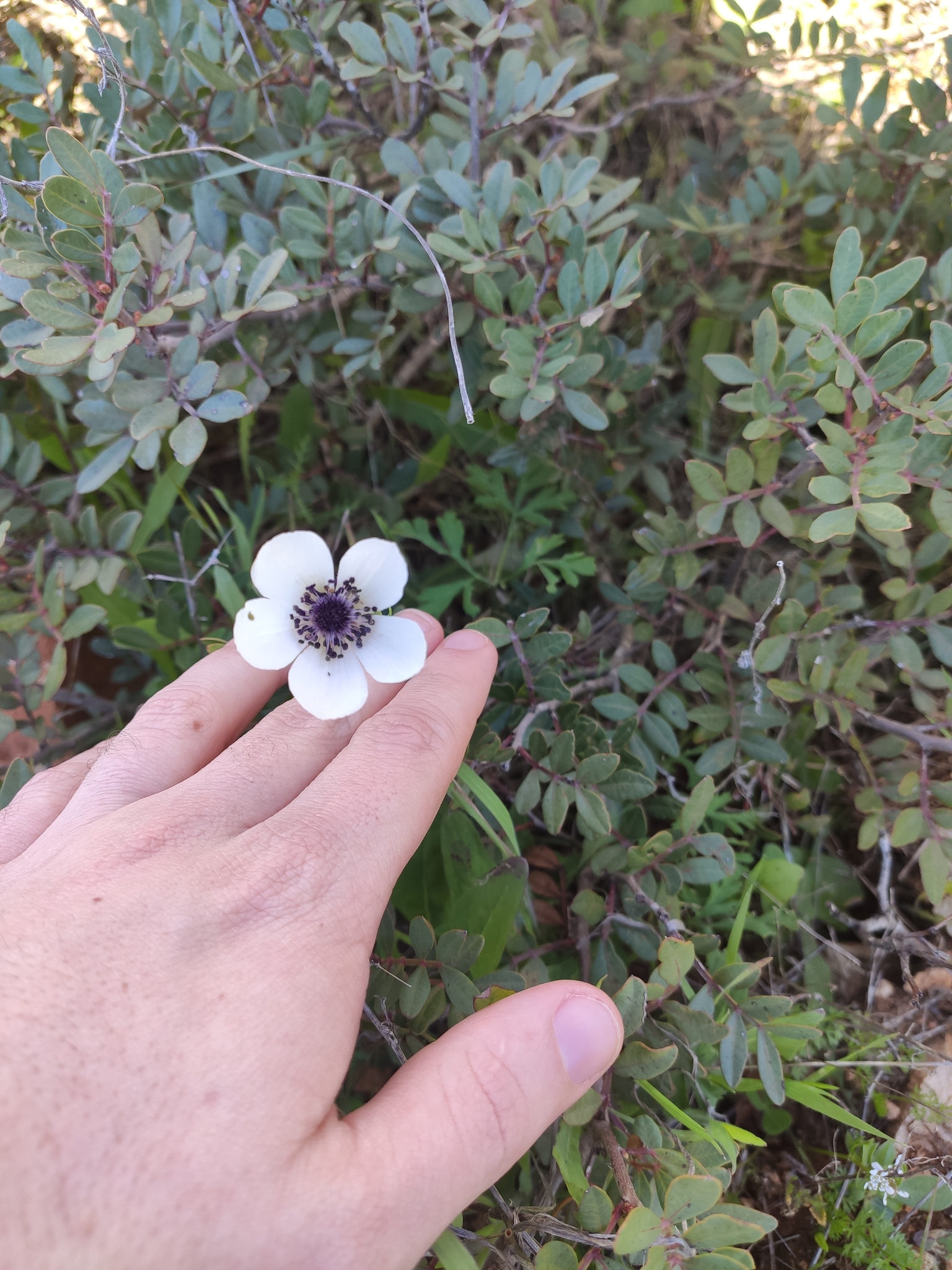


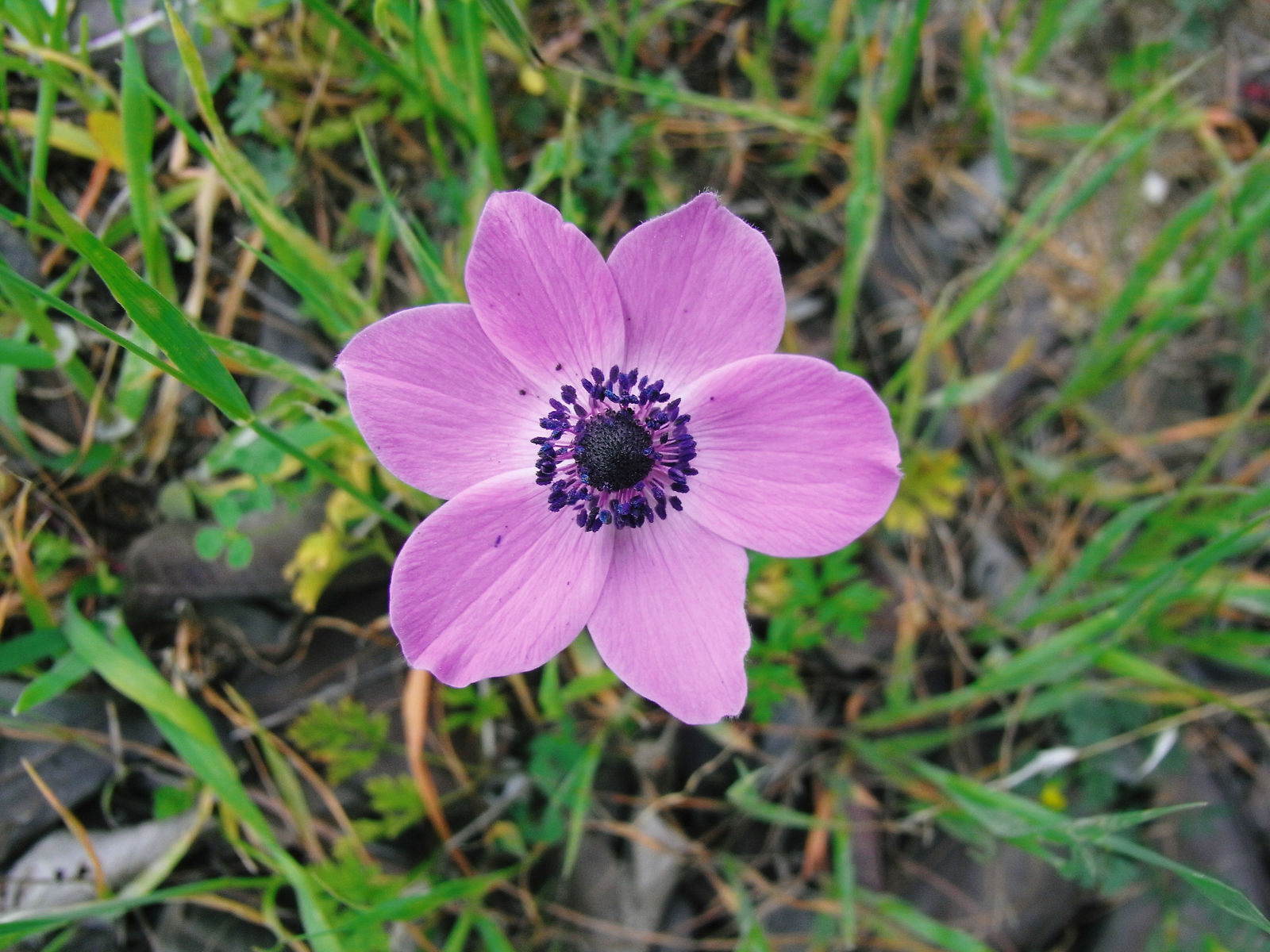
© photo
Gabriel Dixon · cc0
AnnieT39 · cc0
Eleftherios Katsillis · cc-by
Taken Apr 10, 2021 by Roberta Visconti (cc-by-sa)
Taken Apr 21, 2014 by Tela Botanica − Liliane Roubaudi (cc-by-sa)
Taken Feb 26, 2016 by Tela Botanica − Liliane ROUBAUDI (cc-by-sa)
Taken Mar 20, 2022 by Annemarie Ahrens-Stehle (cc-by-sa)
© copyright of the Board of Trustees of the Royal Botanic Gardens, Kew.


Global distribution
The native range of Anemone coronaria spans the Mediterranean region, from North Africa through southern Europe to western Asia, reaching western and southwestern Iran. Widely grown for cut flowers and borders, it has locally escaped or naturalized outside this range. Introduced populations must be distinguished from its native range.
- Native5
- Mediterranean France
- Italy
- Greece
- Israel
- Morocco
Hexagons: regions where the plant occurs. Green dots: native range.1
Identity
Poppy anemone (Anemone coronaria L., 1753), also known as crown anemone, is a tuberous perennial in the genus Anemone and the Ranunculaceae family. The epithet coronaria comes from Latin corona, meaning crown, referring to the collar of divided bracts surrounding the stem immediately below the flower. 1 4
Gardeners and florists recognize its large, solitary flowers in bright red, blue-violet or white, opening in spring. Horticultural selections grouped under De Caen and St Brigid make it one of the principal anemones grown as a cut flower. The same flower shapes and colors also provide its appeal in garden beds. 2 3
Recognition
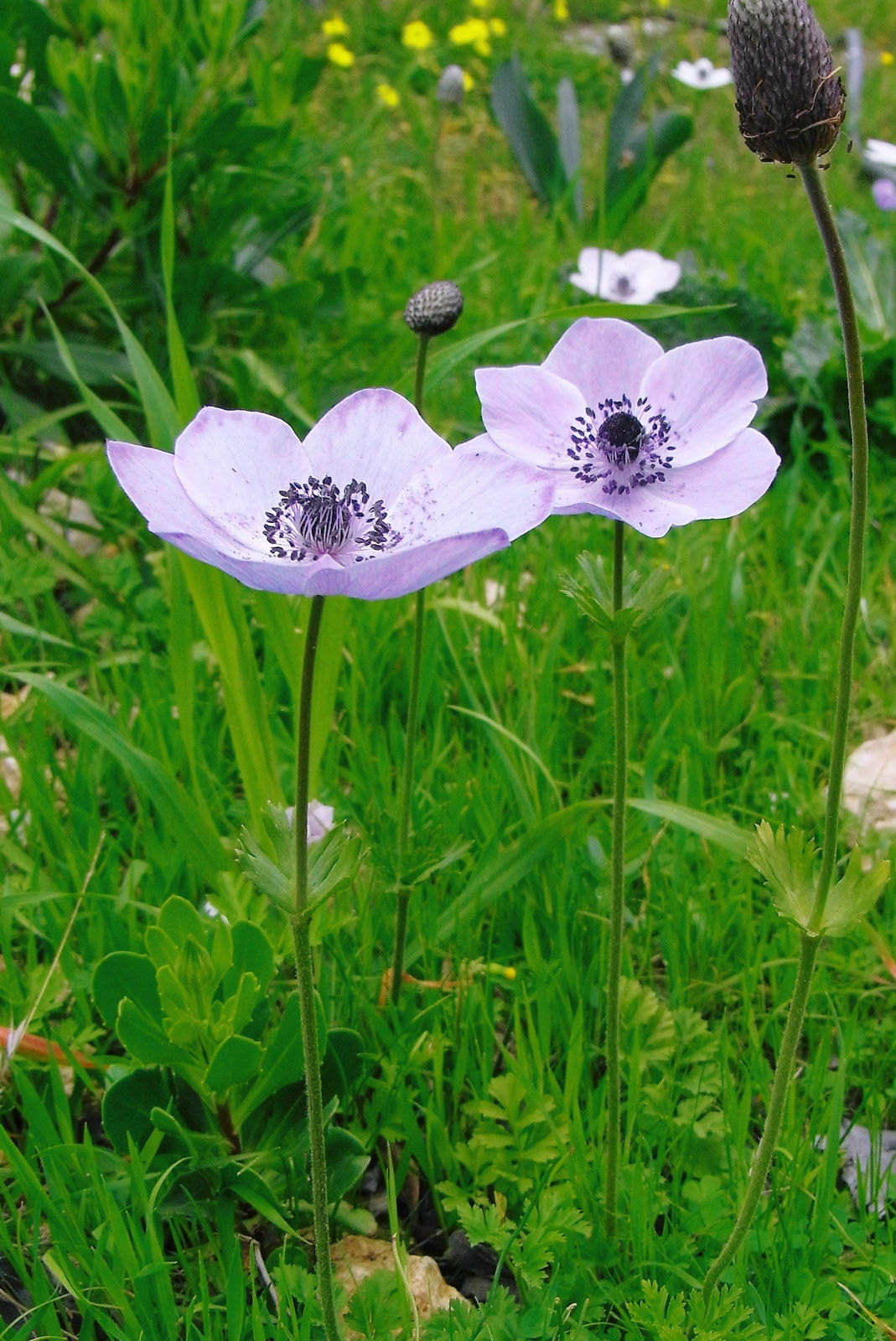
A small, irregular, blackish tuber produces a low plant each year, reaching 15–45 cm (6–18 in) tall. Dark green leaves are deeply cut into narrow segments and grouped into a basal rosette, giving the foliage a finely divided appearance beneath the much larger flowers. 3 2
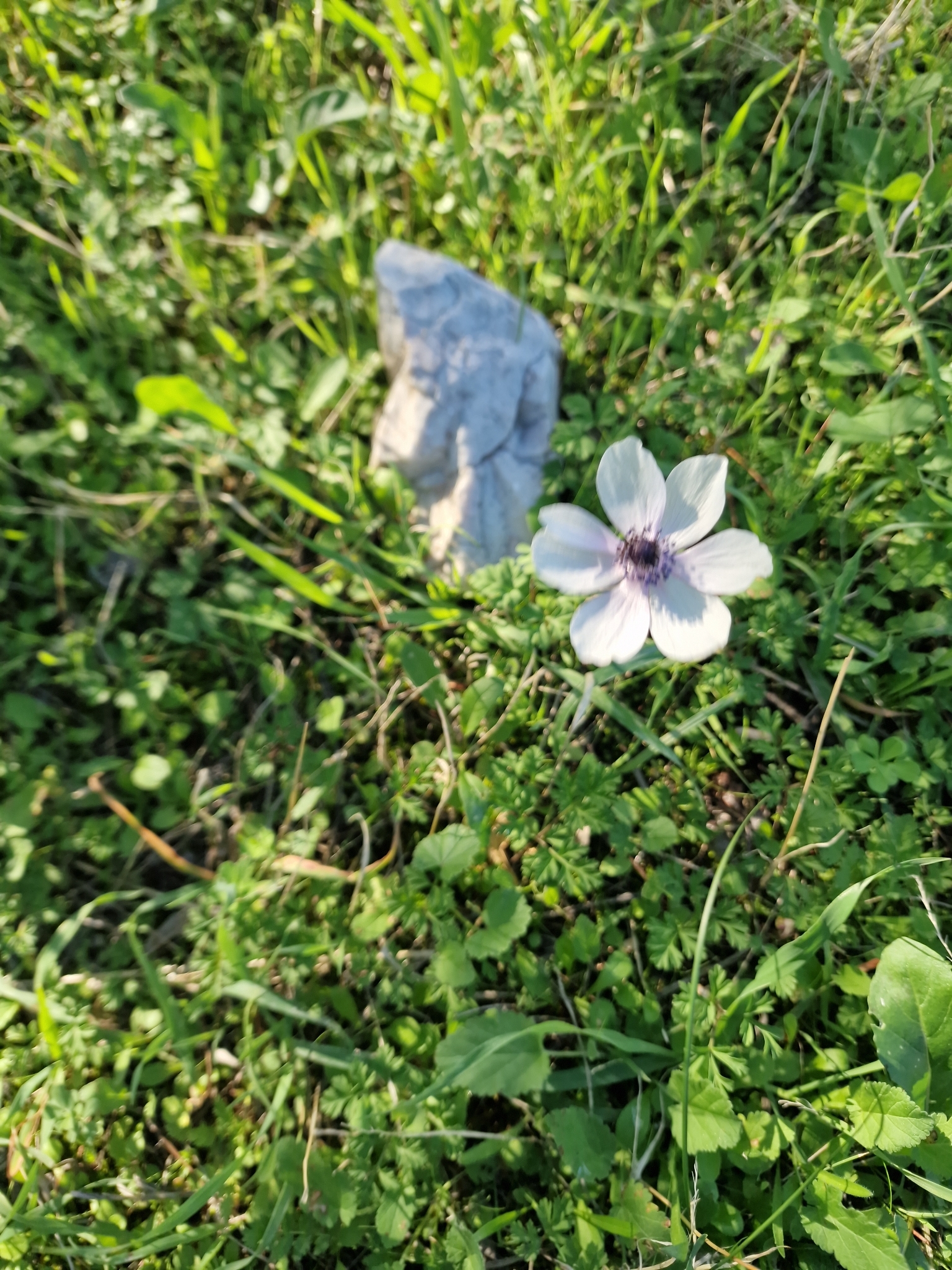
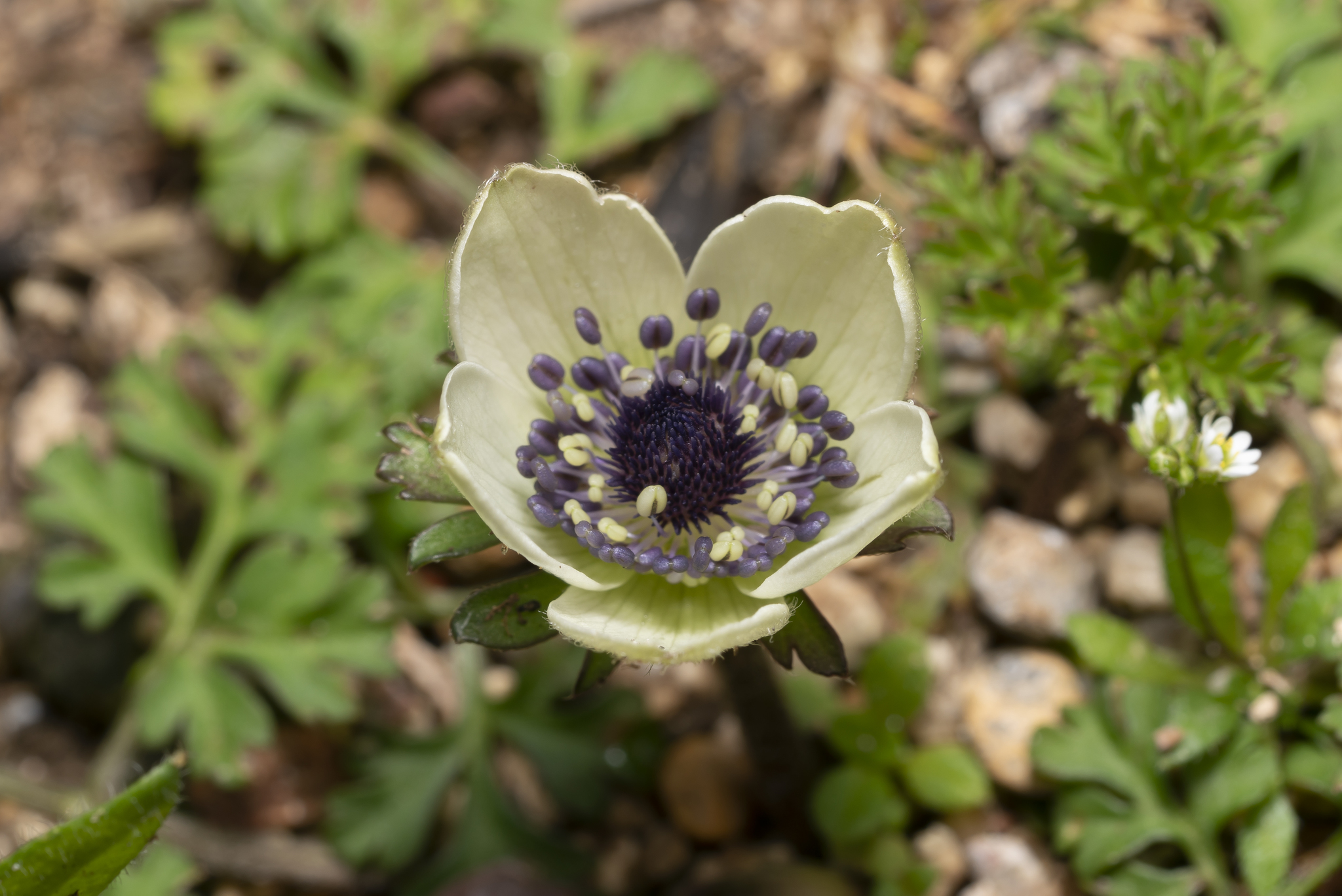
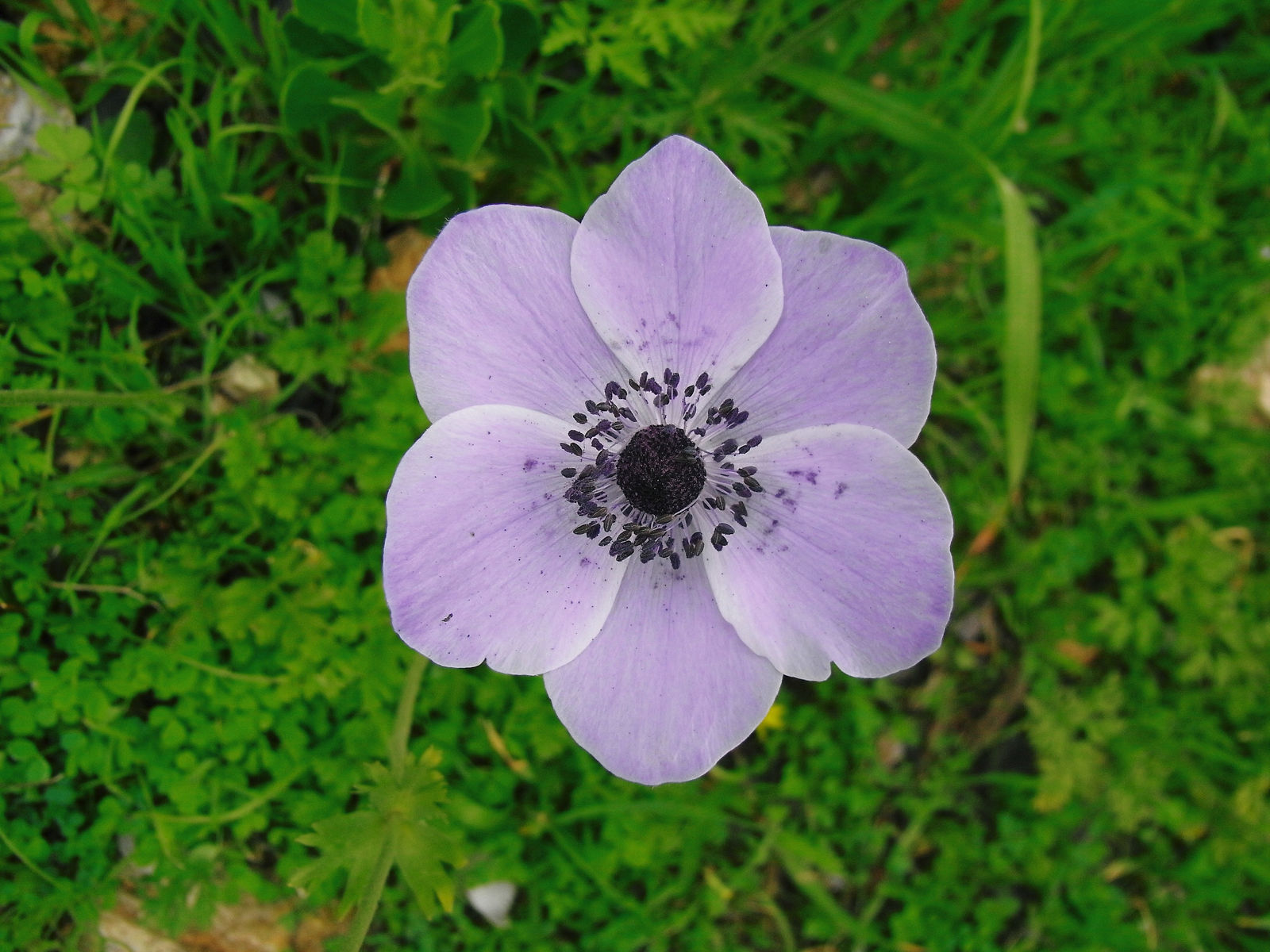
The most distinctive feature is a solitary bloom 4–7 cm (1.5–3 in) across, held on an upright stem with a collar of deeply divided bracts. Usually five to eight colored tepals surround a dark center of stamens. This combination of broad colored segments and dark center gives the flower its poppy-like appearance. 2 3
Flowers may be single or double depending on the horticultural group, with a wide range of vivid colors. Once flowering ends, leaves turn yellow and the visible plant disappears as the tuber enters summer dormancy. Its disappearance after blooming is part of the normal cycle rather than evidence that the perennial has necessarily died. 4 5
Useful taxonomy
Linnaeus described this species as Anemone coronaria L. in 1753. Many species belong to Anemone, and older names based on Mediterranean varieties and forms still occur in botanical literature. The following synonyms help connect those historical references with the name in current use:
- Anemone coronaria var. cyanea (Risso) Ardoino, a historical variety name;
- Anemone coronaria var. coccinea (Jord.) Nyman, another older varietal combination;
- Anemone coronaria var. alba Burnat, a name found in older treatments;
- Anemone coronaria var. parviflora (Boiss.) Sinno, a historical botanical variety;
- Anemone coronaria subsp. ventreana (Hanry) Arcang., an older subspecific combination.
The accepted scientific name Anemone coronaria provides the stable reference. Group names such as De Caen and St Brigid describe sets of horticultural selections within the species, rather than separate species or distinct botanical varieties. That distinction is useful when comparing garden labels with a flora or taxonomic database. 1 7
Habitat and range
Mediterranean landscapes form Poppy anemone's native range, extending from North Africa through southern Europe into western Asia, as far as western and southwestern Iran. It grows in scrub, dry grasslands, olive groves and rocky places where soils drain well. 1 3
Like many Mediterranean plants with underground storage organs, it follows a dry-summer rhythm. Autumn and winter rainfall support growth and flowering; summer drought coincides with the resting stage. Its preference for well-drained soil and a dry summer is therefore central to garden cultivation, particularly where summer conditions differ from those of its native habitat. 2 5
Extensive cultivation for cutting and spring borders has led to occasional escapes and locally naturalized populations beyond the native range. Those introduced occurrences need to be distinguished from the Mediterranean area in which Poppy anemone occurs naturally. 6 7
Life cycle and reproduction
Cool-season growth and summer rest define this tuberous perennial. Leaves and flowering stems emerge from the tuber in the cooler season, flowers open in spring, and foliage then dries as the tuber rests through summer. In mild climates, tubers are commonly planted in autumn; in colder regions, early spring planting is used instead. 2 3
The flowers lack true nectaries, attracting insects mainly through abundant pollen and vivid colors early in the season. Fertilized flowers develop small, woolly achenes grouped into a cottony head. These dry fruits contain the seeds used for sexual reproduction. 4 5
For gardeners, the simplest propagation method is tuber division after summer dormancy. Sowing achenes in autumn is possible but slow and irregular. Seedlings from horticultural selections do not reliably repeat the parent's flower color or form. Because tubers are not especially long-lived, many gardeners replace them regularly and treat the plant almost as an annual. 2 3
Uses and risks
Spring borders, well-drained rock gardens and flower arrangements are the main settings for Poppy anemone. De Caen and St Brigid selections supply much of the cut-flower market, where their early flowering and clear, bright colors make them useful for bouquets. 2 3
Fresh tissue contains protoanemonin, an irritant released when it is crushed or chewed, as in other Ranunculaceae. Sap contact can cause skin redness and irritation; ingestion can irritate the mouth, increase salivation and cause digestive upset. Caution applies to cats, dogs, horses and humans alike. Handle tubers and cut stems carefully, keeping the distinction between an ornamental plant and an edible crop clear. 5 6
The main cultivation problem is tuber rot. Excess water, particularly during summer dormancy, can destroy the underground storage organ. Good drainage, a dry summer resting period and dry storage of lifted tubers after flowering are the principal ways to limit that problem. 2 5
Varieties, look-alikes and related plants
Commercial selections belong to the same species. The De Caen group includes large, single flowers of one color, especially popular for cutting. St Brigid selections bear double or semi-double flowers with a bushier habit. Names such as Mister Fokker, Hollandia, The Bride and Lord Lieutenant identify particular color selections within these groups. 2
Related Mediterranean anemones can cause identification problems:
- Anemone hortensis, a Mediterranean species with pink to mauve flowers;
- Anemone pavonina, a close relative long confused with Poppy anemone;
- Anemone blanda, a lower-growing plant with small, star-shaped flowers in late winter.
A large solitary flower with a dark center, a collar of deeply divided bracts, and growth from a tuber remain the most useful combined features for confirming that a plant sold as Poppy anemone is Anemone coronaria. 3 1
Main sources
Frequently asked questions
Is Poppy anemone poisonous?
It requires caution. Like other Ranunculaceae, Anemone coronaria contains protoanemonin, an irritant released by fresh tissues. Ingestion or contact with sap can cause mouth or skin irritation and digestive upset in humans and animals.
When should Poppy anemone tubers be planted?
In mild climates, plant in autumn for spring flowers. In colder regions, plant in early spring for early-summer flowering. Soak the tubers for a few hours before planting them 3–5 cm (1–2 in) deep.
Why does my Poppy anemone disappear after flowering?
This is its natural cycle. Anemone coronaria becomes dormant in summer: leaves yellow and dry while the tuber rests. It resumes growth the following season if the soil stays dry during summer.
How do De Caen and St Brigid anemones differ?
The De Caen group has large single flowers of one color, ideal for cutting. St Brigid has double or semi-double flowers and a bushier habit. Both groups derive from Anemone coronaria.
Is Poppy anemone hardy?
Established plants tolerate moderate frost, roughly −10 to −15 °C (14–5 °F), corresponding to USDA zones 7–10. In colder climates, mulch or spring planting is advisable.
Can Poppy anemone grow in a container?
Yes. Use a deep, well-drained container with a sandy growing medium. Place it in full sun, water during active growth and keep the medium dry during the tuber’s summer dormancy.
Which plants resemble Poppy anemone?
The main look-alikes are Anemone hortensis and Anemone pavonina, related Mediterranean anemones with colorful flowers. The deeply divided collar of bracts and numerous tepals help identify Poppy anemone.
Similar plants

If you are unsure about a plant’s toxicity, ask a botanist or veterinarian for advice.