
Common pawpaw (Asimina triloba, )
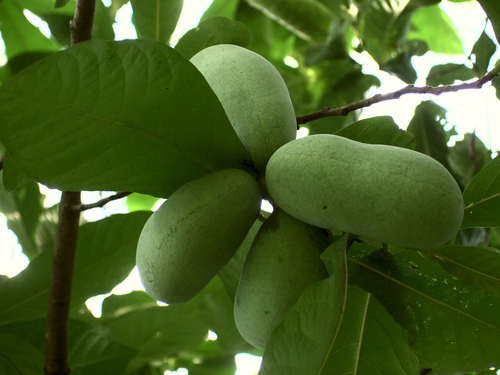
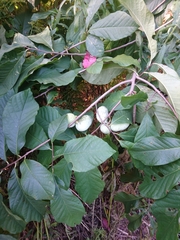
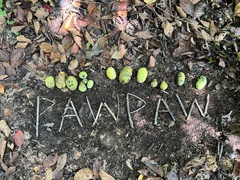
Common pawpaw (Asimina triloba) is a small deciduous fruit tree in the Annonaceae family, native to eastern North America. It bears the continent's largest native edible fruit, with fragrant, creamy flesh. Flies and beetles pollinate its purple flowers, and root suckers readily form woodland colonies.
Read moreCommon pawpaw, Pawpaw, American pawpaw and Dog-banana



© photo
(c) Wendell Smith, some rights reserved (CC BY) · cc-by
S Brian Treelife · cc0
Carrie Seltzer · cc0
Taken May 31, 2021 by Player 3T6 (cc-by-sa)
Taken Mar 23, 2020 by Silas Silas (cc-by-sa)
Taken Sep 24, 2020 by Cynthia Perdue (cc-by-sa)
© copyright of the Board of Trustees of the Royal Botanic Gardens, Kew.




Global distribution
Asimina triloba is native to eastern North America, from southeastern Canada to the central and eastern United States. It grows in the understory of moist deciduous forests, valley bottoms, cool ravines and along watercourses. It is the only species in its family, Annonaceae, to grow and fruit outside tropical climates.
- Native2
- Eastern United States
- Canada (Ontario)
Hexagons: regions where the plant occurs. Green dots: native range.1
Identity
Common pawpaw (Asimina triloba (L.) Dunal, 1817), also called pawpaw, American pawpaw or dog-banana, is a small deciduous fruit tree in the Annonaceae family and genus Asimina. It is the only species in its family to grow and fruit outside tropical climates, unlike its tropical relatives such as soursops and cherimoyas. 1 5
Eastern North America is home to the pawpaw, best known for producing the continent's largest native edible fruit. The creamy flesh tastes of banana and mango, giving this hardy temperate tree a distinctly tropical flavor. 5 7
Recognition
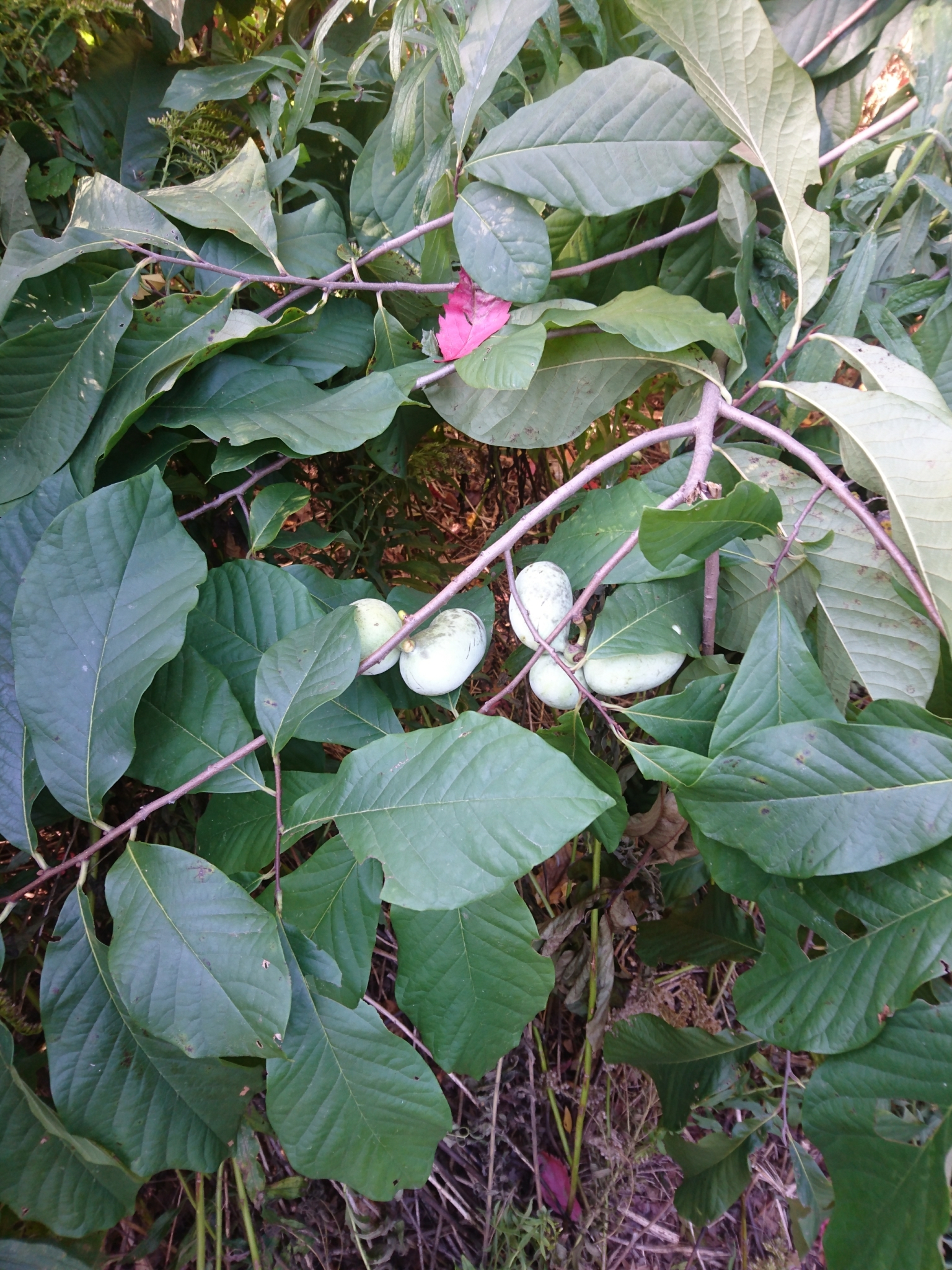
Large, obovate leaves provide an early clue to identification. Measuring 15 to 30 cm (6 to 12 in) long, they hang in clusters at branch tips and smell of green pepper when crushed. The foliage turns pale yellow in fall, brightening the woodland understory where dense groves often form. 4 3
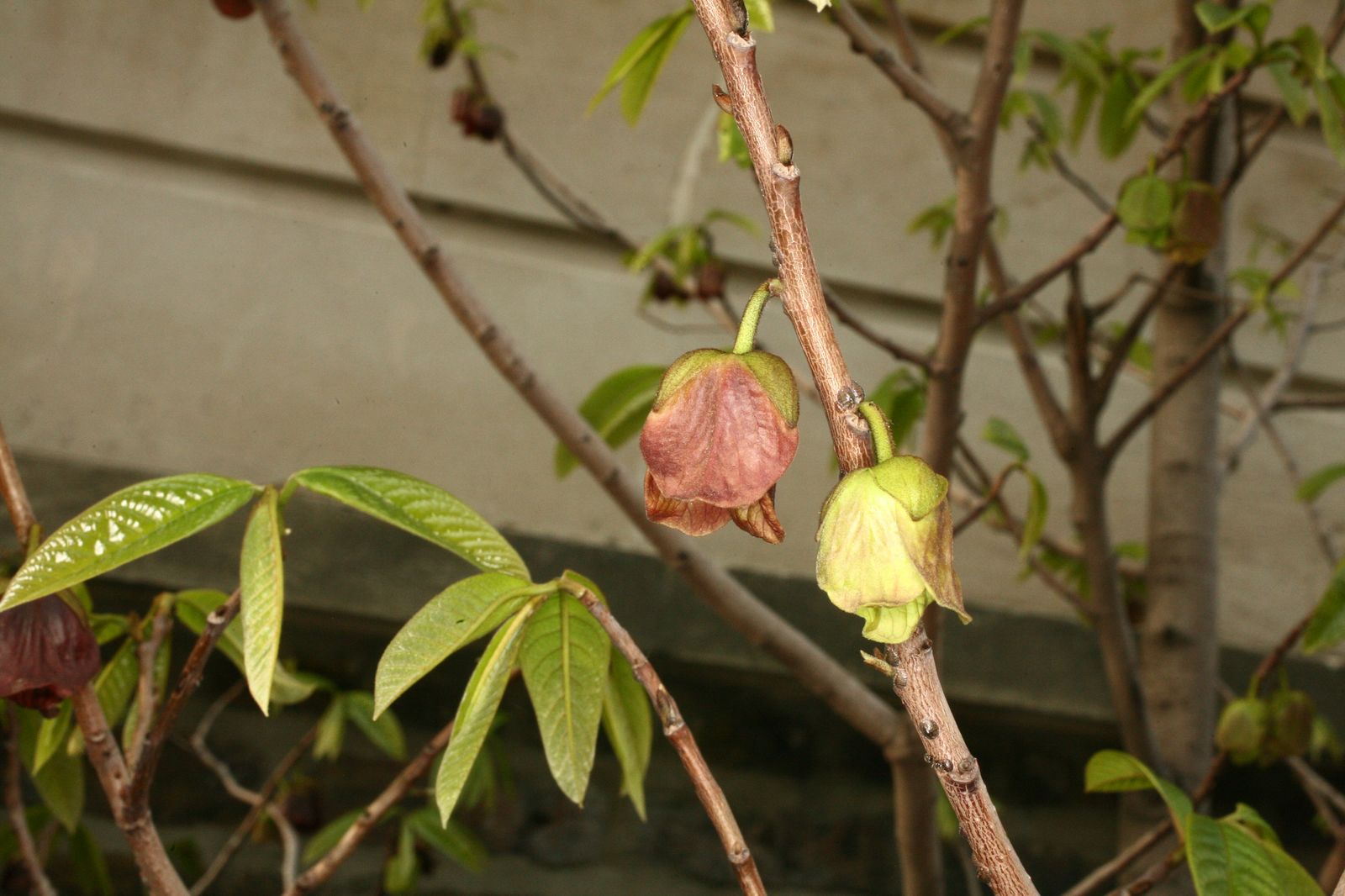
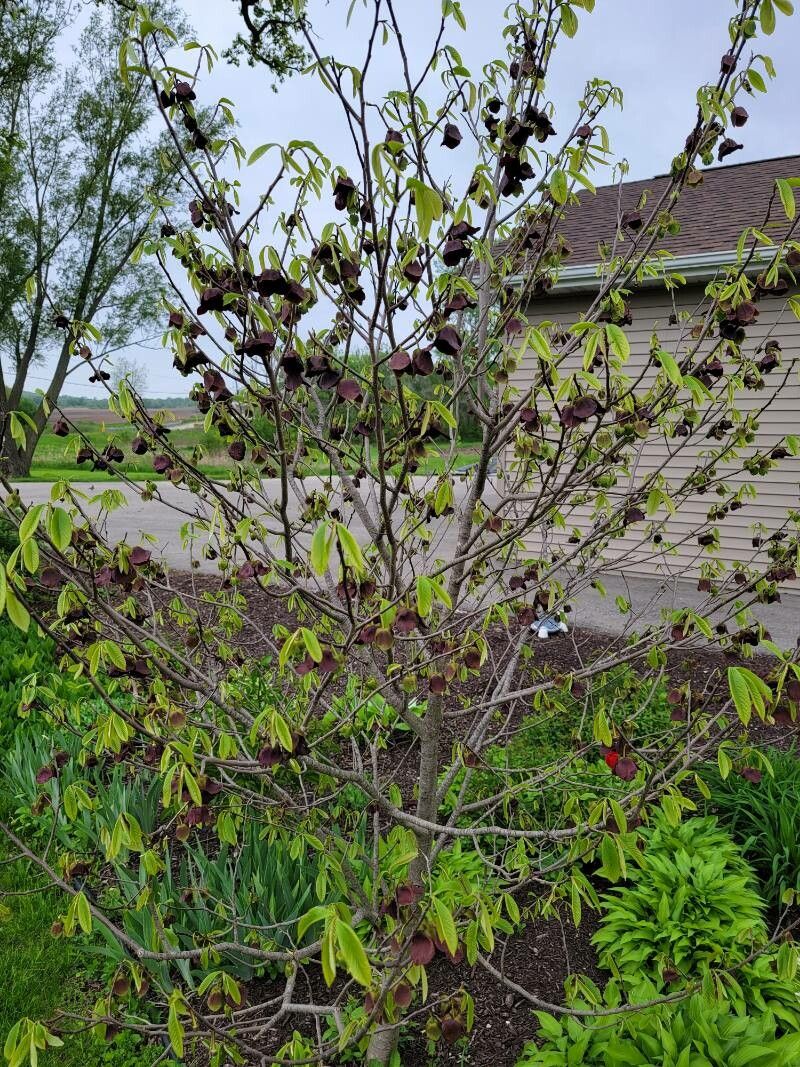
Before or during spring leaf emergence, purple cup-shaped flowers appear, with three green sepals and six purple-brown petals in two rows. Their faint, unpleasant scent attracts flies and beetles, rather than bees, as pollinators. 3 6
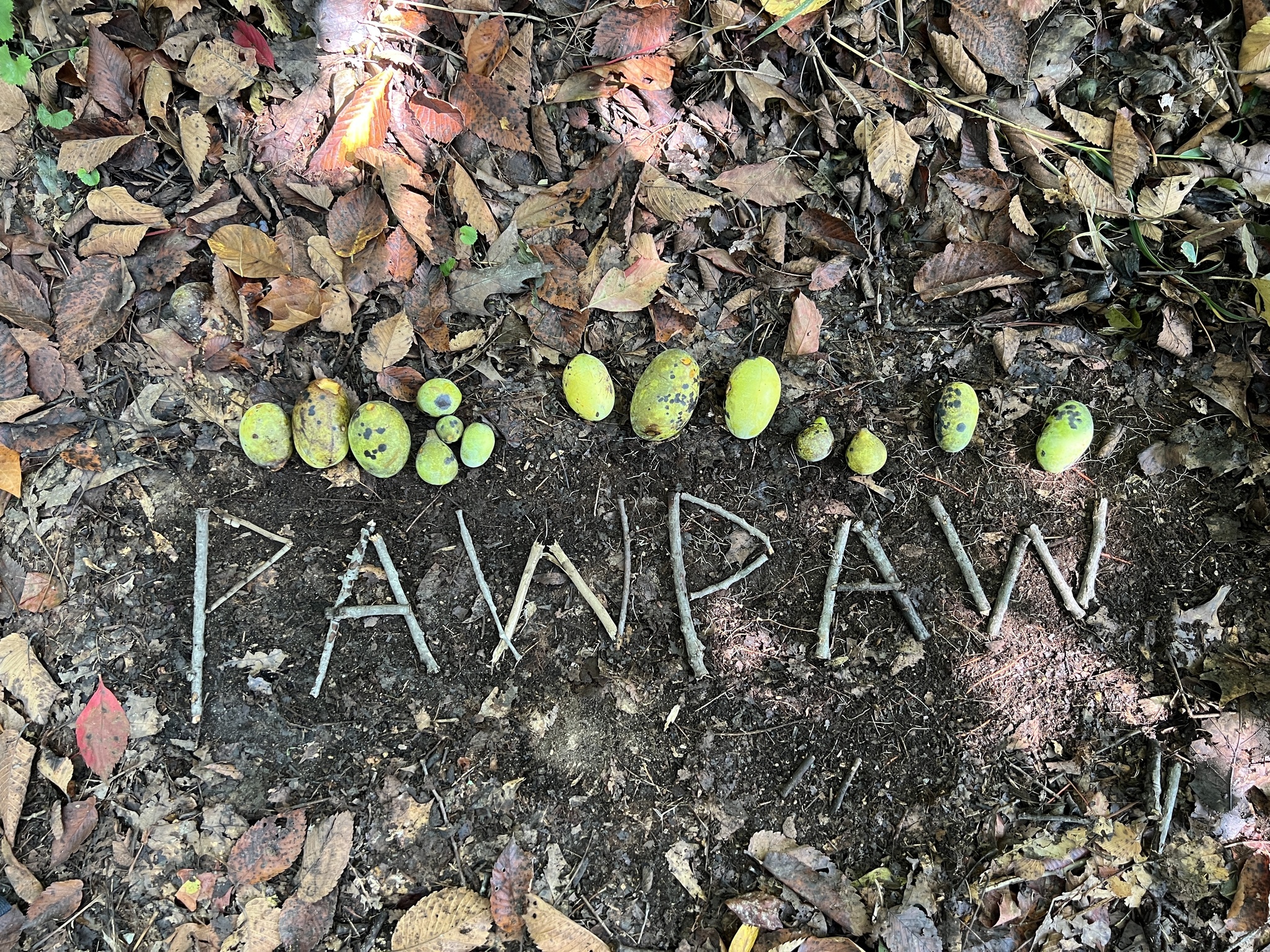
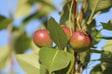
Each fruit is a large fleshy berry, 6 to 15 cm (2.4 to 6 in) long, initially green and turning yellow then brown as it ripens. Soft, creamy flesh surrounds large brown seeds. The pyramidal tree reaches 4 to 10 m (13 to 33 ft) and is often surrounded by root suckers. 2 4
Useful taxonomy
Dunal published the combination Asimina triloba (L.) Dunal in 1817 from a Linnaean basionym, and Plants of the World Online retains this accepted name. The epithet triloba refers to the flower's three sepals. Historical names associated with this species include:
- Annona triloba L. (botanical synonym)
- Porcelia triloba (L.) Pers. (botanical synonym)
- Uvaria triloba (L.) Torr. & A.Gray (botanical synonym)
- Asimina triloba var. typica (botanical variety)
The basionym Annona triloba illustrates its taxonomic history: first placed in Annona, the tree was later transferred to the North American genus Asimina. The accepted scientific name remains the stable reference, while cultivated names such as Sunflower and Overleese identify horticultural selections rather than separate botanical species. 1 5
Habitat and range
From southeastern Canada through the central and eastern United States, common pawpaw occupies the eastern North American forest understory. It grows in moist deciduous woodland, valley bottoms, cool ravines and along watercourses on deep, moist, well-drained soil. 3 4
Root suckering readily produces colonies descended from a single tree within its native range, making pawpaw a characteristic grove-forming woodland plant. Its hardiness, around USDA zones 5 to 9, allows it to withstand cold winters, unlike its tropical relatives. 4 6
Gardeners beyond the native range grow common pawpaw as an unusual fruit tree in several temperate regions, including Europe and Japan, where enthusiasts plant selected cultivars. These cultivated trees should be distinguished from wild North American populations. 2 7
Life cycle and reproduction
Purple flowers open in spring, often before the leaves have fully expanded. Common pawpaw is usually self-incompatible and protogynous: a single tree rarely sets fruit, and a second genetically different tree is needed for cross-pollination by flies and beetles. 3 6
Successful fertilization produces large fleshy fruit that ripens from late summer to early fall, often falling when fully ripe. Large brown seeds germinate after a cold period. Emergence is slow and irregular, and seedlings do not faithfully reproduce the parent cultivar. 2 7
Growers propagate pawpaws from fresh, cold-stratified seed, by grafting a named cultivar onto a young rootstock, or by separating root suckers around a tree. Seed-grown plants take five to eight years to produce their first fruit, depending on conditions. 6 4
Uses and risks
Fruit is the tree's principal use. Ripe flesh can be eaten raw with a spoon or used in ice cream, purées and desserts; its banana-and-mango flavor attracts enthusiasts. The fruit bruises easily and stores poorly, limiting its success as a mass-market commercial crop. 5 7
Edibility does not extend to every part. The seeds and fruit skin contain Annonaceae acetogenins, compounds with neurotoxic and emetic effects. Eating them causes digestive upset, and some people develop a skin reaction when handling fruit. Leaves and bark also contain acetogenins with insecticidal properties. Eat only ripe flesh, discard seeds and skin, and keep the fruit away from cats, dogs and horses. 6 4
Varieties, look-alikes and related plants
Named cultivars are selections developed by enthusiasts and university programs, rather than separate species. Sunflower and Overleese are among the best known; Susquehanna and Shenandoah were selected for large, fleshy fruit with relatively few seeds. Plan for a second compatible pollinating tree before buying.
Likely look-alikes include other Annonaceae and an unrelated plant that shares a common name:
- Asimina parviflora, the dwarf pawpaw of the southeastern United States, with smaller fruit;
- Asimina incarna, a related species of sandy soils in the Southeast;
- Carica papaya, the unrelated tropical papaya, also called pawpaw in English.
Obovate leaves with a green-pepper scent, purple spring flowers and large creamy-fleshed fruit are the most useful combined features for identifying Asimina triloba. 4 1
Main sources
- Plants of the World Online / Kew, Asimina triloba (L.) Dunal
- Royal Horticultural Society, Asimina triloba - pawpaw
- Missouri Botanical Garden, Asimina triloba
- NC State Extension, Asimina triloba (Pawpaw)
- Encyclopaedia Britannica, pawpaw (Asimina)
- Plants For A Future, Asimina triloba
- Kentucky State University, Pawpaw description and nutritional information
Frequently asked questions
Can you eat common pawpaw fruit?
Yes. The ripe flesh is edible and prized for its creamy banana-and-mango flavor. Seeds and skin contain acetogenins and can cause digestive upset, so eat only the flesh and discard seeds and skin.
Why is my common pawpaw not producing fruit?
The species is usually self-incompatible, so a single tree rarely sets fruit. Plant a second, genetically different pawpaw nearby to allow insects to cross-pollinate the flowers.
What pollinates common pawpaw?
The purple flowers have a faint, unpleasant scent that attracts flies and beetles, their natural pollinators. Pollination is often irregular, explaining poor crops when no suitable pollinating tree grows nearby.
What soil and light does common pawpaw need?
It needs deep, moist, rich, well-drained soil, preferably acidic to neutral. Young trees prefer partial shade; adults fruit better in full sun. Avoid waterlogged soil and prolonged drought.
Is common pawpaw invasive in a garden?
It is not classified as invasive, but produces abundant root suckers that form colonies around the parent tree. Regularly remove excess suckers to contain it.
How big does common pawpaw get?
It is a small tree, 4 to 10 m (13 to 33 ft) tall, often about 5 to 6 m (16 to 20 ft) in cultivation, with a spread of 3 to 8 m (10 to 26 ft). It has a pyramidal habit and readily forms a grove through root suckering.
What plants look like common pawpaw?
Confusion mainly involves other Asimina species from the southeastern United States and the unrelated tropical papaya, which also goes by the English name pawpaw.
Similar plants
If you are unsure about a plant’s toxicity, ask a botanist or veterinarian for advice.