
Tuberous begonia (Begonia × tuberhybrida, )


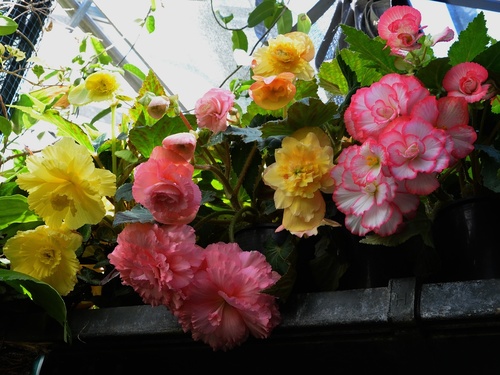
Tuberous begonia (Begonia × tuberhybrida) is a horticultural group of hybrid begonias grown for large single or double summer flowers in pots, planters, hanging baskets and bright shade beds. Unlike foliage begonias, these plants grow from a tuber started in spring and stored dry and frost-free through winter.
Read moreTuberous begonia, Hybrid tuberous begonia, Tuberous hybrid begonia, Tuberhybrida begonia and Begonia Tuberhybrida Group
Place in indirect light or in a shaded room.
Bright partial shade, gentle morning or evening sun; avoid scorching full sun


© photo
Wikimedia Commons · CC BY-SA or Public Domain
Global distribution
Begonia × tuberhybrida is a horticultural group, not a wild species. It is grown worldwide in temperate regions with frost-free winter storage; its botanical ancestry traces to Andean Begonia species.
- Cultivated5
- Andean region
- Mainland France
- United Kingdom
- United States
- Japan
Hexagons: regions where the plant occurs. Green dots: native range.↗
Identity
Tuberous begonia (Begonia × tuberhybrida) denotes a horticultural group of hybrid begonias in the Begoniaceae family. It is not a wild species with a single native range. Instead, the name brings together garden plants bred for large flowers and a dormant tuber, distinguishing them from begonias grown chiefly for foliage or persistent indoor growth. 1 4
Genus-level features still help identify these plants: asymmetric leaves, fleshy stems and separate male and female flowers on one plant. Begonia as a whole has tropical and subtropical origins. The more specific name Begonia × tuberhybrida matters when choosing a plant described as having tubers to start in spring or a summer display for a balcony planter. 5 6
Plant labels use several related names, including hybrid tuberous begonia, tuberous hybrid begonia, tuberhybrida begonia, Begonia × tuberhybrida and Begonia Tuberhybrida Group. These are horticultural descriptions. They should not be interpreted as the name of a single wild botanical species comparable to one recorded in a native flora. 1 7
Recognition
A flattened, often concave tuber is the main recognition feature. At spring planting, place the hollow side upward with only a light covering of growing medium. Young shoots are fleshy and brittle. Move plants outside gradually after the last frost risk, rather than exposing newly started growth abruptly to outdoor conditions. 2 7
Asymmetric leaves, succulent stems and separate male and female flowers retain the familiar features of the genus. The annual rhythm distinguishes tuberous begonias from Rex or cane types: aboveground growth dies away at the end of the season, and the tuber stores the reserves that support growth in the next growing season. 6 4
Large flowers provide the second conspicuous clue. Depending on the series, blooms can be single, semi-double or double, and the plant may grow upright or trail. Colors include white, yellow, orange, pink and red. Trailing forms are commonly sold for hanging baskets, while compact forms suit containers and beds where the soil stays moist. 1 7
Planting and cultivation
Bright partial shade suits tuberous begonia better than strong full sun. An east- or west-facing balcony receiving three to five hours of gentle sunlight matches its common use in planters. Scorching sunlight marks tender leaves, wilts flowers and dries containers rapidly. The useful distinction is between mild morning or evening sun and intense exposure during the hottest hours. 2 1
Rich, humus-filled but freely draining growing medium supports flowering. Water regularly during active growth, while remembering that the tuber can rot in compacted medium or a pot left standing in a full saucer. A practical approach is to water when the surface starts to dry and then let excess water drain away completely. 2
Wind exposure is easy to underestimate. Fleshy stems and sometimes heavy flowers can tear or break, especially in exposed hanging baskets. A sheltered position and a stable planter help protect the display. Removing spent flowers also helps maintain its ornamental effect through the growing season, alongside the appropriate light and watering conditions. 1
Balcony combinations work best when neighboring plants share the tuberous begonia's need for moisture and shelter. Fuchsia, impatiens or heuchera fit that setting better than lavender, gaura or succulents that prefer drier, sunnier conditions. Keep the root ball evenly moist during the flowering season; abrupt swings between a dry root ball and a water-filled saucer cause problems. 1 2
Overwintering the tuber
Frost sensitivity determines winter handling. As temperatures cool, leaves yellow and growth slows; reduce watering, then lift the tuber or move the pot to a frost-free place. Allow the tuber to dry gradually before storage. Enclosing it while still wet creates conditions for decay rather than a sound winter rest. 2 7
Stored tubers should feel firm through winter, neither soft nor dried to a hollow shell. A dry, airy storage medium in a cool frost-free room helps limit mold. At spring restart, select firm tubers with visible buds. These simple checks matter more than the absence of leaves, because leaf loss itself belongs to the normal dormant cycle. 1
Dormancy separates Begonia × tuberhybrida from begonias kept as permanent leafy houseplants. A summer planter can therefore appear empty in winter while the tuber is still alive in storage. The disappearance of its stems and foliage is part of the tuberous group's normal rhythm, rather than automatic evidence that the plant has died. 4
Restart growth gradually in a bright frost-free place. Starting a tuber too early in a warm room can produce long, fragile shoots before outdoor light levels are adequate. Harden plants off before their final outdoor placement. This transition encourages sturdier stems and reduces the chance of breakage when the plant first encounters wind. 1
Horticultural look-alikes
Several begonia groups have quite different cultivation habits. Rex begonias grow from rhizomes and are prized for foliage; wax begonias are small bedding plants commonly treated as annuals; Elatior begonias are flowering pots often grown indoors. The tuberous group's identifying combination is a tuber and large summer flowers, rather than any single leaf color or flower shape. 1 4
Correctly identifying the group prevents unsuitable care advice. A Rex begonia suffers on a windy exposed balcony, a wax begonia is not stored as a dormant tuber, and an Elatior begonia is not planted like a fall bulb. Advice that specifically names Begonia × tuberhybrida should therefore remain attached to the tuberous group. 2
Series names such as Nonstop, Illumination, Picotee and Pendula refine descriptions of habit, color or use; they do not replace the group's name. When referring to tuberous begonias generally, these selections remain under the horticultural umbrella Begonia × tuberhybrida. A series label gives useful purchasing detail without turning it into a separate wild species. 1 8
Toxicity
Safety information comes from the genus Begonia. The ASPCA lists begonias as toxic to cats, dogs and horses because of soluble oxalates, concentrated particularly in tubers. This detail matters especially for tuberous begonias: their storage organs are handled, kept over winter and sometimes left within reach of animals during planting and repotting. 3 2
Drooling, vomiting and mouth irritation can follow ingestion. Decorative flowers are not the main concern compared with a chewed tuber. Store tubers securely out of reach and clear away repotting debris. These practical measures address the part of the plant most likely to be encountered during planting, rather than treating every view of a flowering pot as an equal exposure. 3
In shared or family planters, tuberous begonia can provide a dependable ornamental display when its main limits are respected. Protect it from scorching full sun, and prevent animals from freely accessing its tubers. Appropriate light supports the plant's performance, while secure handling and storage reduce the opportunity for pets to chew the underground parts. 1 3
For children, repotting and storage deserve particular attention. Tubers lifted from soil and left on a table or in a winter storage box should be clearly labeled and kept separate from food. These are also the times when dogs can most easily find and chew them. Keep the work area tidy and store the tubers beyond reach. 3
Main sources
- Royal Horticultural Society, Begonia search results
- North Carolina Extension Gardener Plant Toolbox, Begonia
- ASPCA, Begonia toxicity entry
- Missouri Botanical Garden, Begonia plant finder results
- Plants of the World Online / Kew, Begonia L.
- Encyclopaedia Britannica, begonia genus
- Wikipedia EN, Tuberous begonia
- Wikidata, Begonia × tuberhybrida
Frequently asked questions
Is Begonia × tuberhybrida a wild species?
No. It is a horticultural group of hybrid tuberous begonias. Keep it distinct from the genus Begonia and from botanical species.
Which way up do you plant a tuberous begonia tuber?
Place the hollow side upward with a light covering of growing medium. Planting the hollow upside down or allowing it to fill with water increases the risk of rot.
Can tuberous begonia grow in full sun?
Avoid scorching full sun. Bright partial shade or gentle morning sun gives a longer-lasting flower display.
Do begonia tubers need winter storage indoors?
Yes, in cold temperate climates. After the foliage yellows, store tubers dry and frost-free.
Is tuberous begonia toxic to cats and dogs?
Treat it with caution. The ASPCA lists Begonia as toxic to cats, dogs and horses, with soluble oxalates most concentrated in the tubers.
How does it differ from a Rex begonia?
Rex begonias are rhizomatous and grown mainly for foliage. Tuberous begonias are grown for large flowers and have a dormant tuber.
Similar plants
If you are unsure about a plant’s toxicity, ask a botanist or veterinarian for advice.