
Paper birch (Betula papyrifera, )
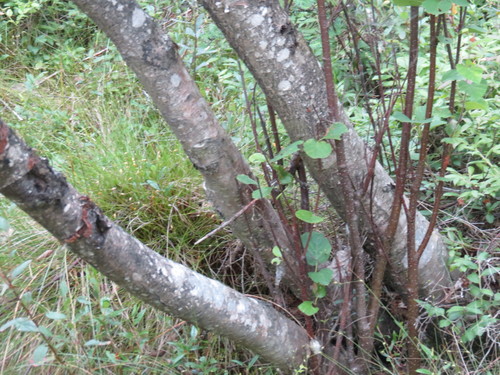
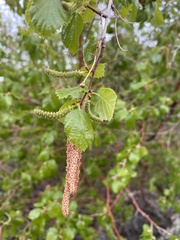
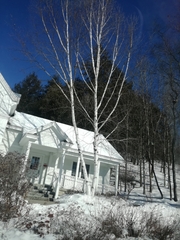
Paper birch (Betula papyrifera) is a deciduous pioneer tree in the Betulaceae family, native to northern North America from Alaska to Newfoundland. Its chalk-white bark peels in broad papery sheets, and its oval leaves have doubly toothed edges. Exceptionally cold hardy but short lived, it colonizes burned or disturbed ground before conifers take over.
Read morePaper birch, Canoe birch and White birch


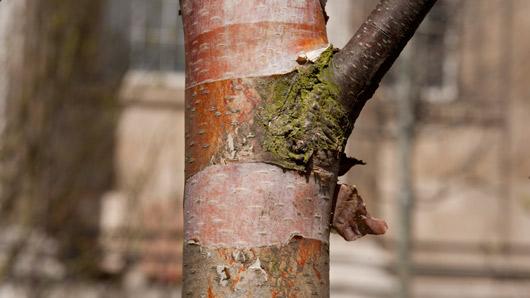
© photo
Reuven Martin · cc0
Matt Berger · cc-by
Nick Kleinschmidt · cc-by
Taken Aug 27, 2021 by Joanie Duval (cc-by-sa)
Taken Apr 5, 2021 by Ureña Marta (cc-by-sa)
Taken Jul 22, 2020 by Valerie Hollett (cc-by-sa)
Taken Jul 20, 2021 by Giode Tonpino (cc-by-sa)
Taken Oct 18, 2020 by Jacynthe Barrette (cc-by-sa)
© copyright of the Board of Trustees of the Royal Botanic Gardens, Kew.




Global distribution
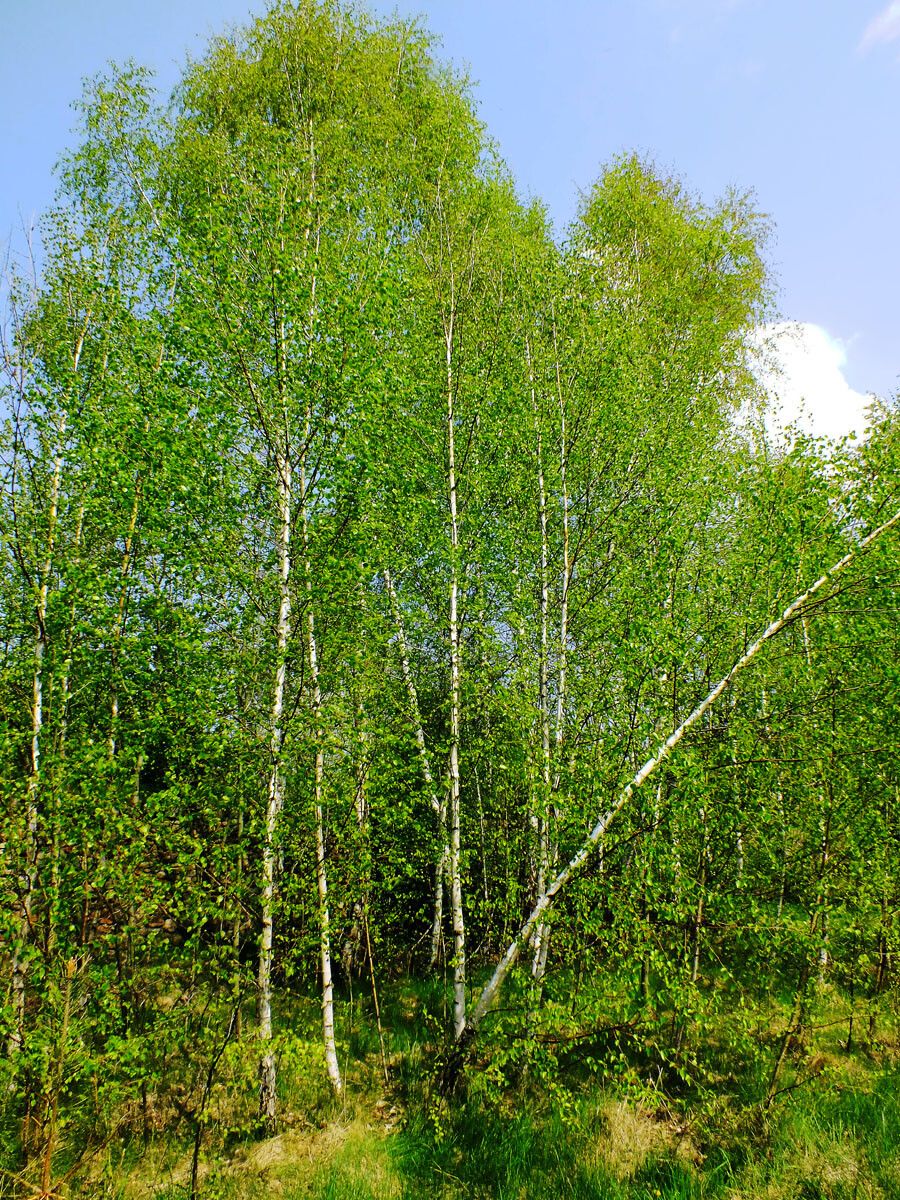
Paper birch is native to northern North America, from Alaska and Yukon to Newfoundland, south to the Great Lakes, New England and the Appalachian Mountains in West Virginia. It dominates extensive boreal and cool mixed forests, often as a pioneer after fire. In Europe it is grown for its white bark, with no reported naturalization or invasive behavior.
Identity
Paper birch (Betula papyrifera Marshall, 1785), also called white birch or canoe birch, is a deciduous tree in the genus Betula, in the Betulaceae family. American botanist Humphry Marshall described it in 1785. Its range spans much of northern North America, from Alaska to Newfoundland. 1 8
The name paper birch describes its thin, white mature bark, which peels away in sheets resembling paper. Canoe birch recalls a specific historical use: Indigenous peoples of North America harvested these large bark sheets to build light, watertight canoes. 5 6
A short-lived pioneer, Betula papyrifera colonizes bare ground after fire by producing abundant winged seeds. It reaches 8 to 15 m (26 to 49 ft) between 5 and 20 years of age and up to 25 m (82 ft) around 20 to 40 years. This rapid start gives it time to establish before conifers such as black spruce replace it in the forest. 5
Recognition
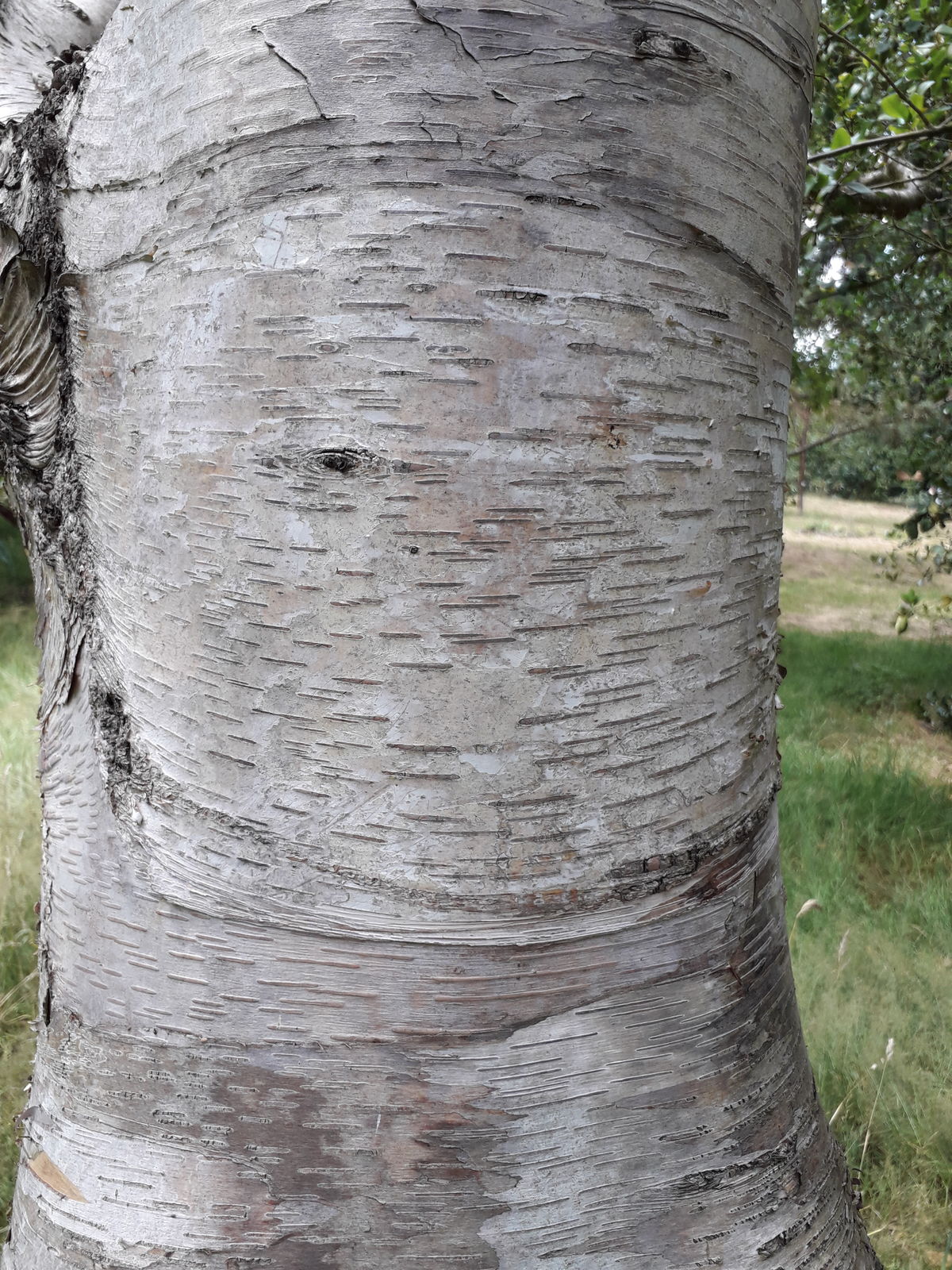
Mature paper birch commonly reaches 15 to 25 m (49 to 82 ft), with exceptional trees exceeding 30 m (98 ft) in established boreal forest. Young trunks have smooth, reddish-brown bark. Between 5 and 20 years, it turns chalk-white and begins peeling in broad papery sheets marked by dark horizontal lenticels. 3 5
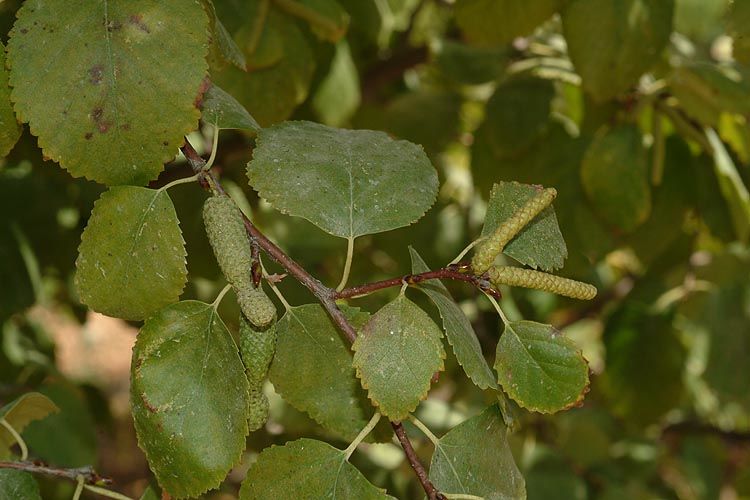
Alternate leaves are oval with a rounded base, a tapering tip and sharply double-toothed margins, each on a slender stalk. The foliage turns yellow in fall before dropping, making mature trees easy to spot from a distance. 3 4
Male and female catkins occur on the same tree, making paper birch monoecious. The hanging male catkins form during the preceding fall. Female catkins are shorter, first upright and later hanging as they mature. Tiny winged fruits are released in late summer and travel widely on the wind. 4
Its pale, lightweight wood can break under frost or ice loads, giving the tree only moderate wind resistance. In very exposed places, major branches remain vulnerable to winter ice storms. 2
Useful taxonomy
Humphry Marshall published the name Betula papyrifera in 1785. It belongs to Betulaceae alongside alders and hornbeams. Among the several dozen species of Betula, paper birch is notably variable, with many geographical varieties described historically. 1 8
These historical synonyms and varieties help explain names encountered in botanical references:
- Betula alba var. papyrifera (Marshall) Spach (historical name)
- Betula lenta var. papyrifera (Marshall) Castigl. (historical combination)
- Betula papyrifera var. commutata (Regel) Fernald (commutata variety)
- Betula papyrifera var. kenaica (W.H.Evans) A.Henry (Kenai variety)
- Betula papyrifera var. neoalaskana (Sarg.) Raup (Alaska variety)
Field identification most often involves distinguishing paper birch from the variety neoalaskana, also grown as Betula neoalaskana and known as Alaska birch. Its bark stays more orange and peels less distinctly than typical paper birch, a clear contrast when trunks are compared side by side. The accepted scientific name Betula papyrifera remains the consistent reference. 1
Habitat and range
Northern North America is its homeland, from Alaska and Yukon to Newfoundland, south to the Great Lakes, New England and the Appalachian Mountains in West Virginia. Paper birch dominates large areas of boreal and cool mixed forest, often beside lakes and rivers. Its range corresponds to USDA zones 2 to 6: tolerance below -45 °C (-49 °F) places it among the hardiest members of Betula, well equipped for severe continental cold. 8 5
Paper birch holds official tree emblem status in two North American jurisdictions: it is the state tree of New Hampshire and the provincial tree of Saskatchewan. These designations reflect its abundance and its prominent place in the regional forest landscape. 9
The International Union for Conservation of Nature assesses Betula papyrifera as Least Concern, consistent with its wide distribution and abundant populations. In Europe, it remains an ornamental garden tree, with no reported naturalization. 7
Life cycle and reproduction
Wind carries paper birch pollen in spring, before the leaves emerge. As in other birches, abundant pollen contains Bet v 1, a common respiratory allergen. Sensitized people may also have cross-reactions to apple or hazelnut. 4 6
Tiny winged seeds ripen in late summer inside female catkins that break apart at maturity, releasing them over long distances. Seed production begins at about 15 years, although full fruiting capacity is reached only between 40 and 70 years. 5
Compared with many forest trees, paper birch has a short life span. Most trees decline before 140 years of age, a relatively rapid turnover beside the conifers that naturally succeed it in mature boreal forest. 5
Uses and risks
Traditional bark canoe construction was a major historical use. Indigenous peoples of North America removed large, lightweight bark sheets, made waterproof by their betulin content, and sewed them over wooden frames to build durable craft. The bark also covered wigwams and provided material for watertight containers. 5 6
Today its pale, easily worked wood is used mainly for paper pulp, veneer and firewood. Paper birch is not toxic when ingested by people or domestic animals. The tree itself is susceptible to bronze birch borer, a wood-boring insect that favors weakened specimens. Prolonged heat above 30 °C (86 °F) markedly increases vulnerability, a concern during the driest continental summers. 5
Road salt is poorly tolerated. Shallow roots absorb salt dissolved in winter runoff, making lasting establishment beside salted roads difficult. 3
Pruning during the early spring sap rise causes heavy, prolonged bleeding from cut surfaces. Experienced pruners therefore favor midwinter or the very end of summer. 2
Varieties, look-alikes and related plants
Horticultural selections with improved bronze birch borer resistance include Renaissance Reflection, widely grown in North America, and Prairie Dream, suited to severe Canadian Prairie winters. These selections retain the characteristic white bark of typical paper birch. 3
Three related species cause frequent confusion. Betula neoalaskana, Alaska birch, keeps more orange bark within a range restricted to the northwest of the continent. Betula populifolia, gray birch, has grayish-white bark that does not peel in broad sheets. In Europe, young paper birches may also resemble Betula pendula, whose bark peels in finer, more regular strips. 4 2
Main sources
- Plants of the World Online / Kew, Betula papyrifera Marshall
- Royal Horticultural Society, Betula papyrifera - paper birch
- Missouri Botanical Garden, Betula papyrifera
- Plants For A Future, Betula papyrifera
- USDA Forest Service, Fire Effects Information System, Betula papyrifera
- Encyclopaedia Britannica, paper birch
- IUCN Red List of Threatened Species, Betula papyrifera assessment
- USDA PLANTS Database, Betula papyrifera (BEPA)
- Government of Saskatchewan (archive), provincial tree, Betula papyrifera
Frequently asked questions
How can I tell paper birch from Alaska birch?
Betula neoalaskana, sometimes treated as a variety of Betula papyrifera, has more orange bark that peels less distinctly than typical paper birch. Its range, restricted to Alaska and northwestern Canada, remains the most reliable guide.
Is paper birch poisonous?
No. The species is not considered toxic when ingested by people or domestic animals. Its main health risk comes from pollen, a common respiratory allergen in spring.
Why does paper birch bark peel in large sheets?
This is a natural result of the thin, layered structure of mature bark, which is rich in betulin. Indigenous peoples of North America used this property to harvest large bark sheets without killing the tree.
Can paper birch pollen cause allergies?
Yes. Like other birches, it produces the protein Bet v 1, which causes many cases of spring pollen allergy. People who are sensitized often have cross-reactions to apple or hazelnut.
Why was paper birch used to make canoes?
Its light, waterproof bark can be removed in large, flexible sheets. It provided a strong, water-resistant hull material, widely documented in traditional North American bark canoe construction.
When should paper birch be pruned?
In midwinter or at the very end of summer, rather than early spring. Pruning during the spring sap rise causes heavy, prolonged bleeding from the cuts.
Is paper birch invasive in Europe?
No naturalization or invasive behavior is reported outside its native North American range. In Europe it is planted as an ornamental tree for its white bark.
Similar plants
If you are unsure about a plant’s toxicity, ask a botanist or veterinarian for advice.