
Hairy beggarticks (Bidens pilosa, )

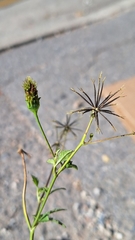
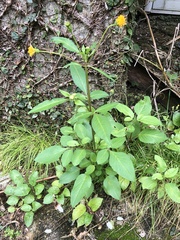
Hairy beggarticks (Bidens pilosa L., 1753) is an annual in the Asteraceae native to tropical and subtropical America. Now a cosmopolitan weed on almost every continent, it spreads through black, barbed fruits that cling to clothing, animal fur and bird feathers. Officially recognized as invasive in French Polynesia and Réunion, it also remains a valued traditional vegetable in several parts of Africa.
Read moreHairy beggarticks, Cobbler's pegs, Black-jack, Spanish needle, Farmer's friends and Hitch hikers
Allow a few hours of direct sun per day, preferably morning or evening.
Full sun to light partial shade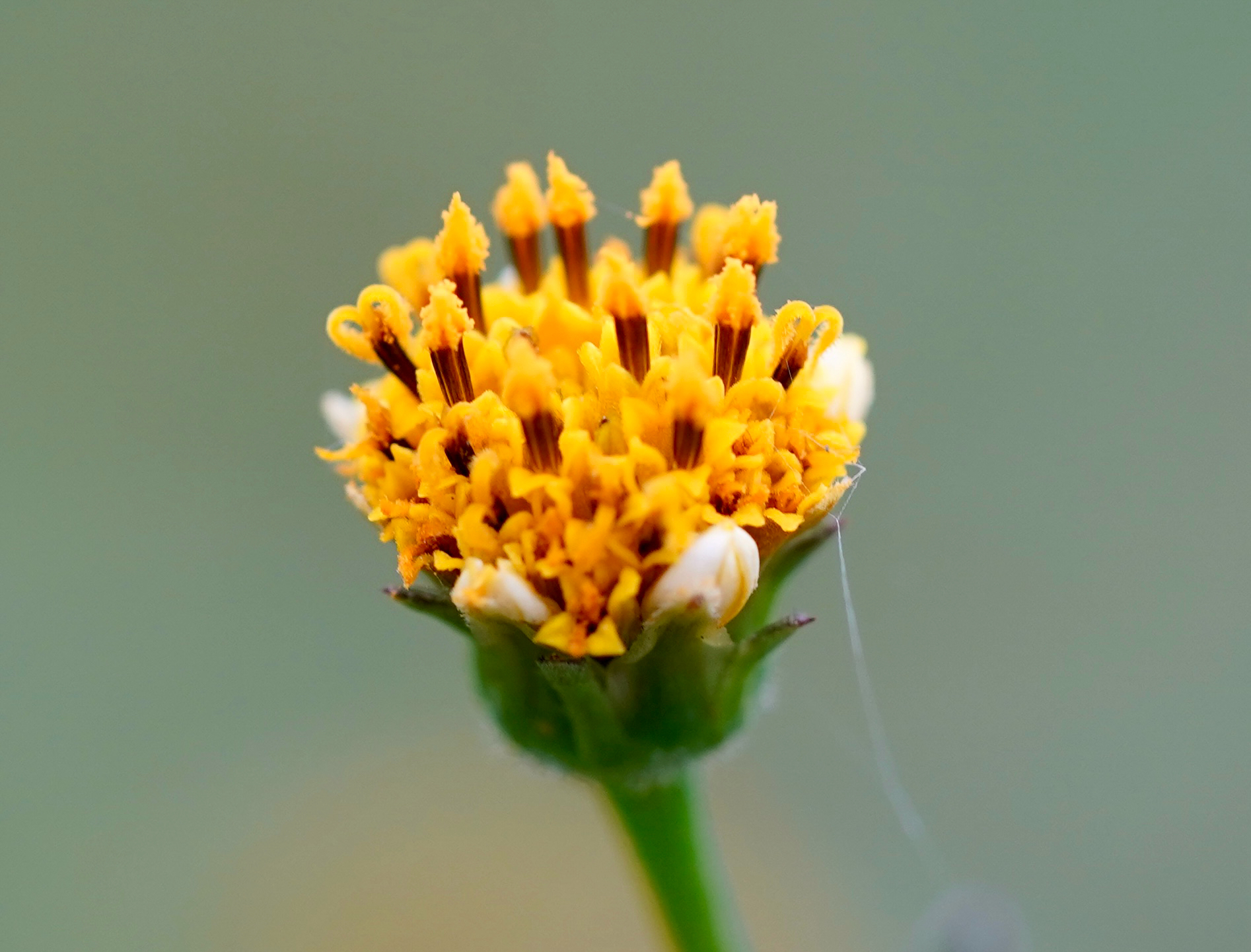



© photo
(c) gg_copen, some rights reserved (CC BY-NC) · cc-by-nc
iNaturalist User · cc0
Takaaki Hattori · cc-by
Taken Feb 18, 2017 by Yoan MARTIN (cc-by-sa)
Taken Nov 10, 2022 by bouhenache abderrahim (cc-by-sa)
Taken Sep 23, 2012 by Tela Botanica − Liliane Roubaudi (cc-by-sa)
© copyright of the Board of Trustees of the Royal Botanic Gardens, Kew.




Global distribution
POWO places the native range of Bidens pilosa in tropical and subtropical America, from Mexico to northern Argentina. It has since naturalized on almost every continent. The species is listed as invasive in Réunion and French Polynesia, where it was introduced in 1838. In mainland France, it remains localized and has mainly been documented recently.
- Native3
- Introduced3
- Invasive4
- Mexico
- Brazil
- Central America
- Sub-Saharan Africa
- United States
- Mainland France
- Australia
- New Caledonia
- French Polynesia
- Réunion
Hexagons: regions where the plant occurs. Green dots: native range.1
Identité
Hairy beggarticks (Bidens pilosa L., 1753) is an accepted species in the daisy family, Asteraceae. Bidens combines Latin bi- and dens, meaning two teeth, for the barbed bristles on its fruits. The epithet pilosa describes the down on stems and young leaves. 1
French sources use bident poilu as the standardized name, with piquants noirs, sornet and herbe aiguille in everyday and African ethnobotanical usage. Some refer directly to the slender, pointed black fruit. English names include cobbler's pegs, black-jack, Spanish needle, farmer's friends and hitch hikers. 2 4
Worldwide weed status makes field identification valuable, while traditional food use remains relevant in several tropical regions. The species has no recognized horticultural role in Europe. 4
Recognition
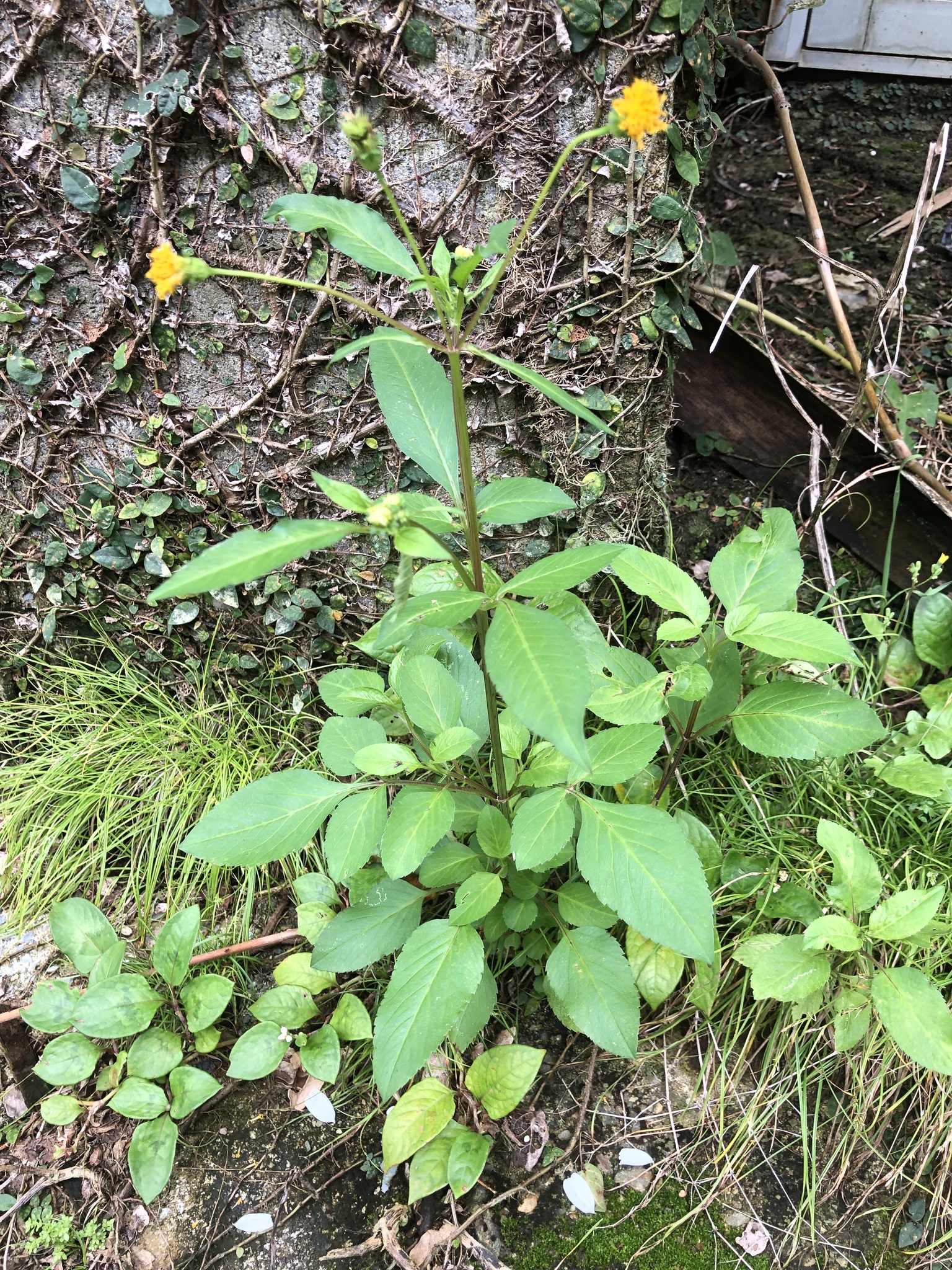
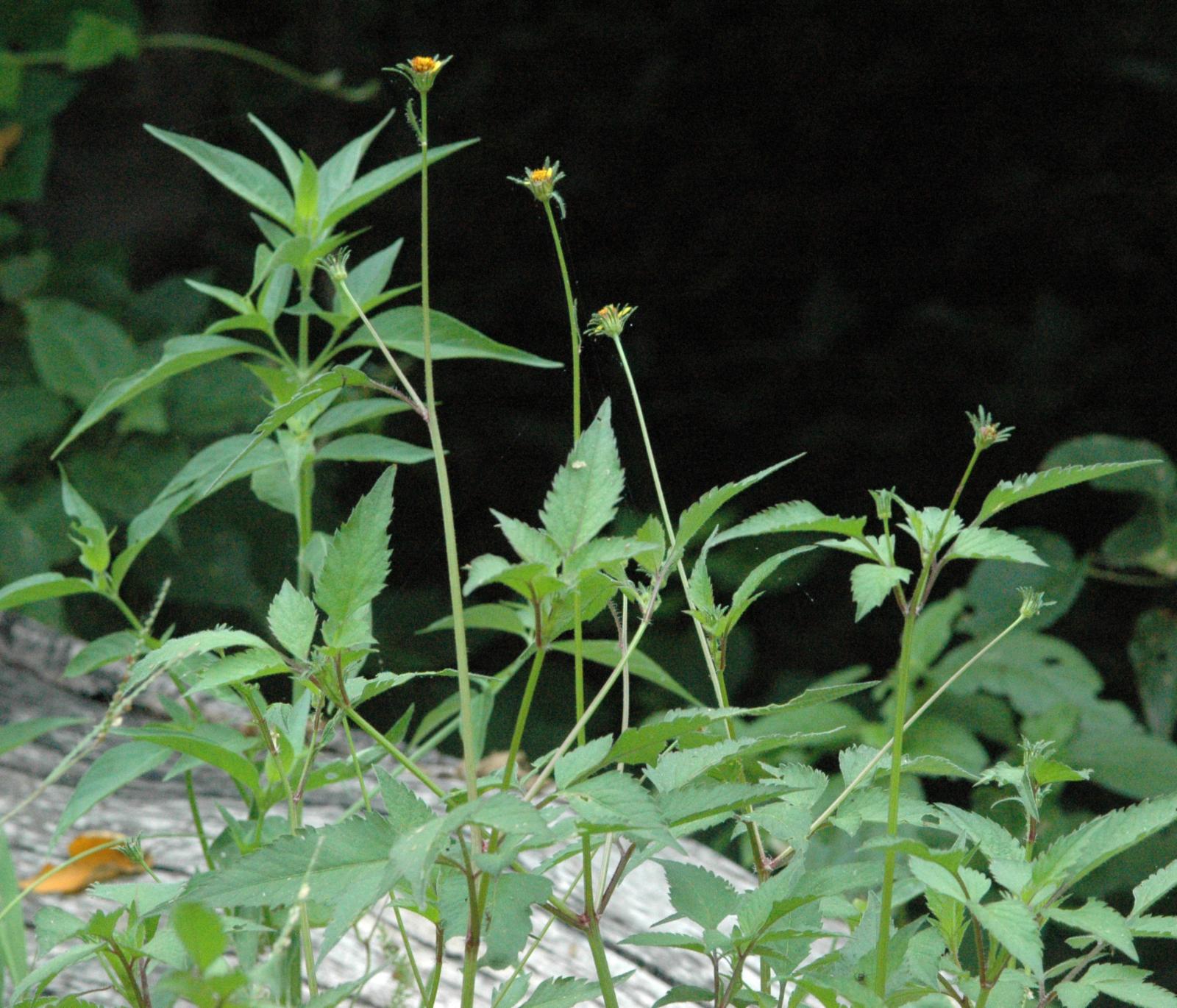
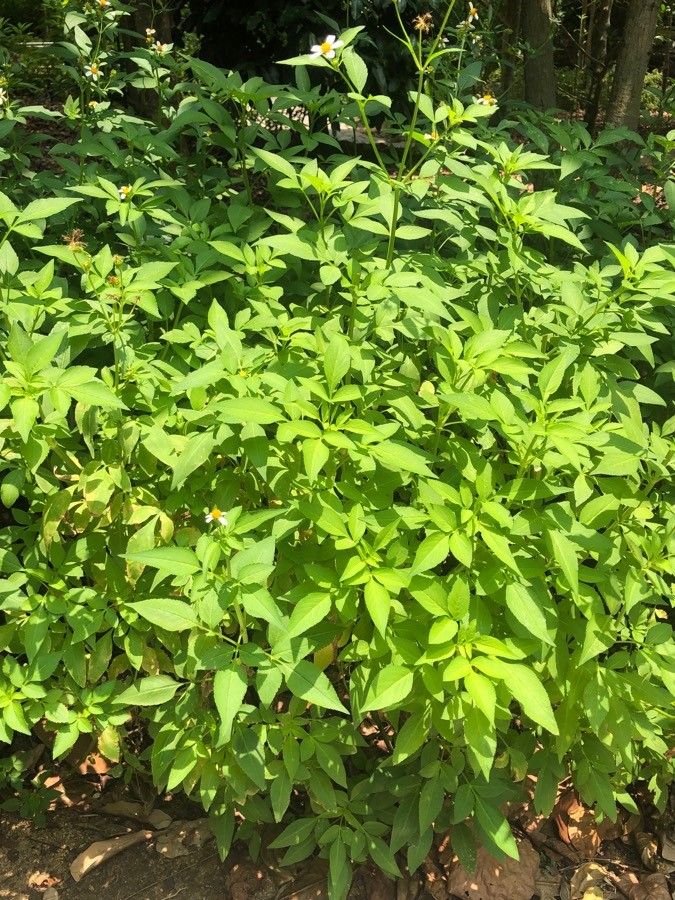
Green to purplish, four-angled stems support this upright annual herb. It usually reaches 30 cm–1 m (1–3.3 ft) but can grow to 1.8 m (6 ft) under favorable conditions. Opposite leaves occur in pairs at right angles to each other and have three or five toothed leaflets, with the terminal leaflet larger than the lateral ones. 4 8
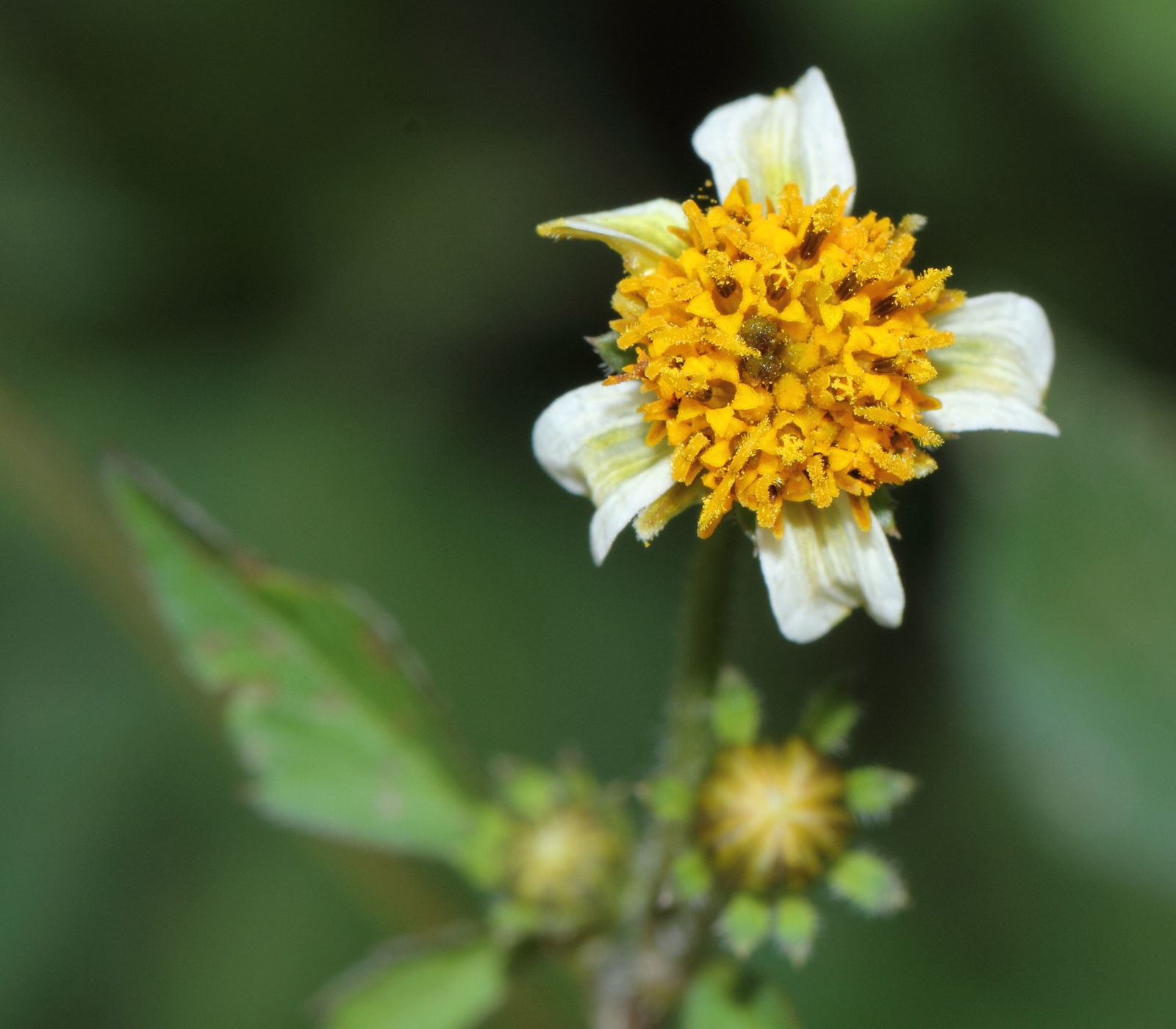
Small flower heads span 6–12 mm (0.24–0.47 in). Depending on the population, four to eight white or yellowish, sometimes pink ray florets surround the tubular yellow disk flowers, or rays may be absent. A plant without white petal-like rays can therefore still be Bidens pilosa. 4
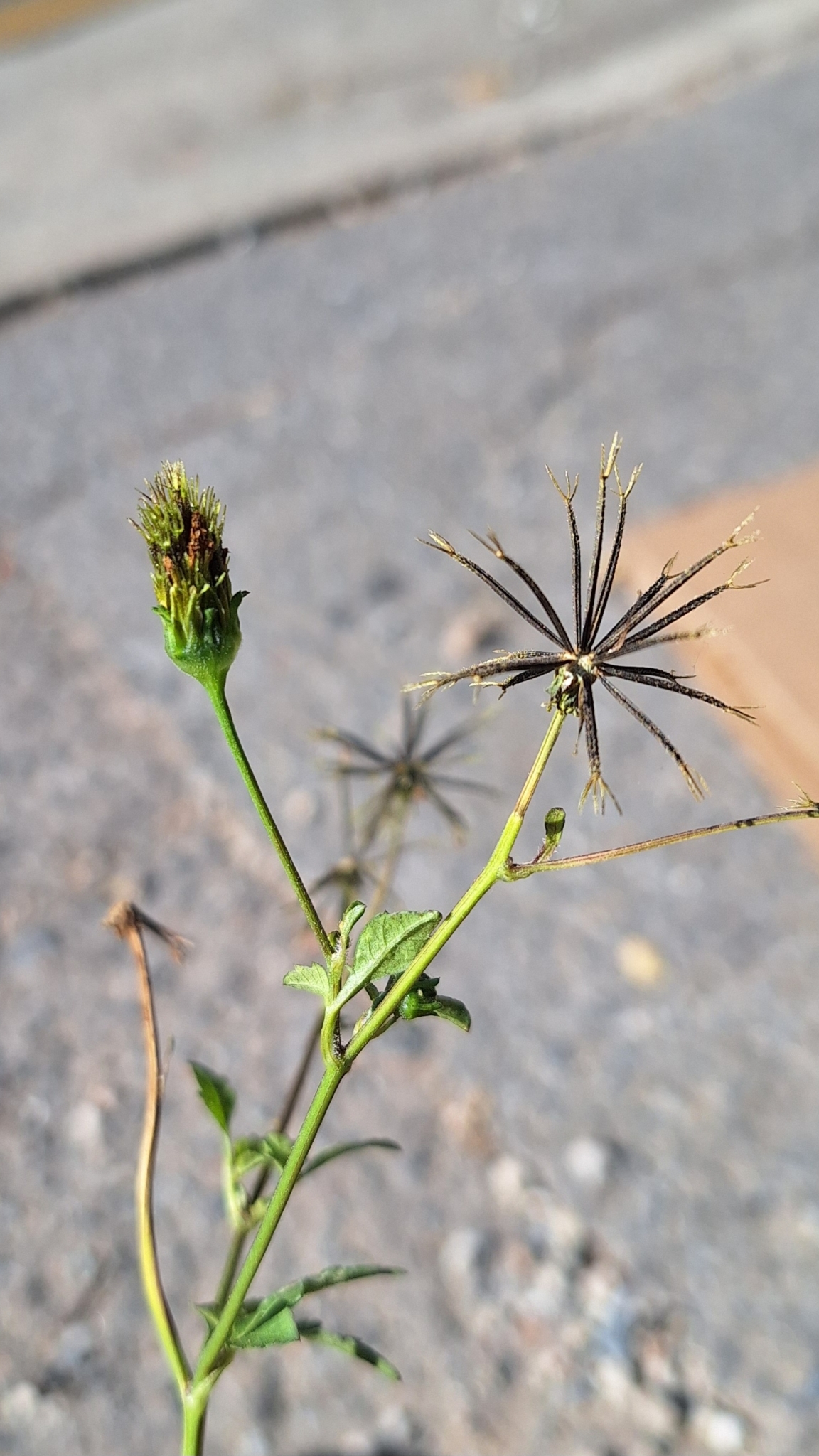
Slender, black fruits provide the strongest identification clue. Each ridged achene measures 4–13 mm (0.16–0.51 in) and ends in two or three, occasionally five, backward-barbed bristles. These catch on clothing and animal fur. 5
Taxonomy and names
Synonymy under the accepted name Bidens pilosa L. includes names accumulated since the 18th century: Kerneria pilosa (L.) Lowe, Cosmea pilosa (L.) Spreng., Coreopsis leucantha L. and Bidens hirsuta Nutt. POWO brings these historical names together under one species. 1
More than 200 species belong to Bidens, grouped with Coreopsis in the tribe Heliantheae. Some authors have proposed merging the two genera, reflecting a classification that the scientific literature itself describes as unsatisfactory. 4
Variation within Bidens pilosa is substantial: plants may be upright or spreading, leaves simple or deeply divided, heads with or without rays, and fruits bristleless or bearing two to five bristles. Differences in chromosome sets probably contribute to this diversity. 4
Habitat and range
Tropical and subtropical America, from Mexico to northern Argentina, is the native range recognized by POWO. Agriculture, trade and fruits hitching onto travelers have helped the species naturalize on almost every continent. 1
Disturbed soils, crop fields weeded late, roadsides, building sites and gardens support the plant from sea level to 2400 m (7,900 ft). Germination is best at 25–30 °C (77–86 °F) and becomes unfavorable below 15 °C (59 °F) or above 45 °C (113 °F). It tolerates soil pH 4–9 and salinity up to 100 mM NaCl, an unusual tolerance for an annual weed. 4
French overseas assessments list Bidens pilosa as invasive in Réunion and French Polynesia. Introduced to French Polynesia in 1838, it mainly invades disturbed habitats there. Mainland French records remain localized to two documented departments. These territorial records describe particular places rather than a worldwide regulatory status. 6 7 3
Life cycle and reproduction
Flowering starts about six weeks after emergence and continues until the plant senesces two to three months later. Hairy beggarticks is self-fertile, although insects also contribute to cross-pollination. 4
First seeds ripen four weeks after flowering begins. Each plant bears at least 80 flower heads and can produce up to 3,000 seeds per generation. Favorable climates allow up to four generations in one year; fruits from central flowers germinate better than those from outer flowers. 4
High seed production combines with effective transport on animals. Barbed bristles grip clothing, fur and feathers, while flowing water can carry the fruits over long distances. 5
Uses and toxicity
Published food-use accounts document no toxicity in humans, cats or dogs. Horse status remains uncertain because published data are lacking. 4
Across sub-Saharan Africa, from Sierra Leone to Mozambique, young shoots and fresh leaves serve as a valued famine vegetable. They are cooked in sauces or dried and powdered for the dry season. A 100 g (3.5 oz) portion of fresh leaves provides about 43 kcal, 3.8 g protein and 1,800 μg beta-carotene. Raw consumption is discouraged because the fresh leaves are rich in saponins. 4
Roots, leaves and seeds also appear in traditional medicines across Africa, Asia and tropical America for wounds, headaches, infections and malaria. An ethanol extract inhibited Plasmodium falciparum growth by up to 90% in vitro, which does not establish an approved medical use. The English name soldier vegetable is attributed to American soldiers eating the leaves during the Vietnam War. 4 5
Varieties, look-alikes and related plants
Recognized horticultural cultivars are absent, so identification focuses on related species. Bidens frondosa, more frequently reported as a weed in mainland France, often lacks ray florets and bears fruits with only two bristles. Bidens bipinnata has more finely divided foliage. 1
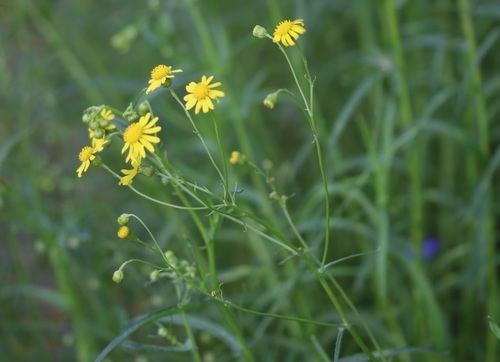
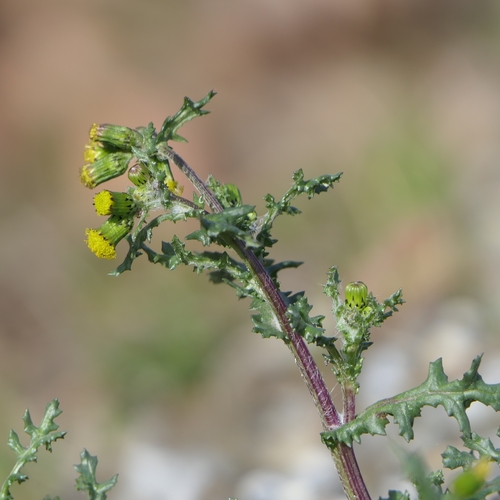
Toothed foliage and small yellow flower heads may also suggest Galinsoga parviflora, another common garden weed in the Asteraceae. Its fruits lack hooked bristles and do not cling to clothing. Fruit structure remains more reliable in the field than ray color or the presence of rays. 4
Main sources
- Plants of the World Online / Kew, Bidens pilosa L.
- INPN, Bidens pilosa L., 1753
- Préservons la Nature / Tela Botanica reference database, Bidens pilosa L.
- Pl@ntUse / PROTA, Bidens pilosa
- Wikipedia (EN), Bidens pilosa
- Global Invasive Species Database / IUCN, Bidens pilosa
- Overseas Invasive Species / IUCN French Committee, Bidens pilosa
- Brisbane City Council, Cobbler's pegs (Bidens pilosa) weed identification
Frequently asked questions
Is Hairy beggarticks poisonous?
No food toxicity is documented in humans, cats or dogs. Its status in horses remains uncertain because published data are lacking.
Can you eat Hairy beggarticks?
Yes, cooked. Young shoots and leaves are traditional vegetables in several parts of sub-Saharan Africa. Eating them raw is discouraged because fresh leaves contain high levels of saponins.
Why do the seeds stick to clothes?
The fruit has two to three backward-barbed bristles that cling to fibers, fur and feathers. This transport on animals, called epizoochory, helps explain its rapid worldwide spread.
Is Hairy beggarticks invasive in France?
It appears on official invasive species lists in Réunion and French Polynesia. In mainland France, its presence remains localized and has mainly been documented recently.
How can you distinguish Bidens pilosa from Bidens frondosa?
Bidens frondosa, more common in mainland France, usually has fruits with two bristles and often lacks ray florets. Bidens pilosa can have up to five bristles per fruit.
Where does Hairy beggarticks come from?
Its native range is tropical and subtropical America, from Mexico to northern Argentina. It has since naturalized on almost every continent.
Does Hairy beggarticks have traditional uses?
Yes. Besides food uses, it appears in traditional medicine in Africa, Asia and tropical America for wounds, headaches and certain fevers.
Similar plants
If you are unsure about a plant’s toxicity, ask a botanist or veterinarian for advice.