
Marsh marigold (Caltha palustris, )
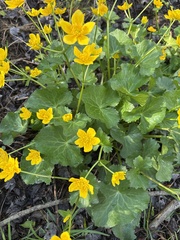
Marsh marigold (Caltha palustris) is an herbaceous perennial in the Ranunculaceae native to temperate and subarctic wetlands across the Northern Hemisphere. Its bright yellow flowers open early in spring beside ponds, in ditches and in floodplain woodland, ahead of many other waterside perennials.
Read moreMarsh marigold, Kingcup and Yellow marsh marigold
Allow a few hours of direct sun per day, preferably morning or evening.
Full sun to light partial shade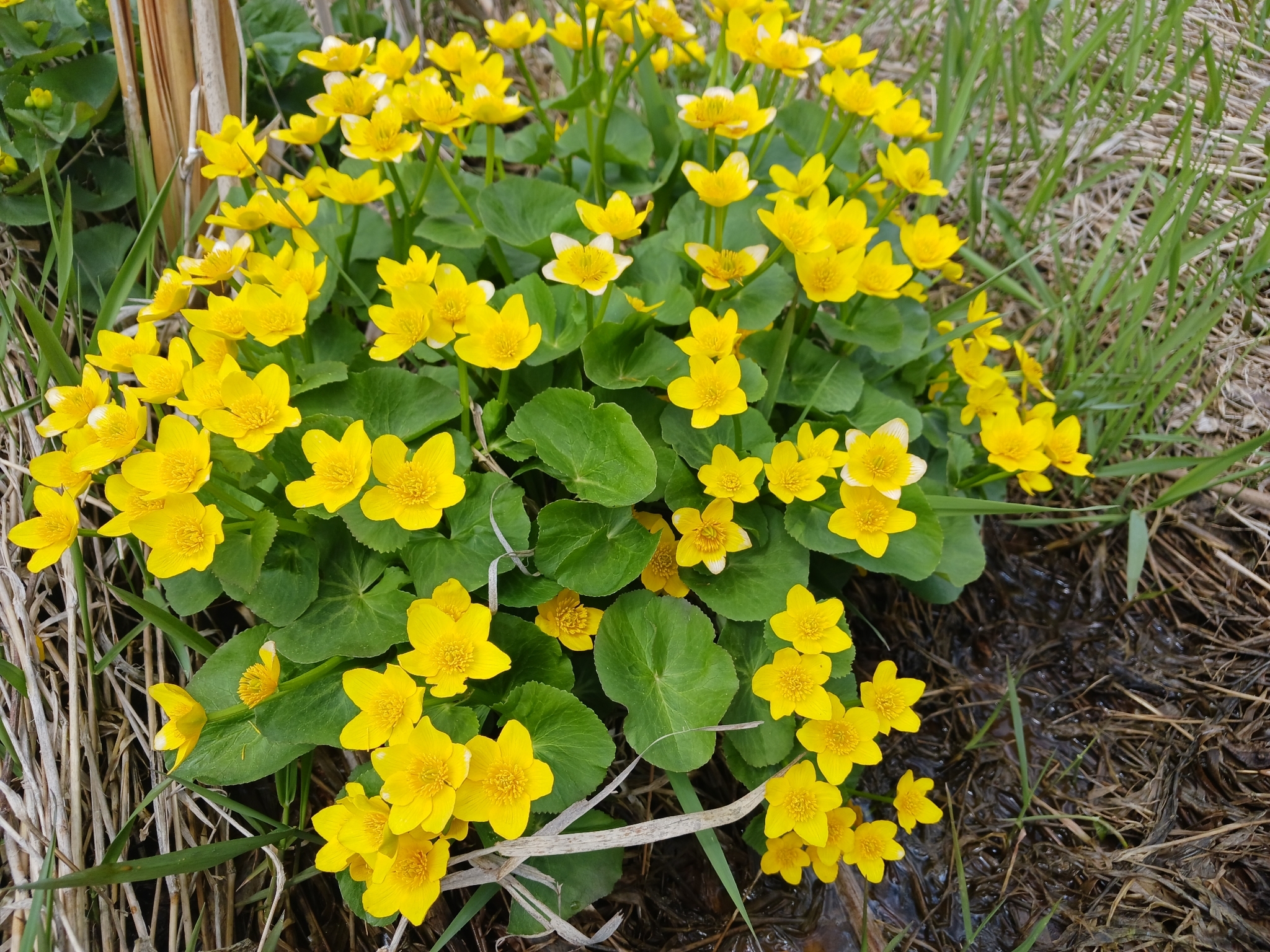
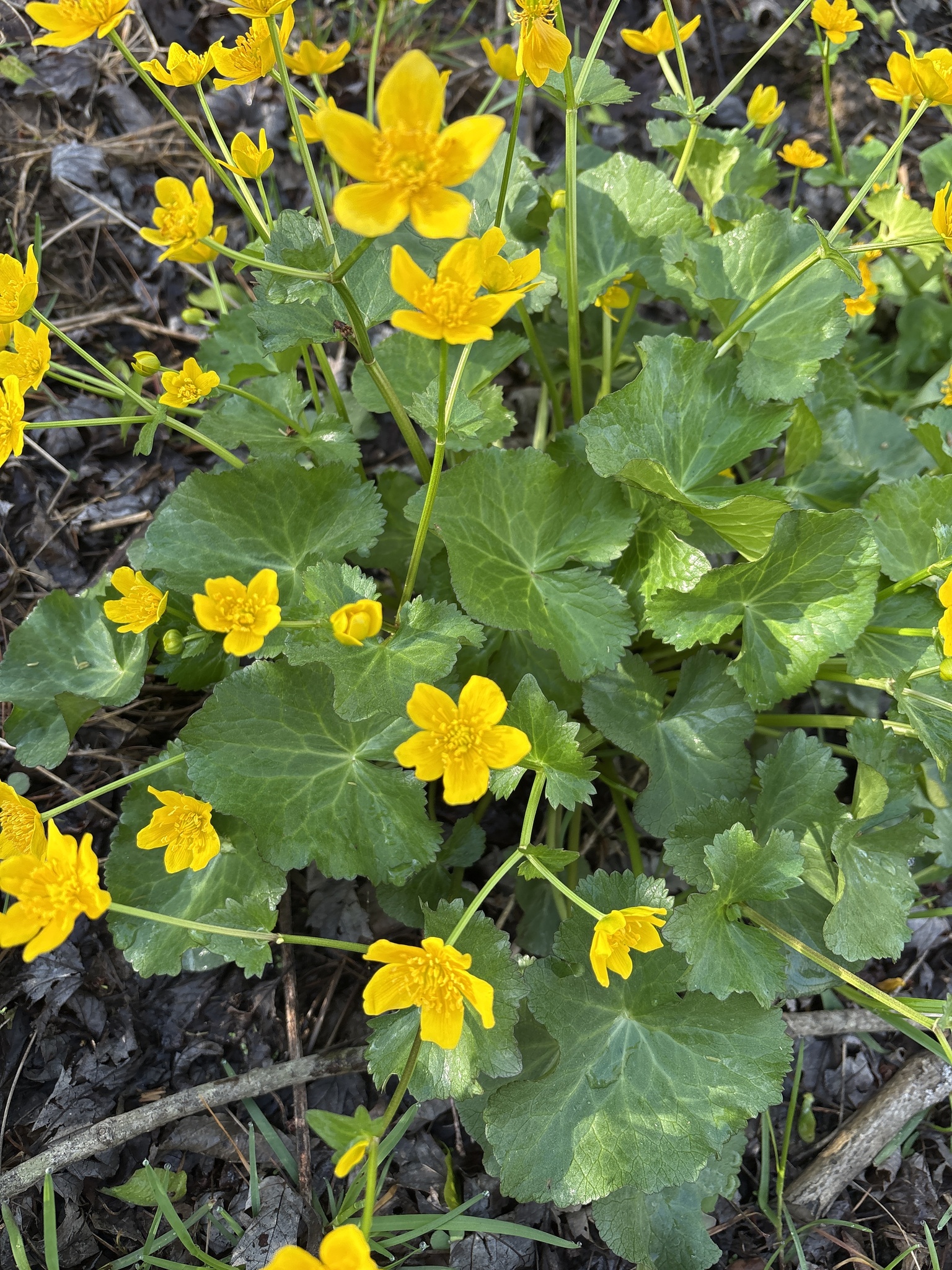
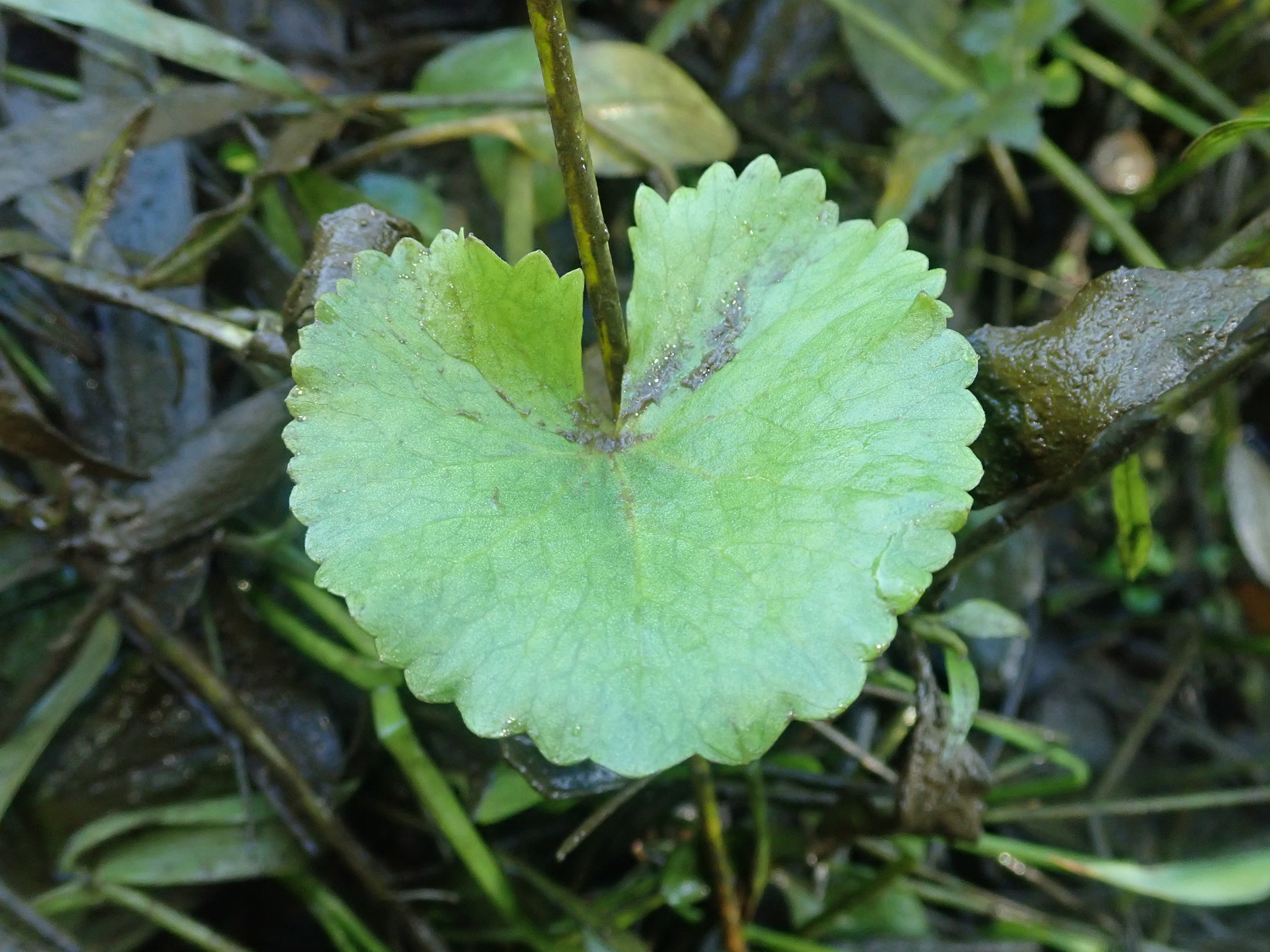
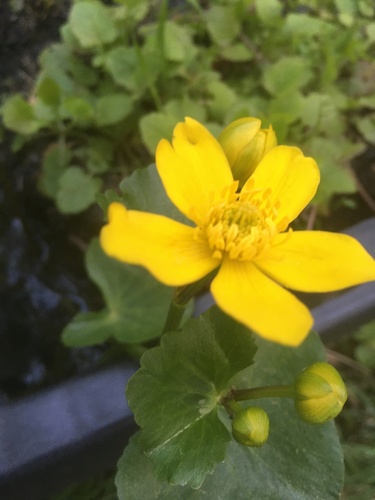
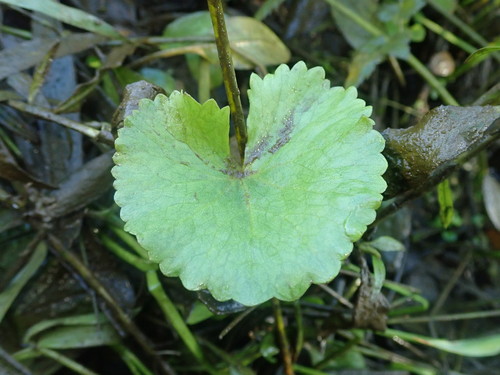
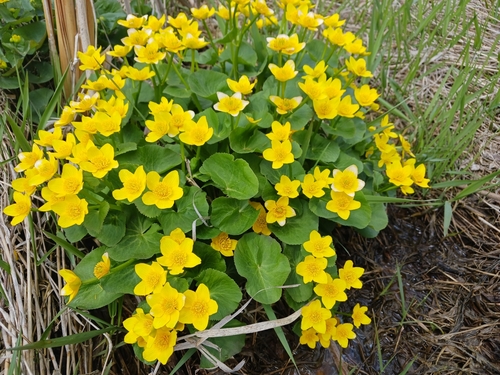
© photo
(c) eeyipes, some rights reserved (CC BY) · cc-by
iNaturalist User · cc0
Nolan Exe · cc-by
(c) Corvi Zeman, some rights reserved (CC BY) · cc-by
(c) Nolan Exe, some rights reserved (CC BY) · cc-by
Global distribution
Native across temperate and subarctic parts of the Northern Hemisphere, from western Europe through Russia, Siberia and the Himalayas to Japan, and in temperate North America. It has no corresponding natural range in the Southern Hemisphere.
- Native8
- France
- United Kingdom
- Germany
- Russia
- Canada
- United States
- Japan
- China
Hexagons: regions where the plant occurs. Green dots: native range.1
Identity
Marsh marigold (Caltha palustris L., 1753), also known as Kingcup or Yellow marsh marigold, is an herbaceous perennial in the genus Caltha, within the buttercup family, Ranunculaceae. In its Northern Hemisphere range it can begin flowering in March in waterlogged ground. Bright yellow sepals form flowers 2–4.5 cm (0.8–1.8 in) wide. The genus name refers to a cup in ancient Greek, while Latin palustris means “of the marsh.” 8 1
English names can obscure its family relationships. The name marsh marigold suggests a connection to Calendula, the pot marigold, although that genus belongs to Asteraceae. The French name populage refers instead to populus, Latin for poplar, because of the rounded basal leaves. Neither comparison indicates a close relationship to those plants. 5 2
Recognition
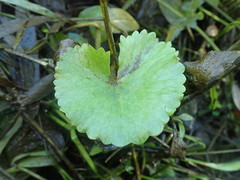
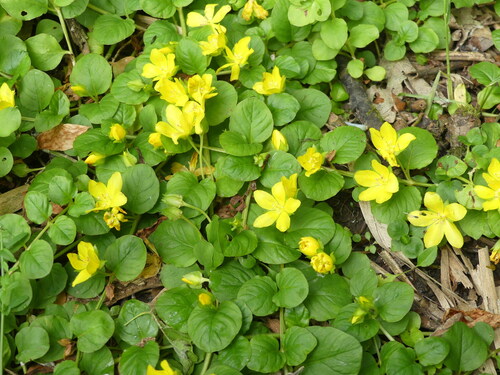
Hollow stems and glossy rounded leaves form a hairless clump, typically 15–50 cm (6–20 in) tall. Stems may stand upright or lie along the ground depending on the population. Basal leaves are kidney- to heart-shaped with scalloped margins and long stalks; smaller stem leaves have little or no stalk. This contrast remains useful when a plant carries leaves at several heights. 4 2
Each yellow flower lacks true petals: 5–9 broad, petal-like sepals surround numerous yellow stamens and several free carpels. The flowers measure 2–4.5 cm (0.8–1.8 in) across. Their showy sepals attract early-season pollinators and provide an important distinction from the flower heads of true marigolds in Calendula. Counting the colored parts alone is less useful than understanding which floral structures they represent. 5 4
After flowering, a star-shaped group of follicles replaces each flower. A follicle is a dry fruit that opens along one side to release seeds, which can float. The arrangement of several follicles together remains a useful identification feature after the yellow display has ended and foliage dominates the plant. 2
Mature leaves commonly measure 5–15 cm (2–6 in) across and retain their shine late into the season. This makes them useful for confirming summer identification. Dull leaves or pale powdery spotting should prompt a check for disease, including rust, rather than being assumed to represent ordinary seasonal aging. 4
Useful taxonomy
The accepted botanical name Caltha palustris L. dates to 1753. Several documented geographical varieties help explain differences in habit and appearance among plants from different origins. Those differences do not necessarily indicate separate species; the variety name provides a more precise description within the wider species:
- Caltha palustris var. palustris, the typical variety, grows upright.
- Caltha palustris var. radicans (T.F.Forst.) Hartm. has trailing stems that root at the nodes.
- Caltha palustris var. barthei Hance occurs from eastern Tibet to Japan.
- Caltha palustris var. himalaica Tamura occurs in the Himalayas and Tibet.
The full scientific name identifies the species more reliably than regional common names, which vary and sometimes overlap with those of unrelated plants. This is particularly useful when comparing a nursery label with a botanical record from another country. 1 8
Habitat and range
A circumboreal distribution links populations in Europe, Russia and Siberia, temperate North America, Japan, China and the Himalayas. Marsh marigold occupies temperate and subarctic parts of the Northern Hemisphere. Its natural range does not have an equivalent extension into the Southern Hemisphere. 1 6
Permanently saturated soil is central to its habitat: marshes, peatlands, ditches, stream and pond margins, floodplain woodland and wet meadows all support it. A few centimeters of standing water are tolerated. Prolonged drying, rather than an excess of water, limits its occurrence. This makes a wet pond margin more appropriate than an ordinary border that dries out between waterings. 4 2
Life cycle and reproduction
Altitude and latitude strongly influence flowering, reported from April to August in its Northern Hemisphere range, with a pronounced spring peak in most temperate populations. Flowers attract generalist insects including bees, hoverflies, beetles and other flies. Abundant pollen is an important attraction for visitors, rather than nectar concealed in a long floral tube. 5 2
Fertilized flowers develop follicles that open and release light, floating seeds. Running water is the main means of dispersal, helping explain the plant’s repeated occurrence along connected stretches of banks and ditches. The seed’s movement follows the wet habitat that the adult plant requires. 4
Garden propagation usually involves dividing clumps after flowering every two or three years. Fresh seed is another option, but it quickly loses germination capacity when removed from moist conditions. This short period of viability makes freshly collected seed more useful than seed left dry in storage. 2
Uses and risks
Fresh tissues contain ranunculin, which produces irritating protoanemonin when the plant is damaged, a chemical response shared by many members of Ranunculaceae. In cats and dogs, ingestion can cause drooling, mouth irritation and digestive upset. The fresh plant should therefore be kept out of reach of animals likely to chew it. 7 5
Cooking breaks down the irritating compound. Some rural European food traditions used pickled young flower buds as a caper substitute or boiled the young leaves as spring greens. These historical uses do not make the raw plant edible: fresh material must never be eaten or fed to domestic animals. 6 7
Pond, pool and ditch margins provide its main ornamental setting, where early flowers and glossy leaves bring color near the start of the growing season. RHS has awarded both the typical form and 'Flore Pleno' an Award of Garden Merit, a useful horticultural indication when choosing plants for a garden pond. 2 3
Varieties, look-alikes and related plants
Double, sterile flowers characterize 'Flore Pleno', the cultivar that dominates horticultural availability. The rarer 'Alba' has white sepals and Himalayan origins. Neither is a separate species from Caltha palustris. The botanical variety radicans has trailing, rooting stems and behaves more like a bankside ground cover than an upright clump. 3 1
Plants most likely to cause confusion include the following yellow-flowered species, which should be compared by their leaves and flower structure rather than by color alone:
- Ficaria verna, lesser celandine, has more star-shaped flowers with narrow petals and often marked leaves.
- Trollius europaeus, European globeflower, holds curved sepals together in a nearly closed flower.
- Calendula officinalis, pot marigold, belongs to the entirely different family Asteraceae.
The complete scientific name separates these plants more reliably than overlapping regional common names. In marsh marigold, the lack of true petals is a useful feature when comparing it with lesser celandine or globeflower, alongside the broader combination of glossy leaves, open flowers and wetland habit. 1 5
Main sources
- Plants of the World Online / Kew, Caltha palustris L.
- Royal Horticultural Society, Caltha palustris - marsh marigold
- Royal Horticultural Society, Caltha palustris Flore Pleno
- Missouri Botanical Garden, PlantFinder Caltha palustris
- Encyclopaedia Britannica, marsh marigold
- NC State Extension, Caltha palustris
- ASPCA, Marsh Marigold toxicity entry
- Wikidata, Caltha palustris (Q147192)
Frequently asked questions
Is marsh marigold poisonous?
Yes, when fresh. The plant contains protoanemonin, which irritates the mouth and digestive system of cats and dogs if swallowed. Cooking breaks down this compound.
Can you eat marsh marigold?
Only cooked, as described in historical food traditions. Some rural European communities pickled young flower buds as a caper substitute or boiled young leaves. The raw plant remains irritating and must never be eaten as it is.
How can I tell marsh marigold from lesser celandine?
Lesser celandine, Ficaria verna, has more star-shaped flowers with narrow petals and often marked leaves. Caltha palustris has broad sepals without true petals and plain, glossy, kidney-shaped leaves.
Is marsh marigold a type of marigold?
No. Despite its common name, Caltha palustris belongs to the Ranunculaceae, a different family from the pot marigold, Calendula officinalis, which belongs to Asteraceae.
Where should I plant marsh marigold?
At the edge of a pond or ditch in full sun to light partial shade, in an aquatic basket submerged by a few centimeters or in permanently waterlogged ground.
When does marsh marigold flower?
Flowering extends from April to August in its Northern Hemisphere range, depending on altitude and latitude, with a strong spring peak in most temperate lowland gardens.
How do you propagate Caltha palustris?
Divide the clumps after flowering every 2 to 3 years, or sow fresh seed immediately after collection. The seeds quickly lose viability when kept out of moist conditions.
Similar plants
If you are unsure about a plant’s toxicity, ask a botanist or veterinarian for advice.