
Harebell (Campanula rotundifolia, )
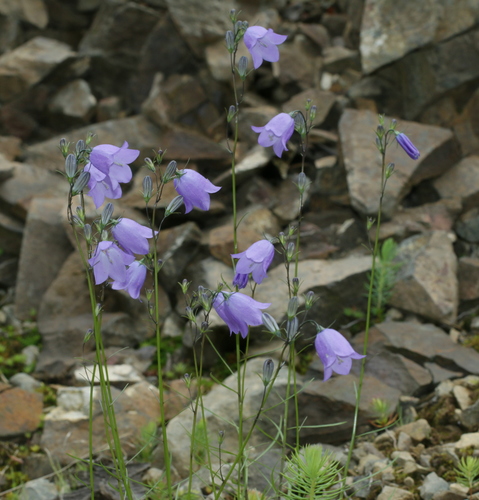
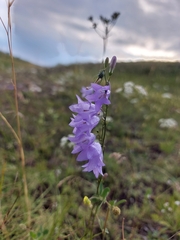
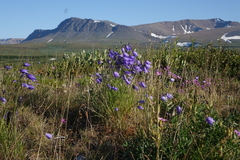
Harebell (Campanula rotundifolia) is a herbaceous perennial in the Campanulaceae family, widespread in dry grasslands and rock gardens of the temperate Northern Hemisphere. Its rounded basal leaves often disappear before flowering, leaving fine stems with violet-blue bells from summer into fall.
Read moreHarebell, Scottish bluebell and Common harebell
Allow a few hours of direct sun per day, preferably morning or evening.
Full sun to light partial shade; full sun encourages denser flowering.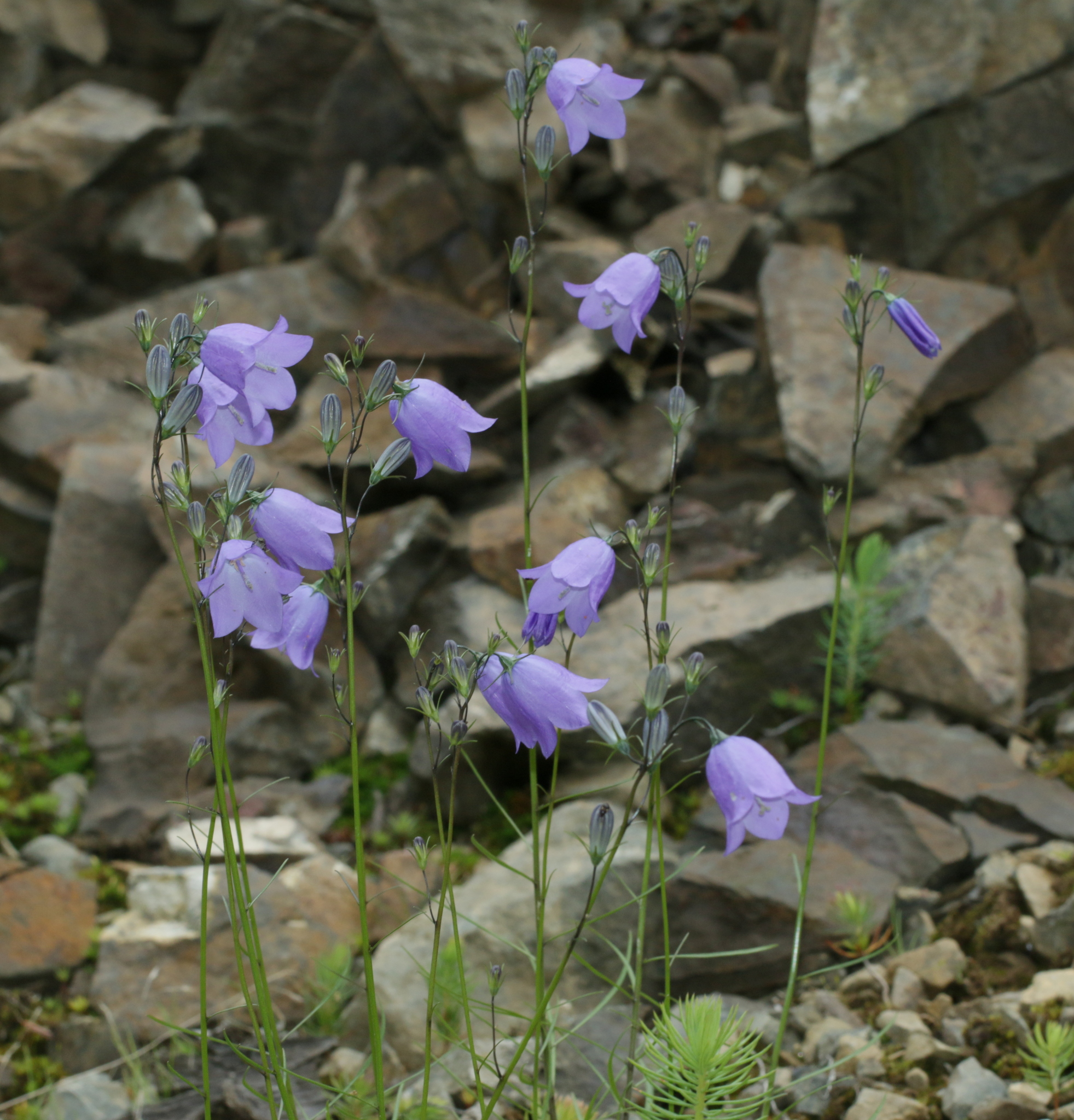
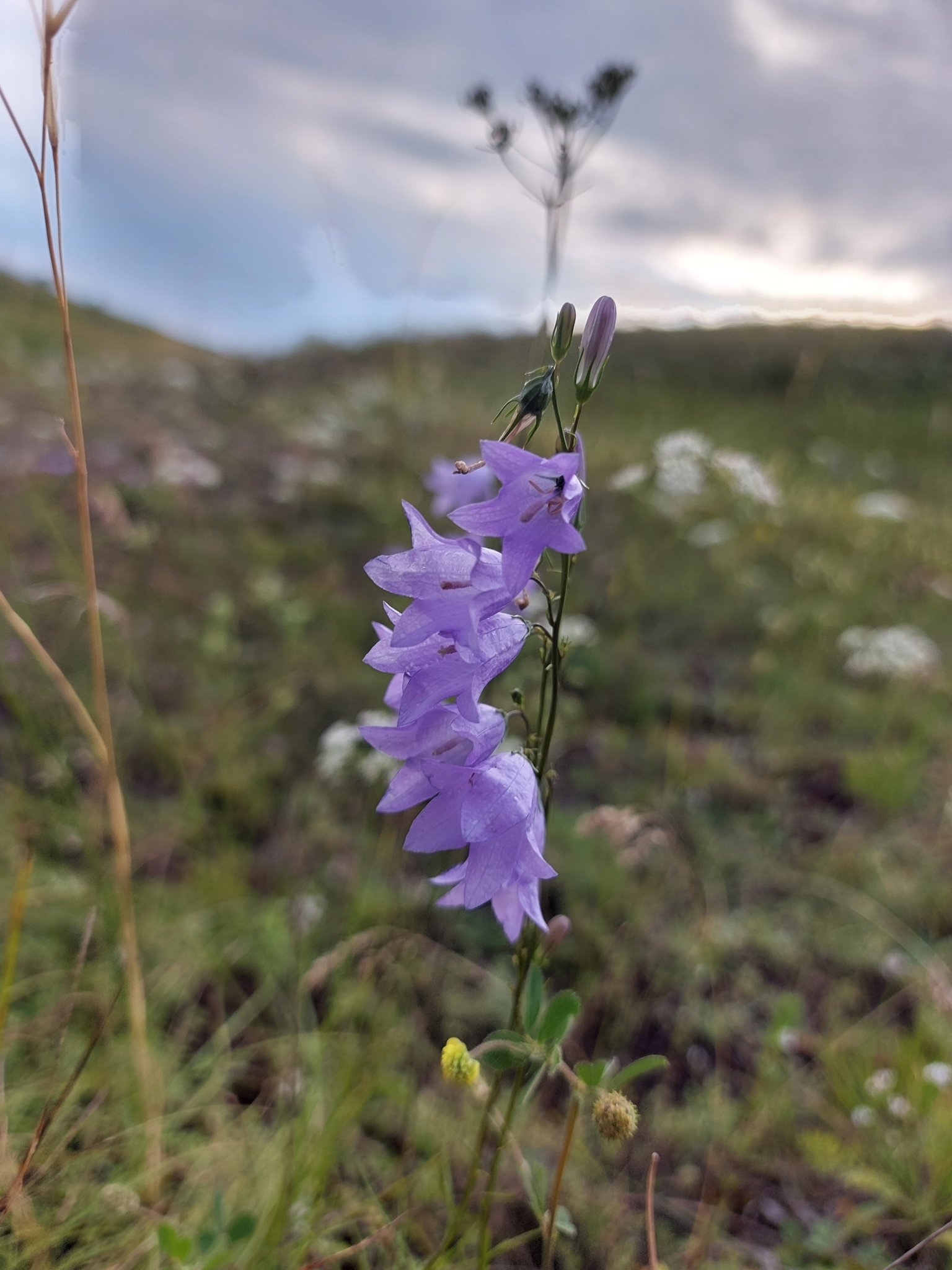
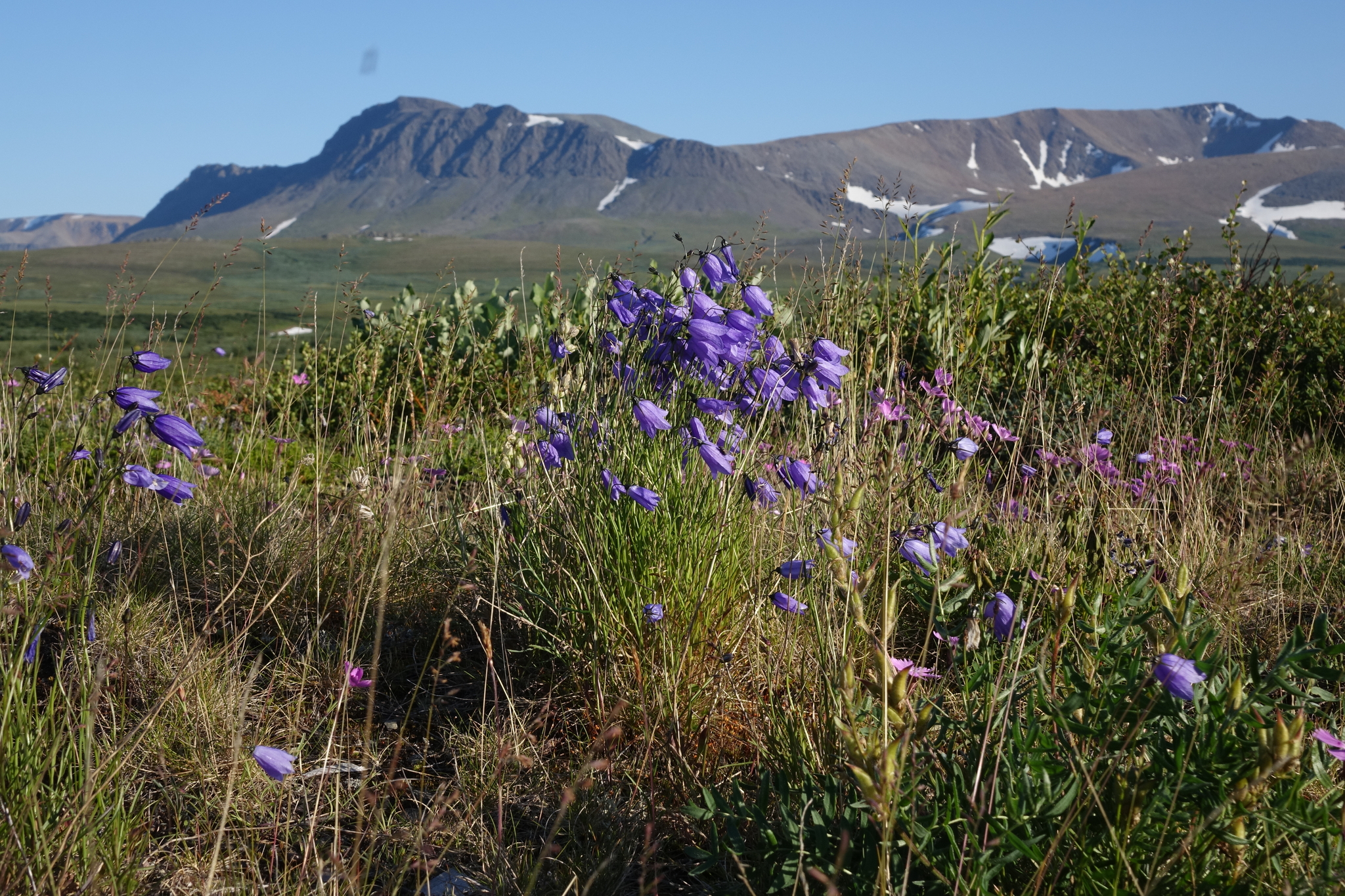
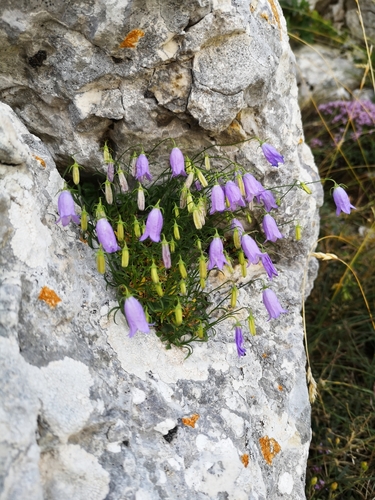
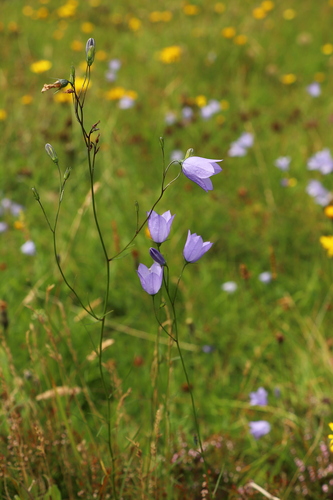
© photo
(c) Sandy Rae, some rights reserved (CC BY) · cc-by
Валя Айникеева · cc0
Oleg Kosterin · cc0
(c) Mattia Menchetti, some rights reserved (CC BY) · cc-by
(c) Dave, some rights reserved (CC BY) · cc-by

Global distribution
Plants of the World Online follows a native range from Iceland south to Spain, then east across Europe and temperate Asia to the Pacific coast of Russia and northeastern China. Missouri Botanical Garden also considers a disjunct population in the Missouri Ozarks native; databases differ on this point.
- Native8
- France
- United Kingdom
- Iceland
- Switzerland
- Russia
- China
- Sweden
- United States
Hexagons: regions where the plant occurs. Green dots: native range.1
Identité
Harebell (Campanula rotundifolia L., 1753) is an accepted species of Campanula in the Campanulaceae family. Carl Linnaeus described it in 1753, and Plants of the World Online continues to recognize that binomial as its accepted name. 1 6
Round leaves give rotundifolia its meaning, but the name describes only the basal leaves of the initial rosette. Leaves on the flowering stem become narrow and linear. By flowering time, the most conspicuous foliage may therefore look quite unlike the feature named by the epithet. 6
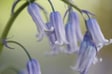
Scottish bluebell is another name for Campanula rotundifolia: in Scotland it is often simply bluebell. Elsewhere in Great Britain, that word means Hyacinthoides non-scripta, an Asparagaceae with spring flowers in racemes. The scientific binomial provides a reliable distinction between these very different plants. 6 7
Recognition
Rounded to heart-shaped basal leaves on long stalks often wither before the flowers open. A flowering harebell clump may seem to lack round leaves altogether, because the stage described by its scientific name has already passed. Look near the base when checking this feature. 6 5
Slender flowering stems stand upright or occasionally droop, usually reaching 10–45 cm (4–18 in). Their narrow linear leaves have no stalks and differ markedly from the rounded foliage of the original rosette. This change in leaf shape is a useful identification feature. 2 5
Nodding violet-blue bells measure 1.2–3 cm (0.5–1.2 in) long, with five triangular lobes curving outward and five pointed sepals behind them. A broken stem releases white latex, a feature shared by many Campanulaceae that can support an otherwise uncertain identification. 2 6
Useful taxonomy
The genus Campanula contains several hundred species, and the name Campanula rotundifolia has long been applied broadly to populations varying with altitude and region. Plants of the World Online places many regional names in synonymy, including the names listed below.
- Campanula rotundifolia subsp. willkommii (Witasek) Blanca, a regional subspecies name
- Campanula rotundifolia subsp. macrorhiza (J.Gay ex A.DC.) Bonnier & Layens, another regional subspecies name
- Campanula rotundifolia var. lanceolata Wimm. & Grab., a varietal name
- Campanula linifolia Scop., a name listed in synonymy
Morphological variation explains why regional floras have historically divided this group into local subspecies or varieties before Plants of the World Online grouped them under one accepted binomial. For a gardener, Campanula rotundifolia remains the reference used here, regardless of the regional name on an older nursery label. 1
Habitat and range
From Iceland south to Spain and east through Europe and temperate Asia, POWO follows a native range reaching the Pacific coast of Russia and northeastern China. In France, harebell is a common plant of dry grasslands, without a particular rarity status. 1 6
Missouri Botanical Garden identifies a disjunct population in Shannon County, in the Missouri Ozarks, as native. Databases consequently differ over the North American status of this species: Plants of the World Online recognizes only its Eurasian range as native. The choice of taxonomic source affects how its range is described. 3
Poor, freely drained ground is typical habitat: dry grassland, heath, stabilized dunes, cliffs and old walls. Rich soil offers little advantage to this species. It grows in cracks in paving as well as on stabilized coastal dunes, wherever the root zone remains suitably drained. 4 5
Life cycle and flowering
Swiss flowering records run from May to September, while in the United Kingdom flowering sometimes continues into November. These are regional Northern Hemisphere observations rather than a calendar for every climate. Bees visit the flowers, but self-pollination is also possible when pollinators are absent. 5 6
Following fertilization, a small 3–4 mm (0.12–0.16 in) capsule develops. Seeds escape through pores at its base, rather than its top as in many other capsules. This low release encourages dense self-sown seedlings around the parent clump, helping the plant maintain a local presence. 6
Propagation also uses seed, clump division or basal shoot cuttings in spring. An older clump left undivided loses vigor sooner than one rejuvenated regularly. Division therefore serves both to produce new plants and to maintain the performance of an established planting. 2 4
Uses and risks
Reference sources including Kew, Missouri Botanical Garden and Plants For A Future document no toxic compound in Campanula rotundifolia. The leaves and flowers are edible raw in small amounts, with a taste compared to mild lettuce. This reported edibility does not make the species a common food crop. 4 3
Harebell mainly serves as an ornamental for rock gardens, walls, wildflower meadows and dry borders, where it establishes without rich soil. Its root also has a history in folk herbalism, chewed or infused for sore throats or earache. That use is traditional and has not been clinically validated. 4 2
Wet or overly fertile garden soil presents the main growing risk. It produces softer stems and fewer flowers, while encouraging crown rot. Drainage and restrained fertility therefore matter more than feeding heavily in an attempt to increase the size of the clump. 2
Varieties, look-alikes and related plants
Named garden cultivars are relatively few in this wild species. Olympica, from a Washington State population, has larger flowers and a deeper blue than the wild type. Alba is the name used in nurseries for a white-flowered horticultural form. 6
The word bluebell creates much of the confusion: it means Campanula rotundifolia in Scotland, Hyacinthoides non-scripta elsewhere in Great Britain and usually Mertensia species in North America. Spring flowering points toward Hyacinthoides non-scripta; summer or fall bells on slender stems with linear leaves point toward harebell. 6 8
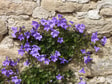
Rock-garden relatives such as Campanula portenschlagiana share its preference for walls and well-drained ground. Their low spreading cushions, however, contrast with the clump of fine, upright flowering stems characteristic of harebell. Habit is therefore a useful distinction even before comparing the individual flowers. 7
Main sources
- Plants of the World Online / Kew, Campanula rotundifolia L.
- Royal Horticultural Society, Campanula rotundifolia - harebell
- Missouri Botanical Garden PlantFinder, Campanula rotundifolia
- Plants For A Future, Campanula rotundifolia
- Info Flora, Campanula rotundifolia L.
- Wikipedia EN, Campanula rotundifolia
- French Wikipedia, round-leaved bellflower
- Wikidata, Campanula rotundifolia (Q27989)
Frequently asked questions
Why does the name refer to round leaves when the visible leaves are narrow?
The epithet rotundifolia describes only the rounded to heart-shaped basal leaves. They often wither before flowering, leaving narrow, linear stem leaves that look quite different.
Is harebell the same plant as the woodland bluebell?
No. In Scotland, bluebell means Campanula rotundifolia, a Campanulaceae with violet-blue bells. Elsewhere in Great Britain, it means Hyacinthoides non-scripta, an Asparagaceae with spring flowers in racemes.
Is harebell toxic to cats and dogs?
No reference source documents a toxic compound in Campanula rotundifolia. The leaves and flowers are edible raw in small amounts, although they have no common culinary use.
Does harebell need rich soil?
No. Poor, well-drained, neutral to calcareous soil produces a more compact, freely flowering clump than rich wet soil, which favors soft stems and crown rot.
How do I propagate Campanula rotundifolia?
Use seed, divide clumps in spring or take basal shoot cuttings. Division also rejuvenates older clumps that lose vigor with age.
Where does harebell grow in France?
It grows in dry grasslands, rock gardens, stabilized dunes and old walls across much of France. It has no particular rarity status in metropolitan France.
How does it differ from Dalmatian bellflower?
Dalmatian bellflower (Campanula portenschlagiana) is a low spreading wall cushion from the Balkans. Harebell forms a clump with slender upright stems and a native range covering Europe and temperate Asia.
Similar plants
If you are unsure about a plant’s toxicity, ask a botanist or veterinarian for advice.