
Japanese chestnut (Castanea crenata, )
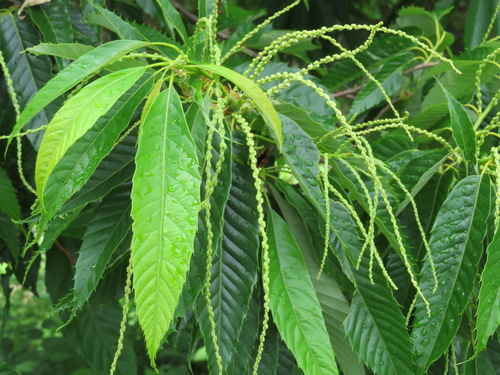

Japanese chestnut (Castanea crenata) is a deciduous tree in the Fagaceae family, native to Japan and the Korean Peninsula. Grown for centuries for its large, sweet nuts, it is also valued for natural resistance to chestnut blight, which makes it an important parent in American chestnut restoration programs.
Read moreJapanese chestnut, Korean chestnut and Kuri
Allow a few hours of direct sun per day, preferably morning or evening.



© photo
(c) Marco Mussita, some rights reserved (CC BY), uploaded by Marco Mussita · cc-by
Randal · cc0
Wikimedia Commons · CC BY-SA or Public Domain
Taken Oct 5, 2022 by Joëlle Pineau (cc-by-sa)
© copyright of the Board of Trustees of the Royal Botanic Gardens, Kew.


Global distribution
Castanea crenata is native to Japan, from the southern islands to Hokkaidō, and the Korean Peninsula. It is widely cultivated for its nuts in eastern China and Taiwan, and introduced in North America and Europe chiefly as a disease-resistant parent for chestnut breeding.
- Native3
- Introduced1
- Japan
- South Korea
- North Korea
- United States
Hexagons: regions where the plant occurs. Green dots: native range.1
Identity
Japanese chestnut (Castanea crenata Siebold & Zucc., 1846), also called Korean chestnut or kuri in Japanese, is a deciduous Fagaceae tree reaching 8–15 m (26–49 ft) at maturity. Philipp Franz von Siebold and Joseph Gerhard Zuccarini described it in 1846 in their work on Japanese flora. POWO accepts the binomial dating from that publication, without a major subsequent taxonomic revision. 1 2
Latin crenata, meaning “crenate,” refers to the finely toothed leaf margin, a feature shared with other chestnuts in the genus Castanea. The name kuri denotes both the tree and its nut in Japanese cooking. Chestnut rice, kuri gohan, and candied chestnuts, kuri kanro-ni, remain autumn dishes in Japanese homes. 6
Recognition
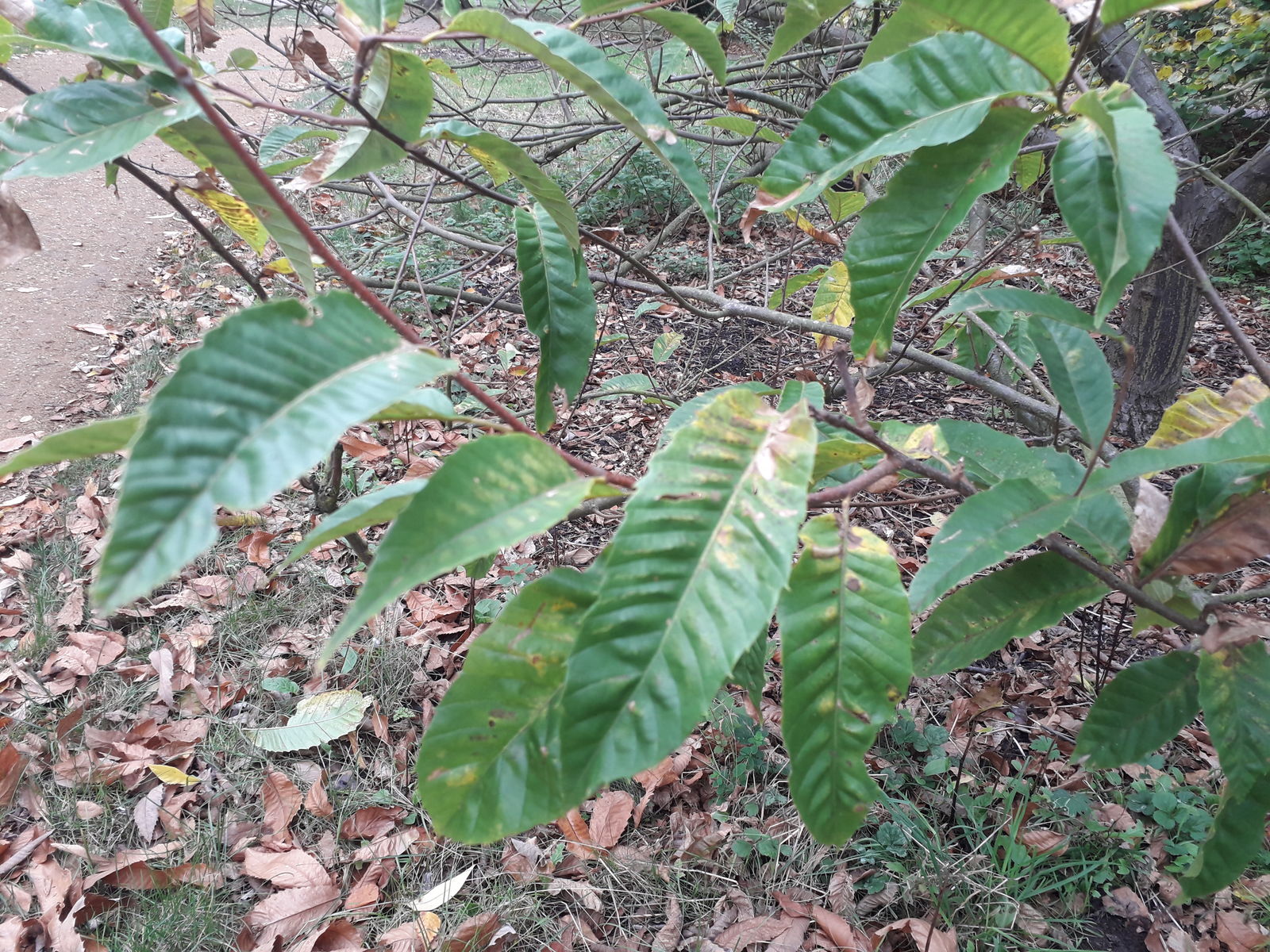
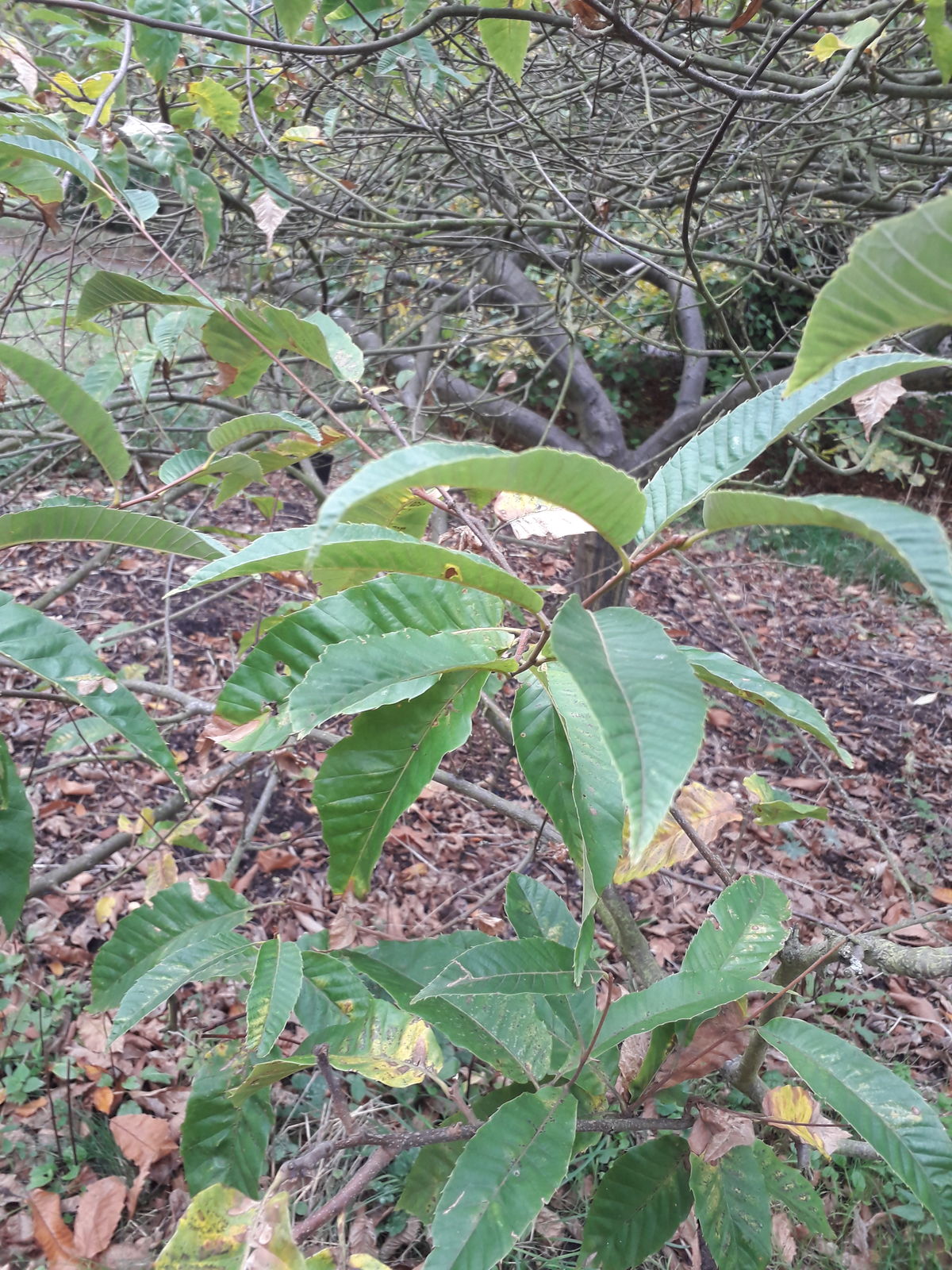
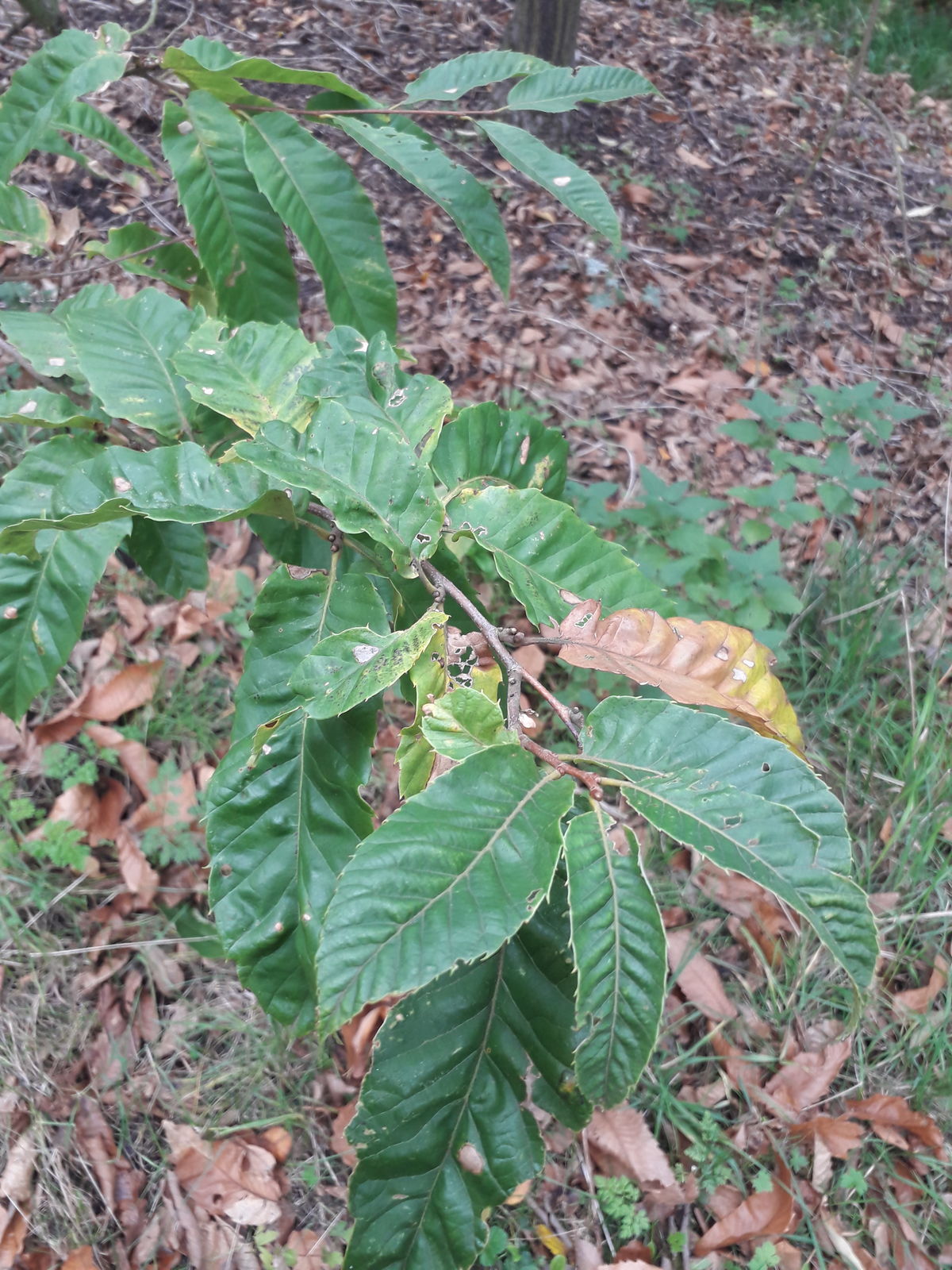
Mature Japanese chestnuts commonly stand 8–15 m (26–49 ft) tall with a spread of 8–12 m (26–39 ft). The broad, low crown is noticeably stockier than that of sweet chestnut (Castanea sativa) or American chestnut (Castanea dentata). Oblong-lanceolate leaves with finely toothed edges measure 8–19 cm (3–7.5 in) long and 3–5 cm (1.2–2 in) wide, somewhat smaller than sweet chestnut leaves. 4 6
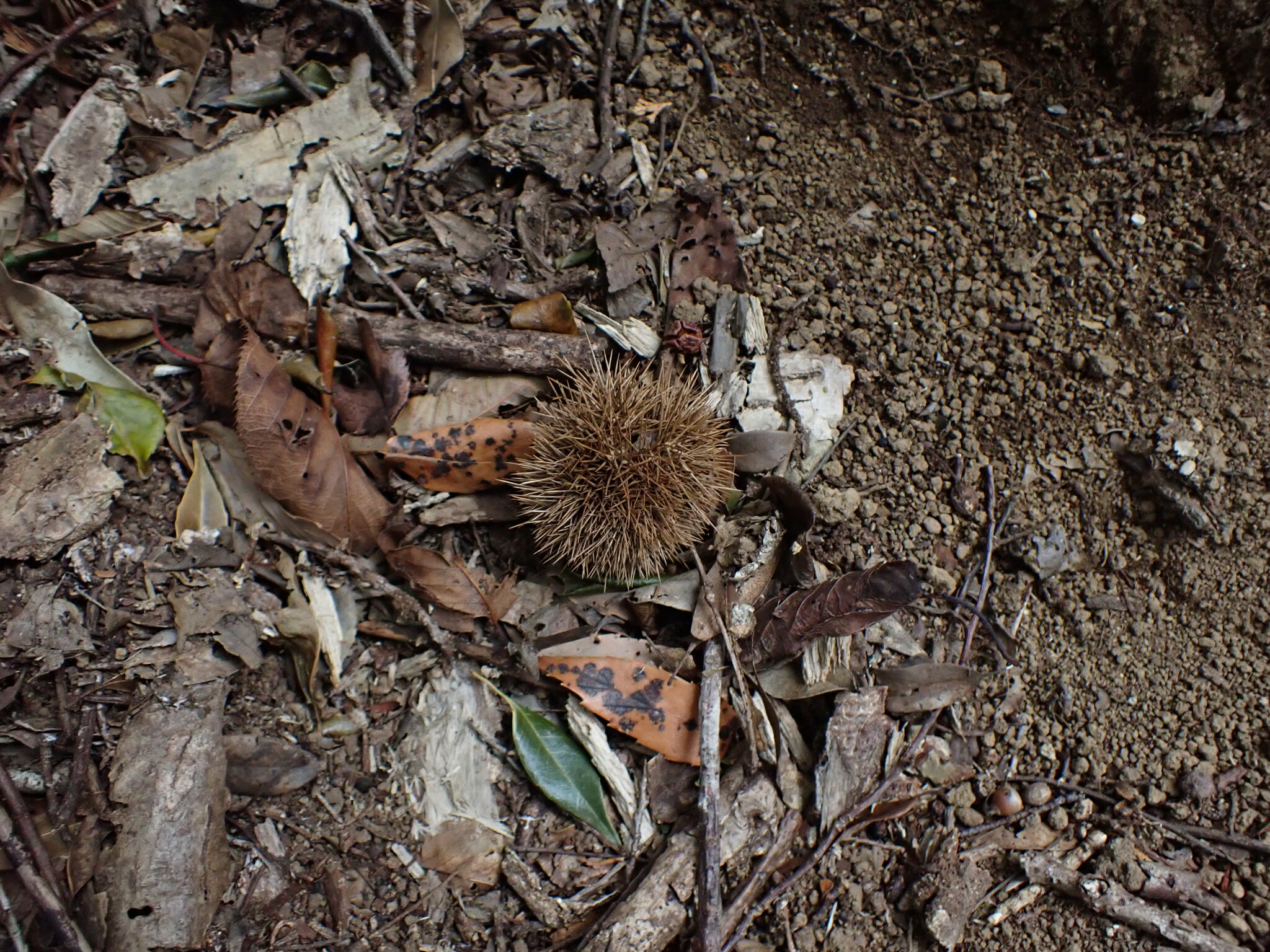
In late spring, upright catkins 7–20 cm (3–8 in) long carry cream male flowers toward the top and female flowers at the base. Fertilized female flowers develop into spiny burrs 5–7 cm (2–3 in) across. These turn yellow-brown and split into three valves when ripe, releasing two or three glossy brown chestnuts. 4 6
Useful taxonomy
Within the Fagaceae, POWO places Castanea crenata alongside three other cultivated chestnuts: sweet chestnut (Castanea sativa), American chestnut (Castanea dentata) and Chinese chestnut (Castanea mollissima). Its name has remained stable since publication in 1846, without the complicated synonymy associated with some long-cultivated garden plants. 1
For a beginner, the essential distinction concerns the genus: Castanea is separate from horse chestnut, Aesculus hippocastanum, in the Sapindaceae family. Similar common names can hide a crucial difference in edibility. Horse chestnut has a single toxic seed in its casing, whereas Japanese chestnut has two or three edible nuts in a spiny burr. 3
Habitat and range
Japanese chestnut grows naturally across Japan, from the southern islands to Hokkaidō, and on the Korean Peninsula. It occupies temperate lowland and mid-elevation forests. Secondary stands may develop from old orchards or after forest cutting, connecting parts of its present landscape distribution with earlier human activity. 1 8
Beyond that native range, the tree is cultivated for nuts in eastern China and Taiwan, and introduced in North America and Europe mainly as a resistant breeding parent. The recorded distribution summarized here includes seven countries or territories, from Japan to metropolitan France. The IUCN lists it as Least Concern, without a notable threat to natural populations in Japan and Korea. 7 5
Life cycle and reproduction
Cross-pollination supplies most fertilization: pollen from another tree reaches the female flowers because self-incompatibility strongly limits self-fertilization. The resulting genetic mixing helps explain the many named Japanese cultivars, each selected for particular nut sizes, flavors or resistance traits. Seedlings therefore need not resemble a named parent closely. 6
Fresh chestnuts germinate in two to four weeks after cold stratification, but seedlings do not reliably reproduce the parent cultivar. Grafting is therefore the standard orchard method for preserving a named selection. It also brings the first substantial harvest forward to four to six years, compared with eight to fifteen years for a seed-grown tree. 4
Uses and risks
Nut production remains the principal use. Larger and easier to peel than sweet chestnuts, these nuts are an autumn staple in Japan and Korea, eaten roasted, puréed or candied. Sweet flesh lies beneath an astringent inner skin that should be removed before eating, a feature shared by most chestnuts. 6 5
Breeding provides another major role for Castanea crenata. It naturally resists chestnut blight (Cryphonectria parasitica) and ink disease, two diseases that devastated American chestnut in the twentieth century. Since the 1930s, North American breeders have used it as a pollen parent in backcrossing programs aimed at restoring a resistant tree close to the original American chestnut. 7 1
Varieties, look-alikes and related plants
Japanese cultivars Tsukuba and Ginyose were selected for consistently large nuts, while Tanzawa also targets resistance to blight and chestnut gall wasp, which forms galls on young shoots. The ornamental selection Silverleaf has silvery leaf undersides, produced by denser hairs than those of the wild form. 6
Keep horse chestnut (Aesculus hippocastanum) clearly separate when identifying nuts. Its less prickly casing contains one toxic seed, without the culinary use of Castanea crenata chestnuts. Compared with sweet chestnut (Castanea sativa), Japanese chestnut has a lower, broader silhouette and somewhat smaller leaves, offering useful additional clues when the fruit is absent. 3 4
Main sources
- Plants of the World Online / Kew, Castanea crenata Siebold & Zucc.
- Tela Botanica eFlore, Castanea crenata Siebold & Zucc., 1846
- INPN / MNHN, Castanea crenata Siebold & Zucc., 1846
- Missouri Botanical Garden Plant Finder, Castanea crenata
- USDA PLANTS Database, Japanese chestnut, Castanea crenata
- Encyclopaedia Britannica, Japanese chestnut
- IUCN Red List, Castanea crenata assessment
- GBIF, Castanea crenata Siebold & Zucc. species page
Frequently asked questions
Is Japanese chestnut toxic?
No. Its chestnuts are sweet and edible, like those of sweet chestnut. Confusion often involves horse chestnut (Aesculus hippocastanum), a different species whose single seed is toxic and inedible.
Why do breeders value Japanese chestnut?
It has natural resistance to chestnut blight (Cryphonectria parasitica) and ink disease, two diseases that devastated American chestnut. North American breeding programs have used it as a resistant parent since the 1930s.
How does Japanese chestnut differ from sweet chestnut?
Castanea crenata forms a lower, broader tree than Castanea sativa, with somewhat smaller leaves. Its nuts are often larger and easier to peel, making it a favored parent for orchard hybrids.
How can I recognize a Castanea crenata burr?
The spiny burr is 5–7 cm (2–3 in) across and usually contains two or three glossy brown chestnuts. Horse chestnut has a less prickly casing and a single seed.
Is Japanese chestnut invasive in France?
No. It has no recognized invasive status there and is mainly planted in orchards or used as a breeding parent, with no documented naturalization beyond deliberate cultivation.
What are the main pests of Japanese chestnut?
Chestnut gall wasp (Dryocosmus kuriphilus) forms galls on young shoots and remains the most closely monitored threat in Japan. Cultivars such as Tanzawa were selected specifically for resistance.
Can Japanese chestnut grow in France?
Yes, in acidic to neutral, well-drained soil and full sun. Its USDA 4–8 hardiness range suits much of metropolitan France, apart from excessively lime-rich Mediterranean sites. Elsewhere, assess local cold and soil conditions against those same requirements.
Similar plants
If you are unsure about a plant’s toxicity, ask a botanist or veterinarian for advice.