
Sweet chestnut (Castanea sativa, )
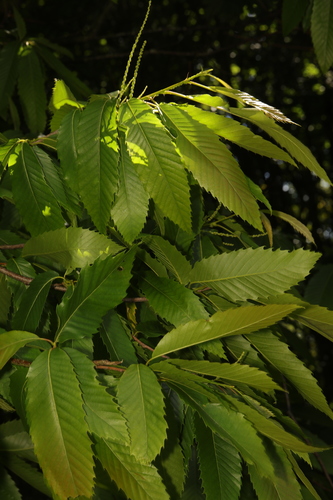
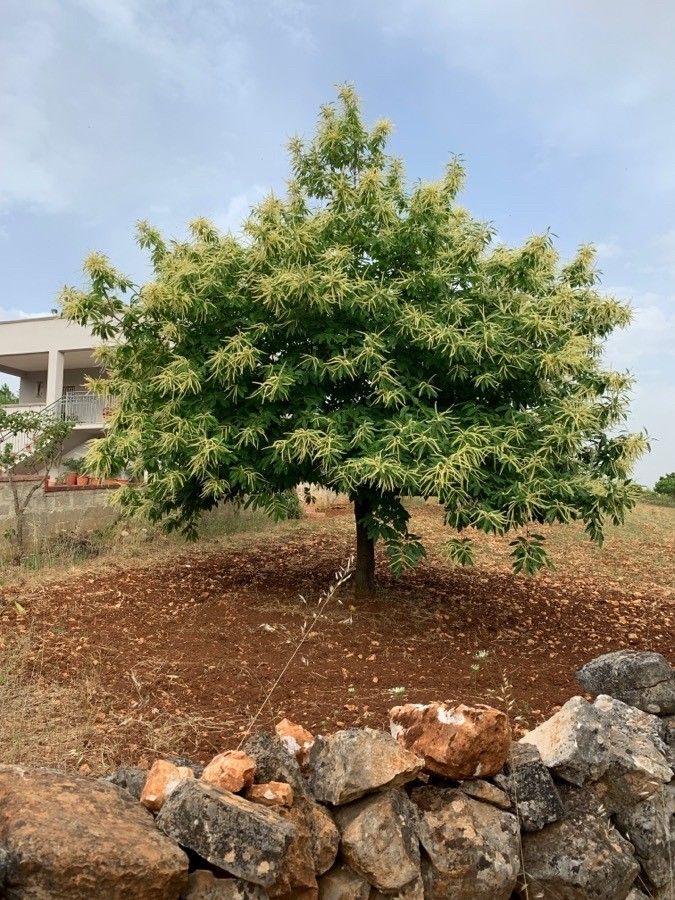
Sweet chestnut (Castanea sativa) is a deciduous tree in the Fagaceae family, native to the northern Mediterranean region and the Caucasus. It bears fragrant pale-yellow male catkins and small female flowers in summer, followed by spiny burrs containing edible chestnuts in fall. Once a staple food in European mountain regions, it is still grown for its nuts, tannin-rich timber and shade.
Read moreSweet chestnut, Spanish chestnut and European chestnut
Place in full sun, with intense direct light all day long.
Full sun; does not develop in shade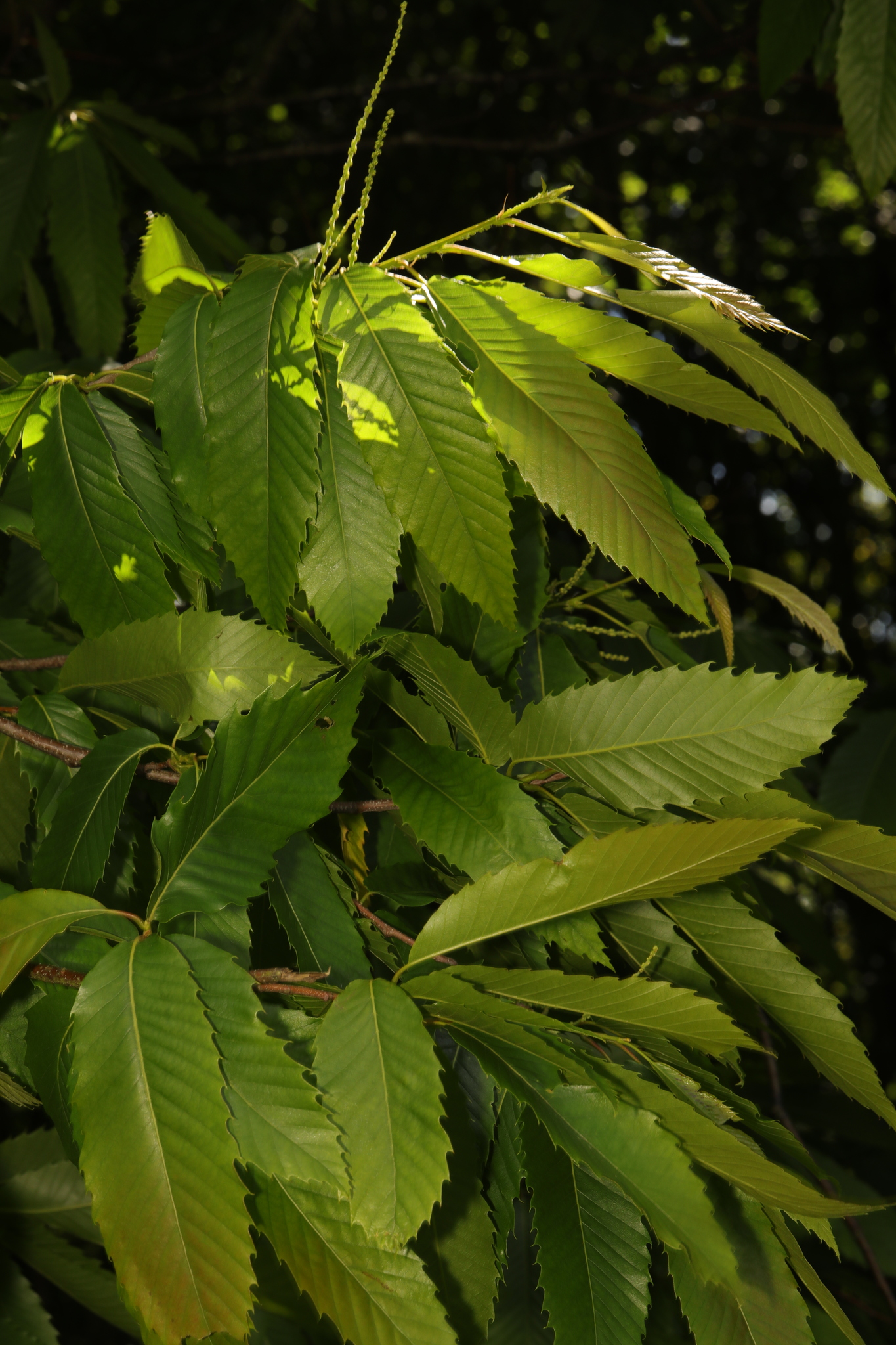


© photo
Stephen James McWilliam · cc0
Kian Hayles-Cotton · cc-by
Connor McInerney · cc-by
Taken Jul 13, 2020 by Thierry LE COM (cc-by-sa)
Taken Sep 17, 2020 by Alain Bigou (cc-by-sa)
Taken Nov 26, 2022 by Jim Knopf (cc-by-sa)
Taken Oct 28, 2019 by Jiří Vilím (cc-by-sa)
Taken Oct 5, 2019 by Angiolino Angiolino (cc-by-sa)
© copyright of the Board of Trustees of the Royal Botanic Gardens, Kew.




Global distribution
Its native range remains debated but centers on northeastern Turkey and the Caucasus, with scattered populations around the northern Mediterranean, from the southern Balkans to North Africa. People have spread it widely through western Europe since antiquity, notably the Romans, as far as Britain.
- Native6
- Introduced1
- Turkey
- Georgia
- Greece
- Italy
- France
- Spain
- United Kingdom
Hexagons: regions where the plant occurs. Green dots: native range.1
Identity
Sweet chestnut (Castanea sativa Mill., 1768), also called Spanish chestnut or European chestnut, is a deciduous tree in the genus Castanea, family Fagaceae, alongside oaks and beeches. 1 9
On a suitable site in the ground, sweet chestnut commonly grows 24–30 m (79–98 ft) tall with a spread of 9–15 m (30–49 ft). Very old trees can have trunks more than 2 m (6.6 ft) in diameter. 4 5
The genus name Castanea comes from Latin castanea, probably borrowed from ancient Greek kastanea. The epithet sativa means “sown” or “cultivated,” recalling centuries of planting beyond its original range. The French culinary word marron denotes a large chestnut with a single seed per burr, selected for eating.
Recognition
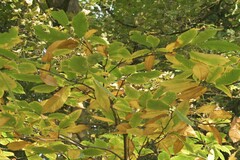
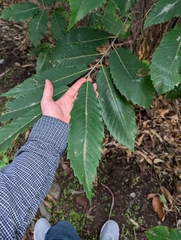
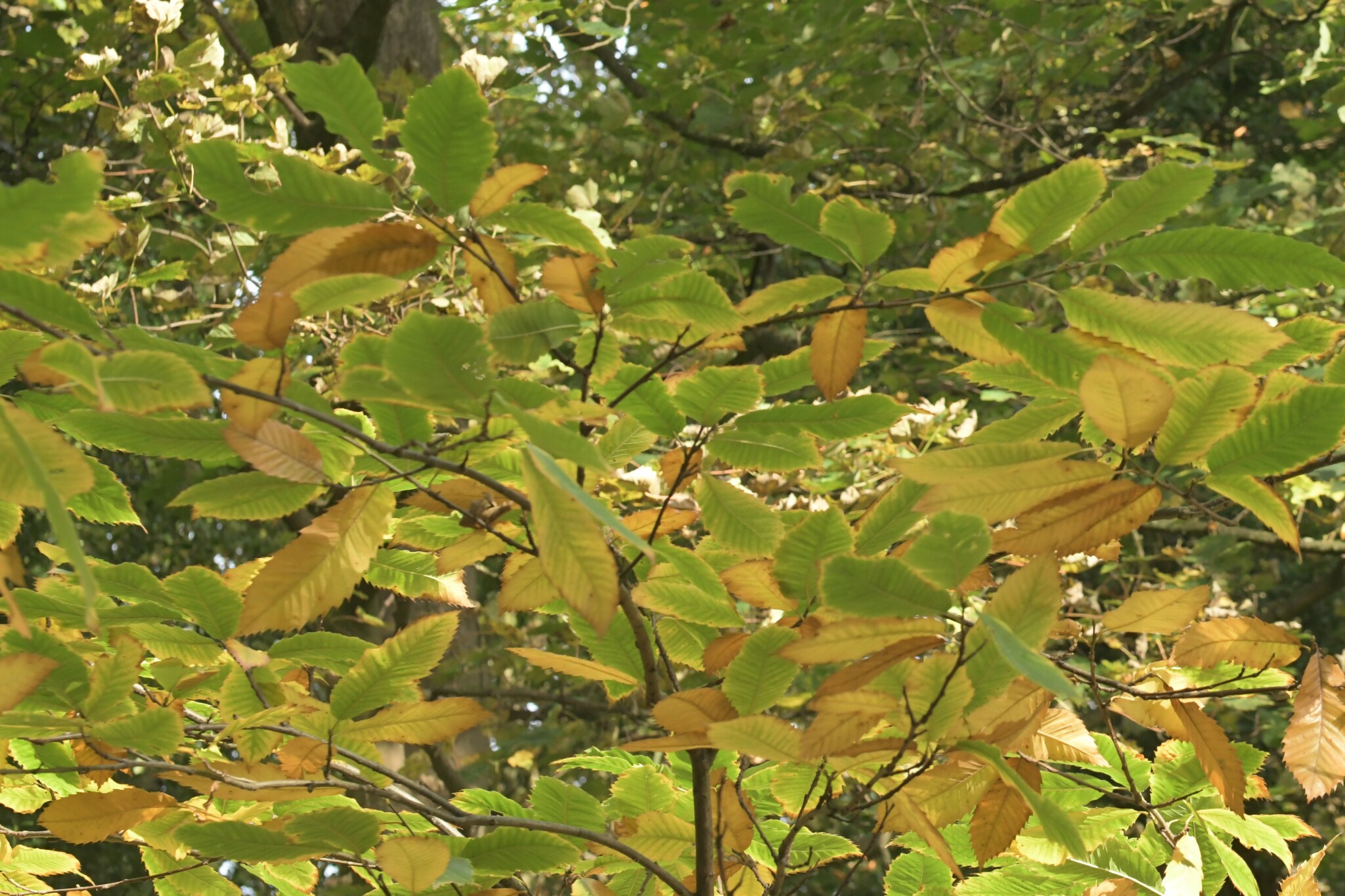
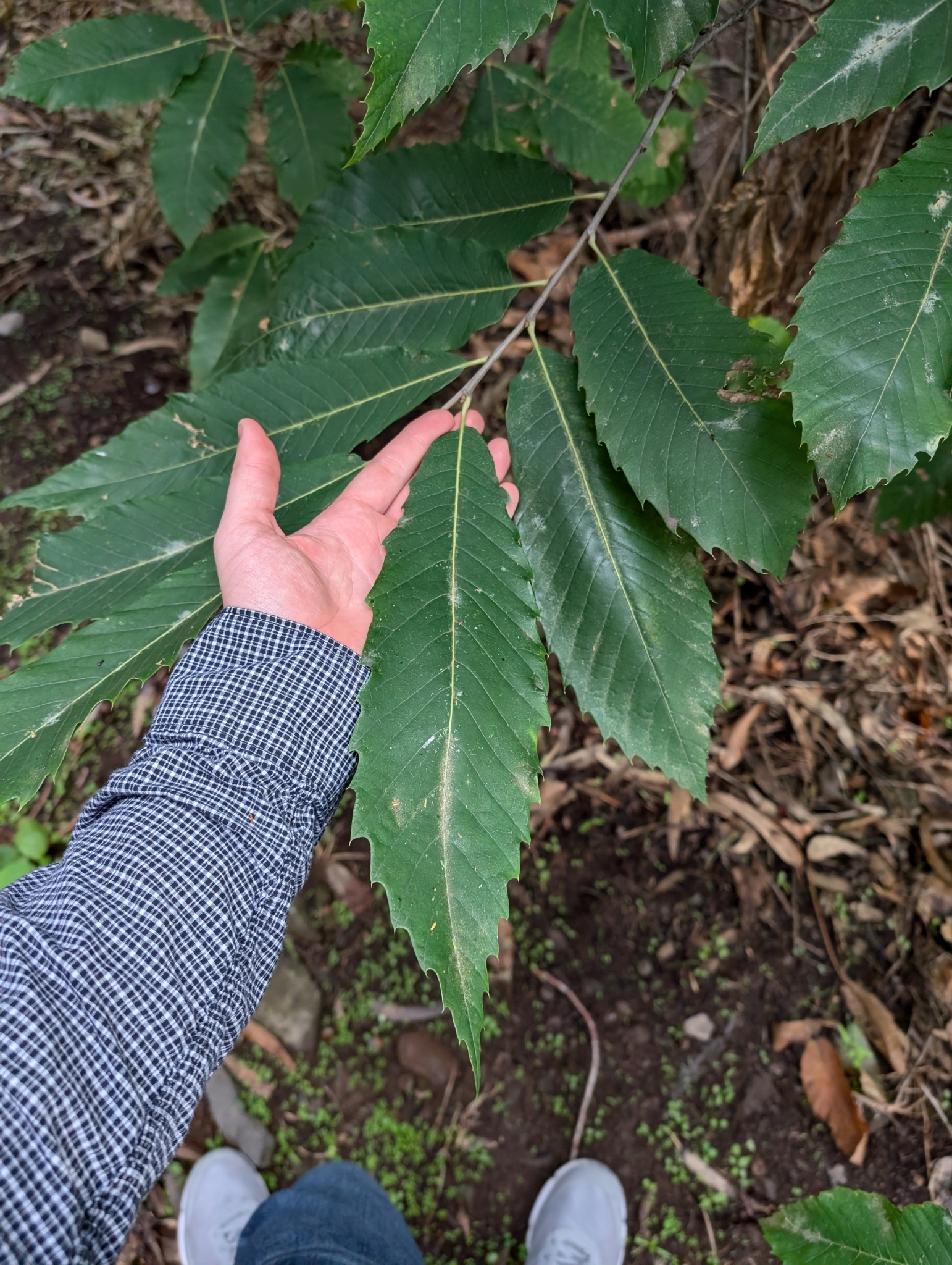
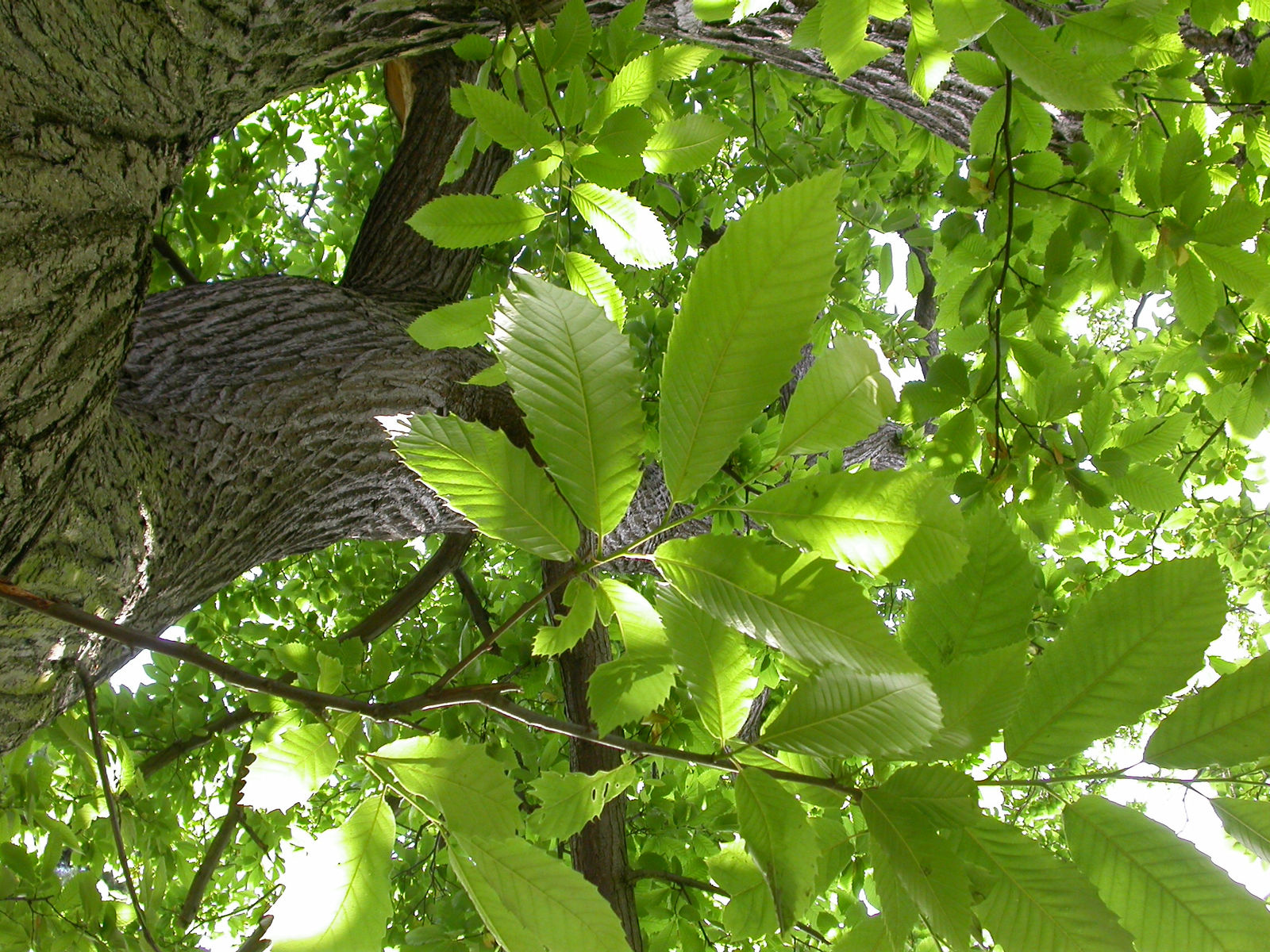
Alternate, deciduous leaves are oblong to lance-shaped, 15–25 cm (6–10 in) long and 4–8 cm (1.6–3 in) wide. Parallel side veins each end in a sawlike tooth along the margin. These regular teeth and veins help identify the tree without flowers or nuts, unlike the very different compound, palmate leaves of horse chestnut. Glossy green above, the leaves turn yellow before falling. 5 4
Male and female flowers grow on the same tree, making the species monoecious, but remain clearly separate. Upright, pale-yellow male catkins measure 10–20 cm (4–8 in) and have a strong scent during summer flowering, with timing depending on the local climate. Small female flowers cluster at the bases of the same current-year shoots. 2 4
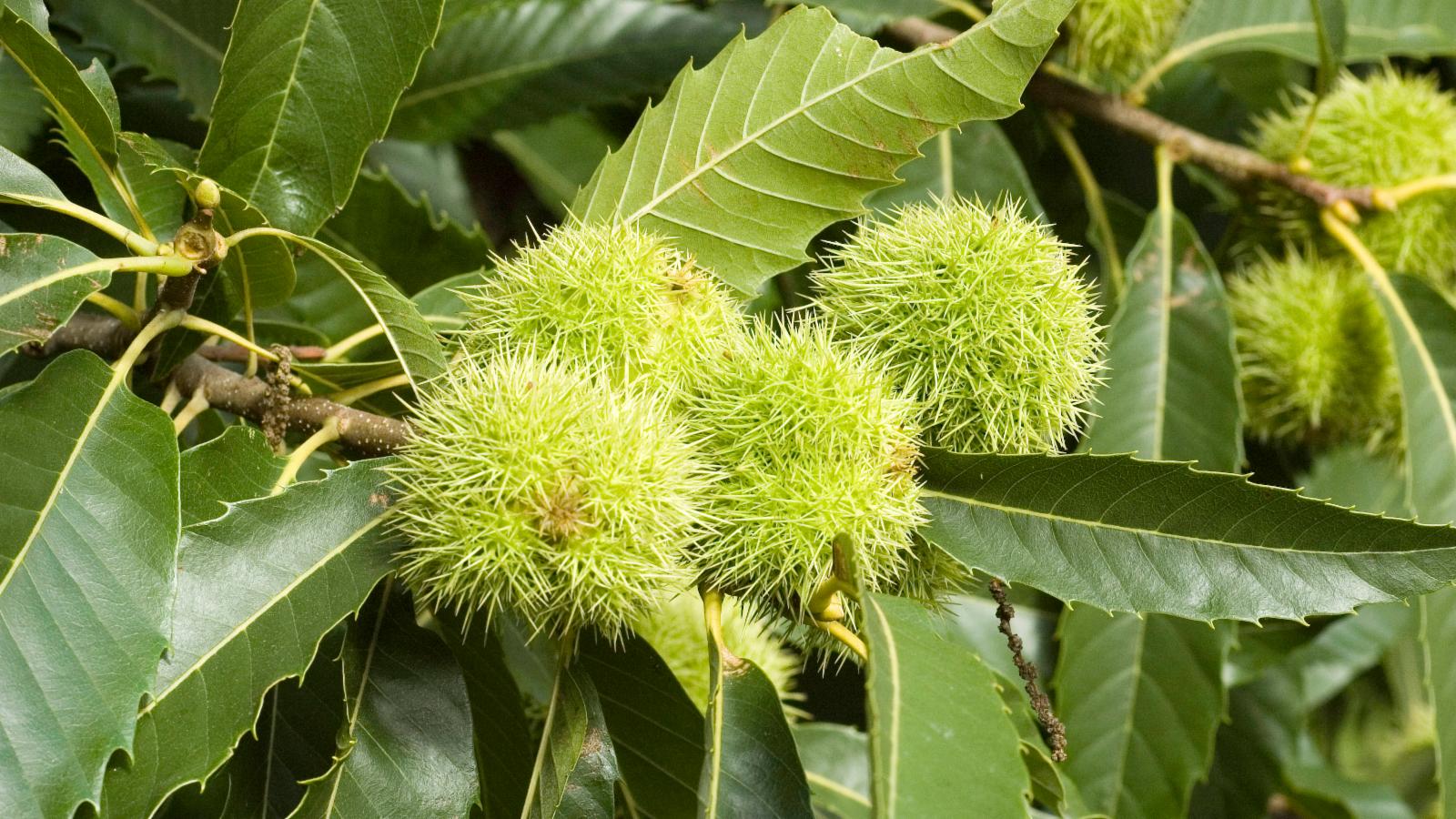
In fall, each spiny burr turns from green to brown and usually splits into several valves, releasing three to seven glossy brown chestnuts, depending on the tree. Young bark is smooth and greenish brown, developing deep fissures with age. 4
Useful taxonomy
For POWO/WCVP, Castanea sativa Mill. is the accepted name of the only Castanea species native to Europe and western Asia. The genus also includes Japanese chestnut (Castanea crenata), Chinese chestnut (Castanea mollissima) and American chestnut (Castanea dentata), devastated by blight across its native range. 1
Older botanical names still encountered as synonyms include:
- Fagus castanea L. (historical synonym)
- Castanea vesca Gaertn. (historical synonym)
- Castanea vulgaris Lam. (historical synonym)
Use the accepted scientific name, Castanea sativa, as the reliable reference. Sweet chestnut must be distinguished from horse chestnut (Aesculus hippocastanum), a distantly related member of Sapindaceae with poisonous conkers whose common name can cause confusion. 1
Habitat and range
Debate continues over the original native range of sweet chestnut. It centers on northeastern Turkey and the Caucasus, with scattered populations around the northern Mediterranean, from the southern Balkans to North Africa. 8
People, notably the Romans, spread sweet chestnut widely through western Europe from antiquity onward, reaching Britain. Soil limits that spread: it requires acidic, deep, well-drained shale, granite or sandy ground. Limestone soils impede iron uptake, causing yellowing and eventually decline. 6 5
Sweet chestnut requires full sun and does not develop in shade. Annual rainfall of at least 600 mm (24 in) supports good nut production, although established trees tolerate summer drought well. USDA zones 5–7 cover much of its present cultivation range. 8 6
Life cycle and reproduction
Summer flowering begins a slow reproductive process. Female flowers receive pollen from male catkins, then take several months to develop the burrs that ripen and release chestnuts in fall, with timing depending on the local climate. 4 5
Seed-grown trees generally need 20–50 years to produce substantial crops. Varieties grafted onto vigorous rootstocks bear earlier. Seed does not reproduce cultivars faithfully, so grafting remains the standard way to propagate a named variety. 2
Cut trees also produce vigorous stump sprouts. For centuries this ability has supported coppice management, with regular shoots harvested for posts and vineyard stakes.
Uses and risks
Chestnuts were long a staple food in European mountain regions where cereals were scarce, earning the tree a local “bread tree” nickname. The nuts are roasted, boiled, or dried and ground into flour. 6
The ASPCA classifies Castanea as non-toxic to dogs, cats and horses. Raw chestnuts nevertheless contain astringent tannins and are easier to digest cooked. 7
Tannin-rich leaves and bark have traditionally been used as astringents for coughs and sore throats. This is a historical folk practice rather than a validated treatment. 6
European chestnut groves face two major diseases: chestnut blight, caused by a fungus that forms bark cankers, and ink disease, caused by root-rotting Phytophthora. Climate change and habitat fragmentation compound these pressures. 8 5
Varieties, look-alikes and related plants
French growers have selected dozens of traditional nut varieties, including Marigoule, Bouche de Bétizac, a Japanese chestnut hybrid more tolerant of blight, and Marron de Lyon. Grafted onto vigorous rootstocks, they produce much earlier than the 20–50 years needed by seedlings, explaining why producers graft rather than sow. The culinary term “marron” describes a large chestnut with one seed per burr, a commercial selection criterion rather than a separate species.
Confusion with horse chestnut (Aesculus hippocastanum) is particularly common. This distantly related Sapindaceae tree has compound, palmate leaves rather than simple, toothed leaves. Its inedible, saponin-rich conkers provide another clear distinction. 6
Yellow-edged leaves distinguish the ornamental cultivar ‘Aureomarginata’, illustrating the horticultural variation available beyond the familiar nut-producing varieties. 3
Main sources
- Plants of the World Online / Kew, Castanea sativa Mill.
- Royal Horticultural Society, Castanea sativa (sweet chestnut)
- Royal Horticultural Society, Castanea sativa 'Aureomarginata'
- Missouri Botanical Garden Plant Finder, Castanea sativa
- NC State Extension Gardener Toolbox, Castanea sativa
- Plants For A Future, Castanea sativa
- ASPCA, Chestnut (Castanea) toxicity entry
- EUFORGEN, Castanea sativa species page
- INPN / MNHN, Castanea sativa Mill., 1768
Frequently asked questions
Is sweet chestnut the same as horse chestnut?
No. Sweet chestnut (Castanea sativa, Fagaceae) produces edible chestnuts. Horse chestnut (Aesculus hippocastanum, Sapindaceae) produces inedible conkers and is not closely related.
Are chestnuts poisonous to dogs and cats?
No. The ASPCA lists Castanea as non-toxic to dogs, cats and horses. Raw chestnuts contain astringent tannins, however, and are easier to digest when cooked.
Why does my sweet chestnut produce no nuts?
The species is largely self-sterile. An isolated tree may flower normally but set few nuts; plant at least two compatible varieties nearby for good pollination.
Is chestnut a hard wood?
Although classified as a hardwood, its timber is relatively soft among European broadleaved trees. Its high tannin content makes it durable, particularly for structural timber and barrel making.
How many chestnuts are in a burr?
A spiny burr usually holds several chestnuts, from three to seven depending on the tree and variety, each wrapped in an astringent inner skin.
Where does sweet chestnut come from?
Its native range centers on northeastern Turkey and the Caucasus, with scattered populations extending into the southern Balkans. People have spread it widely through western Europe since antiquity.
What diseases threaten sweet chestnut?
Chestnut blight and ink disease remain the two main threats to European chestnut groves, compounded by habitat fragmentation and climate change.
Similar plants
If you are unsure about a plant’s toxicity, ask a botanist or veterinarian for advice.