
Deodar cedar (Cedrus deodara, )
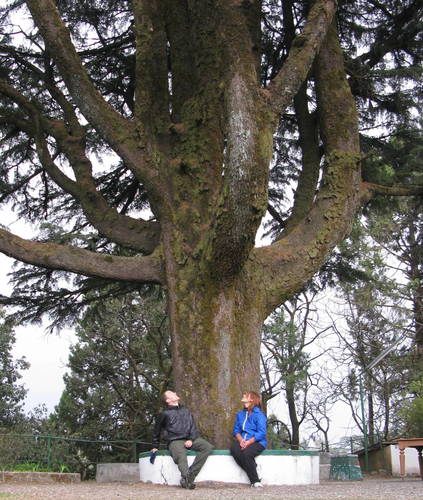
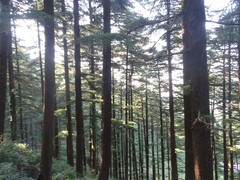
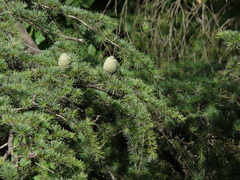
Deodar cedar (Cedrus deodara) is a large evergreen conifer in the Pinaceae family, native to the southern Himalayan foothills from Afghanistan to western Nepal. Its drooping leader and branch tips, long soft needles and upright barrel-shaped cones distinguish one of Eurasia's tallest conifers.
Read moreDeodar cedar, Himalayan cedar and Deodar
Allow a few hours of direct sun per day, preferably morning or evening.
Full sun required; no shade tolerance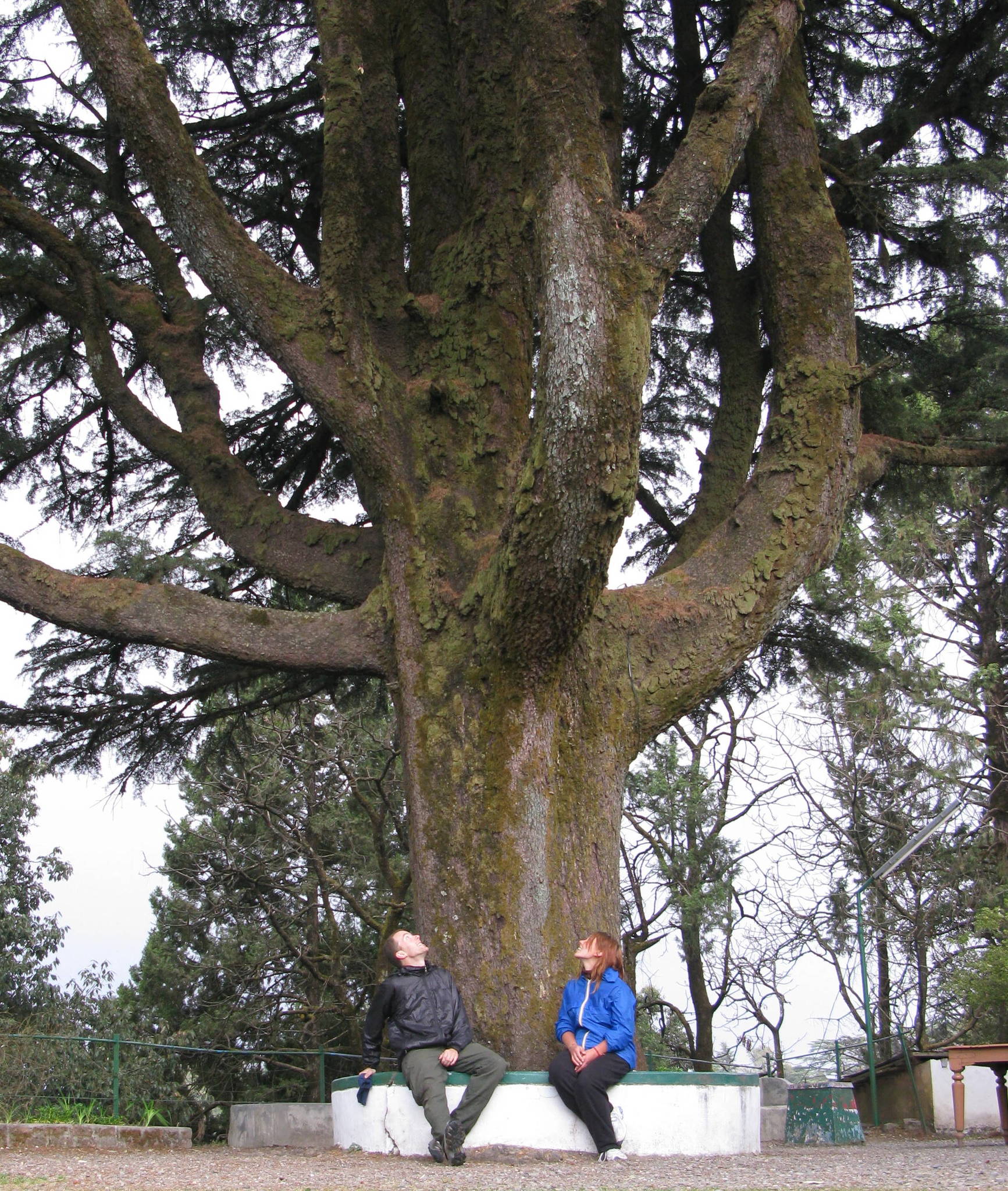
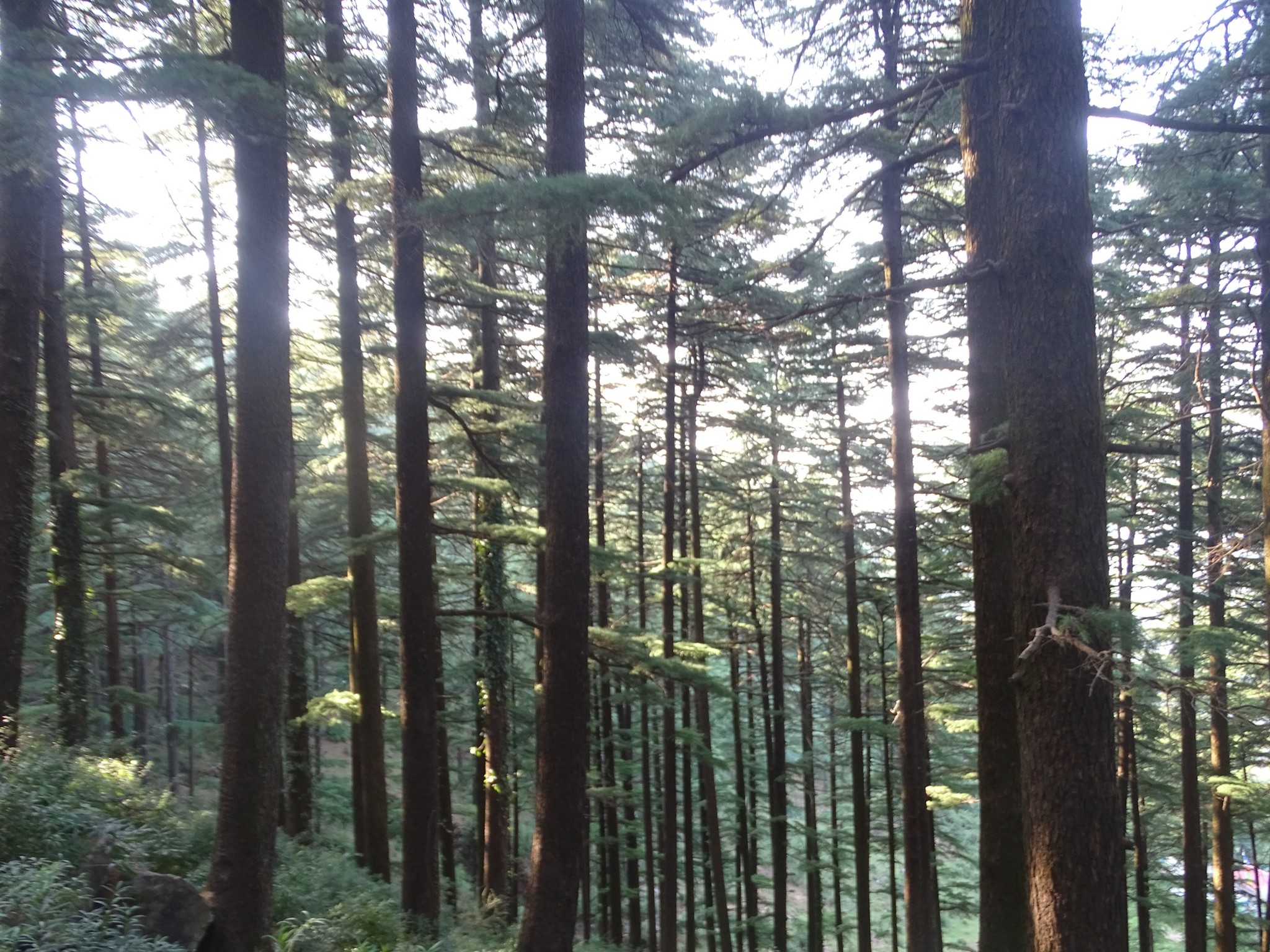


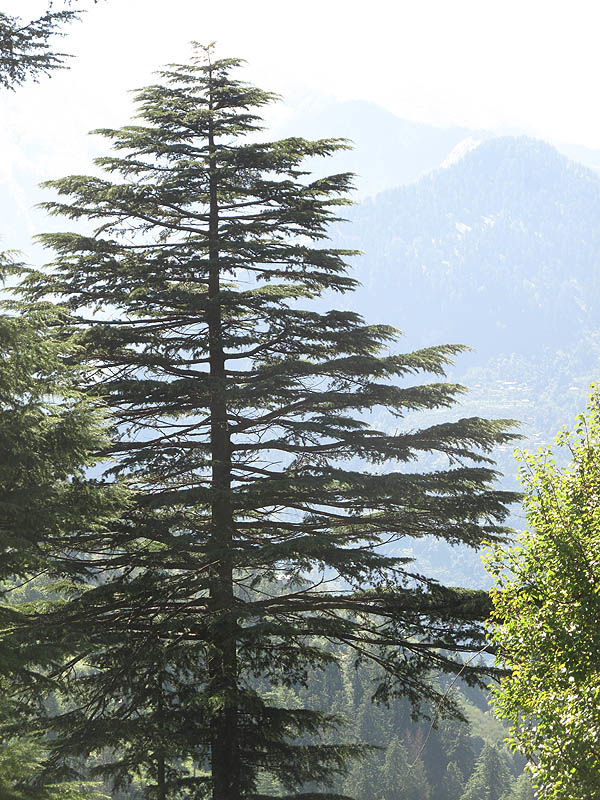
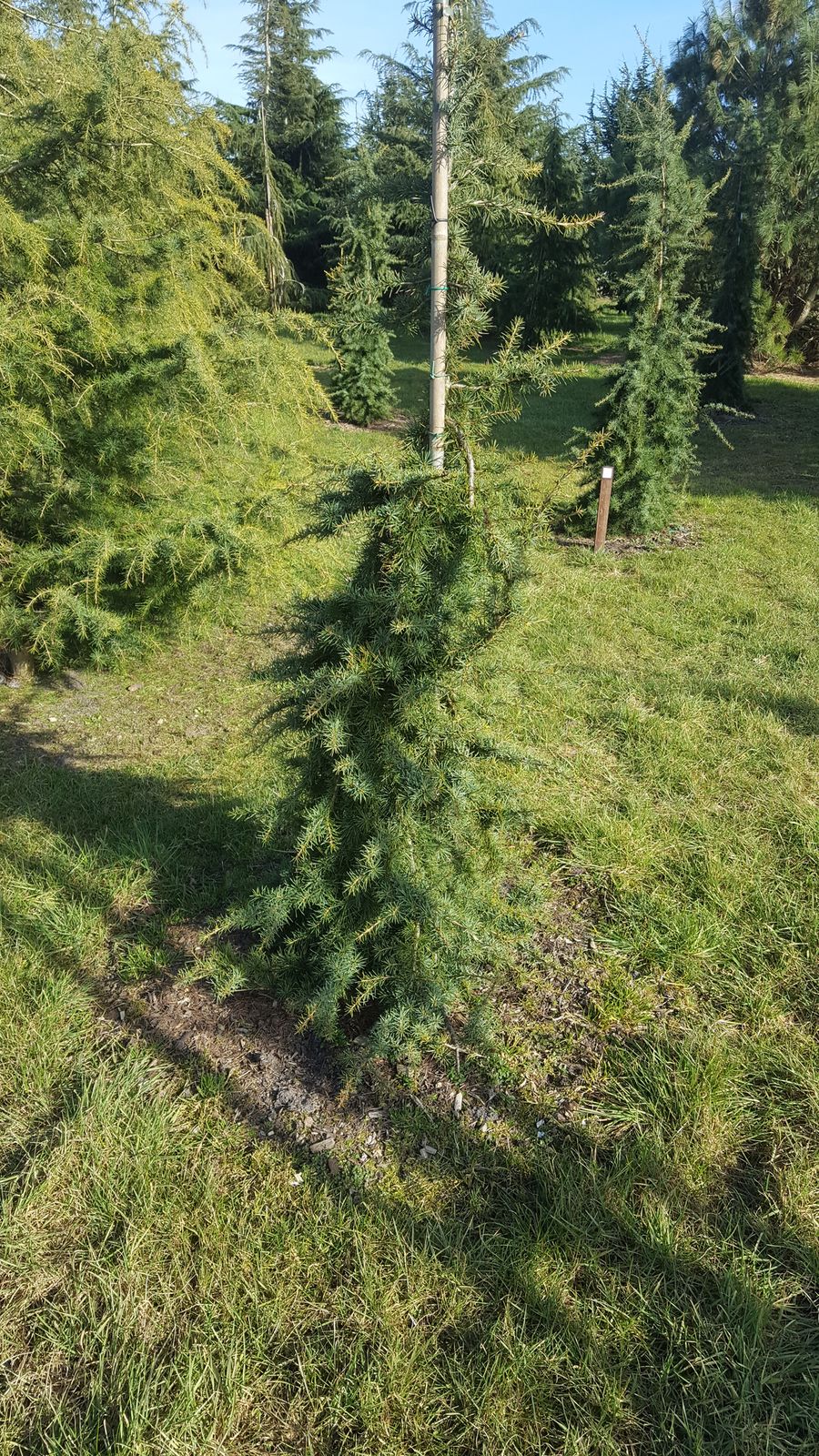

© photo
Yoav Daniel Bar-Ness · cc-by
Manoj Karingamadathil · cc-by
Dinesh Valke · cc-by-sa
Taken Nov 26, 2022 by Jean-René Girardeau (cc-by-sa)
Taken Nov 18, 2019 by Nacho Vega (cc-by-sa)
Taken May 13, 2019 by Fernando Degoumois (cc-by-sa)
Taken Aug 2, 2021 by nbx (cc-by-sa)
Taken Dec 17, 2013 by Tela Botanica − Emmanuel STRATMAINS (cc-by-sa)
© copyright of the Board of Trustees of the Royal Botanic Gardens, Kew.




Global distribution
Cedrus deodara is native to the western Himalayas, from northeastern Afghanistan to western Nepal through northern Pakistan, northwestern India and a fringe of southwestern Tibet. Introduced to Europe in the early nineteenth century, it has since been planted as an ornamental in many temperate countries.
- Native5
- Afghanistan
- Pakistan
- India
- Nepal
- Tibet
Hexagons: regions where the plant occurs. Green dots: native range.1
Identity
Deodar cedar (Cedrus deodara (Roxb. ex D.Don) G.Don, 1830), also known as Himalayan cedar or deodar, is an evergreen conifer in the genus Cedrus, family Pinaceae. Deodar derives from Sanskrit devadāru, literally "wood of the gods," a name recorded in ancient texts of the Indian subcontinent. 1 8
William Roxburgh first described the tree as Pinus deodara, published by David Don in 1824; George Don transferred it to Cedrus in 1830. The parenthesized authors in the accepted name record that change of genus, a convention used in botanical nomenclature. 1 7
Recognition
A drooping leader and flexible branch tips are the clearest features of Cedrus deodara. They remain pendant throughout the tree's life, including on young nursery plants. Mature trees commonly reach 20-50 m (66-164 ft), with exceptional reports of 60 m (197 ft) in the native range. 2 3
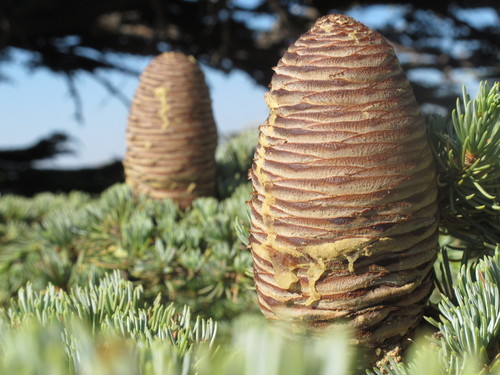
Soft needles measuring 2.5-5 cm (1-2 in) are longer than those of other cedars. They range from light green to blue-green and form dense clusters on short shoots. The barrel-shaped female cones have rounded tops and measure 7-12 cm (2.8-4.7 in) long; they disintegrate on the tree to release winged seeds rather than falling whole. 2 3
Grayish, smooth bark on young trees becomes fissured and scaly with age, on trunks that can exceed 3 m (10 ft) in diameter. An initially conical crown broadens into a wide, spreading canopy as the tree ages. 3
Useful taxonomy
Four closely similar species are recognized in Cedrus: Cedrus deodara, Cedrus libani A.Rich., Cedrus atlantica (Endl.) Manetti ex Carrière and Cedrus brevifolia (Hook.f.) Henry. They hybridize readily in cultivation, complicating identification. The accepted scientific name provides a stable reference when identifying a planted tree. 1 7
Its main homotypic synonym, Cedrus libani var. deodara (Roxb. ex D.Don) Hook.f., recalls an earlier treatment as a variety of Lebanon cedar before recognition as a distinct species. Horticultural cultivars such as Aurea and Pendula are grafted selections of the same taxon, rather than separate botanical varieties. 1 2
Habitat and range
The western Himalayas form the native range of Cedrus deodara, from northeastern Afghanistan to western Nepal through northern Pakistan, northwestern India and a fringe of southwestern Tibet. It grows at 1,500-3,300 m (4,900-10,800 ft), often in pure stands or mixed with firs and Himalayan blue pines. 1 6
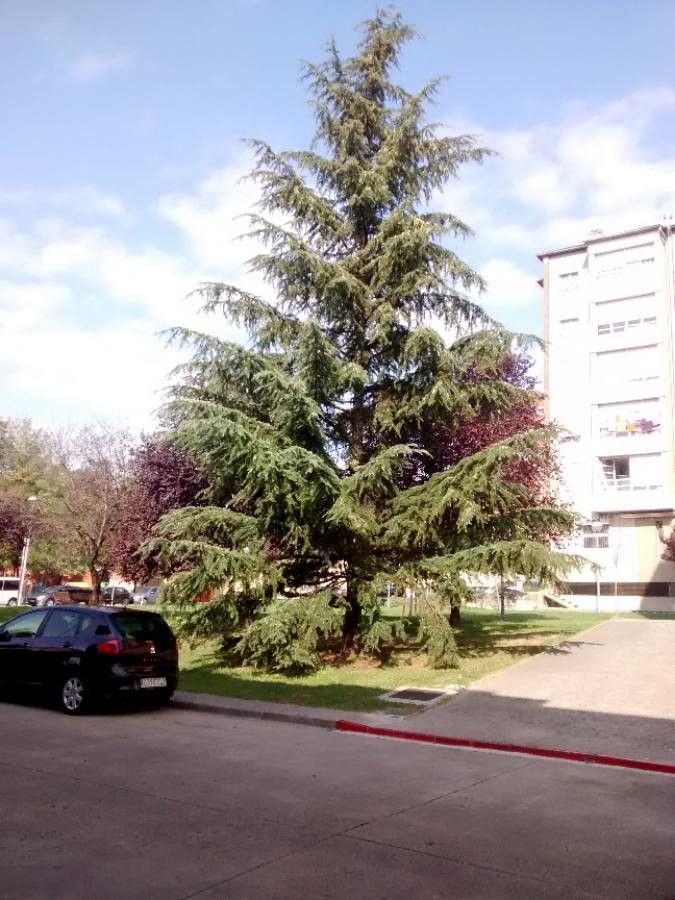
Introduced to Europe in the early nineteenth century, Deodar cedar is now planted as an ornamental in temperate climates worldwide, including France. Established trees tolerate drought and calcareous soils but cope poorly with heavy urban air pollution. 2 4
The International Union for Conservation of Nature lists Cedrus deodara as Least Concern. Despite local timber harvesting, natural regeneration remains strong, and the species is common or even dominant across much of the Himalayan forest region. 5
Life cycle and reproduction
Male and female cones develop on the same Cedrus deodara tree: the species is monoecious. Cones generally form in autumn in its native Northern Hemisphere range. Upright, cylindrical male cones release abundant pollen, carried by wind to female cones on the same tree or nearby trees. 3 2
Female cones mature in about a year. After fertilization they gradually break apart on the branches, scale by scale, releasing winged seeds for wind dispersal. This process means that intact cones rarely fall to the ground. 3 2
Nurseries commonly propagate the species from seed after several weeks of cold stratification to break dormancy; grafting is reserved for cultivars. A named cultivar such as Aurea or Pendula requires grafting onto a species rootstock to preserve its selected traits. Seedlings are genetically variable and do not reliably reproduce the parent's color or habit. 4
Uses and risks
Moderately hard, aromatic and termite-resistant timber makes Deodar cedar valuable for construction, structural woodwork, bridges and furniture in its native Himalayan regions. Natural durability explains its historical use in colonial buildings and Kashmir houseboats. 4 6
Essential oil from its needles and wood is used in perfumery and aromatherapy, while the resin serves as incense in several Himalayan religious traditions. Traditional Ayurvedic practice uses wood and bark decoctions for fever and respiratory complaints. These traditional uses do not replace medical advice. 4
No toxic compound is listed in the foliage or wood of Cedrus deodara for cats, dogs or humans. Effects on horses remain undocumented because specific data are lacking. This reported non-toxic profile distinguishes Deodar cedar from ornamental conifers more often described as irritants. 6
Varieties, look-alikes and related plants
Selections of Cedrus deodara remain cultivars of the same species. Aurea has golden new foliage, Pendula a more pronounced weeping habit, and Feelin' Blue a dwarf, prostrate form suited to small gardens. Before buying, check the scientific name, root condition and the cultivar's stated hardiness against local winter conditions. 2
Related trees most likely to cause confusion include:
- Cedrus libani, with shorter needles, a flat-topped mature crown and flattened cone tops;
- Cedrus atlantica, often bluish, with a stiffer, less drooping habit;
- large Himalayan pines or firs whose conical silhouettes look similar from a distance.
A drooping terminal leader distinguishes Cedrus deodara from its Mediterranean relatives more reliably than foliage color alone, even before the first cones develop. Some Cedrus atlantica trees are also bluish, limiting the diagnostic value of color in the field.
Main sources
- Plants of the World Online / Kew, Cedrus deodara (Roxb. ex D.Don) G.Don
- Royal Horticultural Society, Cedrus deodara - deodar
- Missouri Botanical Garden Plant Finder, Cedrus deodara
- Plants For A Future, Cedrus deodara
- IUCN Red List of Threatened Species, Cedrus deodara assessment
- USDA PLANTS Database, Cedrus deodara (Roxb. ex D.Don) G.Don
- GBIF Backbone Taxonomy, Cedrus deodara (Roxb. ex D.Don) G.Don
- International Plant Names Index, Cedrus deodara (Roxb. ex D.Don) G.Don
Frequently asked questions
Is Deodar cedar toxic?
No toxic compound is listed in the foliage or wood of Cedrus deodara for cats, dogs or humans. Effects on horses remain undocumented because specific data are lacking.
How can I tell Deodar cedar from Lebanon cedar?
Drooping growth, longer needles measuring 2.5-5 cm (1-2 in) and rounded cone tops distinguish Cedrus deodara. Cedrus libani has shorter needles, a flat-topped mature crown and cones with flattened tops.
Why does Deodar cedar have drooping branches?
The leader and terminal shoots remain flexible and drooping throughout the tree's life, unlike conifers with a rigid leader. This feature is visible even on very young nursery plants.
Is Deodar cedar timber used in construction?
Yes. Its natural durability and termite resistance make it valued for buildings, bridges and structural timber, particularly in its native Himalayan regions.
Where does the name deodar come from?
It derives from Sanskrit devadaru, literally "wood of the gods," reflecting the tree's sacred status in several religious traditions of the Indian subcontinent.
Is Deodar cedar threatened?
The International Union for Conservation of Nature lists the species as Least Concern. Despite local timber harvesting, natural regeneration remains strong in most Himalayan forests.
How big does Deodar cedar grow in a garden?
In temperate climates it commonly exceeds 20 m (66 ft) at maturity, spreading 8-15 m (26-49 ft), so it needs ample space. Cultivars such as Feelin' Blue are suitable for small gardens.
Similar plants
If you are unsure about a plant’s toxicity, ask a botanist or veterinarian for advice.