
False yellowhead (Dittrichia viscosa, )
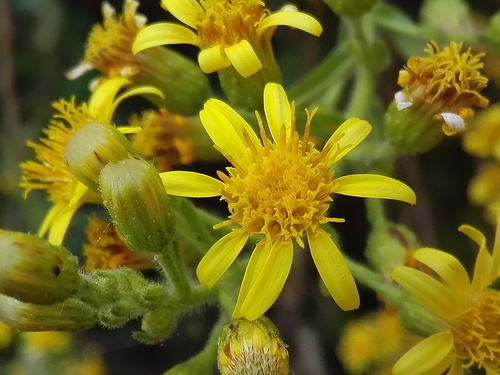

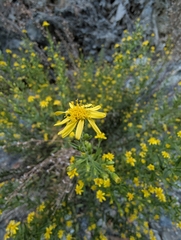
False yellowhead (Dittrichia viscosa (L.) Greuter, 1973) is a perennial herb to subshrub in the Asteraceae, native to the Mediterranean basin and Macaronesia. Sticky, scented glandular hairs cover its stems and leaves. It colonizes waste ground, roadside banks and poor soils, flowering yellow from late summer into fall and providing late forage for bees. It also supports beneficial insects in organic olive growing.
Read moreFalse yellowhead, Sticky fleabane, Woody fleabane and Yellow fleabane
Allow a few hours of direct sun per day, preferably morning or evening.
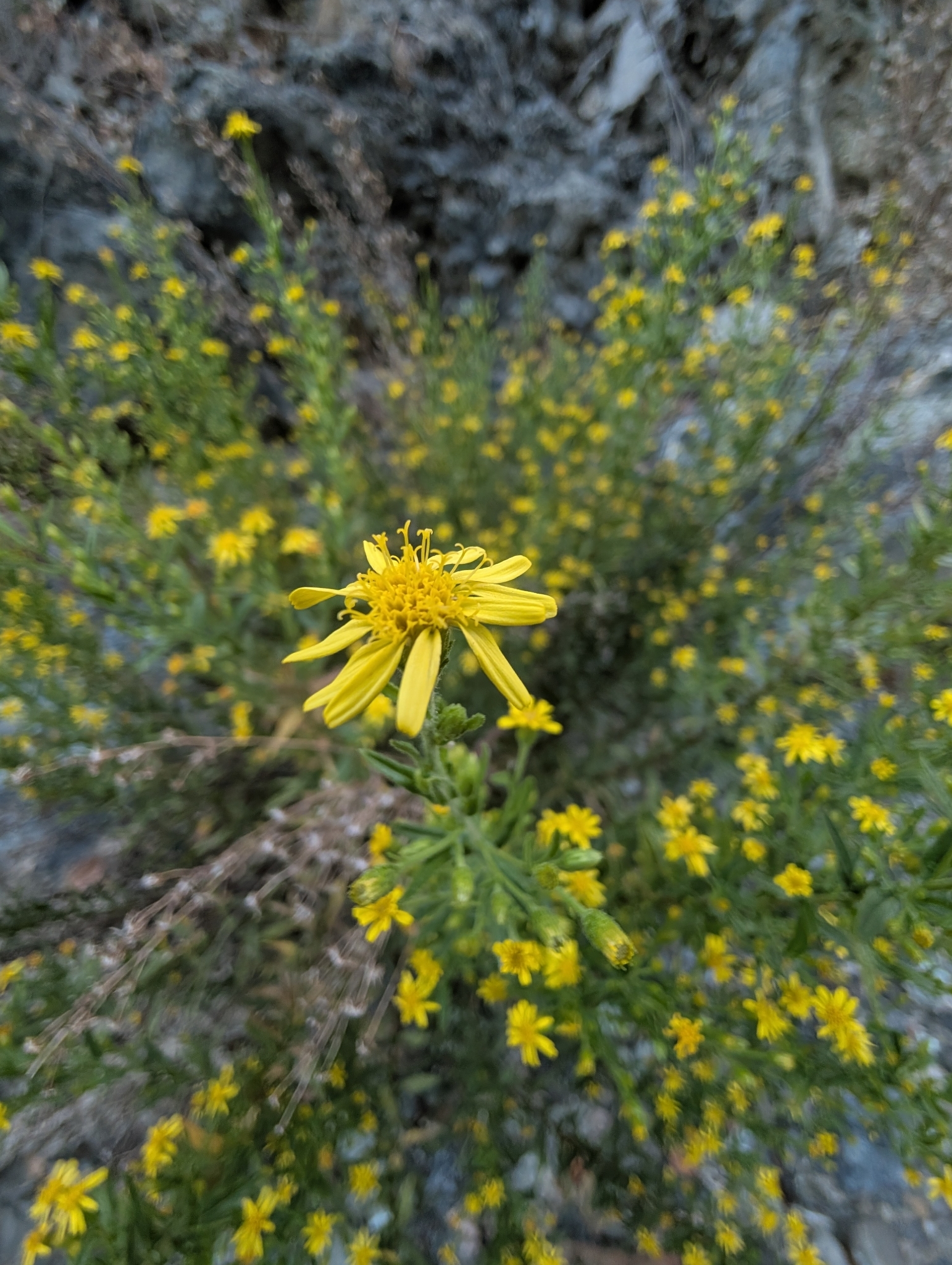


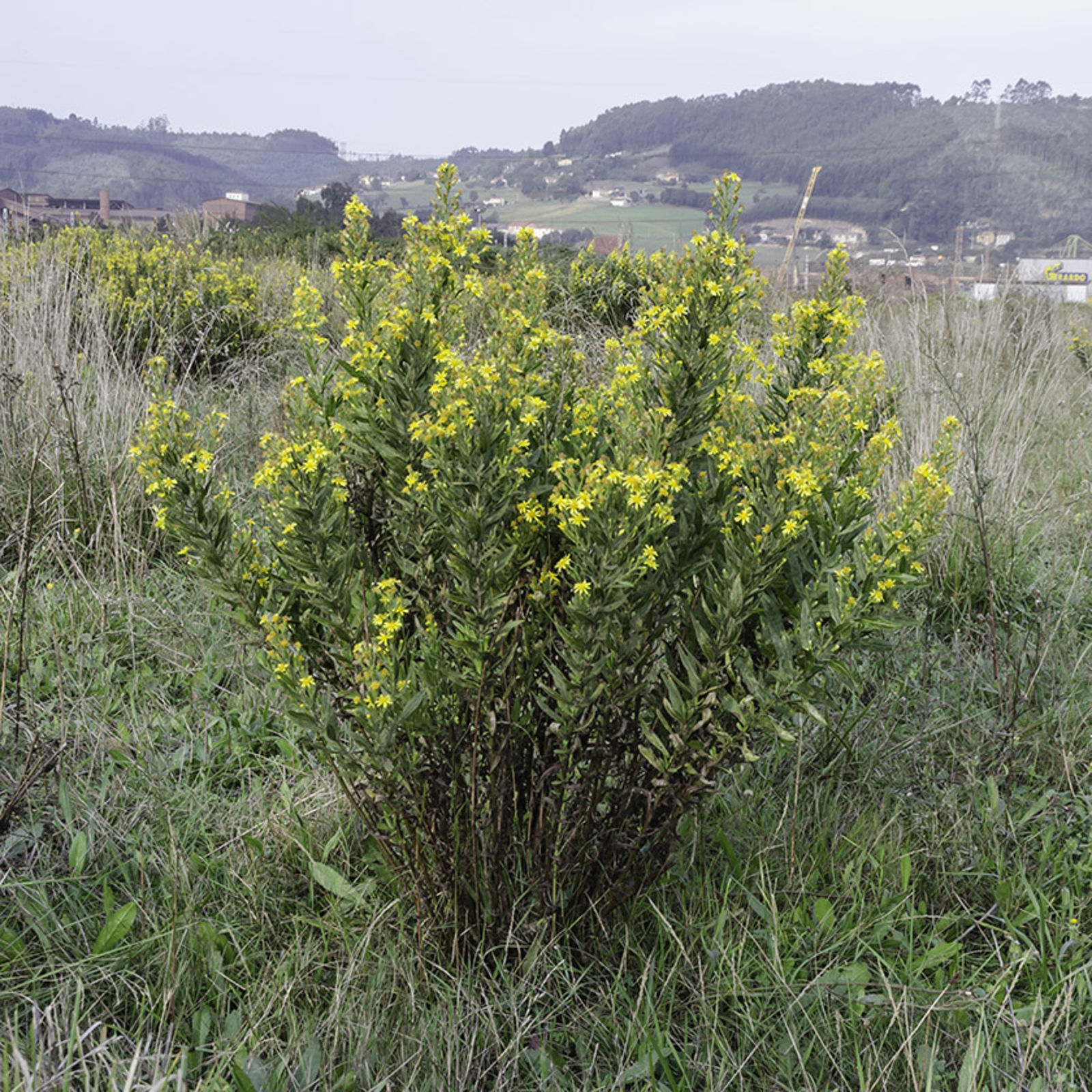
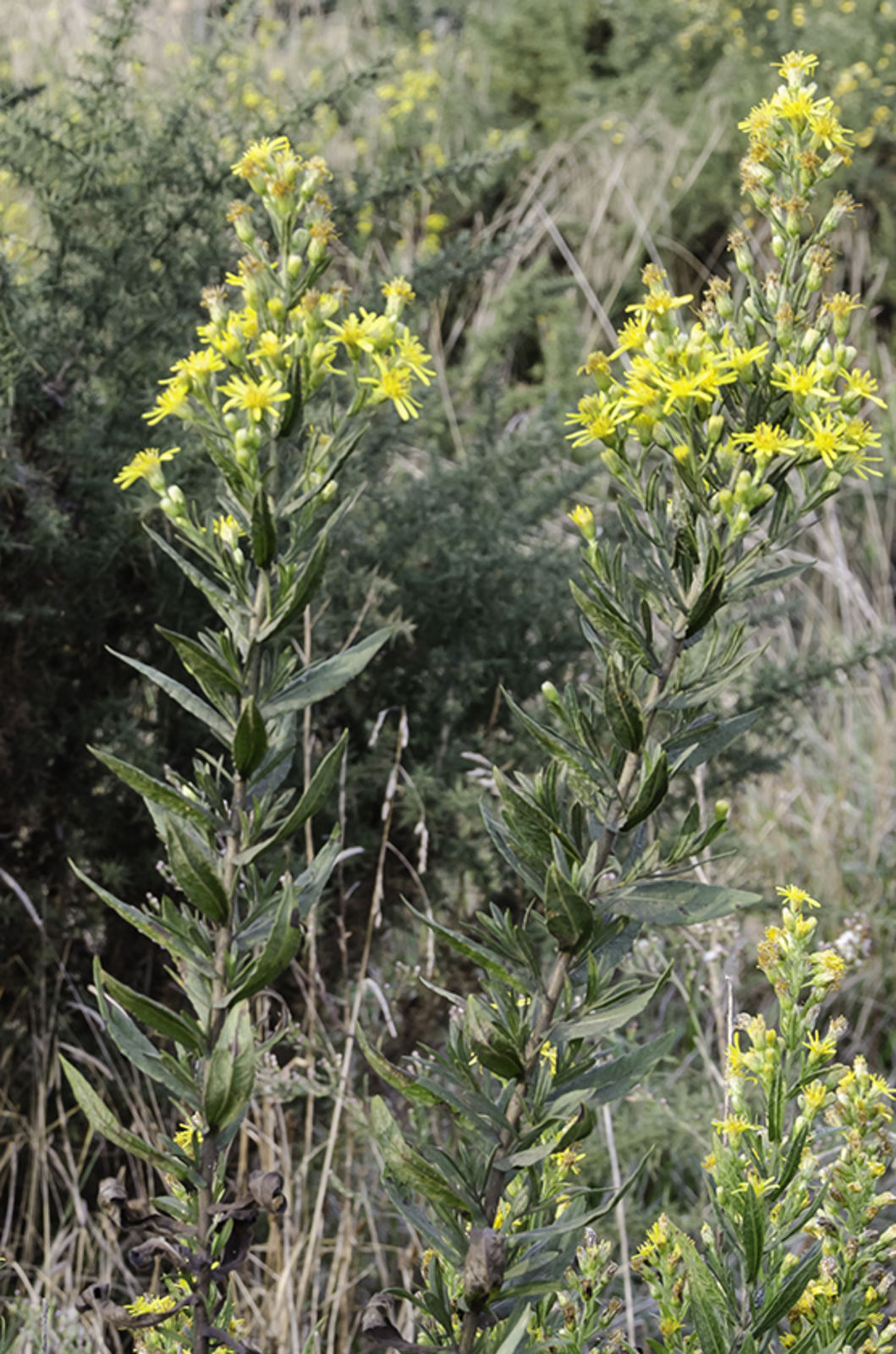
© photo
(c) Maria Emília Martins, some rights reserved (CC BY-NC-SA), uploaded by Maria Emília Martins · cc-by-nc-sa
iNaturalist User · cc0
Marios Thoma · cc-by
Taken Nov 2, 2014 by Tela Botanica − Florent Beck (cc-by-sa)
Taken Mar 13, 2022 by Maza Daniel (cc-by-sa)
Taken Sep 3, 2021 by Bart van Ulden (cc-by-sa)
Taken Jun 30, 2022 by miryam Bou Fayssal (cc-by-sa)
Taken Oct 10, 2020 by gianni del bufalo (cc-by-sa)
© copyright of the Board of Trustees of the Royal Botanic Gardens, Kew.


Global distribution
Dittrichia viscosa is native to the Mediterranean basin and Macaronesia (Canary Islands, Madeira and Azores). Outside this range it has naturalized in California, where it is on the Cal-IPC watch list, and in Australia, where it is classified as invasive.
- Native5
- Introduced1
- Invasive1
- Mainland France
- Spain
- Italy
- Greece
- Macaronesia
- United States (California)
- Australia
Hexagons: regions where the plant occurs. Green dots: native range.1
Identity
False yellowhead (Dittrichia viscosa (L.) Greuter, 1973) is a perennial herb to subshrub in the genus Dittrichia, family Asteraceae. Linnaeus first described it in 1753 as Erigeron viscosus. Werner Greuter transferred it in 1973 to Dittrichia, a genus named for German botanist Manfred Dittrich. 2 1
The Latin epithet viscosa means sticky, directly describing the scented resin that coats the whole plant. The same feature explains the English name sticky fleabane. Other English names include woody fleabane and yellow fleabane. The Catalan name olivarda recalls its long association with protecting olive trees. 2 3
Recognition
Upright, branching stems spread into a fan-shaped outline, usually 40 cm–1 m (16 in–3.3 ft) tall and reaching 1.5 m (5 ft) in especially favorable soil. Their bases become woody and darken with age, while the upper portions remain soft and herbaceous. This combination accounts for the plant's description as a subshrub rather than a fully woody shrub. 2 4
Alternate, lance-shaped leaves attach directly to the stem without a leaf stalk. Both surfaces carry glands, and crushing the leaves releases a camphor-like odor often considered unpleasant. Sticky glandular hairs cover the entire plant. Their tacky texture, together with the strong scent, provides a useful field character even when flowers are absent. 2 3
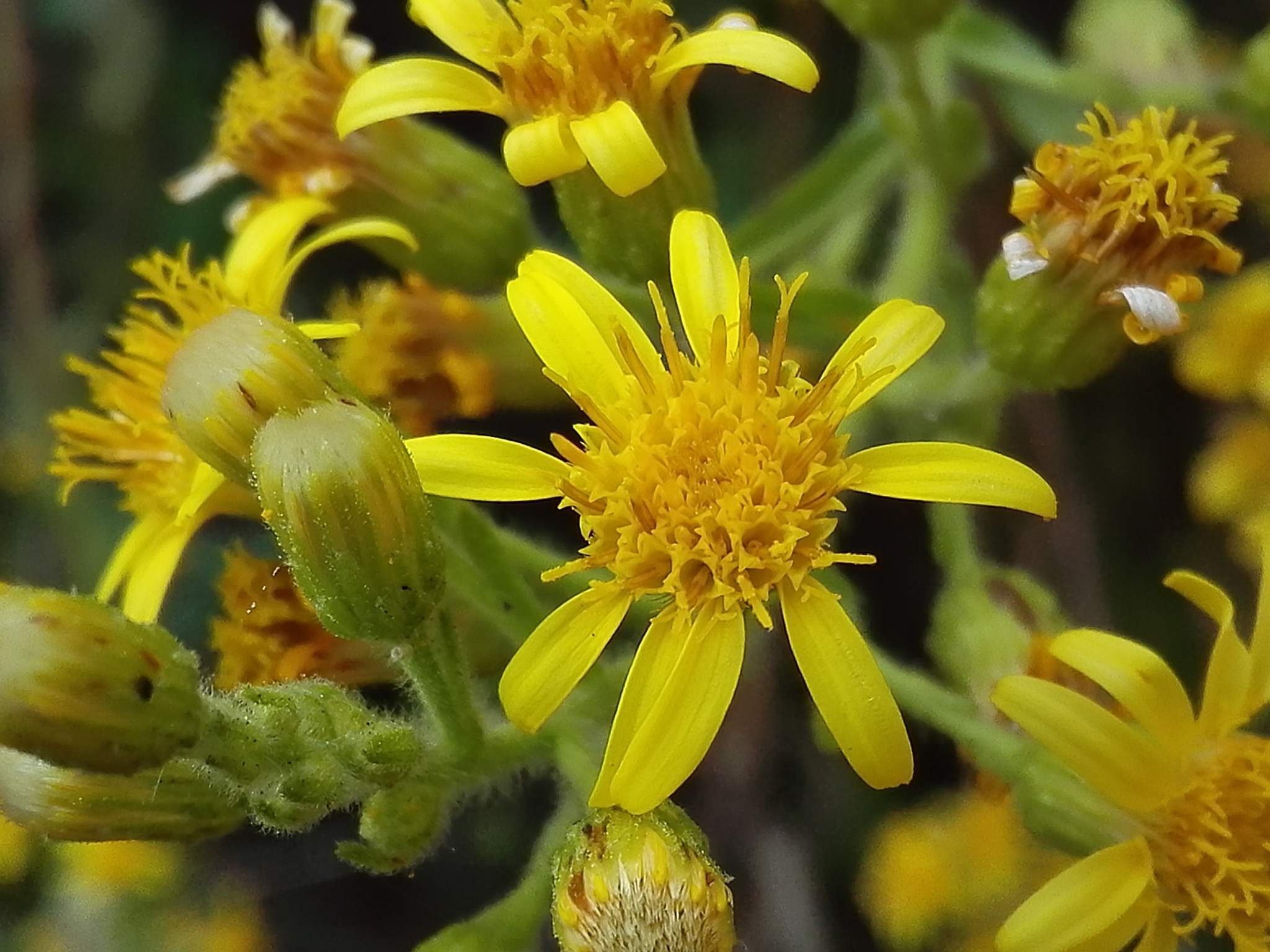
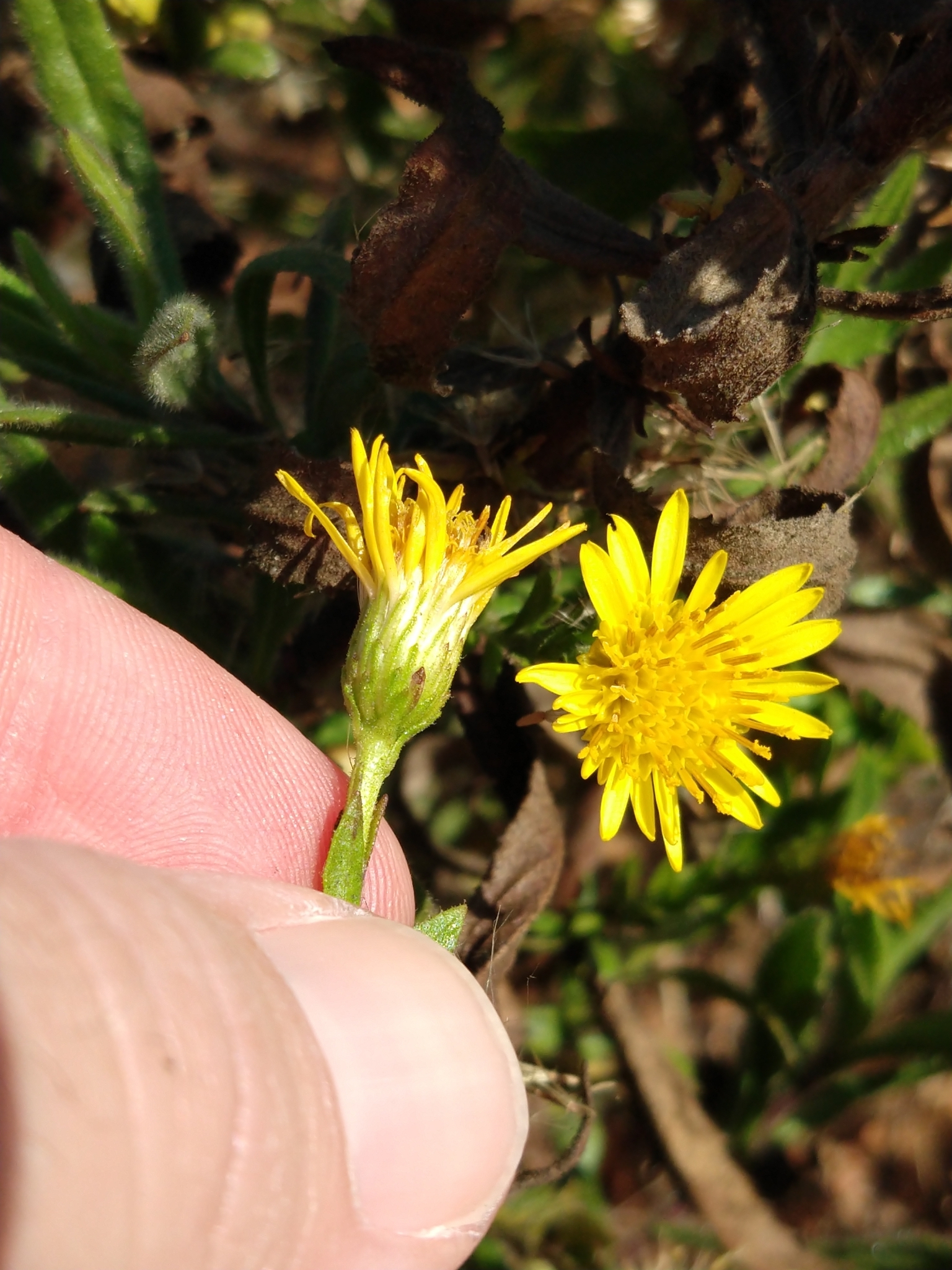
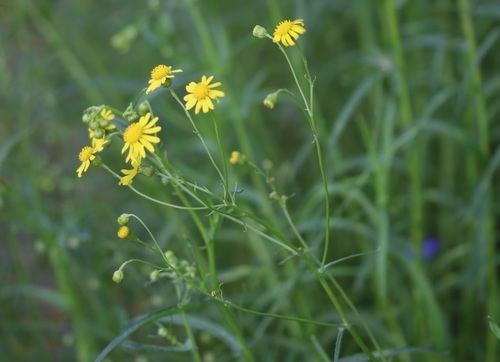
Yellow, rayed flower heads gather in long pyramidal clusters from late summer to November in its native Northern Hemisphere range. Head size helps distinguish the species from annual stinkwort, Dittrichia graveolens: false yellowhead has heads over 1 cm (0.4 in) wide, whereas its narrower-leaved relative has heads smaller than that. 2 5
Useful taxonomy
For false yellowhead, Plants of the World Online accepts Dittrichia viscosa (L.) Greuter, published in 1973. Its basionym, Erigeron viscosus L., dates from Linnaeus's original description in 1753. Before its current combination, the species appeared in several other genera as Inula viscosa (L.) Aiton, Cupularia viscosa (L.) Godr. & Gren., Pulicaria viscosa (L.) W.D.J.Koch and Conyza viscosa (L.) Steud. 1 6
Four subspecies are recognized: Dittrichia viscosa subsp. viscosa, the widespread typical form around the Mediterranean; subsp. angustifolia (Bég.) Greuter, a narrow-leaved eastern Mediterranean form; and two coastal Portuguese forms, subsp. maritima (Brullo & De Marco) Greuter and subsp. revoluta (Hoffmanns. & Link) P.Silva & Tutin. 1 7
Two other close species are included in the genus in the treatment described here: Dittrichia graveolens, annual stinkwort, characterized more by its fetid smell than stickiness, and Dittrichia crithmoides, golden samphire, with fleshy leaves in salt marshes. 2 8
Habitat and range
Mediterranean and Macaronesian populations form the native range, extending through the Canary Islands and Madeira. False yellowhead colonizes dry riverbeds and abandoned ground up to 1,500 m (4,900 ft) above sea level. Today it is especially conspicuous on rubble and roadsides, where disturbance creates open ground for establishment. 3 1
Along Mediterranean France and on Corsica, the species is native. Regional names include nasque in Provence and pecita on Corsica. It can spread strongly through local waste ground without being an introduced species there. Local abundance within its native range is a different situation from establishment outside that range. 2 6
Introduced populations are established in California's Sacramento Valley and San Francisco Bay area. Cal-IPC places the species on its watch list, and CDFA lists it in category A for pests whose distribution remains limited. In Australia it is described as invasive. These assessments concern those particular regions rather than every place where the plant grows. 5 3
Life cycle and reproduction
Late-season flower heads supply nectar and pollen from the end of summer into November, depending on the region within its native range. Bees visit actively until foraging ceases in late fall, making the plant a food source after many other flowers have finished. 2
After fertilization, each head produces tiny achenes 1–2 mm (0.04–0.08 in) long on the floral receptacle. A silky pappus carries them on the wind. Airborne seed dispersal, rather than spreading roots, explains how rapidly the species occupies bare soil after construction work or fire. The small fruits travel away from the parent plant before establishing new individuals. 2 5
Cultivated plants can be raised from seed under cover in spring or by division in spring or fall. In the wild, spontaneous seedling establishment is the main means of reproduction; division is chiefly a technique used by growers rather than the basis of natural colonization. 4
Uses and risks
Olive pest control provides the main documented agricultural use. Flower heads host galls made by the fly Myopites stylata. In fall, several parasitoid wasps, notably Eupelmus urozonus, attack its larvae and also help regulate olive fruit fly, Bactrocera oleae. This biological control takes four to five years to establish after false yellowhead is reintroduced along an olive grove margin. 2
Mediterranean traditional medicine records several external uses in regional sources. In Sardinia it has been used for rheumatic pain; in Sicily, to stop bleeding and aid wound healing; and on Corsica and Elba, for jellyfish, bee and wasp stings. These are traditional uses. No toxicity to people or animals is documented in the cited accounts. 2 4
Beekeepers also value the late nectar and pollen. Honey made from the plant keeps less well than some other honeys because of its higher water content. The plant's usefulness to bees therefore needs to be considered separately from the storage properties of the resulting honey. 2
Varieties, look-alikes and related plants
Wild false yellowhead has no recognized horticultural cultivar and has not been selected as an ornamental. Plants For A Future nevertheless describes it as easy to establish in ordinary sunny soil. Its presence in a garden generally reflects the same readiness to occupy open ground seen in wild populations. 4
Annual stinkwort, Dittrichia graveolens, is easily mistaken for a young false yellowhead before flowering. Life span and leaves provide the decisive comparison: an annual with linear leaves 1–3 mm (0.04–0.12 in) wide and small flower heads points to stinkwort. A perennial habit, broader lance-shaped leaves and heads exceeding 1 cm (0.4 in) support identification as Dittrichia viscosa. 2 5
Historical confusion also survives in the long synonym list. The species moved through Inula, Erigeron, Pulicaria and Conyza before its current placement in Dittrichia. Using the accepted scientific name, Dittrichia viscosa, avoids ambiguity more reliably than common names or obsolete generic combinations, which differ from one reference work to another. 1 6
Main sources
- Plants of the World Online / Kew, Dittrichia viscosa (L.) Greuter
- Wikipedia FR, false yellowhead
- Wikipedia EN, Dittrichia viscosa
- Plants For A Future, Dittrichia viscosa
- California Invasive Plant Council, Dittrichia viscosa profile
- Integrated Taxonomic Information System, Dittrichia viscosa
- Tela Botanica / eFlore bdtfx, Dittrichia viscosa (L.) Greuter
- GBIF Backbone Taxonomy, Dittrichia viscosa (L.) Greuter
Frequently asked questions
Is false yellowhead poisonous?
Plants For A Future documents no known hazard. However, its sticky, scented resin can irritate the skin of sensitive people after repeated contact.
How can I tell false yellowhead from stinkwort?
Stinkwort (Dittrichia graveolens) is annual, with narrow leaves 1–3 mm (0.04–0.12 in) wide and flower heads under 1 cm (0.4 in). False yellowhead is perennial, with broader leaves and heads over 1 cm (0.4 in).
Is false yellowhead invasive?
Native and common in the Mediterranean basin, it is not considered a problem in France. Where introduced in California and Australia, it is watch-listed or classified as invasive.
How does false yellowhead benefit olive trees?
Its flower heads support galls in which parasitoid wasps develop. These insects also help control the olive fruit fly, a service documented in organic olive growing.
Where does false yellowhead come from?
Its native range covers the Mediterranean basin and Macaronesia, from the Canary Islands to Madeira. It has since been introduced to other regions with Mediterranean climates, including California.
Can false yellowhead grow in a garden?
It grows readily in ordinary soil without watering or fertilizer, but has no established ornamental tradition. It mainly appears spontaneously on banks or waste ground.
How does false yellowhead reproduce?
Mainly through plumed achenes dispersed by wind after fall flowering in its native range. Clump division remains a secondary method in cultivation.
Similar plants
If you are unsure about a plant’s toxicity, ask a botanist or veterinarian for advice.