
American burnweed (Erechtites hieraciifolius, )
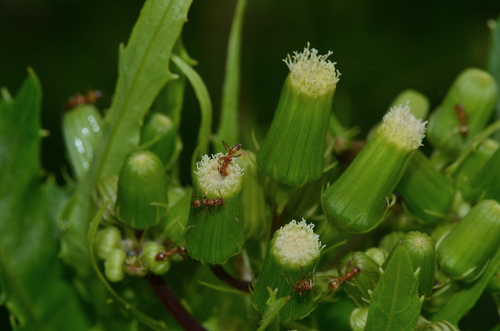
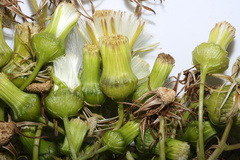
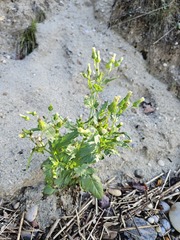
American burnweed (Erechtites hieraciifolius) is an annual in the Asteraceae, native from eastern North America to the West Indies and tropical America. A pioneer of burned or freshly disturbed soils, it colonizes forest clearings and roadsides, then naturally declines as surrounding vegetation closes over the site.
Read moreAmerican burnweed, Fireweed and Pilewort
Allow a few hours of direct sun per day, preferably morning or evening.
Full sun; tolerates light partial shade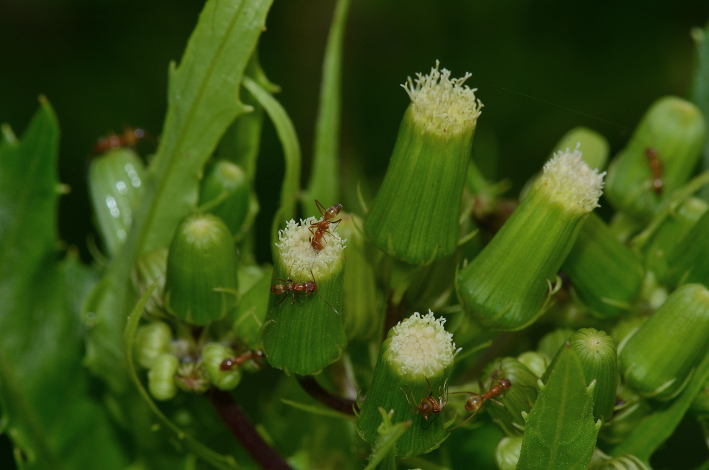


© photo
(c) James (Jim) Duggan, some rights reserved (CC BY-SA), uploaded by James (Jim) Duggan · cc-by-sa
Alex Karasoulos · cc0
Daniel Atha · cc0
Taken Apr 17, 2019 by OTS - J. González (cc-by-nc-sa)
Taken Dec 7, 2012 by OTS - Oviedo-Brenes, Federico (cc-by-nc-sa)
Taken Aug 21, 2021 by Michael Goldthwaite (cc-by-sa)
© copyright of the Board of Trustees of the Royal Botanic Gardens, Kew.




Global distribution
Its native range extends from Newfoundland west to Saskatchewan and south to southern Florida and eastern Texas, with populations in the West Indies and tropical America. INPN treats rare records from Corsica and Guadeloupe as erroneous, with no confirmed established population for France. Widely naturalized elsewhere, it behaves as an invasive weed in several regions.
- Native2
- Introduced3
- Invasive2
- United States
- Canada
- China
- Australia
- New Zealand
- Hawaii
- Poland
Hexagons: regions where the plant occurs. Green dots: native range.1
Identity
American burnweed (Erechtites hieraciifolius (L.) Raf. ex DC., 1838) is an annual herb in the Asteraceae and the genus Erechtites. Its French common names include names comparing its foliage with hawkweed and wild lettuce; those vernacular comparisons do not replace its botanical identity. 1 2
Linnaeus first described the species as Senecio hieraciifolius. Rafinesque later transferred it to Erechtites, and de Candolle validated the name in 1838. 1 9
Names such as fireweed and pilewort, alongside American burnweed, reflect ecology and traditional uses. Burnweed and fireweed recall its ability to colonize freshly burned land; pilewort refers to a historical use for hemorrhoids, or piles. 10 3
Recognition
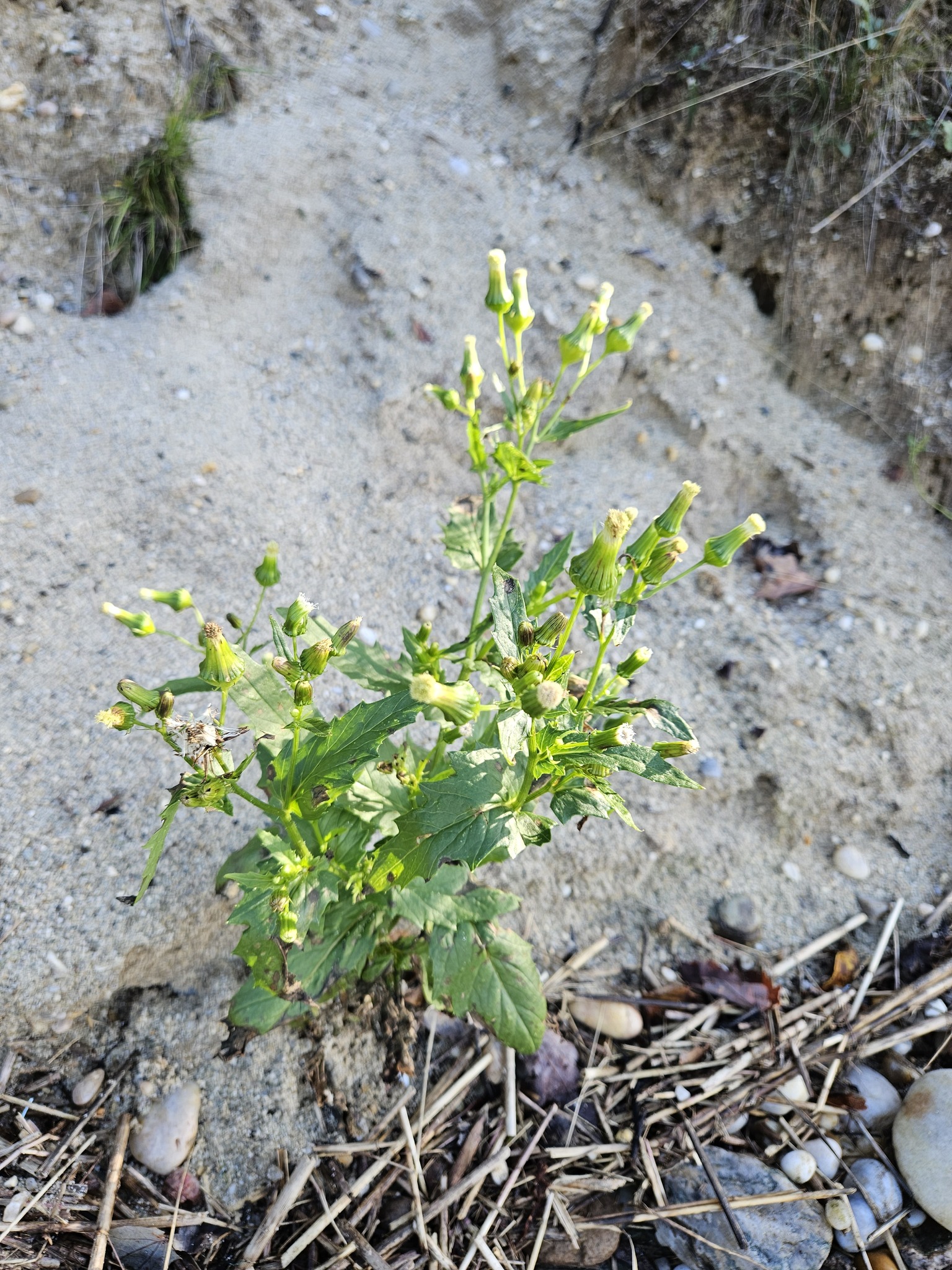
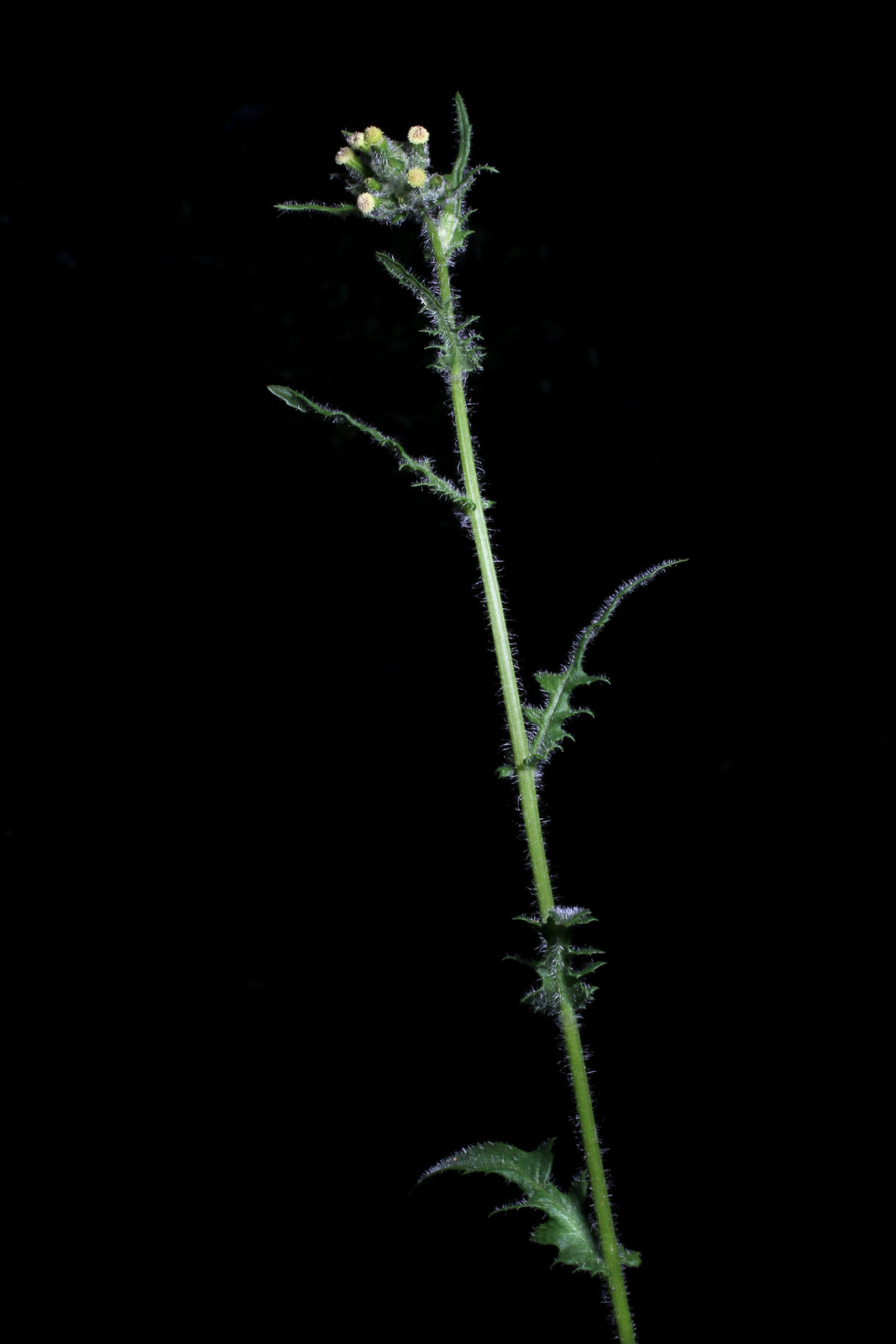
Robust clumps of burnweed often branch into several stems and reach 40 cm–3 m (16 in–10 ft), depending on soil fertility and the time of germination. Thick, green, hollow stems snap readily when handled, a useful identification clue before flowering. 2 4
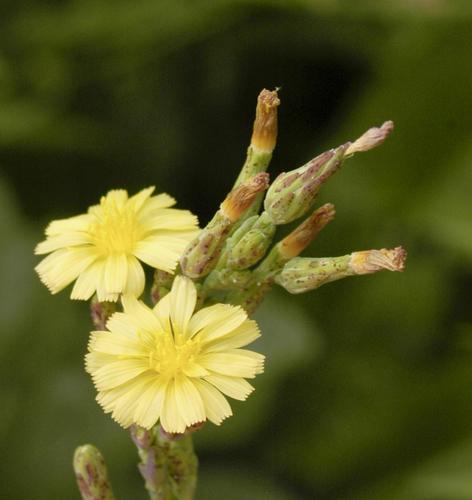
Alternate, simple leaves measure 5–20 cm (2–8 in) long and 0.5–6.5 cm (0.2–2.6 in) wide. Their shape varies markedly between plants, from unlobed to deeply lobed. Toothed margins give a superficial resemblance to wild lettuce, without close botanical kinship. Lower leaves have stalks; upper leaves are often stalkless and clasp the stem. When crushed, all parts release an aromatic odor that many observers find unpleasant, offering another useful field clue. 2 6
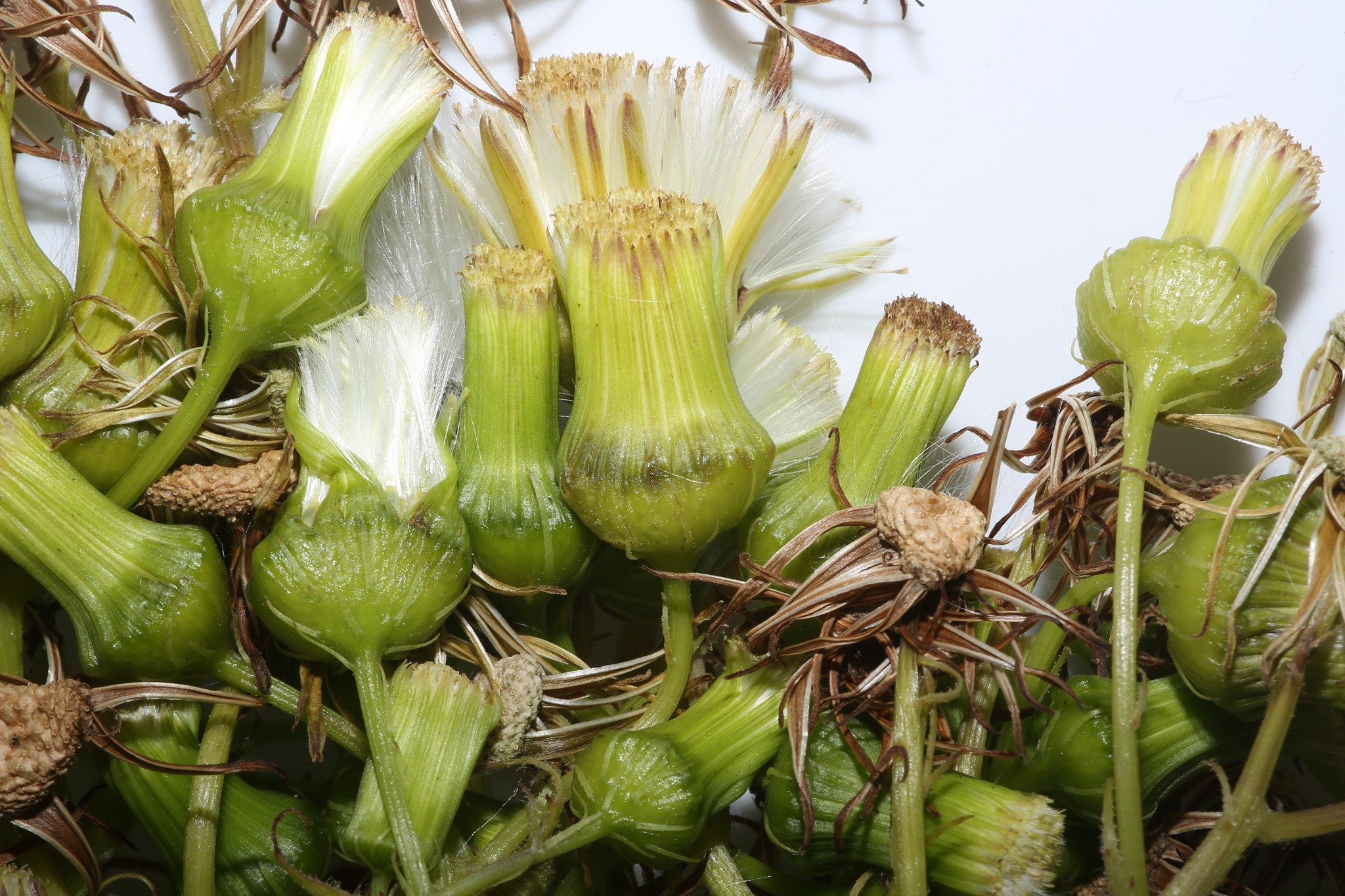
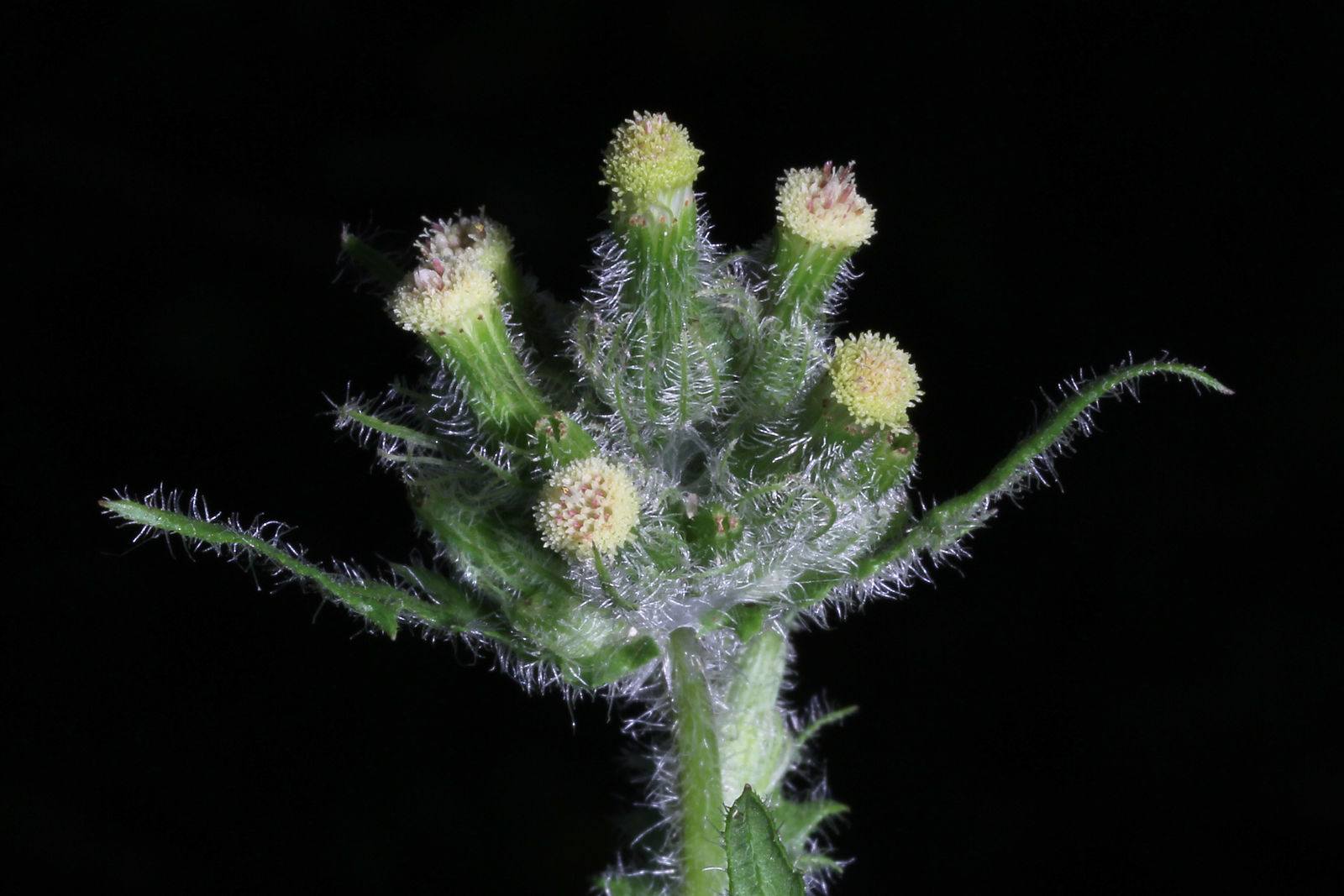
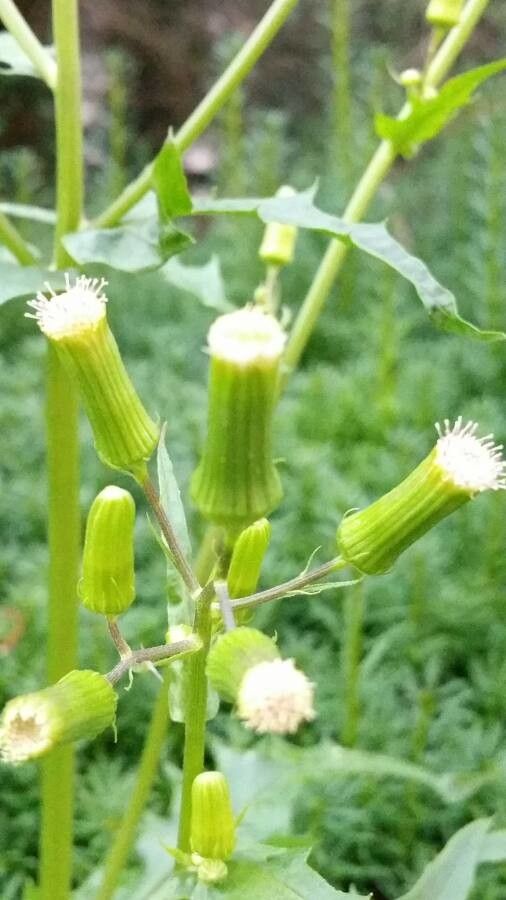
Flower heads lack ray florets and consist entirely of yellowish to creamy white tubular florets, sometimes turning pink. They appear in branching clusters at the stem tips from late summer into fall. Slender, threadlike achenes follow, each topped with a fluffy white pappus reminiscent of a dandelion, allowing efficient wind dispersal. 5 4
Useful taxonomy
POWO accepts Erechtites hieraciifolius (L.) Raf. ex DC., published in 1838, in the Asteraceae. 1
A long synonymy records earlier placements in other genera: Senecio hieraciifolius L. is the original basionym; other names include Neoceis hieraciifolia (L.) Cass., Ptileris hieraciifolius (L.) Raf. and Erechtites hieracifolia (L.) Raf.. The last spelling remains frequent in North American literature. 2 1
Regional floras recognize several botanical varieties, including E. hieraciifolius var. cacalioides and var. megalocarpus. Differences chiefly involve achene size and habitat, including a coastal form on sandy beaches and salt-marsh margins in northeastern North America. 5 2
Habitat and range
Across the Americas, the native range extends from Newfoundland west to Saskatchewan, and south to southern Florida and eastern Texas. Populations also occur in the West Indies and tropical America. 2 1
Disturbance creates the open conditions this pioneer needs. It colonizes almost any habitat except extremely dry sites, including roadsides, railways, ditches, construction sites, forest clearings and especially recently burned ground. Fire directly stimulates germination while removing litter. Abundance peaks in the year after major disturbance, then gradually returns toward previous levels as vegetation closes over the site. 2 6
For mainland France, the species is considered absent. INPN classifies rare records from Corsica and Guadeloupe as erroneous, with no established population confirmed on French territory. 8
Beyond its native range, American burnweed has naturalized widely and behaves as an invasive weed in several regions, notably Hawaii, China, Southeast Asia, Australia and New Zealand. It has recently colonized some Polish peatlands, a habitat previously regarded as poorly suited to its establishment. 2 3
Life cycle and reproduction
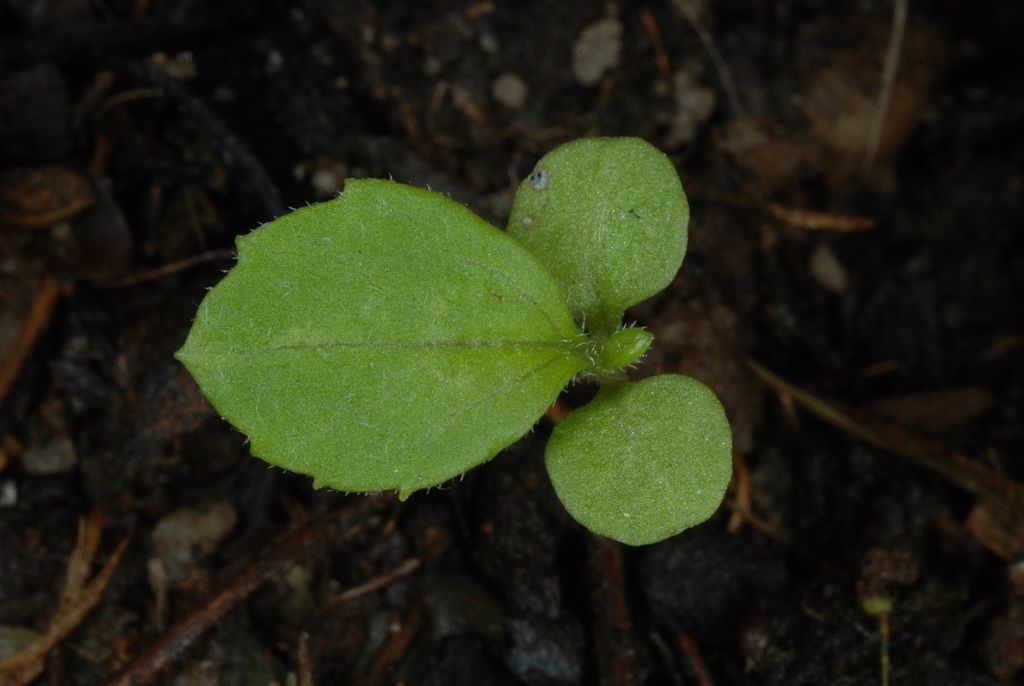
A taproot supports this strictly annual plant, which can produce several generations within one growing season in the warmest parts of its range. Seeds germinate rapidly on bare, well-lit soil. Even minor disturbance, such as an uprooted tree, can provide a suitable opening. 2 6
Late summer and fall bring flowering. Although the flowers offer little nectar, they provide abundant pollen. Wasps are the main pollinators, with bees and tachinid flies also visiting. 4 6
Numerous threadlike achenes develop in each head, carrying white pappus hairs that transport them long distances on the wind. This allows rapid recolonization of disturbed sites. Herbivorous mammals generally avoid the bitter, strongly scented foliage, reducing grazing pressure on young plants. 6
Uses and risks
The aboveground parts contain liver-toxic pyrrolizidine alkaloids, including senecionine and seneciphylline. The US FDA explicitly identifies liver toxicity as a risk associated with this group of compounds. 7
Caribbean traditional medicine nevertheless uses a decoction of fresh leaves for stomach pain. TRAMIL assessments strictly limit this internal use to two days and contraindicate it during pregnancy, while nursing and in children under 12 years. These restrictions accompany the traditional use rather than establishing general safety. 7
Several North American sources describe young leaves as edible raw or cooked, with a strong, peppery flavor often considered unpleasant. Given their pyrrolizidine alkaloid content, regular or prolonged consumption is not recommended. 10 7
Agricultural management treats American burnweed primarily as a weed, with no ornamental or fodder value. Mowing or pulling before seed formation is used in crops and young forest plantations, where dense growth may temporarily slow the establishment of other seedlings. 4
Varieties, look-alikes and related plants
Wild populations have never been domesticated, and no horticultural cultivars are recognized. Floras distinguish only naturally occurring botanical varieties, such as the coastal salt-marsh form var. cacalioides. 5
The shared name fireweed frequently causes confusion with Chamerion angustifolium, an Onagraceae perennial with tall clusters of pink flowers, also called fireweed in North America. They share post-fire habitats and a common name, but their floral biology and toxicity differ. 3
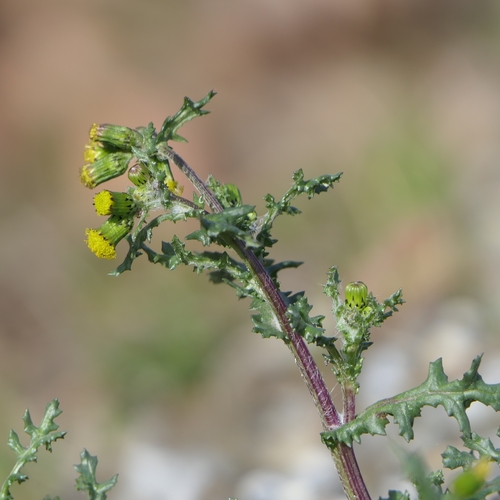
Other ruderal Asteraceae with discoid heads and pappus-bearing achenes are more likely field look-alikes, especially fleabanes in Erigeron. A branching, clumped habit, strong odor when crushed and highly variable leaves on the same plant distinguish American burnweed from its common neighbors. 6
Main sources
- Plants of the World Online / Kew, Erechtites hieraciifolius (L.) Raf. ex DC.
- Wikipedia FR, Erechtites hieraciifolius
- Wikipedia EN, Erechtites hieraciifolius
- North Carolina Extension Gardener Plant Toolbox, Erechtites hieraciifolius
- Go Botany / Native Plant Trust, Erechtites hieraciifolius
- bplant.org, American Burnweed, Erechtites hieraciifolius
- TRAMIL, Erechtites hieraciifolius pharmacological and safety profile
- INPN / MNHN, Erechtites hieraciifolius (L.) Raf. ex DC., 1838
- VASCAN, Database of Vascular Plants of Canada, Erechtites hieraciifolius
- USDA PLANTS Database, Erechtites hieraciifolius plant profile
Frequently asked questions
Is American burnweed toxic?
Yes. Its aboveground parts contain liver-toxic pyrrolizidine alkaloids. Traditional internal use is documented, but TRAMIL limits it to two days and advises against it during pregnancy, while nursing and for children under 12.
Why does American burnweed grow after fires?
Fire removes ground litter and directly stimulates seed germination. This creates a temporary opportunity on bare, well-lit soil, after which the plant naturally becomes less abundant in subsequent years.
Is American burnweed the same as pink-flowered fireweed?
No. The name fireweed is also used for Chamerion angustifolium, an Onagraceae perennial with tall clusters of pink flowers. Both colonize burned ground, but they belong to different botanical families.
Does American burnweed grow in France?
It is considered absent from mainland France. INPN treats the rare records from Corsica and Guadeloupe as erroneous, with no confirmed established population on French territory.
Can American burnweed be eaten?
Young leaves have been described as edible raw or cooked, with a strong, peppery flavor. Because of the pyrrolizidine alkaloid content, regular or prolonged consumption is not recommended.
Is American burnweed invasive?
In its native North American range it is a common pioneer weed, generally without causing problems. Introduced populations in Hawaii, Asia, Oceania and recently some Polish peatlands are considered invasive.
Similar plants
If you are unsure about a plant’s toxicity, ask a botanist or veterinarian for advice.