
sea hibiscus (Hibiscus tiliaceus, )
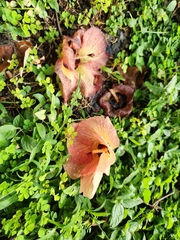
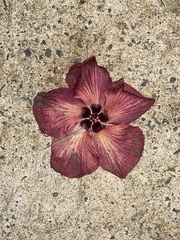
sea hibiscus (Hibiscus tiliaceus) is a tree or large shrub in the Malvaceae, common along tropical coasts in East Africa, Southeast Asia, Australasia and the Pacific. Its funnel-shaped flowers change from white to purple within a single day, and its inner bark supplies fiber long used for cordage and traditional textiles.
Read moresea hibiscus and beach hibiscus
Talipariti tiliaceum
Allow a few hours of direct sun per day, preferably morning or evening.

© photo
Ben Sims · cc0
Shelomi Doyle · cc-by
Scott Ward · cc-by
no rights reserved · cc0
(c) Shelomi Doyle, some rights reserved (CC BY) · cc-by

Global distribution
The precise geographical origin of Hibiscus tiliaceus remains uncertain, but it now occupies almost all tropical Old World coasts and has naturalized in several tropical and subtropical regions. Its status varies greatly by territory, from native to naturalized or locally invasive.
- Native6
- Introduced3
- Invasive1
- French Polynesia
- New Caledonia
- Fiji
- Madagascar
- Tanzania
- Australia
- Hawaii
- Puerto Rico
- New Zealand
- Florida
Hexagons: regions where the plant occurs. Green dots: native range.1
Identity
sea hibiscus (Hibiscus tiliaceus L., 1753), called pūrau in Tahiti, bourao in New Caledonia and mahot bord de mer on Réunion, is a tree or large shrub in the mallow family, Malvaceae. It occurs along almost all the world's tropical coasts. 1 2
In 2001, botanist Paul Fryxell transferred it, together with several close relatives, to a new genus, Talipariti. The name Talipariti tiliaceum therefore appears in recent scientific literature, but POWO retains Hibiscus tiliaceus as the accepted name, and Hibiscus remains overwhelmingly common in everyday use. 1 7
The Tahitian name pūrau, still used by French speakers in French Polynesia, derives from an old Polynesian word, fau, which also gave rise to raufau for the leaves and puāfau for open flowers. Sea hibiscus and beach hibiscus, its English names, both describe its characteristic habitat. 7 8
Recognition
Spreading growth, sometimes with tangled lower branches, and smooth, pale gray bark characterize sea hibiscus as a tree or shrub. Wild plants commonly reach 6–15 m (20–50 ft), with a trunk that can exceed 40 cm (16 in) in diameter; some island populations reach 20 m (65 ft). 7 5
Alternate, heart-shaped leaves measure 3–20 cm (1–8 in) long on petioles 6–17 cm (2.5–7 in) long. Five to nine veins radiate from the base, as in linden, Tilia, the resemblance behind the epithet tiliaceus. The upper surface is smooth and dark green; the underside is paler and sometimes downy. 7 3
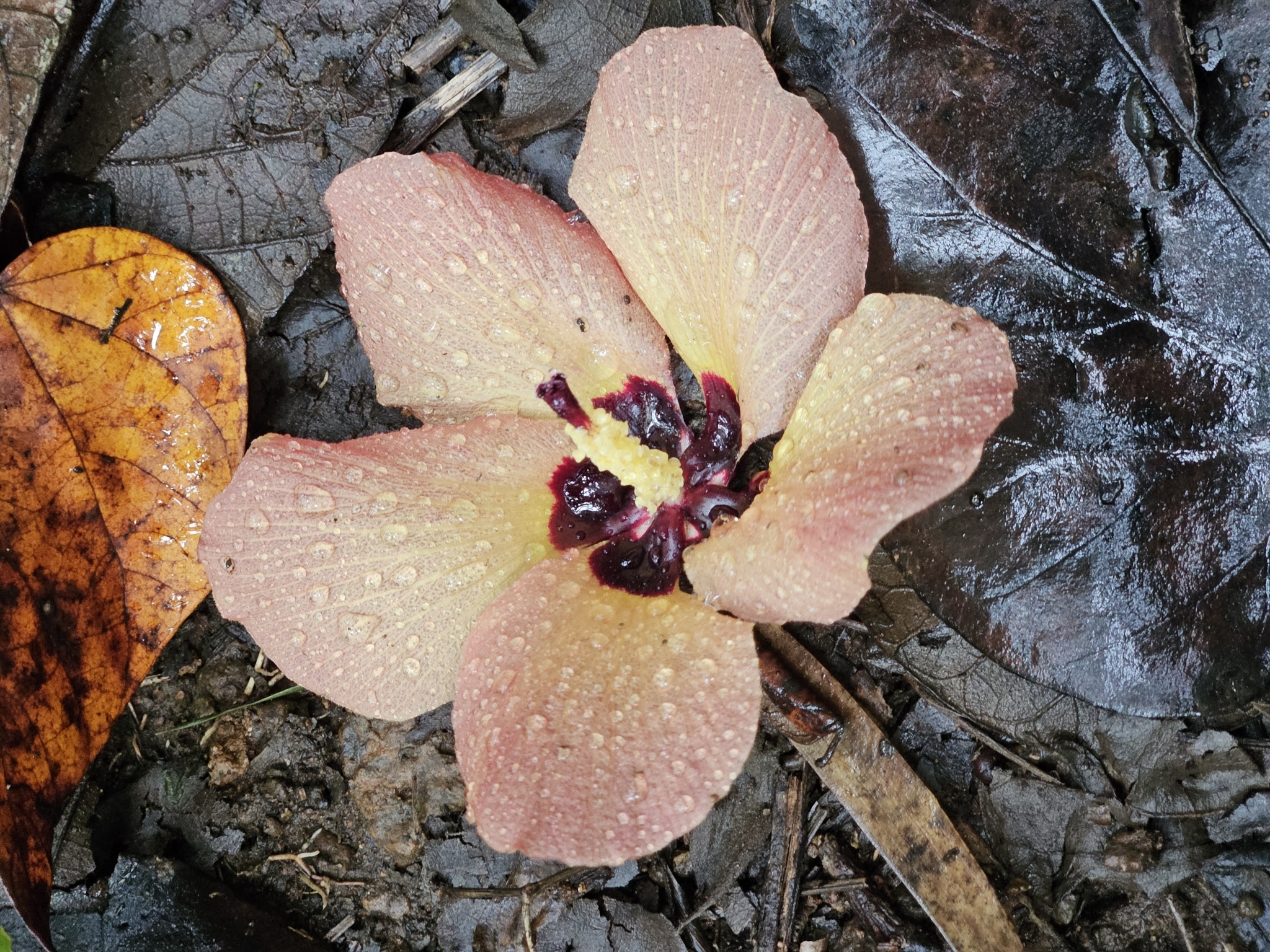
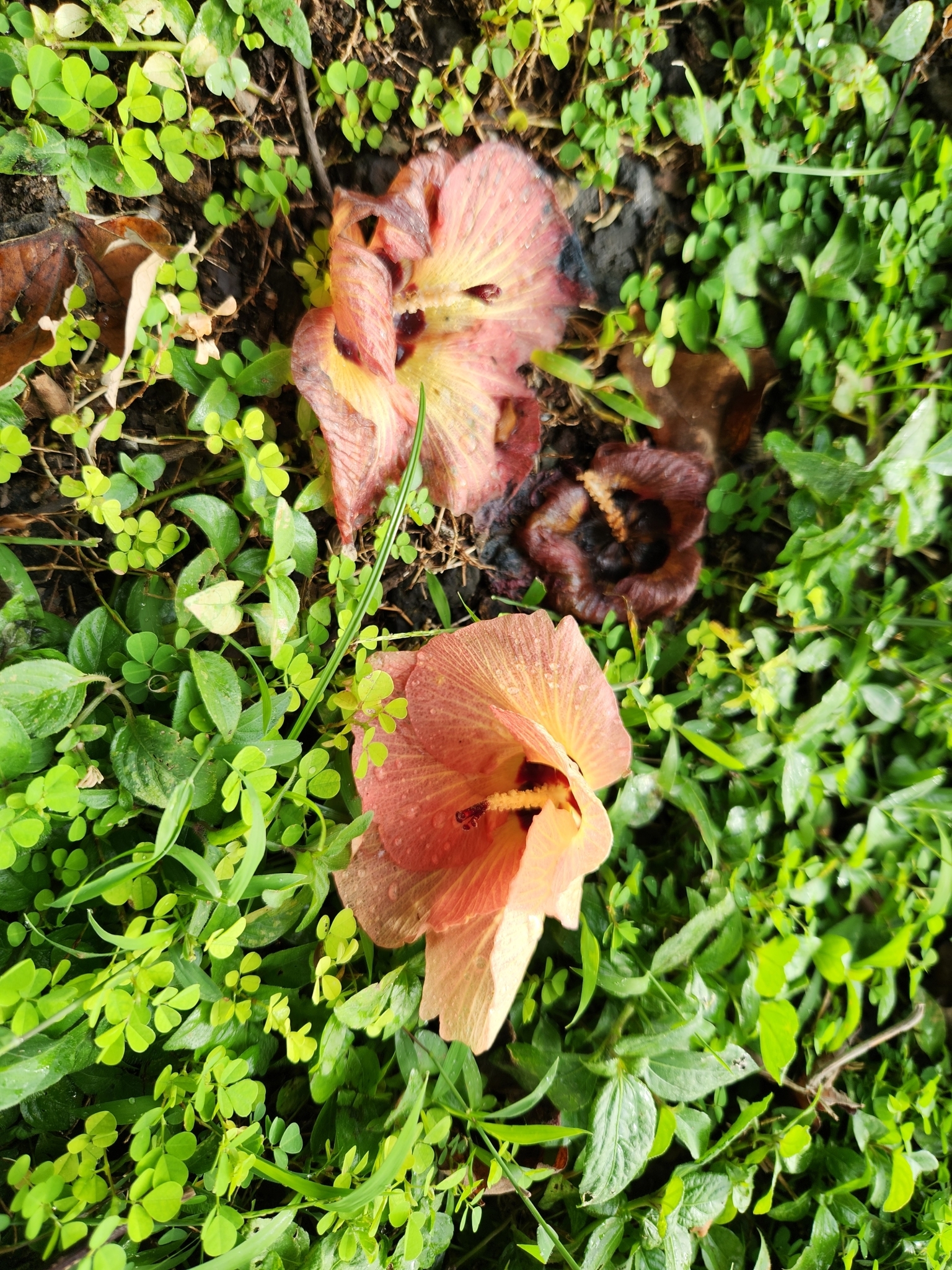
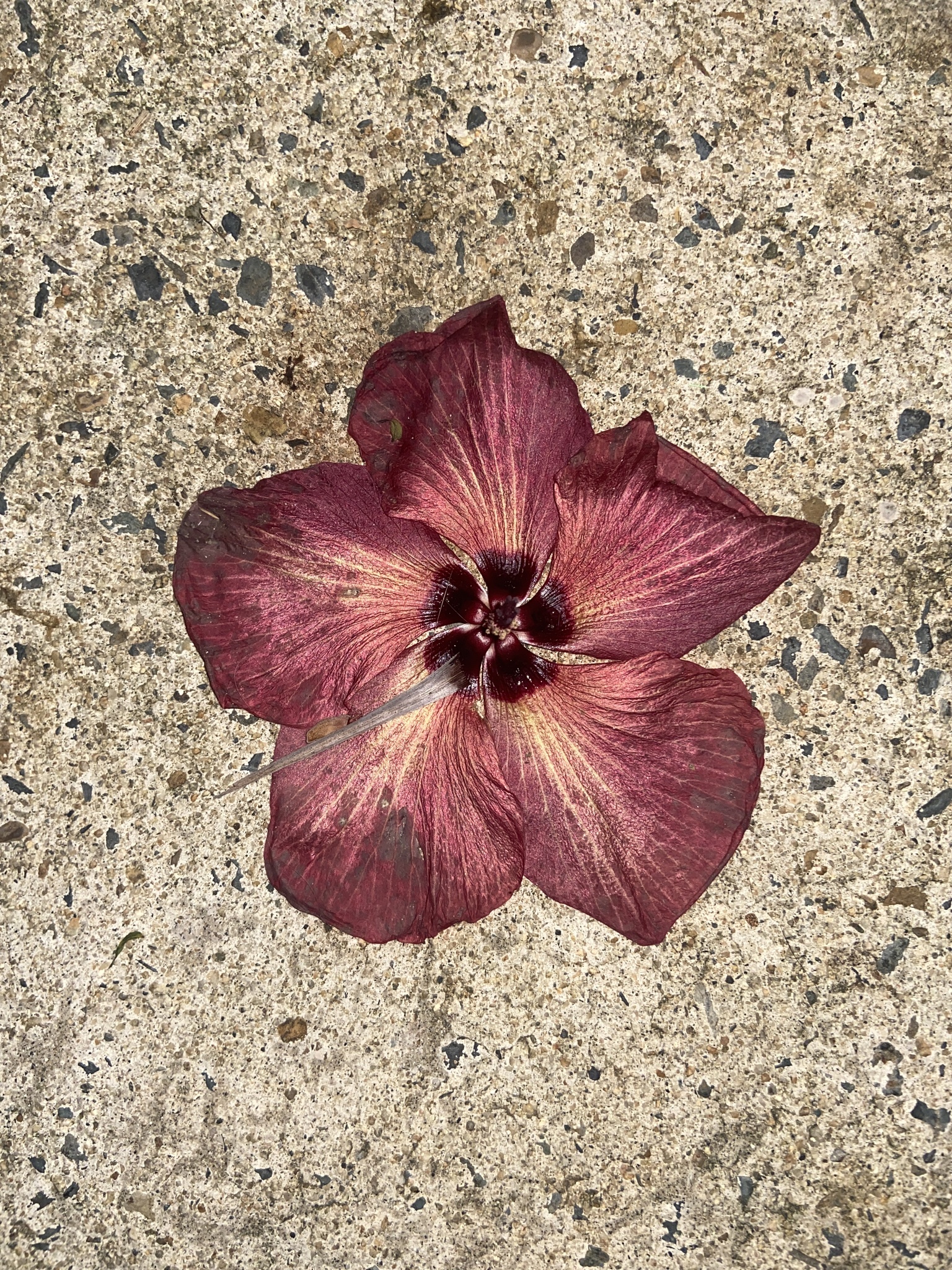
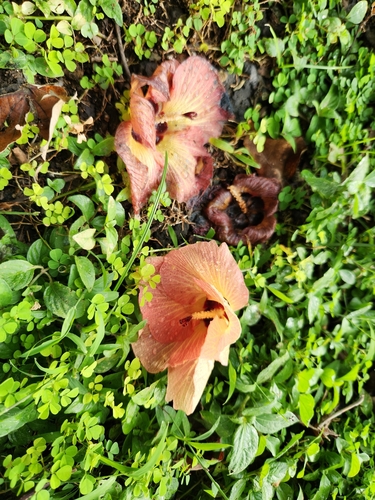
Flowers provide the clearest clue. Each lasts for just one day, opening around 9 a.m. and closing around 4 p.m. A flower opens white or pale yellow in the morning, sometimes with a purple center, then turns pink, orange and finally dark purple before falling that evening. This changing color explains why one tree often carries flowers of several colors at once. 3 6
Useful taxonomy
POWO retains Hibiscus tiliaceus L., 1753 as the accepted name in the Malvaceae. One synonym is widespread in recent scientific literature: Talipariti tiliaceum (L.) Fryxell, 2001. It arose when mallow specialist Paul Fryxell separated the genus Talipariti, bringing together twenty-one species distinct from the remaining Hibiscus. Molecular phylogenetic studies after this split confirmed that the group is monophyletic. 1 7
Two species can cause confusion. Caribbean blue mahoe, Hibiscus elatus Sw., shares the English common name mahoe and was long treated as a variety, but POWO recognizes it as a separate species native to Cuba and Jamaica. Likewise, Hibiscus hamabo Siebold & Zucc., a coastal species from Japan, was long included as a variety before being separated. 1 2
The subspecies Hibiscus tiliaceus subsp. pernambucensis (Arruda) A.Cast. groups the Atlantic American populations, considered sufficiently distinct to merit their own infraspecific rank. This distinction illustrates the species' geographical variation across its vast pantropical range. 1
Habitat and range
Uncertainty surrounds its precise geographical origin, but sea hibiscus now occurs along almost all tropical coasts of East Africa, Southeast Asia, Australasia and the Pacific. It grows on beaches, at mangrove edges alongside Barringtonia, beside rivers and up to 800 m (2,625 ft) above sea level. It tolerates a wide range of soils, including sand, mud, marl and limestone, with pH values of 5–8.5. 7 4
As a salt-tolerant plant, sea hibiscus withstands salt spray and temporary flooding. Its roots help bind dune sand and reduce erosion along tropical shores. It has also naturalized outside its presumed original range, including in Florida, Puerto Rico, the Virgin Islands and New Zealand. 3 7
In Hawaii, its status remains debated: it may be native or a canoe plant brought by the first Polynesian voyagers. In Florida, the Florida Exotic Pest Plant Council lists it as Category II, with documented invasive potential in wetlands. The IUCN assesses the species globally as Least Concern because of its very wide range. 8 9
Traditional uses and properties
Inner bark, known as more in Tahitian, yields a strong fiber used for cordage, mats, fishing nets and traditional dance costumes. In New Caledonia, it is soaked in seawater for several days before being woven into skirts or durable cordage. 7
The lightweight wood is suitable for light structural work, cabinetry, boatbuilding and firewood. Flexible stems planted directly in the ground take root and become living fence posts. Traditional medicinal uses vary by region: in Madagascar, a flower infusion is used for respiratory complaints; in Gabon, the leaves are used for soothing purposes; and in New Caledonian Kanak medicine, the bark is used as a purgative and the sap to heal wounds. 7 4
Available toxicity data classify the plant as non-toxic to cats, dogs and humans. The only documented caveat concerns its seeds. Their oil contains cyclopropenoid fatty acids, malvalic acid and sterculic acid, which may cause physiological disturbances when eaten in large quantities, particularly by livestock. 10 7
Cultivation and propagation
Warm, humid tropical or subtropical conditions support fast, easy growth in full sun, but sea hibiscus cannot withstand frost. The hardiness range generally quoted is USDA 10–12. In frost-prone temperate climates, including mainland France, it therefore needs a pot in a conservatory or heated greenhouse; in French overseas territories where it grows naturally, it can grow in the ground. 3 4
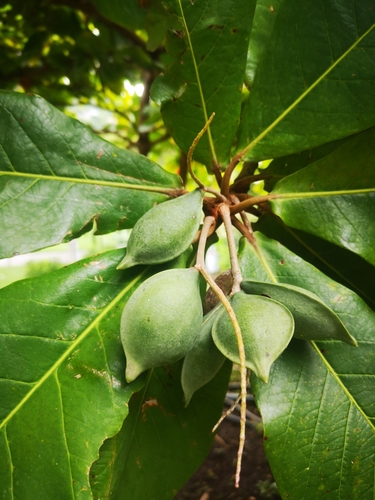
Propagation is by seed or cuttings. Seeds collected just before the capsules turn brown germinate after scarification followed by a 24-hour soak in hot water, with a germination rate of about 50%. Semi-hardwood cuttings, 20–40 cm (8–16 in) long, root faster and produce flowering plants in their first year, compared with two to three years for seed-grown plants. 7
For coastal hedges and windbreaks, the living-post technique already used for fences involves planting branch sections 2–3 m (6.5–10 ft) long, with one-third of their length buried. In good conditions, they take root in less than a month. 7
Cultivars, look-alikes and related plants
Four forms stand out by use or appearance, although the species has no international horticultural cultivar register. Tahitian names distinguish pūrau ʻopiʻopi, with fluted leaves and flowers; pūrau papa, which grows on coastal rocks without producing seeds; and pūrau tōroire, with small leaves. An ornamental form has purple-tinted foliage and pink or white flowers, without a formal international cultivar registration. 7
In practice, blue mahoe, Hibiscus elatus, causes the most confusion with sea hibiscus. The two share the English name mahoe and a historical placement in Talipariti, but blue mahoe remains a distinct species from the Caribbean rather than the Pacific. The full scientific name and author, Hibiscus tiliaceus L. versus Hibiscus elatus Sw., resolve the ambiguity left by common names. 1
In the field, the strongest clue is the species' consistent association with tropical coasts, mangroves or sandy shores. Neither Hibiscus rosa-sinensis, grown in ornamental hedges without a particular link to the sea, nor Hibiscus elatus, valued more for its timber than for coastal occurrence, shares that characteristic habitat association.
Main sources
- Plants of the World Online / Kew, Hibiscus tiliaceus L.
- International Plant Names Index, Hibiscus tiliaceus
- Missouri Botanical Garden Plant Finder, Hibiscus tiliaceus
- Plants For A Future, Talipariti tiliaceum
- National Tropical Botanical Garden, Hibiscus tiliaceus
- Mangrove and Wetland Wildlife guidebook (NUS), sea hibiscus
- Wikipedia, Hibiscus tiliaceus
- Wikipedia, Hibiscus tiliaceus
- IUCN Red List, Hibiscus tiliaceus assessment
- Perenual plant traits data, Hibiscus tiliaceus records
Frequently asked questions
Is sea hibiscus poisonous to cats and dogs?
Available data classify Hibiscus tiliaceus as non-toxic to cats, dogs and humans. The only documented caveat concerns the seeds, whose oil contains cyclopropenoid fatty acids.
Why is sea hibiscus sometimes called Talipariti tiliaceum?
In 2001, botanist Paul Fryxell transferred this species and several close relatives to a new genus, Talipariti. POWO nevertheless retains Hibiscus tiliaceus as the accepted name, and Hibiscus remains overwhelmingly common in everyday use.
Can sea hibiscus grow outdoors in a cool temperate climate?
Not in ordinary open-ground conditions where frost occurs. Sea hibiscus needs a pot in a conservatory or heated greenhouse in mainland France, for example; in the French overseas territories where it grows naturally, it can grow in the ground.
Why do sea hibiscus flowers change color?
Each flower lives for just one day. It opens white or pale yellow in the morning, then turns pink, orange and finally dark purple before falling that evening.
Is sea hibiscus invasive?
The Florida Exotic Pest Plant Council lists it as Category II in Florida, with documented invasive potential in wetlands. Elsewhere, its status depends greatly on the territory and remains chiefly local.
What is sea hibiscus inner bark used for?
The inner bark, called more in Tahitian, yields a strong fiber traditionally used for cordage, mats, fishing nets and some dance costumes.
What is the most effective way to propagate sea hibiscus?
Semi-hardwood cuttings root faster than seed and produce flowering plants in their first year, compared with two to three years for seed-grown plants.
Similar plants
If you are unsure about a plant’s toxicity, ask a botanist or veterinarian for advice.