
Chameleon plant (Houttuynia cordata, )
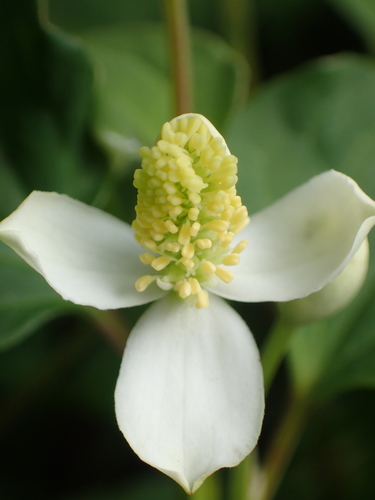
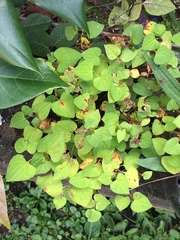
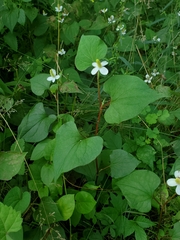
Chameleon plant (Houttuynia cordata Thunb., 1783) is a perennial in the Saururaceae, native from the Himalayas across temperate and tropical Asia to Vietnam. Its heart-shaped leaves release a fishy smell when crushed, and running rhizomes quickly colonize wet, shaded soil. Grown for variegated foliage or edible young shoots, it needs containment in a tub or a closely monitored border.
Read moreChameleon plant, fish mint and fish leaf
Give plenty of ambient light without direct sun on the leaves.
Full sun to shade; tolerates a wide range of exposures



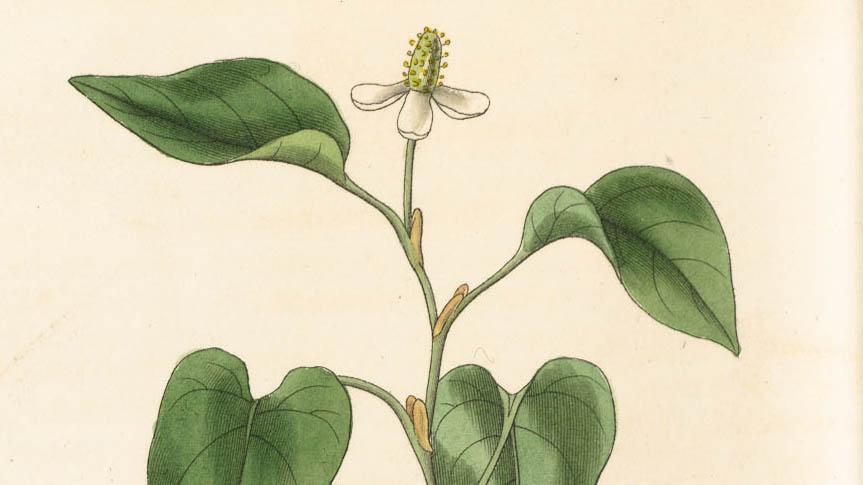
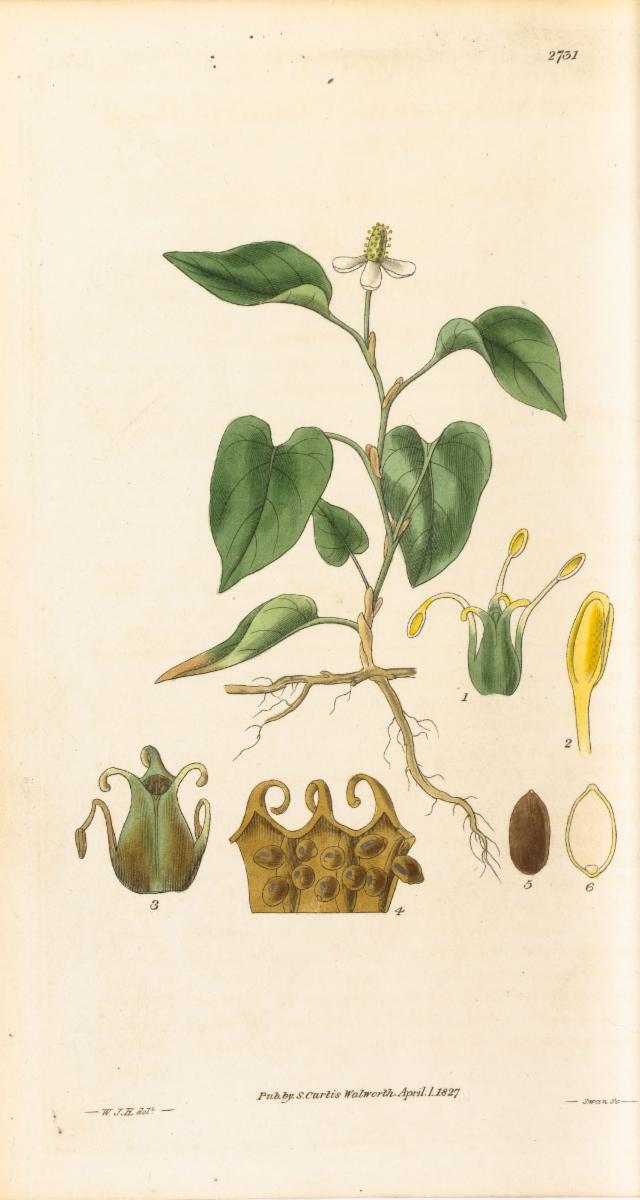

© photo
no rights reserved, uploaded by 葉子 · cc0
Stephen Thorpe · cc-by
Alex Zorach · cc-by
Taken Jul 3, 2021 by acas (cc-by-sa)
Taken May 11, 2020 by Ko Ko (cc-by-sa)
Taken Jun 25, 2019 by Waldemar Zeja (cc-by-sa)
Taken Jun 4, 2022 by Tristan Jaton-Maria (cc-by-sa)
Taken Jul 29, 2021 by anne picard (cc-by-sa)
© copyright of the Board of Trustees of the Royal Botanic Gardens, Kew.


Global distribution
Houttuynia cordata is native from the Himalayas (Bhutan and Nepal) to China, Taiwan, Japan, Korea and Southeast Asia, reaching Vietnam and Thailand. Introduced elsewhere as an ornamental and culinary plant, it has naturalized in parts of North America.
- Native5
- Introduced1
- China
- Japan
- Vietnam
- India
- South Korea
- United States
Hexagons: regions where the plant occurs. Green dots: native range.1
Identity
Chameleon plant (Houttuynia cordata Thunb., 1783) is an herbaceous perennial in the Saururaceae and the only accepted species in the genus Houttuynia. Plants of the World Online accepts Houttuynia cordata, published by Carl Peter Thunberg in 1783, without recognizing another species in the genus. 1
The genus honors the Dutch naturalist Martinus Houttuyn; the epithet cordata describes the heart-shaped leaf blade. Crushing a leaf releases a pronounced fishy smell, which explains the English names fish mint and fish leaf. 5 3
Recognition
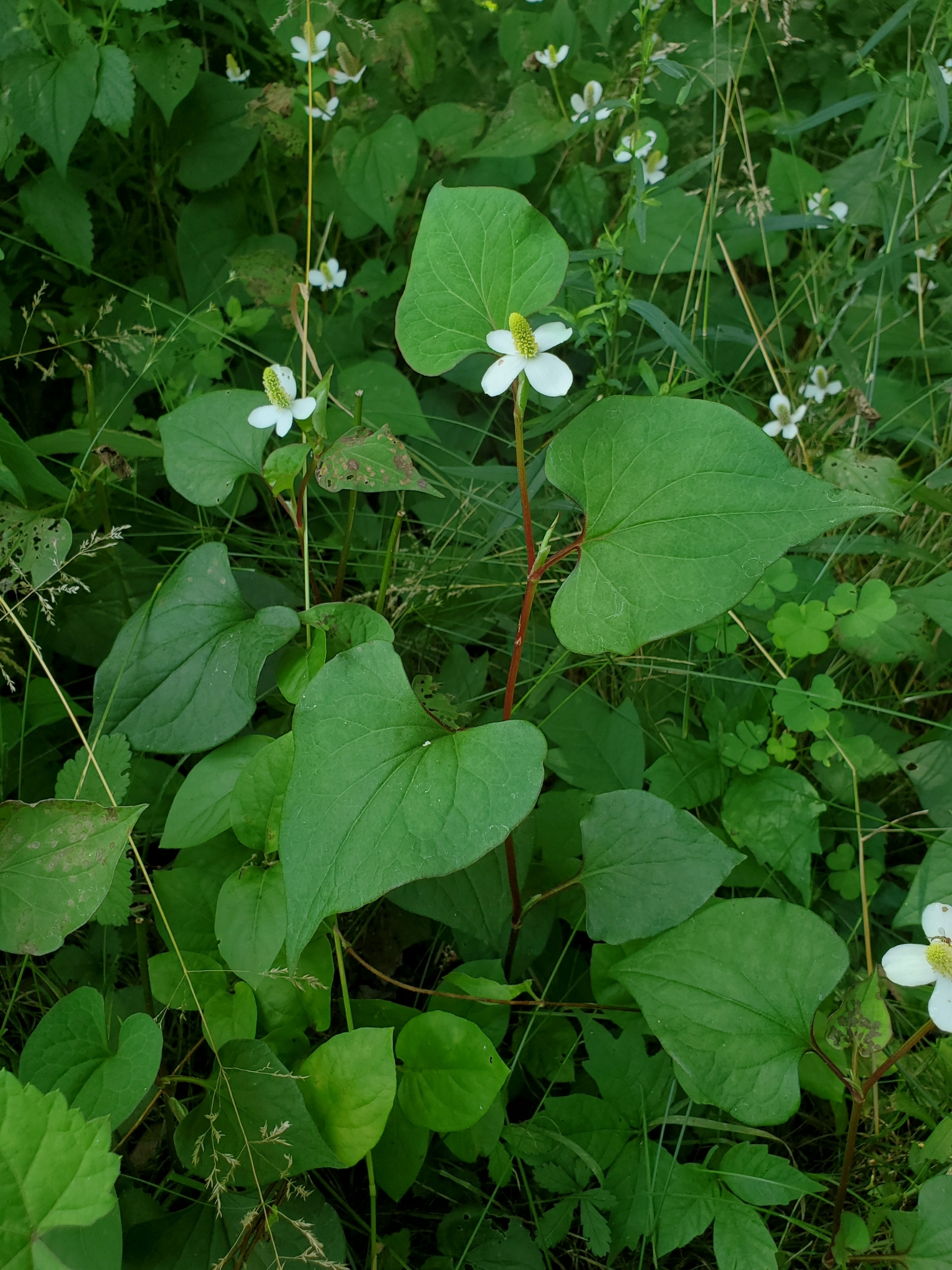
Creeping stems and spreading rhizomes make a low carpet, with flowering shoots commonly reaching 15–60 cm (6–24 in). The alternate, heart-shaped leaves measure 4–9 cm (1.5–3.5 in) long and 3–8 cm (1–3 in) wide, with a bluish green upper surface. 2 4
An upright spike of tiny, petal-less flowers rises above four white bracts at its base. These bracts resemble a corolla, but they are not petals. After flowering, a dry capsular fruit releases small seeds, which are seldom used in cultivation. 4
The cultivar 'Chameleon', the only form of the species commonly sold, develops red, pink, yellow and cream variegation in abundant light. In shade, that same foliage becomes almost uniformly green. 4
The running rhizomes spread mainly through the upper few centimeters (roughly the top few inches) of soil, but this does not mean all the roots stay shallow. Roots can run deep, making an established plant difficult to remove. The rhizomes divide easily and quickly colonize a damp plot. 4
Useful taxonomy
For botanical identification, Houttuynia cordata Thunb., published in 1783, remains the accepted name in Plants of the World Online. It is the sole representative of Houttuynia in the Saururaceae. Regional floras and the horticultural trade also use several variety and form names: 1
- Houttuynia cordata var. plena Makino, a variety name
- Houttuynia cordata var. variegata Makino, a variety name
- Houttuynia cordata f. polypetaloidea T.Yamaz., a form name
- Houttuynia cordata f. viridis J.Ohara, a form name
Saururaceae contains only four genera, including Saururus and Anemopsis. All are herbaceous wetland plants with petal-less flowers borne in spikes, as in Houttuynia. 5
Habitat and range
Across its native range, chameleon plant occurs from the Himalayas (Bhutan and Nepal) through China, Japan, Taiwan and Korea to Southeast Asia, reaching Vietnam and Thailand. It grows in damp, shaded places, often beside rice paddies or ditches. 1 5
Introduced elsewhere as an ornamental and culinary plant, it has naturalized in parts of North America. Several horticultural organizations there warn that its running rhizomes can become troublesome and are difficult to eradicate after establishment. 4 6
In cultivation, clay, loam and sand are all suitable, in full sun or partial shade, provided the soil stays moist to waterlogged. Unlike many border perennials that rot in saturated ground, chameleon plant even tolerates a shallow layer of standing water over the soil. 2
Life cycle and reproduction
Flowering takes place in spring and summer, on upright shoots arising from an underground network of rhizomes. In cold temperate climates the foliage disappears in winter, then regrows in spring from rhizomes that have remained dormant in the soil. Those rhizomes tolerate frost down to around −15 to −20 °C (5 to −4 °F), far below the temperature that kills the aboveground foliage. 2 4
Spring division of the running rhizomes encourages quick establishment. Each fragment with a node can produce a complete plant in 2–4 weeks. Seeds also germinate, although they are rarely used in everyday horticultural practice. 3
Uses and risks
Young leaves and rhizomes are eaten raw or cooked in several Southeast and East Asian cuisines. They serve as fresh garnishes or cooked root vegetables in Vietnam and southwestern China; dried leaves are also used for herbal tea in Japan and Korea. 3
Traditional Chinese and Vietnamese medicine uses Houttuynia cordata for reputed anti-inflammatory and diuretic effects. These traditional uses have not been validated as standardized clinical treatments. 7 8 Injectable preparations made from the plant have been associated with severe allergic reactions documented in the pharmacological literature.
No food toxicity is documented in humans for the parts commonly eaten. The precise status for cats and dogs remains poorly established because authoritative veterinary evidence is lacking. As a precaution, limit pets' access to fresh foliage.
In gardens, the main use is ornamental. As ground cover beside a pond, chameleon plant stabilizes a damp bank and helps limit erosion. This benefit comes chiefly from its ability to colonize waterlogged ground quickly, rather than from any supposed pollution-removing property. 4
Varieties, look-alikes and related plants
Garden centers mainly offer 'Chameleon', also sold as 'Variegata' or 'Tricolor'. Its variegated leaves retain the smell and flavor of the typical species. 3 4
Young, heart-shaped leaves can resemble emerging Persicaria shoots or heart-leaved Anemone. The fishy smell released by crushing a leaf resolves the confusion within seconds, without waiting for flowers or examining the vein arrangement. 2
Around ponds or damp borders, chameleon plant often grows alongside other wet-ground perennials, provided its running rhizomes are contained. Left unchecked, a clump can expand from 30 cm to more than 2 m (1 ft to over 6.5 ft) across in a single season and overwhelm its neighbors.
Main sources
- Plants of the World Online / Kew, Houttuynia cordata Thunb.
- Royal Horticultural Society, Houttuynia cordata var. cordata
- Plants For A Future, Houttuynia cordata
- NC State Extension, Houttuynia cordata - Chameleon Plant
- USDA GRIN Global, Houttuynia cordata taxonomy record
- USDA PLANTS Database, Houttuynia cordata profile (HOCO3)
- Journal of Ethnopharmacology, review of Houttuynia cordata traditional uses
- Chemical and Pharmaceutical Bulletin, adverse reactions linked to Houttuynia cordata injection
Frequently asked questions
Is chameleon plant poisonous?
No food toxicity is documented in humans, and the leaves are commonly eaten raw or cooked in Southeast Asia. Its precise status for cats and dogs remains poorly established because authoritative veterinary evidence is lacking.
Why do the leaves smell like fish?
Volatile aldehydes released when a leaf is crushed or cut produce the smell. This chemical trait explains the English names fish mint and fish leaf.
How can I contain its spreading rhizomes?
Growing it in a large container, with or without drainage holes, remains the most reliable method. In the ground, a rhizome barrier buried around the clump limits its spread.
Can you eat chameleon plant?
Yes. Young leaves and rhizomes are eaten raw or cooked in several Asian cuisines, as a garnish in Vietnam or as a root vegetable in southwestern China.
What is the cultivar 'Chameleon'?
It is the most widely sold ornamental form, with red, pink, yellow and cream variegation in strong light. It retains the smell and flavor of the typical species.
Where does chameleon plant grow in the wild?
Its native range extends from the Himalayas to China, Japan, Korea and Southeast Asia as far as Vietnam, in damp, shaded places such as rice-paddy and ditch margins.
Is chameleon plant invasive in France?
It is not listed as invasive in metropolitan France, but its running rhizomes justify keeping it contained, as several North American horticultural organizations already recommend.
Similar plants
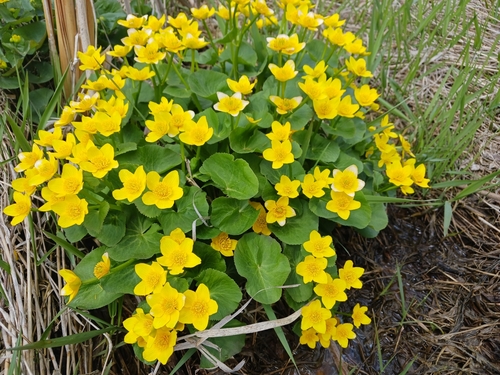
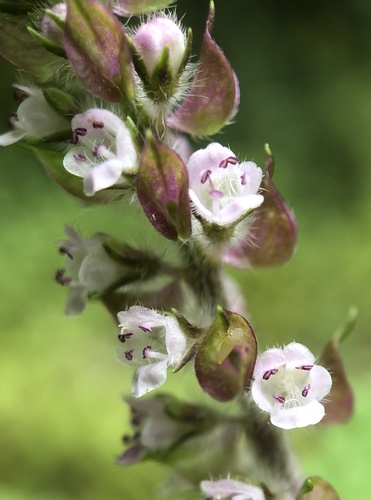
If you are unsure about a plant’s toxicity, ask a botanist or veterinarian for advice.