
Beefsteak plant (Perilla frutescens, )

Beefsteak plant (Perilla frutescens), widely known by the Japanese name shiso, is an annual in the Lamiaceae family native to East Asia, grown for its aromatic green or purple leaves. Although edible in cooking, it is toxic to grazing livestock, making the distinction between culinary use and agricultural risk essential.
Read moreBeefsteak plant, Perilla, Shiso, Zisu, Tía tô and Deulkkae
Allow a few hours of direct sun per day, preferably morning or evening.
Full sun; tolerates light partial shade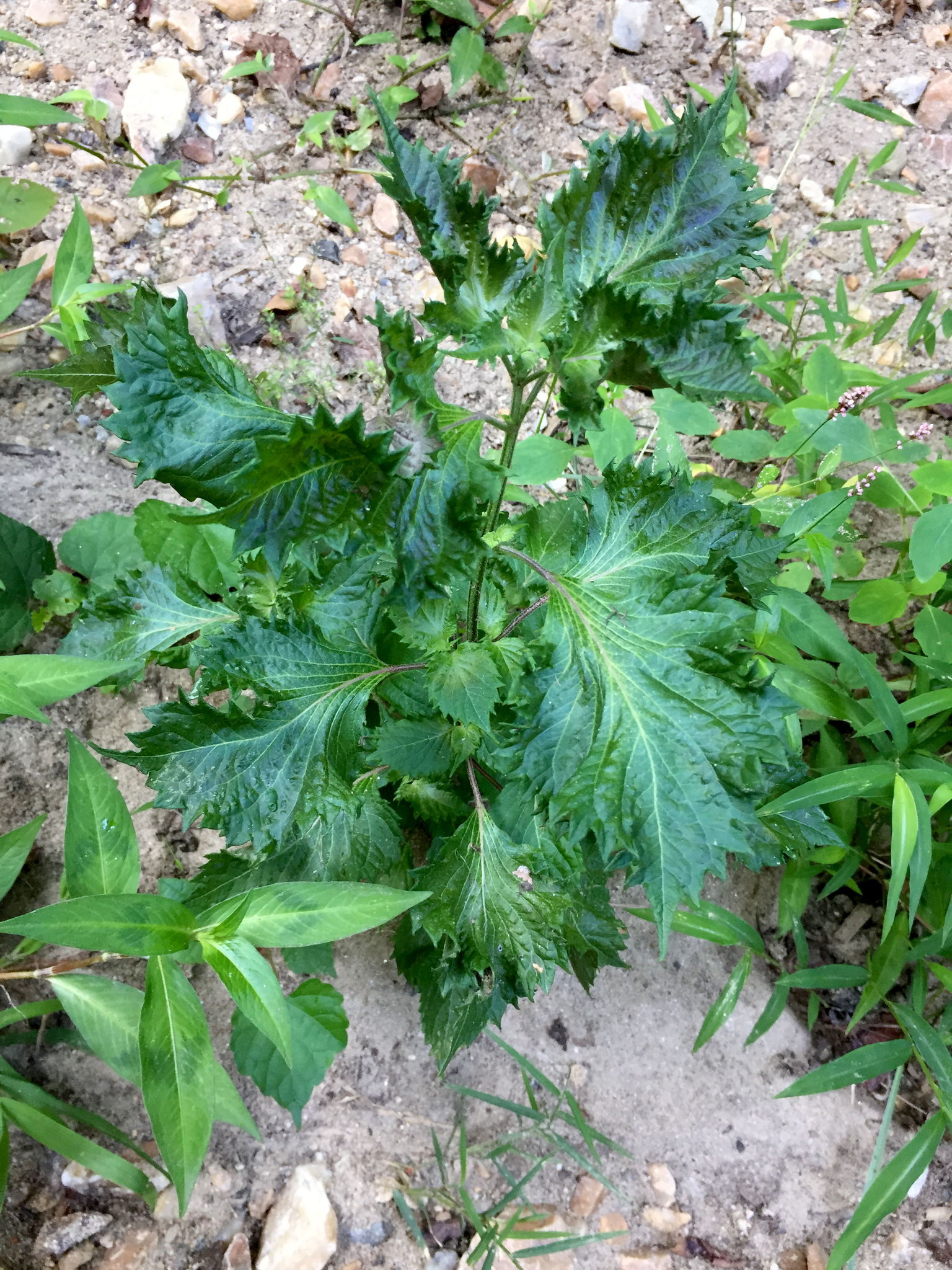
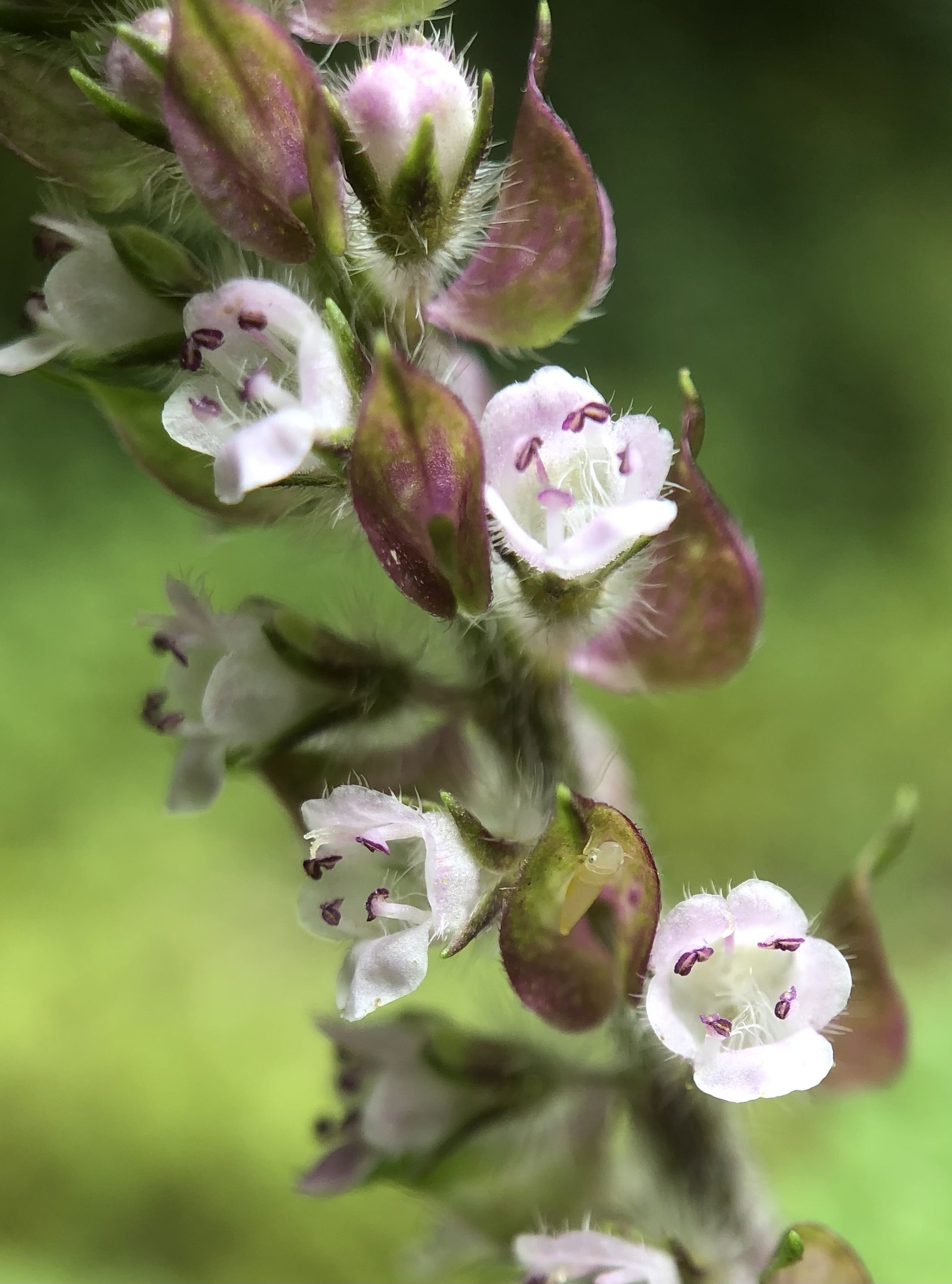


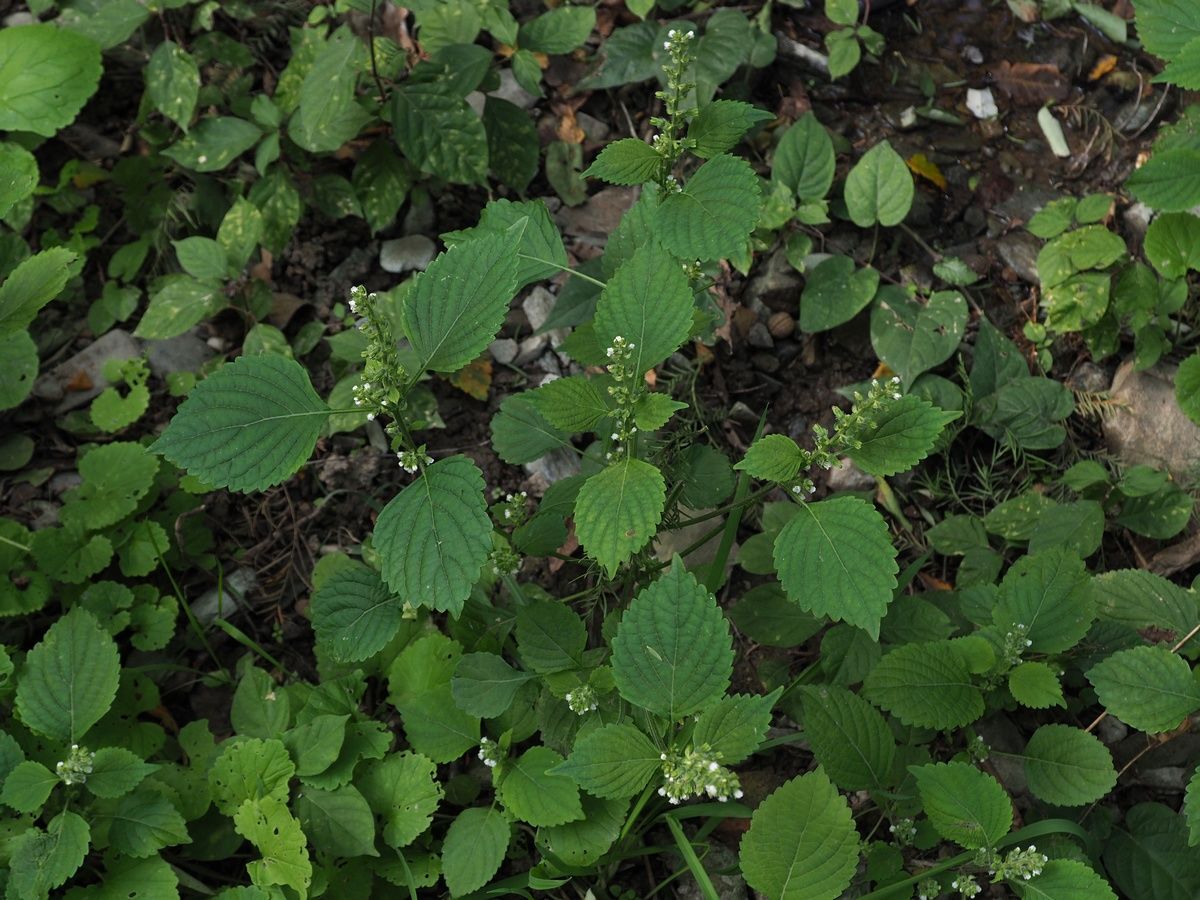
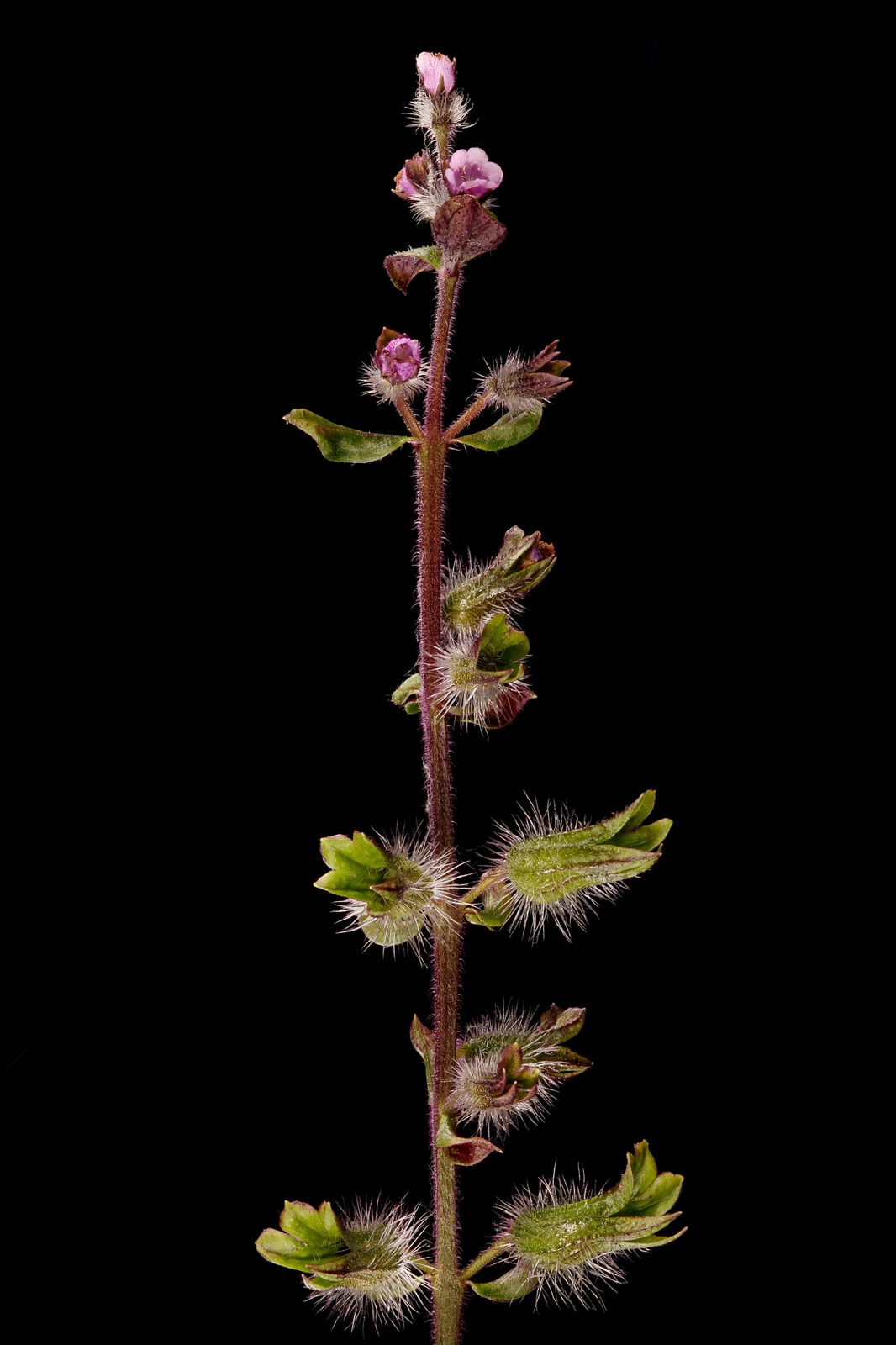
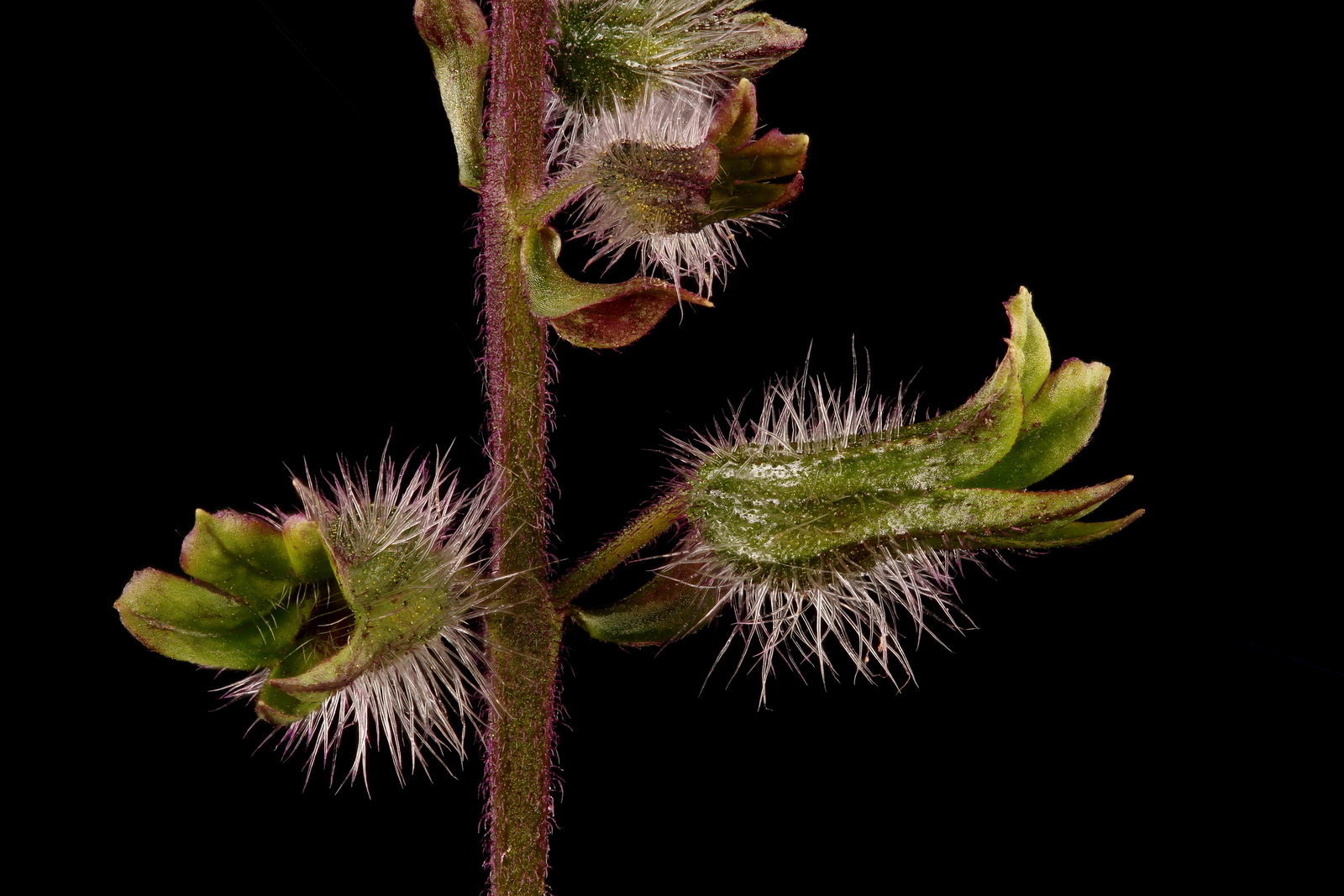
© photo
Katja Schulz · cc0
Daniel Atha · cc0
(c) H. Wilson Montgomery, Jr., some rights reserved (CC BY-NC), uploaded by H. Wilson Montgomery, Jr. · cc-by-nc
Taken Sep 5, 2021 by Jade Rose (cc-by-sa)
Taken Oct 28, 1995 by Royal Botanic Garden Edinburgh - Anonymous (cc-by-nc)
Taken Aug 26, 2019 by Melissa Melissa Keneely (cc-by-sa)
Taken Jul 26, 2022 by Tristan Jaton-Maria (cc-by-sa)
Taken Sep 16, 2019 by Kerri (cc-by-sa)
© copyright of the Board of Trustees of the Royal Botanic Gardens, Kew.




Global distribution
The native range of Perilla frutescens extends from the Himalayan foothills to the Russian Far East, including India, China, Korea and Japan. It has naturalized widely elsewhere, notably in North America, where several regions now treat it as an invasive weed.
- Native3
- Introduced1
- Invasive1
- India
- China
- Nepal
- Canada
- United States
Hexagons: regions where the plant occurs. Green dots: native range.1
Identity
Beefsteak plant (Perilla frutescens (L.) Britton, 1894), widely known as shiso, is an annual in the Lamiaceae family. Linnaeus first described it as Ocimum frutescens before Britton reassigned it to Perilla in the late nineteenth century. 1 9
The Chinese name zǐsū (紫苏) is said to mean literally “the purple that revives,” a story linked to an old medicinal use against food poisoning. Vietnamese tía tô, Korean deulkkae and Japanese shiso refer to the same plant, cultivated in East Asia for centuries for its aromatic leaves. 7 8
Recognition
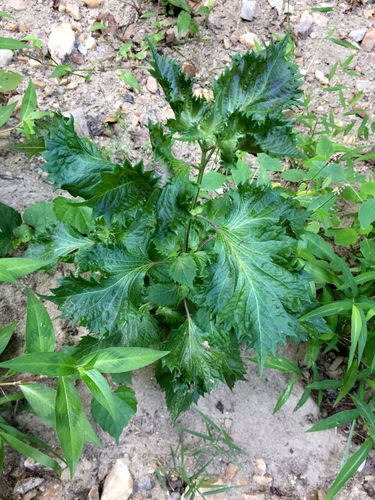
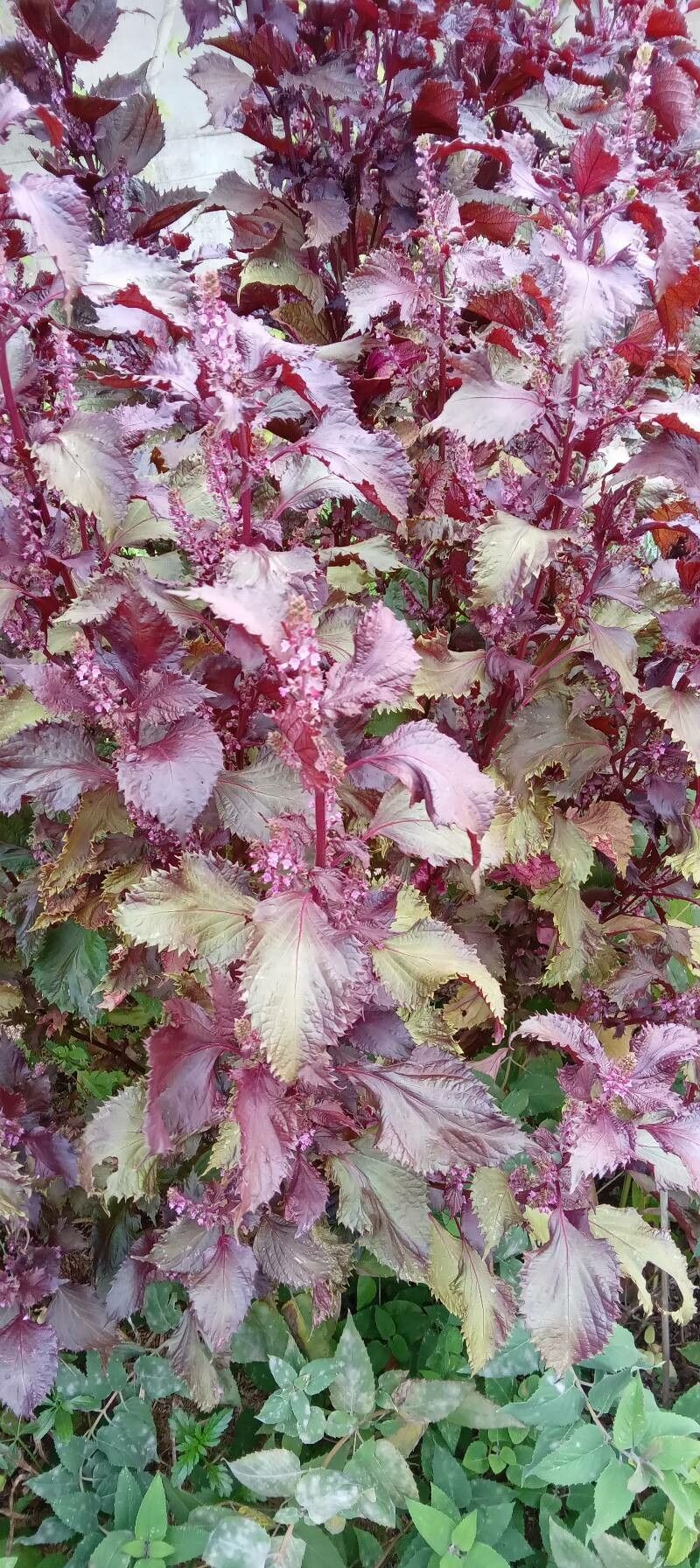
Upright growth and a square stem typical of Lamiaceae characterize Perilla frutescens, which reaches 40 to 120 cm (16 to 47 in) depending on climate and cultivation. Opposite leaves are oval, toothed and often crinkled, releasing a strong scent between basil, mint and anise when crushed. 3 4
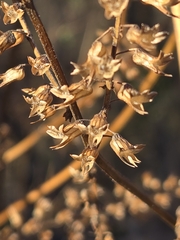
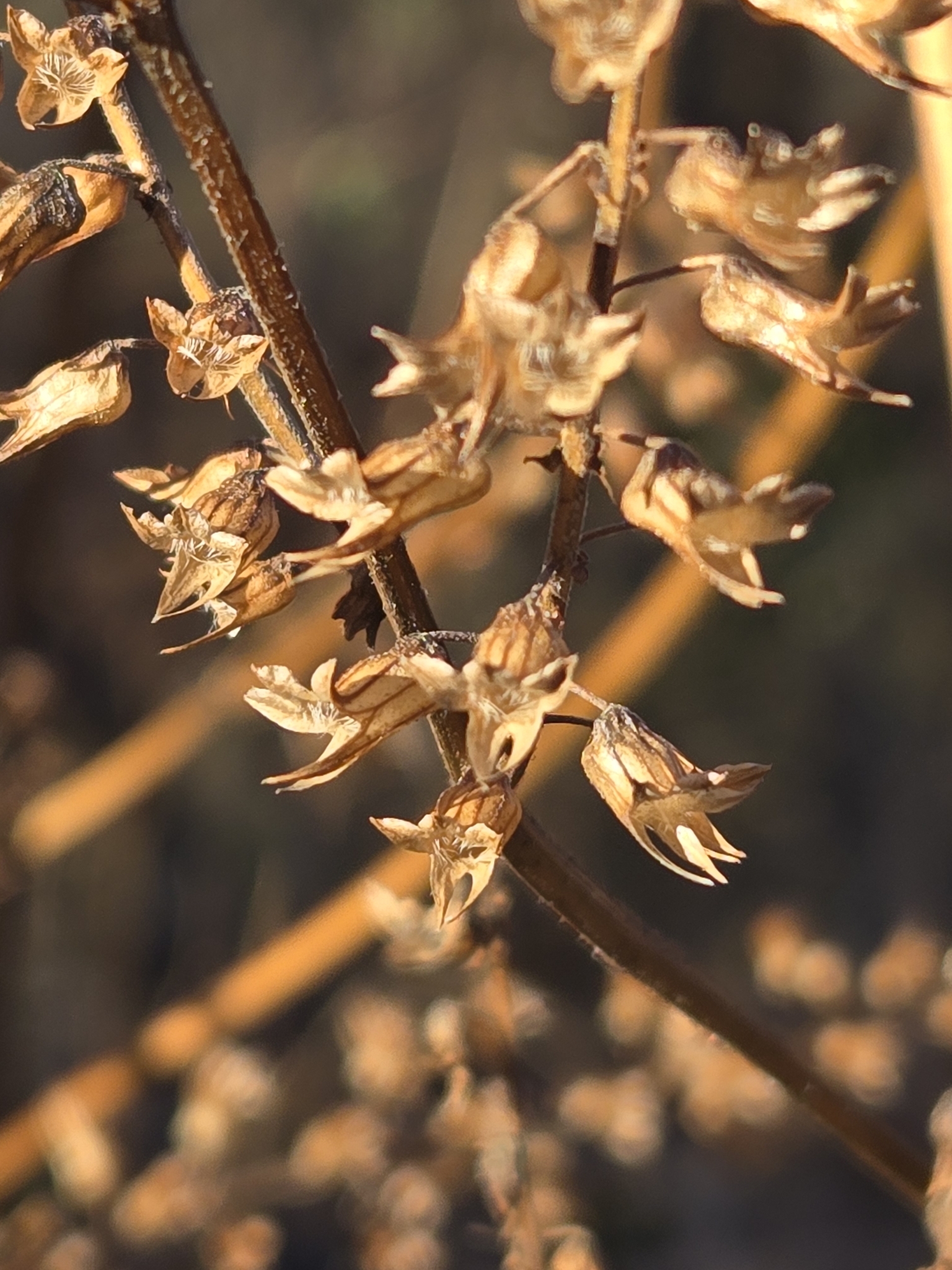
Japanese cooking uses two foliage colors: green shiso (ao-jiso), with a mild aroma, and purple shiso (aka-jiso), whose reddish-purple color gave rise to the English name “beefsteak plant.” In late summer, terminal white to purplish flower spikes 5 to 15 cm (2 to 6 in) long appear at the shoot tips, followed by small black seeds. 4 8
Leaf blades, often 5 to 10 cm (2 to 4 in) wide, have strongly toothed edges and sometimes a blistered surface, particularly in curled shiso selections. These pronounced teeth and uneven surfaces, together with the scent, distinguish beefsteak plant from purple basil with smoother, glossier leaves. 3
Useful taxonomy
For this member of Lamiaceae, POWO accepts the name Perilla frutescens (L.) Britton. Two commonly cited varieties differ chiefly in horticultural use: Perilla frutescens var. frutescens, close to the wild type, and Perilla frutescens var. crispa (Thunb.) H.Deane, containing the cultivated, crinkled-leaved forms sold as shiso. 1 2
Historical synonyms include the following names:
- Ocimum frutescens L. (historical basil placement)
- Perilla ocymoides L. (historical perilla name)
- Mentha perilloides Lam. (historical mint placement)
- Melissa cretica Lour. (historical balm placement)
These four names placed the plant near basil (Ocimum), mint (Mentha) or balm (Melissa), reflecting the similarities among aromatic members of this part of Lamiaceae. 7
Habitat and range
From Himalayan foothills to the Russian Far East, the native range of Perilla frutescens includes India, China, Korea and Japan. 1 2
Beyond its Asian native range, beefsteak plant has naturalized widely. North American populations grow along roads, woodland edges and around pastures; several central and southeastern US regions classify it as an invasive weed. 3 4
Rich, well-drained garden soil with a slightly acidic pH around 5.5 to 6.5 suits this plant. It grows in full sun, tolerating light partial shade. In temperate climates it is a warm-season annual, sown after the last frost and killed by the first cold, independently of its invasive status in milder conditions. 5 3
Life cycle and reproduction
An annual cycle takes the plant from seed through rapid leafy growth to flower spikes and seed production before winter. Fresh seed germinates best at 18 to 23 °C (64 to 73 °F). Flowering begins once plants are established in warm conditions, often in late summer. 7 5
Seed stores poorly beyond one season and germinates better sown on the surface, exposed to light, than buried. Established plants readily self-seed, explaining both their spontaneous occurrence in Asia and their invasive status elsewhere. 5 4
Pinching out shoot tips before flowering extends the leaf-harvest period. Letting a few plants set seed can renew the patch the following year without buying seed. Different parts of the planting can therefore supply tender leaves or future seed. 5
Uses and risks
Japanese, Korean and Vietnamese cuisines use the leaves, young shoots and seeds raw or cooked, as garnishes or in pickles. The seeds are also pressed for oil rich in alpha-linolenic acid. 5 8
Culinary use does not remove the plant's toxicity to livestock. The whole plant, especially the flower spikes, contains perilla ketones that cause acute lung damage resembling respiratory distress syndrome in cattle, other ruminants and horses, sometimes fatal within hours. Both fresh plants and contaminated hay present a risk. 6 5
Varieties, look-alikes and related plants
Green, purple and curled shiso sold by seed suppliers are horticultural selections within Perilla frutescens var. crispa, rather than separate species. Choose them for the color and aroma wanted in cooking. 1
Potential sources of confusion include these plants:
- Purple Ocimum basilicum and Mentha spp. share the square stems of Lamiaceae. The former has smoother foliage and a scent closer to green basil; the latter has more toothed leaves and a distinctly minty smell.
- Perilla frutescens var. hirtella is a wild mountain form from Japan and Korea, not cultivated and rarely encountered outside its habitat. 8
A scientific binomial identifies beefsteak plant more reliably than a common name alone, but the harvest context matters just as much. A pot of shiso for Japanese cooking presents a different risk from wild perilla beside a pasture, particularly when considering hay containing self-sown plants as animal feed. 3 6
Main sources
- Plants of the World Online / Kew, Perilla frutescens (L.) Britton
- GBIF Backbone Taxonomy, Perilla frutescens
- NC State Extension, Perilla frutescens (Beefsteak Plant)
- Missouri Botanical Garden, Perilla frutescens (Beefsteak Plant)
- Plants For A Future, Perilla frutescens (Shiso)
- Alabama Cooperative Extension System, Perilla Mint - A Toxic Threat to Livestock
- Wikipedia FR, Perilla frutescens
- Wikipedia EN, Perilla frutescens
- Wikidata, Perilla frutescens
Frequently asked questions
Is beefsteak plant (shiso) toxic?
Not in normal culinary use: the leaves and seeds are widely eaten in East Asia. However, the whole plant is toxic to cattle, other ruminants and horses because of perilla ketones concentrated mainly in the flower spikes.
What is the difference between green and purple shiso?
Green shiso (ao-jiso) has a milder aroma and is mainly served raw as a garnish. Purple shiso (aka-jiso) colors and flavors pickles and umeboshi. Both belong to the same cultivated variety.
How can I distinguish beefsteak plant from purple basil?
Both genera have the square stem typical of Lamiaceae. Beefsteak plant has more crinkled leaves and a different scent, between mint and anise, whereas purple basil smells more like green basil.
Is beefsteak plant invasive?
Yes, in some North American regions. It has naturalized on waste ground and pasture edges and is classified as a weed in several central and southeastern US states.
When should I sow beefsteak plant?
Sow in spring after the risk of frost has passed, on the surface and in warm conditions. At 18 to 23 °C (64 to 73 °F), germination is generally even and takes one to two weeks.
Similar plants
If you are unsure about a plant’s toxicity, ask a botanist or veterinarian for advice.