
mate (Ilex paraguariensis, )
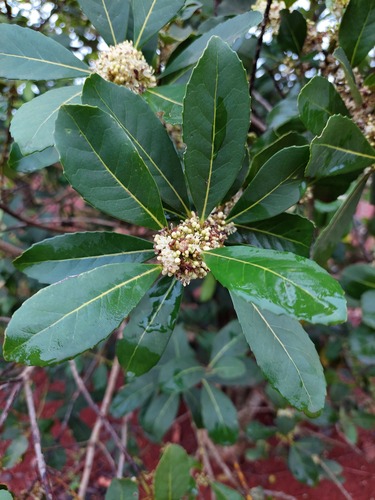
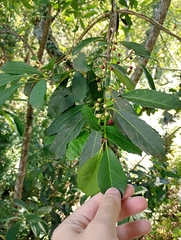
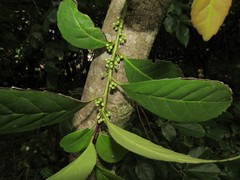
Mate (Ilex paraguariensis A.St.-Hil.), also called yerba mate, is an evergreen shrub or small tree in the Aquifoliaceae, native to the Paraná basin in South America. Its dried, roasted leaves make the caffeinated drink traditionally served in a gourd with a filtering straw called a bombilla.
Read moremate, yerba mate and Paraguay tea

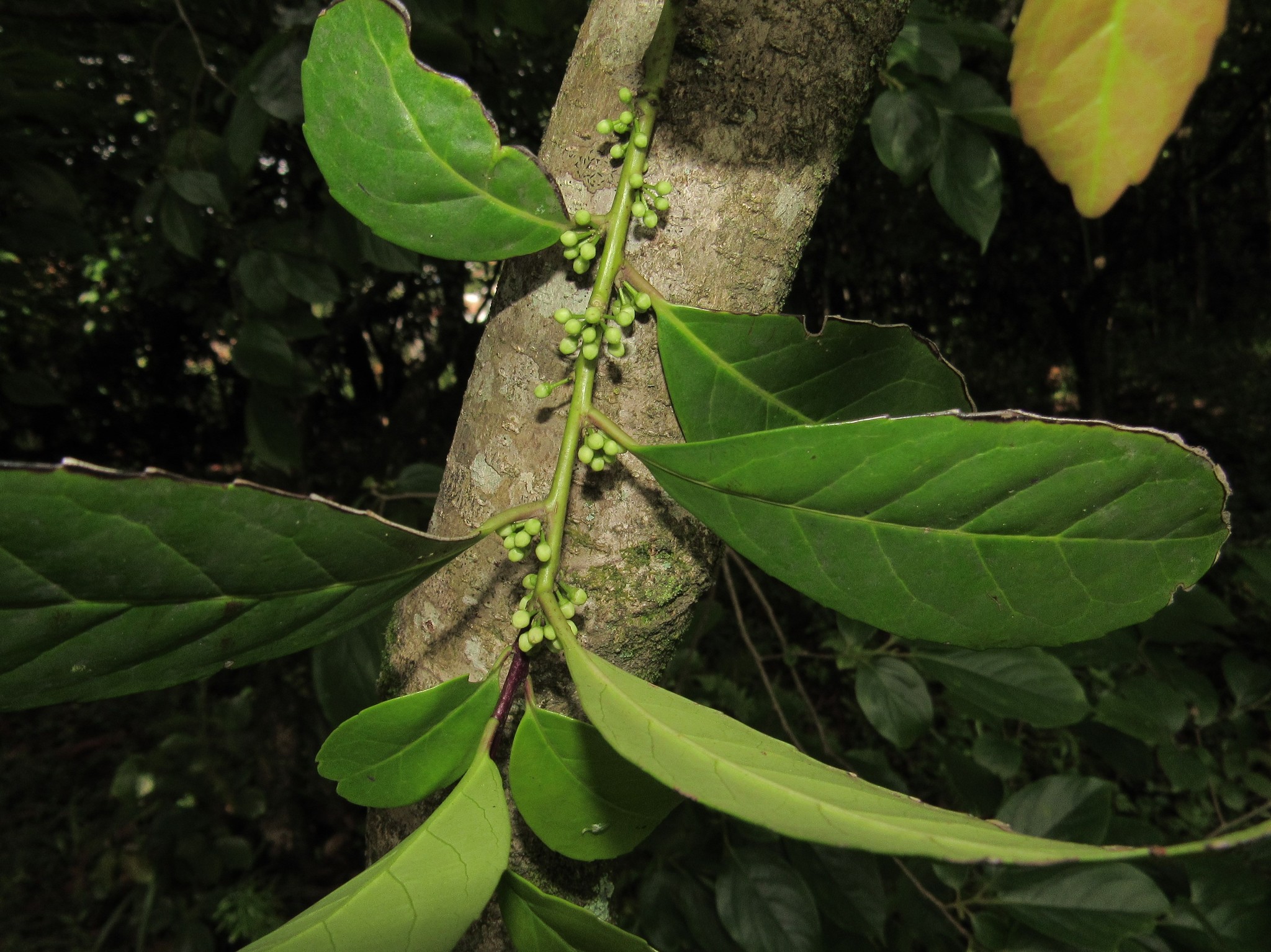


© photo
(c) Nico Sánchez, some rights reserved (CC BY-NC), uploaded by Nico Sánchez · cc-by-nc
Lucas Rodrigues · cc0
Kahio Tiberio Mazon · cc0
Taken Jul 22, 2021 by Trap Hers (cc-by-sa)
© copyright of the Board of Trustees of the Royal Botanic Gardens, Kew.


Global distribution
The native range of Ilex paraguariensis includes the Paraná and Uruguay basins: southern and southeastern Brazil, northeastern Argentina (Misiones), Paraguay and northern Uruguay. Unlike some ornamental hollies, it has no documented invasive status outside this region and remains chiefly a regional agricultural crop.
- Native4
- Brazil (South and Southeast)
- Argentina (Misiones)
- Paraguay
- Uruguay (North)
Hexagons: regions where the plant occurs. Green dots: native range.1
Identity
Mate (Ilex paraguariensis A.St.-Hil., 1822), also called yerba mate or Paraguay tea, is a South American holly grown for its caffeinated leaves. This evergreen shrub or small tree belongs to Ilex in the Aquifoliaceae. French botanist Auguste de Saint-Hilaire described it after encountering it during his early 19th-century travels in Brazil and Paraguay. 1 2
The word mate comes from Quechua mati, originally the gourd used to drink the infusion. The name passed from the container to the drink and then to the plant. Dried and roasted leaves are steeped in a hollowed gourd, and the infusion is drawn through a filtering straw called a bombilla. 5 3
Recognition
A dense, oval crown retains a regular shape even on old trees. Plants kept low for harvesting usually stand 4–8 m (13–26 ft) tall; unpruned trees can reach 15 m (49 ft), with a trunk 30–40 cm (12–16 in) across. Growth remains slow beyond the juvenile stage. 5
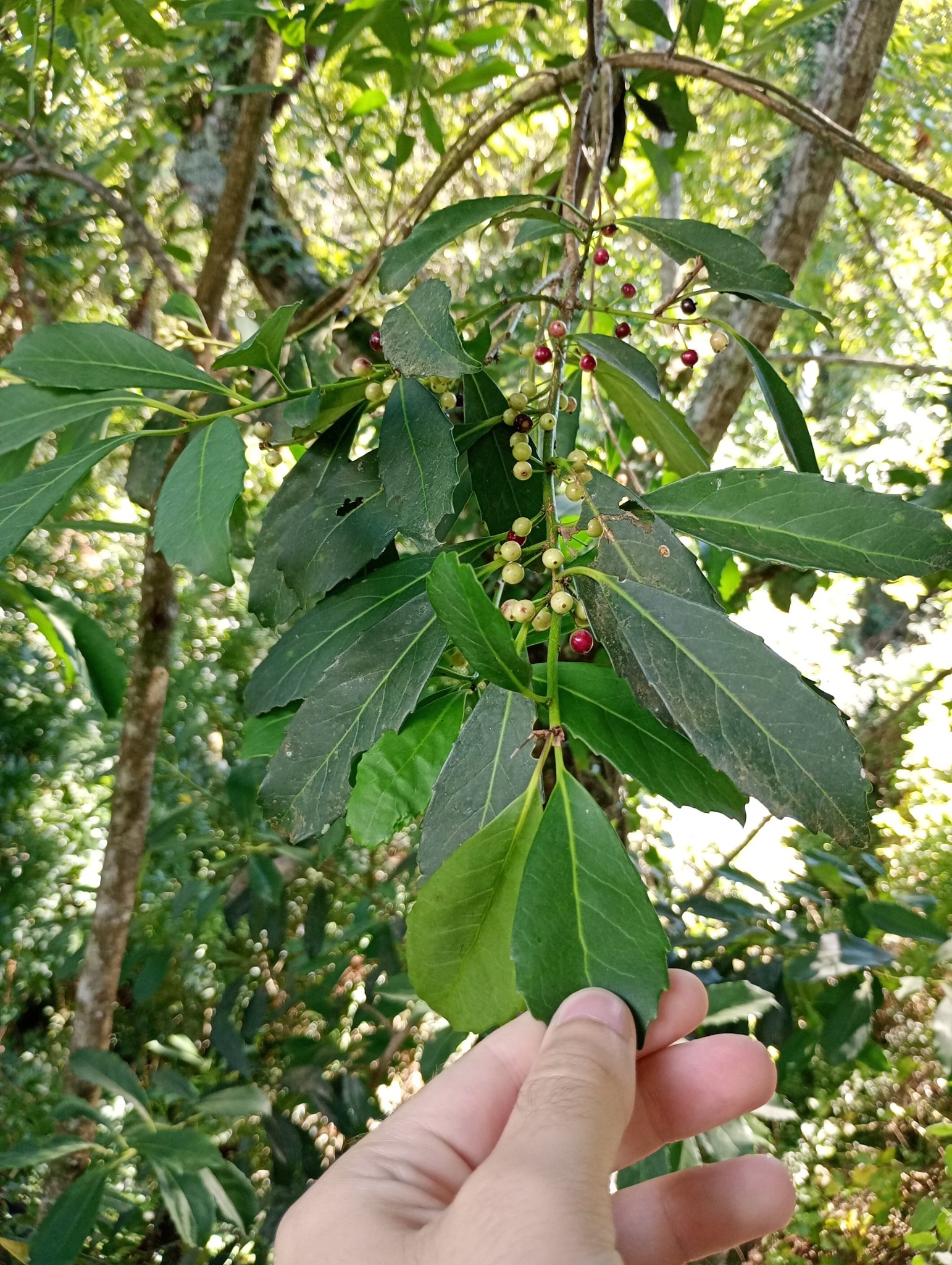
The alternate leaves are leathery, glossy and dark green, with toothed edges. They measure 3–11 cm (1.2–4.3 in) long and 3–5.5 cm (1.2–2.2 in) wide. These are the leaves dried and roasted for the beverage; raw leaves are not consumed in the same way. 3 5
Small greenish-white flowers have four petals and cluster in the leaf axils. They attract butterflies and other pollinators, then give way to small red to purple berries. The fruit is more toxic than the foliage and is a particular concern when animals investigate the plant. 5
Useful taxonomy
POWO and IPNI record Ilex paraguariensis A.St.-Hil., published in 1822. Three varieties are currently accepted below species rank: var. paraguariensis, the typical variety underlying cultivated mate; var. vestita (Reissek) Loes., from southeastern and southern Brazil; and var. sincorensis Loes., from northeastern Brazil. 1 2
Historical combinations and varietal names include:
- Ilex paraguariensis var. latifolia Reissek
- Ilex paraguariensis var. angustifolia Reissek
- Ilex paraguariensis f. pubescens (Reissek) Loes.
- Ilex paraguariensis var. dentata Miers
These are now treated as synonyms of the species or one of its accepted varieties. Use the full scientific name when buying or identifying the plant. Other South American hollies, including Ilex dumosa and Ilex theezans, enter similar commercial uses without being the same species. 1
Habitat and range
The native range includes the Paraná and Uruguay basins: southern and southeastern Brazil, northeastern Argentina, particularly Misiones, Paraguay and northern Uruguay. Plants grow beneath and along the edges of humid subtropical Atlantic Forest, often near streams at moderate elevations, up to about 1,500 m (4,900 ft). 3 5
The IUCN assessment lists the species as Near Threatened. Pressure on Atlantic Forest from deforestation and agricultural conversion explains this status better than the availability of commercially grown mate, which is widely propagated as a crop. Wild conservation status and agricultural abundance describe different populations. 4
Unlike ornamental hollies that have been planted around the world, Ilex paraguariensis remains chiefly cultivated within its native region and immediately adjoining areas. No invasive naturalization beyond that region is documented in the cited account. Its humid subtropical requirements should not be read as general outdoor suitability across the English-speaking world. 5
Life cycle and reproduction
Raising mate from seed takes patience. Seed germination can take 2–3 years. One propagation method uses 4–7 months of stratification in warm, moist sand to let the seeds finish ripening, followed by sowing in a shaded seedbed; under those conditions, germination should occur within a few days. The seedlings should then be ready for planting in their permanent positions 10–11 months later. Several more years pass before the first leaf harvest. 5
Commercial harvesting also serves as pruning. Growers remove some leafy branches, generally no more than a third of the foliage, so the tree can recover before the next cut. This is done in fall and winter in the Southern Hemisphere, when the leaves are considered richest. The seasonal reference belongs to the production region; it is not a fixed calendar for both hemispheres. 5
Guaraní communities historically gathered the species in the wild. In the 17th century, Jesuit missions in the Misiones reductions domesticated and planted it on a larger scale, developing a lasting regional crop from the earlier local use. 3
Uses and risks
The principal use is a caffeinated infusion made from dried, roasted leaves. Traditionally, the drink is prepared in a gourd and sipped through a bombilla, a metal filtering straw. Several people may share the same vessel during a drinking session, making its preparation and serving a social practice as well as a way to consume the leaves. 5
Like tea and coffee, mate contains caffeine, once sometimes called mateine. Excess caffeine can cause agitation, digestive upset and an abnormal heart rhythm in animals. The fruits contain irritating saponins, as do those of other hollies, and can cause vomiting and diarrhea if eaten. Keep the beverage as well as the plant out of animals' reach. 6 5
A separate documented concern is drinking temperature. The International Agency for Research on Cancer classifies drinking very hot beverages, above 65 °C (149 °F), as probably carcinogenic to the esophagus. Its 2016 evaluation placed mate consumed at temperatures that are not very hot in Group 3, not classifiable as to its carcinogenicity to humans. That classification reflects inadequate evidence and does not establish that the drink has no carcinogenic potential. 7 8
Varieties, look-alikes and related plants
The three accepted botanical varieties, var. paraguariensis, var. vestita and var. sincorensis, offer more help with geographical origin than with simple visual identification. Distinguishing them confidently may require a botanical key; they do not replace the shared field characters of the species. 1
Three other species need to be distinguished. Ilex dumosa is sometimes mixed into commercial yerba under the name “yerba mate compañera.” Ilex theezans, another South American holly with similar leaves, is occasionally included as well. Tea, Camellia sinensis, shares the use of caffeinated leaves for infusion but belongs to the Theaceae rather than the Aquifoliaceae.
Leathery evergreen leaves 3–11 cm (1.2–4.3 in) long and red to purple berries are the main field characters highlighted here. An ornamental holly lacking that combination should not be assumed to be Ilex paraguariensis simply because it grows outdoors. The scientific name remains essential when the plant is intended for a particular commercial use. 5 3
Main sources
- Plants of the World Online / Kew, Ilex paraguariensis A.St.-Hil.
- International Plant Names Index, Ilex paraguariensis A.St.-Hil.
- GBIF Backbone Taxonomy, Ilex paraguariensis A.St.-Hil.
- IUCN Red List, Ilex paraguariensis assessment
- Useful Tropical Plants Database, Ilex paraguariensis
- ASPCA, Holly (Ilex) toxicity entry
- International Agency for Research on Cancer (IARC/WHO), press release on coffee, mate and very hot beverages
- PMC, comparative oesophageal cancer risk assessment of hot beverage consumption (coffee, maté, tea)
Frequently asked questions
Is mate a type of holly?
Yes. Ilex paraguariensis belongs to Ilex, the same genus as European holly, in the Aquifoliaceae. Its dried, roasted leaves make the beverage called mate or yerba mate.
Does mate contain caffeine?
Yes. Both leaves and infusion contain caffeine, formerly sometimes called mateine. Its concentration falls in a range close to tea and lower than coffee.
Is mate poisonous to cats and dogs?
As in other hollies, the fruit contains irritating saponins. The infusion and caffeinated leaves carry an additional caffeine risk. Keep both the plant and drink out of animals’ reach.
Is drinking very hot mate dangerous?
The International Agency for Research on Cancer classifies drinking very hot beverages, above 65 °C (149 °F), as probably carcinogenic to humans (Group 2A), in connection with esophageal cancer. Temperature, rather than the drink itself, appears to be responsible. Mate consumed at temperatures that are not very hot is not classifiable as to its carcinogenicity to humans (Group 3), because the evidence is inadequate. This classification does not demonstrate that it is safe.
Where does mate grow wild?
Its native range includes the Paraná and Uruguay basins: southern and southeastern Brazil, northeastern Argentina, Paraguay and northern Uruguay, in subtropical Atlantic Forest.
How long before a mate plant has harvestable leaves?
Seed germination can take 2–3 years. With 4–7 months of stratification in warm, moist sand followed by sowing in a shaded seedbed, germination should instead occur within a few days; the seedlings should be ready for planting out 10–11 months later. Several more years pass before the first harvest.
Can mate be grown outside South America?
Cultivation elsewhere remains limited because the species needs a humid subtropical climate and cannot withstand prolonged freezing. No invasive naturalization is documented outside its native range.
Similar plants
If you are unsure about a plant’s toxicity, ask a botanist or veterinarian for advice.