
Orange balsam (Impatiens capensis, )
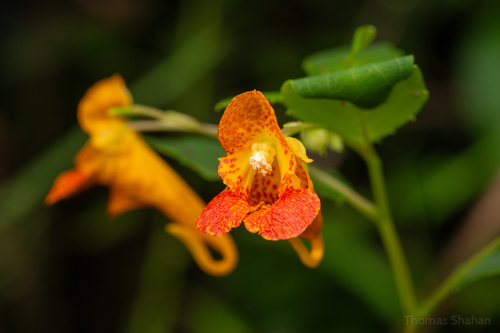
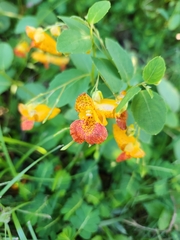
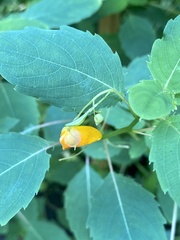
Orange balsam (Impatiens capensis Meerb., 1775) is an annual in the Balsaminaceae family native to North America, where it grows along streams, in ditches and in wet lowlands. Introduced in Europe, it favors moist, shaded soil there, but is not considered invasive everywhere.
Read moreOrange balsam, Orange jewelweed, Common jewelweed, Jewelweed, Spotted jewelweed and Spotted touch-me-not
Place in indirect light or in a shaded room.
Partial to light shade; tolerates more sun in wet soil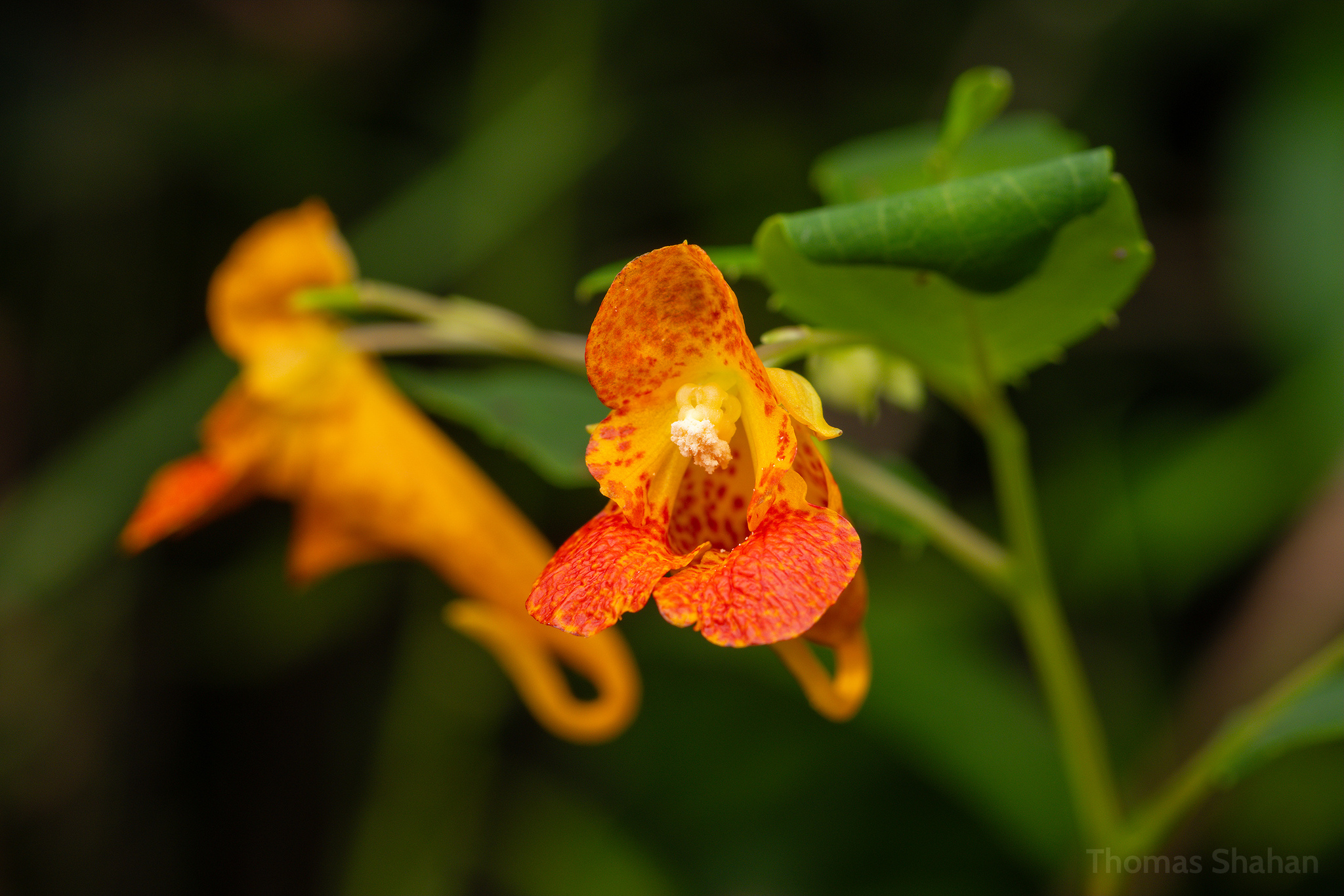
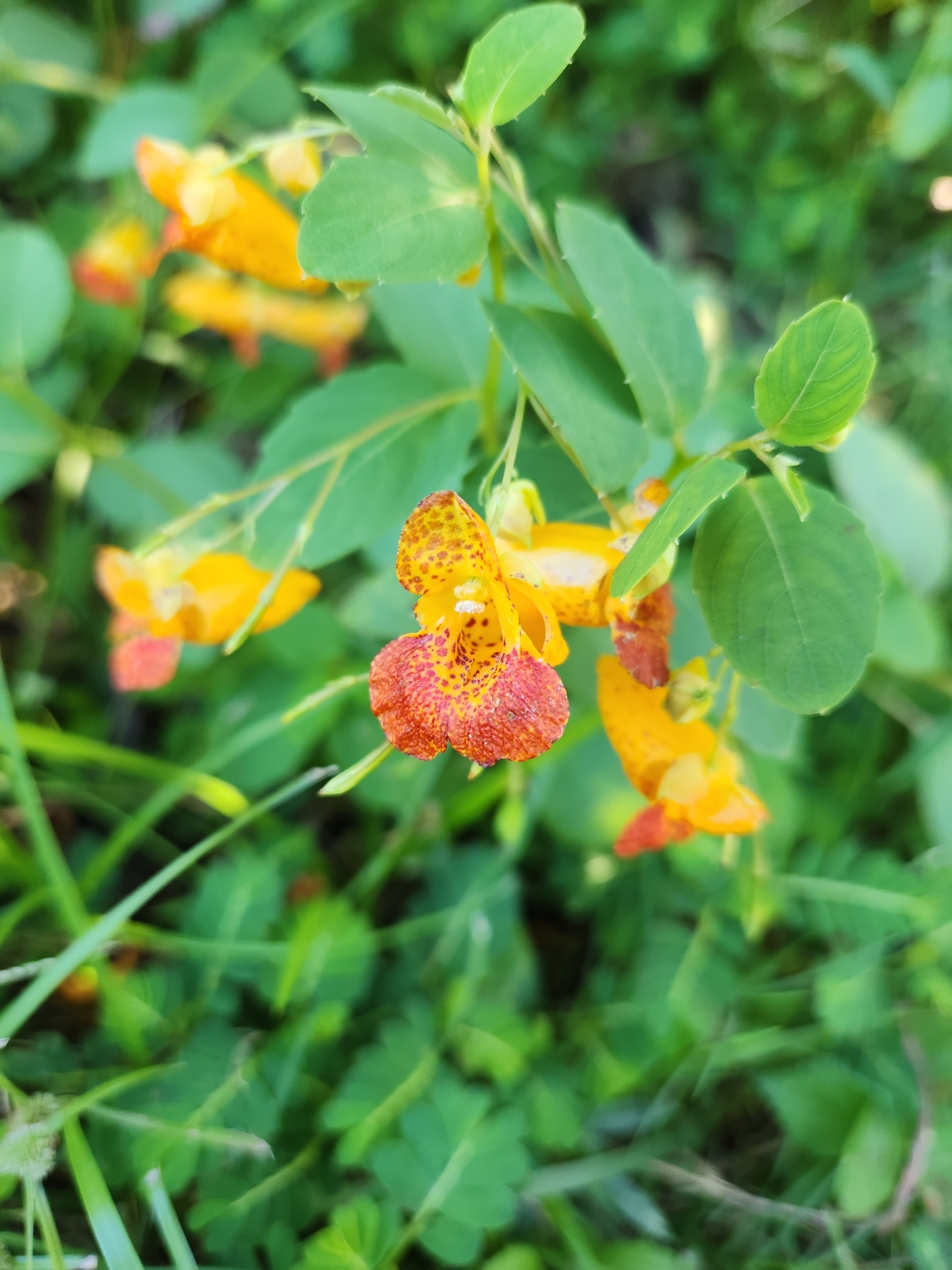
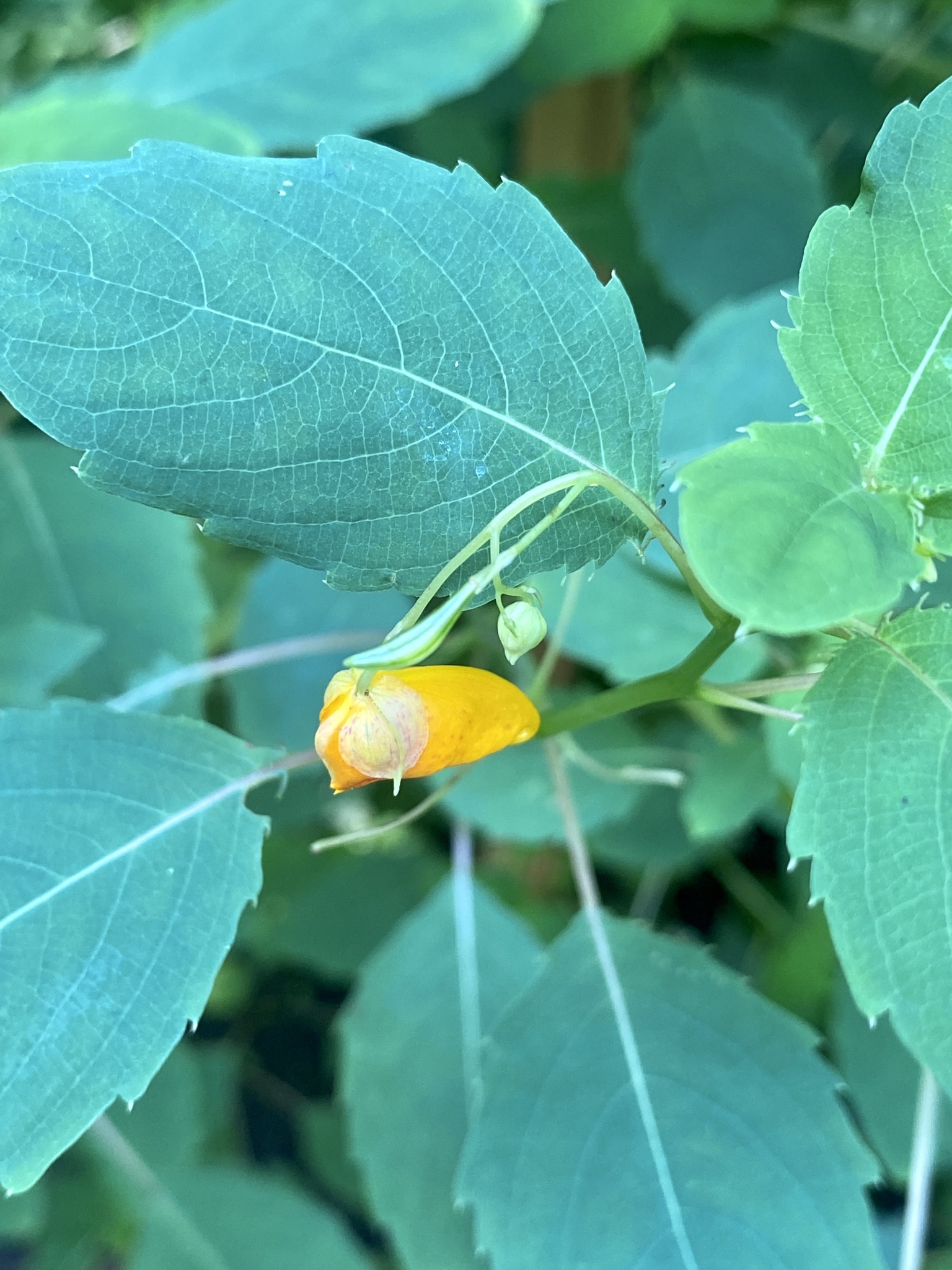


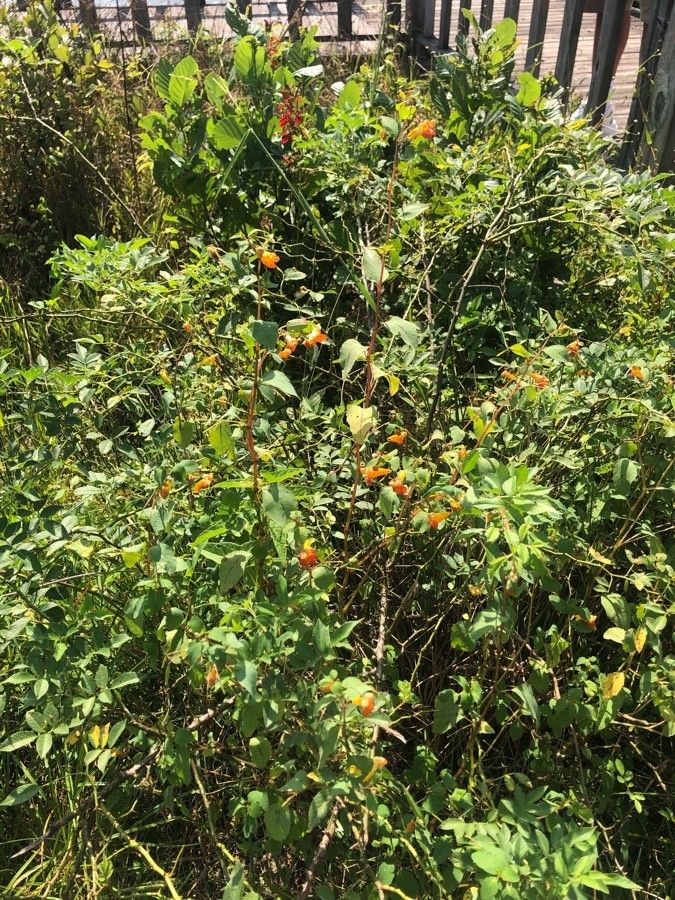
© photo
(c) Thomas Shahan, some rights reserved (CC BY-NC), uploaded by Thomas Shahan · cc-by-nc
Schyler Brown · cc0
Sandy Wolkenberg · cc-by
Taken Sep 15, 2007 by Photoflora - Jean-Luc TASSET (©)
Taken Aug 26, 2022 by Laura Bonet (cc-by-sa)
Taken Oct 2, 2020 by j laserblast (cc-by-sa)
Taken Aug 28, 2019 by tremblay stephanie (cc-by-sa)
Taken Jun 28, 2020 by stephanie jayne (cc-by-sa)
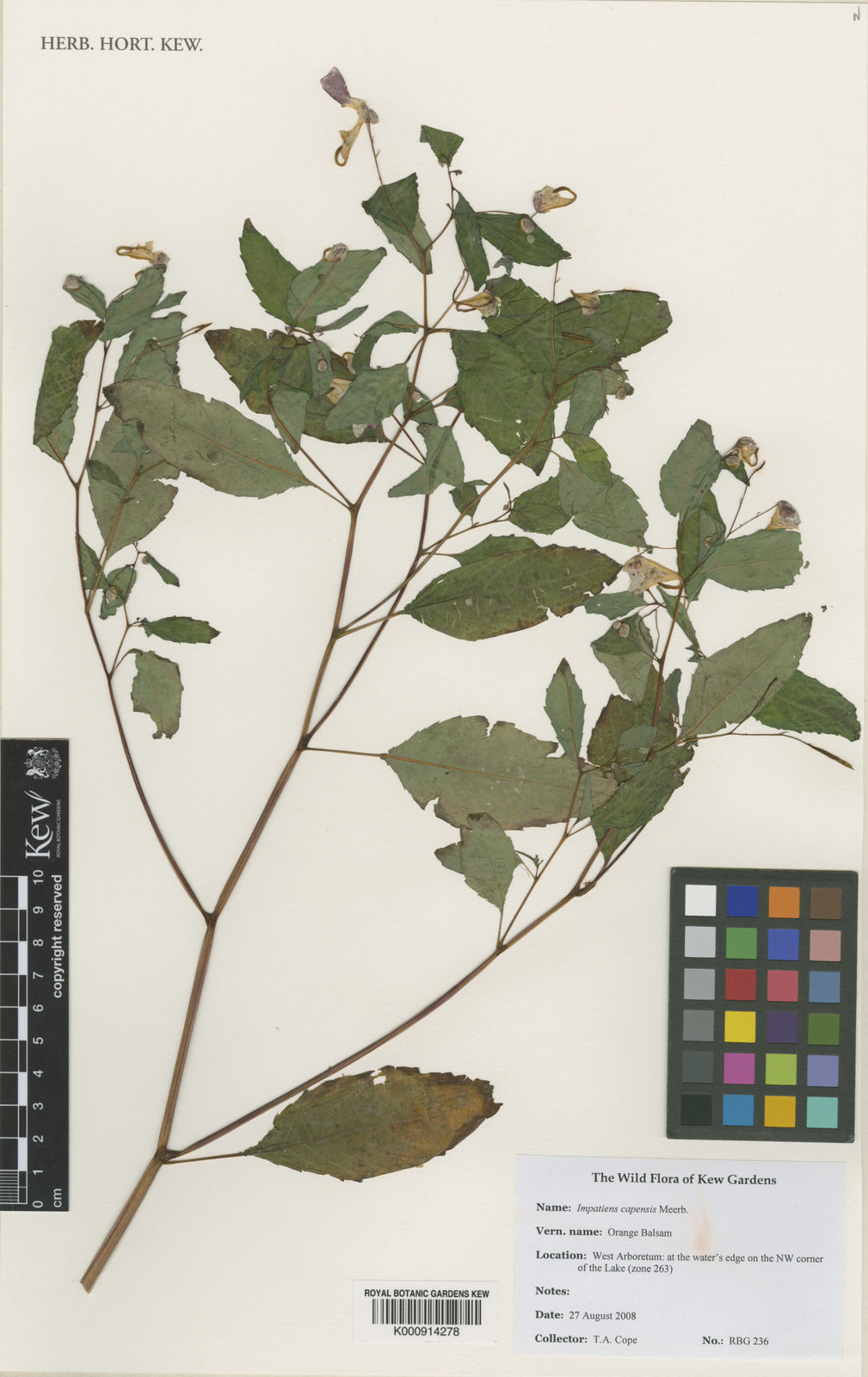
© copyright of the Board of Trustees of the Royal Botanic Gardens, Kew.




Global distribution
POWO and GBIF treat Impatiens capensis as native to Canada and the northern, central and eastern United States, and introduced in Europe and Asia. Its invasive status varies considerably between recipient countries.
- Native2
- Introduced3
- Invasive3
- United States
- Canada
- Metropolitan France
- Belgium
- Germany
- Denmark
- Finland
- Japan
Hexagons: regions where the plant occurs. Green dots: native range.1
Identity
Orange balsam (Impatiens capensis Meerb., 1775), also known as orange jewelweed, is an annual member of Impatiens in the Balsaminaceae family. Dutch botanist Nicolaas Meerburgh described it in 1775; his name remains attached to its accepted botanical name. 1
The epithet capensis, meaning “of the Cape,” records a historical mistake: Meerburgh believed this strictly North American plant came from the Cape of Good Hope. Jewelweed refers to leaves that appear silvery underwater, while touch-me-not describes capsules that burst when touched. 2
Wild wetland populations provide this species’ main interest: no ornamental variety has been bred from it, unlike the familiar bedding impatiens of the same genus. It feeds hummingbirds and bumblebees from June to September in its native range. Stem juice also has a documented traditional Native American use for skin irritation, discussed below. 4
Recognition
Upright clumps reach 0.6–1.5 m (2–5 ft) tall and 0.4–0.8 m (1.3–2.6 ft) wide. Smooth, succulent, partly translucent stems have nodes that may be tinged red. 3
Oval, finely toothed leaves are opposite near the stem base and alternate higher up. Orange flowers, often spotted red, measure 2–3 cm (0.8–1.2 in) long. Their three-lobed corolla has a curved, conical spur behind it. A rarer form bears pale yellow flowers without spots. 3 2
Flower color ranges from spotted orange to pale yellow, and the outline resembles other woodland impatiens. The oblong fruit provides another clue: its capsule bursts at a touch and throws seeds several tens of centimeters, a process called explosive dehiscence. Small closed flowers, called cleistogamous flowers, also self-fertilize without opening, ensuring seed production even without pollinator visits. 2
Taxonomy and names
Botanically, the accepted name is Impatiens capensis Meerb., in Balsaminaceae, order Ericales. Wild flower-color variants remain attached to this accepted taxon, including Impatiens capensis f. albiflora, f. citrina and f. immaculata. 1
French vegetation classifications place orange balsam among nitrogen-loving pioneer annuals of moist clearings and woodland edges. It grows alongside the European Impatiens noli-tangere, which shares its general appearance but is a distinct species. 8
Habitat and range
Canada and the northern, central and eastern United States form the native range, extending from Newfoundland and Saskatchewan southward. Waterlogged stream margins, ditches, wooded lowlands and wet meadows supply its characteristic habitat. 1 3
European introductions include France, Belgium and Germany, where the introduced-species inventories consulted do not classify it as invasive. The same registers consider it locally invasive in Denmark, Finland and Japan. 5
Washington State lists orange balsam as a Class C noxious weed, a regional regulatory status distinct from its native status elsewhere on the continent. The IUCN assesses it as Least Concern across its range, consistent with its extensive native distribution and ability to spread rapidly to new wet sites. 7 6
Life cycle, pollination and seeds
Orange balsam completes its annual life cycle within one season. Seeds germinate in spring after winter chilling breaks their dormancy. 4
Native-range flowering runs from June to September. Hummingbirds pollinate the flowers while reaching nectar deep inside the spur; bumblebees account for most flower visits through the rest of the season. 2
Ripe seed capsules burst at the slightest touch, throwing seeds several tens of centimeters through explosive dehiscence, or ballistochory. The first cold weather kills the plant. Only its seeds survive winter, sheltered in the soil until the next germination season. 3 2
Traditional uses and toxicity
Fresh stem and leaf juice is a traditional Native American remedy for skin irritation, including irritation caused by poison ivy (Toxicodendron radicans). The sap contains saponins associated with its reputed soothing effect. This widely reported traditional use has yet to be confirmed by clinical research. 4
Young spring shoots are eaten cooked, with the water changed once or twice to remove most calcium oxalates from the raw tissues. Large quantities eaten raw can instead have a purgative effect. 4
Pet safety accounts differ between sources. NC State identifies orange balsam as a concern for cats and dogs because its fruit contains a naphthoquinone that causes mild to moderate digestive irritation when swallowed. The ASPCA, by contrast, lists Impatiens as non-toxic to cats, dogs and horses. Caution around cats and dogs therefore remains appropriate. 9 10
For people, the main concern is eating large quantities raw, which may have that purgative effect. Traditional external use is generally well tolerated. 4
Look-alikes and related plants
Two relatives can cause confusion, especially Impatiens pallida, or yellow jewelweed. It often shares the same wet sites, but has larger pale yellow flowers and a less sharply curved spur than Impatiens capensis. 2
Impatiens glandulifera, Himalayan balsam, is much taller and bears pink or purple flowers. It is classified as invasive in Europe, unlike Impatiens capensis in the registers consulted. In France, orange balsam remains recorded as introduced, without an equivalent invasive status. 5
European native Impatiens noli-tangere occupies a similar ecological niche but is distinct and does not occur spontaneously in North America. Impatiens species often look alike at first glance; exact flower color and spur shape, considered with geographic range, are more reliable than overall habit.
Confirm a flowering specimen’s identity before gathering it or using its juice traditionally. Spotted orange flowers, a curved spur and explosive capsules together provide stronger identification than any one feature alone. 8
Main sources
- Plants of the World Online / Kew, Impatiens capensis Meerb.
- USDA PLANTS Database, Impatiens capensis, jewelweed
- Missouri Botanical Garden Plant Finder, Impatiens capensis
- Plants For A Future, Impatiens capensis
- GBIF / Global Register of Introduced and Invasive Species, Impatiens capensis
- IUCN Red List, Impatiens capensis assessment
- Washington State Noxious Weed Control Board, Spotted Jewelweed
- Tela Botanica eFlore / BDTFX, Impatiens capensis
- NC State Extension Gardener Plant Toolbox, Impatiens capensis
- ASPCA, Buzzy Lizzie (Impatiens spp.) non-toxic plant entry
Frequently asked questions
Is orange balsam toxic?
Its toxicity is low. NC State reports fruit that irritates the digestive tract of cats and dogs, whereas the ASPCA lists the genus Impatiens as non-toxic. In humans, raw leaves contain calcium oxalates and may have a purgative effect in large amounts; cooking removes this risk.
Why is it called touch-me-not?
Ripe capsules burst at the slightest touch and scatter their seeds, a mechanism called explosive dehiscence.
Does capensis mean it comes from South Africa?
No. The botanist who described it in 1775 mistakenly believed it came from the Cape of Good Hope. It is actually strictly North American.
Does orange balsam juice treat poison ivy irritation?
This is a widely reported traditional Native American remedy; some analyses suggest a soothing effect linked to saponins in the sap. It does not replace medical advice for a severe reaction.
Is orange balsam invasive in France?
It is introduced in several European countries, including France, without being listed as invasive there in the available inventories. Its status differs in Denmark, Finland and Japan, where it is considered locally invasive.
Can it be confused with Himalayan balsam?
Yes. Impatiens glandulifera is much taller, has pink or purple flowers and is classified as invasive in Europe, unlike Impatiens capensis in the inventories consulted.
Are the young shoots really edible?
Young spring stems are eaten cooked, with one or two changes of water to remove oxalates. They remain uncommon in modern cooking.
Similar plants
If you are unsure about a plant’s toxicity, ask a botanist or veterinarian for advice.