
Himalayan balsam (Impatiens glandulifera, )
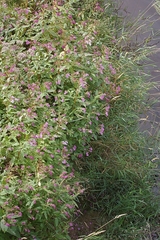
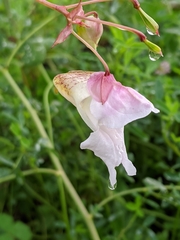
Himalayan balsam (Impatiens glandulifera Royle, 1835) is an annual in the Balsaminaceae family native to the western Himalayas, introduced to Europe as an ornamental in the nineteenth century. It is now listed as an invasive alien species of Union concern in the European Union, where planting, sale and deliberate spread are prohibited. Identification, ecological impacts and control methods are central to understanding this plant.
Read moreHimalayan balsam, Indian balsam, Policeman’s helmet, Ornamental jewelweed and Kiss-me-on-the-mountain
Place in indirect light or in a shaded room.
Partial to light shade; tolerates more sun in consistently wet soil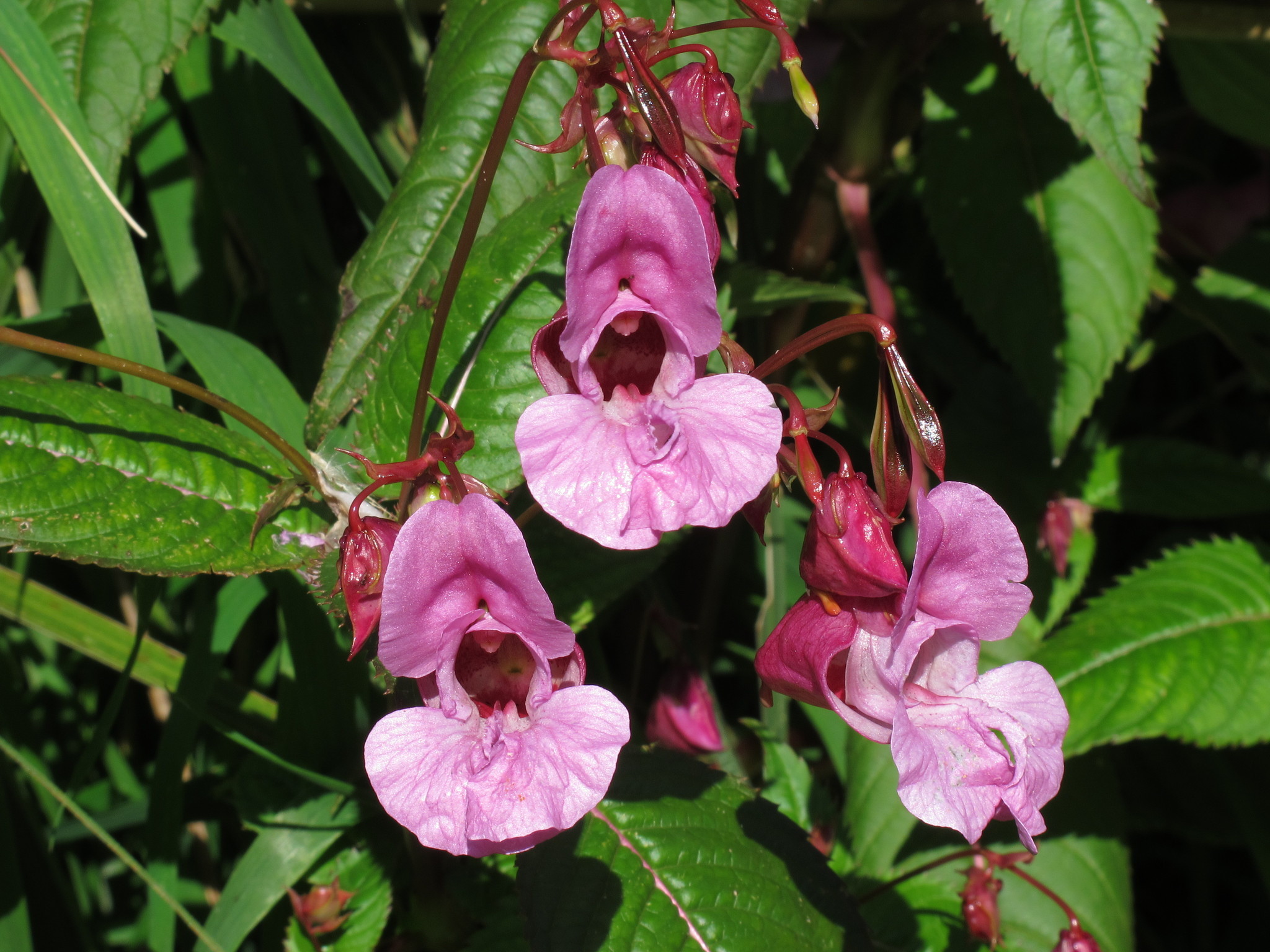
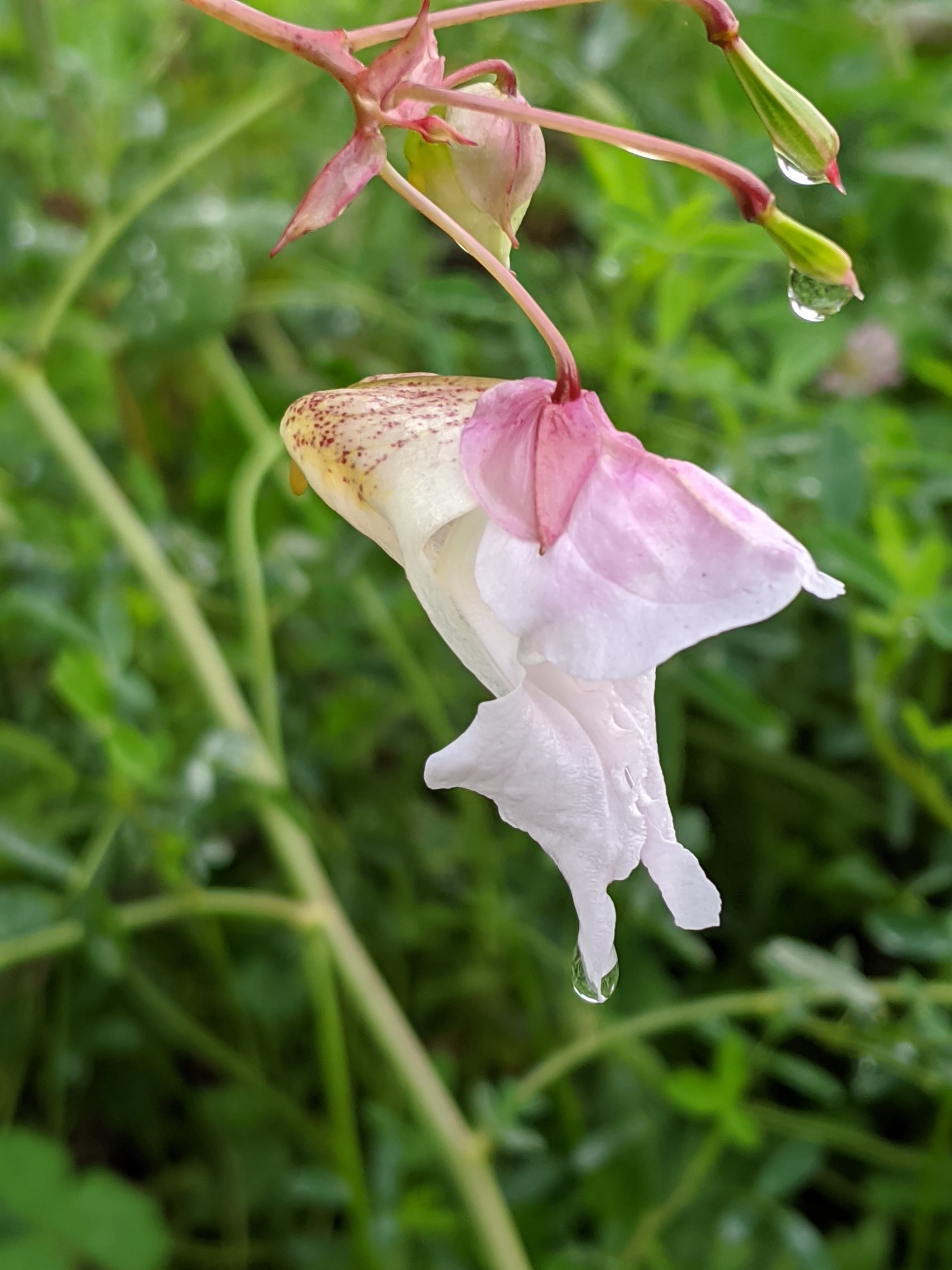


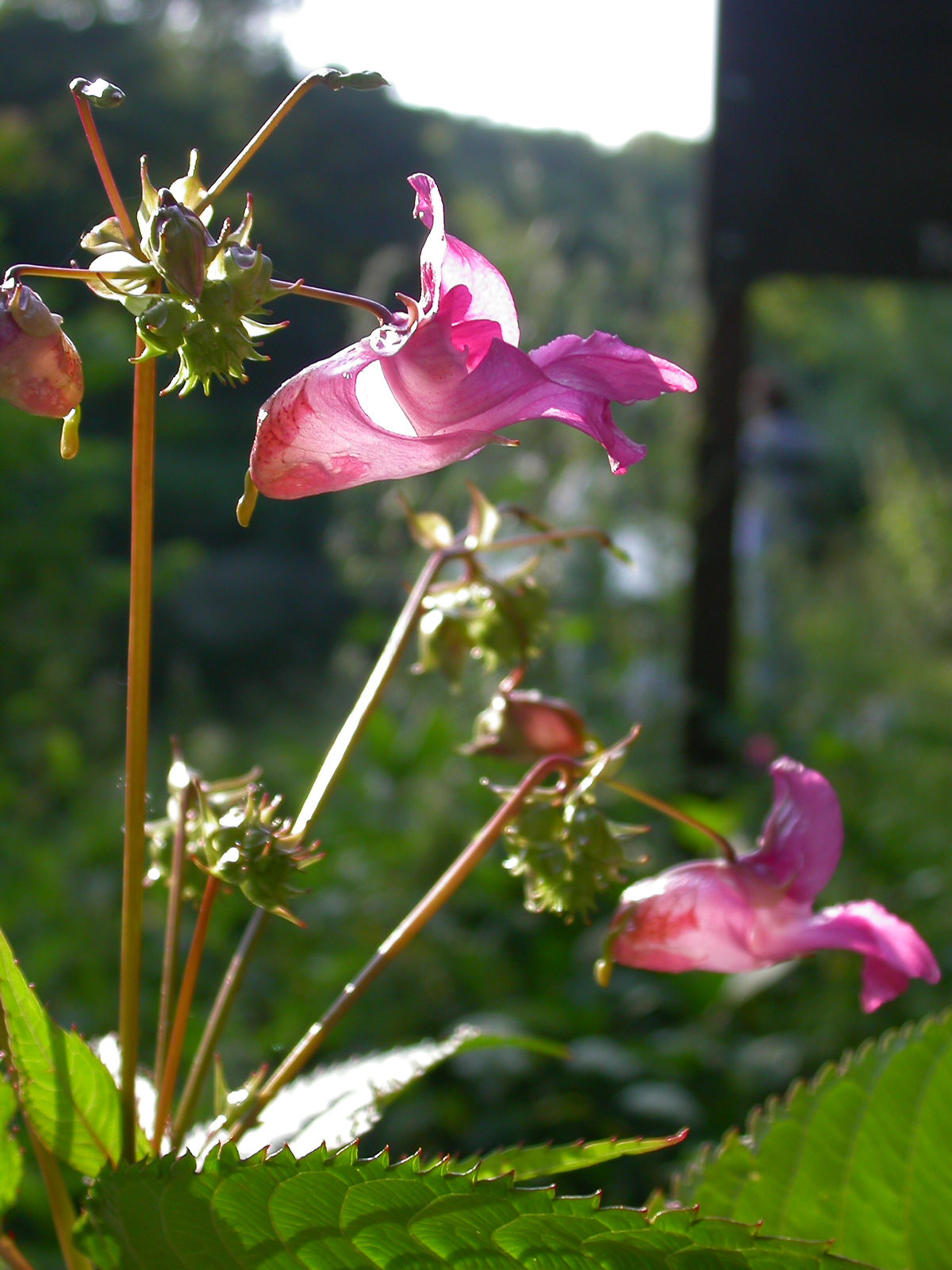
© photo
(c) John Barkla, some rights reserved (CC BY), uploaded by John Barkla · cc-by
Stephen James McWilliam · cc0
Ben Keen · cc0
Taken Aug 13, 2021 by Alexandra Norrsken (cc-by-sa)
Taken Aug 4, 2017 by SPS Karvina (cc-by-sa)
Taken Jul 20, 2019 by sawako totsuka (cc-by-sa)
Taken Aug 15, 2021 by Ian Bennett (cc-by-sa)
Taken Sep 12, 2021 by Lina Teresa Buitrago (cc-by-sa)
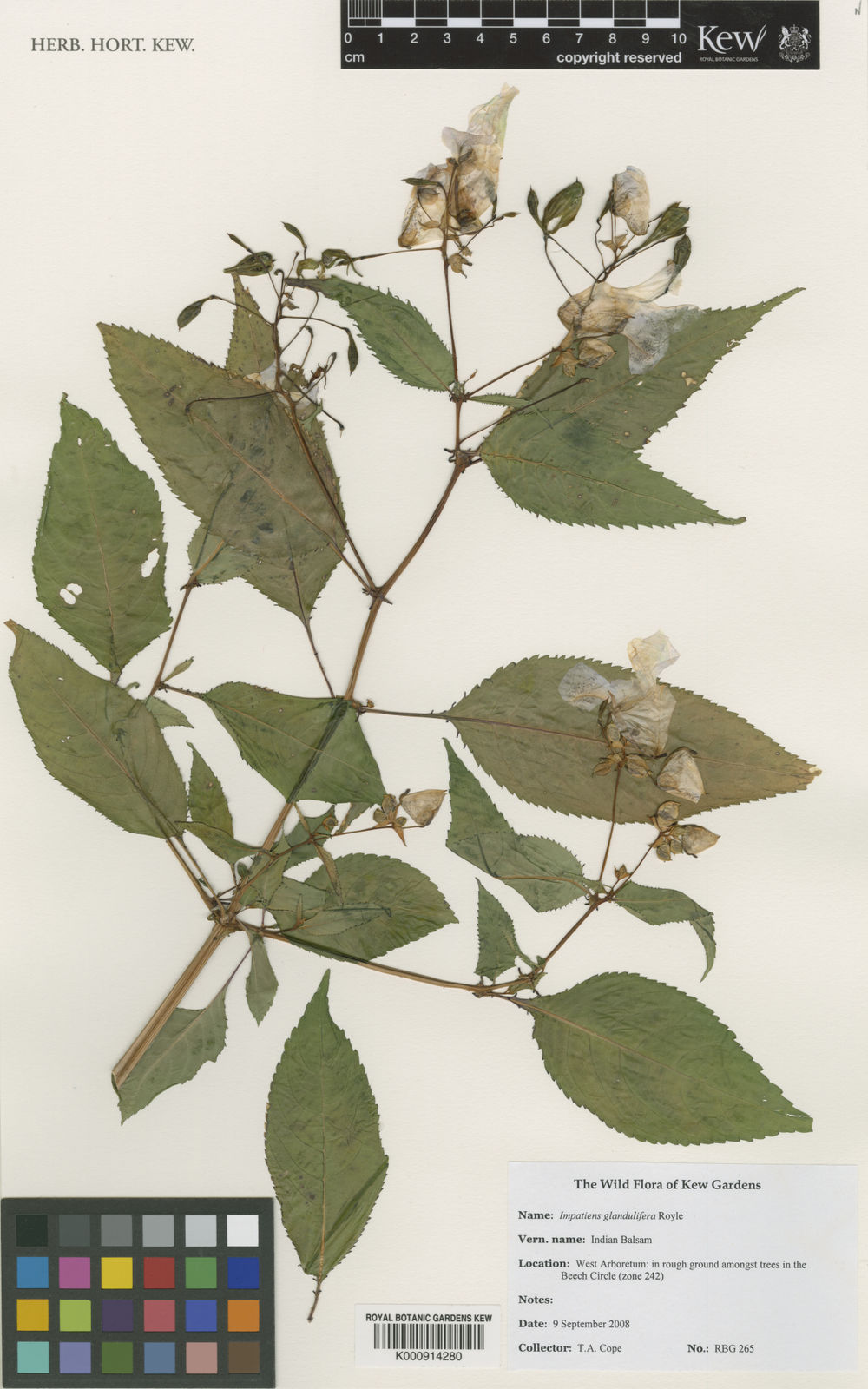
© copyright of the Board of Trustees of the Royal Botanic Gardens, Kew.


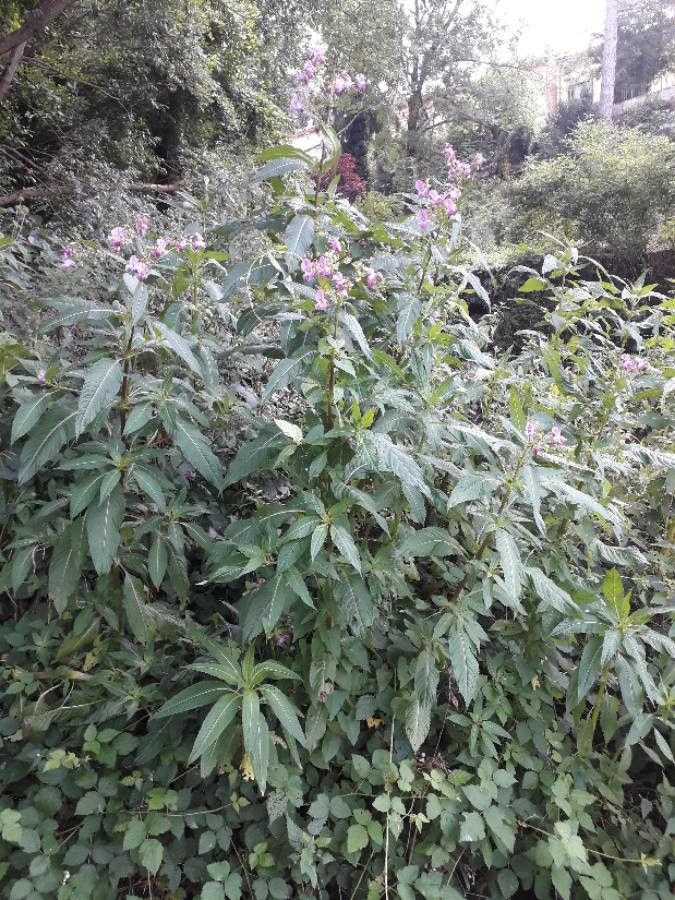


Global distribution
POWO and GISD place the native range in the western Himalayas (India, Nepal and Pakistan), at 2,000–2,500 m elevation. Introduced to the United Kingdom as an ornamental in 1839, it had naturalized by 1855 and subsequently spread across much of Europe, North America and New Zealand.
- Native3
- Introduced3
- Invasive4
- India
- Nepal
- Pakistan
- Canada
- United States
- New Zealand
- United Kingdom
- Metropolitan France
- Germany
- Poland
Hexagons: regions where the plant occurs. Green dots: native range.1
Identity
Himalayan balsam (Impatiens glandulifera Royle, 1835) is Europe’s tallest annual, reaching 2.5 m (8.2 ft) in one season. Planting it has been prohibited in the European Union since 2017. This Impatiens species belongs to Balsaminaceae. John Forbes Royle described it in 1835 from Himalayan specimens; POWO and GBIF retain that accepted botanical name. 1 5
Gland-bearing structures explain the epithet glandulifera: small glands at the bases of leaves and leaf stalks secrete sweet, sticky nectar. The English name policeman’s helmet compares the rounded flower to the helmet of a British police officer. 2
European Union restrictions make this a plant to recognize and manage rather than deliberately cultivate there. Since 2017, Himalayan balsam has been listed as an invasive alien species of Union concern, with planting prohibited. Its field identification, ecological effects and available control methods take priority. 9
Recognition
Tall, upright stands reach 1–2.5 m (3.3–8.2 ft). Hollow, succulent stems are often red-tinged and break easily in strong winds. Despite this height, roots rarely extend deeper than 15 cm (6 in), helping explain why even a large plant can be pulled by hand. 2 6
Lance-shaped, toothed leaves measure 5–23 cm (2–9 in) long and occur in pairs or whorls of three. Helmet-shaped pink, purple or occasionally white flowers measure 3–4 cm (1.2–1.6 in) and open from July to October in Europe. 2 6
Explosive fruit capsules help distinguish this species from other tall pink-flowered riverside plants. At the slightest touch, the oblong capsules throw seeds up to 5–7 m (16–23 ft) through explosive dehiscence, also called ballistochory. A single plant may produce more than 2,500 seeds per season, enabling rapid colonization. 6 8
Taxonomy and names
For botanical identification, use Impatiens glandulifera Royle, in Balsaminaceae, order Ericales. Historical synonyms for this taxon include Impatiens roylei Walp., Balsamina glandulifera (Royle) Ser., Impatiens glanduligera Lindl. and Impatiens royleana Payer. 1
English names Himalayan balsam, Indian balsam and policeman’s helmet all refer to this plant. Tela Botanica likewise records several equivalent French names, including balsamine de l’Himalaya, balsamine géante, balsamine glanduleuse, impatiente de l’Himalaya and impatiente glanduleuse. 7 2
Plant-health records use the EPPO code IPAGL for Himalayan balsam. This regulatory reference does not replace the full botanical name when identifying the species. 4
Habitat and range
Western Himalayan populations occupy the native range recognized by POWO and GISD, from Kashmir to Nepal. Typical elevations are 2,000–2,500 m (6,560–8,200 ft), with occasional reports up to 4,000 m (13,120 ft). 1 6
John Forbes Royle introduced the plant from Kashmir to Kew Gardens in 1839. It had naturalized in Hertfordshire and Middlesex by 1855, then spread across most of Europe, North America and New Zealand. 3
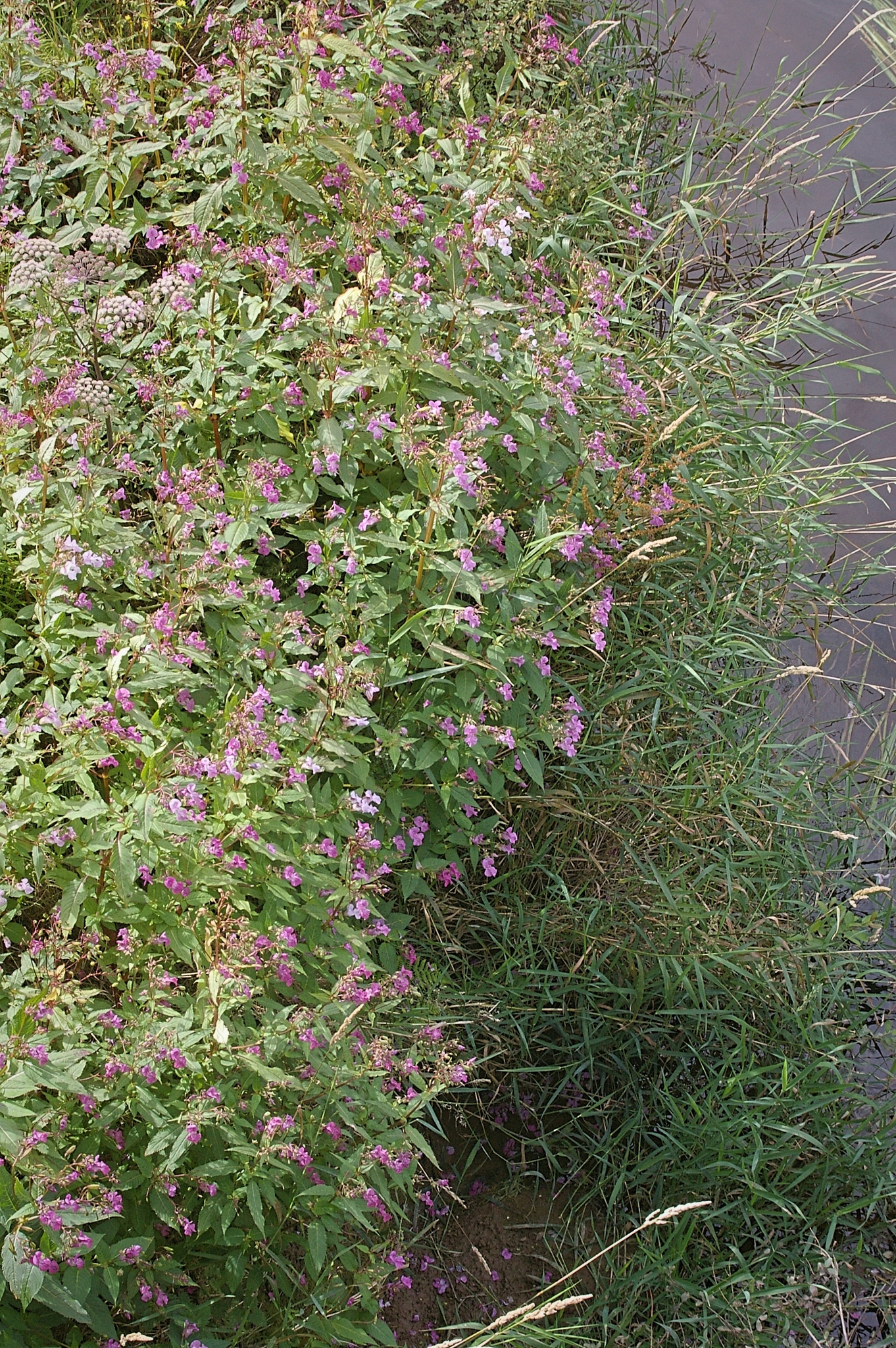
France and most of western and central Europe now have invasive populations. Himalayan balsam primarily colonizes watercourses and wet ditches, but over roughly the last two decades it has also expanded into riverside woodland edges. 4 5
Life cycle, pollination and seeds
Strictly annual, Himalayan balsam needs prolonged seed chilling, around 4 °C (39 °F) for more than 45 days, to break dormancy before germinating in February–March in the European seasonal pattern. 6
About thirteen weeks after germination, flowering begins. Nectar output can reach 0.47 mg per flower per hour, compared with a maximum of 0.3 mg in native central European plants. This abundance draws bumblebees and bees away from neighboring native flowers. 6
Roughly twelve weeks after flowering, ripe capsules burst at a touch and scatter seeds several meters. The first frosts kill the plants. Winter loss of their hollow stems leaves banks bare and exposed to erosion, a documented consequence of the annual cycle. 6
Legal status and control
Commission Implementing Regulation (EU) 2017/1263 placed Impatiens glandulifera on the list of invasive alien species of Union concern. Introduction, reproduction, transport, marketing, use and release into the environment are prohibited within that jurisdiction. 9
French implementation includes the order of February 14, 2018 concerning invasive alien plants. In the United Kingdom, the species appears in Schedule 9 of the Wildlife and Countryside Act 1981: causing it to grow in the wild is prohibited, but existing garden plants do not have to be removed under that provision. 10 2
Hand pulling and cutting before flowering are recommended by the RHS and GISD; herbicides are not advised beside watercourses. Since 2014, the specialist rust fungus Puccinia komarovii var. glanduliferae has been tested in the United Kingdom as a biological control agent, with results still varying between sites. 2 6
Uses, toxicity and look-alikes
Dogs and cats have no documented significant toxicity from this species. Raw tissues contain oxalates that can have a purgative effect in people eating large amounts; cooking young shoots reduces that risk. Ripe seeds, raw or roasted, reportedly taste nutty, but gathering them is difficult because the capsules burst before picking. 8
Bach flower preparations include this species under the name “Impatiens.” It is one of five ingredients in Rescue Remedy. That complementary-medicine use does not constitute recognized clinical evidence of efficacy. 8
Other tall pink-flowered riverside plants, particularly rosebay willowherb, are common sources of confusion. Hollow reddish stems, helmet-shaped flowers and glands at the leaf bases identify Impatiens glandulifera more reliably than flower color alone. 11 12
Main sources
- Plants of the World Online / Kew, Impatiens glandulifera Royle
- Royal Horticultural Society, Himalayan balsam profile
- GB Non-Native Species Secretariat, Himalayan Balsam information portal
- EPPO Global Database, Impatiens glandulifera (IPAGL)
- GBIF, Impatiens glandulifera Royle
- IUCN Global Invasive Species Database, Impatiens glandulifera
- Tela Botanica eFlore / BDTFX, Impatiens glandulifera
- Plants For A Future, Impatiens glandulifera
- EUR-Lex, Commission Implementing Regulation (EU) 2017/1263
- Légifrance, order of February 14, 2018 concerning invasive alien plants
- USDA PLANTS Database, Impatiens glandulifera, ornamental jewelweed
- California Invasive Plant Council, Impatiens glandulifera risk assessment
Frequently asked questions
Is Himalayan balsam toxic?
No significant toxicity is documented in dogs or cats. In humans, raw tissues contain oxalates that may have a purgative effect in large quantities; cooking reduces this risk.
Why should I avoid planting Himalayan balsam?
It has been on the European Union list of invasive alien species of Union concern since 2017. Cultivation, sale, planting and intentional transport are prohibited there.
How can I identify Himalayan balsam outdoors?
A hollow, reddish succulent stem, toothed leaves in groups of three and pink helmet-shaped flowers together provide a reliable distinction from other riverside plants.
Are the seeds and young shoots really edible?
Cooked young shoots and ripe seeds, raw or roasted, are documented as edible. They remain uncommon foods apart from occasional use in jam or oil.
Should I pull out a colony of Himalayan balsam myself?
Pulling or cutting before flowering remains the most effective method for small areas. For heavy infestations or sensitive banks, report the colony and follow local management guidance.
Why do pollinators neglect nearby native flowers?
The flowers produce unusually abundant nectar, attracting bumblebees and bees away from neighboring native species. This is documented as one mechanism of its ecological impact.
Similar plants
If you are unsure about a plant’s toxicity, ask a botanist or veterinarian for advice.