
Golden rain tree (Koelreuteria paniculata, )
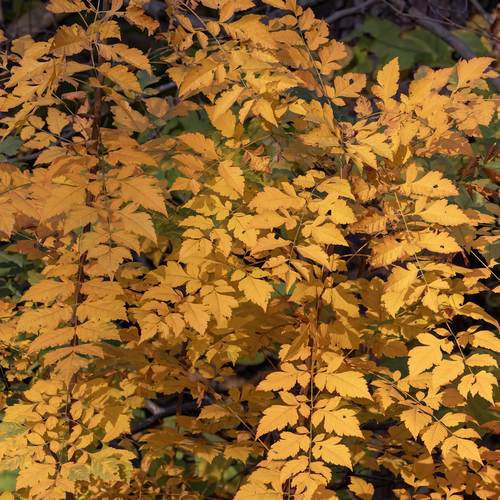

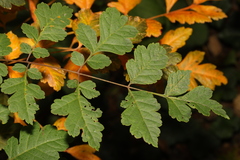
Golden rain tree (Koelreuteria paniculata) is a small deciduous tree in the Sapindaceae family, native to China, Korea and the Russian Far East. Its late yellow flowers and lanternlike fruits make it a popular urban tree. It tolerates drought, lime-rich soil and pollution better than many ornamental trees.
Read moreGolden rain tree, Goldenrain tree and Pride of India


© photo
Dan Vickers · cc0
(c) Charles, some rights reserved (CC BY-NC), uploaded by Charles · cc-by-nc
Stephen James McWilliam · cc0
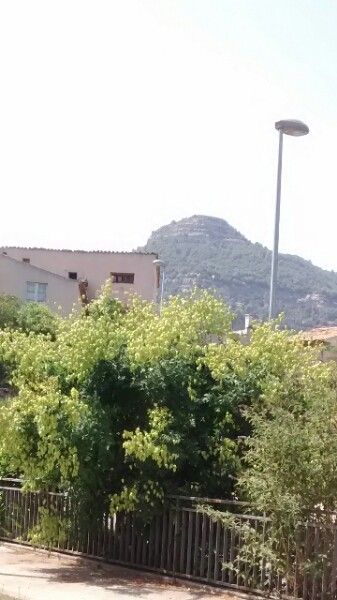
Taken Aug 2, 2021 by gutierrez josep (cc-by-sa)
Taken Jun 14, 2021 by Joan Francesc (cc-by-sa)
Taken Jan 13, 2016 by Tela Botanica − Dominique REMAUD (cc-by-sa)
Taken May 4, 2016 by Elisabete Elisabete Almeida (cc-by-sa)
Taken Oct 23, 2013 by Tela Botanica − Inge WULLWEBER (cc-by-sa)
© copyright of the Board of Trustees of the Royal Botanic Gardens, Kew.




Global distribution
The native range covers China, Korea and the Russian Far East, extending to Mongolia according to some sources. The species has been naturalized in Japan since the Middle Ages but is not native there. Widely introduced as an ornamental in temperate regions, it is also considered invasive in some parts of the United States.
- Native4
- Introduced1
- Invasive1
- China
- South Korea
- Russia
- Mongolia
- Japan
- United States
Hexagons: regions where the plant occurs. Green dots: native range.1
Identity
Golden rain tree (Koelreuteria paniculata Laxm., 1771), also called Goldenrain tree and Pride of India, is a small deciduous tree in the Sapindaceae family and the only species of its genus widely cultivated in Europe. Swedish-Finnish naturalist Erik Laxmann, who worked in Russia, described it in 1771 from Chinese specimens. 1 6
Joseph Gottlieb Kölreuter, professor of natural history in Karlsruhe and a pioneer of experimental plant hybridization, is honored by the genus Koelreuteria. The epithet paniculata describes the upright, branched flower cluster, or panicle, bearing the yellow flowers. 4
Its French name savonnier refers to saponins in the bark and fruits, traditionally used in Asia to wash clothes before industrial soap became widespread. This does not place it in Sapindus, the soapberry genus, which belongs to the same family but is taxonomically distinct. 7
Recognition
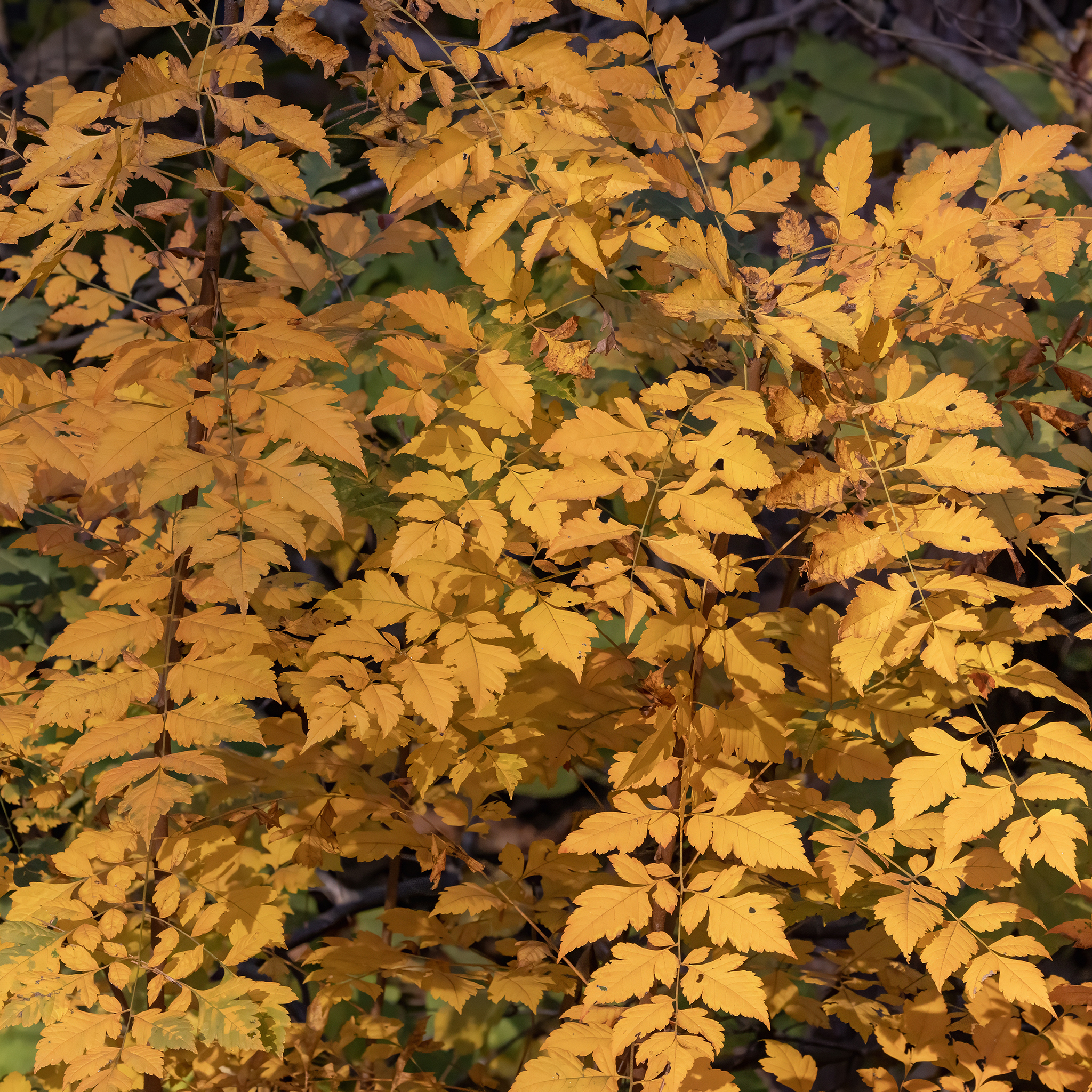
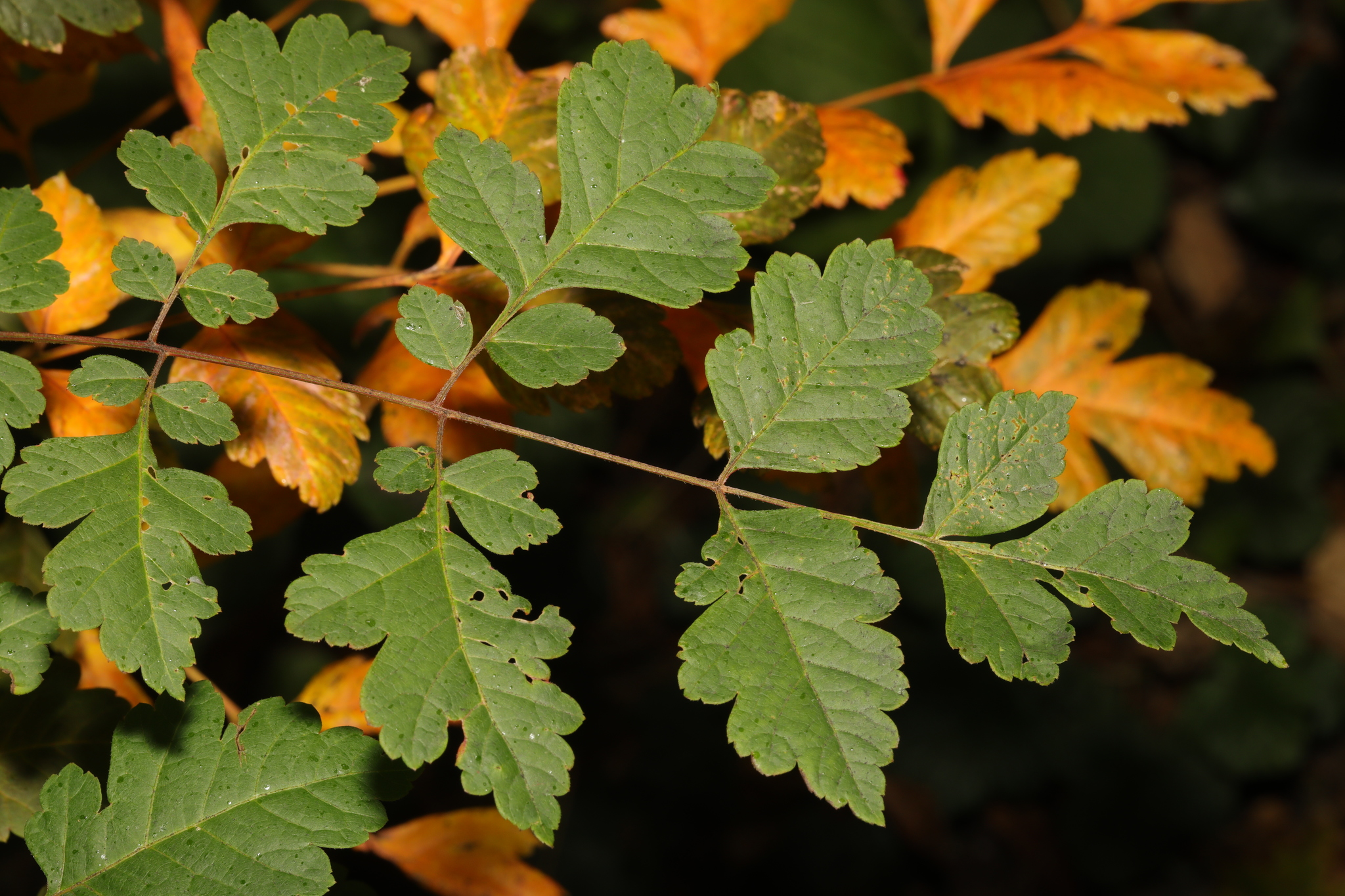
An open, irregular, lightly branched crown gives golden rain tree a loose silhouette. It reaches 8–12 m (26–39 ft) tall and about as wide, rather than forming a dense, compact ball. Pinnate or twice-pinnate leaves measure 15–40 cm (6–16 in), with toothed leaflets that can be deeply lobed near the base. New foliage emerges bronze or purple, turns clear green and then becomes yellow in fall, with color intensity varying between years. 2 3
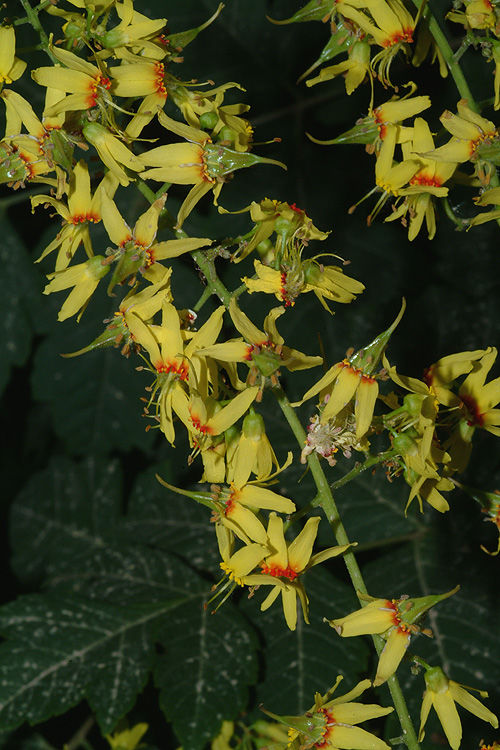
Yellow flowers in early summer, June–July in the Northern Hemisphere, provide a reliable identifying feature. Upright panicles 20–40 cm (8–16 in) long hold small yellow flowers with red centers, each about 1–2 cm (0.4–0.8 in) across. Relatively few ornamental trees flower bright yellow at this point in summer. 2 3
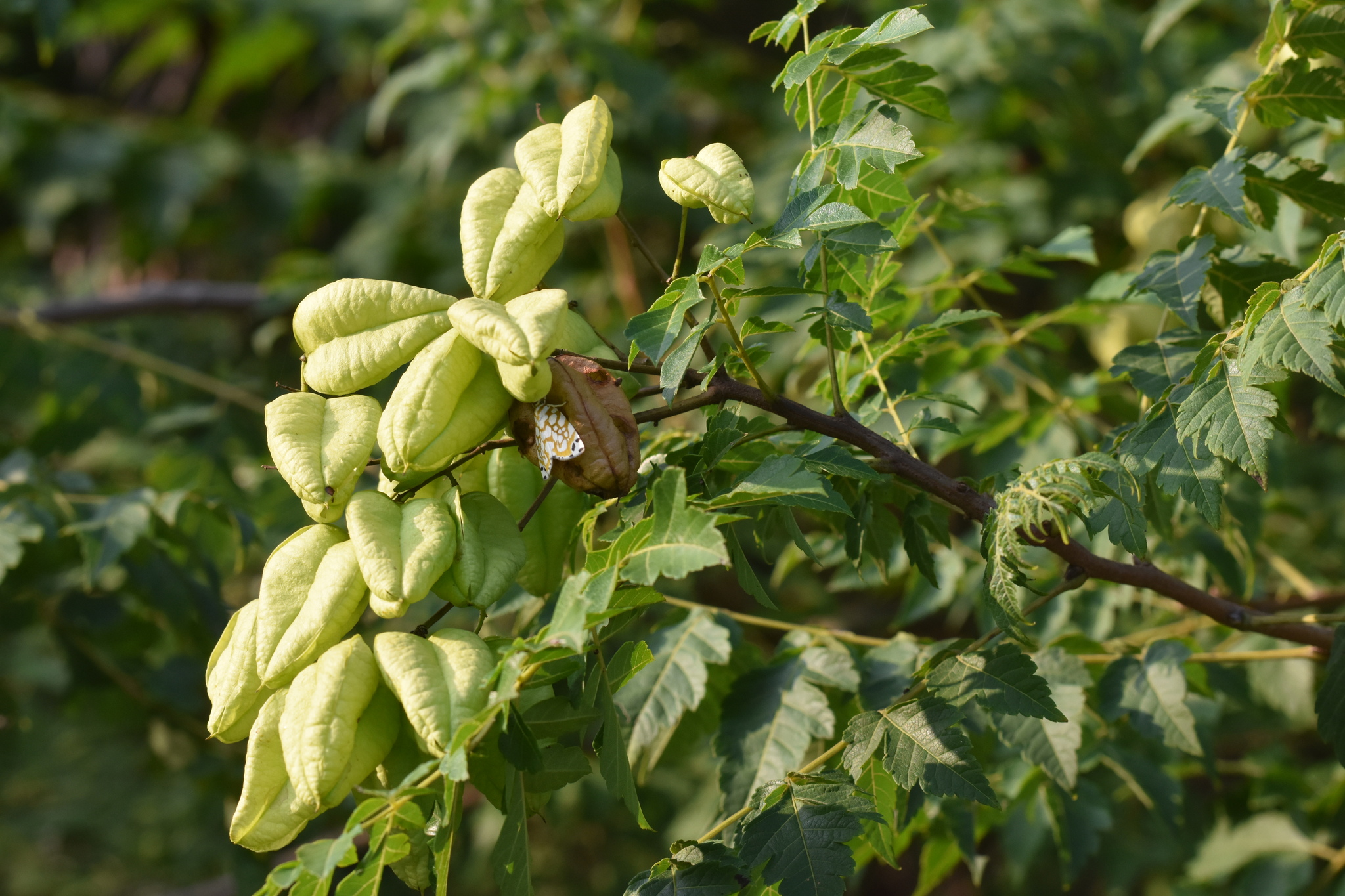
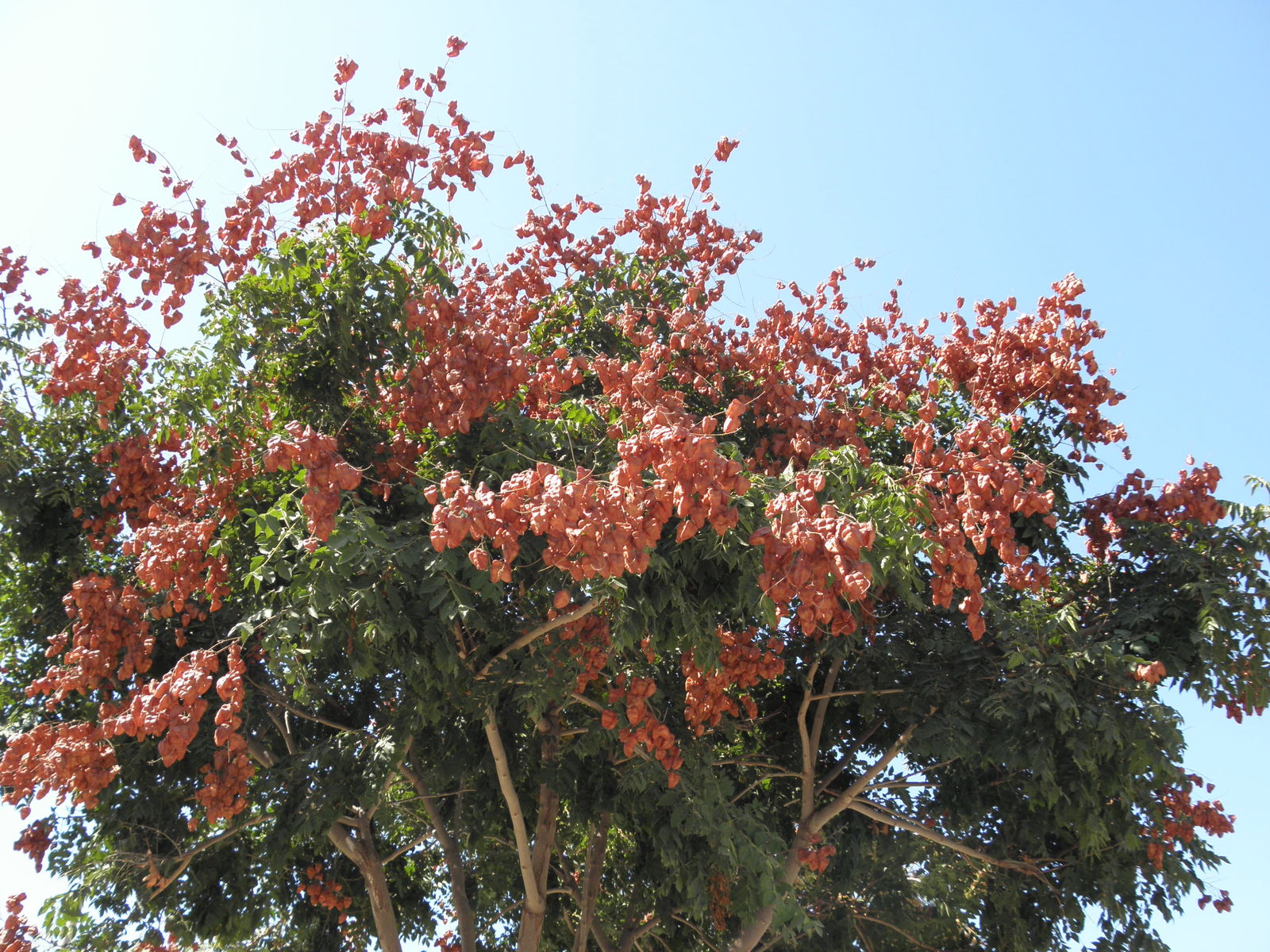
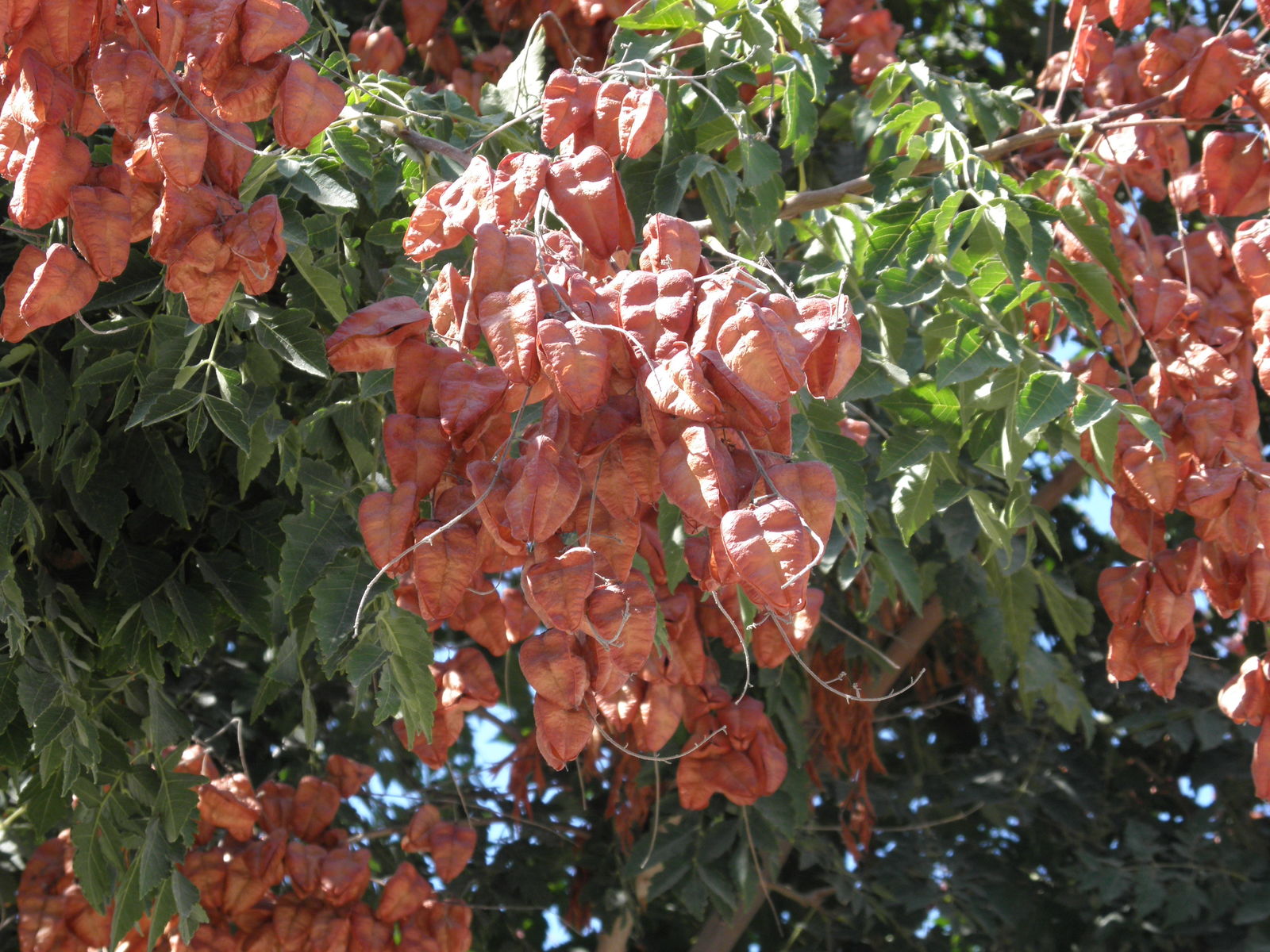
Inflated, three-sided papery capsules, 3–6 cm (1.2–2.4 in) long, follow the flowers. Each protects one to three round seeds, changing from green through pink or bronze to pale brown at maturity. Their Chinese-lantern shape explains another descriptive nickname; the capsules often remain on the tree into fall. 7 3
Useful taxonomy
Kew accepts Koelreuteria paniculata Laxm. The taller variety once called Koelreuteria apiculata, sometimes distinguished as the Bihar form, is now treated as a synonym of the typical species rather than a separate taxon. 1
- Koelreuteria apiculata Rehder & E.H.Wilson, a former species name
- Koelreuteria paniculata var. apiculata (Rehder & E.H.Wilson) Rehder, a former variety
- Koelreuteria paniculata var. fastigiata Bean, a historical varietal name
Confusion in gardens more often involves Koelreuteria bipinnata, distinguished by more consistently twice-pinnate foliage and later flowering. Checking the complete scientific name against the observed flowering season gives a useful basis for identification. 1
Habitat and range
China, Korea and the Russian Far East form the native range, with Mongolia included by some sources. Golden rain tree grows naturally on plains and in secondary woodland, often on poor soils. It also occurs near the coast in Japan, where it has been naturalized since the Middle Ages without being native. 6 5
Introduced to Europe in 1747 and North America in 1763, golden rain tree spread as an ornamental through much of the temperate world. Tolerance of drought, lime-rich soil and urban pollution makes it a common choice for street plantings and parking lots where other trees struggle. 6 3
Parts of the United States, particularly the mid-Atlantic region and Florida, regard the species as invasive. Abundant fruit and readily germinating seeds allow it to colonize disturbed ground and roadsides without deliberate planting. In mainland France it is cultivated, with no invasive status established to date. 3 7
Life cycle and reproduction
One to three round, hard, black seeds develop inside each capsule. The inflated papery covering helps wind disperse the dry fruit. Germination is difficult without cold stratification, which breaks dormancy associated with the thick seed coat. 5 6
Flowering maturity arrives relatively early, often at 5–8 years, followed by dependable summer bloom in a sunny position. The wood breaks more readily in storms than that of more flexible trees, reflecting its natural brittleness rather than general weakness of the species. 3 2
Uses and risks
Ornamental value rests on late yellow flowers, decorative capsules suitable for dried arrangements and an outline that tolerates urban conditions. Bark and fruits contain saponins traditionally extracted in Asia to make natural soap. Round seeds also become beads for necklaces and rosaries. 7 5
Available information indicates no known toxicity to cats or dogs; evidence for horses remains uncertain without dedicated studies. Occasional reports describe skin irritation after prolonged sap contact during pruning, a precaution rather than evidence of established systemic toxicity. 5
Varieties, look-alikes and related plants
Cultivated forms include Fastigiata, with a narrow columnar habit suited to confined urban planting, and Coral Sun, whose bright coral-red young foliage later turns green. September flowers toward the end of summer but is less cold-hardy than the typical form. 2 3
To separate it from Koelreuteria bipinnata, look for the latter’s more consistently twice-pinnate leaves, later bloom in late summer and often pinker capsules. A tree sold under a common name alone deserves a check of its full scientific name, especially outside the flowering season. 1
Main sources
- Plants of the World Online / Kew, Koelreuteria paniculata Laxm.
- Royal Horticultural Society, Koelreuteria paniculata details
- NC State Extension, Koelreuteria paniculata
- Missouri Botanical Garden Plant Finder, Koelreuteria paniculata
- Plants For A Future, Koelreuteria paniculata
- Wikipedia EN, Koelreuteria paniculata
- Wikipedia FR, Koelreuteria paniculata
- GBIF, Koelreuteria paniculata species page
Frequently asked questions
Why is golden rain tree called a soap tree in French?
The French name savonnier refers to saponins in the bark and fruits, traditionally used in Asia for washing clothes. It does not make the tree a member of Sapindus, a different genus in the same Sapindaceae family.
Is golden rain tree invasive?
It is considered invasive in some parts of the United States, where abundant fruit and readily germinating seeds encourage rapid naturalization along roads and on disturbed ground. No invasive status is currently established for mainland France.
How can I distinguish golden rain tree from Koelreuteria bipinnata?
Koelreuteria bipinnata flowers later, has more consistently twice-pinnate foliage and often develops pinker mature capsules. Koelreuteria paniculata flowers in early summer and has mainly once-pinnate leaves.
Is golden rain tree toxic to cats and dogs?
Available data indicate no known toxicity to cats and dogs. Information for horses remains uncertain because dedicated studies are lacking. A few reports describe skin irritation after prolonged sap contact.
Why are golden rain tree leaves reddish in spring?
New growth often emerges bronze to purple before turning clear green within a few weeks. Selected cultivars such as Coral Sun emphasize this feature.
Does golden rain tree wood have a particular use?
Timber use is secondary to the ornamental value of the tree. Its wood is mainly known for breaking in storms, which matters when choosing a site near a path or building.
Can golden rain tree grow in a container?
A young tree can live in a large container for several years, but its roots eventually become too extensive for lasting container culture. Planting in the ground is the normal medium-term destination.
Similar plants
If you are unsure about a plant’s toxicity, ask a botanist or veterinarian for advice.