
Black locust (Robinia pseudoacacia, )
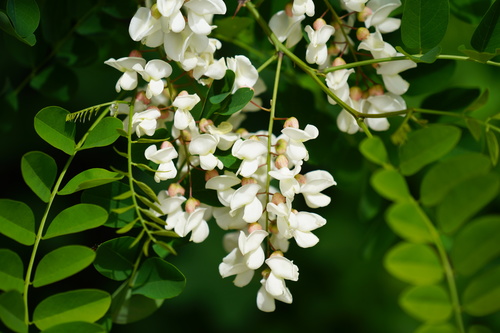
Black locust (Robinia pseudoacacia L.) is a deciduous tree in the Fabaceae family, native to the eastern United States and introduced to France in the early seventeenth century. Its flowers support honey production and its wood is durable, but it requires caution: vigorous root suckering can create dense stands, and its bark, leaves and seeds are toxic.
Read moreBlack locust, False acacia and Yellow locust
Place in full sun, with intense direct light all day long.





© photo
(c) Eric Koberle, some rights reserved (CC BY-NC), uploaded by Eric Koberle · cc-by-nc
katunchik · cc0
Florencia Grattarola · cc0
Taken Aug 23, 2022 by Jardin Des Cocagnous (cc-by-sa)
Taken Dec 13, 2021 by Kai Best (cc-by-sa)
Taken Feb 3, 2022 by David Ochoa (cc-by-sa)
Taken Feb 1, 2020 by Nicolas Koehnlein (cc-by-sa)
Taken May 17, 2017 by huy HO (cc-by-sa)
© copyright of the Board of Trustees of the Royal Botanic Gardens, Kew.


Global distribution
POWO places the native range in several eastern US states and lists France, Corsica and much of Europe as introduced range. The French Ministry of Agriculture forestry account describes the tree throughout France up to 1600 m (5250 ft).
- Native4
- Introduced3
- Invasive1
- Alabama
- Georgia
- Pennsylvania
- Virginia
- Corsica
- Central Europe
- Great Britain
- Metropolitan France
Hexagons: regions where the plant occurs. Green dots: native range.1
Identity
Black locust (Robinia pseudoacacia L.) is a deciduous tree in the genus Robinia and family Fabaceae. POWO and GBIF retain the Linnaean name published in 1753, with a native range centered on the eastern United States. 1 2
False acacia and Yellow locust are other names for the tree. French names often shorten to “acacia,” especially in discussions of honey and flower fritters. That wording is ambiguous: this species is a Robinia, neither a true botanical Acacia nor a honey locust in the genus Gleditsia. 3 2
Durable timber, nectar production and stabilization of disturbed soils are established uses of Black locust. Those benefits need to be weighed alongside its toxicity and ability to spread, which make it a demanding choice for a garden. 7 8
Recognition
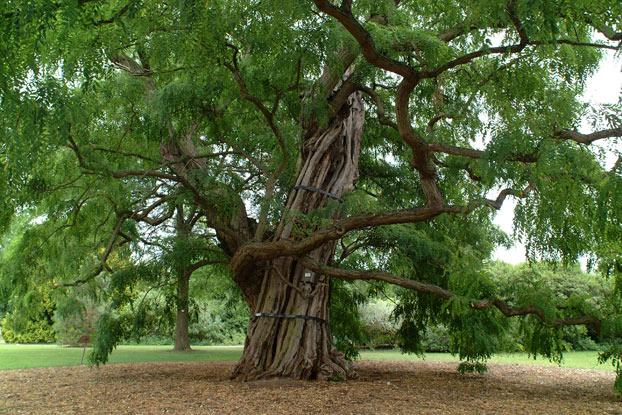
Sun-demanding Robinia pseudoacacia commonly reaches 10–15 m (33–49 ft) in horticultural accounts, with trees reaching about 25 m (82 ft) according to the US Forest Service. Its crown is open and sometimes irregular; small branches break more readily than those of more substantial park trees. 3 4
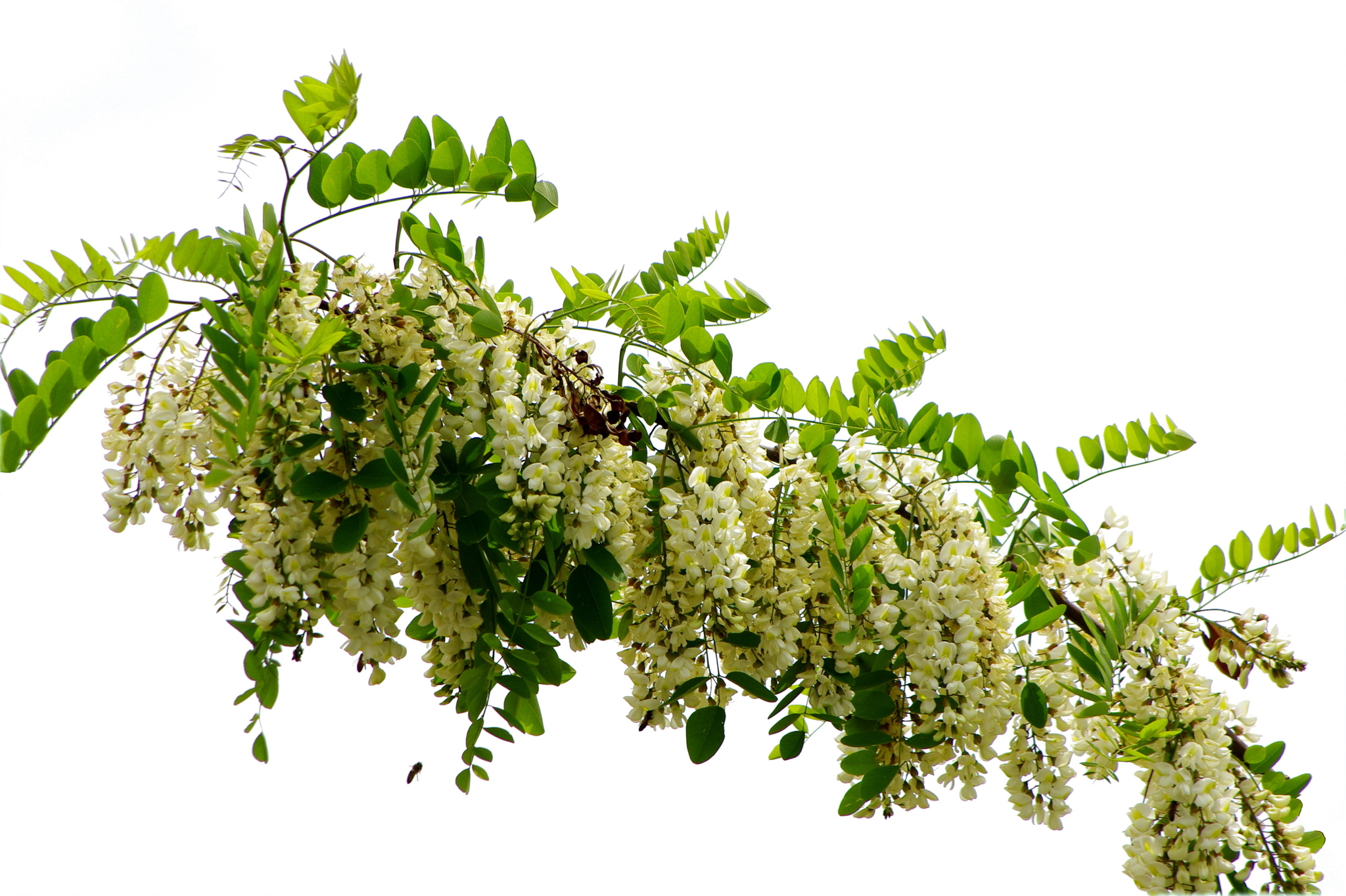
Alternate, pinnately compound leaves consist of numerous oval leaflets with smooth margins. Young branches often bear two short spines beside a leaf base or leaf scar. These paired spines help distinguish Black locust from several other trees with compound leaves. 3 11
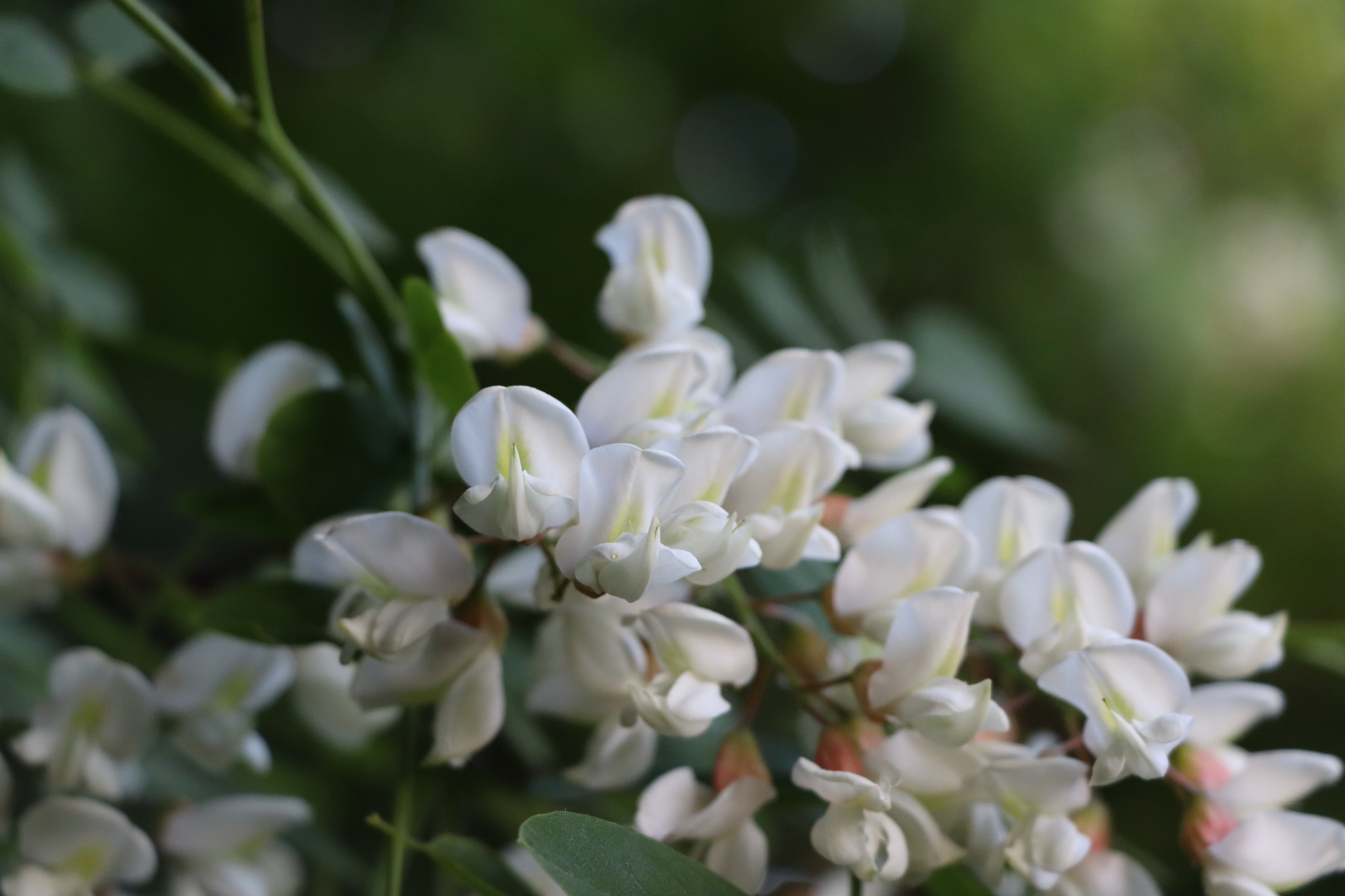
Hanging clusters of fragrant white, pea-shaped flowers are the most familiar feature, usually appearing in spring or early summer under temperate conditions. Flat brown to purplish-brown pods contain several hard seeds and can remain visible after leaf fall. 4 3
Taxonomy and names
The stable botanical reference is Robinia pseudoacacia L. POWO lists extensive synonymy, including Robinia acacia, Pseudacacia odorata, Pseudo-acacia vulgaris and many old horticultural forms. These names do not represent separate species. 1
Resemblance and naming history explain the name false acacia. It is useful in everyday language but insufficient for sensitive uses: foraging, timber purchases, invasive-species assessments and wildlife records should use the scientific name. 2 3
Cultivar labels add further complexity. NC State lists 'Frisia', 'Lace Lady', 'Purple Robe', 'Tortuosa' and 'Umbraculifera', among others. Their altered habit, color or spines do not remove the need to watch for suckers, seedlings and effects on surrounding habitats. 3
Habitat and range
Several eastern US states form the native range listed by POWO, followed by an extensive introduced range that includes France and Corsica. The French Ministry of Agriculture account describes an origin in temperate eastern North America, introduction to France in the early seventeenth century and occurrence across France up to about 1600 m (5250 ft). 1 7
As a light-demanding pioneer, Black locust occupies well-drained, aerated soils that may be poor or disturbed. French forestry sources advise against compacted, waterlogged soils or sites with inadequate water supply when timber production is the aim. 7 5
CBNFC-ORI describes a highly invasive tree distributed through almost all of France, becoming less frequent at altitude and varying regionally. Typical colonization sites include clearcuts, canopy gaps, woodland edges, hedges, agricultural or industrial waste ground and embankments. 8
Life cycle, suckers and regeneration
Seed production begins relatively early for a tree, at about 6 years, according to forestry accounts. Its hard seeds can persist for a long time, and regeneration benefits from light and bare soil. 6 5
Vegetative growth drives much of its spread, especially after disturbance. US Forest Service and French forestry accounts agree that the species readily sprouts from stumps and suckers from roots, particularly after cutting, injury or stress. Felling without a management strategy can multiply regrowth rather than resolve the problem. 6 7
Nitrogen fixation helps explain both the tree's use on disturbed soils and its ecological risks. In nutrient-poor open habitats, enrichment of the soil, shade and dense thickets can alter the local flora in favor of plants that thrive on higher nitrogen levels. 7 8
Uses, flowers and toxicity
Well-documented uses include durable timber, posts, railroad ties, firewood, slope stabilization, some reforestation and honey production. The French Ministry of Agriculture describes substantial national timber resources and selection programs for wood, biomass and honey; NC State also notes the wood's natural durability. 7 3
Flower fritters are popular in the cultural account from CBNFC-ORI. The US Forest Service also reports cooked flowers or flower infusions consumed by some people. This tradition is not foraging advice: only correctly identified, untreated flowers prepared under safe food-handling conditions belong to this use. 8 6
Culinary flower use does not lessen the toxicity of other parts. ASPCA classifies Robinia species as toxic to dogs, cats and horses, identifying toxalbumins in bark, leaves and seeds. NC State also assigns high severity for human poisoning and lists those same toxic parts. 10 3
Reported poisoning signs include vomiting, depression, weakness, sometimes bloody diarrhea, breathing difficulty and shock; large ingestions can have severe outcomes. For horses and livestock, FEIS also summarizes numerous poisoning reports involving bark, leaves, seeds, young shoots or roots. 10 6
Invasive status, management and look-alikes
French regional references support an invasive alien classification, notably CBNFC-ORI's major invasive category. That assessment is geographically specific. ClimEssences notes that the species is not on the European Union invasive alien species list and qualifies its behavior in closed forest because of its intolerance of shade. 8 9
Habitat conditions shape the practical risk. Dry open ground, embankments, waste ground, clearcuts and nutrient-poor grasslands are particularly vulnerable, while dense forest cover limits regeneration. That distinction does not make planting harmless, especially beside sensitive natural habitats. 8 9
Honey locust (Gleditsia triacanthos) and other ornamental Fabaceae are useful comparisons. Honey locust often has very different thorns and longer pods. Black locust is better recognized by oval leaflets, paired short spines, fragrant white flower clusters and flat pods. 3 11
For planting decisions, flowers and honey should not be the only considerations. In a small garden or beside nutrient-poor grassland, dunes, sensitive woodland edges or natural areas, favor a suitable local tree with less suckering. If Black locust is already present, plan for regrowth before cutting it. 7 8
Main sources
- Plants of the World Online / Kew, Robinia pseudoacacia L.
- GBIF Backbone Taxonomy, Robinia pseudoacacia L.
- NC State Extension Gardener Plant Toolbox, Robinia pseudoacacia
- US Forest Service, Black Locust plant of the week
- US Forest Service, Silvics of North America, Black Locust
- US Forest Service FEIS, Robinia pseudoacacia
- Ministère de l’Agriculture / INRAE / CNPF, Robinia pseudoacacia L. species account
- CBNFC-ORI, Robinia pseudoacacia L., 1753
- ClimEssences, Robinia pseudoacacia L. - Black locust
- ASPCA, Locust toxicity entry
- Utah State University Extension Forestry, Black Locust
Frequently asked questions
Is Black locust a true acacia?
No. False acacia refers to its resemblance and the epithet pseudoacacia, but the species belongs to Robinia in the Fabaceae family.
Is Black locust poisonous?
Yes. Toxicity sources particularly identify the bark, leaves and seeds as toxic to people, domestic animals and livestock.
Can you eat Black locust flowers?
Some sources report flowers eaten cooked or in fritters, but this is not foraging advice. Never ingest seeds, leaves or bark. Only correctly identified, untreated flowers prepared under safe food-handling conditions belong to this culinary use.
Why does Black locust spread through a garden?
It produces stump sprouts and long root suckers, often stimulated by cutting, stress or root injury.
Is Black locust invasive everywhere in France?
It is introduced, naturalized and classified as invasive in several regional references, including CBNFC-ORI. Risk depends on habitat: nutrient-poor open ground, woodland edges, slopes and waste ground are more vulnerable than shaded, closed forests.
Should I plant Black locust for bees?
Its flowers provide abundant nectar, but that benefit alone does not justify planting near sensitive habitats. In a small garden, a suitable local tree is a better choice.
Similar plants
If you are unsure about a plant’s toxicity, ask a botanist or veterinarian for advice.