
Red deadnettle (Lamium purpureum, )
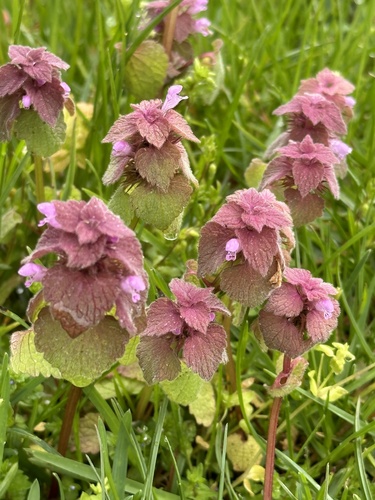
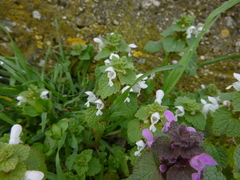
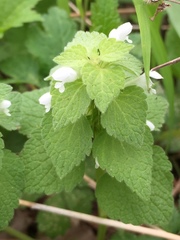
Red deadnettle (Lamium purpureum) is a small annual in the Lamiaceae, native to Europe and temperate Asia. Despite its name, it is not a nettle. Purple upper leaves and spikes of pink flowers brighten banks, gardens and pathsides from late winter onward, without stinging.
Read moreRed deadnettle, purple dead-nettle and purple archangel
Give plenty of ambient light without direct sun on the leaves.
Full sun to light partial shade
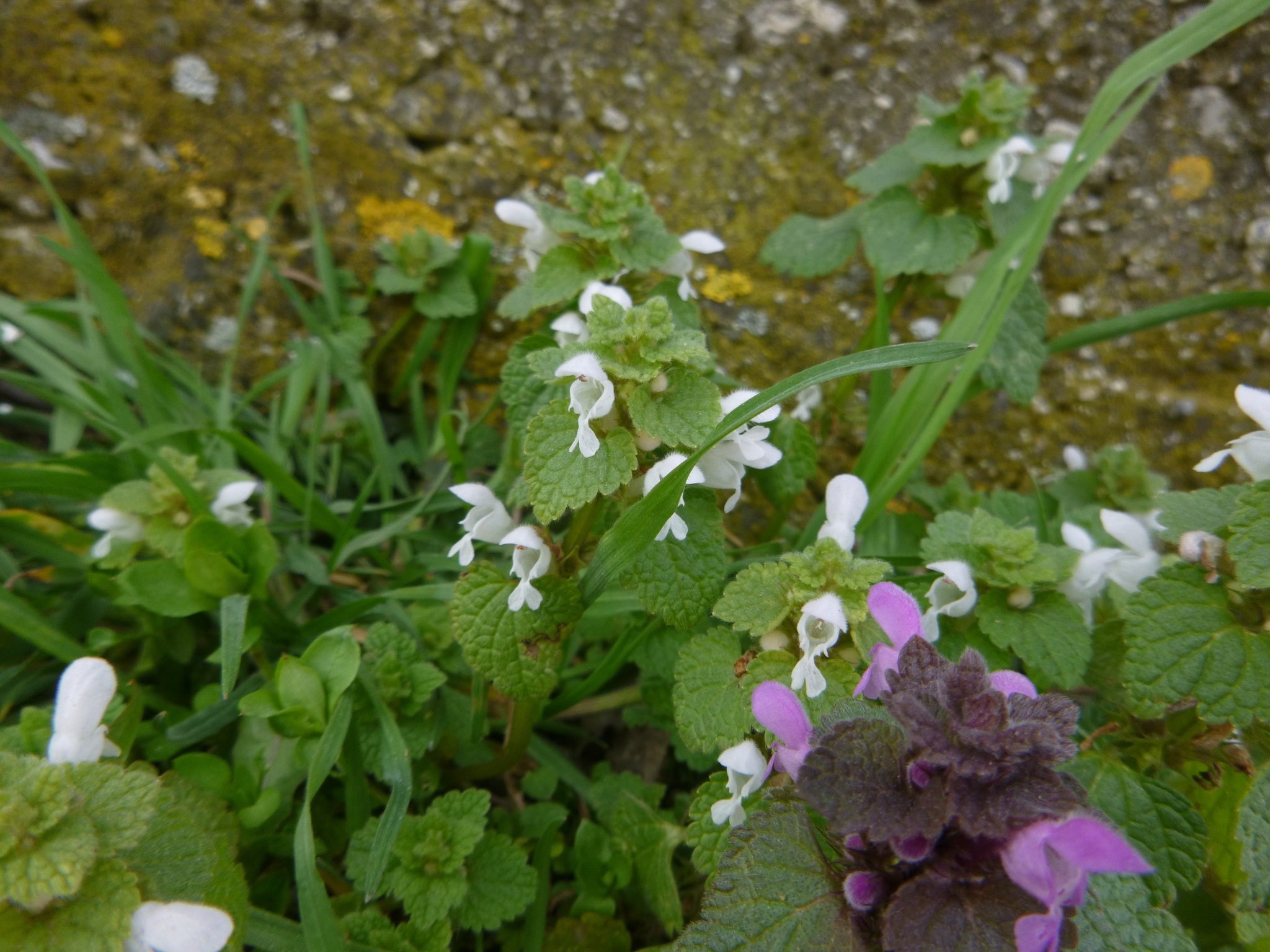
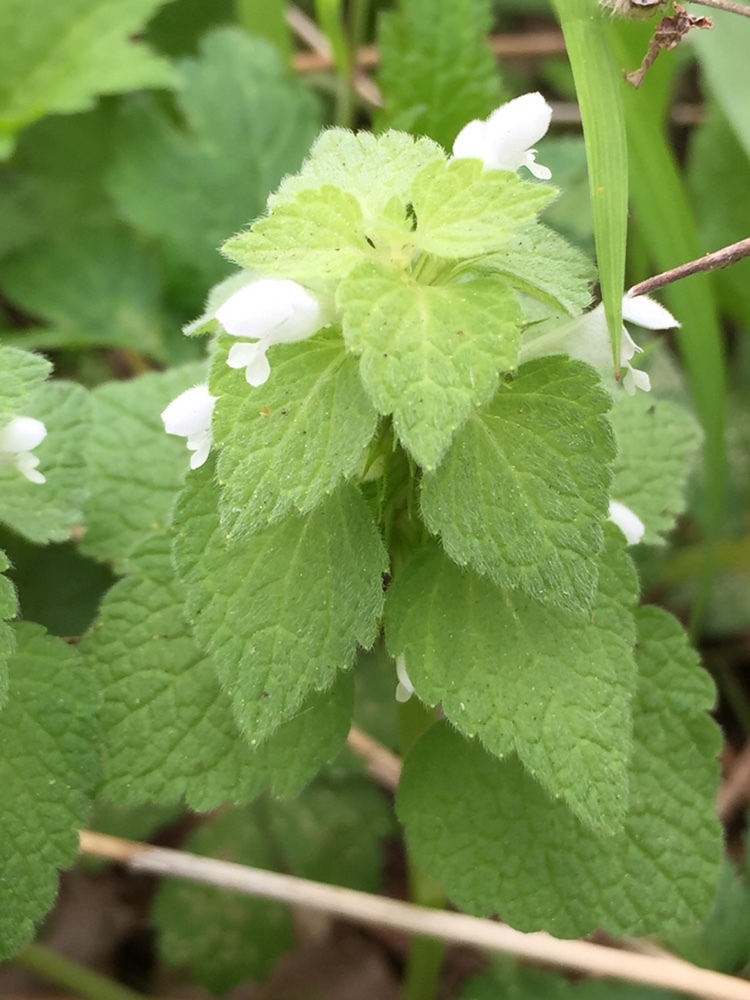


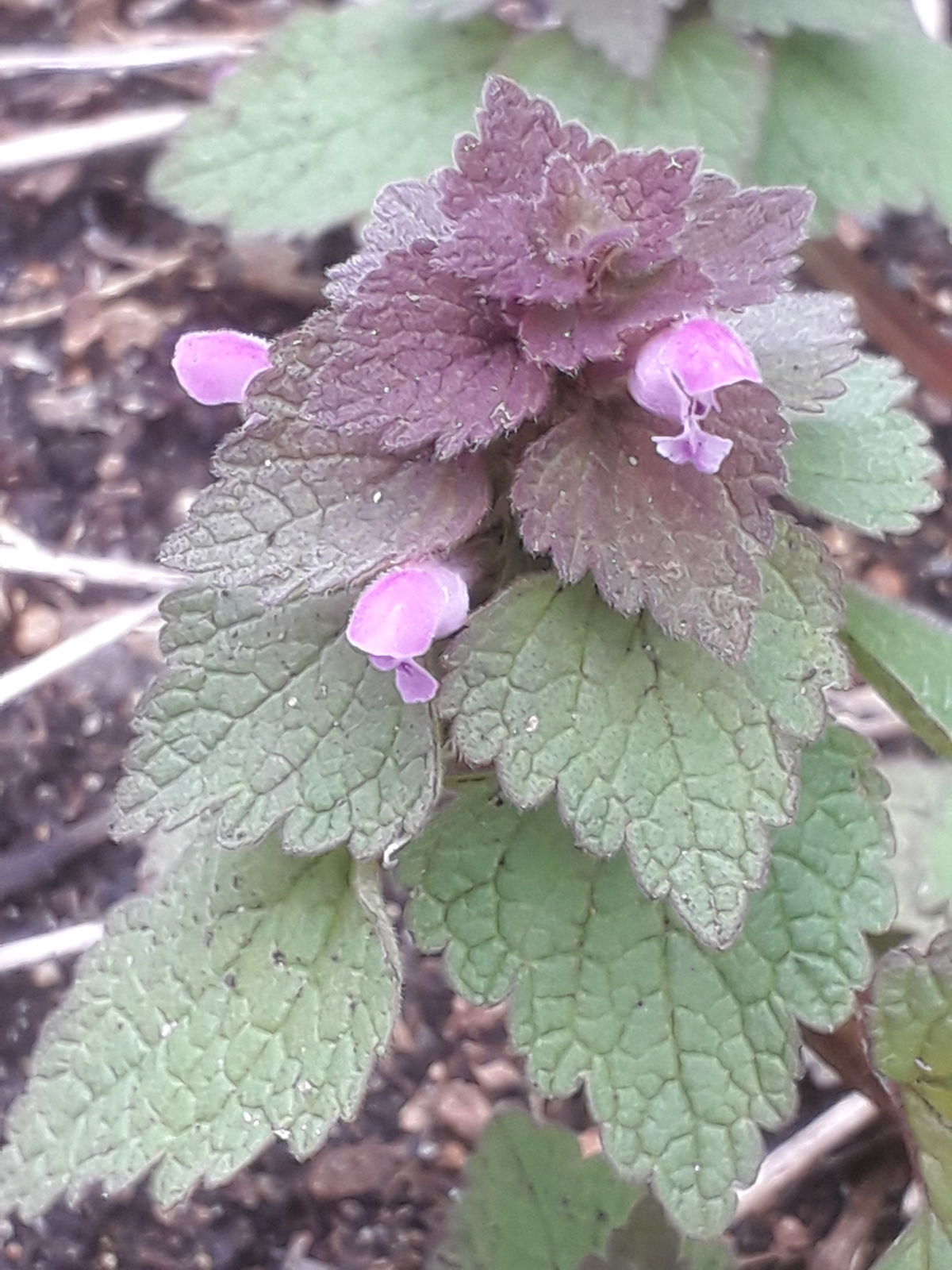
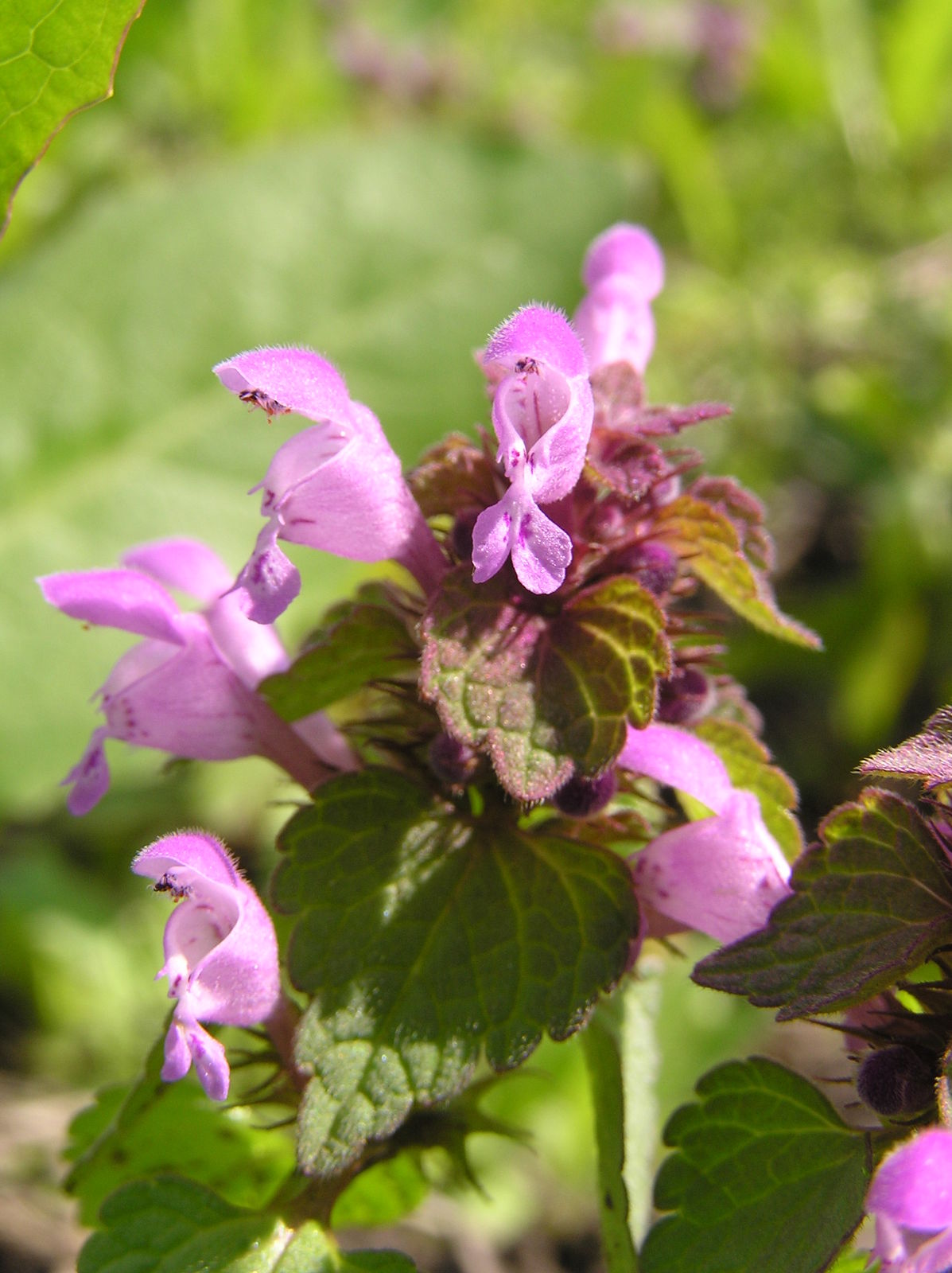
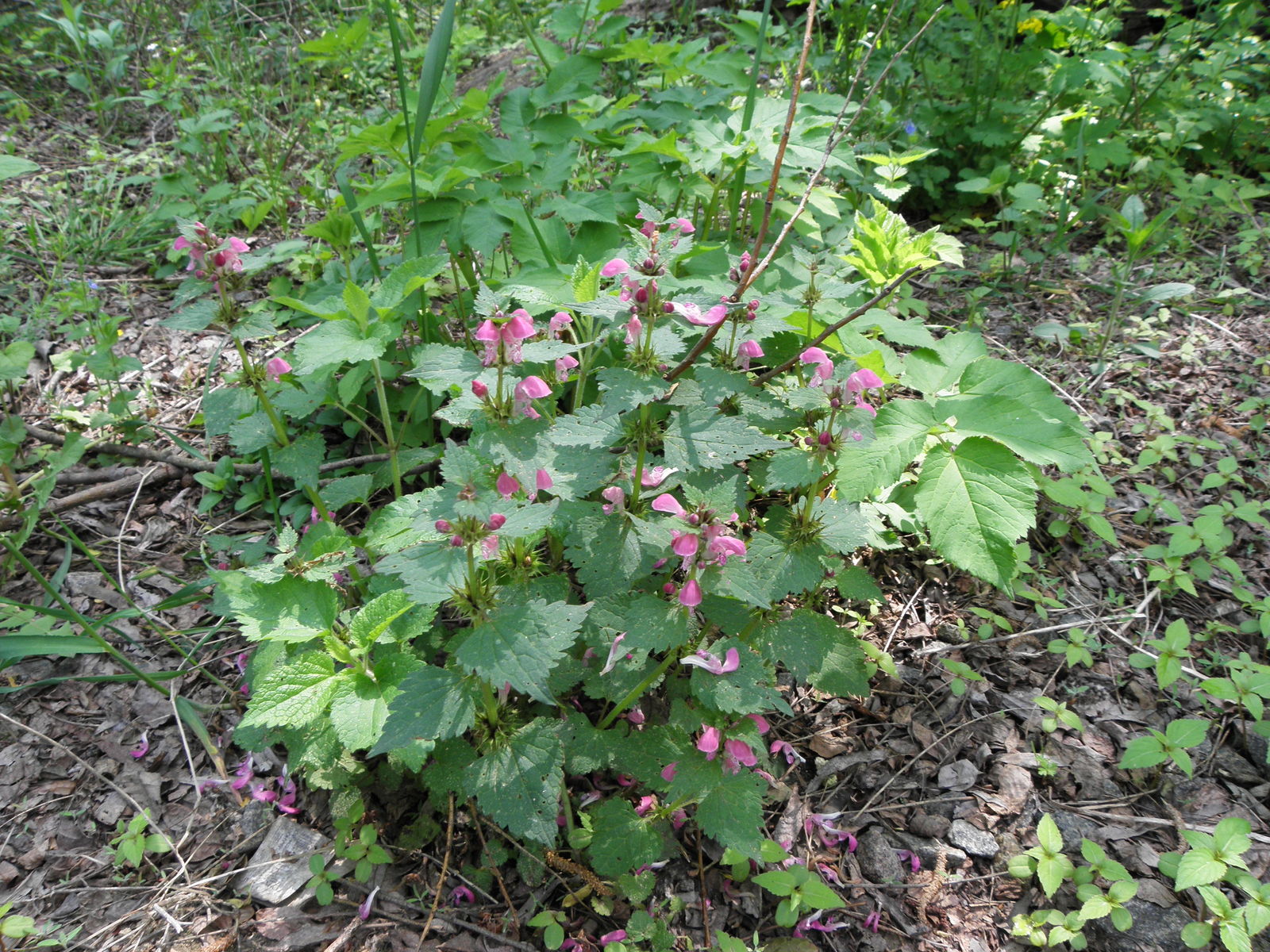
© photo
(c) Katrina Winthrop, some rights reserved (CC BY-NC), uploaded by Katrina Winthrop · cc-by-nc
Gabriel Mayrhofer · cc0
iNaturalist User · cc0
Taken Apr 16, 2022 by Andrzej Konstantynowicz (cc-by-sa)
Taken Mar 29, 2021 by Mar Llopis (cc-by-sa)
Taken Feb 22, 2017 by Jean-René Girardeau (cc-by-sa)
Taken Apr 10, 2021 by Alain Bigou (cc-by-sa)
© copyright of the Board of Trustees of the Royal Botanic Gardens, Kew.




Global distribution
POWO places the native range of Lamium purpureum in Macaronesia, the Mediterranean and across Europe to western Siberia. It has since spread widely with cultivation and is now naturalized in North America, East Asia and Oceania, primarily as a weed of cultivated ground and lawns.
- Native4
- Introduced3
- Europe
- Mediterranean basin
- Macaronesia
- France
- United States
- Canada
- Japan
Hexagons: regions where the plant occurs. Green dots: native range.1
Identity
The Red deadnettle (Lamium purpureum L., 1753), also known as purple dead-nettle or purple archangel, is a small annual in the Lamiaceae described by Linnaeus in Species Plantarum. POWO and IPNI confirm this accepted name without major disputed synonymy. 1 7
The genus name Lamium comes from the ancient Greek laimos, meaning throat, describing the flared, tubular corolla characteristic of the Lamiaceae. Lamium purpureum is the type species: Linnaeus designated it in 1753 as the reference for defining the characteristics of the entire genus. 2
Despite its common names, the plant is unrelated to nettles of the genus Urtica (family Urticaceae). The French qualification fausse and the English word dead in dead-nettle indicate its lack of stinging hairs: its leaves can be crushed without a nettle sting. 2
Recognition
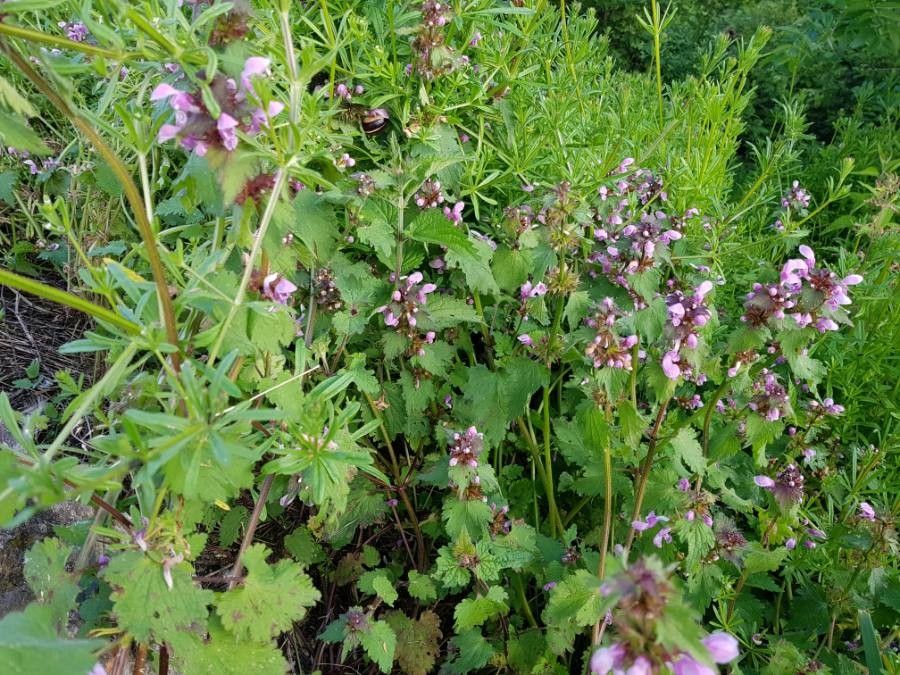
Lamium purpureum forms a low clump of upright square stems, typical of the Lamiaceae, 5–20 cm (2–8 in) tall and rarely reaching 40 cm (16 in). The stalked leaves are 2–4 cm (0.8–1.6 in) long, wrinkled and puckered, with wavy to toothed margins. They remain green at the stem base but turn violet-purple toward the top, near the inflorescence. 2 4
The tubular flowers are bright pink-purple, with five fused petals forming a hooded upper lip and a two-lobed lower lip. Groups of three to six open in the upper leaf axils. In mild climates they can flower almost year-round, with a clear peak from late winter into spring. 2
The leaf stalk is the most reliable distinction from its close relative Lamium amplexicaule (henbit). The upper leaves of Lamium purpureum retain distinct stalks, whereas those of henbit clasp the stem directly without a visible stalk. The cotyledons also differ: oval and hairless in L. purpureum, more rounded in L. amplexicaule. 5
Useful taxonomy
Lamium purpureum belongs to the subfamily Lamioideae alongside white dead-nettle (Lamium album) and henbit. POWO recognizes several accepted botanical varieties, including var. incisum, with more deeply cut leaves, and var. moluccellifolium, which occurs in western Europe. 1
POWO recognizes a single homotypic synonym, Lamiopsis purpurea (L.) Opiz, an abandoned generic reassignment. The species has 2n = 18 chromosomes, a stable count recorded in French floristic references. 1 6
This taxonomic stability contrasts with the frequent field confusion between Lamium purpureum and Lamium amplexicaule. They share disturbed habitats and a similar outline, making the scientific name the safest reference despite overlapping common names. 5
Habitat and range
The native range given by POWO covers Macaronesia, the Mediterranean basin and Europe eastward to western Siberia. The plant occupies meadows, woodland edges, banks and roadsides, but colonizes cultivated gardens and disturbed soils just as readily, tolerating heavy clay as well as sandy loam. 1 4
Spread with cultivation over centuries, it is now naturalized in North America, including the eastern and western United States and Canada, and in East Asia. In these introduced regions it remains chiefly a common weed of cultivated ground, lawns and gardens, without regulated-species status. 4 2
Native in France, it occurs throughout the country, including Corsica. It is not among the monitored invasive species, and its presence in lawns or vegetable-bed margins is regarded as an ordinary part of the disturbed-ground flora. 6
Life cycle and reproduction
Lamium purpureum is a short-lived annual, germinating in autumn or very early spring according to climate. Seeds emerge in dense carpets, often within a few weeks, and plants can flower just four to six weeks after emergence. 2
Reproduction is by seed rather than vegetative spread. Each pollinated flower produces several nutlets with an elaiosome that attracts ants, encouraging local dispersal beyond simply falling beneath the parent plant. 2
Summer heat brings the cycle to an abrupt end: plants yellow and dry out within a few weeks, leaving a soil seed bank to produce the next generation from autumn onward. This summer disappearance is the normal end of the annual life cycle rather than a sign of disease. 3
Uses and risks
Red deadnettle is edible. Young shoots and leaves are eaten raw in salads or cooked as a spring vegetable, and the flowers can be crystallized in sugar. Plants For A Future gives it a modest traditional medicinal-use rating and records astringent and diaphoretic properties, without systematic modern clinical validation. 3 2
No toxicity is documented for humans or domestic animals: neither Plants For A Future nor Cornell CALS reports a known risk. In this respect it differs from henbit, which has rarely been associated with reversible neurological problems in ruminants after very large intakes. 3 5
Its early flowers, sometimes opening in late winter, provide one of the season's first sources of nectar and pollen for solitary bees and bumblebees before most garden perennials flower. The distinctly crimson pollen is readily visible on the legs of visiting bees. 2
Varieties, look-alikes and related plants
No stable horticultural cultivar is widely distributed for this species. Garden plants almost always represent the wild type, usually self-sown rather than deliberately planted. POWO recognizes botanical varieties such as var. incisum, with more deeply cut leaves, and var. moluccellifolium, without a particular ornamental status. 1
Frequent lookalikes include:
- Lamium amplexicaule, whose upper leaves clasp the stem directly without stalks;
- Glechoma hederacea (ground ivy), which creeps and roots at every node and has a distinct minty scent;
- Urtica urens and Urtica dioica, which have a similar outline but genuinely stinging hairs.
These distinctions matter because the species often share disturbed habitats, such as vegetable-bed margins and lightly maintained lawns. That overlap creates many opportunities for confusion when identifying a young shoot before it flowers. 5
Main sources
- Plants of the World Online / Kew, Lamium purpureum L.
- Wikipedia EN, Lamium purpureum
- Plants For A Future, Lamium purpureum
- NC State Extension Gardener Plant Toolbox, Lamium purpureum
- Cornell CALS Weed Science, Deadnettles (Lamium purpureum and L. amplexicaule)
- Tela Botanica / BDTFX, Lamium purpureum L.
- International Plant Names Index, Lamium purpureum L.
- Wikidata, Lamium purpureum
Frequently asked questions
Is red dead nettle a true nettle?
No. Lamium purpureum belongs to the Lamiaceae, the mint family, rather than the nettle family Urticaceae. Its name reflects only a similar outline; the plant has no stinging hairs.
Is red dead nettle toxic?
No toxicity is documented for humans or domestic animals. Young shoots and leaves are even eaten raw in salads or cooked as a spring vegetable.
How can I distinguish red dead nettle from henbit?
The most reliable feature is the stalk of the upper leaves. In Lamium purpureum they retain stalks; in Lamium amplexicaule they clasp the stem directly without a visible stalk.
Is red dead nettle invasive in gardens?
It is not classified as invasive in France, where it is native. Its annual cycle and prolific self-seeding make it mainly a common weed of vegetable beds and lightly maintained lawns, easily pulled before seed forms.
Why are the upper leaves purple?
The purple color concentrated at the stem tip has no toxic function. It appears chiefly on young leaves near the inflorescence, while the basal leaves remain green.
Does red dead nettle benefit insects?
Its early flowering, sometimes from late winter onward, provides one of the season’s first nectar and pollen sources for solitary bees and bumblebees before most garden perennials bloom.
Similar plants
If you are unsure about a plant’s toxicity, ask a botanist or veterinarian for advice.