
Birdeye speedwell (Veronica persica, )
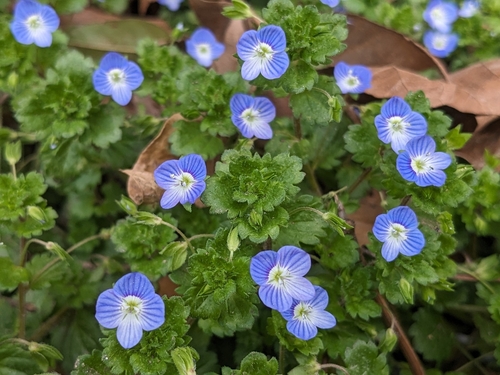
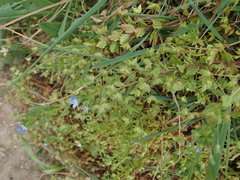
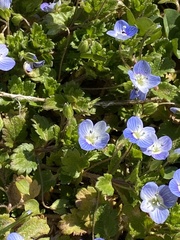
Birdeye speedwell (Veronica persica Poir., 1808) is an annual in the Plantaginaceae family, native to the Caucasus and northern Iran. It is now naturalized on almost every continent as a weed of cultivated ground and lawns. Solitary sky-blue flowers with white centers sit on long, slender stalks, followed by two-lobed, V-shaped capsules. No toxicity is documented in people or pets.
Read moreBirdeye speedwell, Persian speedwell and Common field-speedwell
Allow a few hours of direct sun per day, preferably morning or evening.
Full sun to light partial shade
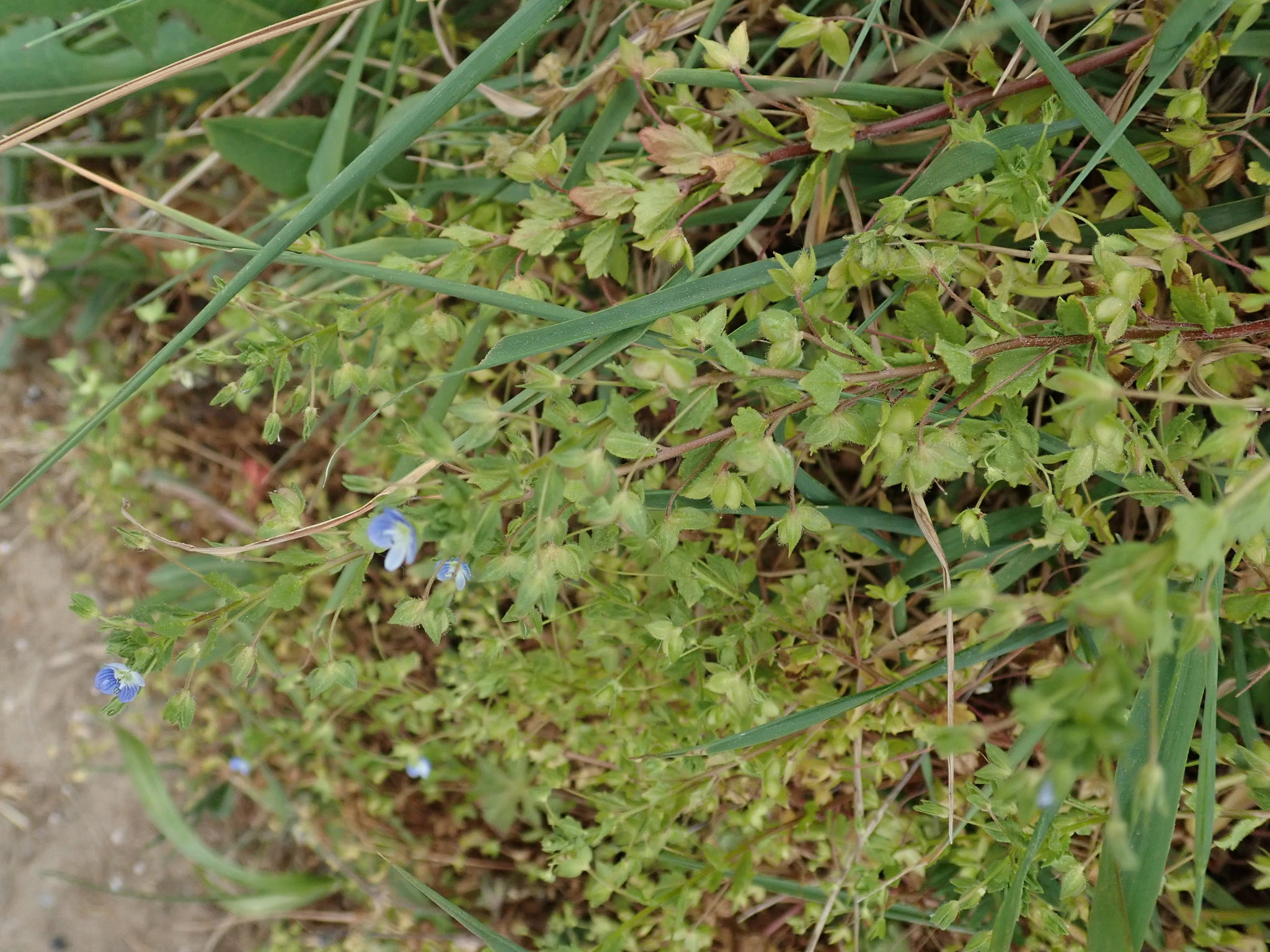
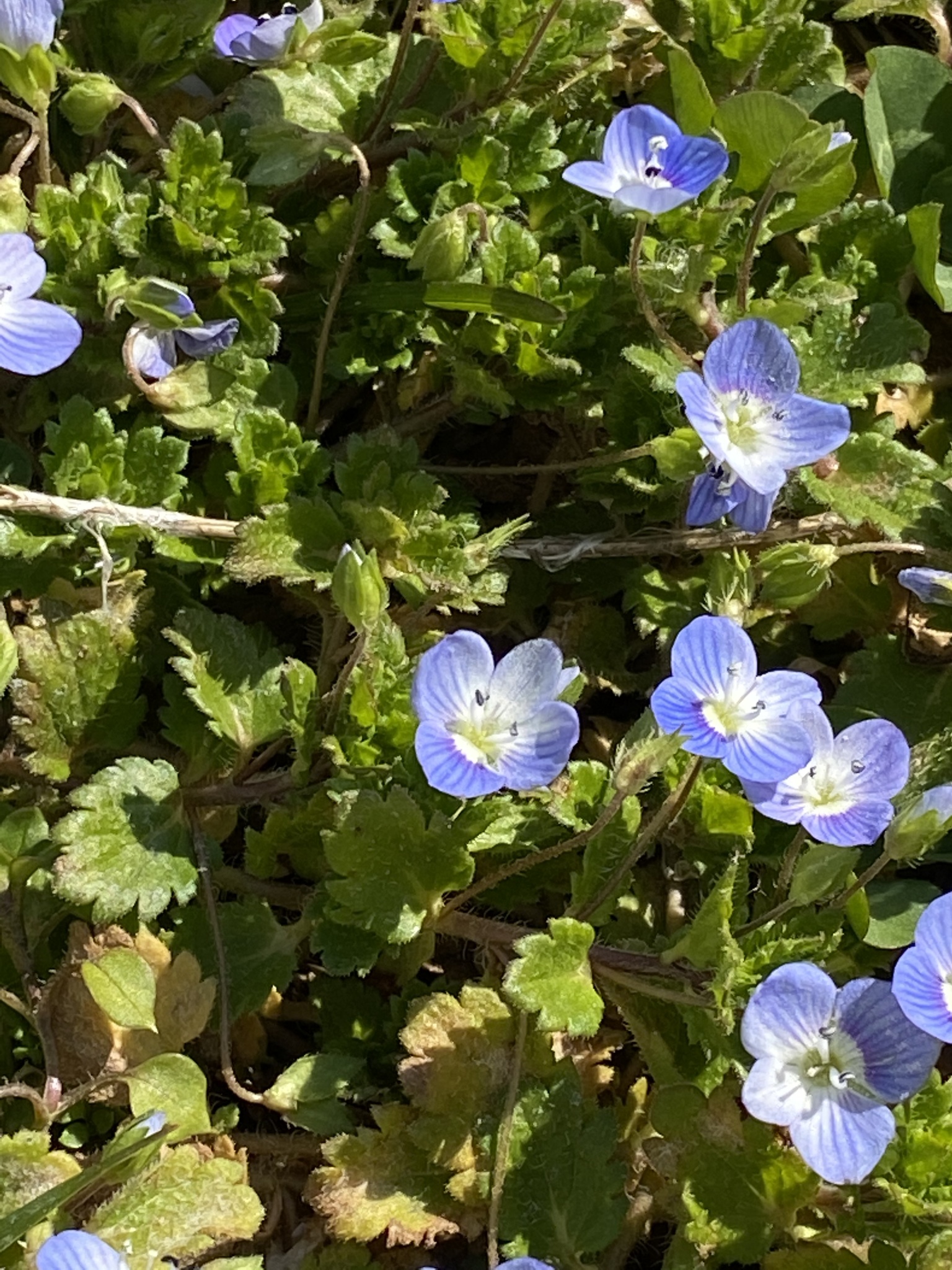


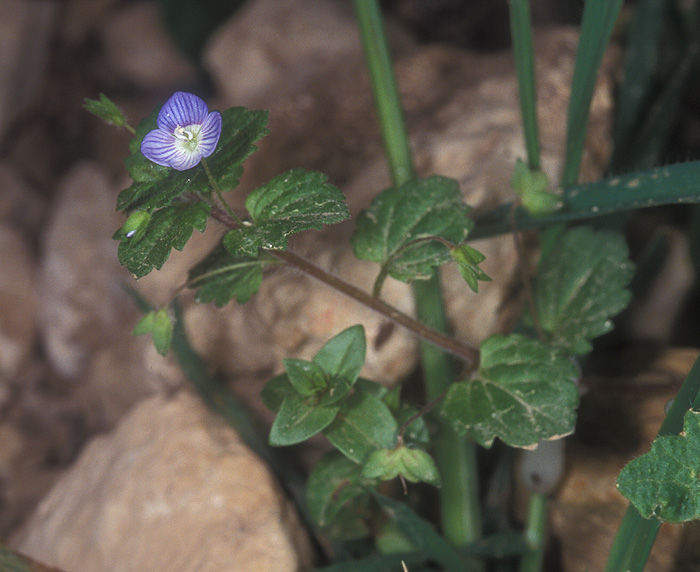
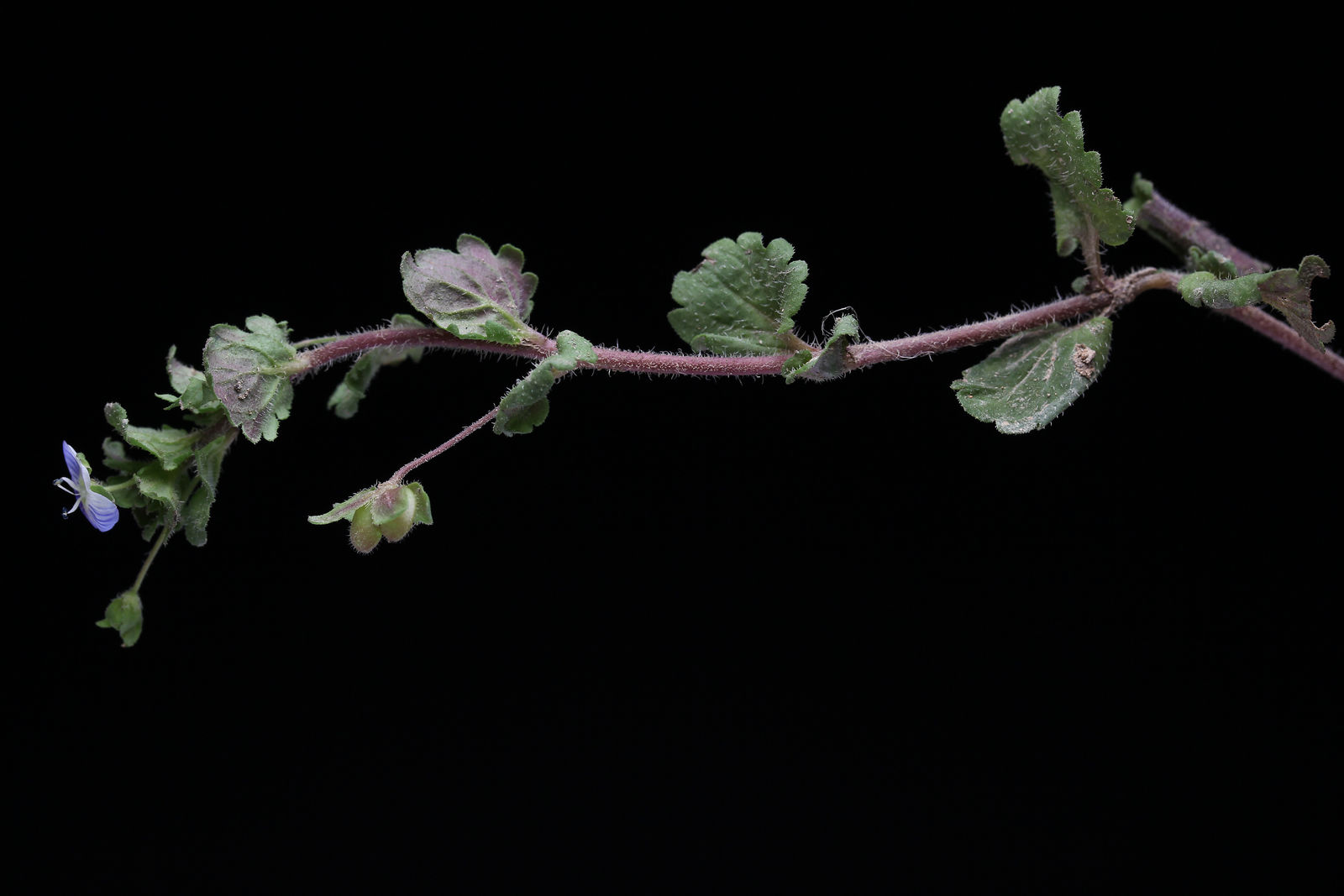
© photo
(c) liriodendron_tulipifera, some rights reserved (CC BY-NC), uploaded by liriodendron_tulipifera · cc-by-nc
iNaturalist User · cc0
Tim · cc-by
Taken Feb 17, 2018 by Mehmet Basbag (cc-by-sa)
Taken Apr 7, 2021 by Fabrice Bourriquet (cc-by-sa)
Taken Nov 4, 2020 by Franck lejard (cc-by-sa)
© copyright of the Board of Trustees of the Royal Botanic Gardens, Kew.


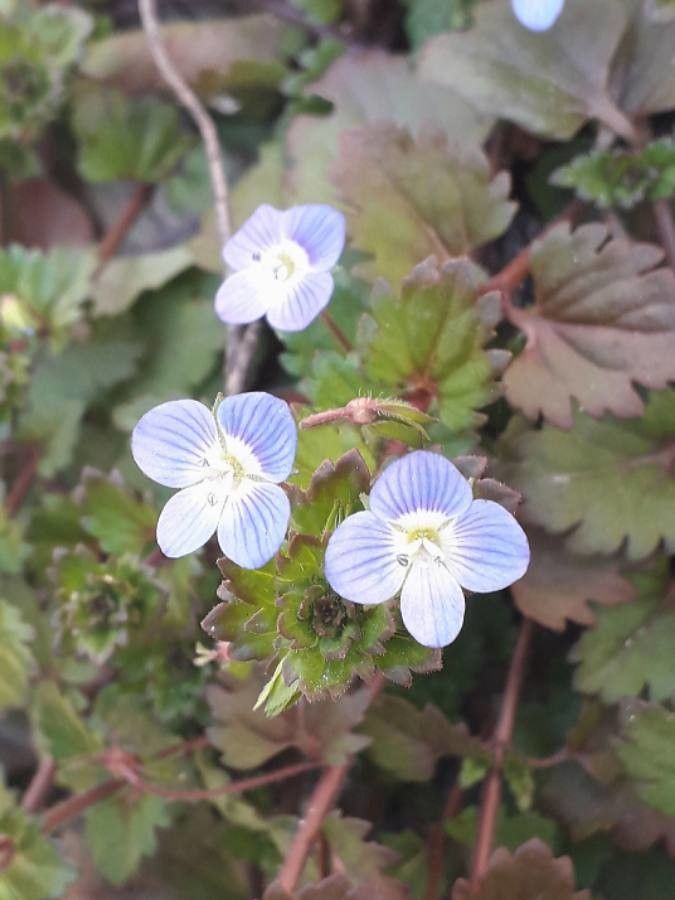


Global distribution
The native range of Veronica persica lies in the Caucasus and northern Iran. It has since naturalized on almost every continent and appears on the WSSA list of North American weeds. It is now recorded in Europe, eastern and southern Africa, East Asia, the Americas and Oceania.
- Native2
- Introduced8
- Iran
- Georgia
- France
- United Kingdom
- United States
- Canada
- China
- Japan
- Australia
- New Zealand
Hexagons: regions where the plant occurs. Green dots: native range.1
Identity
Birdeye speedwell (Veronica persica Poir., 1808), also known as Persian speedwell or Common field-speedwell, is an annual species in the genus Veronica, family Plantaginaceae. POWO accepts this name and places its native range around the Caucasus and northern Iran. 1 3
The generic name comes from the Latin Veronica, the name of a saint associated with several miraculous legends. In one, she brought a portrait of Christ to Rome that could cure leprosy, explaining an old French plant name meaning “lepers' herb.” The epithet persica refers to the region of origin described by Poiret, then associated with historical Persia. 8
A hybrid origin is described for the species: genetic analyses identify it as an allotetraploid, arising from a cross between Veronica polita and Veronica ceratocarpa followed by chromosome doubling. Its chromosome number is 28, compared with 14 in the two parental species. 7
Recognition
A low, spreading mat of hairy, often reddish stems characterizes Veronica persica. Stems root at the nodes and rise only at their tips; the whole plant measures 10–40 cm (4–16 in). 3 6
Lower leaves occur in opposite pairs, while upper leaves alternate. They have short stalks, an oval to heart-shaped outline and strongly toothed margins, measuring about 1–2 cm (0.4–0.8 in) long. Even seedlings offer a clue: the seed leaves are triangular with a truncated base. 7
About 1 cm (0.4 in) across, each sky-blue flower has darker stripes and a white center. Flowers occur singly in leaf axils on slender, hairy stalks one to three times as long as the leaf; these stalks bend backward as fruit develops. 3 7
The fruit is a hairy capsule, 6–7 mm (0.24–0.28 in) wide and 4–5 mm (0.16–0.20 in) high, with a deep notch. Its two flattened lobes diverge widely into a clear V, each containing 4–8 seeds. Related speedwells have parallel fruit lobes rather than this strongly spreading V. 3
Taxonomy and names
Poiret's accepted name, Veronica persica Poir., was published in 1808 in Lamarck's Encyclopédie méthodique, botanique. Synonyms found in the literature include Veronica buxbaumii Ten., Veronica tournefortii C.C.Gmel. and Pocilla persica (Poir.) Fourr. 3 2
French usage distinguishes véronique de Perse, associated with this species, from the broader véronique commune, also applied to other small garden speedwells. Such common names can be ambiguous; the scientific name Veronica persica identifies a single species recognized by POWO. 3
Habitat and range
From its native Caucasian and western Asian range, Veronica persica has naturalized on almost every continent. It even appears on the Weed Science Society of America (WSSA) list of North American weeds. 5
Western European introduction is well documented. First recorded in Great Britain in 1825, the plant spread rapidly during the nineteenth century and was widespread throughout lowland Britain and Ireland by 1960. 7
Coste recorded the species in cultivated and uncultivated places scattered across almost all of France and Corsica. Elsewhere it also colonizes North America, eastern and southern Africa, East Asia and Oceania, introduced through agricultural and horticultural trade. 3 5
Life cycle and reproduction
An annual capable of self-pollination, Veronica persica produces many seeds and can germinate and flower almost year-round in mild climates. France has a pronounced flowering peak from late winter to early summer. 7 3
Transversely wrinkled seeds measure just 1–2 mm (0.04–0.08 in) long. Ants disperse some of them, a process called myrmecochory that encourages establishment close to the parent plant. Vegetative spread also occurs: each node of a prostrate stem touching the ground can produce roots, explaining how a dense mat develops rapidly after a single flush of germination. 7 7
Uses and toxicity
No toxicity is documented for Veronica persica in people, cats, dogs or horses, and the species does not appear on the usual lists of poisonous plants. 6
Horticultural use is minimal. The RHS classes it as a weed, at most tolerated in an informal wildflower meadow for its early blue flowers. Traditional medicine once used some speedwells, including Veronica persica, for heart problems, snakebite, bleeding, inflammatory rheumatism and asthma, and as an expectorant. These are historical uses and do not replace current medical advice. 4 7
Look-alikes, ecology and management
Several small annual speedwells resemble this species. Veronica polita and Veronica agrestis have parallel rather than V-shaped fruit lobes, and flower stalks shorter than or equal to the leaves; those of Veronica persica are distinctly longer. Veronica filiformis has round leaves smaller than its flowers, while Veronica hederifolia differs in the shape of its leaf lobes. 7
Garden populations favor fertile, moist, disturbed soil in flower beds, vegetable plots, sparse lawns and path margins. The RHS also notes occasional aphids, downy mildew, fungal leaf spots, Phytophthora root rot and honey fungus. Pulling plants out completely, including the roots, before capsules form limits regrowth more effectively than mowing alone, which removes flowers but leaves rooted nodes in place. Combining removal with regular lawn mowing to suppress flowering is the approach recommended by the RHS. For identification, check first for the V-shaped capsule, 6–7 mm (0.24–0.28 in) wide, together with a flower stalk longer than the leaf. 6 4 4
Main sources
- Plants of the World Online / Kew, Veronica persica Poir.
- International Plant Names Index, Veronica persica
- Tela Botanica / BDTFX reference flora, Veronica persica Poir.
- Royal Horticultural Society, Veronica persica, field speedwell
- EPPO Global Database, Veronica persica (VERPE)
- NC State Extension, Veronica persica plant profile
- Wikipedia (EN), Veronica persica
- CNRTL, etymology of the French name véronique
- GBIF Backbone Taxonomy, Veronica persica Poir.
Frequently asked questions
Is birdeye speedwell toxic?
No toxicity is documented in people, cats, dogs or horses. The species does not appear on the usual lists of poisonous plants.
How can I distinguish Veronica persica from other speedwells?
The most reliable clue is the fruit: a capsule with widely diverging lobes forming a V, combined with a flower stalk one to three times as long as the leaf. Veronica polita and Veronica agrestis have parallel fruit lobes and shorter stalks.
Where does birdeye speedwell come from?
Its native range lies in the Caucasus and northern Iran. Recorded in Great Britain as early as 1825, it subsequently naturalized on almost every continent in a little over a century.
Why does it flower so early?
Veronica persica can germinate and flower almost year-round in mild climates, with a marked late-winter to early-summer peak in France. Its early flowers provide useful nectar for insects active from late winter.
How do I remove it from a lawn?
Pulling plants out with their roots before capsules form is the most reliable method, combined with regular mowing to reduce flowering and the production of new seeds.
Does the name common speedwell always mean this species?
No. Broad common names are also used for other small annual garden speedwells and can be ambiguous. The scientific name Veronica persica gives an unambiguous identification.
Why is the species called persica?
The epithet refers to the region of origin described by botanist Jean Louis Marie Poiret in 1808, then associated with historical Persia and corresponding today to the Caucasus and northern Iran.
Similar plants
If you are unsure about a plant’s toxicity, ask a botanist or veterinarian for advice.