
tamarack (Larix laricina, )
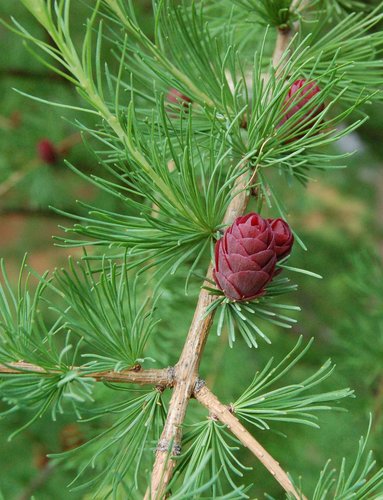
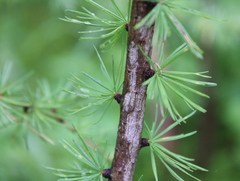
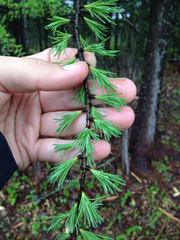
Tamarack (Larix laricina) is a conifer in the Pinaceae, native to North American boreal forests and peatlands from Yukon to Newfoundland. Like European larch, it is one of the few conifers to shed all its needles each winter. Soft, pale green foliage returns the next spring, turning gold and then bright yellow in fall before dropping completely.
Read moretamarack, hackmatack, eastern larch and American larch
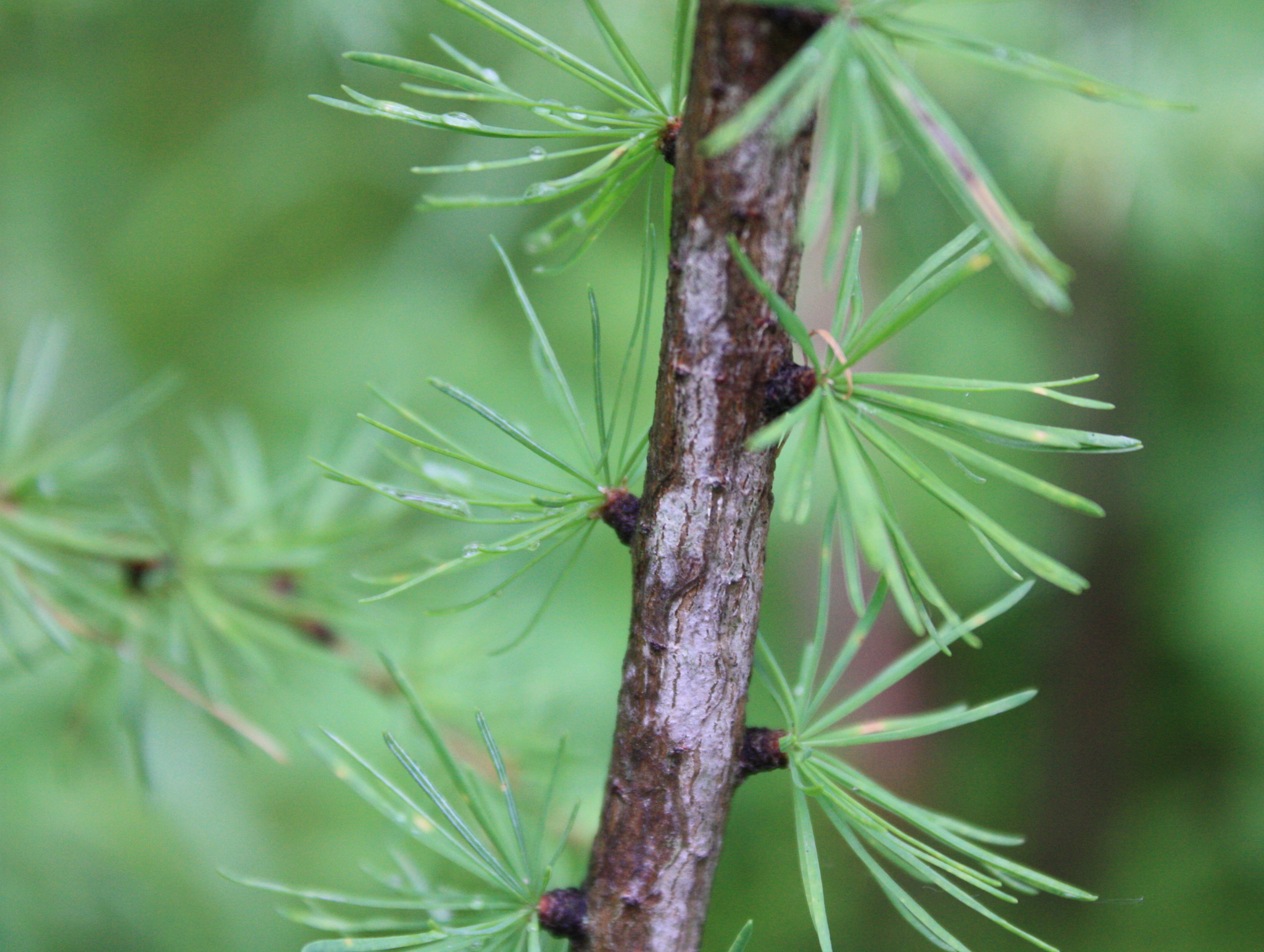
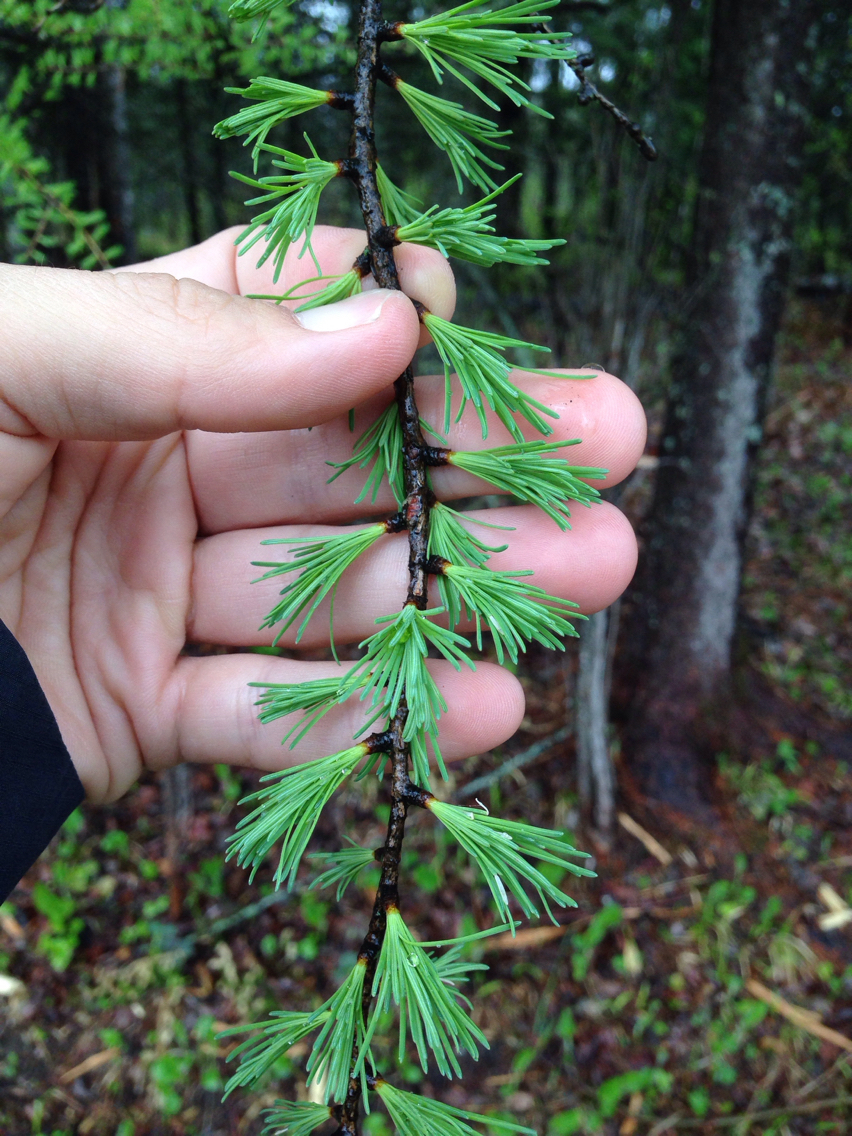

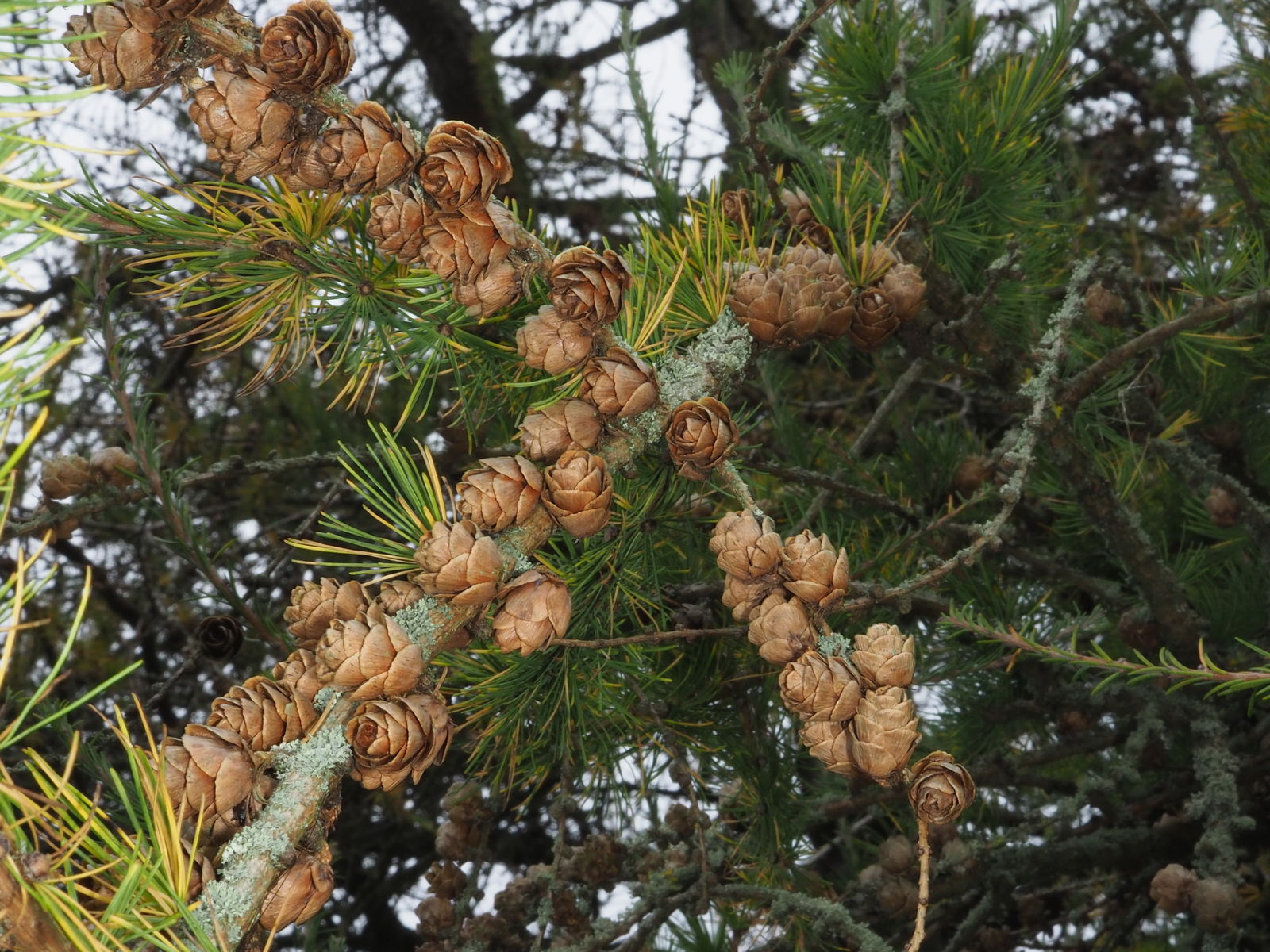
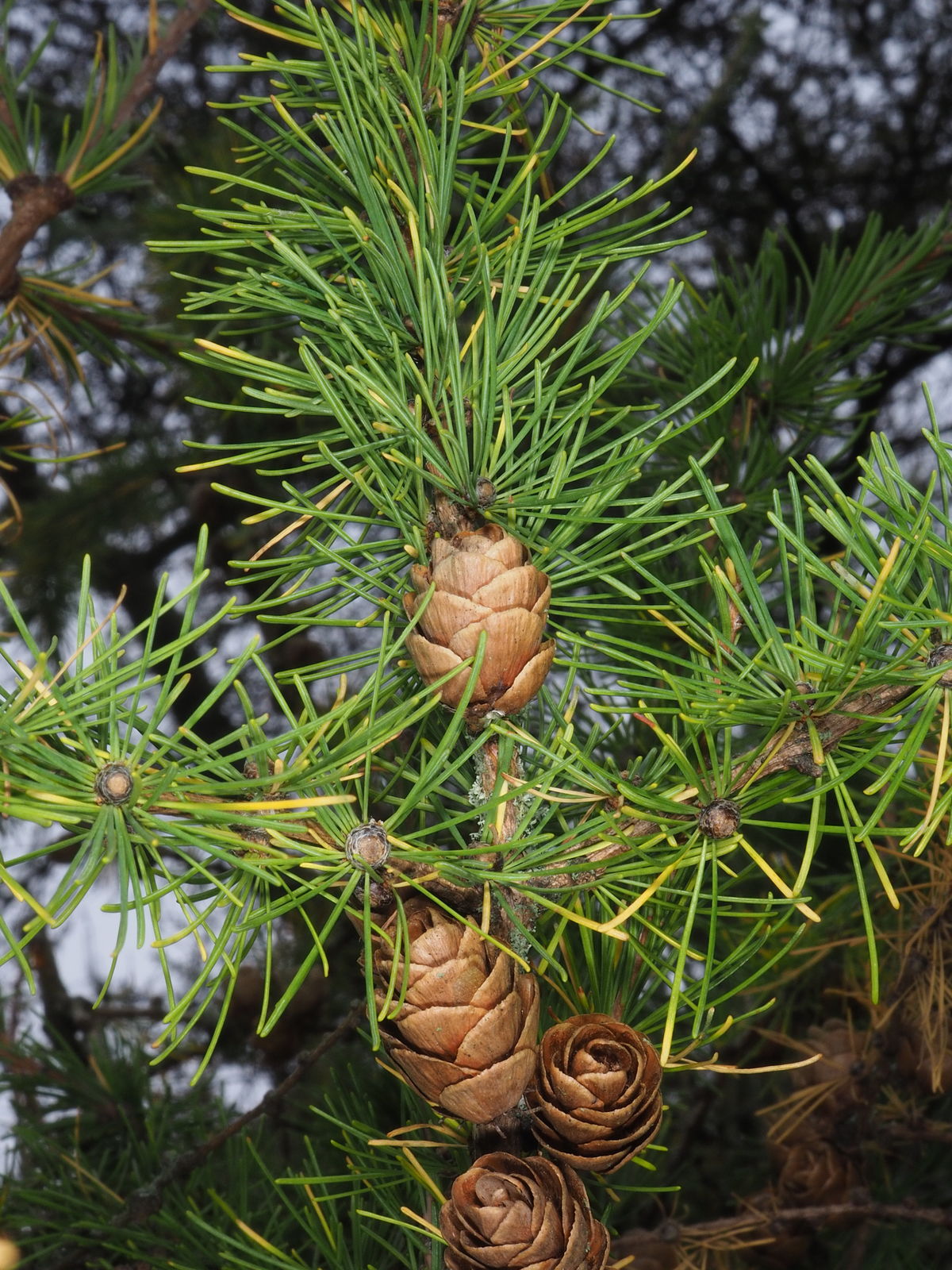
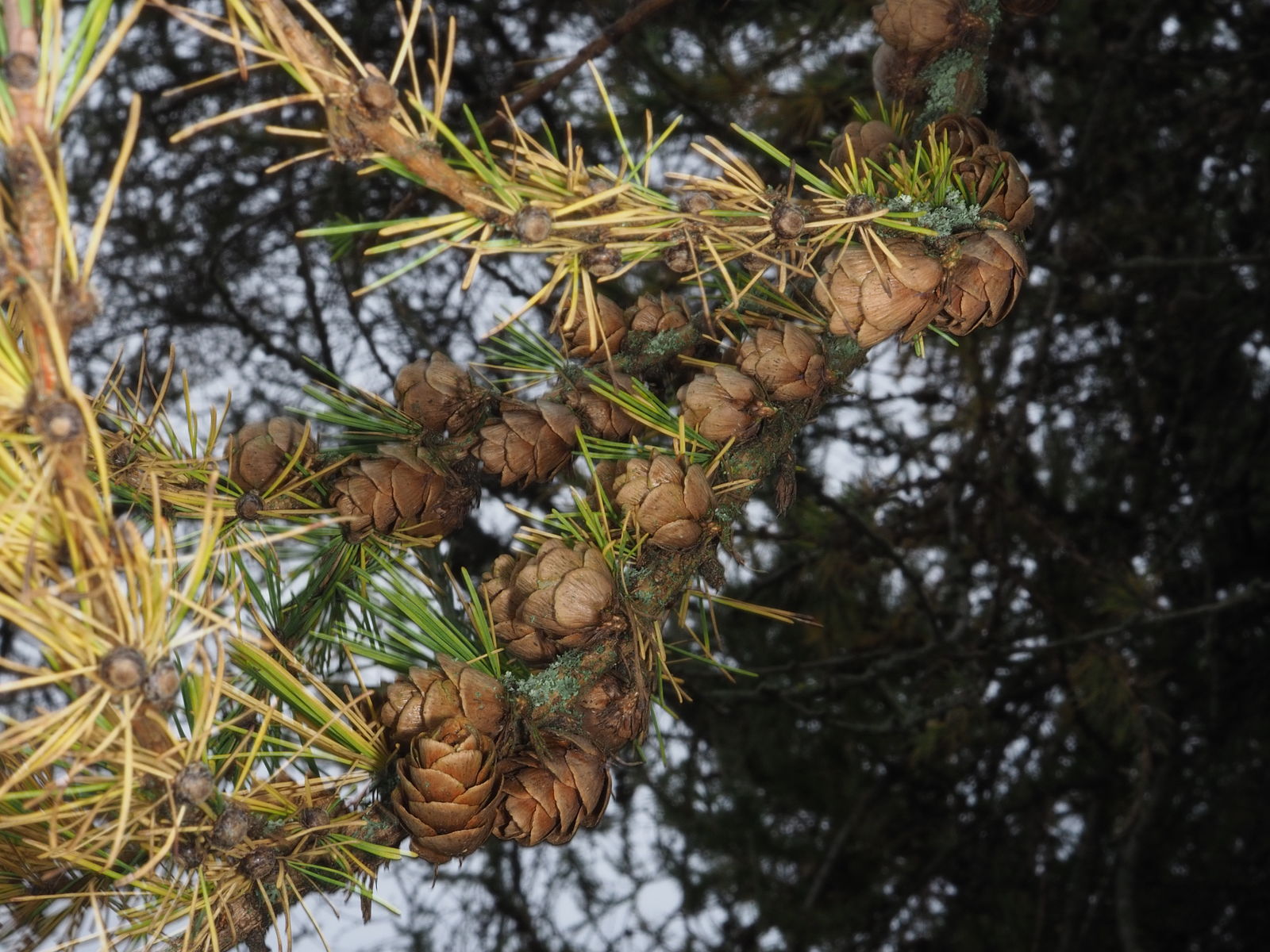
© photo
(c) Eli Sagor, some rights reserved (CC BY-NC) · cc-by-nc
Scott Loarie · cc0
Ken-ichi Ueda · cc0
Taken Aug 15, 2007 by Photoflora - Jean-Luc TASSET (©)
© copyright of the Board of Trustees of the Royal Botanic Gardens, Kew.


Global distribution
The native range of Larix laricina spans boreal North America, from Yukon and interior Alaska to Newfoundland and Labrador, extending south to Minnesota and western Virginia. It is also grown horticulturally well beyond that range, including in the United Kingdom, where it is fully hardy.
Identity
Each fall, tamarack (Larix laricina (Du Roi) K.Koch, 1873) sheds all its needles, like its European relative Larix decidua. Also called hackmatack, eastern larch or American larch, this boreal North American conifer belongs to the Pinaceae. Other North American larches also shed their needles, as does bald cypress. 1 2
Trees reach 10–25 m (33–82 ft) tall, with a trunk seldom more than 60 cm (24 in) in diameter. The sparse, conical crown lets abundant light reach the ground even beneath an adult tree. An herbaceous understory can therefore persist beneath its branches where a denser spruce canopy would exclude it. 2 7
The name tamarack comes from the Algonquin akemantak, meaning “wood for snowshoes.” Indigenous peoples also used its flexible roots as thread for sewing bark canoes. 6 4
Recognition
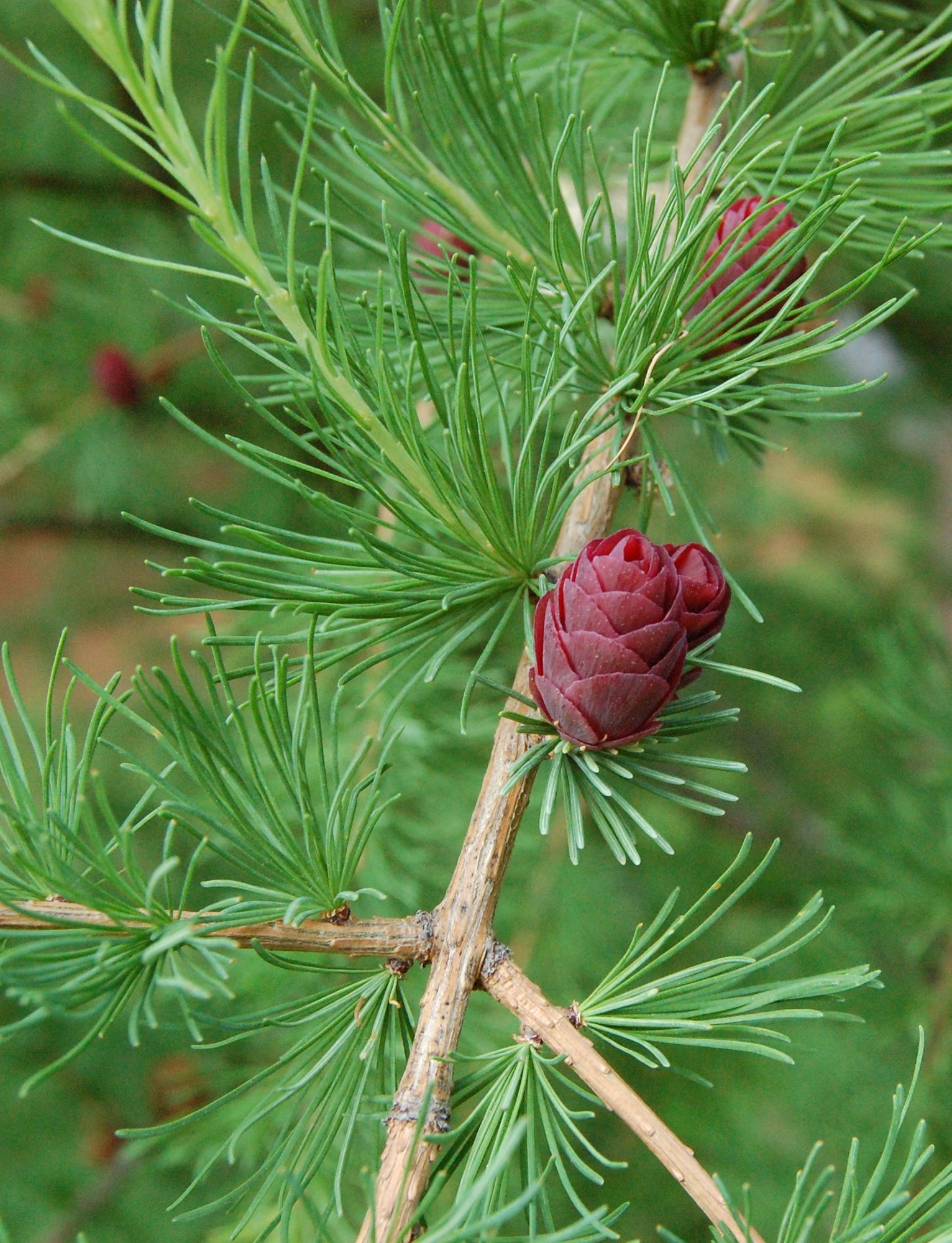
Soft, blue-green needles grow in groups of 10–20, sometimes as many as 60, on short shoots; on the current year's long shoots they grow singly in a spiral. They turn yellow and fall completely in autumn, leaving the tree bare all winter, unlike neighboring spruces and firs that retain their foliage throughout the year. 2 7
The upright, egg-shaped cones measure 1–2 cm (0.4–0.8 in) and have about ten to thirty scales. Young female cones are red or purple in spring, gradually browning as they mature. Their changing color helps identify the stage of the flowering season. 7
Smooth gray bark on young trees becomes reddish brown, thin and scaly at maturity, rarely exceeding 1 cm (0.4 in) in thickness. This thin bark partly explains the tree's poor resistance to fire, unlike thick-barked trees such as certain pines. 7 2
Useful taxonomy
Johann Philipp Du Roi described the species as Pinus laricina in 1771; Karl Koch transferred it to Larix in 1873, producing the combined authority used in its accepted name. The epithet laricina means “resembling larch,” referring to European larch, which Linnaeus originally named Pinus larix. 1
Several regional names once distinguished populations at the edges of its range, now included within the same species:
- Larix laricina var. alaskensis (W.Wight) Raup
- Larix laricina subsp. alaskensis (W.Wight) Silba
- Larix laricina var. americana (Michx.) Lemmon
- Larix americana Michx.
Isolated Alaskan populations were once called Larix alaskensis because their cone scales are narrower, but they are no longer considered distinct from populations in the eastern part of the range. The accepted scientific name, Larix laricina, remains the reliable reference. 7 1
Habitat and range
Boreal North America supports its native range, from Yukon and interior Alaska east to Newfoundland and Labrador, extending south to Minnesota and western Virginia. 2 7
Cold, waterlogged organic soils, sphagnum bogs and muskegs are typical habitats. Black spruce and, less often, northern white-cedar grow alongside it on the same wet ground. At the northern edge of the range, where these mixed stands thin out, tamarack also occupies drier mineral soils on exposed slopes. 2
A pioneer, it colonizes open bogs and recently burned ground through wind-dispersed, winged seeds. Black spruce, which tolerates more shade, gradually replaces it. Tamarack itself cannot tolerate shade: a young seedling deprived of full light soon declines. 2
Life cycle and reproduction
Male and female cones appear on the same tree from late April to early May in the North American seasonal setting, before the new needles fully open. Seeds mature within one season and disperse on the wind in September and October. They remain viable for only about a year after release. 2
In full light, seedlings grow quickly: nearly 20 cm (8 in) in the first growing season and twice that height after three years. The first cones appear at about 15 years in open stands, compared with 35–40 years under a dense canopy. At the northern range limit, where seed production becomes rare, natural layering of low branches takes over from seed as a means of reproduction. 2
Uses and risks
Dense, hard wood that resists rot even when submerged was long used for shipbuilding, posts, railroad ties and fence stakes. Flexible roots served as thread for sewing bark canoes. These uses draw on different parts of the tree: durable timber for structural work and pliable roots for stitching. 4 6
Neither the bark nor the needles are considered toxic to the main domestic animals. Resin and needles can nevertheless irritate sensitive skin on contact, a risk comparable to that associated with European larch. 4
Fire readily damages tamarack. Thin bark and shallow roots offer little protection, and seeds on the ground, lacking protective endosperm, are destroyed by heat. Larch sawfly remains its principal pest and can kill a tree after six to nine years of repeated defoliation. 2
Varieties, look-alikes and related plants
Horticultural cultivars are less numerous than those of European larch. Girard Dwarf has a compact, dwarf habit suited to small gardens; Nash Pendula develops long, drooping branches maintained by grafting; Arethusa Bog, selected from a Maine bog, suits a container or bonsai. 5
Common look-alikes include:
- Larix decidua, European larch, with a distinctly Alpine and Carpathian native range;
- Larix kaempferi, Japanese larch, with reddish-brown young shoots;
- black spruce (Picea mariana), its most frequent bog companion, whose single, evergreen needles contrast with tamarack's once autumn arrives.
The most reliable clue is seasonal: a conifer that loses all its needles in winter and regrows soft green foliage in spring, in a North American bog or on waterlogged soil, suggests tamarack, whose identity should be checked against the other features described above. 7
Main sources
- Plants of the World Online / Kew, Larix laricina (Du Roi) K.Koch
- USDA Forest Service FEIS, Larix laricina species review
- Missouri Botanical Garden, Larix laricina
- Plants For A Future, Larix laricina
- American Conifer Society, Larix laricina cultivar database
- Natural Resources Canada, tamarack profile
- The Gymnosperm Database, Larix laricina
- IUCN Red List assessment, Larix laricina
Frequently asked questions
Does tamarack really lose its needles in winter?
Yes. Larix laricina is one of the few conifers to shed all its foliage each fall, after turning bright yellow. New, soft foliage grows again the following spring.
Is tamarack a fir or a spruce?
No. Despite a similar conical outline, Larix laricina belongs to Larix, a genus separate from Abies (firs) and Picea (spruces), within the same family, Pinaceae.
How does tamarack differ from European larch?
The two species look very similar. Larix laricina grows naturally in boreal North America, often in peatlands, whereas Larix decidua comes from the Alps and Carpathians. Their cones and young shoots also differ slightly.
Is tamarack toxic?
It is not considered toxic to the main domestic animals. Resin and needles can nevertheless irritate sensitive skin on contact.
Where does tamarack grow naturally?
Its native range spans boreal North America, from Yukon and interior Alaska to Newfoundland and Labrador, extending south to Minnesota and western Virginia.
Why does tamarack grow in bogs?
It tolerates cold, acidic, waterlogged organic soils that few other conifers withstand. This allows it to colonize peatlands, where black spruce is its main competitor.
Is tamarack threatened?
No. It occupies a very large range and remains listed as Least Concern by IUCN. Its main localized threat is larch sawfly during outbreaks of defoliation.
Similar plants
If you are unsure about a plant’s toxicity, ask a botanist or veterinarian for advice.